



Caspase Activator
-
PROTAC EZH2 Degrader-44
 0 ImagesCat. No.: HY-181413CAS No.: 3093642-25-9
PROTAC EZH2 Degrader-44 (compound 60) is a highly efficient PROTAC degrader targeting the EZH2-PRC2 complex. By recruiting the CRBN E3 ligase and relying on the proteasome system, PROTAC EZH2 Degrader-44 simultaneously induces the degradation of core components EZH2, SUZ12 and EED, thereby significantly reducing the levels of H3K27me3 and CARM1. PROTAC EZH2 Degrader-44 exerts antiproliferative effects through a dual mechanism: on the one hand, it triggers mitochondrial dysfunction leading to decreased membrane potential; on the other hand, it strongly promotes apoptosis by regulating Bcl-2 family proteins (upregulating Bax, Caspase-3 and PARP, and downregulating Bcl-2). PROTAC EZH2 Degrader-44 exhibits only extremely low cytotoxicity in human normal mammary epithelial, liver and kidney cells, showing a favorable safety window. PROTAC EZH2 Degrader-44 is an ideal tool molecule for exploring the mechanisms of targeted therapy for triple-negative breast cancer.
-
c9,t11,c15-CLNA
 0 ImagesCat. No.: HY-171837CAS No.: 15909-18-9
c9,t11,c15-CLNA is a conjugated linolenic acid (CLNA) isomer produced by Lactobacillus plantarum ZS2058. c9,t11,c15-CLNA has significant anti-proliferation activity against colon cancer cells (IC50: 18.26 μM). c9,t11,c15-CLNA induces pyroptosis by activating the canonical pyroptosis pathway mediated by caspase-1. c9,t11,c15-CLNA can be used in the study of colon cancer.
-
Desethylamiodarone-d4 hydrochloride
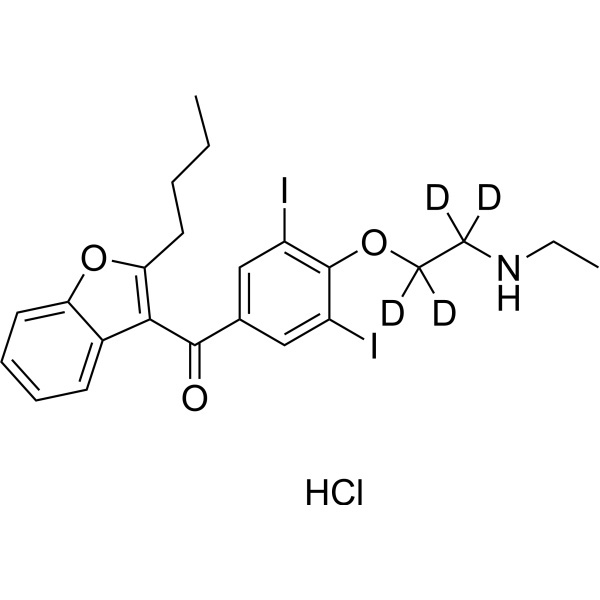 0 ImagesCat. No.: HY-130353SCAS No.: 1189960-80-2Synonyms: N-Desethylamiodarone-d4 hydrochloride; LB 33020-d4 hydrochloride
Desethylamiodarone-d4 hydrochloride (N-Desethylamiodarone-d4 hydrochloride; LB 33020-d4 hydrochloride) is the deuterated-labeled Desethylamiodarone hydrochloride (HY-130353). Desethylamiodarone hydrochloride (N-Desethylamiodarone hydrochloride; LB 33020 hydrochloride) is the major active metabolite of Amiodarone (HY-14187) generated via CYP3A4 metabolism. Desethylamiodarone hydrochloride downregulates p‑Akt, p‑Bad and Bcl‑2, upregulates Bax, promotes mitochondrial release of cytochrome c, activates caspase‑3 and cleaves PARP‑1, thereby inducing cell cycle arrest and apoptosis. Desethylamiodarone hydrochloride can be used in cervical cancer-related research.
-
1-Monopalmitin (Standard)
 0 ImagesSynonyms: Glyceryl palmitate (Standard)
1-Monopalmitin (Glyceryl palmitate) (Standard) is the analytical standard of 1-Monopalmitin (HY-W009141). This product is intended for research and analytical applications. 1-Monopalmitin (Glyceryl palmitate) is an activator of the PI3K/Akt pathway and an inhibitor of P-glycoprotein (P-gp). 1-Monopalmitin can induce G2/M arrest and caspase-dependent apoptosis in cancer cells, while inhibiting IAPs protein expression. 1-Monopalmitin can increase drug accumulation by inhibiting P-gp activity in intestinal Caco-2 cells. 1-Monopalmitin has the ability to induce protective autophagy and apoptosis of lung cancer cells (IC50=50-58 μg/mL), with low toxicity to normal cells.
-
8-Acetonyldihydronitidine
 0 ImagesCat. No.: HY-N21597CAS No.: 80330-39-8
8‑Acetonyldihydronitidine is a naturally occurring benzophenanthridine alkaloid with antibacterial, antifungal, and anti-proliferative activities against colorectal cancer cells. 8‑Acetonyldihydronitidine inhibits Staphylococcus aureus and exerts a potent antifungal effect against Cladosporium cladosporioides. 8‑Acetonyldihydronitidine activates the p53 signaling pathway, upregulates the expression of target genes including p21, BAX, and FAS, downregulates cyclin A and cyclin B, and induces cell cycle arrest and apoptosis, thereby suppressing the proliferation of colorectal cancer cells. 8‑Acetonyldihydronitidine is used in research related to colorectal cancer, fungal infections, and bacterial infections.
-
Anticancer agent 56
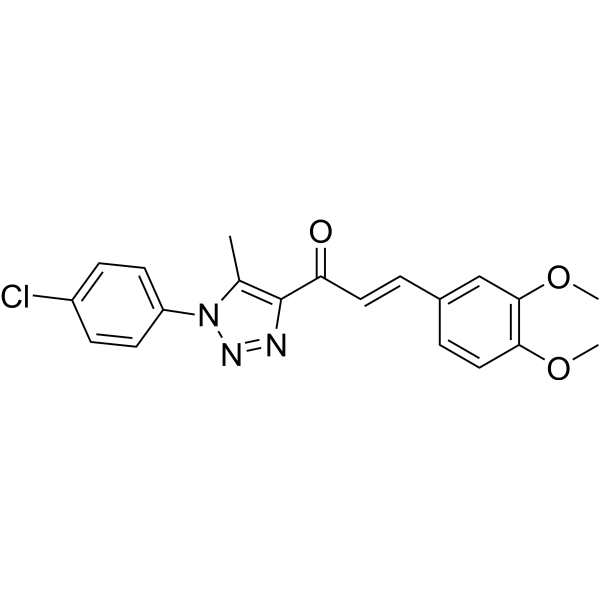 0 ImagesCat. No.: HY-146444CAS No.: 2241915-59-1
Anticancer agent 56 (compound 4d) is a potent anti-cancer agent with agent-likeness properties, possessing anticancer activity against several cancer cell lines (IC50<3 μM). Anticancer agent 56 induces cell cycle arrest at G2/M phase and triggers mitochondrial apoptosis pathway. Anticancer agent 56 acts by accumulation of ROS, up regulation of BAX, down regulation of Bcl-2 and activation of caspases 3, 7, 9.
-
Apoptosis inducer 49
 0 ImagesCat. No.: HY-178940
Apoptosis inducer 49 is a selective apoptosis inducer with high specificity against CCRF-CEM leukemia cells (IC50 = 2.68 μM). Apoptosis inducer 49 enhances RNA synthesis and replication stress, activates the Chk1-p21 axis, leading to S-phase arrest. Apoptosis inducer 49 can inhibit Bcl-2 and activate caspase-3. Apoptosis inducer 49 can be used for the study of Leukemia.
-
Cucurbitacin F
 0 Images
Cucurbitacin F is a tetracyclic protostane-type triterpenoid with low toxicity, antibacterial and anti-inflammatory activities, and is also a related compound of Cucurbitacin B (HY-N0416). Cucurbitacin F widely exists in plants such as Cucurbitaceae plants, Quisqualis indica and Sorbaria sorbifolia. Cucurbitacin F acts as an actin aggregator and reduces cell viability in a dose-dependent manner. Cucurbitacin F induces apoptosis by triggering G2/M phase cell cycle arrest and activating the caspase-3-dependent apoptosis.
-
Anticancer agent 64
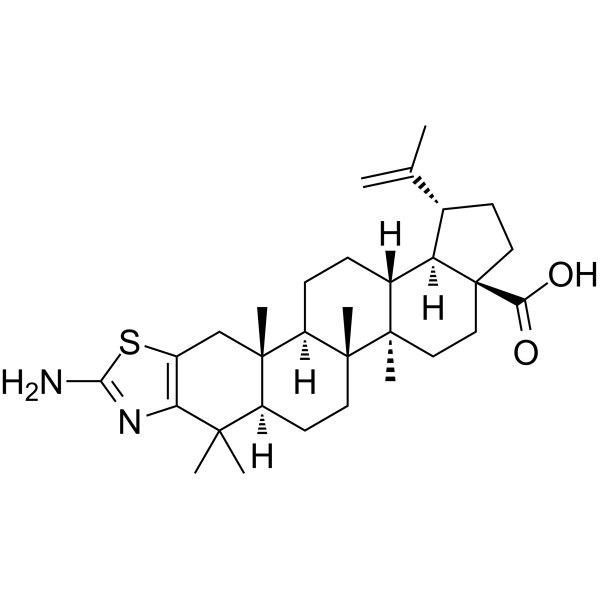 0 ImagesCat. No.: HY-147514CAS No.: 2387902-92-1
Anticancer agent 64 (compound 5m) shows cytotoxic activity in CCRF-CEM cells, with IC50 of 2.4 μM. Anticancer agent 64 shows good anticancer activity through apoptosis induction. Anticancer agent 64 induces caspase 3 and 7 activation and PARP cleavage. Anticancer agent 64 induces significant effect of mitochondria depolarization.
-
4,4′-Secalonic acid D
 0 ImagesCat. No.: HY-N15380CAS No.: 2265910-52-7
4,4′-Secalonic acid D (Compound 12) is a PARP1 inhibitor. 4,4′-Secalonic acid D induces the accumulation of ROS and DNA damage, activates the caspase-3/GSDME pathway, and triggers apoptosis and pyroptosis of tumor cells by inhibiting PARP1. 4,4′-Secalonic acid D has anti-tumor activity.
-
EGFR/VEGFR2-IN-9
 0 ImagesCat. No.: HY-178942CAS No.: 3123724-88-6
EGFR/VEGFR2-IN-9 (Compound 9b) is an inhibitor of VEGFR-2 (IC50 = 1.325 μM) and EGFR (IC50 = 1.891 μM). EGFR/VEGFR2-IN-9 significantly inhibits the proliferation of multiple cancer cell lines, particularly leukemia cells. EGFR/VEGFR2-IN-9 upregulates the expression levels of Bax, caspase-3, and p53, while downregulating the expression of Bcl-2. EGFR/VEGFR2-IN-9 induces apoptosis and arrests the cell cycle in the G1 phase. EGFR/VEGFR2-IN-9 can be used to investigate anti-tumor angiogenesis and multi-drug resistant cancers.
-
Candidone
 0 ImagesCat. No.: HY-180324CAS No.: 77727-18-5
Candidone is a type of flavanone phenolic compound with anti-cancer and antibacterial activities. Candidone inhibits the proliferation of hepatoblastoma and cholangiocarcinoma cells and induces their apoptosis by up-regulating p21, Bax, and caspase 3/9, and down-regulating Bcl-2 and survivin. It reduces the metastatic ability of cancer cells by inhibiting the expression of phosphorylated p38 and matrix metalloproteinase MMP-9. Candidone has inhibitory effects on multidrug-resistant bacterial strains. Candidone binds to the base pairs of DNA in a groove-binding manner, thereby slightly altering the conformation of DNA.
-
Caspase-3 activator 5
 0 ImagesCat. No.: HY-180849
Caspase-3 activator 5 (Compound 11) is a caspase-3 activator. Caspase-3 activator 5 reduces MRP1 levels and induces Apoptosis through Caspase-3 activation. Caspase-3 activator 5 exhibits anticancer activity against leukemia, cervical cancer, and breast cancer. Caspase-3 activator 5 shows no antibacterial or antifungal effects.
-
Pycnidione
 0 ImagesCat. No.: HY-N11418CAS No.: 149064-34-6
Pycnidione is a natural small-molecule compound isolated from fungi. Pycnidione inhibits stromelysin/MMP3, targets cyclin D1/E, induces G1 phase arrest, modulates survivin, affects caspase-8/3, targets PAI-1, inhibits topoisomerases, and induces HIF-1α accumulation/nuclear translocation and DNA binding/reporter gene transactivation and erythropoietin expression. Pycnidione induces apoptosis, reactive oxygen species (ROS) generation, and mitochondrial membrane potential collapse. Pycnidione can be used for research on lung cancer.
-
DH20931
 0 ImagesCat. No.: HY-183140CAS No.: 1629992-28-4
DH20931 is a ceramide synthase 2 (CerS2) activator. DH20931 inhibits growth of cancer cells by inducing lipotoxic endoplasmic reticulum (ER) stress. DH20931 shows synergistic anti-tumor efficacy with Doxorubicin (HY-15142A). DH20931 can be used for the research of breast cancer.
-
2'-Deoxyadenosine monohydrate-13C10,15N5 hydrate
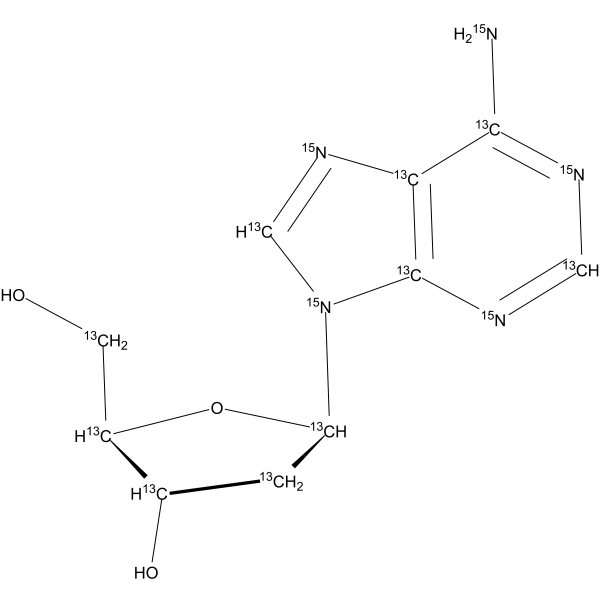 0 Images
2'-Deoxyadenosine monohydrate-13C10,15N5 is the 13C and 15N labeled 2'-Deoxyadenosine monohydrate (HY-W011683). 2′-Deoxyadenosine monohydrate is an adenine nucleoside that inhibits glucose-stimulated insulin release. 2′-Deoxyadenosine monohydrate inhibits glucose-stimulated increases seen in islet cyclic AMP (cAMP) accumulation. 2'-Deoxyadenosine monohydrate activates caspase-3 and promotes apoptosis. 2'-Deoxyadenosine monohydrate inhibits the activity of S-adenosyl-L-homocysteine hydrolase (SAHH). 2'-Deoxyadenosine monohydrate inhibits the growth of various cells. 2'-Deoxyadenosine monohydrate has an anticancer effect on colon cancer.
-
STK899704
 0 ImagesCat. No.: HY-120339CAS No.: 1578247-29-6
STK899704 is a tubulin polymerization inhibitor. STK899704 exhibits broad-spectrum inhibitory activity against various cancer cell lines with IC50 values ranging from 0.2 to 1.0 μM. STK899704 disrupts the mitotic spindle structure, inducing G2/M phase cell cycle arrest. STK899704 inhibits the migration ability of HT29 cells by downregulating the FAK-MEK-ERK signaling pathway, thereby suppressing the expression and activity of MMP-2 and MMP-9. STK899704 activates caspase-3/7/8/9, leading to PARP cleavage and inducing apoptosis. STK899704 induces cellular senescence through the p53 pathway. STK899704 can be used in research on skin cancer, lung cancer, colon cancer, and other cancers.
-
CK2-TN03
 0 Images
CK2-TN03 is an ATP-competitive casein kinase 2 (CK2) inhibitor, with an IC50 of 165 nM and a Ki of 20 nM. CK2-TN03 inhibits CK2-mediated survivin activation and reduces CK2-dependent phosphorylation levels of BRD4/MYCN and AKT1. CK2-TN03 exerts anti-neuroblastoma effects by inhibiting survivin, leading to mitotic catastrophe and apoptosis of cancer cells. CK2-TN03 can be used in studies related to neuroblastoma.
-
MA203
 0 ImagesCat. No.: HY-179157
MA203 is a selective CHK1 PROTAC degrader. MA203 targets activated CHK1 for degradation by recruiting the CRBN E3 ubiquitin ligase, thereby completely abolishing both its catalytic and non-catalytic functions and ultimately triggering DNA replication catastrophe and apoptosis. MA203 can be used in research related to pancreatic ductal adenocarcinoma, colorectal cancer, and acute lymphoblastic leukemia.
-
Oosporein (Standard)
 0 Images
Oosporein (Standard) is the analytical standard of Oosporein (HY-N7719). This product is intended for research and analytical applications. Oosporein is a microbial metabolite and a red crystalline toxin produced by various fungi. Oosporein can promote the reproduction of fungi in host bodies by inhibiting insect immunity, and possesses multiple activities such as antibacterial, antiviral (HSV), and insecticidal effects. Oosporein can inhibit plant growth. In addition, Oosporein can also induce apoptosis, cell membrane damage, oxidative stress, and mitochondrial damage. Oosporein has certain antitumor activity.



