



ERK2
ERK2 (MAPK1) is a core effector kinase of the Ras/Raf/MEK/ERK signaling cascade and functions as an integration point for extracellular signals that regulate cell proliferation, differentiation, survival, transcriptional programs, and development[1][2]. Mechanistically, ERK2 is activated through MEK-dependent phosphorylation and subsequently phosphorylates numerous substrates across cellular compartments, linking growth factor stimulation to broad biological responses[3]. Because ERK signaling controls fundamental cellular processes, dysregulation of the pathway is associated with multiple pathological conditions, particularly tumorigenesis, and aberrant ERK pathway activity is observed in a substantial proportion of human cancers[4]. In experimental systems, genetic disruption studies demonstrate that ERK2 is essential for normal mammalian development, as loss of ERK2 causes embryonic lethality, highlighting the critical requirement for adequate ERK signaling output[3]. Compared with the closely related isoform ERK1 (MAPK3), ERK2 shares highly conserved activation mechanisms, substrate recognition properties, and signaling functions, and many studies support the view that biological outcomes are largely determined by total ERK activity rather than strict isoform-specific functions[3]. For experimental applications, ERK pathway inhibitors targeting RAF, MEK, or ERK have been extensively developed and are widely used to investigate ERK-dependent signaling networks, disease mechanisms, therapeutic resistance, and pathway regulation in cancer models[4][5].
References:
- [1]. Mitogen Activated Protein Kinase 1. Sciencedirect topic.
- [2]. Wikipedia.
- [3]. Buscà R, et al. ERK1 and ERK2 Map Kinases: Specific Roles or Functional Redundancy? Front Cell Dev Biol. 2016 Jun 8;4:53. [Content Brief]
- [4]. Timofeev O, et al. ERK pathway agonism for cancer therapy: evidence, insights, and a target discovery framework. NPJ Precis Oncol. 2024 Mar 14;8(1):70. [Content Brief]
- [5]. Sah VK, et al. Advances in ERK1/2 inhibition: a medicinal chemistry perspective on structure and regulation. J Enzyme Inhib Med Chem. 2025 Dec;40(1):2555510. [Content Brief]
-
ERK2 Related Products (269)
Related Products (269)

-
Antibodies (1)
-
Zoniporide dihydrochloride
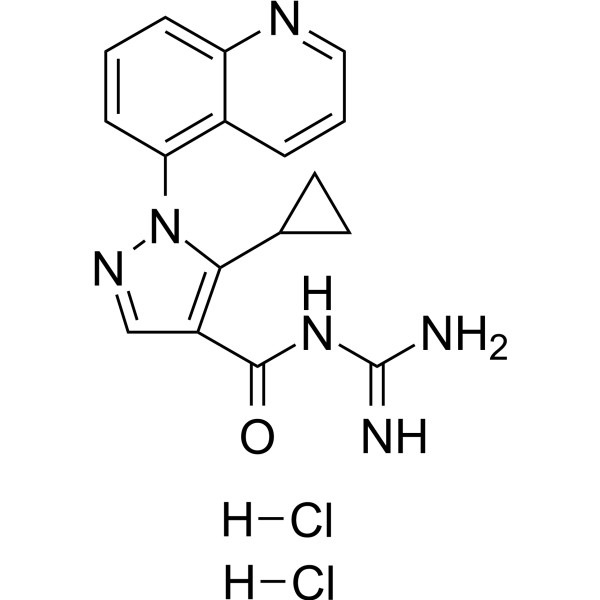 0 ImagesCat. No.: HY-105064CCAS No.: 241799-10-0Synonyms: CP-597396 dihydrochlorideZoniporide dihydrochloride (CP-597396 dihydrochloride) is a selective Na+/H+ exchanger subtype 1 (NHE1) inhibitor with cardioprotective activity, with IC50 values of 67 nM and 73 nM against rat NHE1. Zoniporide dihydrochloride reduces intracellular Na+ and Ca2+ overload, preserves mitochondrial integrity, activates pro-survival ERK1/2 and STAT3 signaling pathways, reduces necrosis and apoptosis, and decreases neutrophil aggregation. Zoniporide dihydrochloride is applicable to research related to myocardial ischemia-reperfusion injury and heart graft ischemia-reperfusion injury.
-
MA191
 0 ImagesCat. No.: HY-175273MA191 is a FLT3 PROTAC degrader. MA191 targets and degrades mutant FLT3-ITD protein by recruiting the VHL E3 ligase in a manner dependent on ubiquitination and BIM, thereby blocking aberrant downstream MAPK/STAT5 signaling pathways and inducing apoptosis. MA191 can be used in research related to acute myeloid leukemia.
-
Eras-4001-d6
 0 ImagesCat. No.: HY-175870SCAS No.: 3024881-00-0Eras-4001-d6 is a deuterated form of Eras-4001 (HY-175870). Eras-4001 is a potent, orally active pan-KRAS inhibitor with Kd values of 110, 13 and 39 pM against wild-type, G12D and G12V mutant KRAS, respectively, and exhibits selectivity toward wild-type HRAS and NRAS. Eras-4001 inhibits ERK1/2 phosphorylation and cell viability in cancer cells. Eras-4001 induces tumor growth inhibition and regression in subcutaneous xenograft models. Eras-4001 can be used in research on non-small cell lung cancer, ovarian cancer, etc.
-
ERK1/2 inhibitor 13
 0 ImagesCat. No.: HY-173060CAS No.: 3093367-23-5ERK1/2 inhibitor 13 (Compound 21y) is the orally active inhibitor for ERK that inhibits ERK1 and ERK2 with IC50 of 91.71 nM and 97.87 nM. ERK1/2 inhibitor 13 inhibits the proliferation of MCF-7, 4T1, MDA-MB-468, and HCC1970 (IC50 of 0.67, 2.76, 2.15 and 1.68 μM), inhibits the cancer cell migration, induces apoptosis and autophagy in MCF-7. ERK1/2 inhibitor 13 exhibits antitumor and anti-metastatic effect in 4T1 xenograft mouse model.
-
NY0123
 0 ImagesCat. No.: HY-123795CAS No.: 1801911-70-5NY0123 is a EPAC1 inhibitor. NY0123 significantly inhibits the expression of EPAC1, phosphorylated AKT, phosphorylated ERK1/2 and phosphorylated VEGFR2. NY0123 inhibits angiogenesis and tumor growth of triple-negative breast cancer. NY0123 is applicable to relevant research on triple-negative breast cancer.
-
AKT1-IN-13
 0 ImagesCat. No.: HY-184145AKT1-IN-13 is an orally active AKT1 inhibitor with an IC50 of 5.17 μM. AKT1-IN-13 also exhibits high inhibitory activity against PAK1, PKA, MAP2K1 (MEK1 / MAPKK1) and MAPK1 (ERK2). AKT1-IN-13 induces cell apoptosis, activates the pro-apoptotic protein BAX, inhibits the anti-apoptotic protein Bcl-2, and activates caspase 3 simultaneously. As a cytotoxic agent, AKT1-IN-13 exerts a killing effect on orthotopically transplanted liver cancer in an AKT1-dependent manner. AKT1-IN-13 can be used in studies related to hepatocellular carcinoma.
-
Famotidine-13C3
 0 ImagesCat. No.: HY-W777002CAS No.: 1185241-48-8Synonyms: MK-208-13C3Famotidine-13C3 (MK-208-13C3) is the 13C3-labeled Famotidine (HY-B0377). Famotidine (MK-208) is an orally active and highly selective histamine H2 receptor antagonist. It inhibits gastric acid secretion by blocking the Gs signaling pathway, and regulates intracellular cAMP and ERK pathways. Famotidine inhibits TLR3-mediated inflammatory pathways, and reduces the expression of various inflammatory mediators and interferon-related genes. Famotidine scavenges DPPH and nitric oxide free radicals, alleviates oxidative stress damage in gastric tissue, inhibits proMMP-9, improves vascular endothelial permeability, and restores the normal physiological functions of neutrophils and eosinophils. Famotidine crosses intestinal epithelial cells via facilitated diffusion and passive diffusion, blocks paracellular cation transport, and increases intestinal transepithelial electrical resistance. Famotidine reduces serum levels of transaminases and alkaline phosphatase, exerts analgesic effects and gastric protective effects simultaneously. Famotidine can be used in studies related to COVID-19, liver injury and acute gastric ulcer.
-
LQEQ-19 (mouse, rat)
 0 ImagesCat. No.: HY-P11130CAS No.: 322644-72-4LQEQ-19 (mouse, rat) is a VGF derived peptide that exerts neuroprotective effects. LQEQ-19 (mouse, rat) activates the PI3K/Akt and MEK/ERK signaling pathways by promoting phosphorylation of Akt and ERK1/2. LQEQ-19 (mouse, rat) is commonly used in the study of neurological conditions.
-
Pizotifen hydrochloride
 0 ImagesCat. No.: HY-B0115BCAS No.: 73391-87-4Synonyms: Pizotyline hydrochloride; BC-105 hydrochloridePizotifen hydrochloride (Pizotyline hydrochloride) is a 5-HT2 receptor antagonist. Pizotifen hydrochloride inhibits the Wnt/β-catenin-EMT signaling pathway and induces mitochondria-mediated Apoptosis. Pizotifen hydrochloride causes transient ERK1/2 phosphorylation and restores ATP. Pizotifen hydrochloride blocks Serotonin (HY-B1473A)-mediated platelet activation, inhibits Serotonin-enhanced ADP-induced platelet aggregation, and prolongs carotid artery occlusion and tail bleeding time. Pizotifen hydrochloride exhibits anticancer activity against gastric cancer and colon cancer. Pizotifen hydrochloride exerts neuroprotective effects in the striatum of R6/2 mice. Pizotifen hydrochloride can be used for research on gastric cancer, colon cancer, Huntington's disease, metastasis, and thromboembolic diseases.
-
Famotidine-d4
 0 ImagesCat. No.: HY-W707517CAS No.: 2707433-64-3Synonyms: MK-208-d4Famotidine-d4 (MK-208-d4) is the deuterated-labeled Famotidine (HY-B0377). Famotidine (MK-208) is an orally active and highly selective histamine H2 receptor antagonist. It inhibits gastric acid secretion by blocking the Gs signaling pathway, and regulates intracellular cAMP and ERK pathways. Famotidine inhibits TLR3-mediated inflammatory pathways, and reduces the expression of various inflammatory mediators and interferon-related genes. Famotidine scavenges DPPH and nitric oxide free radicals, alleviates oxidative stress damage in gastric tissue, inhibits proMMP-9, improves vascular endothelial permeability, and restores the normal physiological functions of neutrophils and eosinophils. Famotidine crosses intestinal epithelial cells via facilitated diffusion and passive diffusion, blocks paracellular cation transport, and increases intestinal transepithelial electrical resistance. Famotidine reduces serum levels of transaminases and alkaline phosphatase, exerts analgesic effects and gastric protective effects simultaneously. Famotidine can be used in studies related to COVID-19, liver injury and acute gastric ulcer.
-
Cyclazosin
 0 ImagesCat. No.: HY-184086CAS No.: 139953-73-4Cyclazosin is an α1D-adrenergic receptor antagonist and a partial agonist of CXCR4/ACKR3. The pKi values of Cyclazosin for cloned human α1D, α1B and α1A adrenergic receptors are 9.28, 9.23 and 8.18, respectively. Cyclazosin induces β-arrestin recruitment in CXCR4 and ACKR3 with EC50 values of 16 μM and 10 μM, respectively, stimulates ERK1/2 phosphorylation, and induces receptor internalization. Cyclazosin potently inhibits CXCL12-induced chemotaxis of primary human aortic vascular smooth muscle cells. Cyclazosin alters MDMA-induced thermoregulatory responses in mice, converting monophasic hyperthermia to a biphasic pattern without affecting resting core body temperature. Cyclazosin can be used for diseases related to tumor metastasis, MDMA-induced hyperthermia and vasoconstriction.
-
Tubulozole
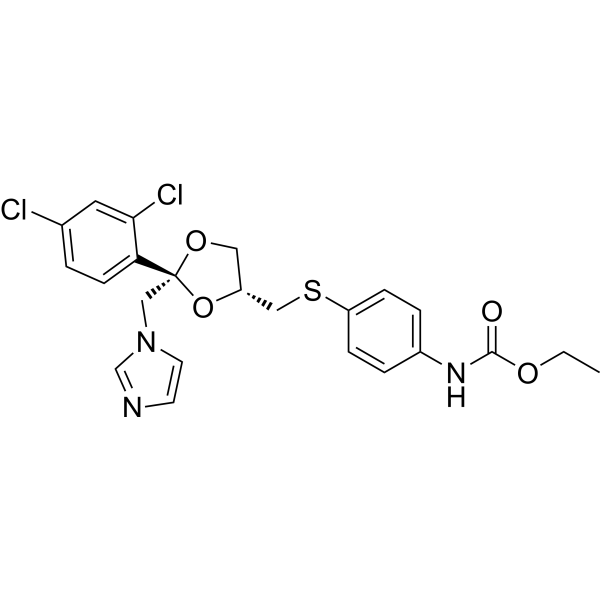 0 ImagesCat. No.: HY-119169CAS No.: 84697-22-3Synonyms: R 46846Tubulozole (R 46846) is an orally active inhibitor of tubulin polymerization with an ID50 of 0.34 μM. Tubulozole induces activation of the Chk1 kinase and phosphorylation of ERK1/2, which is required for microtubule formation. Tubulozole arrests Mitosis at the metaphase stage. Tubulozole causes cells to accumulate in the radiosensitive mitotic phase of the cell cycle. Tubulozole exerts anticancer activity against colon cancer. Tubulozole produces a radiosensitizing effect in mouse tumor models and enhances the tumor growth delay effect when combined with γ-ray irradiation. Tubulozole is used in studies related to colon cancer, fascioliasis, MO4 fibrosarcoma, and Lewis lung carcinoma.
-
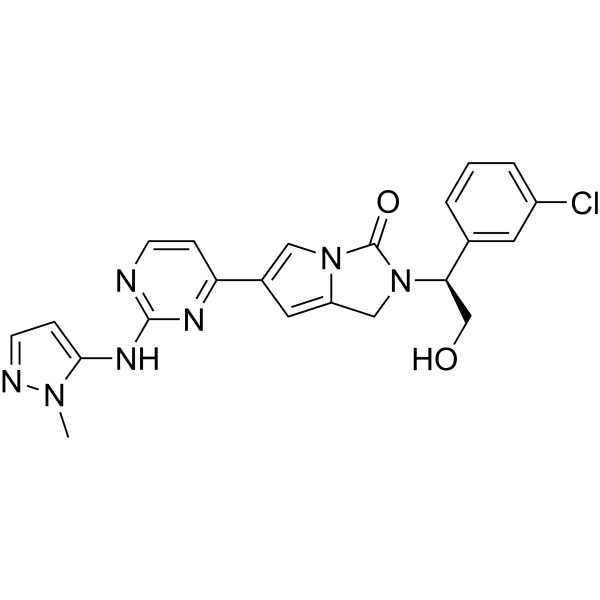
ERK-IN-2 free base
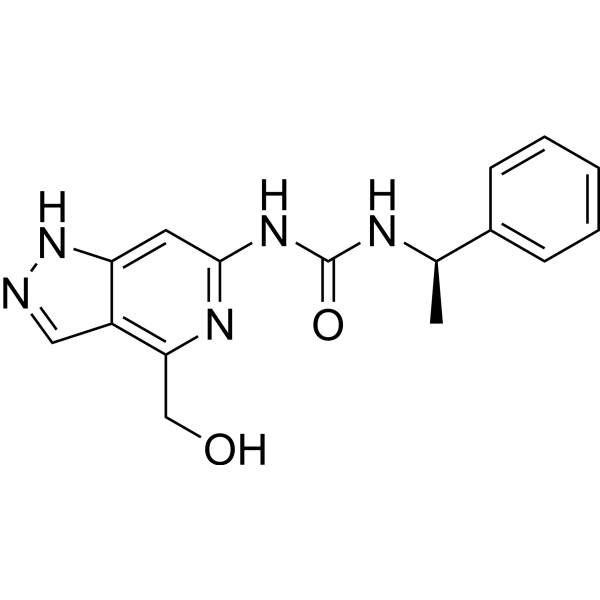 0 ImagesCat. No.: HY-133084ACAS No.: 2743576-55-6ERK-IN-2 free base is a ERK2 inhibitor with an IC50 value of 1.8 nM. ERK-IN-2 free base might lead to off-target toxicity and/or off-target activity at dose >10 μM.
-
COG449
 0 ImagesCat. No.: HY-P12219Synonyms: OP449COG449 (OP449) is a cell-penetrating peptide that binds to SET, prevents the formation of the SET-PP2A complex, and restores PP2A phosphatase activity. COG449 decreases the phosphorylation levels of AKT308, ERK1/2, NFkB p65, and c-MYC S62, and reduces c-MYC stability and target gene expression. COG449 induces apoptosis, autophagy, and histone H3 hyperacetylation, and decreases the levels of SET, CIP2A, SETBP1, and Mcl-1. COG449 reduces cancer cell viability and decreases tumor mass in xenograft models. COG449 can be used for research on various cancers such as oral squamous cell carcinoma, T-cell acute lymphoblastic leukemia, B-CLL, non-Hodgkin lymphoma, and breast cancer.
-
Apoptosis inducer 55
 0 ImagesCat. No.: HY-180226Apoptosis inducer 55 (Compound 10) is an Apoptosis inducer. Apoptosis inducer 55 induces rapid apoptosis via the intrinsic pathway. Apoptosis inducer 55 potently inhibits several signaling cascades including AKT, ERK1/2, STAT1, STAT3, and S6K. Apoptosis inducer 55 has anti-cancer activity against melanoma.
-
DCZ19931
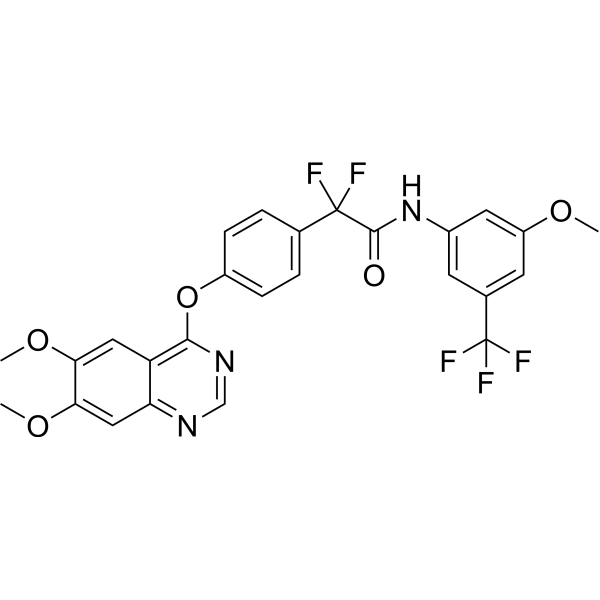 0 ImagesCat. No.: HY-152087CAS No.: 2789629-84-9DCZ19931 is a potent multi-targeting kinase inhibitor. DCZ19931 has anti-angiogenic effects on ocular neovascularization. DCZ19931 also inhibits ERK1/2-MAPK and p38-MAPK signaling.
-
12(S)-HEPE
 0 Images12 (S)-HEPE is an oxidation product of Eicosapentaenoic acid (HY-B0660). 12 (S)-HEPE activates p38α, GSKβ, CREB, and ERK1/2. 12 (S)-HEPE induces DNA synthesis. 12 (S)-HEPE leads to activation of the PI3K-mTORC2-Akt signaling pathway and translocation of Glut4 to the plasma membrane. 12 (S)-HEPE increases glucose uptake. 12 (S)-HEPE reduces body weight gain in HFD mice. 12 (S)-HEPE can be used in research on colorectal cancer, zymosan-induced peritonitis, diabetes, and obesity.
-
Leupeptin Ac-LL
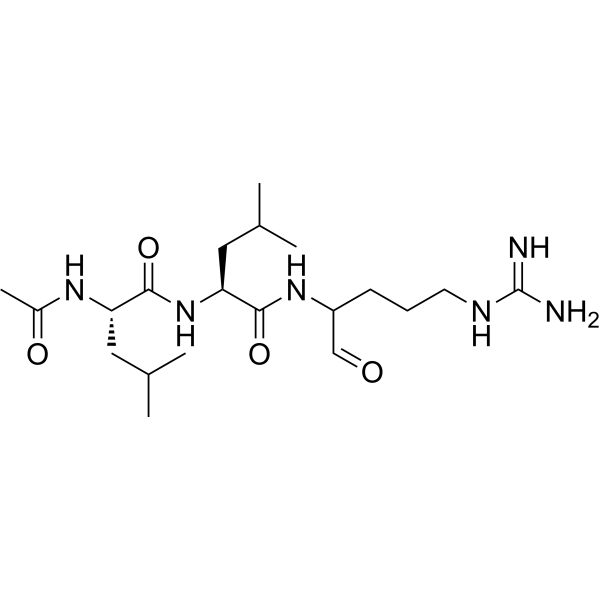 0 ImagesCat. No.: HY-18234BCAS No.: 24365-47-7Leupeptin Ac-LL is a broad-spectrum protease inhibitor. By inhibiting the activation of the PTEN/PI3K/Akt/NF-κB/ERK1/2/p38 signaling pathway, Leupeptin Ac-LL significantly reduces LPS-induced NO and ROS production, mitochondrial membrane potential hyperpolarization, phagocytic activity, pro-inflammatory cytokine release, and M1 polarization in mouse peritoneal macrophages, and reverses autophagic flux impairment. It also decreases Concanavalin A (HY-P2149)-induced proliferation index of mouse splenic lymphocytes and the Th1/IL-10 and Th2/IL-10 cytokine ratios, thereby modulating innate and adaptive immune responses. Leupeptin Ac-LL inhibits blood coagulation and tumorigenesis in mouse skin. Leupeptin Ac-LL can be used in research on chronic inflammatory diseases and skin tumorigenesis.
-
TC6-D3
 0 ImagesCat. No.: HY-P11928CAS No.: 3121532-43-9TC6-D3 is a proteolysis-resistant peptide and also a CC chemokine receptor 7 (CCR7) inhibitor, with a Kd value of 403 nM against mouse targets. TC6-D3 blocks the interaction between CCR7 and its ligands CCL19 and CCL21, and inhibits the activation of the ERK1/2 pathway. TC6-D3 reduces the migratory capacity of tumor cells in vitro. TC6-D3 inhibits tumor growth and lymph node metastasis in vivo. TC6-D3 restores T cell cytotoxicity, promotes CD8+ T cell infiltration, and enhances anti-tumor immune responses. TC6-D3 can be used in studies related to lymph node metastasis.




