



NF-κB
Nuclear factor-κB; Nuclear factor-kappaB
NF-κB (Nuclear factor kappa-light-chain-enhancer of activated B cells) is a protein complex that controls transcription of DNA. NF-κB is found in almost all animal cell types and is involved in cellular responses to stimuli such as stress, cytokines, free radicals, ultraviolet irradiation, oxidized LDL, and bacterial or viral antigens. NF-κB plays a key role in regulating the immune response to infection. Incorrect regulation of NF-κB has been linked to cancer, inflammatory, and autoimmune diseases, septic shock, viral infection, and improper immune development. NF-κB has also been implicated in processes of synaptic plasticity and memory. There are five proteins in the mammalian NF-κB family: NF-κB1, NF-κB2, RelA, RelB, c-Rel.
NF-κB Isoform Specific Products
All Product Categories
-
NF-κB Inhibitors
(1636)
View all products
-
NF-κB Agonists
(6)
View all products
-
NF-κB Antagonist
(1)
View all products
-
NF-κB Activators
(146)
View all products
-
NF-κB Modulators
(34)
View all products
-
NF-κB Inducers
(3)
View all products
-
NF-κB Degraders
(4)
View all products
-
NF-κB Controls
(7)
View all products
-
NF-κB Ligands
(2)
View all products
-
NF-κB Related Products (1973)
Related Products (1973)

-
Antibodies (32)
-
NF-κB Signaling Pathway
-
NF-κB Isoform Comparison
-
p53-MDM2-IN-2
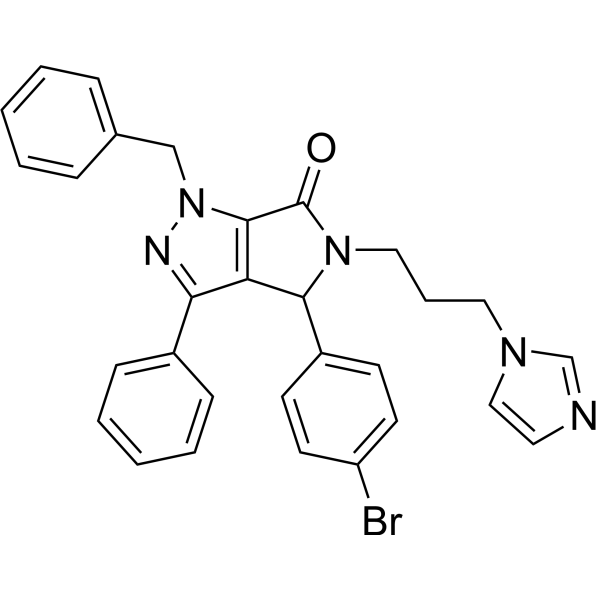 0 ImagesCat. No.: HY-116052CAS No.: 1542066-69-2p53-MDM2-IN-2 (Compound 5q) is an orally active p53-MDM2 inhibitor with a Ki value of 0.25 μM. p53-MDM2-IN-2 exerts antitumor activity by inhibiting NF-κB pathway.
-
PRDX3-IN-1
 0 ImagesCat. No.: HY-189247PRDX3-IN-1 is an orally active antagonist targeting mitochondrial PRDX3 (Kd=0.514 μM), where PRDX3 is a marker of ferroptosis. PRDX3-IN-1 causes PRDX3 inactivation and disrupts mitochondrial redox homeostasis, inducing apoptosis, ROS accumulation, and a decrease in mitochondrial membrane potential. PRDX3-IN-1 inhibits cell migration and invasion, and downregulates NF-κB and VEGF signaling pathways. PRDX3-IN-1 can be used for research on non-small cell lung cancer.
-
Fusaric acid (Standard)
 0 ImagesFusaric acid (Standard) is the analytical standard of Fusaric acid (HY-128483). This product is intended for research and analytical applications. Fusaric acid is an orally active multi-pathway inhibitor with the activity of inducing oxidative stress and apoptosis. Fusaric acid can chelate divalent metal cations, damage mitochondrial membrane structure, and activate apoptosis-related proteases such as Caspase-3/7, -8, and -9. Fusaric acid also regulates Bax/Bcl-2 protein, inhibits fibrosis-related signaling pathways such as NF-κB, TGF-β1/SMADs, and PI3K/AKT/mTOR, and reduces collagen deposition. Fusaric acid is also a dopamine β-hydroxylase inhibitor, which reduces endogenous levels of norepinephrine and epinephrine in the brain, heart, spleen, and adrenal glands. Fusaric acid can play a role in myocardial fibrosis and improve cardiac hypertrophy in heart disease, and can also be used in the study of esophageal cancer and liver cancer.
-
Anti-inflammatory agent 72
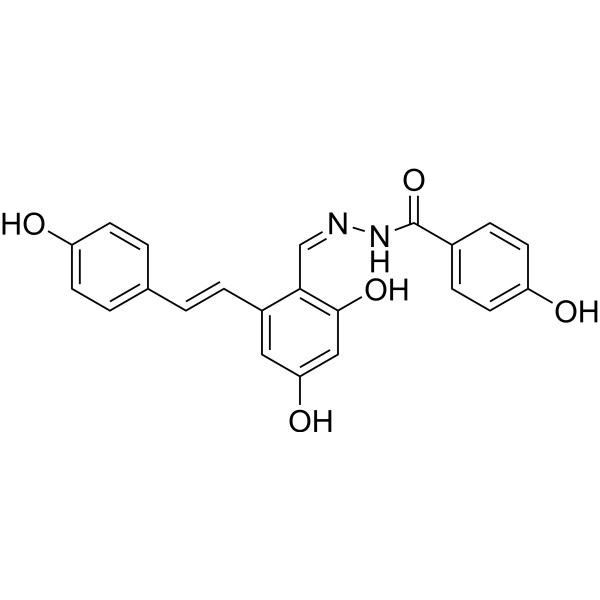 0 ImagesCat. No.: HY-162170CAS No.: 3036299-85-8Anti-inflammatory agent 72 (compound 5) is a novel resveratrol derivative hybrid with benzoylhydrazine. Anti-inflammatory agent 72 shows anti-inflammatory and antioxidant activities by activating Nrf2 and inhibiting NF-κB p65/iNOS and MAPKs signaling pathways.
-
sEH-IN-21
 0 ImagesCat. No.: HY-176554CAS No.: 3084814-46-7sEH-IN-21 is an orally active sEH inhibitor with IC50s of 0.1 nM for hsEH and msEH. sEH-IN-21 potently inhibits NF-κB signaling pathways. sEH-IN-21 shows a strong anti-inflammatory activity, decreases the release of IL-6 and TNF-α and maintained the integrity of the intestinal barrier. sEH-IN-21 can be used for the study of inflammatory bowel disease (IBD).
-
Avicularin (Standard)
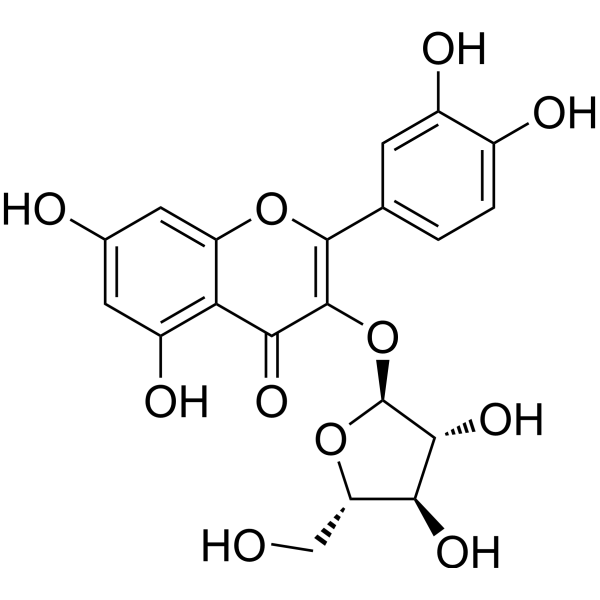 0 ImagesAvicularin (Standard) is the analytical standard of Avicularin. This product is intended for research and analytical applications. Avicularin is an orally active flavonoid. Avicularin inhibits NF-κB (p65), COX-2 and PPAR-γ activities. Avicularin has anti-inflammatory, anti-infectious anti-allergic, anti-oxidant, hepatoprotective, and anti-tumor activities.
-
OT-551
 0 ImagesCat. No.: HY-W556870CAS No.: 627085-15-8OT-551 is a NF-κB inhibitor with antioxidant and anti-inflammatory effects. OT-551 has the potential for retinal diseases research.
-
Nargenicin A1
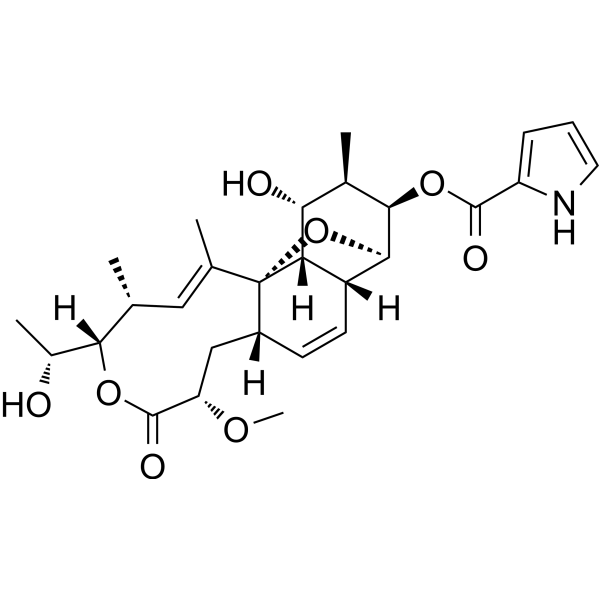 0 ImagesCat. No.: HY-123121CAS No.: 70695-02-2Nargenicin A1 is an antibiotic agent against various Gram-positive bacteria. Nargenicin A1 shows anti-inflammatory activity. Nargenicin A1 protects HINAE cells against Tacrolimus (HY-13756)-induced DNA damage and apoptosis. Nargenicin A1 can also be used for the research of acute myeloid leukemia.
-
Methoxycoronarin D
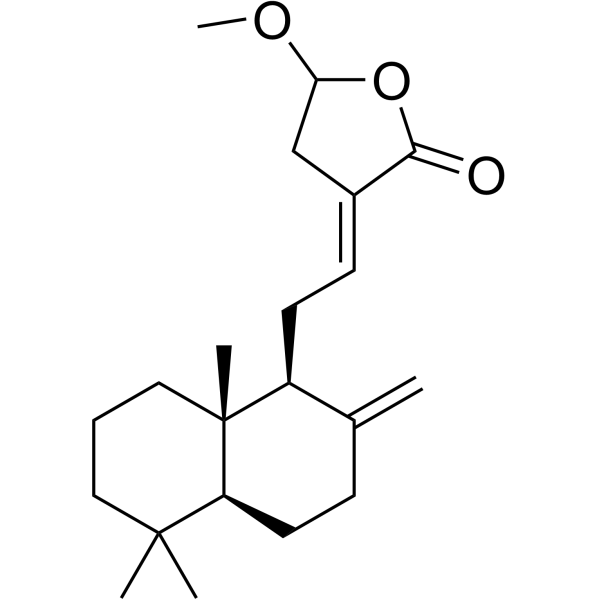 0 ImagesCat. No.: HY-N3632CAS No.: 157528-81-9Synonyms: Coronarin D Me ether
-
GABAAR/5-HT2AR modulator-1
 0 ImagesCat. No.: HY-183357CAS No.: 3128970-09-9GABAAR/5-HT2AR modulator-1 is an orally active and brain-penetrant GABAAR agonist and 5-HT2AR antagonist with Kd values of 0.89 and 0.78 μM. GABAAR/5-HT2AR modulator-1 blocks 5-HT-stimulated IP1 accumulation, inducing a chloride current, reduces LPS (HY-D1056)-induced increases of ROS, NO, TNF-α, IL-6, IL-1β, iNOS, and COX-2 levels. Antidepressant agent 11 dihydrochloride inhibits NF-κB pathway activation by reducing IκBα and p65 phosphorylation and blocking p65 nuclear translocation. GABAAR/5-HT2AR modulator-1 alleviates depression-like behaviors in LPS-challenged and chronic restraint stress-challenged mice, and protects hippocampal neurons against inflammation-mediated damage.
-
Metaxalone-d6
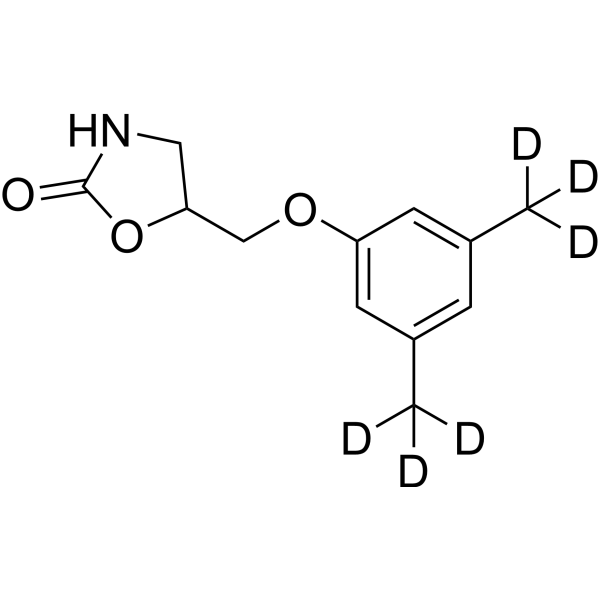 0 ImagesCat. No.: HY-B0678S1CAS No.: 1189944-95-3Synonyms: AHR438-d6; NSC170959-d6Metaxalone-d6 is deuterium labeled Metaxalone. Metaxalone (AHR438; NSC170959) is an FDA-approved muscle relaxant. Metaxalone acts mainly on the central nervous system and achieves muscle relaxation by inhibiting polysynaptic reflex arcs. In addition, Metaxalone is an inhibitor of MAO-A, which has anti-inflammatory and antioxidant effects. Metaxalone inhibits IL-1β-induced inflammatory phenotype, modulates NF-κB and other related signaling pathways, and decreases MAO-A expression and activity in IL-1β-treated microglia.
-
Articaine
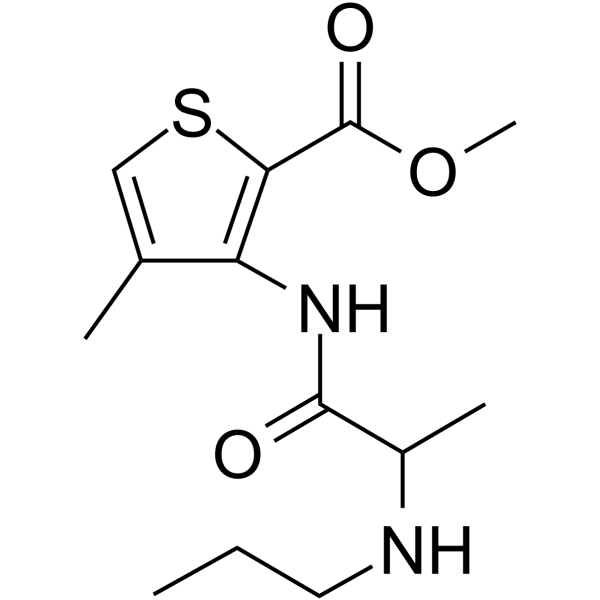 0 ImagesCat. No.: HY-B0516ACAS No.: 23964-58-1Synonyms: Hoe-045 free baseArticaine (Hoe-045) is a selective inhibitor of voltage-gated sodium channels (such as rNav1.4, hNav1.7, and rNav1.8), with an IC50 of 15.8 μM for open-state Na+ channels, and IC50 of 40.6 μM and 378 μM for inactivated and resting-state Na+ channels, respectively. Articaine exerts local anesthetic activity by inhibiting Na+ influx to block nerve impulse conduction, and can also inhibit NF-κB activation and NLRP3 inflammasome pathways, exhibiting anti-inflammatory function. Articaine can be used in the study of dental local anesthesia and inflammatory-related diseases (such as acute kidney injury).
-
5-Aminosalicylic Acid-d3 hydrochloride
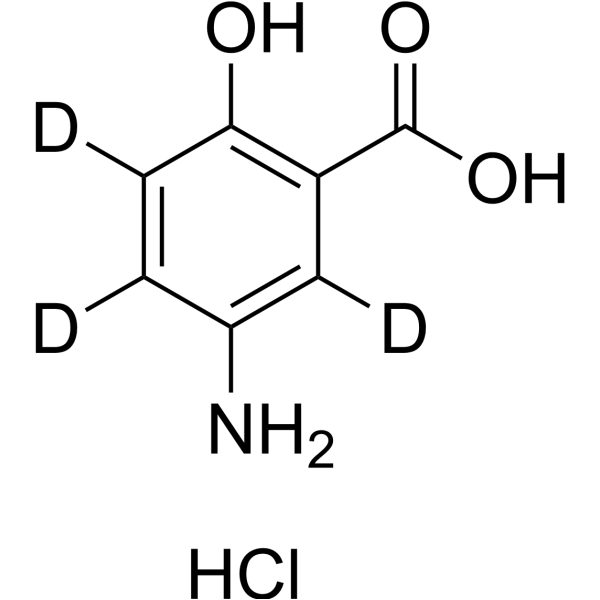 0 ImagesSynonyms: Mesalamine-D3 hydrochloride; 5-ASA-D3 hydrochloride; Mesalazine-D3 hydrochloride5-Aminosalicylic Acid-d3 (hydrochloride) is the deuterium labeled 5-Aminosalicylic Acid. 5-Aminosalicylic acid (Mesalamine) hydrochloride acts as a specific PPARγ agonist and also inhibits p21-activated kinase 1 (PAK1) and NF-κB.
-
Papiliocin
 0 ImagesCat. No.: HY-P11093Papiliocin is a potent peptide antibiotic with both anti-inflammatory and antibacterial activities. Papiliocin is primarily active against Gram-negative bacteria. Papiliocin exhibits strong anti-inflammatory activity against cell, exerting its anti-inflammatory activity by inhibiting the production of NO and the secretion of TNF-α and MIP-2. Papiliocin participates in the innate defense response mechanism by inhibiting the Toll-like receptor pathway and NF-κB. Papiliocin induces apoptosis in fungal cells and increases the total level of intracellular ROS. Papiliocin acts as an effective antiseptic peptide in sepsis models. Papiliocin is useful in anti-inflammatory and antibacterial research.
-
Antioxidant agent-5
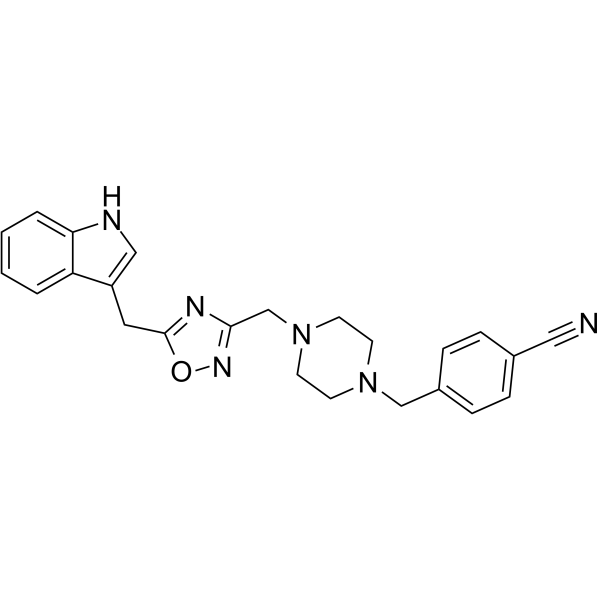 0 ImagesCat. No.: HY-143243CAS No.: 2684291-60-7Antioxidant agent-5 (compound D-6) is a potent antioxidant agent. Antioxidant agent-5 can inhibit oxLDL (oxidized low-density lipoprotein)-induced apoptosis and the expression of ICAM-1 and VCAM-1 in VECs. Antioxidant agent-5 suppresses oxLDL-induced increase of ROS level and nuclear translocation of NF-κB. Antioxidant agent-5 protects against oxLDL-induced endothelial injury by activating Nrf2/HO-1 anti-oxidation pathway.
-
Glaucine hydrobromide
 0 ImagesCat. No.: HY-W726101CAS No.: 5996-06-5Synonyms: O,O-Dimethylisoboldine hydrobromide; S-(+)-Glaucine hydrobromide; NSC 34396 hydrobromideGlaucine hydrobromide (O,O-Dimethylisoboldine hydrobromide; S-(+)-Glaucine hydrobromide; NSC 34396 hydrobromide) is an alkaloid extracted from Glaucium flavum that possesses various activities, including cough relief, bronchodilation, anti-inflammatory effects, analgesia, antipyretic properties, and anticancer effects. Glaucine hydrobromide acts as a selective and orally active inhibitor of phosphodiesterase 4 (PDE4), with a Ki of 3.4 µM in human bronchial tissues and polymorphonuclear leukocytes. Glaucine hydrobromide induces relaxation of human isolated bronchi by antagonizing calcium channels. Additionally, Glaucine hydrobromide inhibits the activation of NF-κB, leading to a reduction in the expression of the MMP-9 gene, thereby suppressing the migration and invasion of breast cancer cells. Therefore, Glaucine hydrobromide holds potential for research in asthma and breast cancer.
-
NF-κB-IN-20
 0 ImagesCat. No.: HY-175833NF-κB-IN-20 is an orally active NF-κB inhibitor. NF-κB-IN-20 directly binds to the Keap1 protein, activating the Keap1/Nrf2/HO-1 antioxidant pathway, and simultaneously inhibiting the NF-κB inflammatory pathway, thereby synergistically reducing oxidative stress and inflammatory responses. NF-κB-IN-20 M11 inhibits the expression of IL-6, IL-1β, and TNF-α, significantly reduces the level of ROS, and restores the mitochondrial membrane potential. NF-κB-IN-20 can be used for the study of acute lung injury (ALI).
-
Sodium propionate-13C2
 0 ImagesCat. No.: HY-B1773AS2CAS No.: 83587-75-1Sodium propionate-13C-2 is the 13C-labeled Propionate sodium (HY-B1773A). Sodium propionate is an orally active short-chain fatty acid. Sodium propionate can be produced by intestinal bacteria from the metabolism of dietary fiber. Sodium propionate increases PPAR-γ, inhibits NF-κB activation, and reduces COX-2 expression and NO production. Sodium propionate also induces Apoptosis and Autophagy. Sodium propionate reduces HSV-1-induced keratitis. Sodium propionate has anticancer effects against glioblastoma. Sodium propionate exhibits neuroprotective, antioxidant, and anti-inflammatory activities. Sodium propionate can be used in the research of spinal cord injury and Alzheimer's disease.
-
RIPK1-IN-32
 0 ImagesCat. No.: HY-175007RIPK1-IN-32 is a RIPK inhibitor with anti-inflammatory activity. RIPK1-IN-32 inhibits nitric oxide (NO) release with an IC50 of 3.26 μM. RIPK1-IN-32 significantly alleviates acute liver injury associated with sepsis through the RIPK1/NF-κB/MAPK pathway, therefore preventing the nuclear translocation of p65 and c-fos, which results in reduced expression of TNF-α and IL-6. RIPK1-IN-32 can be used for the study of acute liver injury and sepsis.
-
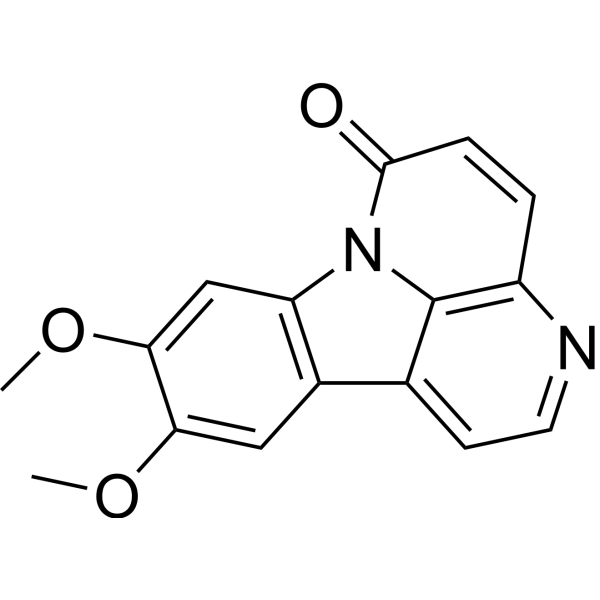
9,10-Dimethoxycanthin-6-one
 0 ImagesCat. No.: HY-N7182CAS No.: 155861-51-19,10-Dimethoxycanthin-6-one is an alkaloid compound. 9,10-Dimethoxycanthin-6-one exhibits NF-κB inhibitory effects with an IC50 of 19.5 μM.




