



PERK
Protein kinase R-like endoplasmic reticulum kinase; PKR-like endoplasmic reticulum kinase
Protein kinase R (PKR)-like endoplasmic reticulum kinase (PERK) is one of four known kinases that respond to cellular stress by deactivating the eukaryotic initiation factor 2 α (eIF2α) or other signal transduction cascades. PERK is highly expressed in pancreatic beta-cells and is essential in the beta-cell's development, differentiation and function.
PERK is a type I ER membrane protein containing a stress-sensing domain facing the ER lumen, a transmembrane segment, and a cytosolic kinase domain. Increase in unfolded proteins in the ER causes release of ER chaperones from the stress-sensing domain of PERK, which results in its activation via oligomerization and autophosphorylation at multiple serine, threonine, and tyrosine residues. Upon activation, PERK phosphorylates eIF2α at serine 51, rendering it an inhibitor of the ribosome translation initiation complex, consequently reducing overall protein synthesis. The reduction in translation reduces the ER burden, providing time for the cell to process or degrade the accumulated unfolded proteins to restore ER homeostasis. Although global protein synthesis is decreased, there is specific increased translation of certain mRNAs, such as ATF4, which modulate cellular survival pathways and enhance UPR function. Interfering with PERK function in cancer cells may limit their ability to thrive under hypoxia or nutrient deprived conditions and lead to apoptosis or tumor growth inhibition.
All Product Categories
-
PERK Related Products (221)
Related Products (221)

-
Antibodies (2)
-
Nuvrumetinib
 0 ImagesCat. No.: HY-187882CAS No.: 3079099-31-0Synonyms: PAS-004Nuvrumetinib (PAS-004) is a macrocyclic MEK inhibitor. Nuvrumetinib functionally inhibits MEK1/2, thereby suppressing pERK in tumors. Nuvrumetinib inhibits the proliferation of NRAS-mutant cancer cells. Nuvrumetinib can be used in studies related to NRASG12C-mutant solid tumors, neurofibromatosis type 1 (NF1), RASopathies and laminopathies.
-
Swerchirin
 0 ImagesSwerchirin is an orally active, plant-derived xanthone that acts as an inhibitor of the Raf/MEK/ERK signaling pathway. Swerchirin downregulates the expression of phosphorylated MEK and phosphorylated ERK, induces mitochondrial apoptosis and cell cycle arrest, regulates Bcl-2 family proteins, triggers cytochrome c release, activates caspases, and drives PARP cleavage. Swerchirin reduces blood glucose levels in rat models under fasting, fed, glucose-loaded conditions, and following treatment with Tolbutamide (HY-B0401). Swerchirin can be used in research related to ovarian cancer, liver injury, and diabetes.
-
KRAS inhibitor-40
 0 ImagesCat. No.: HY-168442CAS No.: 3059496-56-6KRAS inhibitor-40 (Compound 41) is a KRAS inhibitor that interferes with the KRAS G12C-BRAF complex. KRAS inhibitor-40 inhibits the ERK phosphorylation of KRAS downstream signaling pathway. KRAS inhibitor-40 can inhibit the proliferation of tumor cells with different KRAS mutation types and has antitumor activity.
-
FLT3/VEGFR2-IN-1
 0 ImagesCat. No.: HY-168493FLT3/VEGFR2-IN-1 (Compound 26) is a FLT3/VEGFR2/HDAC inhibitor with IC50 values of 14.5 nM, 3.9 nM, and 30.8 nM for FLT3, VEGFR2, and HDAC1, respectively. FLT3/VEGFR2-IN-1 can inhibit the phosphorylation of STAT3 and ERK1/2 and the proliferation of leukemia cells. FLT3/VEGFR2-IN-1 has anti-tumor activity and can be used for the research of acute myeloid leukemia.
-
SAIT-301
 0 ImagesCat. No.: HY-P990661SAIT-301 is a Met-targeting monoclonal antibody. SAIT-301 inhibits Met activation, induces downregulated expression of phosphorylated Met(p-Met) and phosphorylated ERK(p-ERK), and reduces EGR-1 expression. SAIT-301 inhibits the migration and invasion of nasopharyngeal carcinoma cells. SAIT-301 is applicable to relevant research on nasopharyngeal carcinoma. For the isotype control of SAIT-301, refer to Human IgG1 kappa, Isotype Control (HY-P99001).
-
PERK-IN-3
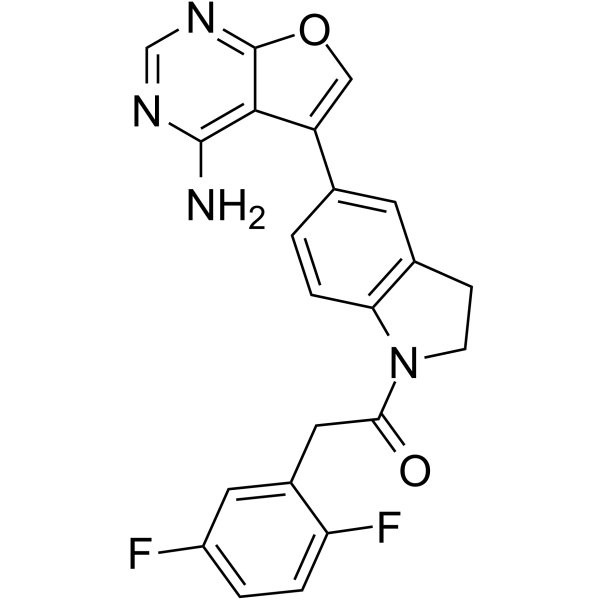 0 ImagesCat. No.: HY-130643CAS No.: 1337532-08-7PERK-IN-3 is a potent PERK inhibitor with an IC50 of 7.4 nM.
-
FGFR-IN-25
 0 ImagesCat. No.: HY-181005FGFR-IN-25 (Compound 19E) is a FGFR inhibitor (IC50s: 1.30 nM and 0.85 nM for FGFR1 and FGFR2, respectively) and radiosensitizer. FGFR-IN-25 effectively reduces the phosphorylation of FGFR1 and its key downstream effectors, pAKT and pERK. FGFR-IN-25 exerts broad-spectrum antitumor activity against gastric cancer, colorectal carcinoma, hepatocellular carcinoma, breast cancer, triple-negative breast cancer, and glioblastoma. FGFR-IN-25, when combined with radiotherapy, synergistically activates the ROS-Caspase-3-GSDME axis, downregulates PD-L1 expression, and induces immunogenic cell death (ICD). FGFR-IN-25 combined with radiotherapy improves the antitumor efficacy.
-
ONO-8130
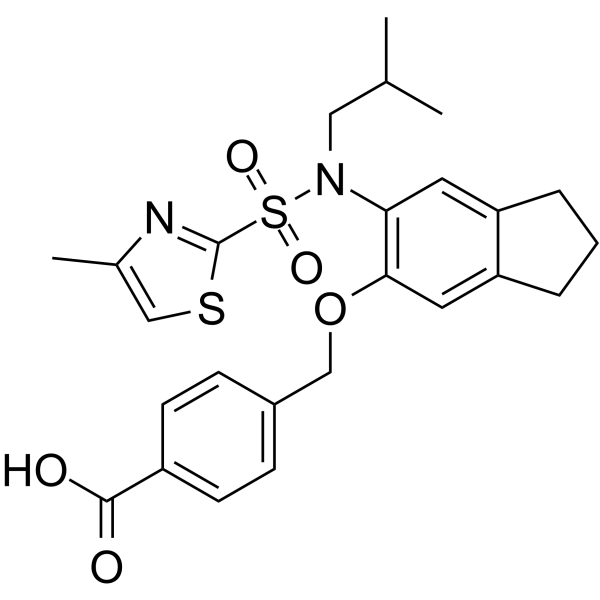 0 ImagesCat. No.: HY-110198CAS No.: 459841-96-4
-
PROTAC SOS1 degrader-1
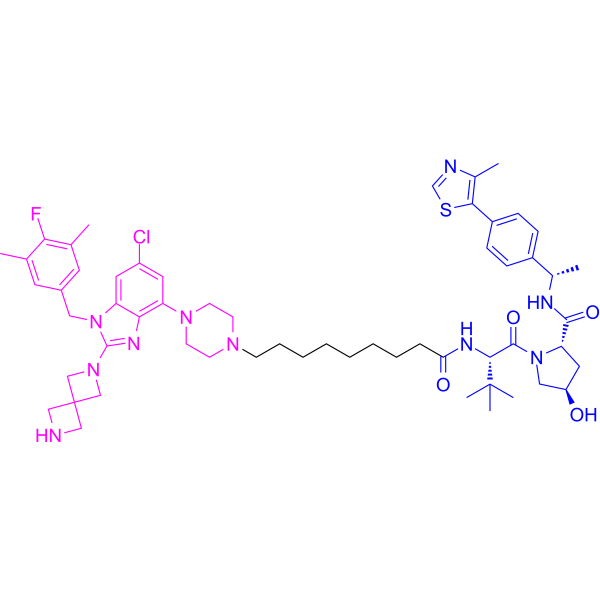 0 ImagesCat. No.: HY-145737CAS No.: 2913185-35-8PROTAC SOS1 degrader-1 is a degrader of SOS1 PROTAC, with a DC50 of 98.4 nM and a Kd value of 44 nM. PROTAC SOS1 degrader-1 induces the formation of a ternary complex with SOS1 and the VCB E3 ubiquitin ligase complex, thereby promoting the ubiquitination and proteasomal degradation of SOS1. PROTAC SOS1 degrader-1 reduces KRAS-GTP levels, inhibits the phosphorylation of ERK in the RAS-RAF-MEK-ERK pathway, and suppresses the proliferation of cancer cells carrying KRAS mutations. PROTAC SOS1 degrader-1 inhibits tumor growth in mouse xenograft models. PROTAC SOS1 degrader-1 can be used for the research of KRAS-driven cancers.
-
Milnacipran-d5 hydrochloride
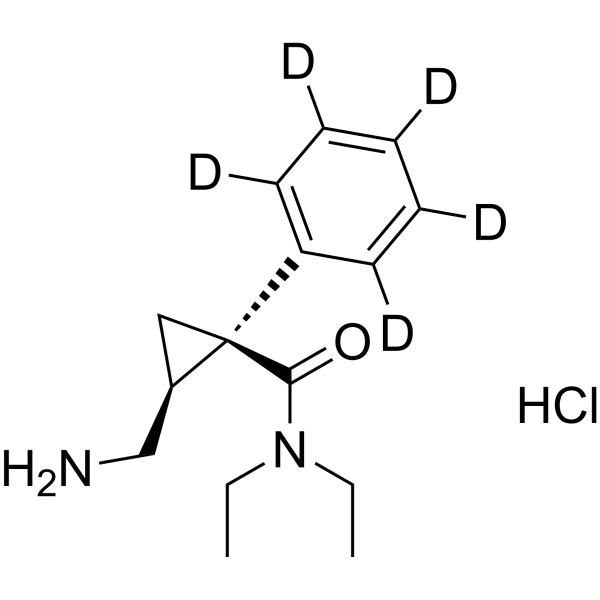 0 ImagesCat. No.: HY-B0168ASCAS No.: 2750534-79-1Milnacipran-d5 hydrochloride is deuterium labeled Milnacipran hydrochloride (HY-B0168A). Milnacipran hydrochloride is an orally active Serotonin (HY-B1473A) and Norepinephrine (HY-13715) reuptake inhibitor. Milnacipran hydrochloride inhibits monoamine transporters, especially the norepinephrine transporter and the serotonin transporter (Ki values of 31 and 8.5 nM, respectively). Milnacipran hydrochloride inhibits pERK1/2 activation. Milnacipran hydrochloride has antidepressant, anxiolytic and analgesic properties. Milnacipran hydrochloride inhibits biting behavior in mice. Milnacipran hydrochloride can be used in the study of major depressive disorder, anxiety disorders, and neuropathic pain (e.g., fibromyalgia).
-
CYB-5067
 0 ImagesCat. No.: HY-184598CYB-5067 is a FGFR molecular glue degrader with a DC50 of 27 nM against FGFR2. CYB-5067 inhibits FGFR1, FGFR3, FGFR4 and downstream FGFR signaling pathways, induces antiproliferative activity in vitro, and exhibits sustained target protein inhibition in vivo without obvious hook effect. CYB-5067 shows significant tumor growth inhibitory activity in the ETV6-FGFR2 fusion Ba/F3 xenograft model. CYB-5067 can be used for the research of FGFR-driven cancers.
-
TrxR/EGFR-IN-1
 0 ImagesCat. No.: HY-168492CAS No.: 3038386-42-1TrxR/EGFR-IN-1 is a TrxR/GFR inhibitor and a Gefitinib (HY-50895) derivative. TrxR/EGFR-IN-1 inhibits TrxR and EGFR, downregulates p‑EGFR, p‑AKT, and p‑ERK; promotes GPX4 protein degradation through dual autophagy-lysosomal and proteasomal pathways, triggering ferroptosis. TrxR/EGFR-IN-1 induces endoplasmic reticulum stress, immunogenic cell death, and apoptosis, increasing intracellular ROS and oxidative stress. TrxR/EGFR-IN-1 exhibits in vitro antiproliferative activity against both Gefitinib-sensitive and Gefitinib-resistant non-small cell lung cancer. TrxR/EGFR-IN-1 inhibits tumor growth in the PC9GR xenograft tumor model. TrxR/EGFR-IN-1 can be used for lung cancer-related research.
-
Cyanidin 3,5-diglucoside chloride (Standard)
 0 ImagesCat. No.: HY-129138RCAS No.: 2611-67-8Cyanidin 3,5-diglucoside (chloride) (Standard) is the analytical standard of Cyanidin 3,5-diglucoside (chloride) (HY-129138). This product is intended for research and analytical applications. Cyanidin 3,5-diglucoside chloride is an anthocyanin. Cyanidin 3,5-diglucoside chloride inhibits inflammatory cytokines (IL-1α, IL-1β, and IL-6) expression and NO production. Cyanidin 3,5-diglucoside chloride inhibits the phosphorylation of STAT3, IκB, ERK, p38, and AKT. Cyanidin 3,5-diglucoside chloride inhibits high pressure-induced decrease in GLAST. Cyanidin 3,5-diglucoside chloride exerts anti-inflammatory and skin barrier modulating effects. Cyanidin 3,5-diglucoside chloride can be used in retinal research.
-
BRAFV600E/ABL2-IN-1
 0 ImagesCat. No.: HY-178382BRAFV600E/ABL2-IN-1 is a BRAFV600E (IC50 = 0.088 μM)/ABL2 (IC50 = 0.3 μM) dual inhibitor. BRAFV600E/ABL2-IN-1 can diminish P-glycoprotein expression. BRAFV600E/ABL2-IN-1 effectively inhibits p-CrkL (Abl2 signaling) and p-ERK1/2 (BRAFV600E pathway) in A375-R melanoma cells. BRAFV600E/ABL2-IN-1 causes cell cycle arrest. BRAFV600E/ABL2-IN-1 significantly increases the percentage of late apoptotic cells. BRAFV600E/ABL2-IN-1 can be used for the study of melanoma.
-
Pulegone-d8
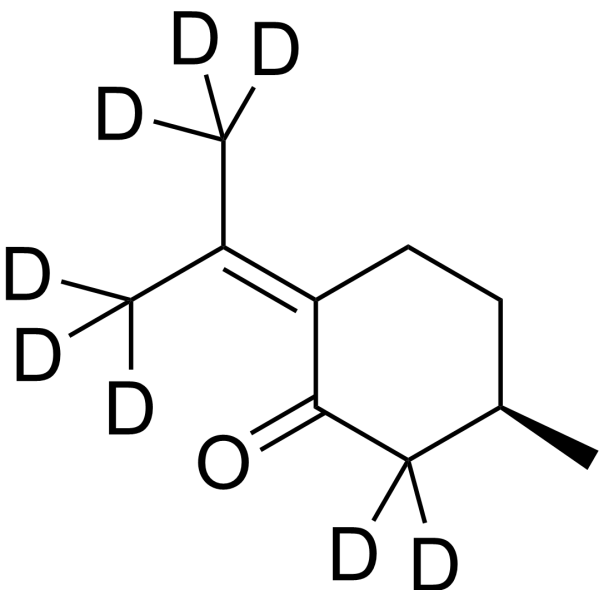 0 ImagesCat. No.: HY-N1500S1CAS No.: 62385-90-4Pulegone-d8 is deuterated labeled Pulegone (HY-N1500). Pulegone is a monoterpene ketone compound widely present in the essential oils of many plants. Pulegone can also be used as a bird repellent. Pulegone has multiple activities such as anti-inflammatory, antibacterial, antifungal, and anti-hyperalgesic effects. Pulegone is particularly effective against bacteria of the Salmonella species.
-
DPAP
 0 ImagesCat. No.: HY-182899DPAP is a p-ERK1/2 inhibitor with an IC50 of 7.85 μM against p-ERK1/2. DPAP inhibits the expression of p-MEK1/2 and disrupts the Ras-ERK signaling pathway. DPAP inhibits the expression of COX-2 in nerve cells. DPAP damages DNA and mitochondria, induces Apoptosis via the mitochondrial pathway, and upregulates PD-L1. DPAP inhibits melanoma metastasis and angiogenesis, and inactivates spinal microglia and astrocytes. DPAP exhibits anti-melanoma activity and can be combined with anti-PD-1 monoclonal antibodies to modify anti-tumor effects. DPAP is applicable for the research of melanoma.
-
(Rac)-8-Gingerol
 0 ImagesCat. No.: HY-N16557CAS No.: 77398-92-6(Rac)-8-Gingerol is a non-volatile component. (Rac)-8-Gingerol can be extracted from ginger. (Rac)-8-Gingerol enhances Apoptosis. (Rac)-8-Gingerol decreases the level of phosphorylated EGFR and, accordingly, the phosphorylation levels of its downstream effectors, STAT3 and ERK. (Rac)-8-Gingerol exhibits anticancer activity against colorectal cancer.
-
KRAS-IN-54
 0 ImagesCat. No.: HY-181704CAS No.: 3084918-70-4KRAS-IN-54 is a macrocyclic KRAS inhibitor. KRAS-IN-54 exhibits activity against cell viability and pERK inhibition in cells with KRASG12D and KRASG13D mutations. KRAS-IN-54 can be used in the research of KRAS-mutant cancers, including pancreatic adenocarcinoma, colorectal cancer, non-small cell lung cancer, esophageal cancer, gallbladder cancer, melanoma, ovarian cancer and endometrial cancer.
-
α-Neoendorphin (porcine)
 0 ImagesCat. No.: HY-P11656CAS No.: 77739-20-9α-Neoendorphin porcine is a peptide. α-Neoendorphin porcine effectively alleviates UVB-induced skin photoaging via activating mTOR-Beclin-1-mediated autophagy, reducing UVB-triggered ROS production, inhibiting the MAPK pathway and MMP activity, and promoting type I procollagen synthesis. α-Neoendorphin porcine exerts anti-aging and anti-wrinkle effects on skin cells. α-Neoendorphin porcine can be used in studies related to skin photoaging.
-
YN14 (mixture of diastereomers)
 0 ImagesCat. No.: HY-155356ACAS No.: 3053689-54-3YN14 mixture of diastereomers is a diastereomer mixture of YN14 (HY-155356). YN14 is a KRASG12C PROTAC degrader that recruits E3 ubiquitin ligase to induce the polyubiquitination and proteasomal degradation of KRASG12C. YN14 induces tumor cell apoptosis, cell cycle arrest, and cell migration inhibition. YN14 exhibits in vivo antitumor proliferative activity in tumor cell xenograft nude mice. YN14 can be used in cancer-related research.




