



PERK
Protein kinase R-like endoplasmic reticulum kinase; PKR-like endoplasmic reticulum kinase
Protein kinase R (PKR)-like endoplasmic reticulum kinase (PERK) is one of four known kinases that respond to cellular stress by deactivating the eukaryotic initiation factor 2 α (eIF2α) or other signal transduction cascades. PERK is highly expressed in pancreatic beta-cells and is essential in the beta-cell's development, differentiation and function.
PERK is a type I ER membrane protein containing a stress-sensing domain facing the ER lumen, a transmembrane segment, and a cytosolic kinase domain. Increase in unfolded proteins in the ER causes release of ER chaperones from the stress-sensing domain of PERK, which results in its activation via oligomerization and autophosphorylation at multiple serine, threonine, and tyrosine residues. Upon activation, PERK phosphorylates eIF2α at serine 51, rendering it an inhibitor of the ribosome translation initiation complex, consequently reducing overall protein synthesis. The reduction in translation reduces the ER burden, providing time for the cell to process or degrade the accumulated unfolded proteins to restore ER homeostasis. Although global protein synthesis is decreased, there is specific increased translation of certain mRNAs, such as ATF4, which modulate cellular survival pathways and enhance UPR function. Interfering with PERK function in cancer cells may limit their ability to thrive under hypoxia or nutrient deprived conditions and lead to apoptosis or tumor growth inhibition.
All Product Categories
-
PERK Related Products (221)
Related Products (221)

-
Antibodies (2)
-
α-Neoendorphin (porcine)
 0 ImagesCat. No.: HY-P11656CAS No.: 77739-20-9α-Neoendorphin porcine is a peptide. α-Neoendorphin porcine effectively alleviates UVB-induced skin photoaging via activating mTOR-Beclin-1-mediated autophagy, reducing UVB-triggered ROS production, inhibiting the MAPK pathway and MMP activity, and promoting type I procollagen synthesis. α-Neoendorphin porcine exerts anti-aging and anti-wrinkle effects on skin cells. α-Neoendorphin porcine can be used in studies related to skin photoaging.
-
YN14 (mixture of diastereomers)
 0 ImagesCat. No.: HY-155356ACAS No.: 3053689-54-3YN14 mixture of diastereomers is a diastereomer mixture of YN14 (HY-155356). YN14 is a KRASG12C PROTAC degrader that recruits E3 ubiquitin ligase to induce the polyubiquitination and proteasomal degradation of KRASG12C. YN14 induces tumor cell apoptosis, cell cycle arrest, and cell migration inhibition. YN14 exhibits in vivo antitumor proliferative activity in tumor cell xenograft nude mice. YN14 can be used in cancer-related research.
-
PROTAC SHP2 degrader-1
 0 ImagesCat. No.: HY-189468CAS No.: 3128784-74-4PROTAC SHP2 degrader-1 is a potent SHP2 PROTAC degrader with a DC50 of 7.406 μM. PROTAC SHP2 degrader-1 recruits DCAF16 E3 ligase to induce ubiquitination and proteasomal degradation of SHP2, thereby inhibiting the RAS/MAPK and PI3K/AKT/mTOR signaling pathways while simultaneously inducing IFN-γ/JAK/STAT1, apoptosis, and cell cycle arrest. PROTAC SHP2 degrader-1 can be used for cancer research.
-
HDAC6-IN-74
 0 ImagesCat. No.: HY-181579HDAC6-IN-74 is an orally active, selective histone deacetylase 6 (HDAC6) inhibitor with an IC50 of 0.036 μM. HDAC6-IN-74 induces tumor cell apoptosis, arrests cells at the S phase of the cell cycle, and impairs cell migration, invasion and colony-forming abilities. HDAC6-IN-74 exerts anticancer effects with no obvious toxicity. HDAC6-IN-74 can be used in the research of cancers such as liver cancer.
-
IBT21
 0 ImagesCat. No.: HY-134800CAS No.: 692744-81-3IBT21 is an endoplasmic reticulum stress inhibitor that binds to unfolded or misfolded proteins and prevents their aggregation. IBT21 inhibits UPR activation of the ATF6, IRE1 and PERK branches under ER stress, with IC50 values of 0.24 μM, 0.33 μM, and 0.46 μM, respectively. IBT21 protects cells from ER stress-induced death and mutant prion protein (protein toxin)-induced growth inhibition. IBT21 exhibits chemical chaperone activity distinct from UPR modulators, does not affect protein translation, moderately reduces DTT (HY-15917)-induced ER stress, and fails to inhibit the heat shock response. IBT21 is useful for research related to prion diseases.
-
L-Azetidine-2-carboxylic acid (Standard)
 0 ImagesL-Azetidine-2-carboxylic acid is a proline analog. L-Azetidine-2-carboxylic acid upregulates the lipid autophagy marker LC3-II via activation of the PERK pathway. L-Azetidine-2-carboxylic acid increases pro-apoptotic BAX protein. L-Azetidine-2-carboxylic acid induces ATF6 cleavage and upregulates phosphorylated eIF2α levels. L-Azetidine-2-carboxylic acid induces ER stress, inducing protein misfolding and aggregation. L-Azetidine-2-carboxylic acid shows teratogenic, pro-inflammatory and pro-apoptotic effects.
-
6-Methoxyflavone (Standard)
 0 ImagesCat. No.: HY-W097625RCAS No.: 26964-24-96-Methoxyflavone (Standard) is the analytical standard of 6-Methoxyflavone (HY-W097625). This product is intended for research and analytical applications. 6-Methoxyflavone is an orally active methoxyflavone. 6-Methoxyflavone suppresses neuroinflammation in microglia through the inhibition of TLR4/MyD88/p38 MAPK/NF-κB dependent pathways and the activation of HO-1/NQO-1 signaling. 6-Methoxyflavone induces S-phase arrest through the CCNA2/CDK2/p21CIP1 signaling pathway and activates the PERK/EIF2a/ATF4/CHOP pathway in HeLa cells. 6-Methoxyflavone acts as a Flumazenil (HY-B0009)-insensitive positive allosteric modulator at human recombinant α1β2γ2L and α2β2γ2L GABAα receptors. 6-Methoxyflavone inhibits NFAT Translocation into the nucleus and suppresses T cell activation. 6-Methoxyflavone partially restores chronic ethanol-induced behavioral deficits in mice. 6-Methoxyflavone antagonizes chronic constriction injury and diabetes associated neuropathic nociception expression. 6-Methoxyflavone can be used for the study of cancer, inflammation and neurological diseases.
-
DGAT-1 inhibitor 2 (Standard)
 0 ImagesCat. No.: HY-50670RCAS No.: 942999-61-3DGAT-1 inhibitor 2 (Standard) is the analytical standard of DGAT-1 inhibitor 2 (HY-50670). This product is intended for research and analytical applications. DGAT-1 inhibitor 2 is an orally active DGAT-1 inhibitor with IC50 values of 15 nM and 9 nM for human DGAT-1 and rat DGAT-1, respectively. DGAT-1 inhibitor 2 increases ROS concentration, GRP78, and PERK protein abundance. DGAT-1 inhibitor 2 increases SREBF1, CPT1A, and MTTP mRNA in fatty acid-treated cells. DGAT-1 inhibitor 2 improves obesity.
-
Benzoylpaeoniflorin (Standard)
 0 ImagesCat. No.: HY-N0852RCAS No.: 38642-49-8Benzoylpaeoniflorin (Standard) is an analytical standard for Benzoylpaeoniflorin (HY-N0852). This product is intended for research and analytical applications. Benzoylpaeoniflorin is an orally active monoterpene glycoside compound. Benzoylpaeoniflorin exerts anti-inflammatory, anti-allergic, psoriasis-improving and sepsis-improving effects by inhibiting signaling pathways such as TNF/NF-κB and MAPK, as well as regulating immune homeostasis. Benzoylpaeoniflorin can be used in research related to immune, allergic and inflammatory diseases.
-
ML291 (Standard)
 0 ImagesCat. No.: HY-101991RCAS No.: 1523437-16-2ML291 (Standard) is the analytical standard of ML291 (HY-101991). This product is intended for research and analytical applications. ML291 is a UPR (unfolded protein response)-inducing sulfonamidebenzamide. ML291 overwhelms the adaptive capacity of the UPR and induces apoptosis in a variety of solid cancer models. ML291 can activate the PERK/eIF2a/CHOP (apoptotic) arm of the UPR and reduce leukemic cell burden.
-
Lard oil
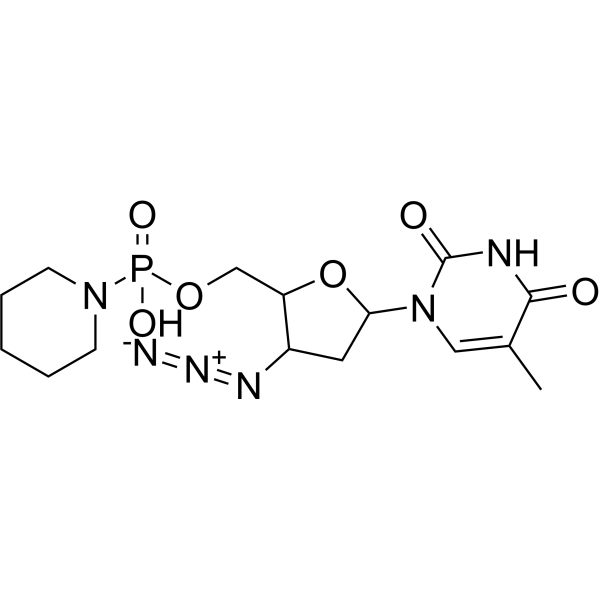 0 ImagesCat. No.: HY-W127601CAS No.: 8016-28-2Lard oil is an orally active biochemical reagent. Lard oil upregulates PERK, eIF2a, CHOP, OPN, TLR2, TLR4, TNF-α, and downregulates GRP78 and IRE1a. Lard oil induces responses such as body fat accumulation, elevated serum insulin levels, increased HOMA-IR, hepatic ectopic lipid deposition, hepatic endoplasmic reticulum stress, and hepatic inflammation. Lard oil can be used in studies related to diet-induced obesity, insulin resistance, and non-alcoholic fatty liver disease.
-
Dehydrodiisoeugenol (Standard)
 0 ImagesDehydrodiisoeugenol (Standard) is the analytical standard of Dehydrodiisoeugenol (HY-N0589). This product is intended for research and analytical applications. Dehydrodiisoeugenol is an orally active anti-inflammatory and anti-tumor agent. Dehydrodiisoeugenol inhibits the proliferation of colorectal cancer cells, and induces apoptosis, autophagy, endoplasmic reticulum stress and cell cycle arrest. Dehydrodiisoeugenol also exerts anti-inflammatory effects by inhibiting the activation of NF-κB and the expression of COX-2. Dehydrodiisoeugenol can be used in the research related to colorectal cancer, inflammatory diseases and ulcerative colitis.
-
VUBI1 (Standard)
 0 ImagesCat. No.: HY-111671RCAS No.: 2245237-53-8Synonyms: SOS1 activator 1 (Standard)VUBI1 (Standard) is the analytical standard of VUBI1 (HY-111671). This product is intended for research and analytical applications. VUBI1 (SOS1 activator 1) is a benzimidazole derivative and SOS1 activator with a Kd of 44 nM. VUBI1 can significantly activate RAS-GTP and regulate the phosphorylation of ERK. VUBI1 also can serve as a target ligand for synthesizing PROTACs, such as PROTAC SOS1 degrader-1 (HY-145737), to induce SOS1 degradation. VUBI1 can be used in the study of cancer.
-
Milnacipran-d10 hydrochloride
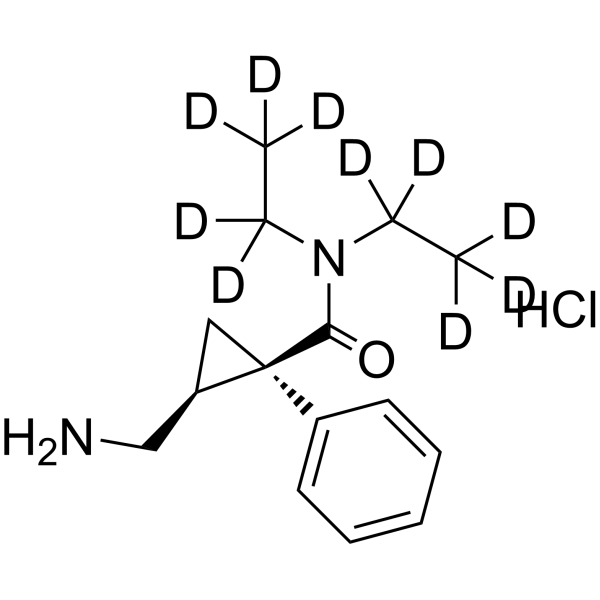 0 ImagesMilnacipran-d10 (hydrochloride) is the deuterium labeled Milnacipran hydrochloride (HY-B0168A). Milnacipran hydrochloride is an orally active Serotonin (HY-B1473A) and Norepinephrine (HY-13715) reuptake inhibitor. Milnacipran hydrochloride inhibits monoamine transporters, especially the norepinephrine transporter and the serotonin transporter (Ki values of 31 and 8.5 nM, respectively). Milnacipran hydrochloride inhibits pERK1/2 activation. Milnacipran hydrochloride has antidepressant, anxiolytic and analgesic properties. Milnacipran hydrochloride inhibits biting behavior in mice. Milnacipran hydrochloride can be used in the study of major depressive disorder, anxiety disorders, and neuropathic pain (e.g., fibromyalgia).
-
ISRIB trans-isomer (Standard)
 0 ImagesCat. No.: HY-12495RCAS No.: 1597403-47-8ISRIB (trans-isomer) (Standard) is the analytical standard of ISRIB (trans-isomer) (HY-12495). This product is intended for research and analytical applications. ISRIB (trans-isomer) is a potent inhibitor of PERK with an IC50 of 5 nM. ISRIB potently reverses the effects of eIF2α phosphorylation (IC50=5 nM).
-
O6-Benzylguanine sodium
 0 ImagesCat. No.: HY-W002585ACAS No.: 100994-97-6O6-Benzylguanine sodium is an orally active, blood-brain barrier-penetrant inhibitor of O6-methylguanine-DNA methyltransferase (MGMT/AGT). O6-Benzylguanine sodium modulates p53 and its downstream p21 and cyclins to induce cell cycle arrest and apoptosis, and on the other hand activates mTORC1/MAPK and other signaling pathways to induce cellular senescence by inhibiting intracellular MGMT. O6-Benzylguanine sodium is used in research related to various tumors, cellular senescence, and vascular smooth muscle dysfunction.
-
Pulegone (Standard)
 0 ImagesPulegone (Standard) is the analytical standard of Pulegone (HY-N1500). This product is intended for research and analytical applications. Pulegone is a monoterpene ketone compound widely present in the essential oils of many plants. Pulegone can also be used as a bird repellent. Pulegone has multiple activities such as anti-inflammatory, antibacterial, antifungal, and anti-hyperalgesic effects. Pulegone is particularly effective against bacteria of the Salmonella species.
-
2-Ethoxybenzamide (Standard)
 0 Images2-Ethoxybenzamide (Standard) is the analytical standard of 2-Ethoxybenzamide (HY-B1428). 2-Ethoxybenzamide (Ethenzamide) is a nonsteroidal anti-inflammatory agent that shows analgesic and antipyretic effects. 2-Ethoxybenzamide induces melanin synthesis via cAMP response element-binding protein (CREB) phosphorylation. 2-Ethoxybenzamide can be used in the research of hypopigmentation and inflammation-related diseases.
-
YW3-56 hydrochloride
 0 ImagesYW3-56 (hydrochloride) is a PAD inhibitor. YW3-56 (hydrochloride) activates p53 target genes. YW3-56 (hydrochloride) activates ATF and blocks autophagy flux. YW3-56 induces ER stress through the PERK-eIF2α-ATF4 signaling cascade and inhibits the mTOR signaling. YW3-56 (hydrochloride) inhibits triple-negative breast cancer.
-
Bromuconazole
 0 ImagesCat. No.: HY-W715812CAS No.: 116255-48-2Bromuconazole is a triazole fungicide with oral efficacy and blood-brain barrier permeability. Bromuconazole protects crops from various fungal contaminations. Bromuconazole exhibits cytotoxicity against a variety of cancer cells, induces G0/G1 cell cycle arrest and inhibits DNA synthesis in cancer cells, and triggers cytoskeletal structural disorder, genotoxic damage, apoptotic (apoptosis) cell death, and mitochondrial membrane depolarization. Bromuconazole activates caspase-3, induces excessive production of ROS, p53 and Bax, lipid peroxidation, increased activities of SOD and CAT, and downregulates Bcl-2. By upregulating p-ERK1/2 and p-JNK, Bromuconazole disrupts the MAPK signaling pathway, impairs the cellular stress response of human trophoblast cells and endometrial cells, and damages the implantation process. Bromuconazole is applicable to research related to glioma, colon cancer, reproductive injury (implantation dysfunction), and cardiac dysfunction.




