



PERK
Protein kinase R-like endoplasmic reticulum kinase; PKR-like endoplasmic reticulum kinase
Protein kinase R (PKR)-like endoplasmic reticulum kinase (PERK) is one of four known kinases that respond to cellular stress by deactivating the eukaryotic initiation factor 2 α (eIF2α) or other signal transduction cascades. PERK is highly expressed in pancreatic beta-cells and is essential in the beta-cell's development, differentiation and function.
PERK is a type I ER membrane protein containing a stress-sensing domain facing the ER lumen, a transmembrane segment, and a cytosolic kinase domain. Increase in unfolded proteins in the ER causes release of ER chaperones from the stress-sensing domain of PERK, which results in its activation via oligomerization and autophosphorylation at multiple serine, threonine, and tyrosine residues. Upon activation, PERK phosphorylates eIF2α at serine 51, rendering it an inhibitor of the ribosome translation initiation complex, consequently reducing overall protein synthesis. The reduction in translation reduces the ER burden, providing time for the cell to process or degrade the accumulated unfolded proteins to restore ER homeostasis. Although global protein synthesis is decreased, there is specific increased translation of certain mRNAs, such as ATF4, which modulate cellular survival pathways and enhance UPR function. Interfering with PERK function in cancer cells may limit their ability to thrive under hypoxia or nutrient deprived conditions and lead to apoptosis or tumor growth inhibition.
All Product Categories
-
PERK Related Products (221)
Related Products (221)

-
Antibodies (2)
-
Milnacipran hydrochloride (Standard)
 0 ImagesMilnacipran (hydrochloride) (Standard) is the analytical standard of Milnacipran hydrochloride (HY-B0168A). This product is intended for research and analytical applications. Milnacipran hydrochloride is an orally active Serotonin (HY-B1473A) and Norepinephrine (HY-13715) reuptake inhibitor. Milnacipran hydrochloride inhibits monoamine transporters, especially the norepinephrine transporter and the serotonin transporter (Ki values of 31 and 8.5 nM, respectively). Milnacipran hydrochloride inhibits pERK1/2 activation. Milnacipran hydrochloride has antidepressant, anxiolytic and analgesic properties. Milnacipran hydrochloride inhibits biting behavior in mice. Milnacipran hydrochloride can be used in the study of major depressive disorder, anxiety disorders, and neuropathic pain (e.g., fibromyalgia).
-
O6-Benzylguanine (Standard)
 0 ImagesO6-Benzylguanine Standard is the analytical standard of O6-Benzylguanine (HY-W002585). This product is intended for research and analytical applications. O6-Benzylguanine is an orally active, blood-brain barrier-penetrant inhibitor of O6-methylguanine-DNA methyltransferase (MGMT/AGT). O6-Benzylguanine modulates p53 and its downstream p21 and cyclins to induce cell cycle arrest and apoptosis, and on the other hand activates mTORC1/MAPK and other signaling pathways to induce cellular senescence by inhibiting intracellular MGMT. O6-Benzylguanine is used in research related to various tumors, cellular senescence, and vascular smooth muscle dysfunction.
-
FGIN 1-27 (Standard)
 0 ImagesCat. No.: HY-101059RCAS No.: 142720-24-9FGIN 1-27 (Standard) is the analytical standard of FGIN 1-27 (HY-101059). This product is intended for research and analytical applications. FGIN-1-27 is a blood-brain barrier-penetrant TSPO ligand with a Ki value of 5 nM. FGIN 1-27 inhibits PKC-β, PKA/CREB, p38/ERK MAPK, MITF, tyrosinase, TRP-1, and TRP-2, thereby inhibiting melanogenesis and pigmentation. FGIN-1-27 alleviates X-ray radiation-induced astrocyte mitochondrial hyperfunction, reduces ROS and superoxide production, inhibits excessive activation of A1-type astrocytes, downregulates GFAP and C3 protein expression, and restores astrocyte proliferative capacity. FGIN-1-27 produces anticonvulsant effects in normal mice; in diazepam-withdrawn mice, the brain MDR pathway becomes subsensitive, and the anticonvulsant activity disappears. FGIN-1-27 attenuates pigmentation in zebrafish embryos and ameliorates UVB-induced skin pigmentation in guinea pigs. FGIN-1-27 directly stimulates testicular Leydig cells while upregulating luteinizing hormone levels, causing an acute increase in serum testosterone in male rats. FGIN 1-27 can be used for research related to hyperpigmentation, epilepsy, brain injury, and other diseases.
-
Daraxonrasib (Standard)
 0 ImagesCat. No.: HY-148439RCAS No.: 2765081-21-6Synonyms: RMC-6236 (Standard); RAS-IN-2 (Standard)Daraxonrasib (Standard) is the analytical standard of Daraxonrasib (HY-148439). This product is intended for research and analytical applications. Daraxonrasib (RMC-6236) is an orally active, non-covalent RAS (ON) inhibitor. Daraxonrasib disrupts the interaction of wild-type or mutant RAS proteins with the RAS binding domain of BRAF, with EC50 values ranging from 28-220 nM for wild-type KRAS, NRAS, HRAS, and multiple oncogenic RAS variants. Daraxonrasib inhibits pERK. Daraxonrasib has anti-tumor activity against KRAS mutant tumors.
-
Osteoprotegerin
 0 ImagesCat. No.: HY-183516CAS No.: 19220-35-0Synonyms: OPGOsteoprotegerin (OPG) belongs to the tumor necrosis factor receptor (TNFR) superfamily. Osteoprotegerin blocks the RANKL-RANK interaction as well as the binding of TRAIL to its receptor. Osteoprotegerin activates NF-κB to induce the expression of ICAM-1, VCAM-1 and E-selectin, and activates the phosphorylation of ERK1/2. Osteoprotegerin regulates osteoclast activity, inhibits osteoclast maturation and formation, bone lysis and bone resorption, and increases bone mass. Osteoprotegerin regulates vascular endothelial cell function. Osteoprotegerin can be used in the research of cardio-cerebrovascular and bone-related diseases.
-
p-MPPF dihydrochloride
 0 ImagesCat. No.: HY-137111CAS No.: 223699-41-0p-MPPF dihydrochloride is a selective 5-HT antagonist that dose-dependently antagonizes the reduction of phosphorylated Erk1/2 levels in the hippocampus induced by 8-OH-DPAT (HY-112061) in rats. p-MPPF dihydrochloride can be used for neurological disease research.
-
GSK2656157 (Standard)
 0 ImagesCat. No.: HY-13820RCAS No.: 1337532-29-2GSK2656157 (Standard) is the analytical standard of GSK2656157 (HY-13820). This product is intended for research and analytical applications. GSK2656157 is a selective and ATP-competitive inhibitor of protein Kinase R (PKR)-like endoplasmic reticulum Kinase (PERK) with an IC50 of 0.9 nM.
-
SKI II hydrochloride
 0 ImagesCat. No.: HY-112364CAS No.: 1177741-83-1SKI-II hydrochloride is an orally active dual-target inhibitor of SphK1/2 and DES1, with Ki values of 16 µM and 0.3 µM against SphK1 and DES1, respectively. SKI-II hydrochloride activates the PERK-Nrf2 antioxidant pathway by stabilizing Nrf2, and synergizes with Temozolomide (HY-17364) to induce oxidative/endoplasmic reticulum stress and cancer cell death under hypoxic conditions. SKI-II hydrochloride inhibits SphK activity, promotes ceramide accumulation and apoptosis, and synergizes with Cisplatin (HY-17394) to reverse drug resistance via the ras/MAPK pathway in vivo. SKI-II hydrochloride reduces measles virus replication by inhibiting mTORC1 activity. SKI-II hydrochloride binds to VCP to induce M1 polarization, enhances host tolerance to Staphylococcus aureus infection, and exerts radioprotective effects through Nrf2 activation and accelerated DNA repair. SKI-II hydrochloride can be used in research related to glioblastoma, acute myeloid leukemia, gastric cancer, measles virus infection, Staphylococcus aureus infection, and acute radiation syndrome.
-
Rosolic acid
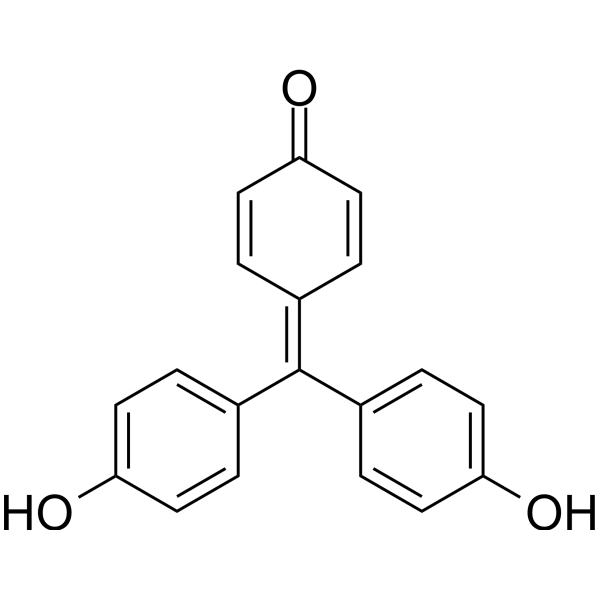 0 ImagesCat. No.: HY-W104821CAS No.: 603-45-2Rosolic acid is a Michael acceptor molecule isolated from the rhizomes of Plantago asiatica L. Rosolic acid inhibits Keap1, promotes Nrf2 nuclear translocation, and upregulates HO-1 and NQO-1. Rosolic acid reduces ER stress markers PERK, ATF-6, GRP78, and CHOP, as well as oxidative stress, ROS production, inflammation, and apoptosis. Rosolic acid upregulates SOD, CAT, and GPx activities, induces angiogenesis and insulin secretion, and restores endothelial function and pancreatic beta cell protection under ER stress. Rosolic acid can be used in research on diabetes and endothelial dysfunction.
-
CInQ-03
 0 ImagesCat. No.: HY-130453CAS No.: 500272-80-0CInQ-03 is an allosteric inhibitor of MEK1/2, with IC50 values of 5 μM and 10 μM against MEK1 and MEK2, respectively. CInQ-03 inhibits the kinase activity of MEK1/2 and reduces the phosphorylation levels of downstream ERK1/2 and RSK. CInQ-03 suppresses both anchorage-dependent and anchorage-independent growth of colon cancer cells, the activity of AP-1 reporter gene in colon cancer cells, as well as EGF-induced growth, transformation and AP-1 reporter gene activity in HaCaT keratinocytes. CInQ-03 can be used in studies related to colon cancer.

-
Carbocisteine-13C3-1
 0 ImagesCat. No.: HY-D0205AS1CAS No.: 1391068-19-1Synonyms: Carbocysteine-13C3-1Carbocisteine-13C3-1 (Carbocysteine-13C3-1) is 13C labeled Carbocisteine. Carbocisteine is an orally active mucolytic agent. Carbocisteine attenuates the phosphorylation of NF-κB p65 and ERK1/2. Carbocisteine modulates Nrf2/HO-1 and NFκB interplay. Carbocisteine inhibits Apoptosis. Carbocisteine is used in chronic obstructive pulmonary disease (COPD) research.
-
GSK2606414 (Standard)
 0 ImagesCat. No.: HY-18072RCAS No.: 1337531-36-8GSK2606414 (Standard) is the analytical standard of GSK2606414 (HY-18072). This product is intended for research and analytical applications. GSK2606414 is a cell-permeable and orally available protein Kinase R-like endoplasmic reticulum (ER) Kinase (PERK) inhibitor with an IC50 of 0.4 nM.
-
Flurochloridone (Standard)
 0 ImagesCat. No.: HY-121337RCAS No.: 61213-25-0Synonyms: R-40244 (Standard)Flurochloridone (Standard) (R-40244 (Standard)) is the analytical standard of Flurochloridone (HY-121337). This product is intended for research and analytical applications. Flurochloridone (R-40244) is an orally active herbicide and an inducer of ER stress, apoptosis, and cytotoxicity. Flurochloridone upregulates GRP78 and activates the PERK-eIF2α-ATF4 UPR axis, ATF6, CHOP, Bax, and Bim. Flurochloridone decreases Akt, p-Akt, GSK3β, and p-GSK3β levels, and induces ROS, oxidative stress, γ-glutamyl cycle activation, and GSH accumulation. Flurochloridone inhibits mitochondrial respiration and ATP production while enhancing glycolysis and cell viability inhibition. Flurochloridone inhibits spermatogonial proliferation, spermatocyte meiosis, and sperm mitochondrial membrane potential, and induces Sertoli cell apoptosis and mitochondrial damage. Flurochloridone non-competitively binds phytoene desaturase, blocking phytoene desaturation and carotenoid synthesis, leading to leaf bleaching and phytotoxicity. Flurochloridone can be used for research on male reproductive toxicity, hepatotoxicity, and as a herbicide.
-
AD-35 free base
 0 ImagesCat. No.: HY-117710ACAS No.: 1531586-58-9AD-35 free base is an orally active, blood-brain barrier-permeable acetylcholinesterase inhibitor with an IC50 of 793 nM. AD-35 free base inhibits metal-induced amyloid-β aggregation and disassembles preformed amyloid-β aggregates. In rat models of cognitive impairment, AD-35 free base attenuates Aβ25-35-induced astrocyte activation, TNF-α and IL-1β release, inhibits ERK phosphorylation, and alleviates learning and memory deficits. AD-35 free base can be used for research on Alzheimer's disease.
-
1,2,4-Trihydroxybenzene (Standard)
 0 ImagesSynonyms: Hydroxyhydroquinone (Standard)1,2,4-Trihydroxybenzene (Hydroxyhydroquinone) (Standard) is the analytical standard of 1,2,4-Trihydroxybenzene (HY-W010451). This product is intended for research and analytical applications. 1,2,4-Trihydroxybenzene (Hydroxyhydroquinone) is an ER stress inducer that targets proteins such as PKR-like ER kinase PERK to induce cytotoxicity. 1,2,4-Trihydroxybenzene selectively activates eIF2α phosphorylation, activates the PERK-eIF2α signaling pathway and induces stress granule formation. 1,2,4-Trihydroxybenzene subsequently exacerbates oxidative stress and causes DNA double-strand breaks, destroying organelles such as mitochondria and ER, and inducing cell death. 1,2,4-Trihydroxybenzene also has the potential to exhibit anti-tumor effect, increase blood pressure, and relieve spasm.
-
p-MPPF
 0 ImagesCat. No.: HY-137111ACAS No.: 155204-26-5p-MPPF is a selective 5-HT antagonist that dose-dependently antagonizes the reduction of phosphorylated Erk1/2 levels in the hippocampus induced by 8-OH-DPAT (HY-112061) in rats. p-MPPF can be used for neurological disease research.
-
Saponarin (Standard)
 0 ImagesCat. No.: HY-N5083RCAS No.: 20310-89-8Saponarin (Standard) is the analytical standard of Saponarin (HY-N5083). This product is intended for research and analytical applications. Saponarin is an orally active flavonoid compound. Saponarin can be isolated from Gypsophila trichotoma. Saponarin inhibits ERK/p38, NF-κB and MAPK phosphorylation and activates AMPK. Saponarin reduces IL-1β and COX-2. Saponarin has antioxidant, anti-inflammatory, hepatoprotective, hypoglycemic and hypotensive effects. Saponarin improves sleep disorders.
-
Vindoline (Standard)
 0 ImagesVindoline (Standard) is an analytical standard of Vindoline (HY-N0687). This product is intended for research and analytical applications. Vindoline is an orally active vinca alkaloid. Vindoline can be extracted from the leaves of Catharanthus roseus. Vindoline has a weak inhibitory effect on the self-assembly of tubulin. Vindoline alleviates Apoptosis, inhibits p-p65 and p-ERK. Vindoline improves diabetes, bone loss, osteoarthritis, and kidney damage.
-
Sinapaldehyde (Standard)
 0 ImagesSinapaldehyde is a methoxyphenol and a selective COX-2 inhibitor (IC50: 47.8 µM) that can be extracted from various plants. Sinapaldehyde has antibacterial, anti-inflammatory, and antioxidant activities. Sinapaldehyde can scavenge DPPH free radicals (IC50: 172 μM). Sinapaldehyde is active against both Gram-negative and Gram-positive bacteria.




