



Reactive Oxygen Species (ROS)
Reactive oxygen species (ROS), such as superoxide anion (O2-), hydrogen peroxide (H2O2), and hydroxyl radical (HO•), consist of radical and non-radical oxygen species formed by the partial reduction of oxygen. Cellular ROS are generated endogenously during mitochondrial oxidative metabolism as well as in cellular response to xenobiotics, cytokines, and bacterial invasion.
ROS also activates MAPK pathways by the direct inhibition of MAPK phosphatases. Through PTEN, the PI3K pathway is subject to reversible redox regulation by ROS generated by growth factor stimulation. The activation of autophagy may be a cellular defense mechanism in response to ROS.
All Product Categories
-
Reactive Oxygen Species (ROS) Inhibitors
(1091)
View all products
-
Reactive Oxygen Species (ROS) Agonists
(37)
View all products
-
Reactive Oxygen Species (ROS) Antagonists
(2)
View all products
-
Reactive Oxygen Species (ROS) Activators
(525)
View all products
-
Reactive Oxygen Species (ROS) Modulators
(22)
View all products
-
Reactive Oxygen Species (ROS) MDM2 Inhibitor
(1)
View all products
-
Reactive Oxygen Species (ROS) Inducers
(645)
View all products
-
Reactive Oxygen Species (ROS) Controls
(5)
View all products
-
Reactive Oxygen Species (ROS) Substrates
(3)
View all products
-
Reactive Oxygen Species (ROS) Related Products (2859)
Related Products (2859)

-
Antibodies (8)
-
BuChE-IN-20
 0 ImagesCat. No.: HY-172782BuChE-IN-20 is a selective butyrylcholinesterase (hBuChE) inhibitor (IC50 = 0.13 μM) with BBB permeability. BuChE-IN-20 is a L-Tryptophan derivative. BuChE-IN-20 possesses neuroprotective properties by inhibiting the production of nitric oxide (NO) and lowering the levels of ROS. BuChE-IN-20 is proficient in inhibiting the self-aggregation of amyloid-beta (Aβ) peptides. BuChE-IN-20 can be used in research for Alzheimer’s disease.
-
3-O-Caffeoyl-5-O-feruloylquinic acid
 0 ImagesCat. No.: HY-N17779CAS No.: 173658-86-13-O-Caffeoyl-5-O-feruloylquinic acid is a quinic acid-based phenolic compound that can be isolated from Eryngium bourgatii. 3-O-Caffeoyl-5-O-feruloylquinic acid regulates free radical scavenging and inflammatory pathways, exerting antioxidant activity through electron transfer and hydrogen atom transfer mechanisms. It also inhibits TNF-α-induced reactive oxygen species (ROS) production and the production of monocyte chemoattractant protein-1 (MCP-1) and its transcripts in human umbilical vein endothelial cells (HUVECs).
-
R24
 0 ImagesCat. No.: HY-116135CAS No.: 151417-66-2R24 is a type of flavonoid derivative. R24 exhibits strong anti-angiogenic and anti-proliferative effects. R24 induces cell apoptosis and promotes the production of reactive oxygen species (ROS). R24 can be used for the study of cancers such as lung cancer and colorectal cancer.
-
L-Ascorbic acid-13C-4
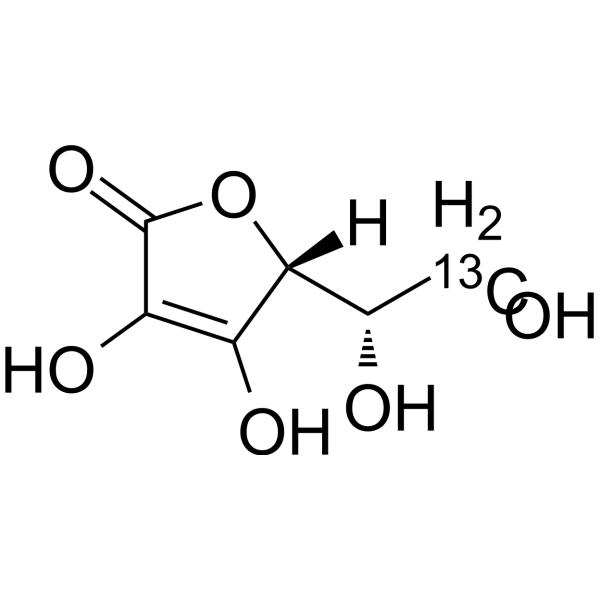 0 ImagesCat. No.: HY-B0166S5CAS No.: 149153-08-2Synonyms: L-Ascorbate-13C-4; Vitamin C-13C-4L-Ascorbic acid-13C-4 is the 13C labeled L-Ascorbic acid. L-Ascorbic acid (L-Ascorbate), an electron donor, is an endogenous antioxidant agent. L-Ascorbic acid inhibits selectively Cav3.2 channels with an IC50 of 6.5 μM. L-Ascorbic acid is also a collag
-
GK-136901
 0 ImagesCat. No.: HY-124487CAS No.: 1062624-71-8GK-136901 is an orally active, dual Nox1/Nox4 NADPH oxidase inhibitor with a Ki of 160 nM for Nox1 and 165 nM for Nox4. GK-136901 potently blocks high glucose-induced intracellular reactive oxygen species production, p38-MAPK phosphorylation, and upregulation of TGF-β1/2 and fibronectin (fibronectin) in renal cells. GK-136901 also inhibits the proliferation of mouse pulmonary vascular cells under hypoxic conditions. GK-136901 is applicable to the research on the pathogenesis of type 2 diabetic nephropathy, high glucose-related renal lesions and pulmonary hypertension.
-
Diuron (Standard)
 0 ImagesDiuron (Standard) is the analytical standard of Diuron (HY-B0860). This product is intended for research and analytical applications. Diuron is an orally active phenylurea herbicide. Diuron inhibits photosynthesis in plants by blocking the formation of ATP and NADH. Diuron increases the production of ROS. Diuron increases expression of p53 in certain cell lines. Diuron has herbicidal activity against annual and perennial broadleaf weeds and grass weeds. Diuron promotes DMBA/BBN-induced bladder cancer. Diuron can be used in breast cancer research.
-
HNGF6A
 0 ImagesCat. No.: HY-P1184CAS No.: 1093111-54-6HNGF6A is a humanin analogue. HNGF6A increases glucose-stimulated insulin secretion and glucose metabolism, and has the potential for diabetes research. HNGF6A inhibits of ROS production during oxidative stress. HNGF6A can prevent endothelial dysfunction and atherosclerosis in vivo.
-
ISAM-CG557
 0 ImagesCat. No.: HY-175666ISAM-CG557 is a selective CB2R agonist, with a Ki of 54.6 nM. ISAM-CG557 reduces intracellular ROS levels and caspase activity. ISAM-CG557 exhibits significant MAPK bias and moderate G-protein bias, with CB2R EC50s of 0.60 nM (cAMP), 60.9 nM (β-arrestin) and 0.03 nM (MAPK). ISAM-CG557 exerts potent anti-inflammatory effects by reducing pro-inflammatory cytokines and increasing anti-inflammatory cytokines in cells. ISAM-CG557 can be used for the study of neuroinflammatory and neurodegenerative disorders.
-
Exserohilone
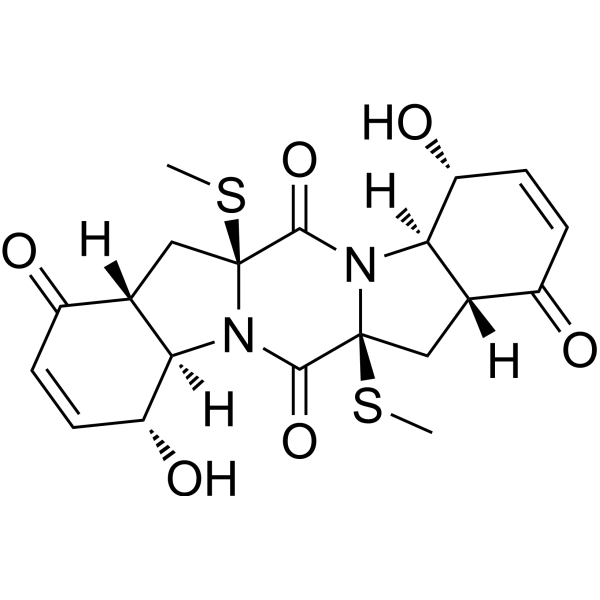 0 ImagesCat. No.: HY-N12653CAS No.: 99572-22-2Synonyms: (-)-ExserohiloneExserohilone ((-)-Exserohilone) is a thiodiketopiperazine derivative that exhibits the inhibition of TNF-α-induced ROS generation and MMP-1 secretion. Exserohilone increases the procollagen type I α1 secretion in human dermal fibroblasts.
-
ZnPc-amide-PEG3-C2-NH2
 0 ImagesCat. No.: HY-176726ZnPc-amide-PEG3-C2-NH2 is a photosensitizer-linker conjugate which consists of ZnPcPs (HY-176725) and a linker (HY-W040165). ZnPc-amide-PEG3-C2-NH2 can be used to synthesize the photo-activated BRD4 degrader pZnPc-O3-JQ1 (HY-176724).
-
Myr-Tat-PKCβII
 0 ImagesCat. No.: HY-P10821Myr-Tat-PKCβII is a cell permeable protein kinase C β II peptide inhibitor. Myr-Tat-PKCβII mitigates the generation of reactive oxygen species in rat ex-vivo and porcine in-vivo ischemia-reperfusion injury.
-
Methyllycaconitine
 0 ImagesCat. No.: HY-N2332CAS No.: 21019-30-7Synonyms: MLAMethyllycaconitine (MLA) is a blood-brain barrier-permeable antagonist of α7 nicotinic acetylcholine receptor (α7nAChR) with an IC50 of 2 nM. Methyllycaconitine inhibits Aβ25-35-induced autophagy by restoring the mTOR pathway, and prevents reactive oxygen species (ROS) production, microglial activation, reduced dopamine uptake, loss of dopaminergic terminals and catecholamine secretion. Methyllycaconitine induces hippocampal glutamate efflux, enhances long-term potentiation, and improves memory acquisition. Methyllycaconitine can be used in research related to Alzheimer's disease, cerebral palsy, Parkinson's disease and schizophrenia.
-
Cyclocommunol
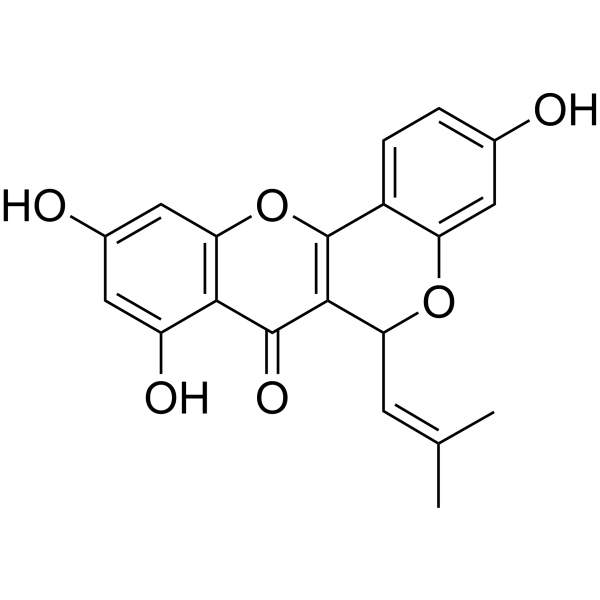 0 ImagesCat. No.: HY-N3665CAS No.: 145643-96-5Cyclocommunol is a GST inhibitor with an IC50 of 3.0 μM. Cyclocommunol downregulates the expression of the anti-apoptotic (apoptosis) protein Mcl-1, reduces the levels of phosphorylated Akt and mTOR, and induces caspase-dependent apoptosis, reactive oxygen species (ROS) production and autophagy. Cyclocommunol can be used in research related to oral squamous cell carcinoma, breast cancer, lung cancer, norovirus-induced gastroenteritis and bacterial infections.
-
Antiproliferative agent-26
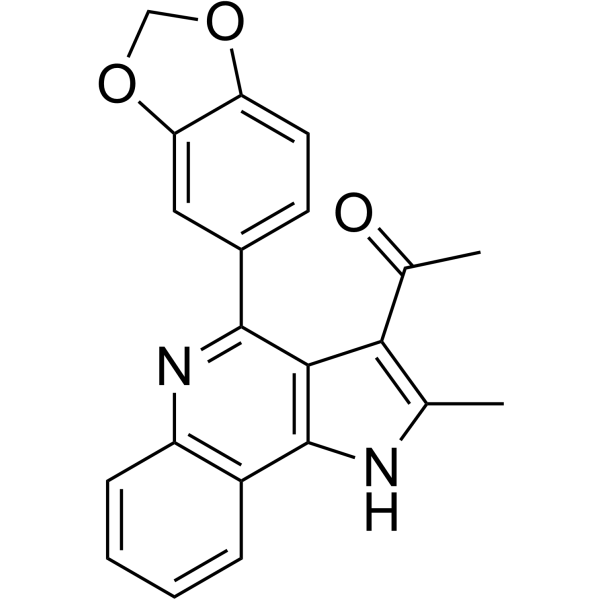 0 ImagesCat. No.: HY-155055CAS No.: 3049662-97-4Antiproliferative agent-26 (compound 4g) is an antiproliferative agent with much broad range of activity targeting Leukemia, CNS, Melanoma, Renal and Breast (at the concentration of 10 μM). Antiproliferative agent-26 inhibits colony forming and arrests cell cycle at G1 phase/S phase at 5 μM and 25 μM, respectively.
-
GPX4-IN-23
 0 ImagesCat. No.: HY-182072GPX4-IN-23 (Compound 3e) is a GPX4 inhibitor with an IC50 of 0.27 μM. GPX4-IN-23 induces Ferroptosis by enhancing lipid peroxidation, ROS production, and intracellular GSH depletion. GPX4-IN-23 exhibits antiproliferative activity against central nervous system cancer cells. GPX4-IN-23 can be used in studies related to central nervous system cancers.
-
GPX4 degrader-1
 0 ImagesCat. No.: HY-181598CAS No.: 3057531-85-5GPX4 degrader-1 (Compound RS-1) is a hydrophobic tagging (HyT)-mediated GPX4 degrader (DC50: 8.9 nM in HT1080 cells) GPX4 degrader-1 induces GPX4 degradation. GPX4 degrader-1 induces Ferroptosis. GPX4 degrader-1 increases lipid ROS. GPX4 degrader-1 demonstrates potent antitumor efficacy in a murine mammary carcinoma model.
-
Cartap hydrochloride
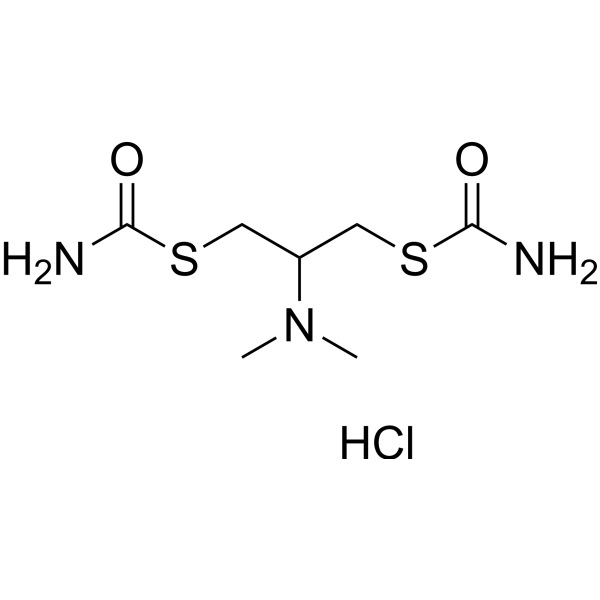 0 ImagesCat. No.: HY-W040028CAS No.: 15263-52-2Cartap hydrochloride, an organonitrogen insecticide, can cause a marked irreversible Ca2+-dependent contracture in both isolated mouse and rabbit phrenic nerve-diaphragms. Cartap hydrochloride significantly increases the level of endogenous reactive oxygen species (ROS) in C2C12 cells.
-
Elsinochrome C
 0 ImagesCat. No.: HY-N16417CAS No.: 24512-87-6Elsinochrome C is a photosensitizer. Elsinochrome C relies on light activation to generate reactive oxygen species (ROS) such as singlet oxygen (1O2), inducing apoptosis or directly disrupting pathogen structures. Elsinochrome C is promising for research of skin cancers, HIV-associated infections, and refractory skin diseases.
-
Leteprinim
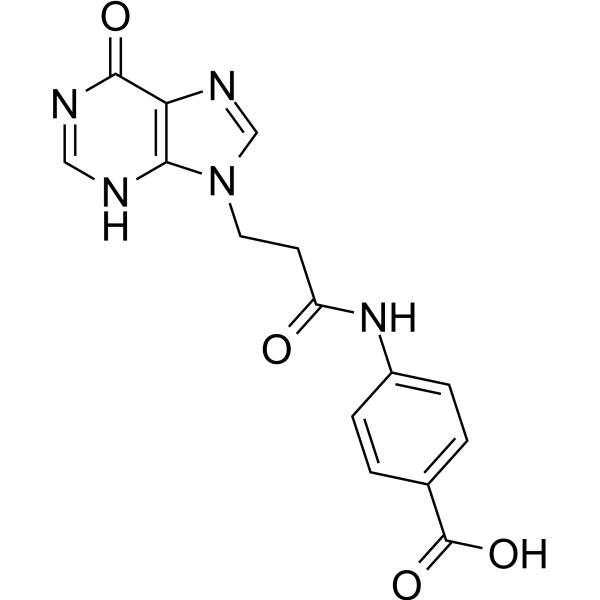 0 ImagesCat. No.: HY-120251CAS No.: 138117-50-7Synonyms: AIT-082 free acidLeteprinim (AIT-082 free acid), a purine analog, is a neuroprotective agent and cognitive enhancer. Leteprinim is a hypoxanthine derivative neurotrophic agent. Leteprinim can induce brain-derived neurotrophic factor (BDNF) mRNA production following spinal cord lesions, and nerve growth factor (NGF) mRNA production in basal forebrain. Leteprinim reduces glutamate toxicity in cultured hippocampal neurons. Leteprinim increases heme-oxygenase 1 and 2 mRNA levels that play role in cellular defense against reactive oxygen species.
-
L-Cystine disodium monohydrate
 0 ImagesCat. No.: HY-W772717CAS No.: 199329-53-8L-Cystine disodium monohydrate is an orally active extracellular form of L-Cysteine (HY-Y0337), occurring in proteins of plants and animals. L-Cystine disodium monohydrate elevates Nrf2 protein expression and activates Nrf2 transcription factor. L-Cystine disodium monohydrate reduces ROS generation and protects against oxidant- or Doxorubicin (HY-15142A)-induced apoptosis. L-Cystine disodium monohydrate combined with L-theanine (HY-15121) enhances the production of antigen-specific IgG by increasing glutathione (GSH) levels and T helper 2 (Th2) mediated responses in mice. L-Cystine disodium monohydrate is promising for research of cystinuria and kidney stones.




