



Reactive Oxygen Species (ROS)
Reactive oxygen species (ROS), such as superoxide anion (O2-), hydrogen peroxide (H2O2), and hydroxyl radical (HO•), consist of radical and non-radical oxygen species formed by the partial reduction of oxygen. Cellular ROS are generated endogenously during mitochondrial oxidative metabolism as well as in cellular response to xenobiotics, cytokines, and bacterial invasion.
ROS also activates MAPK pathways by the direct inhibition of MAPK phosphatases. Through PTEN, the PI3K pathway is subject to reversible redox regulation by ROS generated by growth factor stimulation. The activation of autophagy may be a cellular defense mechanism in response to ROS.
All Product Categories
-
Reactive Oxygen Species (ROS) Inhibitors
(1091)
View all products
-
Reactive Oxygen Species (ROS) Agonists
(37)
View all products
-
Reactive Oxygen Species (ROS) Antagonists
(2)
View all products
-
Reactive Oxygen Species (ROS) Activators
(525)
View all products
-
Reactive Oxygen Species (ROS) Modulators
(22)
View all products
-
Reactive Oxygen Species (ROS) MDM2 Inhibitor
(1)
View all products
-
Reactive Oxygen Species (ROS) Inducers
(645)
View all products
-
Reactive Oxygen Species (ROS) Controls
(5)
View all products
-
Reactive Oxygen Species (ROS) Substrates
(3)
View all products
-
Reactive Oxygen Species (ROS) Related Products (2859)
Related Products (2859)

-
Antibodies (8)
-
L-Ornithine-1,2-13C2 hydrochloride
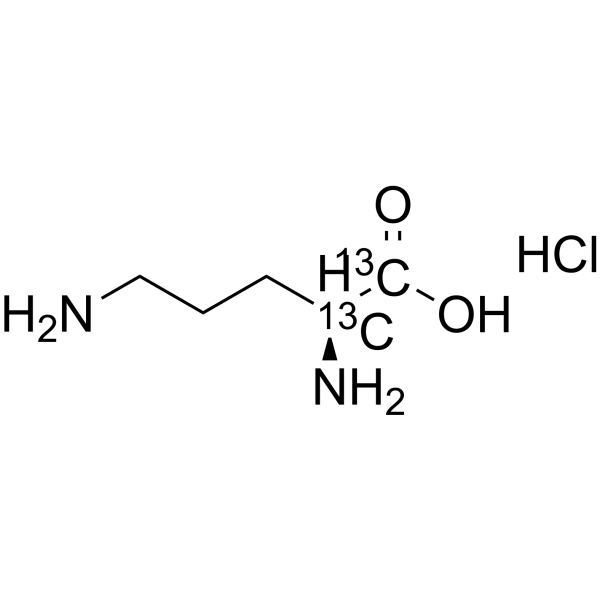 0 ImagesCat. No.: HY-W017018S1CAS No.: 224054-19-7L-Ornithine-1,2-13C2 hydrochloride is the 13C-labeled L-Ornithine hydrochloride (HY-W017018). L-Ornithine hydrochloride is an orally active CaSR and p38 activator. L-Ornithine hydrochloride inhibits ROS and supports urea cycle function. L-Ornithine hydrochloride can be used to study kidney diseases involving proximal tubular cell damage caused by oxidative stress or crystallopathy, as well as research related to anxiety disorders.
-
LQB-118
 0 ImagesCat. No.: HY-124068CAS No.: 1219104-20-7LQB-118 is an orally active compound derived from sandalwood. LQB-118 can inhibit the migration of glioblastoma cells and induce cell death. LQB-118 can suppress the migration and invasion of prostate cancer cells by regulating the AKT/GSK3β pathway and the expression of the MMP-9/reck genes. LQB-118 can also inhibit yeast polysaccharide-induced inflammation both in vivo and in vitro. Additionally, LQB-118 selectively induces ROS-triggered and mitochondrial-dependent apoptosis in Leishmania amazonensis. LQB-118 can be used in studies related to inflammation, infections, and cancer diseases.
-
trans-2-Decenal (Standard)
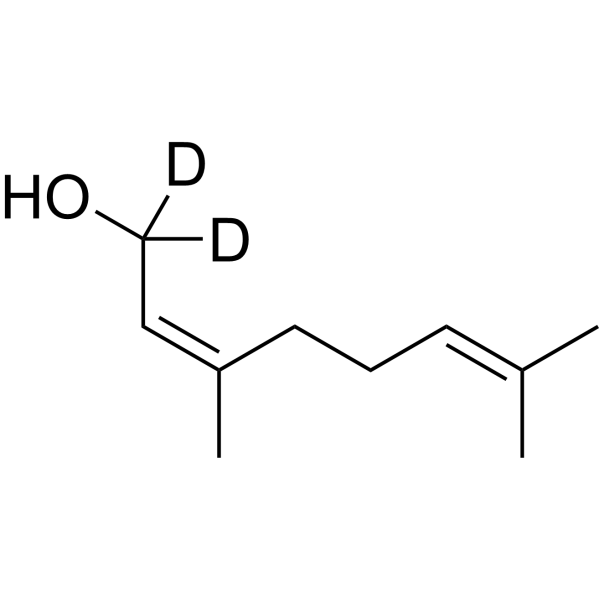
 0 ImagesCat. No.: HY-W015551RCAS No.: 3913-81-3Synonyms: (E)-Dec-2-enal (Standard)trans-2-Decenal ((E)-Dec-2-enal)) Standard is the analytical standard of trans-2-Decenal (HY-W015551). This product is intended for research and analytical applications. trans-2-Decenal ((E)-Dec-2-enal) acts as a urease inhibitor and antibacterial agent against Helicobacter pylori, with an IC50 of 9.484 μg/mL against Helicobacter pylori urease. trans-2-Decenal reduces the urease activity of Helicobacter pylori, and possesses antibacterial, bactericidal, anti-biofilm and anti-migratory activities. It alters the morphology of Helicobacter pylori, induces bacterial rupture, inhibits biofilm formation, reduces the number of mature biofilms and impairs the migratory capacity of Helicobacter pylori. trans-2-Decenal disrupts the cell wall integrity of Phytophthora capsici, damages membrane integrity and permeability, triggers intracellular reactive oxygen species (ROS) accumulation, decreases glutathione levels and disrupts the mitochondrial membrane potential of Phytophthora capsici. trans-2-Decenal is applicable to studies related to Helicobacter pylori and plant diseases induced by and Phytophthora capsici.
-
Simvastatin acid ammonium (Standard)
 0 ImagesSynonyms: Tenivastatin ammonium (Standard)Simvastatin acid (ammonium) (Standard) is the analytical standard of Simvastatin acid (ammonium). This product is intended for research and analytical applications. Simvastatin acid (Tenivastatin) ammonium is a potent HMG-CoA reductase (HMGCR) inhibitor. Simvastatin acid ammonium reduces Indoxyl sulfate-mediated reactive oxygen species (ROS) production in human cardiomyocytes. Simvastatin acid ammonium can also modulates OATP3A1 expression in cardiomyocytes and HEK293 cells transfected with the OATP3A1 gene.
-
Antibacterial agent 326
 0 ImagesCat. No.: HY-181686Antibacterial agent 326 is a bactericide that inhibits the growth of various bacterial strains. Antibacterial agent 326 inhibits biofilm formation in Escherichia coli, disrupts bacterial cell membranes, induces oxidative stress and lipid peroxidation in Escherichia coli, increases ROS levels, and reduces GSH activity. Antibacterial agent 326 can be used in studies of bacterial infections, including those caused by Escherichia coli, Staphylococcus aureus, Enterococcus faecalis, Listeria spp., Bacillus subtilis, Serratia marcescens, Salmonella enteritidis and Acinetobacter calcoaceticus.
-
7β-Hydroxycholesterol (Standard)
 0 ImagesCat. No.: HY-113341RCAS No.: 566-27-87β-Hydroxycholesterol (Standard) is the analytical standard of 7β-Hydroxycholesterol. This product is intended for research and analytical applications. 7β-Hydroxycholesterol is an oxysterol that derived by the oxidation of cholesterol. 7β-hydroxycholesterol can induce cellular oxidative stress, apoptosis, and necrosis, resulting in cytotoxicity. 7β-hydroxycholesterol has antitumor activity.
-
Salicylic acid diethylamine
 0 ImagesCat. No.: HY-W129230CAS No.: 4419-92-5Synonyms: 2-Hydroxybenzoic acid diethylamineSalicylic acid diethylamine (2-Hydroxybenzoic acid diethylamine) is a hormone involved in plant signaling. Salicylic acid diethylamine antagonizes the oxidative damaging effect of metal toxicity directly by acting as an antioxidant to scavenge the ROS and by activating the antioxidant systems of plants and indirectly by reducing uptake of metals from their medium of growth.
-
Alaternin
 0 ImagesCat. No.: HY-121174CAS No.: 39723-40-5Synonyms: CatharticinAlaternin (Catharticin) is an anthraquinone compound with antioxidant and hepatoprotective activities. Alaternin has an inhibitory activity against hydroxyl radicals generated in a cell-free chemical system (FeSO4/H2O2) with an IC50 value of 3.05 μM. Alaternin exhibits hepatoprotective activity against Tacrine (HY-111338)-induced toxicity in human hepatic HepG2 cells with an EC50 value of 4.02 μM.
-
Ciprofloxacin-d4
 0 ImagesCat. No.: HY-B0356S2Synonyms: Bay-09867-d4Ciprofloxacin-d4 (Bay-09867-d4) is deuterium labeled Ciprofloxacin. Ciprofloxacin (Bay-09867) is a potent, orally active topoisomerase IV inhibitor. Ciprofloxacin induces mitochondrial DNA and nuclear DNA damage and lead to mitochondrial dysfunction, ROS production. Ciprofloxacin has anti-proliferative activity and induces apoptosis. Ciprofloxacin is a fluoroquinolone antibiotic, exhibiting potent antibacterial activity.
-
2"-O-Galloylhyperin (Standard)
 0 ImagesCat. No.: HY-N0526RCAS No.: 53209-27-12"-O-Galloylhyperin (Standard) is the analytical standard of 2"-O-Galloylhyperin (HY-N0526). This product is intended for research and analytical applications. 2''-O-Galloylhyperin is an active natural compound with anti‑inflammatory, antioxidant, anti‑adipogenic, antifibrotic, and cytostatic activities. 2''-O-Galloylhyperin upregulates SIRT1/Nrf2 signaling, inhibits NF-κB and MAPK (ERK1/2, p38, JNK) phosphorylation, suppresses TSHR activation, reduces ROS accumulation, and enhances SOD and GSH-Px activities. 2''-O-Galloylhyperin protects against LPS-induced tissue injury, enhances survival, and inhibits adipogenesis and fibrosis. 2"-O-Galloylhyperin can be used for the research of sepsis, acute lung injury, and thyroid eye disease.
-
N-Acetylcysteine amide (Standard)
 0 ImagesCat. No.: HY-110256RCAS No.: 38520-57-9N-Acetylcysteine amide (Standard) is the analytical standard of N-Acetylcysteine amide (HY-110256). This product is intended for research and analytical applications. N-Acetylcysteine amide is a cell membranes and blood brain barrier permeant thiol antioxidant and neuroprotective agent, reduces ROS production.
-
DL-Propargylglycine hydrochloride
 0 ImagesCat. No.: HY-W051612CAS No.: 16900-57-5DL-Propargylglycine hydrochloride is an irreversible and selective CSE inhibitor that blocks the biosynthesis of endogenous hydrogen sulfide. DL-Propargylglycine hydrochloride induces ROS and TGF-β1 expression. DL-Propargylglycine hydrochloride downregulates carotid ACE2 and Ang-(1-7), and elevates Ang II. DL-Propargylglycine hydrochloride upregulates ICAM-1/LFA-1, exacerbating Aspirin (HY-14654)-induced gastric mucosal injury. DL-Propargylglycine hydrochloride is used in research on diabetes-induced liver injury, diabetic nephropathy, atherosclerosis, gastric mucosal injury, hemorrhagic shock, and Streptococcus agalactiae infection.
-
NSP-116
 0 ImagesCat. No.: HY-189150CAS No.: 1643925-08-9NSP-116 is an orally active antioxidant and neuroprotective agent. NSP-116 protects corneal epithelial cells from UV-A and blue light LED-induced photo-oxidative damage. NSP-116 scavenges DPPH, superoxide anion, and hydroxyl radicals, inhibits light-induced ROS production in photoreceptor cells, and inhibits lipid peroxidation in retinal homogenates. NSP-116 prevents light-induced photoreceptor cell death and retinal degeneration, and inhibits intracellular Fe2+ accumulation, autophagy, apoptosis, p38 phosphorylation, and microglial/macrophage activation. NSP-116 exerts neuroprotective effects in hemorrhagic stroke models. NSP-116 can be used for research on photokeratitis, dry age-related macular degeneration, and intracranial hemorrhage.
-
Pyroptosis inducer-1
 0 ImagesCat. No.: HY-189386CAS No.: 3081319-75-4Pyroptosis inducer-1 is a pyroptosis inducer. Pyroptosis inducer-1 promotes STING phosphorylation, NF-κB activation, caspase-1-dependent pyroptosis, GSDMD cleavage, mitochondrial membrane potential disruption, ROS production, S phase cell cycle arrest, ER stress, calcium release, and immunogenic cell death accompanied by CRT exposure, HMGB1 release, and ATP secretion. Pyroptosis inducer-1 enters cancer cells via endocytosis and accumulates in mitochondria and endoplasmic reticulum. Pyroptosis inducer-1 increases dendritic cells and CD8+ T cells while decreasing regulatory T cells. Pyroptosis inducer-1 can be used for breast cancer research.
-
Digallic acid
 0 ImagesDigallic acid is an antioxidant, antimutagenic, antigenotoxic, and anti-hyperuricemic compound. Digallic acid is a reverse transcriptase and XOD, URAT1 (IC50: 5.34 μM) inhibitor. Digallic acid scavenges DPPH· and O2·− radicals. Digallic acid induces apoptosis. Digallic acid can be isolated from the fruits of Pistascia lentiscus.
-
Methazolamide (Standard)
 0 ImagesMethazolamide (Standard) is the analytical standard of Methazolamide. This product is intended for research and analytical applications. Methazolamide (L584601) is a BBB-penetrable and orally active carbonic anhydrase inhibitor, with a Ki of 14 nM for human carbonic anhydrase II. Methazolamide can reduce intraocular pressure and has a neuroprotective effect, being able to inhibit neuronal apoptosis. Methazolamide can be used in the research of ophthalmic diseases such as glaucoma and cerebrovascular diseases such as subarachnoid hemorrhage.
-
Liensinine (Standard)
 0 ImagesLiensinine (Standard) is the analytical standard of Liensinine (HY-N0484). This product is intended for research and analytical applications. Liensinine is a bisbenzylisoquinoline alkaloid. By inhibiting the PI3K/AKT and JNK/p38-MAPK signaling pathways, Liensinine suppresses autophagy and apoptosis, clears Aβ, and exerts anti-inflammatory, antioxidant and neuroprotective effects. Liensinine activates AMPK and inhibits the expression of HIF-1α and VEGF, thereby suppressing angiogenesis. Liensinine exerts anti-tumor effects through ROS-mediated inhibition of the JAK2/STAT3 signaling pathway. Liensinine can be used for the research of diseases such as Alzheimer's disease, hepatocellular carcinoma, osteosarcoma, sepsis-induced organ injury and stroke.
-
Phaeosphaeride A
 0 ImagesCat. No.: HY-N19899CAS No.: 910050-51-0Phaeosphaeride A is a STAT3 inhibitor with an IC50 of 0.61 mM against human STAT3. It exhibits higher selectivity for STAT3 over STAT1 and STAT5. Phaeosphaeride A inhibits the binding of STAT3 to DNA, STAT3-dependent transcriptional activity, as well as IL-6-induced phosphorylation and signaling of STAT3. Phaeosphaeride A activates the JNK, p38, Akt, CREB and STAT5A/B signaling pathways. Phaeosphaeride A induces oxidative stress (ROS), exerts antiproliferative and growth-inhibitory effects in cancer cells, and shows low cytotoxicity toward non-cancerous cells. Phaeosphaeride A is a phytotoxin and a weak animal toxin, with no antimicrobial activity against tested bacteria and fungi. Phaeosphaeride A can be used in research related to conditions such as cervical cancer and multiple myeloma, as well as weed infestations.
-
Coelenterazine TFA
 0 ImagesCat. No.: HY-18743APurity: 99.14%Coelenterazine TFA is a luminescent enzyme substrate for apoaequorin and Renilla luciferase. Renilla luciferase and substrate Coelenterazine TFA has been used as the bioluminescence donor in bioluminescence resonance energy transfer (BRET) to detect protein-protein interactions. Coelenterazine TFA is a superoxide anion-sensitive chemiluminescent probe and it can also be used in chemiluminescent detection of peroxynitrite (Ex/Em = 429/466 nm).




