



TNF Receptor Inhibitor
-
hCBE-11
 0 ImagesCat. No.: HY-P991473
-
Anti-inflammatory agent 112
 0 ImagesCat. No.: HY-181156
Anti-inflammatory agent 112 is an inducible nitric oxide synthase (iNOS) inhibitor, a COX-2 inhibitor, and an anti-inflammatory agent. Anti-inflammatory agent 112 suppresses i-NOS and COX-2 protein expression, reduces nitric oxide, IL-6, and TNF-α production, and attenuates lipopolysaccharide (LPS)-induced inflammatory responses. Anti-inflammatory agent 112 can be used for the research of inflammatory disorders.
-
Callistephin chloride (Standard)
 0 ImagesCat. No.: HY-W040045RCAS No.: 18466-51-8Synonyms: Pelargonidin-3-O-glucoside chloride (Standard)
Callistephin (Pelargonidin 3-O-glucoside) chloride (Standard) is the analytical standard of Callistephin chloride (HY-W040045). This product is intended for research and analytical applications. Callistephin chloride is an anthocyanin. Callistephin chloride regulates the expression of inflammatory (reducing iNOS/TNF-α/COX-2) and apoptosis-related proteins by inhibiting p38 phosphorylation, and enhances the protective effect of Isoflurane (HY-A0134) on microglial cell damage. Callistephin chloride significantly reduces ROS levels, eliminates DPPH free radicals, protects retinal pigment epithelial cells, and inhibits lipid peroxidation. Callistephin chloride can alleviate glutamate excitotoxicity, reduce neuronal apoptosis, and protect cerebellar granule neurons. Callistephin chloride can inhibit the proliferation and metastasis of breast cancer cells by inducing apoptosis.
-
10-Gingerol (Standard)
 0 ImagesCat. No.: HY-N0448RCAS No.: 23513-15-7
10-Gingerol (Standard) is the analytical standard of 10-Gingerol (HY-N0448). This product is intended for research and analytical applications. 10-Gingerol is an AMPK agonist, which is found in the ginger oleoresin from fresh rhizome with anti-inflammatory, antioxidant and anti-proliferative activities. 10-Gingerol suppresses neointimal hyperplasia and inhibits vascular smooth muscle cell proliferation. 10-Gingerol exhibits substantial scavenging activities with an IC50 value of 10.47 μM against DPPH radical, an IC50 value of 1.68 μM against superoxide radical and an IC50 value of 1.35 μM against hydroxyl radical. 10-Gingerol inhibits the proliferation of MDA-MB-231 tumor cell line with an IC50 of 12.1 μM. 10-Gingerol suppresses the proliferation, migration, invasion, and induced apoptosis through targeting the PI3K/Akt signaling pathway in MDA-MB-231/IR cells. 10-Gingerol is promising for research of ulcerative colitis.
-
TNF-α-IN-29
 0 ImagesCat. No.: HY-182884
TNF-α-IN-29 is an orally active and selective TNF-α inhibitor, with IC50 values of 123.0 nM against human targets, and a human Kd of 45.9 nM. TNF-α-IN-29 blocks TNF-α-TNFR1 protein-protein interactions and inhibits TNF-α-mediated inflammatory signaling pathways. TNF-α-IN-29 exhibits anti-inflammatory effects in a mouse model of collagen-induced arthritis and promotes articular cartilage repair. TNF-α-IN-29 can be used for the research of rheumatoid arthritis.
-
Anti-TNFRSF7/CD27 Antibody
 0 ImagesCat. No.: HY-P990528
Anti-TNFRSF7/CD27 Antibody is a CHO-expressed human antibody targeting TNFRSF7/CD27. The Anti-TNFRSF7/CD27 Antibody contains huIgG2 heavy chain and huκ light chain, with a predicted molecular weight (MW) of 145 kDa. The isotype control for Anti-TNFRSF7/CD27 Antibody can refer to Human IgG2 kappa, Isotype Control (HY-P99002).
-
Hydrangeic acid
 0 Images
Hydrangeic acid is an orally effective stilbene-type glycolipid metabolism regulator that lowers blood glucose and lipids. It can be isolated from processed leaves of Hydrangea macrophylla var. thunbergii. Hydrangeic acid is associated with glycolipid metabolism and insulin sensitivity regulation. Hydrangeic acid does not directly activate PPARγ or PPARα, but instead upregulates the mRNA expression of adiponectin, PPARγ2, GLUT4, and fatty acid-binding protein aP2, and downregulates TNF-α mRNA expression, promoting adipogenesis, glucose uptake, and GLUT4 translocation in 3T3-L1 cells. Simultaneously, Hydrangeic acid inhibits inflammatory factor-induced NO production, exerting activity in improving insulin resistance. Hydrangeic acid can be used in research related to type 2 diabetes and does not cause liver weight gain as a side effect.
-
Delmitide
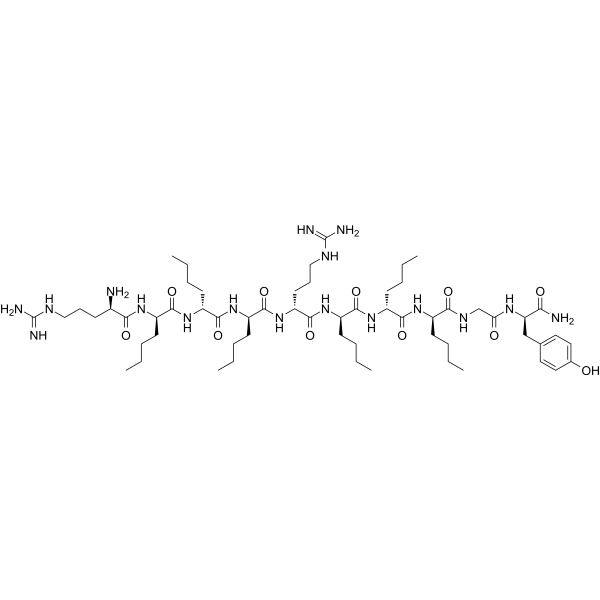 0 ImagesCat. No.: HY-106359CAS No.: 287096-87-1Synonyms: RDP-58
Delmitide (RDP58) is an orally active d-isomer decapeptide with potent anti-inflammatory activity. Delmitide inhibits production of TNF-α, IFN-γ, and interleukin (IL)-12, and up-regulates heme oxygenase 1 activity. Delmitide can be used for the research of ulcerative colitis.
-
Asperflavin
 0 ImagesCat. No.: HY-N15651CAS No.: 1415764-41-8
Asperflavin is an anti-inflammatory compound that can be produced by the marine fungus Eurotium amstelodami. Asperflavin inhibits the production of NO, PGE2, and proinflammatory cytokines, as well as the expression of inducible NOS (iNOS) in RAW 264.7 cells treated with LPS (HY-D1056). Asperflavin can be used in the study of inflammatory diseases.
-
IBI-325
 0 ImagesCat. No.: HY-P991634
IBI-325 is a humanized monoclonal antibody inhibitor targeting CD73. IBI-325 completely inhibits CD73 enzymatic activity without hook effect. IBI-325 reverses Adenosine monophosphate (HY-A0181)-mediated immune suppression and significantly inhibits T cell proliferation and cytokines (IL-2, IFN-γ and TNF-α) release. IBI-325 has potent antitumor activities in hPBMC-reconstituted mice model and hCD73 knock-in mice model. IBI-325 can be used for cancer immunotherapy research.
-
Bisdemethoxycurcumin
 0 ImagesCat. No.: HY-N2942CAS No.: 52328-96-8
Bisdemethoxycurcumin is an orally effective curcuminoid. Bisdemethoxycurcumin downregulates pro-inflammatory cytokines in macrophages by inhibiting the phosphorylation of PI3K/Akt and p38 MAPK. Bisdemethoxycurcumin relieves autophagy inhibition and promotes lipophagy to clear vascular smooth muscle foam cells by inhibiting the PDK1/Akt/mTOR pathway. Bisdemethoxycurcumin activates the cAMP/Epac/AMPKα axis and the NRF2/HO-1 antioxidant axis, thereby indirectly inhibiting the phosphorylation of NF-κB p65 and pro-inflammatory outputs such as IL-1β/IL-6/TNF-α, so as to alleviate pulmonary oxidative stress, inflammatory infiltration and pulmonary edema. Bisdemethoxycurcumin blocks NLRP3-mediated pyroptosis and protects cartilage extracellular matrix degradation by activating NRF2/HO-1. Bisdemethoxycurcumin also exerts a synergistic effect with potassium iodide against Candida.
-
5-LOX-IN-8
 0 ImagesCat. No.: HY-173180
5-LOX-IN-8 is a 5-LOX inhibitor with anti-inflammatory activity. 5-LOX-IN-8 suppresses IL-6, IL-1β, TNF-α and IFN-γ in macrophages and reduces IL-8 secretion in SW480 cells. 5-LOX-IN-8 reduces disease activity in a DSS colitis model. 5-LOX-IN-8 can be used for research of inflammatory bowel disease (IBD).
-
Theophylline sodium acetate
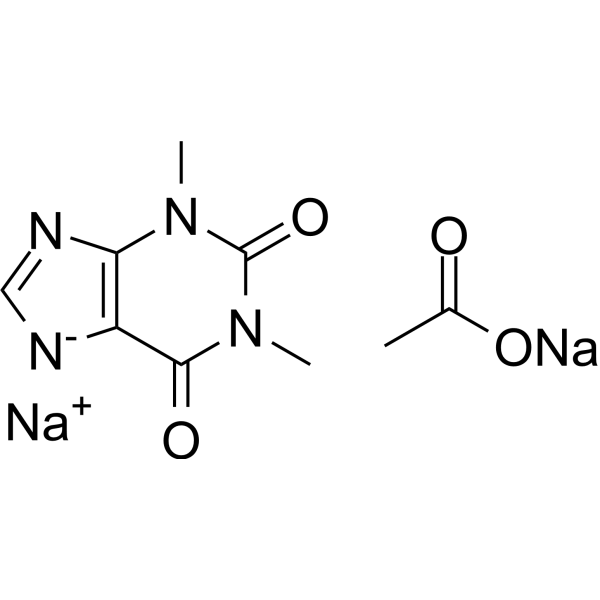 0 ImagesSynonyms: 1,3-Dimethylxanthine sodium acetate; Theo-24 sodium acetate
Theophylline (1,3-Dimethylxanthine) sodium acetate is a potent phosphodiesterase (PDE) inhibitor, adenosine receptor antagonist, and histone deacetylase (HDAC) activator. Theophylline (1,3-Dimethylxanthine) sodium acetate inhibits PDE3 activity to relax airway smooth muscle. Theophylline (1,3-Dimethylxanthine) sodium acetate has anti-inflammatory activity by increase IL-10 and inhibit NF-κB into the nucleus. Theophylline (1,3-Dimethylxanthine) sodium acetate induces apoptosis. Theophylline (1,3-Dimethylxanthine) sodium acetate can be used for asthma and chronic obstructive pulmonary disease (COPD) research.
-
TNF-α-IN-22
 0 ImagesCat. No.: HY-173210CAS No.: 2251689-60-6
TNF-α-IN-22 (Compound 30) is a TNFα inhibitor. It can induce Apoptosis by inhibiting the downregulation of IkBα induced by TNFα and blocking the cell cycle. TNF-α-IN-22 can be used in the research of triple-negative breast cancer.
-
UBP1213
 0 ImagesCat. No.: HY-P992479
UBP1213 is a monoclonal antibody targeting TNFSF13B/BAFF/CD257.
-
HS-276 formic
 0 ImagesCat. No.: HY-147141B
HS-276 formic is an orally active, potent and highly selective TAK1 inhibitor, with a Ki of 2.5 nM. HS-276 formic shows significant inhibition of TAK1, CLK2, GCK, ULK2, MAP4K5, IRAK1, NUAK, CSNK1G2, CAMKKβ-1, and MLK1, with IC50 values of 8.25, 29, 33, 63, 125, 264, 270, 810, 1280, and 5585 nM, respectively. HS-276 formic reduces the expression of TNF, IL-6, and IL-1β. HS-276 formic can be used for rheumatoid arthritis (RA) research.
-
TNF-α-IN-15
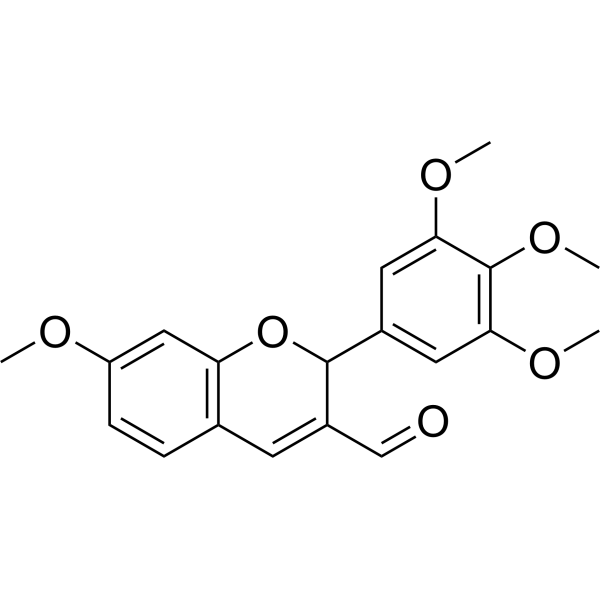 0 ImagesCat. No.: HY-160436CAS No.: 364039-58-7
TNF-α-IN-15 is a TNF-α inhibitor. TNF-α-IN-15 can decrease the TNF-α blood levels.
-
Anethole trithione derivative-1
 0 ImagesCat. No.: HY-189057
Anethole trithione derivative-1 is a derivative of Anethole trithione (HY-B1223), and also a regulator of sulfide:quinone oxidoreductase (SQR) and uncoupling protein 2 (UCP2), with mitochondrial uncoupling-inducing activity and neuroprotective activity. Anethole trithione derivative-1 mediates mitochondrial uncoupling via SQR-dependent reverse electron transport of complex I, ROS-dependent UCP2 activation, and reduction of mitochondrial membrane potential. Anethole trithione derivative-1 reduces brain damage and improves function in mouse models of ischemic and hemorrhagic stroke. Anethole trithione derivative-1 can be used in stroke research.
-
Malvidin-3-glucoside chloride (Standard)
 0 ImagesCat. No.: HY-125740RCAS No.: 7228-78-6Synonyms: Malvidin-3-O-glucoside chloride (Standard); Oenin chloride (Standard)
Malvidin-3-glucoside (Malvidin-3-O-glucoside; Oenin) chloride (Standard) is the analytical standard of Malvidin-3-glucoside chloride (HY-125740). This product is intended for research and analytical applications. Malvidin-3-glucoside chloride is an orally active inhibitor of the NF-κB pathway, which blocks inflammatory responses induced by TNF-α, reduces IκB-α degradation and p65 nuclear translocation, and upregulates endothelial nitric oxide synthase eNOS to increase NO production. Malvidin-3-glucoside chloride exerts anti-inflammatory and antioxidant effects by inhibiting pro-inflammatory molecules such as MCP-1, ICAM-1, and IL-6, and regulating intestinal microorganisms and metabolites, while protecting endothelial cells and improving intestinal microecological dysbiosis under inflammatory conditions. Malvidin-3-glucoside chloride can be used to study chronic inflammatory-related diseases such as atherosclerosis and inflammatory bowel disease, and has the potential to prevent vascular inflammation and improve intestinal health.
-
Butrin
 0 Images
Butrin is a compound found in Butea monosperma flowers. Butrin reduces expression of SIRT1, AURKB, cyclin D1, pAKT, GSK-3β, β-catenin, and TGF-3β expression, enhances apoptosis and ROS production in cancer cells. Butrin downregulates Wnt and NF-κB signaling, mitigates oxidative stress, reduces proinflammatory cytokine (TNF-α, IL-6 and IL-8) production and suppresses neuroinflammation. Butrin inhibits IKK enzyme activity. Butrin can be used for the researches of colorectal cancer, Alzheimer’s disease, and rheumatoid arthritis.



