



mTOR
mTOR (mechanistic target of rapamycin) is a conserved serine/threonine kinase that functions as a central regulator of cell growth, metabolism, protein synthesis, and autophagy by integrating nutrient availability, growth factor signaling, and cellular energy status[1][2]. Mechanistically, mTOR assembles into two distinct signaling complexes, mTORC1 and mTORC2, which coordinate anabolic and catabolic processes through partially non-overlapping downstream pathways[2][3][4]. mTORC1 primarily responds to nutrients and growth factors to promote protein synthesis, biomass accumulation, and metabolic reprogramming while suppressing autophagy, thereby controlling cellular growth and metabolic homeostasis[1][5]. In contrast, mTORC2 regulates cell survival, proliferation, cytoskeletal organization, and metabolism through signaling networks that include AKT, PKC, and SGK family proteins[2][4]. Dysregulation of mTOR signaling is strongly associated with cancer, metabolic disorders, aging-related pathologies, and immune dysfunction, highlighting its importance in both physiological regulation and disease progression[1][6]. In experimental systems, genetic or pharmacological manipulation of mTOR complexes has demonstrated distinct and non-redundant functions of mTORC1 and mTORC2 in cellular differentiation, immune-cell maturation, and tissue development[4][7][8]. Compared with the related isoform complex mTORC1, mTORC2 exhibits unique regulatory roles in cell survival and autophagy-associated signaling, emphasizing the necessity of complex-specific investigation in mechanistic studies[4]. For experimental applications, rapamycin and related mTOR inhibitors remain widely used tools for dissecting pathway function, although increasing attention has focused on next-generation inhibitors with improved selectivity toward specific mTOR complexes[9].
References:
- [1]. Laplante M, et al. mTOR signaling in growth control and disease. Cell. 2012 Apr 13;149(2):274-93. [Content Brief]
- [2]. Panwar V, et al. Multifaceted role of mTOR (mammalian target of rapamycin) signaling pathway in human health and disease. Signal Transduct Target Ther. 2023 Oct 2;8(1):375. [Content Brief]
- [3]. Yong J, et al. Regulation of transcriptome plasticity by mTOR signaling pathway. Exp Mol Med. 2025 Aug;57(8):1623-1630. [Content Brief]
- [4]. Ballesteros-Álvarez J, et al. mTORC2: The other mTOR in autophagy regulation. Aging Cell. 2021 Aug;20(8):e13431. [Content Brief]
- [5]. Patel CH, et al. More TOR: The expanding role of mTOR in regulating immune responses. Immunity. 2025 Jul 8;58(7):1629-1645. [Content Brief]
- [6]. Dai DF, et al. The mTOR signaling pathway in cardiac aging. J Cardiovasc Aging. 2023;3(3):24. [Content Brief]
- [7]. Wang F, et al. Crosstalks between mTORC1 and mTORC2 variagate cytokine signaling to control NK maturation and effector function. Nat Commun. 2018 Nov 19;9(1):4874. [Content Brief]
- [8]. Schaub T, et al. mTORC1 and mTORC2 Differentially Regulate Cell Fate Programs to Coordinate Osteoblastic Differentiation in Mesenchymal Stromal Cells. Sci Rep. 2019 Dec 27;9(1):20071. [Content Brief]
- [9]. Mao B, et al. Overview of Research into mTOR Inhibitors. Molecules. 2022 Aug 19;27(16):5295. [Content Brief]
All Product Categories
-
mTOR Inhibitors
(409)
View all products
-
mTOR Agonists
(5)
View all products
-
mTOR Antagonist
(1)
View all products
-
mTOR Activators
(55)
View all products
-
mTOR Modulators
(11)
View all products
-
mTOR p53 Inhibitor
(1)
View all products
-
mTOR Degraders
(2)
View all products
-
mTOR Control
(1)
View all products
-
mTOR Substrate
(1)
View all products
-
mTOR Ligand
(1)
View all products
-
mTOR Related Products (518)
Related Products (518)

-
Antibodies (11)
-
mTOR/GLS1-IN-1
 0 ImagesCat. No.: HY-179003mTOR/GLS1-IN-1 (Compoud 9d) is a potent dual targeted mTOR/GLS1 inhibitor. Has anti proliferative activity against various tumor cells. mTOR/GLS1-IN-1 dose dependently induces ROS accumulation, induces autophagosome formation, and induces apoptosis. mTOR/GLS1-IN-1 can increase Fe2+, decrease GPX4, and induce ferroptosis. mTOR/GLS1-IN-1 can inhibit cell migration, invasion, and angiogenesis. mTOR/GLS1-IN-1 can be used in the research of cancer, such as breast cancer.
-
P-2281
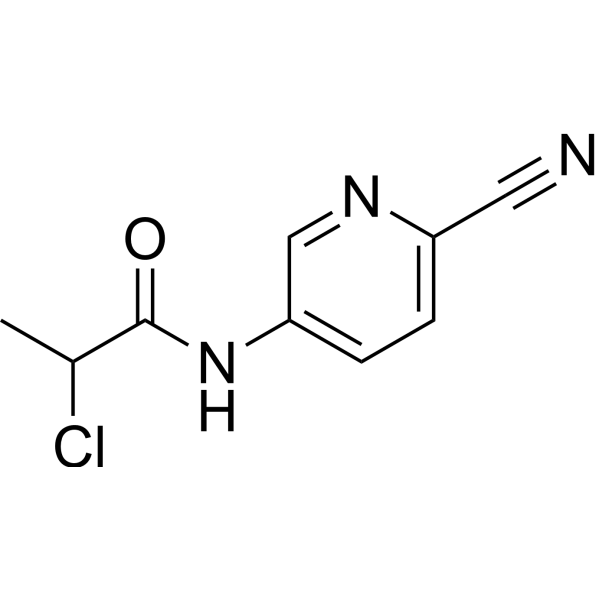 0 ImagesP-2281 is a mTOR inhibitor with anticancer and anti-inflammatory efficacies. P2281 inhibits mTOR activity in colon cancer cells. P-2281 suppresses Dextran sulfate sodium salt (HY-116282C) (DSS)-induced colitis by inhibiting T cell function and is efficacious in a murine model of human colitis.
-
α-Neoendorphin (porcine)
 0 ImagesCat. No.: HY-P11656CAS No.: 77739-20-9α-Neoendorphin porcine is a peptide. α-Neoendorphin porcine effectively alleviates UVB-induced skin photoaging via activating mTOR-Beclin-1-mediated autophagy, reducing UVB-triggered ROS production, inhibiting the MAPK pathway and MMP activity, and promoting type I procollagen synthesis. α-Neoendorphin porcine exerts anti-aging and anti-wrinkle effects on skin cells. α-Neoendorphin porcine can be used in studies related to skin photoaging.
-
Fusaric acid (Standard)
 0 ImagesFusaric acid (Standard) is the analytical standard of Fusaric acid (HY-128483). This product is intended for research and analytical applications. Fusaric acid is an orally active multi-pathway inhibitor with the activity of inducing oxidative stress and apoptosis. Fusaric acid can chelate divalent metal cations, damage mitochondrial membrane structure, and activate apoptosis-related proteases such as Caspase-3/7, -8, and -9. Fusaric acid also regulates Bax/Bcl-2 protein, inhibits fibrosis-related signaling pathways such as NF-κB, TGF-β1/SMADs, and PI3K/AKT/mTOR, and reduces collagen deposition. Fusaric acid is also a dopamine β-hydroxylase inhibitor, which reduces endogenous levels of norepinephrine and epinephrine in the brain, heart, spleen, and adrenal glands. Fusaric acid can play a role in myocardial fibrosis and improve cardiac hypertrophy in heart disease, and can also be used in the study of esophageal cancer and liver cancer.
-
PI-540
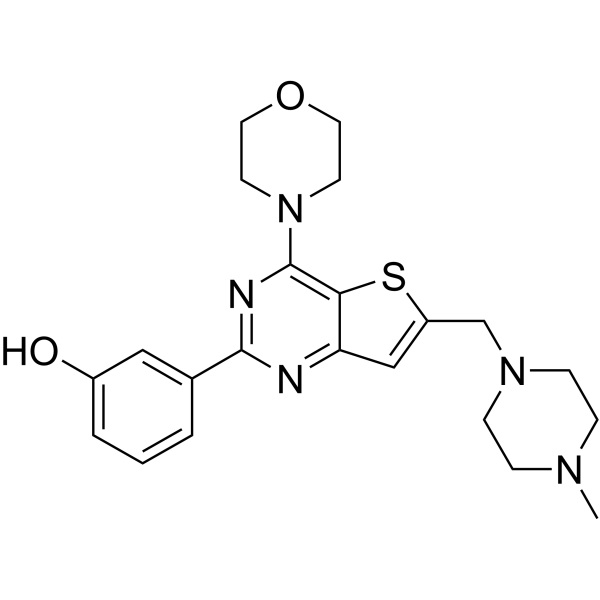 0 ImagesCat. No.: HY-10116CAS No.: 885616-78-4PI-540 is a bicyclic thienopyrimidine derivative and an orally active PI3K inhibitor. PI-540 has anti-cancer cell proliferation properties and high tissue distribution. PI-540 can inhibit different isoforms of PI3K, with IC50s of 10 nM (P110α), 3510 nM (P110β), 410 nM (P110δ), and 33110 nM (P110γ). PI-540 also inhibits mTOR (IC50: 61 nM) and DNA-PK (IC50: 525 nM).
-
PROTAC SHP2 degrader-1
 0 ImagesCat. No.: HY-189468CAS No.: 3128784-74-4PROTAC SHP2 degrader-1 is a potent SHP2 PROTAC degrader with a DC50 of 7.406 μM. PROTAC SHP2 degrader-1 recruits DCAF16 E3 ligase to induce ubiquitination and proteasomal degradation of SHP2, thereby inhibiting the RAS/MAPK and PI3K/AKT/mTOR signaling pathways while simultaneously inducing IFN-γ/JAK/STAT1, apoptosis, and cell cycle arrest. PROTAC SHP2 degrader-1 can be used for cancer research.
-
PI3K/mTOR Inhibitor-13
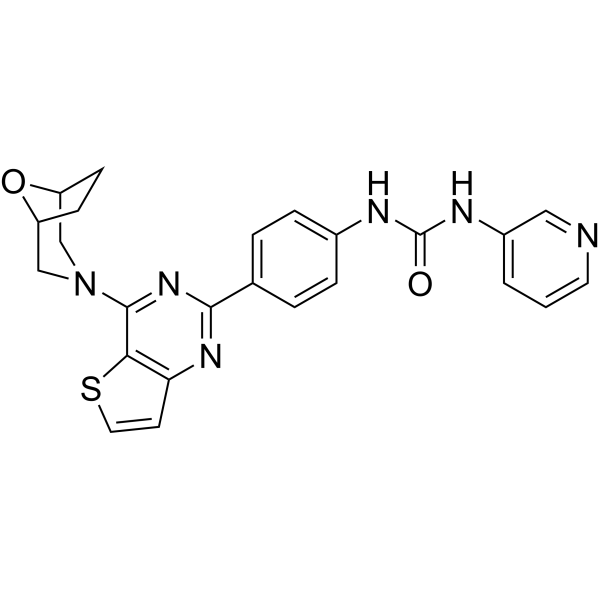
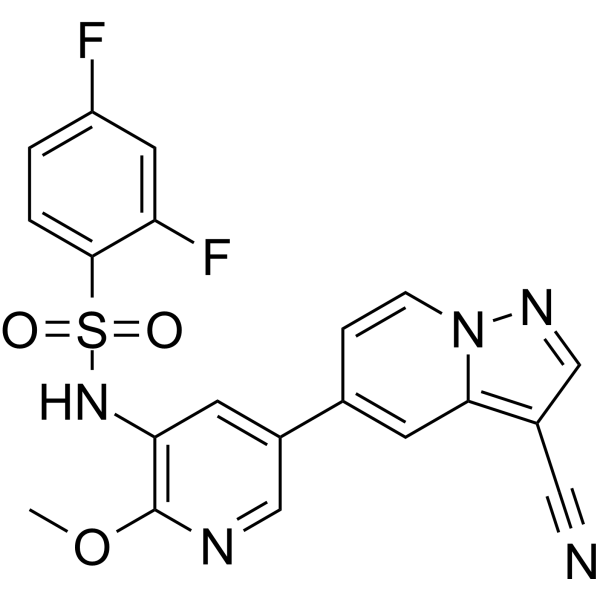 0 ImagesCat. No.: HY-153120CAS No.: 1621718-37-3
-
Hederacolchiside A1 (Standard)
 0 ImagesCat. No.: HY-N6950RCAS No.: 106577-39-3Hederacolchiside A1 (Standard) is the analytical standard of Hederacolchiside A1. This product is intended for research and analytical applications. Hederacolchiside A1, isolated from Pulsatilla chinensis, suppresses proliferation of tumor cells by inducing apoptosis through modulating PI3K/Akt/mTOR signaling pathway. Hederacolchiside A1 has antischistosomal activity, affecting parasite viability both in vivo and in vitro.


-
(Z)-Doxepin
 0 Images(Z)-Doxepin is an isomer of Doxepin (HY-B0725A). Doxepin is an orally active, blood-brain barrier penetrant tricyclic antidepressant with multiple activities including hypnosis, sedation, analgesia and vasodilation. Doxepin enhances the expression of PSD-95 and synapsin 1 via the PI3K/AKT/mTOR signaling pathway, and is metabolized to Desmethyldoxepin in vivo. Doxepin can be used in research related to various diseases such as depression, anxiety, obesity and atopic dermatitis.
-
FLLL12
 0 ImagesCat. No.: HY-183402CAS No.: 917813-60-6Synonyms: GO-Y026FLLL12 (GO-Y026) is a curcumin analog anticancer agent. FLLL12 inhibits the phosphorylation of AKT, Bcl-2, Bid, EGFR, mTOR, FOXO1a, FOXO3a, STAT3, HER2/neu, as well as pancreatic AKT/STAT3; upregulates the expression of Bim and DR5; and activates PTPs. FLLL12 regulates downstream pathways, induces mitochondria-mediated and DR5-dependent extrinsic apoptosis, inhibits cancer cell viability, proliferation, anchorage-independent growth and migration, and exerts a synergistic effect with Doxorubicin (HY-15142A). FLLL12 can be used in research related to head and neck squamous cell carcinoma, breast cancer, prostate cancer, pancreatic cancer, lung cancer, colon cancer and colorectal cancer.
-
Izorlisib methanesulfonate
 0 ImagesCat. No.: HY-15466ACAS No.: 2242053-82-1Synonyms: CH5132799 methanesulfonateIzorlisib (CH5132799) methanesulfonate is an orally active, selective Class I PI3K inhibitor with an IC50 value of 14 nM against PI3Kα. Izorlisib methanesulfonate specifically inhibits Class I PI3K (particularly PI3Kα and its mutants) and blocks the PI3K/Akt/mTOR pathway; this leads to cell cycle arrest at the G1 phase and apoptosis without triggering feedback activation of Akt by competitively binding to the ATP-binding site of PI3K. Izorlisib methanesulfonate can be used in research on cancers harboring PIK3CA mutations or PTEN loss (such as breast, ovarian, prostate, and endometrial cancers).
-
SPR519
 0 ImagesCat. No.: HY-156484CAS No.: 1391923-59-3SPR519 is a selective, orally active dual PI3Kα/mTOR kinase inhibitor, with an IC50 of 0.03 μM against PI3Kα and an IC50 of 0.01 μM against mTOR. SPR519 exhibits anticancer effects in ovarian cancer and colon cancer xenograft models. SPR519 can be used for the research of solid tumors (ovarian cancer, colon cancer).

-
Succinylsulfathiazole (Standard)
 0 ImagesSuccinylsulfathiazole (Standard) (Succinylsulphathiazole) is the analytical standard of Succinylsulfathiazole (HY-B0921). This product is intended for research and analytical applications. Succinylsulfathiazole is a long-acting sulfonamide antibiotic with localized gut-specific antibacterial activity and is orally active. Succinylsulfathiazole inhibits bacterial folate synthesis, reduces coliform counts, suppresses intestinal bacterial growth and vitamin biosynthesis, and depletes gut folate-producing bacteria. Succinylsulfathiazole modulates hepatic mTOR signaling, diminishes cecal fermentation, decreases hepatic folate levels and total folate excretion, elevates nitrogen excretion and reduces the fermentability of certain dietary fibers. Succinylsulfathiazole induces folate deficiency and triggers biotin- and folate-related nutritional deficiency symptoms in rats and C57BL/6 mice.
-
1-O-Hexadecyl-2-O-acetyl-sn-glycerol
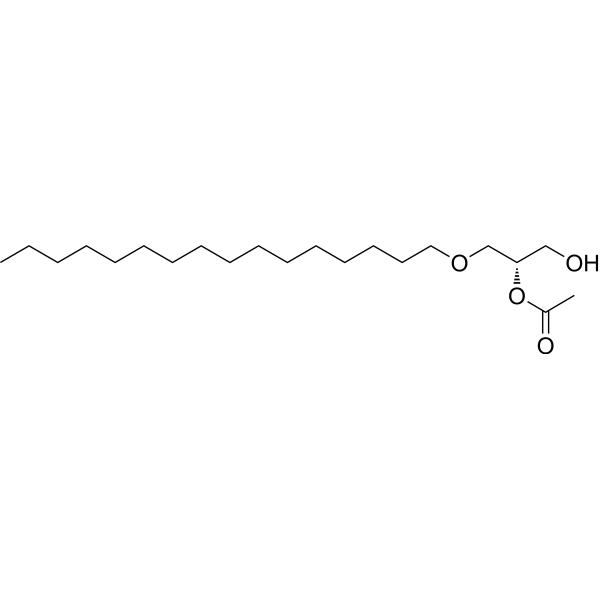 0 ImagesCat. No.: HY-W019868CAS No.: 77133-35-81-O-Hexadecyl-2-O-acetyl-sn-glycerol is an alkyl acylglycerol that may activate the amino acid transport activity of the A-system and stimulate the absorption of methylaminoisobutyric acid (MeAIB). MeAIB inhibits mTOR phosphorylation, which may affect intestinal amino acid absorption and signal transduction.
-
2,6-Dimethoxy-1,4-benzoquinone (Standard)
 0 Images2,6-Dimethoxy-1,4-benzoquinone (Standard) is the analytical standard of 2,6-Dimethoxy-1,4-benzoquinone (HY-N1677). This product is intended for research and analytical applications. 2,6-Dimethoxy-1,4-benzoquinone is a 1,4-benzoquinone derivative. 2,6-Dimethoxy-1,4-benzoquinone promotes phosphorylation of AKT, S6K, mTOR, 4E-BP1, and AMPK, and attenuates mTORC1 activity as part of the AKT/mTOR pathway. 2,6-Dimethoxy-1,4-benzoquinone stimulates myoblast differentiation, increases myotube size, elevates MHC protein expression, enhances mitochondrial biogenesis, respiration, and DNA content, and increases skeletal muscle weights, fiber size, grip strength, and treadmill performance. 2,6-Dimethoxy-1,4-benzoquinone exerts anti-cancer, anti-inflammatory, anti-adipogenic, antibacterial, and antimutagenic effects, inhibits adipogenic transcription factors, nitric oxide production, skin tumor development, Magnaporthe oryzae growth, spore germination, appressorium formation, and growth of select bacterial species, induces H2O2 generation and rice defense gene expression, and reduces rice blast lesion formation. 2,6-Dimethoxy-1,4-benzoquinone can be used for the research of obesity, skin tumorigenesis, rice blast disease, and food-borne illness.




