



p38 MAPK
The p38 MAPK family consists of highly conserved proline-directed serine-threonine protein kinases that are activated in response to a number many growth factors, cytokines, and chemotactic substances, such as vascular endothelial growth factor (VEGF), fibroblast growth factor (FGF), PDGF, TNF, interleukins, lipopolysaccharide (LPS) and formyl-methionyl-leucyl-phenylalanine (fMLP). It is well known that p38 is involved in inflammation, apoptosis, cardiomyocyte hypertrophy and cell differentiation.
The p38 MAPK family is composed of four proteins: p38α (encoded by the gene Mapk14), p38β (Mapk11), p38γ (Mapk12), and p38δ (Mapk13). Their coding genes have a distinct tissue distribution and they appear differentially expressed, being Mapk14 the most highly expressed. p38 MAPKs are substrates for three MAP2K (MKK6, MKK3, and MKK4). The contribution of each of these MAP2K to p38 MAPKs activation depends on the stimulus and the cell type. The MAP3Ks that lead to p38 MAPKs activation are ASK1, DLK1, TAK1, TAO1, TAO2, TPL2, MLK3, MEKK3, MEKK4, and ZAK1.
p38 MAPK Isoform Specific Products
All Product Categories
-
p38 MAPK Inhibitors
(846)
View all products
-
p38 MAPK Agonists
(6)
View all products
-
p38 MAPK Antagonists
(2)
View all products
-
p38 MAPK Activators
(228)
View all products
-
p38 MAPK Modulators
(21)
View all products
-
p38 MAPK p53 Inhibitors
(2)
View all products
-
p38 MAPK Inducers
(15)
View all products
-
p38 MAPK Degraders
(3)
View all products
-
p38 MAPK Control
(1)
View all products
-
p38 MAPK Ligands
(2)
View all products
-
AKT Serine/Threonine Kinase 1 (AKT1) Proteins
(3)
View all products
-
p38 MAPK Related Products (1216)
Related Products (1216)

-
Recombinant Proteins (3)
-
Antibodies (20)
-
p38 MAPK Isoform Comparison
-
Mapk11 Mouse Pre-designed siRNA Set A
 0 ImagesCat. No.: HY-RS08099
Mapk11 Mouse Pre-designed siRNA Set A contains three designed siRNAs for Mapk11 gene (Mouse), as well as a negative control, a positive control, and a FAM-labeled negative control.
-
CBS-3408
 0 ImagesCat. No.: HY-182579CAS No.: 452056-93-8
-
HVF18-a3-d
 0 ImagesCat. No.: HY-P11250HVF18-a3-d is an antimicrobial peptide. HVF18-a3-d reduces NO production. HVF18-a3-d inhibits the production of TNF-α and IL-6, reduces ROS production, and suppresses the TLR4 signaling pathway, as well as LPS-induced phosphorylation of ERK, JNK, and p38 MAPK. HVF18-a3-d exhibits antimicrobial activity against a variety of bacteria by disrupting their outer and inner membranes. HVF18-a3-d protects mice from fatal septic shock induced by Acinetobacter baumannii resistant to Carbapenem. HVF18-a3-d shows anti-inflammatory and antioxidant effects.
-
p38 Kinase inhibitor 5
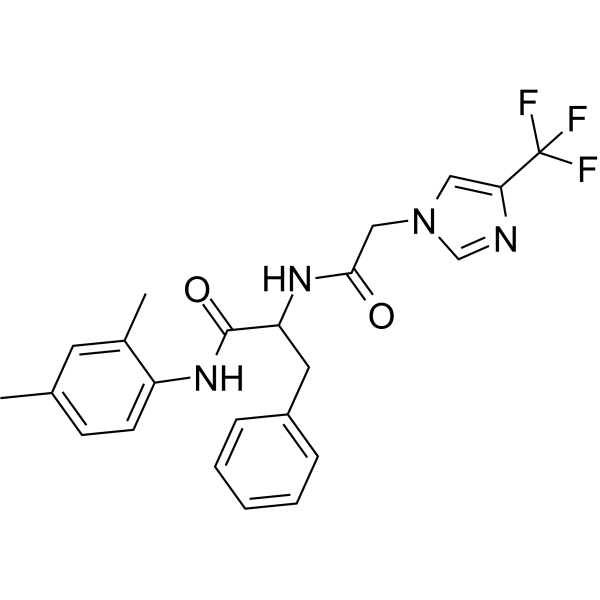 0 ImagesCat. No.: HY-149850CAS No.: 2929285-29-8p38 Kinase inhibitor 5 (AA6) is a potent p38 kinase inhibitor with an IC50 of 403.57 nM. p38 Kinase inhibitor 5 has anti-inflammatory activity.
-
ETI60
 0 ImagesETI60 is an orally active, selective TLR inhibitor that targets the nucleoside-binding Site I on TLR7 (IC50 = 0.68 μM) and TLR9 (IC50 = 0.12 μM), sparing surface TLRs (including TLR1/TLR2, TLR2/TLR6, TLR4 and TLR5). ETI60 potently inhibits endosomal TLR-mediated pro-inflammatory signaling with nanomolar activity in cellular, biophysical and in vivo assays. ETI60 modulates the expression of genes associated with inflammation. ETI60 effectively ameliorates symptoms in mouse models of psoriasis, and systemic lupus erythematosus (SLE). ETI60 can be used for autoimmune and inflammatory diseases research.
-
Sinigrin (Standard)
 0 ImagesSynonyms: Allyl-glucosinolate (Standard); 2-Propenyl-glucosinolate (Standard)Sinigrin (Standard) (Allyl-glucosinolate (Standard)) is the analytical standard of Sinigrin (HY-N0404). This product is intended for research and analytical applications. Sinigrin (Allyl-glucosinolate) is an orally active glucosinolate found in cruciferous plants. Sinigrin possesses multiple activities such as anti-cancer, antibacterial, antifungal, anti-inflammatory, antioxidant, and inhibition of fat synthesis. Sinigrin can be used in the research of tumors, inflammatory, and metabolic diseases.
-
d-T101 peptide
 0 ImagesCat. No.: HY-P11298CAS No.: 2120397-85-3d-T101 peptide, a human hormone-peptide, is a T1/ST2 receptor ligand. d-T101 peptide binds to the T1/ST2 receptor and activates caspases 8, 9 and 3 mediated apoptosis, together with activation of JNKinase and p38 MAPKinase. d-T101 peptide also changes Golgi structural with function loss and downregulation of the endoplasmic reticulum (ER) stress repair mechanism. d-T101 peptide has immunostimulatory and anticancer activity, selectively induces apoptosis in proliferating cancer cells and increases IL-2 and IFN-γ expression as well as the recruitment of NK cells and M1 macrophages to the tumor site.
-
Hordenine (Standard)
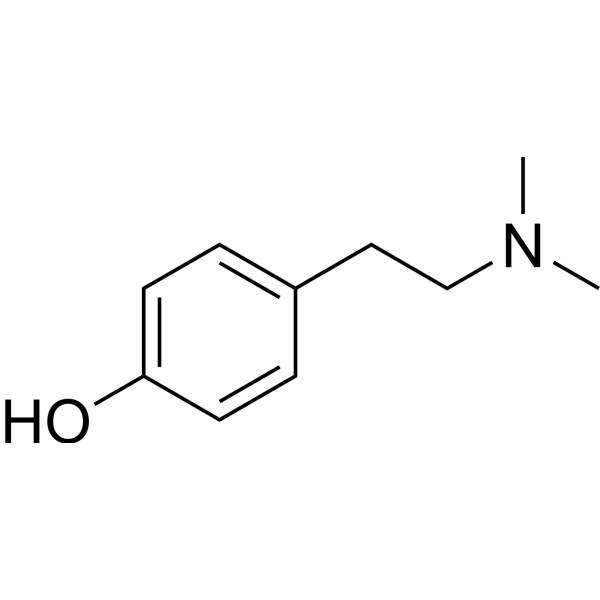 0 ImagesSynonyms: Ordenina (Standard); Peyocactine (Standard)Hordenine (Standard) (Ordenina (Standard); Peyocactine (Standard)) is the analytical standard of Hordenine (HY-N0113). This product is intended for research and analytical applications. Hordenine (Ordenina; Peyocactine) is a multifunctional alkaloid with oral activity and blood-brain barrier penetration. Hordenine inhibits LPS-induced phosphorylation of p38, JNK, ERK1/2, p65, IκB, and AKT, prevents p65 nuclear translocation, and suppresses inflammatory cytokines and mediators. Hordenine promotes M2 macrophage polarization, restores blood-milk barrier integrity, alleviates oxidative stress by reducing ROS and MDA, and attenuates LPS-induced lung injury and pulmonary edema. Hordenine inhibits cAMP production, CREB phosphorylation, and MITF expression, thereby suppressing melanin synthesis in melanocytes and reconstructed epidermis. Hordenine activates the Wnt/β-catenin signaling pathway, promotes dermal papilla cell proliferation and hair shaft elongation, and accelerates hair regeneration. Hordenine activates DRD2, acts as a D3R partial agonist, α2A-AR full agonist, and 5-HT2A-R antagonist, and inhibits SERT and DAT. Hordenine inhibits α-synuclein accumulation and ameliorates motor deficits in Parkinson's disease models. Hordenine limits alcohol intake, reduces relapse drinking behavior, and modulates alcohol-induced conditioned place preference. Hordenine can be used for research on mastitis, skin pigmentation, acute lung injury, foodborne diseases, hair loss, Parkinson's disease, bacterial infections, and alcohol use disorder.
-
Cyproheptadine hydrochloride (Standard)
 0 ImagesSynonyms: Cyproheptadine HCl (Standard)Cyproheptadine hydrochloride (Standard) (Cyproheptadine HCl (Standard)) is the analytical standard of Cyproheptadine hydrochloride (HY-B0366A). This product is intended for research and analytical applications. Cyproheptadine hydrochloride (Cyproheptadine HCl) acts as a p38 MAP kinase activator, CHK2 activator, histamine H1 receptor inhibitor and serotonin receptor inhibitor. Cyproheptadine hydrochloride mediates cell cycle arrest via G1 phase arrest, G1/S transition arrest, G0/G1 phase arrest, reduced expression of cyclins D1/D2/D3, upregulated expression of HBP1, p16, p21, p27, and decreased phosphorylation of retinoblastoma protein. Cyproheptadine hydrochloride induces Apoptosis by increasing PARP and cleaved PARP, as well as activating the mitochondrial caspase pathway. Cyproheptadine hydrochloride inhibits tumor growth with extremely low toxicity to normal cells. Cyproheptadine hydrochloride can be used in research related to hepatocellular carcinoma, multiple myeloma and acute myeloid leukemia.
-
P2L-003
 0 ImagesCat. No.: HY-180244CAS No.: 1359416-20-8P2L-003 is a selective PAR2 antagonist with an IC50 of 0.62 μM in HT-29 cells. P2L-003 blocks PAR2-mediated Ca2+ mobilization without affecting PAR1, PAR4, or ATP-mediated signaling and dose-dependently suppresses the downstream MAPK signaling cascades, including ERK1/2 and p38 phosphorylation. P2L-003 can be used for colon cancer research.
-
CBS-3595
 0 ImagesCat. No.: HY-111164CAS No.: 908380-97-2CBS-3595 is a dual inhibitor of p38 MAP kinase and phosphodiesterase 4 with anti-inflammatory and anti-allodynic activities. CBS-3595 reduces the production of the proinflammatory cytokine IL-6 and increases the levels of the anti-inflammatory cytokine IL-10 in rats. CBS-3595 reduces paw oedema formation in the Complete Freund’s adjuvant (CFA) (HY-153808)-induced arthritis rat model. CBS-3595 is promising for research of autoimmune diseases.
-
Buloxibutid hydrochloride
 0 ImagesCat. No.: HY-100113ACAS No.: 1947313-60-1Synonyms: AT2 receptor agonist C21 hydrochlorideBuloxibutid (AT2 receptor agonist C21) hydrochloride is an orally active, selective angiotensin II type 2 receptor (AT2R) agonist, with a Ki value of 0.4 nM for porcine AT2R. Buloxibutid hydrochloride exerts vasodilatory, anti-inflammatory, antifibrotic (promoting the expression of collagenase MMP-13) and tissue repair effects mainly by activating the NO/cGMP pathway, inhibiting the pro-proliferative MAPK signaling, and suppressing the pro-fibrotic TGF-β/Smad pathway and inflammatory NF-κB pathway. Buloxibutid hydrochloride can be used in research related to idiopathic pulmonary fibrosis, hypertension, systemic sclerosis and other conditions.
-
Dehydrocostus Lactone (Standard)
 0 ImagesSynonyms: (-)-Dehydrocostus lactone (Standard); Epiligulyl oxide (Standard)Dehydrocostus Lactone (Standard) ((-)-Dehydrocostus lactone (Standard)) is the analytical standard of Dehydrocostus Lactone (HY-N0591). This product is intended for research and analytical applications. Dehydrocostus Lactone is a natural sesquiterpene that can be isolated from Saussurea lappa. Dehydrocostus Lactone has multiple activities such as anti-inflammatory, antibacterial, anti-tumor, and immunomodulatory effects. Dehydrocostus Lactone has an MIC of 2 µg/mL against Mycobacterium tuberculosis. Dehydrocostus Lactone can also inhibit the killing activity of cytotoxic T lymphocytes and induce apoptosis in tumor cells.
-
Nimustine
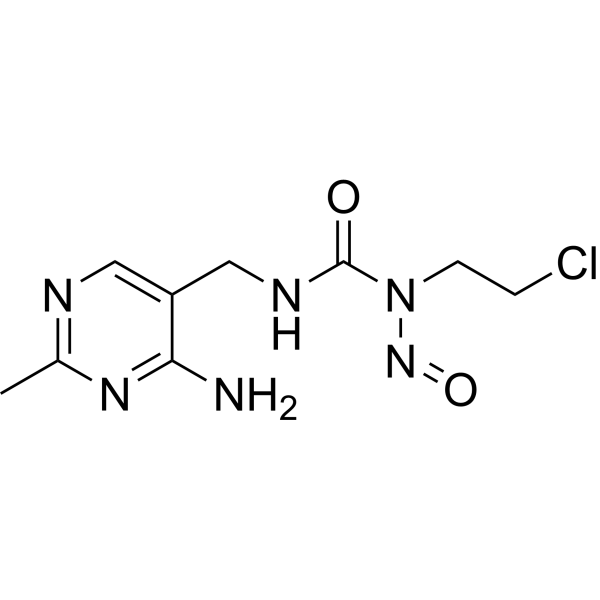 0 ImagesCat. No.: HY-13703CAS No.: 42471-28-3Nimustine is an alkylating agent, which induces DNA double-strand breaks (DSBs) and inter-strand crosslinks (ICLs), thereby activating the DNA damage response (DDR) signaling pathway. Nimustine activates p38 MAPK/JNK signaling pathway, and exhibits antitumor activity.
-
Lumichrome-d8
 0 ImagesCat. No.: HY-W708917Lumichrome-d8 is the deuterium labeled Lumichrome (HY-115385). Lumichrome, a photodegradation product of Riboflavin, is an endogenous compound in humans. Lumichrome inhibits human lung cancer cell growth and induces apoptosis via a p53-dependent mechanism. Lumichrom is the inhibitor for AKT/β-catenin signaling pathway.
-
SB-284851-BT
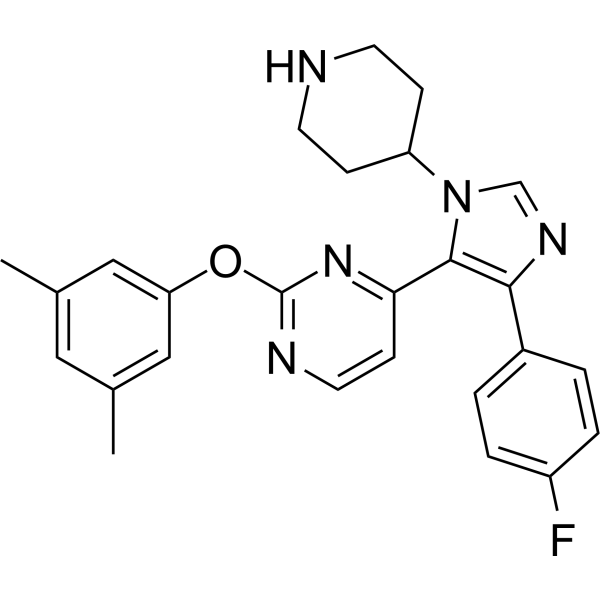 0 ImagesCat. No.: HY-136794CAS No.: 219769-23-0SB-284851-BT is an inhibitor of BRD4/p38α/BRDT. SB-284851-BT inhibits BRD4-BD1 (IC50=1.7 µM), p38α (Kd=0.47 nM), BRDT (1) (IC50=18 µM) and BRD4 (1)(IC50=3.7 µM). SB-284851-BT reduces IL-8 production by inhibiting p38α, as well as inhibiting BRD4 to down-regulates c-Myc and NF-κB gene pathways in cancer. SB-284851-BT can combined with the bromine domain and extra terminal (BET).
-
Aspirin calcium
 0 ImagesAspirin calcium is an orally active, potent and irreversible inhibitor of cyclooxygenase COX-1 and COX-2, with IC50 values of 5 and 210 μg/mL, respectively. Aspirin calcium induces apoptosis. Aspirin calcium inhibits the activation of NF-κB. Aspirin calcium also inhibits platelet prostaglandin synthetase, and can prevent coronary artery and cerebrovascular thrombosis.
-
β-Zearalenol (Standard)
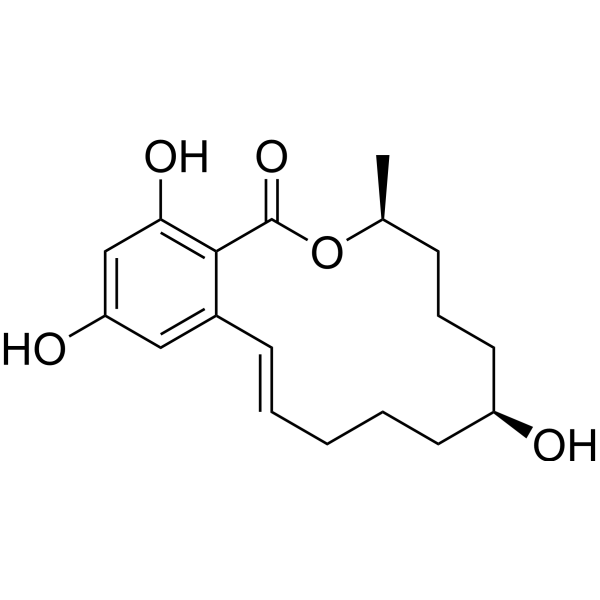 0 ImagesCat. No.: HY-N6741RCAS No.: 71030-11-0β-Zearalenol (Standard) is the analytical standard of β-Zearalenol (HY-N6741). This product is intended for research and analytical applications. β-Zearalenol is a zearalenone metabolite and Estrogen receptor binder (Kd = 0.406 nM) that induces apoptosis through activation of p53, JNK, and p38 kinases and the mitochondrial apoptosis pathway, while inhibiting CYP19A1 and inducing autophagy via SIRT1. β-Zearalenol is used in research on cardiotoxicity, mycotoxin-induced reproductive toxicity, and breast cancer.
-
J-1149
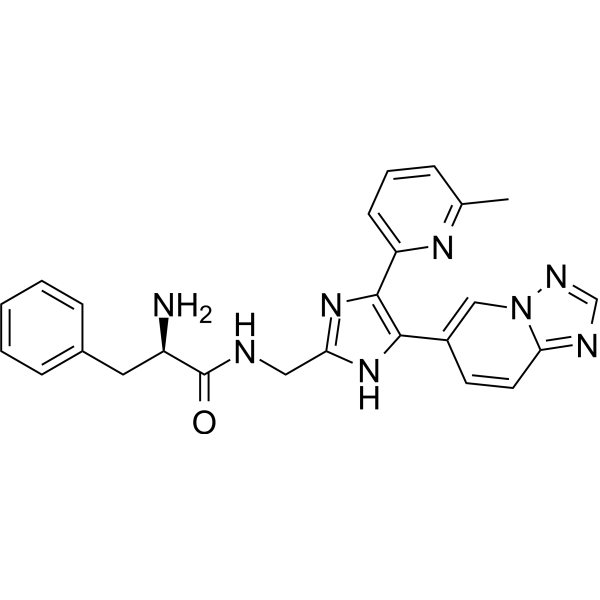 0 ImagesCat. No.: HY-163429CAS No.: 2883580-95-6
-
BMS-751324
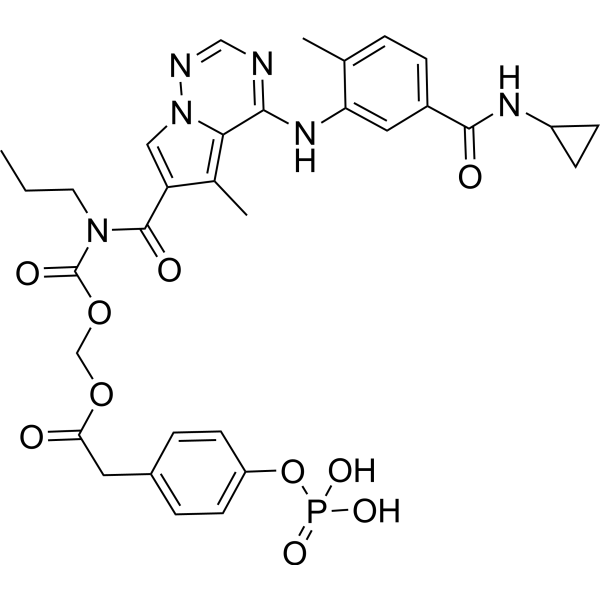 0 ImagesCat. No.: HY-18759CAS No.: 948842-66-8BMS-751324 is a p38α MAPK inhibitor. BMS-751324 equips a precursor of carbamyl-methyl linkage, containing esters and phosphate functional groups derived from hydroxyphenylacetic acid (HPA). BMS-751324 effectively inhibits foot swelling and LPS-induced TNFα production in an arthritic rat model.




