



Amantadine sulfate
Based on 11 publication(s) in Google Scholar
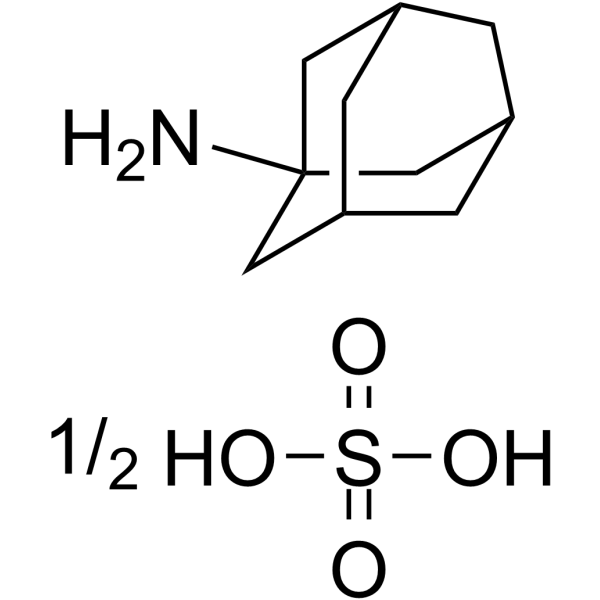
Amantadine (1-Adamantanamine) sulfate is an orally avtive and potent antiviral agent with activity against influenza A viruses. Amantadine sulfate inhibits several ion channels such as NMDA and M2, and also inhibits Coronavirus ion channels. Amantadine sulfate also has anti-orthopoxvirus and anticancer activity. Amantadine sulfate can be used for Parkinson's disease, postoperative cognitive dysfunction (POCD) and COVID-19 research.
For research use only. We do not sell to patients.
- CAS No.: 31377-23-8
- Formula: C10H17N.1/2H2O4S
- Molecular Weight:200.18
-
Storage:
Please store the product under the recommended conditions in the Certificate of Analysis.

To place orders, for customer services and technical support, please contact: MedChemExpress USA
Tel: 609-228-6898 E-mail: [email protected] [email protected]


-
 Biological Activity
-
Chemical Information
- Protocols
- Purity & Documentation
- References
-
 Help & FAQs


-
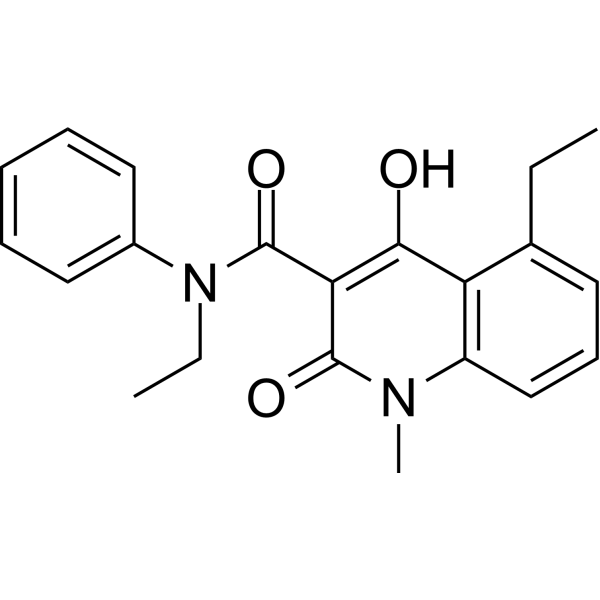
HY-100442
PaquinimodS100A8/A9 Inhibitor -
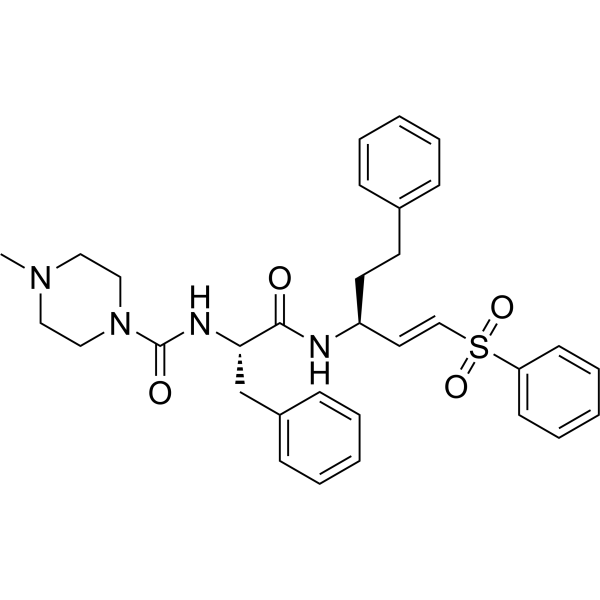
HY-119293
K777Cysteine Protease Inhibitor -
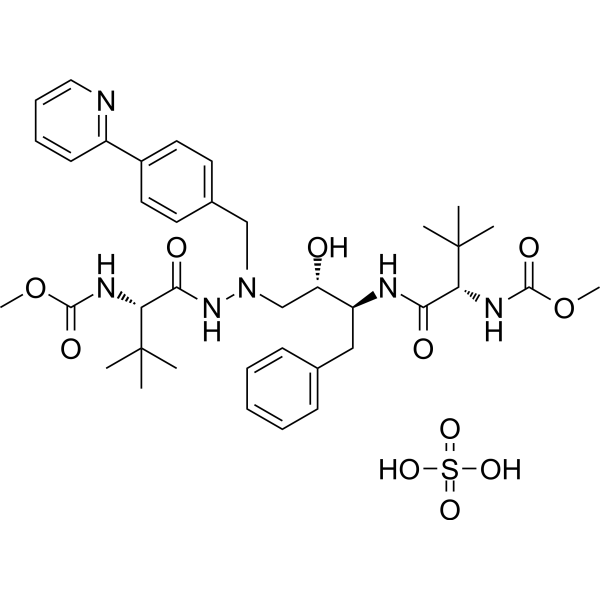
HY-17367A
Atazanavir sulfateHIV Protease Inhibitor -
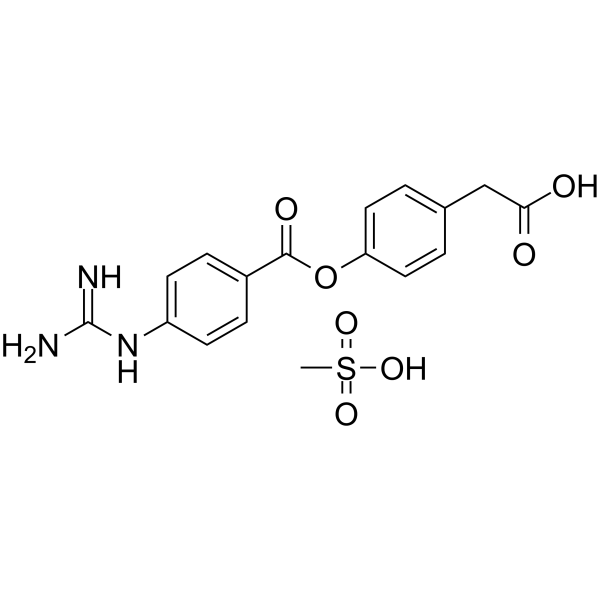
HY-19727A
FOY 251Proteinase Inhibitor -
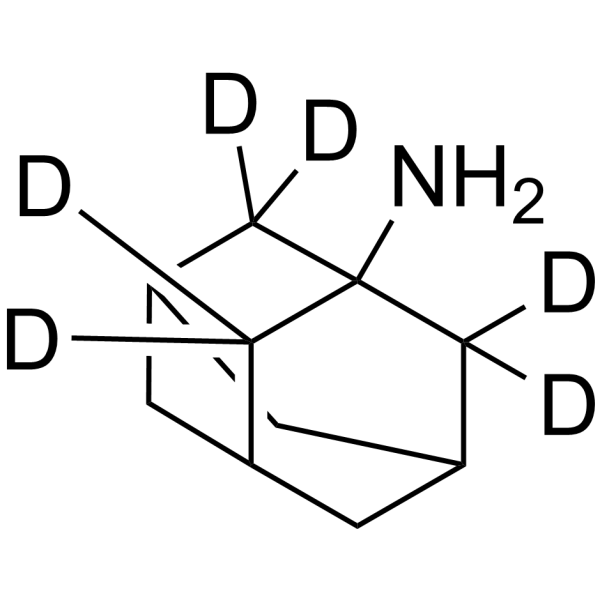
HY-B0402S1
Amantadine-d6Stable Isotope -
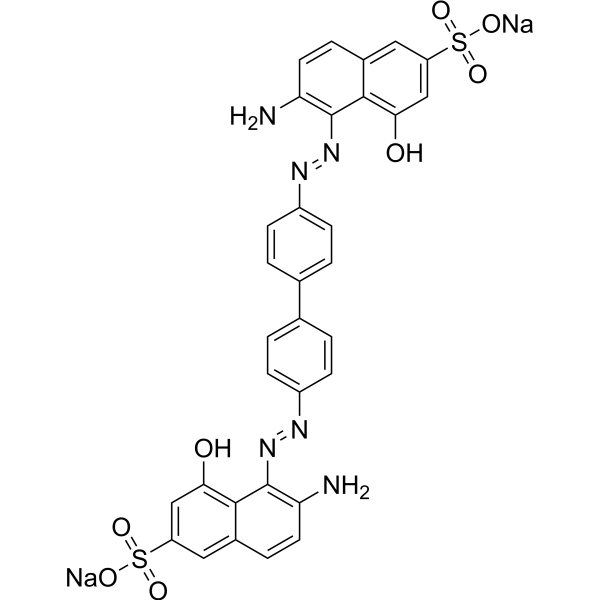
HY-D1270
Direct Violet 1SARS-CoV Inhibitor -

HY-100442R
Paquinimod (Standard)S100A8/A9 Inhibitor -

HY-17367AR
Atazanavir sulfate (Standard)HIV Protease Inhibitor -

HY-19727AR
FOY 251 (Standard)Proteinase Inhibitor
Publications Citing Use of MedChemExpress (MCE) Amantadine sulfate
More- Signal Transduct Target Ther. 2021 Mar 27;6(1):134. [Abstract]
- Int J Nanomedicine. 2019 Nov 27:14:9217-9234. [Abstract]
- Emerg Microbes Infect. 2025 Dec;14(1):2564308. [Abstract]
- Int J Mol Sci. 2025 Jun 3;26(11):5358. [Abstract]
- PLoS Pathog. 2026 Jan 26;22(1):e1013903. [Abstract]
- ACS Infect Dis. 2025 Jun 13;11(6):1437-1447. [Abstract]
- Virol J. 2025 Jun 4;22(1):181. [Abstract]
- Open Forum Infect Dis. 2025 Apr 10;12(5):ofaf212. [Abstract]
- Chem Phys Lipids. 2024 Aug:262:105397. [Abstract]
- Vet Microbiol. 2026 May:316:110992. [Abstract]
- bioRxiv. 2026 Jun 10.


Biological Activity
Description
IC50 & Target
|
CDK2 |
Bcl-2 |
Bax |
In Vitro
Amantadine sulfate (0-500 µM, 26 h) inhibits SARS-CoV-2 replication, with IC50 concentrations between 83 and 119 µM[4].
Amantadine sulfate (0-100 µg/mL, 24-72 h) markedly inhibits the proliferation of HepG2 and SMMC‑7721 cells[6].
Amantadine sulfate (0-75 µg/mL, 48 h) arrests the cell cycle at the G0/G1 phase and induces apoptosis[6].
Amantadine sulfate (0-75 µg/mL, 48 h) reduces the levels of the cell cycle‑related genes and proteins (cyclin D1, cyclin E and CDK2), reduces Bcl-2 and increases the Bax protein and mRNA levels[6].
MedChemExpress (MCE) has not independently confirmed the accuracy of these methods. They are for reference only. Further protocols information, click here.
-
Cell Line:Vero E6 cells
-
Concentration:500 µM, 100 µM, 20 µM, 4 µM, and 8 nM
-
Incubation Time:26 h
-
Result:Caused a concentration-dependent reduction (IC50=83 µM) of viral nucleic acids in the supernatant 26 h after infection at 10-500 µM. Caused a concentration-dependent reduction (IC50=119 µM) of viral nucleic acids in the cytosol 26 h after infection.
-
Cell Line:Human HCC cell lines (HepG2 and SMMC-7721) and normal hepatocellular cells (L02 cells)
-
Concentration:0, 1, 2, 5, 10, 25, 50 and 100 µg/mL
-
Incubation Time:24, 48 and 72 h
-
Result:Inhibited cellular proliferation in a time- and dose-dependent manner in HepG2 and SMMC-7721 cells.
-
Cell Line:HepG2 and SMMC-7721 cells
-
Concentration:0, 10, 25, 50 and 75 µg/mL
-
Incubation Time:48 h
-
Result:Significantly increased the population of HepG2 and SMMC-7721 cells in the G0/G1 phase in a dose-dependent manner, and significantly decreased the number of HepG2 cells in the S phase.
-
Cell Line:HepG2 and SMMC-7721 cells
-
Concentration:0, 10, 25, 50 and 75 µg/mL
-
Incubation Time:48 h
-
Result:Markedly increased the percentage of apoptotic HepG2 and SMMC-7721 cells (early- and late-stage apoptosis) in a dose-dependent manner.
-
Cell Line:HepG2 and SMMC-7721 cells
-
Concentration:0, 10, 25, 50 and 75 µg/mL
-
Incubation Time:48 h
-
Result:Showed downregulation of cyclin D1, cyclin E and CDK2, and showed a decrease in Bcl-2 levels and an increase of Bax levels in HepG2 and SMMC-7721 cells.
-
Cell Line:HepG2 and SMMC-7721 cells
-
Concentration:0, 10, 25, 50 and 75 µg/mL
-
Incubation Time:48 h
-
Result:Revealed an increase in Bax and decrease in Bcl-2 genes.
In Vivo
MedChemExpress (MCE) has not independently confirmed the accuracy of these methods. They are for reference only.
-
Animal Model:Fischer 344 rats (Four-month old, male, 290-330 g, 15 rats each group)[5]
-
Dosage:25 mg/kg
-
Administration:IP, once daily for 3 days (the first dose at 15 min before surgery)
-
Result:Inhibited surgery induced neuroinflammation and learning and memory impairment, increased GDNF (glial cell line-derived neurotrophic factor) that was co-localized with glial fibrillary acidic protein (an astrocytic marker) in the hippocampus.
Clinical Trial
| NCT Number | Sponsor | Condition | Start Date |
Phase

|
|---|---|---|---|---|
| NCT01329991 | Plexxikon| | 2011-05 | PHASE1 |


Chemical Information
-
CAS No. 31377-23-8
-
Molecular Weight 200.18
-
Formula C10H17N.1/2H2O4S
-
SMILES
NC1(C[C@H](C2)C3)C[C@H]3C[C@H]2C1.O=S(O)(O)=O.[1/2]
-
Synonyms
1-Adamantanamine sulfate; 1-Aminoadamantane sulfate
-
Shipping
Room temperature in continental US; may vary elsewhere.
-
Storage
Please store the product under the recommended conditions in the Certificate of Analysis.


Publications (11)
-
Journal Impact Factor
-
Most Recent
-
Signal Transduct Target Ther
Cathepsin L plays a key role in SARS-CoV-2 infection in humans and humanized mice and is a promising target for new drug development. [Abstract]2021 Mar 27;6(1):134. PMID: 33774649 -
Int J Nanomedicine
The Optimization Design Of Lactoferrin Loaded HupA Nanoemulsion For Targeted Drug Transport Via Intranasal Route. [Abstract]2019 Nov 27:14:9217-9234. PMID: 31819426 -
Emerg Microbes Infect
Efficient airborne transmission of influenza D virus in ferret models and serological evidence of human exposure in Northeast China. [Abstract]2025 Dec;14(1):2564308. PMID: 41069204 -
Int J Mol Sci
Lycorine Inhibits Influenza Virus Replication by Affecting Nascent Nucleoporin Nup93 Synthesis. [Abstract]2025 Jun 3;26(11):5358. PMID: 40508167 -
PLoS Pathog
Anti-orthopoxvirus drugs inhibit lumpy skin disease virus replication by targeting viral DNA polymerase. [Abstract]2026 Jan 26;22(1):e1013903. PMID: 41587213 -
ACS Infect Dis
Development of a Universal Type A Influenza Viral RdRp-Induced Reporter System with Potential for Antiviral Drug Screening. [Abstract]2025 Jun 13;11(6):1437-1447. PMID: 40421776 -
Virol J
Bisbenzylisoquinoline alkaloids inhibit influenza virus replication by disrupting endosomal acidification. [Abstract]2025 Jun 4;22(1):181. PMID: 40468427 -
Open Forum Infect Dis
Toward Personalized Medicine: The Effect of Treatment of Chronic Enterovirus Diarrhea in an Immunocompromised Patient and the Correlation With In Vitro Models. [Abstract]2025 Apr 10;12(5):ofaf212. PMID: 40302715 -
Chem Phys Lipids
2024 Aug:262:105397. PMID: 38740276 -
Vet Microbiol
The Chinese medicine monomer Schisandrin C inhibits PRRSV infection by regulating the OGT-PI3K/AKT/mTOR signaling pathway. [Abstract]2026 May:316:110992. PMID: 41865607 -

Protocols
-
Research Protocol for Infectious Diseases
Infectious-disease experiments test how pathogens interact with host barriers, innate immune receptors, inflammatory signaling, pathogen replication, and tissue injury; pattern-recognition receptors such as TLRs, RIG-I-like receptors, NOD-like receptors, and inflammasomes detect microbial molecules and activate NF-κB, interferon, and cytokine responses. The central hypothesis is that infection severity reflects the balance between pathogen burden and host response: protective inflammation restricts pathogen growth, whereas excessive or mislocalized inflammation contributes to tissue damage and disease phenotype. Unresolved questions include which host pathways are protective versus pathogenic, why some infection models fail to translate to human disease, and which combined readouts best predict clinically relevant infection outcomes.
-
Human pluripotent stem cell midbrain dopaminergic neuron differentiation
Human pluripotent stem cells are directed toward midbrain dopaminergic neurons by first inducing a neural floor-plate-like progenitor state, then patterning cells with ventralizing SHH signaling and midbrain/WNT-FGF cues, and finally maturing progenitors into neurons expressing dopaminergic markers such as TH, NURR1/NR4A2, PITX3, DAT/SLC6A3, VMAT2/SLC18A2, GIRK2/KCNJ6, FOXA2, LMX1A, and EN1. The main readouts are loss of pluripotency, acquisition of FOXA2+/LMX1A+ midbrain floor-plate progenitors, emergence of βIII-tubulin+/MAP2+ neurons, and production of TH+ dopaminergic neurons with molecular, dopamine-release, and electrophysiological features of midbrain dopaminergic identity.


Purity & Documentation
References
[1]. Suzuki H, et al. Emergence of amantadine-resistant influenza A viruses: epidemiological study. J Infect Chemother. 2003;9(3):195-200. [Content Brief]
[2]. Hubsher G, et al. Amantadine: the journey from fighting flu to treating Parkinson disease. Neurology. 2012;78(14):1096-1099. [Content Brief]
[3]. Donald F Smee, et al. A review of compounds exhibiting anti-orthopoxvirus activity in animal models. Antiviral Res. 2003 Jan;57(1-2):41-52. [Content Brief]
[4]. Fink K, et al. Amantadine Inhibits SARS-CoV-2 In Vitro. Viruses. 2021 Mar 24;13(4):539. [Content Brief]
[5]. Zhang J, et al. Amantadine alleviates postoperative cognitive dysfunction possibly by increasing glial cell line-derived neurotrophic factor in rats. Anesthesiology. 2014 Oct;121(4):773-85. [Content Brief]
[6]. Lan Z, et al. Amantadine inhibits cellular proliferation and induces the apoptosis of hepatocellular cancer cells in vitro. Int J Mol Med. 2015;36(3):904-910. [Content Brief]

Calculators
Concentration (start) × Volume (start) = Concentration (final) × Volume (final)


Amantadine sulfate Related Classifications
HY-B0402B Related Classifications
 Powered by Bioz
Keywords
- Amantadine
- 31377-23-8
- 1-Adamantanamine
- 1-Aminoadamantane
- Influenza Virus
- Orthopoxvirus
- SARS-CoV
- Apoptosis
- CDK
- Bcl-2 Family
- M2 proton channel
- antiviral
- Parkinson's disease
- Vero E6 cells
- antiviral drugs
- Covid-19
- SARS-CoV-2
- orthopoxvirus
- memory impairment
- Postoperative cognitive dysfunction
- POCD
- Neuroinflammation
- HCC cells
- HepG2
- SMMC 7721
- hepatitis C virus
- anticancer
- liver cancer
- Inhibitor
- inhibitor
- inhibit