



THZ2
Based on 6 publication(s) in Google Scholar
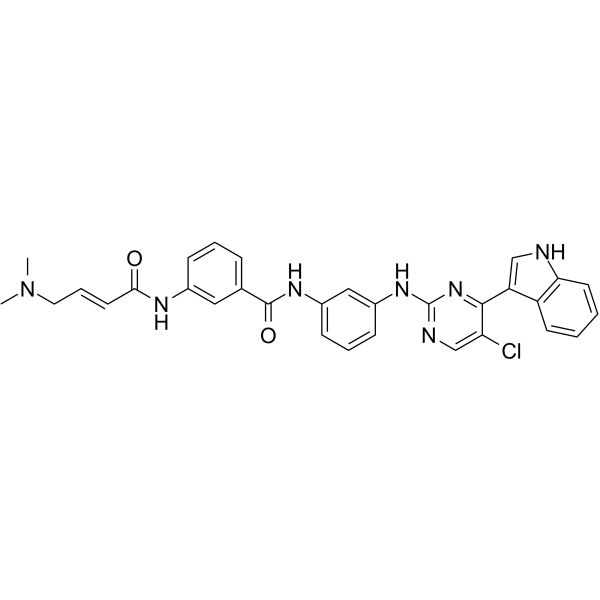
THZ2 is a potent and selective CDK7 inhibitor with an IC50 of 13.9 nM.
For research use only. We do not sell to patients.
- Purity : 99.03%
- CAS No.: 1604810-84-5
- Formula: C31H28ClN7O2
- Molecular Weight:566.05
-
Storage:Powder -20°C, 3 years , 4°C, 2 years ; In solvent -80°C, 2 years , -20°C, 1 year

To place orders, for customer services and technical support, please contact: MedChemExpress USA
Tel: 609-228-6898 E-mail: [email protected] [email protected]


-
 Biological Activity
-
Chemical Information
-
Solvent & Solubility
- Purity & Documentation
- References
-
 Help & FAQs


-
HY-80013
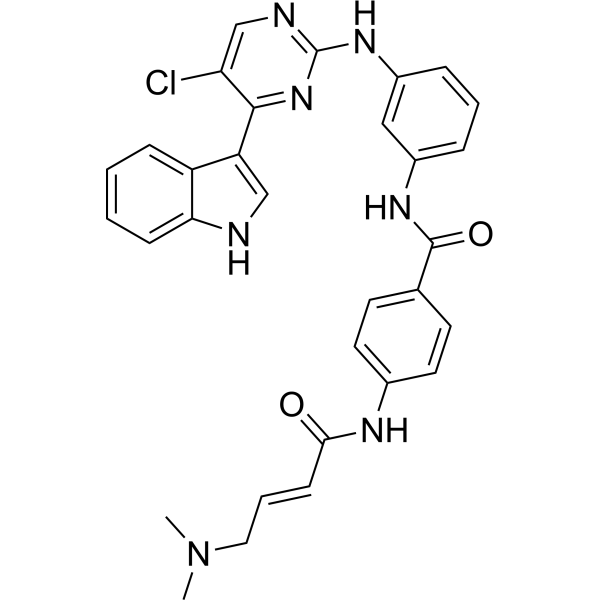
THZ1CDK7 Inhibitor -
HY-138293
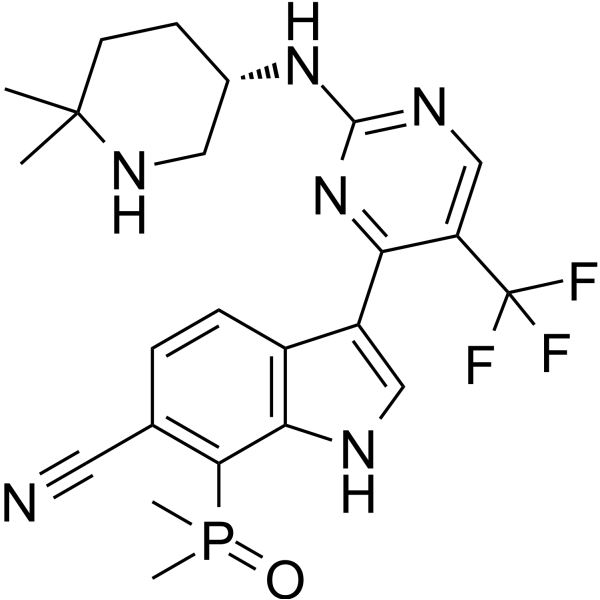
SY-5609CDK7 Inhibitor -
HY-10492
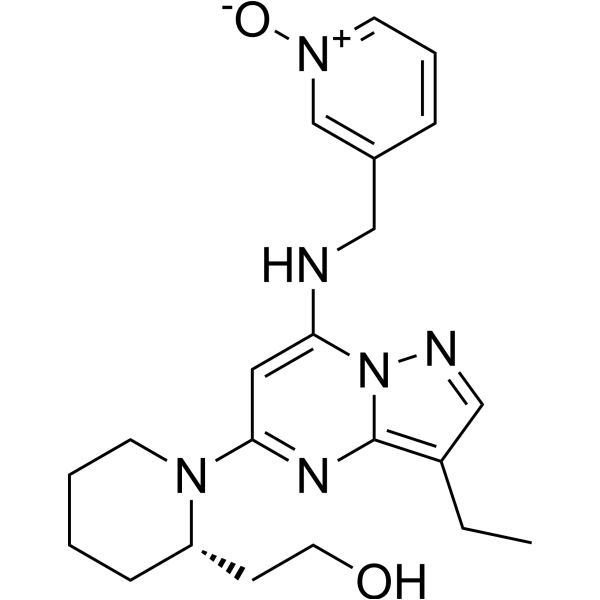
DinaciclibCDK2/5/9 Inhibitor -
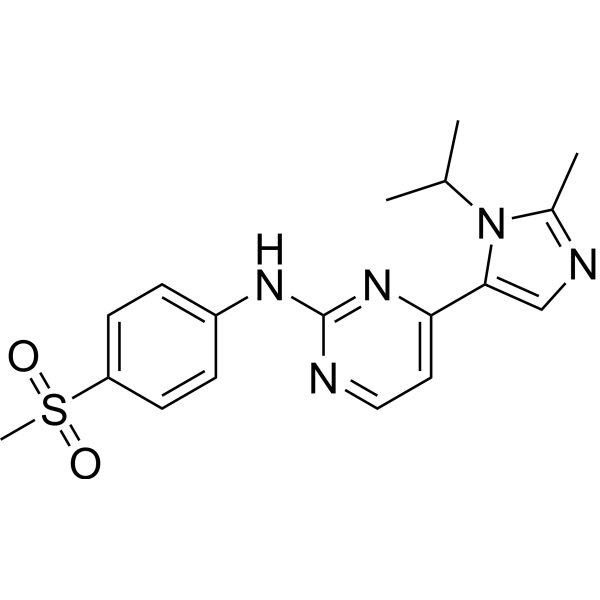
HY-10012
AZD-5438CDK1/2/9 Inhibitor -
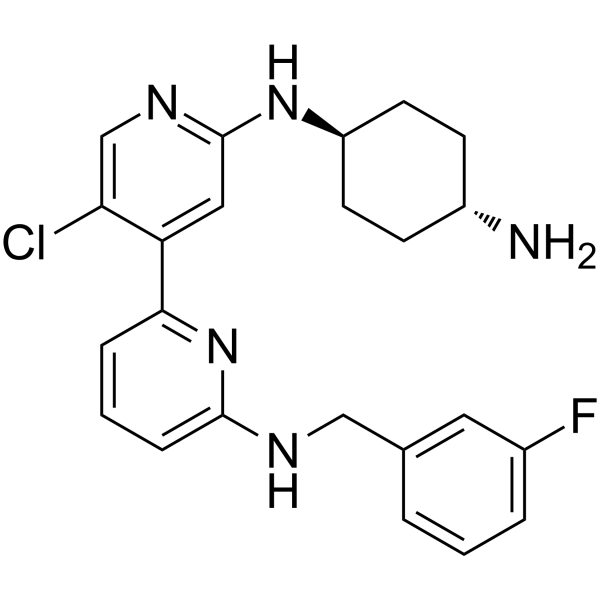
HY-16462
CDK9-IN-2CDK9 Inhibitor -
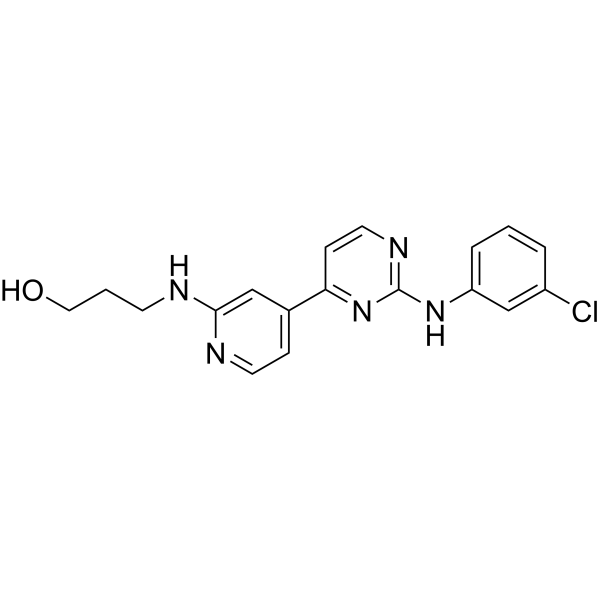
HY-11009
CGP60474CDK/PKC Inhibitor -
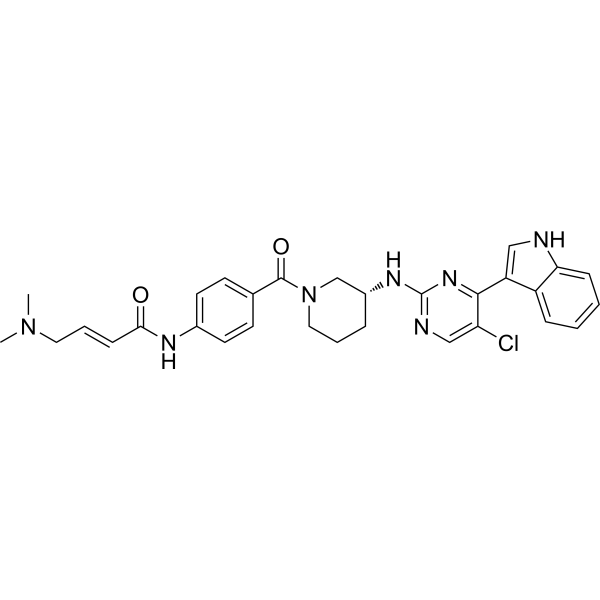
HY-103618
THZ531CDK12/13 Inhibitor -
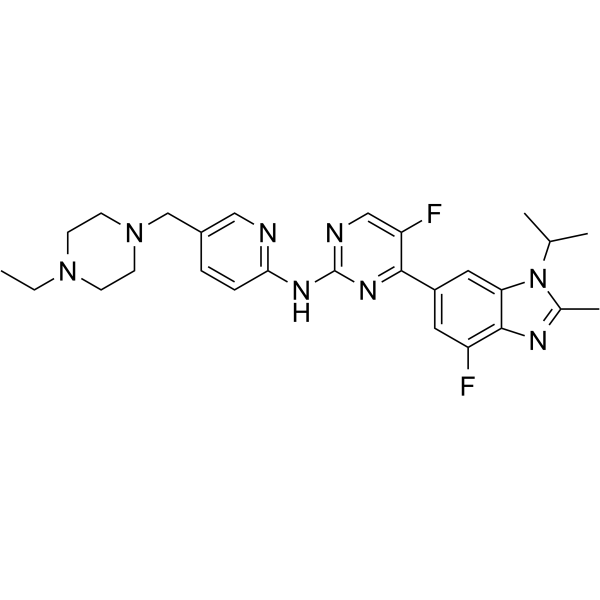
HY-16297A
AbemaciclibCDK4/6 Inhibitor -
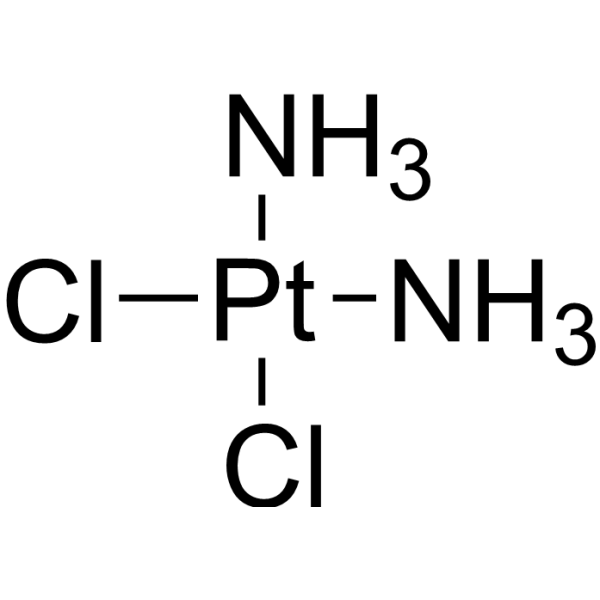
HY-17394
CisplatinDNA Alkylator -
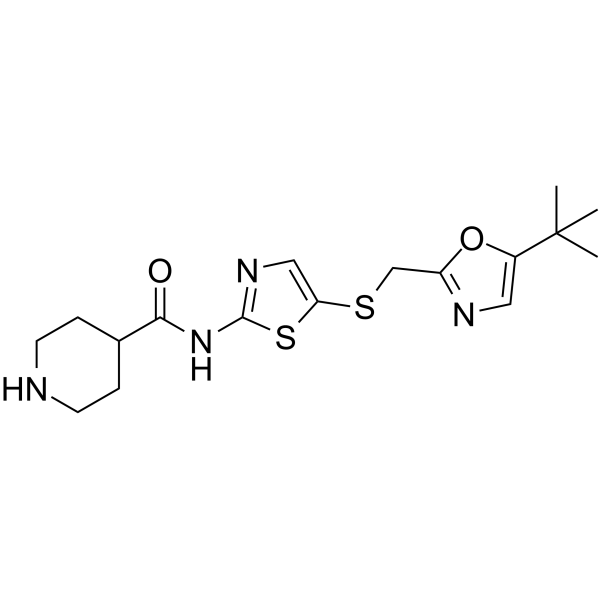
HY-10008
SNS-032CDK Inhibitor -
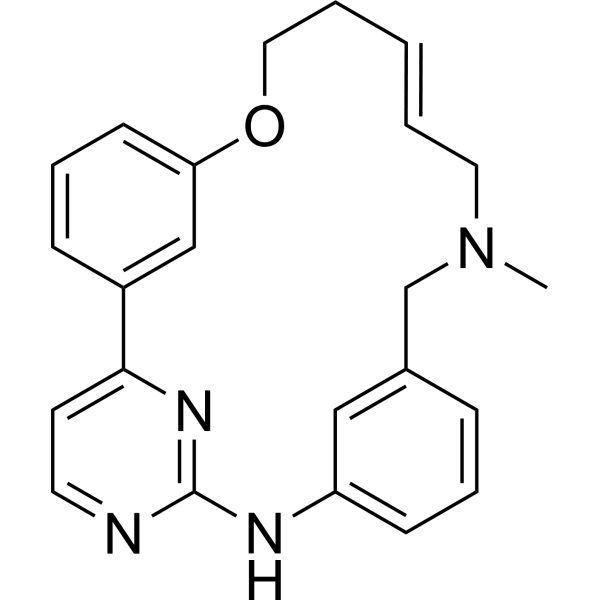
HY-15166
(E/Z)-ZotiraciclibCDK/JAK2/FLT3 Inhibitor -
HY-50914
AZD5597CDK Inhibitor
Publications Citing Use of MedChemExpress (MCE) THZ2
More

Biological Activity
Description
IC50 & Target
[1]|
CDK7 13.9 nM (IC50) |
CDK1 96.9 nM (IC50) |
CDK2 222 nM (IC50) |
CDK5 134 nM (IC50) |
CDK9 194 nM (IC50) |
CDK8 6830 nM (IC50) |
Cellular Effect
|
Cell Line

|
Type | Value | Description | References |
|---|---|---|---|---|
| AGS | IC50 |
0.19 μM
Compound: 24; THZ2
|
Cytotoxicity against human AGS cells assessed as reduction in cell viability
Cytotoxicity against human AGS cells assessed as reduction in cell viability
|
[PMID: 31514062] |
| MGC-803 | IC50 |
0.74 μM
Compound: 24; THZ2
|
Cytotoxicity against human MGC803 cells assessed as reduction in cell viability
Cytotoxicity against human MGC803 cells assessed as reduction in cell viability
|
[PMID: 31514062] |
In Vitro
THZ2 selectively targets CDK7 and potently inhibits the growth of triple-negative but not ER/PR+ breast cancer cells. THZ2 at low nanomolar doses also efficiently suppresses the clonogenic growth of TNBC cells with IC50 of appr 10 nM. THZ2 induces apoptotic cell death in triple-negative but not ER/PR+ breast cancer cells or normal human cells[1].
MedChemExpress (MCE) has not independently confirmed the accuracy of these methods. They are for reference only.
In Vivo
MedChemExpress (MCE) has not independently confirmed the accuracy of these methods. They are for reference only.


Chemical Information
-
CAS No. 1604810-84-5
-
Appearance Solid
-
Molecular Weight 566.05
-
Formula C31H28ClN7O2
-
Color Light yellow to khaki
-
SMILES
O=C(NC1=CC=CC(NC2=NC=C(Cl)C(C3=CNC4=C3C=CC=C4)=N2)=C1)C5=CC=CC(NC(/C=C/CN(C)C)=O)=C5
-
Shipping
Room temperature in continental US; may vary elsewhere.
-
Storage
Powder -20°C 3 years 4°C 2 years In solvent -80°C 2 years -20°C 1 year


Publications (6)
-
Journal Impact Factor
-
Most Recent
-
Nat Cell Biol
Robust gene expression programs underlie recurrent cell states and phenotype switching in melanoma. [Abstract]2020 Aug;22(8):986-998. PMID: 32753671 -
Mol Cell
2025 Oct 17:S1097-2765(25)00785-3. PMID: 41109217 -
Biochim Biophys Acta Mol Basis Dis
Single-cell RNA sequencing and machine learning provide candidate drugs against drug-tolerant persister cells in colorectal cancer. [Abstract]2025 Mar;1871(3):167693. PMID: 39870146 -
-
-


Solvent & Solubility
In Vitro:
DMSO : 21.67 mg/mL (38.28 mM; Need ultrasonic; Hygroscopic DMSO has a significant impact on the solubility of product, please use newly opened DMSO)
Please refer to the solubility information to select the appropriate solvent. Once prepared, please aliquot and store the solution to prevent product inactivation from repeated freeze-thaw cycles.
Storage method and period of stock solution: -80°C, 2 years; -20°C, 1 year. When stored at -80°C, please use it within 2 years. When stored at -20°C, please use it within 1 year.
Please refer to the solubility information to select the appropriate solvent. Once prepared, please aliquot and store the solution to prevent product inactivation from repeated freeze-thaw cycles.
Storage method and period of stock solution: -80°C, 2 years; -20°C, 1 year. When stored at -80°C, please use it within 2 years. When stored at -20°C, please use it within 1 year.
Concentration (start) × Volume (start) = Concentration (final) × Volume (final)
In Vivo:
Select the appropriate dissolution method based on your experimental animal and administration route.
- For the following dissolution methods, please ensure to first prepare a clear stock solution using an In Vitro approach and then sequentially add co-solvents:
- To ensure reliable experimental results, the clarified stock solution can be appropriately stored based on storage conditions. As for the working solution for In Vivo experiments, it is recommended to prepare freshly and use it on the same day.
- The percentages shown for the solvents indicate their volumetric ratio in the final prepared solution. If precipitation or phase separation occurs during preparation, heat and/or sonication can be used to aid dissolution.
Add each solvent one by one: 10% DMSO 40% PEG300 5% Tween-80 45% Saline
Solubility: ≥ 2.17 mg/mL (3.83 mM); Clear solution
This protocol yields a clear solution of ≥ 2.17 mg/mL (saturation unknown).
Taking 1 mL working solution as an example, add 100 μL DMSO stock solution (21.7 mg/mL) to 400 μL PEG300, and mix evenly; then add 50 μL Tween-80 and mix evenly; then add 450 μL Saline to adjust the volume to 1 mL.
Preparation of Saline: Dissolve 0.9 g sodium chloride in ddH₂O and dilute to 100 mL to obtain a clear Saline solution.
In Vivo Dissolution Calculator
Please enter the basic information of animal experiments:
-
-
-
-
Recommended: Prepare an additional quantity of animals to account for potential losses during experiments.
Please enter your animal formula composition:
-
%DMSO +
Recommended: Keep the proportion of DMSO in working solution below 2% if your animal is weak.
-
%+
-
+%Tween-80 + +
-
%Saline +
The co-solvents required include: DMSO, . All of co-solvents are available by MedChemExpress (MCE). , Tween 80. All of co-solvents are available by MedChemExpress (MCE).
Working solution concentration: 0.22 mg/mL
Method for preparing stock solution: mg drug dissolved in μL DMSO. Stock solution concentration: mg/mL.
1. Take μL DMSO stock solution;
2. Add μL .
μL , mix evenly;
3. Then add μL Tween 80, mix evenly;
4. Then add μL
Please ensure that the stock solution in the first step is dissolved to a clear state, and add co-solvents in sequence. You can use ultrasonic heating (ultrasonic cleaner, recommended frequency 20-40 kHz), vortexing, etc. to assist dissolution.


Purity & Documentation
-
Data Sheet (274 KB)
-
SDS (393 KB)
- English - EN (393 KB)
- Français - FR (393 KB)
- Deutsch - DE (393 KB)
- Norwegian - NO (393 KB)
- Español - ES (393 KB)
- Swedish - SV (393 KB)
- Italian - IT (393 KB)
- Korean - KR (393 KB)
- Portuguese - PT (393 KB)
-
Handling Instructions (2659 KB)
References


Complete Stock Solution Preparation Table
Please refer to the solubility information to select the appropriate solvent. Once prepared, please aliquot and store the solution to prevent product inactivation from repeated freeze-thaw cycles.
Storage method and period of stock solution: -80°C, 2 years; -20°C, 1 year. When stored at -80°C, please use it within 2 years. When stored at -20°C, please use it within 1 year.
| Optional Solvent | Concentration Solvent Mass | 1 mg | 5 mg | 10 mg | 25 mg |
|---|---|---|---|---|---|
| DMSO | 1 mM | 1.7666 mL | 8.8331 mL | 17.6663 mL | 44.1657 mL |
| 5 mM | 0.3533 mL | 1.7666 mL | 3.5333 mL | 8.8331 mL | |
| 10 mM | 0.1767 mL | 0.8833 mL | 1.7666 mL | 4.4166 mL | |
| 15 mM | 0.1178 mL | 0.5889 mL | 1.1778 mL | 2.9444 mL | |
| 20 mM | 0.0883 mL | 0.4417 mL | 0.8833 mL | 2.2083 mL | |
| 25 mM | 0.0707 mL | 0.3533 mL | 0.7067 mL | 1.7666 mL | |
| 30 mM | 0.0589 mL | 0.2944 mL | 0.5889 mL | 1.4722 mL |


THZ2 Related Classifications
HY-12280 Related Classifications
 Powered by Bioz