CCR2
CCR2 is a CC chemokine receptor that mediates MCP-1/CCL2-dependent monocyte chemotaxis, receptor binding, and ligand internalization in inflammatory and vascular contexts[1][2]. Mechanistically, the CCR2 amino-terminal domain is necessary and sufficient for high-affinity MCP-1 binding, while tyrosine sulfation enhances CCR2 interaction with monomeric and dimeric MCP-1 and supports leukocyte recruitment[1][3]. In human monocytes, LDL increases CCR2 expression and strengthens MCP-1 chemotactic responses, linking CCR2 signaling to monocyte recruitment during atherogenesis[4]. In disease models, leukocyte-derived CCR2 is critical for angiotensin II-accelerated atherosclerosis and aneurysm formation in hypercholesterolemic mice[5]. CCR2 also mediates MCP-1 binding and internalization along brain microvessels, supporting its use in blood-brain barrier and neuroinflammation models[6]. Compared with related isoforms, CCR2A and CCR2B show cell-specific distribution in idiopathic inflammatory myopathies, where CCR2A appears in vessel walls and mononuclear cells, while CCR2B appears in satellite cells, neuromuscular junction domains, and regenerative fibers[7]. For experimental applications, MCP-1 binds and activates CCR2B as a monomer, and CCR2-blocking antibodies reduce myeloma-cell migration toward bone marrow stromal chemokines[8][9].
Références:
- [1]. Monteclaro FS, et al. The amino-terminal domain of CCR2 is both necessary and sufficient for high affinity binding of monocyte chemoattractant protein 1. Receptor activation by a pseudo-tethered ligand. J Biol Chem. 1997 Sep 12;272(37):23186-90. [Content Brief]
- [2]. Preobrazhensky AA, et al. Monocyte chemotactic protein-1 receptor CCR2B is a glycoprotein that has tyrosine sulfation in a conserved extracellular N-terminal region. J Immunol. 2000 Nov 1;165(9):5295-303. [Content Brief]
- [3]. Tan JHY, et al. Tyrosine sulfation of chemokine receptor CCR2 enhances interactions with both monomeric and dimeric forms of the chemokine monocyte chemoattractant protein-1 (MCP-1). J Biol Chem. 2013 Apr 5;288(14):10024-10034. [Content Brief]
- [4]. Han KH, et al. Chemokine receptor CCR2 expression and monocyte chemoattractant protein-1-mediated chemotaxis in human monocytes. A regulatory role for plasma LDL. Arterioscler Thromb Vasc Biol. 1998 Dec;18(12):1983-91. [Content Brief]
- [5]. Ishibashi M, et al. Bone marrow-derived monocyte chemoattractant protein-1 receptor CCR2 is critical in angiotensin II-induced acceleration of atherosclerosis and aneurysm formation in hypercholesterolemic mice. Arterioscler Thromb Vasc Biol. 2004 Nov;24(11):e174-8. [Content Brief]
- [6]. Dzenko KA, et al. The chemokine receptor CCR2 mediates the binding and internalization of monocyte chemoattractant protein-1 along brain microvessels. J Neurosci. 2001 Dec 1;21(23):9214-23. [Content Brief]
- [7]. Bartoli C, et al. CCR2A and CCR2B, the two isoforms of the monocyte chemoattractant protein-1 receptor are up-regulated and expressed by different cell subsets in idiopathic inflammatory myopathies. Acta Neuropathol. 2001 Oct;102(4):385-92. [Content Brief]
- [8]. Paavola CD, et al. Monomeric monocyte chemoattractant protein-1 (MCP-1) binds and activates the MCP-1 receptor CCR2B. J Biol Chem. 1998 Dec 11;273(50):33157-65. [Content Brief]
- [9]. Vande Broek I, et al. Chemokine receptor CCR2 is expressed by human multiple myeloma cells and mediates migration to bone marrow stromal cell-produced monocyte chemotactic proteins MCP-1, -2 and -3. Br J Cancer. 2003 Mar 24;88(6):855-62. [Content Brief]
-
CCR2 Produits associés (53)
Produits associés (53)

-
Protéines Recombinantes (3)
-
Anticorps (1)
-
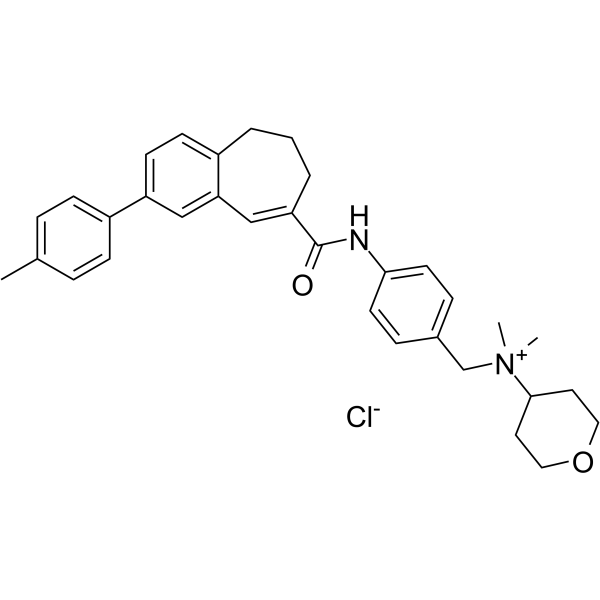
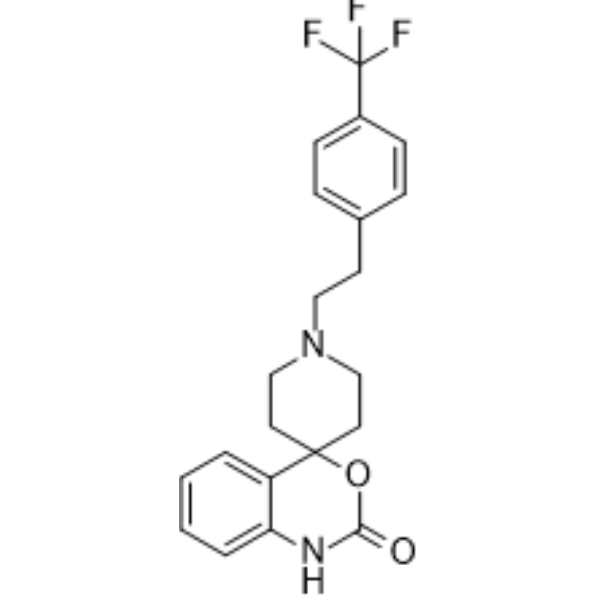
RS 504393
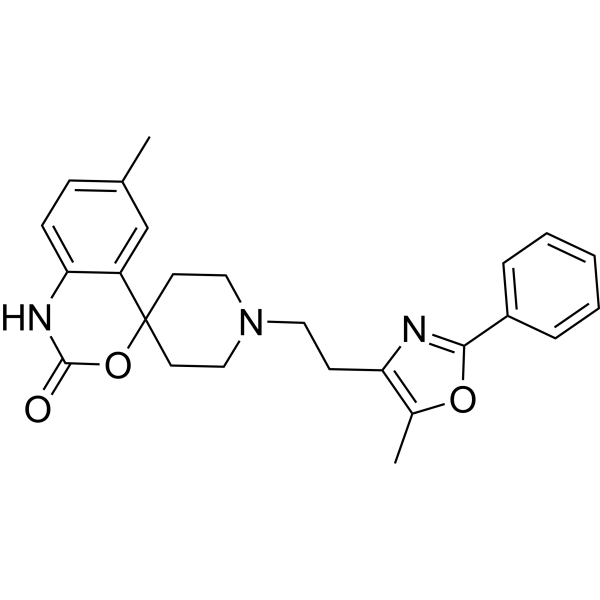 0 ImagesRS 504393 is a selective CCR2 chemokine receptor antagonist (IC50 values are 89 nM and > 100 μM for inhibition of human recombinant CCR2 and CCR1 receptors respectively).
-
Cenicriviroc
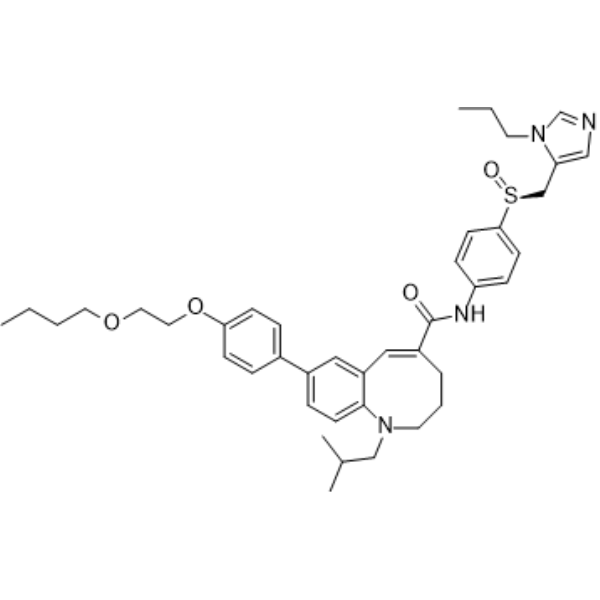 0 ImagesSynonyms: TAK-652; TBR-652

-
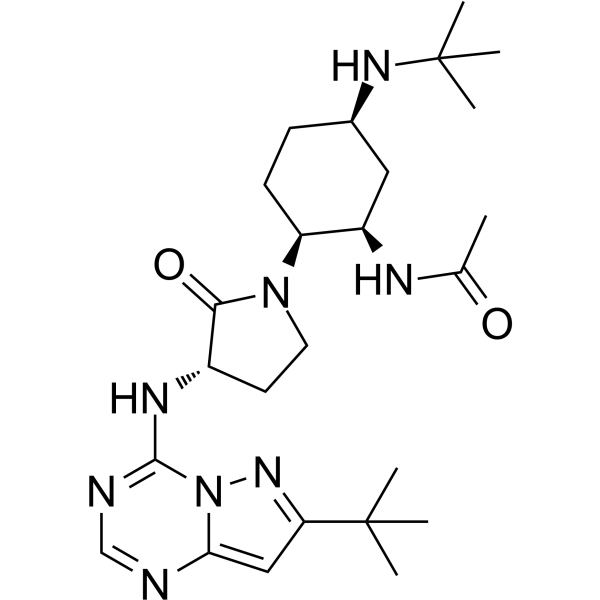
PF-4136309
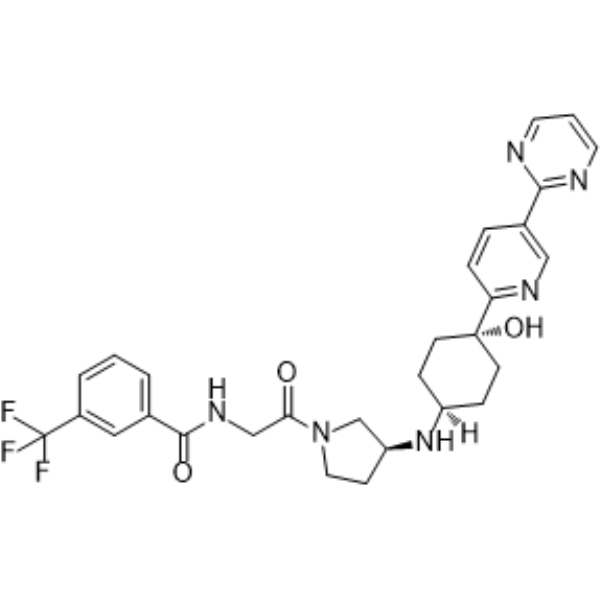 0 ImagesSynonyms: INCB8761
-
Abaucin hydrochloride
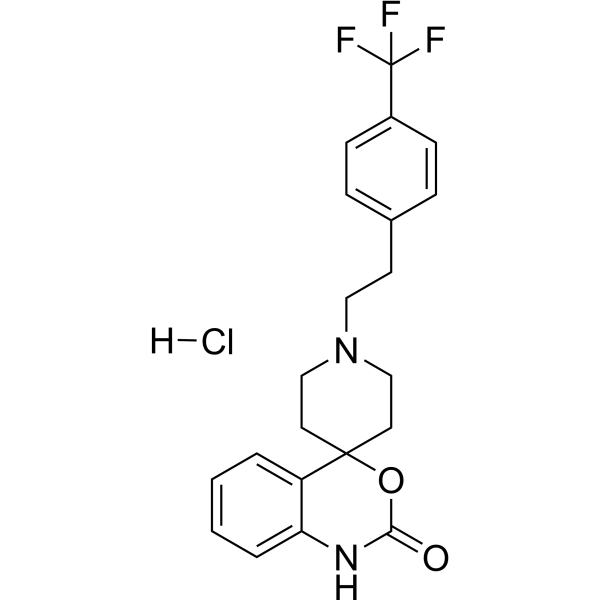 0 ImagesSynonyms: RS102895 hydrochloride; MLJS-21001 hydrochloride
-
CCR2 antagonist 4
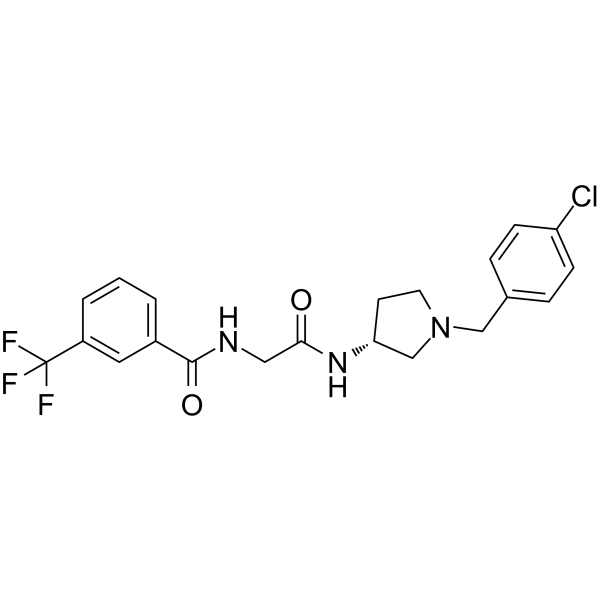 0 ImagesSynonyms: Teijin compound 1CCR2 antagonist 4 (Teijin compound 1) is a potent and specific CCR2 antagonist, with IC50s of 180 nM for CCR2b. CCR2 antagonist 4 potently inhibits MCP-1-induced chemotaxis with an IC50 of 24 nM.
-
Cenicriviroc Mesylate
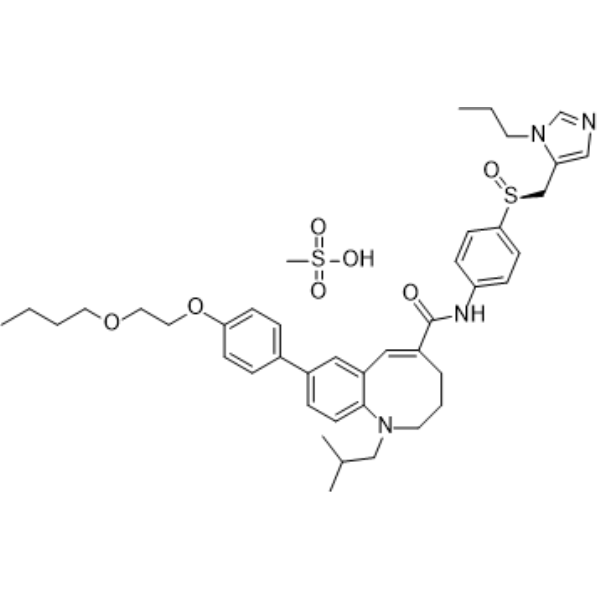 0 ImagesSynonyms: TAK-652 Mesylate; TBR-652 Mesylate
-
YM022
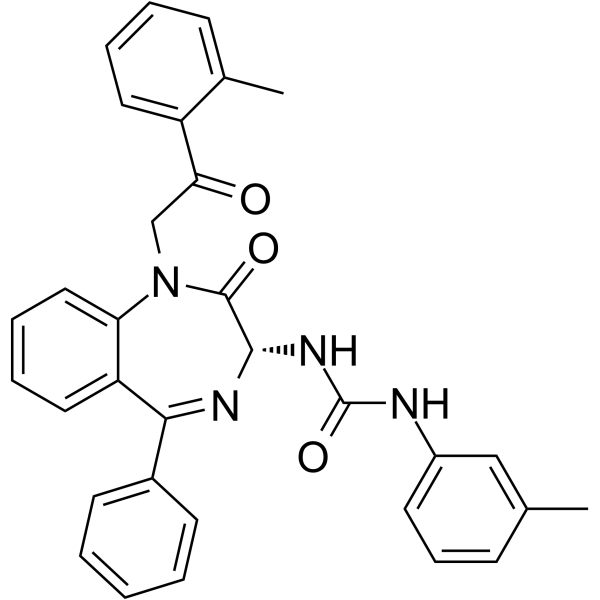 0 ImagesYM022 is a highly potent, selective and orally active gastrin/cholecystokinin (CCK)-B receptor (CCK-BR) antagonist. YM022 shows the Ki values of 68 pM and 63 nM for CCK-B and CCK-A receptor, respectively. YM022 can inhibit gastrin-induced gastric acid secretion and histidine decarboxylase activation in vivo.
-
Plozalizumab
 0 ImagesSynonyms: MLN-1202Plozalizumab (MLN-1202) is a humanized anti-CCR2 IgG1 monoclonal antibody. Plozalizumab blocks the recruitment of myeloid cells to the tumor microenvironment by inhibiting the CCL2/CCR2 axis. In addition, Plozalizumab also ameliorates synovial inflammation in rheumatoid arthritis. Plozalizumab can be used in the research of malignant melanoma and bone metastasis-related cancers. Recommended isotype control: Human IgG1 kappa, Isotype Control (HY-P99001).
-
CCR2-RA-[R]
![CCR2-RA-[R]](https://file.medchemexpress.com/product_pic/hy-50081.gif "Click to View CCR2-RA-[R] Product Detail") 0 ImagesCCR2-RA-[R] is an allosteric antagonist of the C-C chemokine receptor type 2 (CCR2) with an IC50 of 103 nM.
0 ImagesCCR2-RA-[R] is an allosteric antagonist of the C-C chemokine receptor type 2 (CCR2) with an IC50 of 103 nM.
-
Medrysone
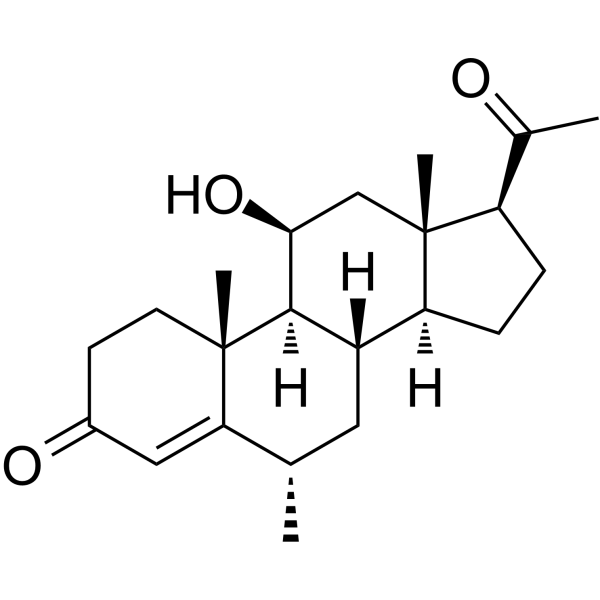 0 ImagesSynonyms: HMS; 6α-Methyl-11β-hydroxyprogesteroneMedrysone (HMS; 6α-Methyl-11β-hydroxyprogesterone) is a STAT6 modulator and M2 macrophage polarization inducer. Medrysone enhances IL-4-triggered STAT6 activation, upregulates the expression of M2 markers, and promotes the secretion of VEGF and CCL2. Medrysone also enhances the pro-migratory activity of M2-like macrophages toward endothelial cells. By regulating macrophage polarization and related repair pathways, Medrysone significantly promotes corneal wound repair in a rat mechanical injury model. Medrysone can be used for research related to corneal injury.
-
INCB 3284
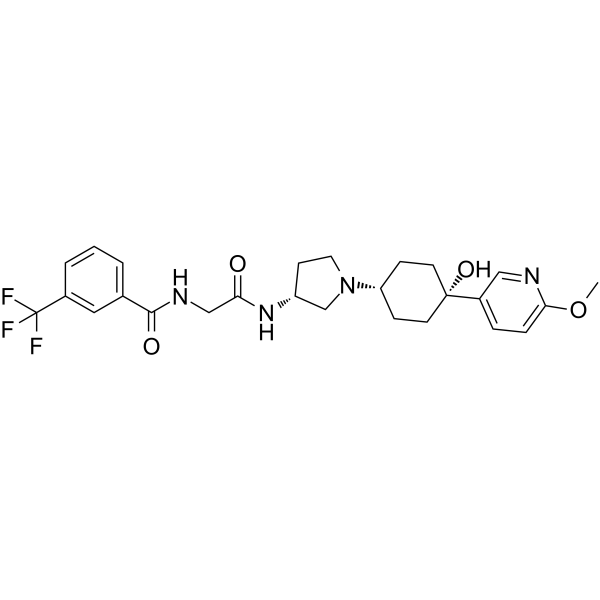 0 ImagesINCB 3284 is a potent, selective and orally bioavailable human CCR2 antagonist, inhibiting monocyte chemoattractant protein-1 binding to hCCR2, with an IC50 of 3.7 nM. INCB 3284 can be used in the research of acute liver failure.
-
CCR2 antagonist 4 hydrochloride
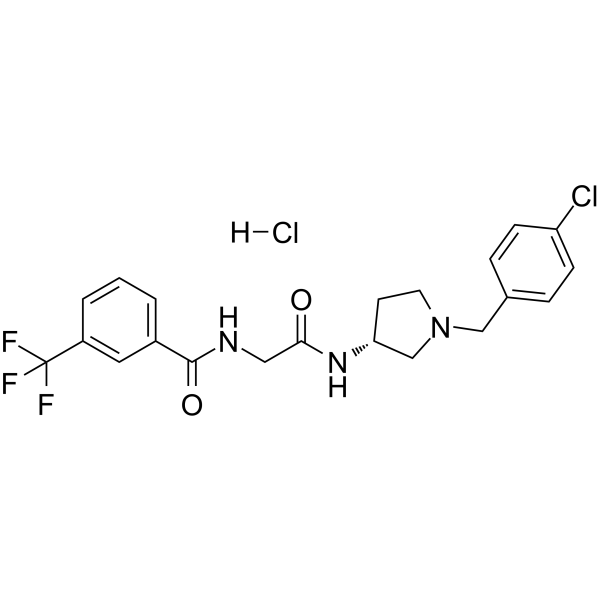 0 ImagesSynonyms: Teijin compound 1 hydrochlorideCCR2 antagonist 4 hydrochloride (Teijin compound 1 hydrochloride) is a potent and specific CCR2 antagonist, with IC50s of 180 nM for CCR2b. CCR2 antagonist 4 hydrochloride potently inhibits MCP-1-induced chemotaxis with an IC50 of 24 nM.
-
BMS CCR2 22
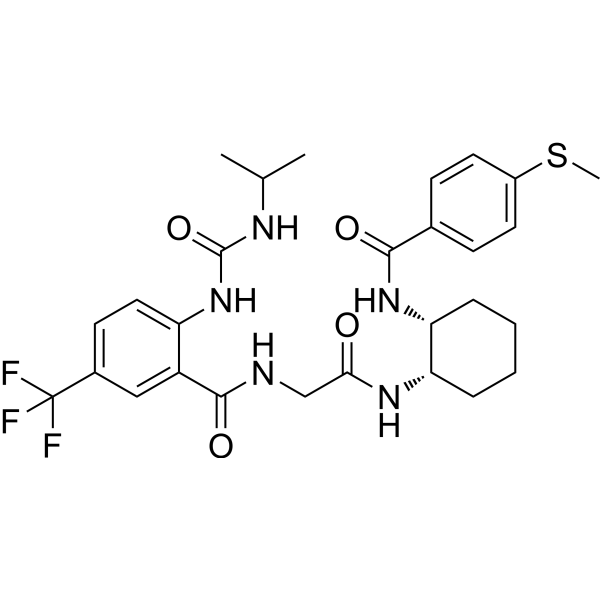 0 ImagesBMS CCR2 22 is a potent, specific and high affinity CC-type chemokine receptor 2 (CCR2) antagonist with excellent binding affinity (binding IC50 of 5.1 nM) and potent functional antagonism (calcium flux IC50 of 18 nM and chemotaxis IC50 of 1 nM).