



Inclisiran
Based on 9 publication(s) in Google Scholar
Inclisiran is a double-stranded small interfering RNA (siRNA) molecule. Inclisiran inhibits the transcription of PCSK9. Inclisiran inhibits Pyroptosis, activates PPARγ, and reduces NLRP3, cleaved caspase-1, IL-1β, and IL-18. Inclisiran has anti-inflammatory, lipid-regulating and anti-atherosclerotic activities. Inclisiran can be used in researches of hyperlipidemia and cardiovascular disease (CVD).
For research use only. We do not sell to patients.
- Purity : 98.81%
- CAS No.: 1639324-58-5
- Molecular Weight:16339.00
-
Storage:
-20°C, stored under nitrogen
* In solvent : -80°C, 6 months; -20°C, 1 month (stored under nitrogen)


To place orders, for customer services and technical support, please contact: MedChemExpress USA
Tel: 609-228-6898 E-mail: [email protected] [email protected]


-
 Biological Activity
-
Chemical Information
-
Solvent & Solubility
- Protocols
- Purity & Documentation
- References
-
 Help & FAQs


-

HY-P99187
BococizumabAnti-human PCSK9 Antibody -

HY-132588
LumasiranGlycolate Oxidase Inhibitor -

HY-P9930
EvolocumabPCSK9 Inhibitor -

HY-132610
GivosiranALAS1 Inhibitor -

HY-132589
VutrisiransiRNA Agent -
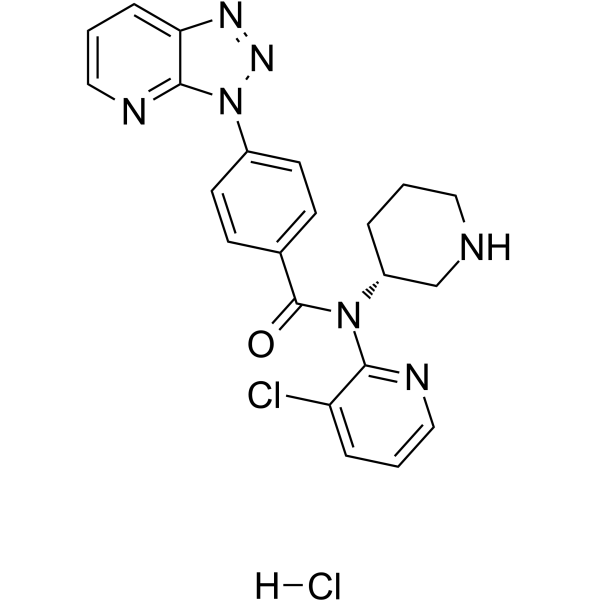
HY-120088A
PF-06446846 hydrochloridePCSK9 Inhibitor -
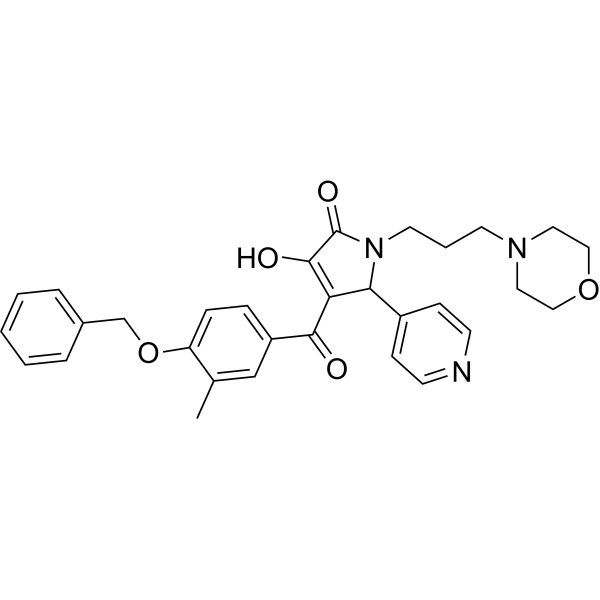
HY-12402
SBC-115076PCSK9 Inhibitor -
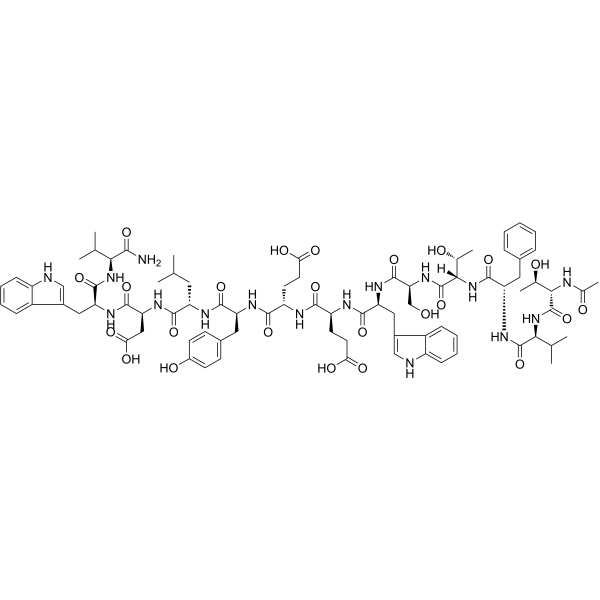
HY-P2276
Pep2-8PCSK9 Inhibitor -
HY-150223
GalNAc unconjugated/naked InclisiranRNA -
HY-148673
LaroprovstatPCSK9 Inhibitor -

HY-P4153
Enlicitide chloridePCSK9 antagonist -

HY-108753
EteplirsenAntisense Oligonucleotide
Publications Citing Use of MedChemExpress (MCE) Inclisiran
More- Nat Cardiovasc Res. 2026 Jun 22. [Abstract]
- Free Radic Biol Med. 2026 Mar 16:246:547-561. [Abstract]
- J Med Chem. 2025 Apr 24;68(8):8190-8207. [Abstract]
- Biochem Pharmacol. 2025 Jul 27;242(Pt 2):117192. [Abstract]
- Drug Metab Dispos. 2025 Jun;53(6):100089. [Abstract]
- Biol Methods Protoc. 2024 May 6;9(1):bpae029. [Abstract]
- SSRN. 2026 Jun 26.
- medRxiv. 2025 Feb 12.
- Ann Transl Med. 2022 Nov;10(22):1205. [Abstract]
 Customer Validation & Images

-
WB
-
IF
-
WB
-
WB
-
Cell Proliferation/Viability Assay
All Caspase Isoforms
More

Biological Activity
Description
|
PPARγ |
IL-1β |
Caspase-1 |
NLRP3 |
In Vitro
Inclisiran (50-200 nM; 48 h) significantly inhibits cell death, cytotoxicity, and downregulates mRNA and protein expressions of pyroptosis-related factors in ox-LDL-induced HUVECs[2].
Inclisiran (50-200 nM; 48 h) inhibits ox-LDL-induced foam cell formation in Raw264.7 macrophages by activating the PPARγ pathway[3].
MedChemExpress (MCE) has not independently confirmed the accuracy of these methods. They are for reference only. Further protocols information, click here.
-
Cell Line:Human umbilical vein endothelial cells (HUVECs) treated with 25 μg/mL ox-LDL
-
Concentration:50 nM, 100 nM, 200 nM
-
Incubation Time:48 h
-
Result:Decreased the protein expression of NLRP3, ASC, cleaved caspase-1, GSDMD-N, IL-1β, and IL-18.
-
Cell Line:Raw264.7 macrophages treated with ox-LDL
-
Concentration:50 nM, 100 nM, 200 nM
-
Incubation Time:48 h
-
Result:Increased PPARγ, SR-B1, ApoE, ABCA1.
Decreased SR-A, LOX-1, CD36.
In Vivo
MedChemExpress (MCE) has not independently confirmed the accuracy of these methods. They are for reference only.
-
Animal Model:Male ApoE-/- mice (8 weeks old, 17-20 g); high-fat diet (HFD)-induced atherosclerosis model[2]
-
Dosage:1, 5, 10 mg/kg (dissolved in PBS)
-
Administration:Intraperitoneal injection; 20 weeks
-
Result:Significantly reduced LDL-C, TC, TG, and increased HDL-C in plasma.
Decreased aortic plaque area and lipid deposition.
Decreased pyroptosis-related factors (NLRP3, ASC, GSDMD, IL-1β, IL-18).
Clinical Trial
| NCT Number | Sponsor | Condition | Start Date |
Phase

|
|---|---|---|---|---|
| NCT01329991 | Plexxikon| | 2011-05 | PHASE1 |


Chemical Information
-
CAS No. 1639324-58-5
-
Appearance Solid
-
Molecular Weight 16339.00
-
Color White to off-white
-
SMILES
[Inclisiran]
-
Synonyms
ALN-PCSsc
-
Sequence
RNA, (Am-sp-(2'-deoxy-2'-fluoro)C-sp-Am-(2'-deoxy-2'-fluoro)A-(2'-deoxy-2'- fluoro)A-(2'-deoxy-2'-fluoro)A-Gm-(2'-deoxy-2'-fluoro)C-Am-(2'-deoxy-2'-fluoro)AAm-(2'-deoxy-2'-fluoro)A-Cm-(2'-deoxy-2'-fluoro)A-Gm-(2'-deoxy-2'-fluoro)G-Um-(2'-deoxy-2'-fluoro)C-Um-Am-Gm-sp-Am-sp-Am), complex with RNA (Cm-sp-Umsp -Am-Gm-Am-Cm-(2'-deoxy-2'-fluoro)C-Um-(2'-deoxy-2'-fluoro)G-Um-dT-UmUm-Gm-Cm-Um-Um-Um-Um-Gm-Um) 3'-[[(2S,4R)-1-[29-[[2-(acetylamino)-2- deoxy-β-D-galactopyranosyl]oxy]-14,14-bis[[3-[[3-[[5-[[2-(acetylamino)-2-deoxy-βD-galactopyranosyl]oxy]-1-oxopentyl]amino]propyl]amino]-3-oxopropoxy]methyl]- 1,12,19,25-tetraoxo-16-oxa-13,20,24-triazanonacos-1-yl]-4-hydroxy-2- pyrrolidinyl]methyl hydrogen phosphate] (1:1)
-
Shipping
Room temperature in continental US; may vary elsewhere.
-
Storage
-20°C, stored under nitrogen
* In solvent : -80°C, 6 months; -20°C, 1 month (stored under nitrogen)


Publications (9)
-
Journal Impact Factor
-
Most Recent
-
Nat Cardiovasc Res
Proteomics reveals spatial and molecular heterogeneities in advanced atherosclerotic carotid artery plaques. [Abstract]2026 Jun 22. PMID: 42332205 -
Free Radic Biol Med
Inclisiran attenuates Alzheimer's disease-like changes by suppressing microvascular endothelial ferroptosis to preserve blood-brain barrier integrity. [Abstract]2026 Mar 16:246:547-561. PMID: 41605321
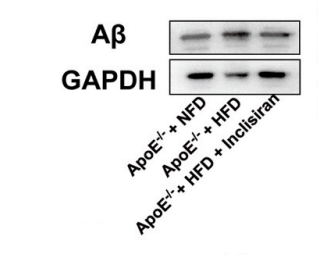
Inclisiran purchased from MedChemExpress. Usage Cited in: Free Radic Biol Med. 2026 Mar 16:246:547-561. [Abstract]
Inclisiran sodium (5 mg/kg). Western blot and quantitative analysis of Aβ expression in the cortex of ApoE-/− mice.
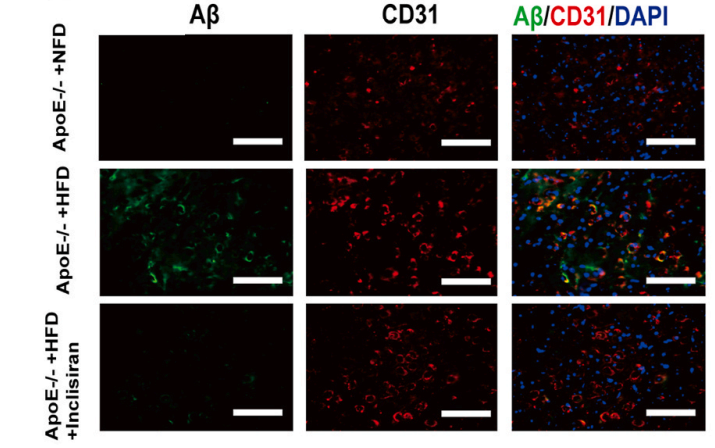
Inclisiran purchased from MedChemExpress. Usage Cited in: Free Radic Biol Med. 2026 Mar 16:246:547-561. [Abstract]
Inclisiran sodium (5 mg/kg). Colocalization of Aβ in microvascular endothelial cells of ApoE −/− mouse brain (scale bar: 75 μm; DAPI (blue fluorescence) indicates cell nuclei, Aβ (green) and CD31 (red)).
Inclisiran purchased from MedChemExpress. Usage Cited in: Free Radic Biol Med. 2026 Mar 16:246:547-561. [Abstract]
Inclisiran sodium (5 mg/kg). Western blot and quantitative analysis of ACSL4 and GPX4 expression in the cortex of ApoE-/− mice.
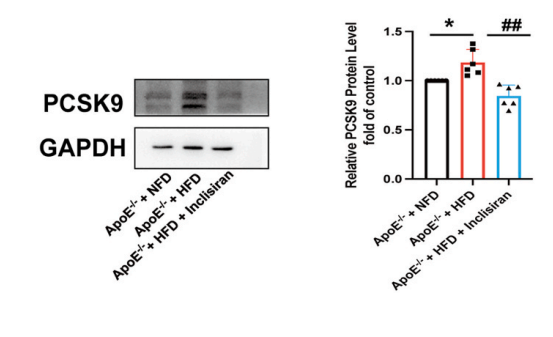
Inclisiran purchased from MedChemExpress. Usage Cited in: Free Radic Biol Med. 2026 Mar 16:246:547-561. [Abstract]
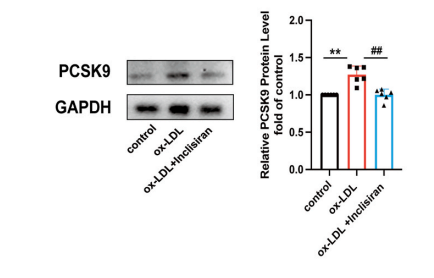
Western blot and quantitative analyses of PCSK9 expression after ox-LDL (50 μg/mL) and Inclisiran (100 nmol/L) treatment in HCMEC/D3 cells.
Inclisiran purchased from MedChemExpress. Usage Cited in: Free Radic Biol Med. 2026 Mar 16:246:547-561. [Abstract]
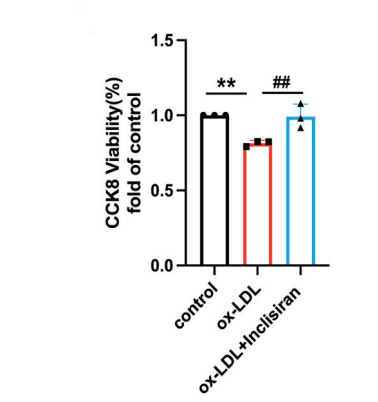
Cell viability of HCMEC/D3 cells after treatment with ox-LDL (50 μg/mL) and Inclisiran (100 nmol/L) measured by CCK-8 assay.
-
J Med Chem
PCSK9 Targeted Autophagosome-Tethering Compounds: Design, Synthesis, and Antiatherosclerosis Evaluation. [Abstract]2025 Apr 24;68(8):8190-8207. PMID: 40226893 -
Biochem Pharmacol
Intracellular fatty acid levels differentially impact target silencing by FDA-approved siRNA drugs. [Abstract]2025 Jul 27;242(Pt 2):117192. PMID: 40730278 -
Drug Metab Dispos
Comparative metabolism of an N-acetylgalactosamine-conjugated small interfering RNA, inclisiran, among various in vitro systems and correlations with in vivo metabolism in rats. [Abstract]2025 Jun;53(6):100089. PMID: 40505270 -
Biol Methods Protoc
A highly sensitive stem-loop RT-qPCR method to study siRNA intracellular pharmacokinetics and pharmacodynamics. [Abstract]2024 May 6;9(1):bpae029. PMID: 38783988 -
-
-
Ann Transl Med
PCSK9 inhibitor inclisiran for treating atherosclerosis via regulation of endothelial cell pyroptosis. [Abstract]2022 Nov;10(22):1205. PMID: 36544639


Solvent & Solubility
In Vitro:
H2O : 5 mg/mL (0.31 mM; Need ultrasonic)

Protocols
-
Apoptosis Solutions
Apoptosis is a regulated, generally non-lytic cell-death pathway that removes unwanted, damaged, infected, or abnormal cells through coordinated morphological changes, caspase activation, DNA fragmentation, and membrane remodeling. The intrinsic apoptosis pathway is controlled mainly by mitochondrial outer membrane permeabilization, BCL-2 family proteins, cytochrome c release, apoptosome formation, caspase-9 activation, and downstream executioner caspase-3/7 activation. The extrinsic apoptosis pathway is initiated by death receptors such as Fas, TNFR, and TRAIL receptors, which recruit adaptor proteins and activate caspase-8 before engaging executioner caspases or mitochondrial amplification through BID cleavage. Apoptosis is linked to many phenotypes, including cancer cell killing, tissue homeostasis, immune regulation, neurodegeneration, infection response, and treatment-induced cytotoxicity; unresolved questions include how apoptosis interacts with necroptosis, pyroptosis, ferroptos
-
RNA interference technology
RNA interference (RNAi) is a cellular mechanism that inhibits gene expression by suppressing gene transcription or activating RNA degradation. This mechanism was discovered in plants in 1998 by Andrew Fire and Craig Mello. Today, this phenomenon can be observed in almost all eukaryotes, including protozoa, flies, nematodes, insects, parasites, and mammals.
-
Research Protocol for Cardiovascular Diseases
Cardiovascular disease can be modeled as maladaptive cardiac remodeling, where ischemic injury or pressure overload activates inflammatory signaling, fibroblast activation, extracellular-matrix deposition, cardiomyocyte hypertrophy, vascular remodeling, and progressive ventricular dysfunction. The TGF-β/SMAD axis is a central profibrotic pathway after myocardial injury and pressure overload, while innate immune and cytokine pathways regulate leukocyte recruitment, scar formation, and adverse remodeling. Key unresolved questions include which inflammatory signals are reparative versus harmful, when fibrosis is protective versus maladaptive, and whether pathway inhibition improves function without weakening necessary infarct healing or compensatory remodeling.
-
Research Protocol for Inflammation-related Diseases
The NLRP3 inflammasome is a cytosolic innate immune signaling platform that integrates priming signals and danger-signal activation to promote caspase-1 activation, maturation of IL-1β and IL-18, and gasdermin D-mediated pyroptotic cell death. The core experimental logic is to determine whether inflammatory disease phenotypes are driven by increased NLRP3 expression, ASC-containing inflammasome assembly, caspase-1 cleavage, GSDMD cleavage, and extracellular release of IL-1β/IL-18 rather than by nonspecific cell injury alone. The pathway is strongly linked to inflammation-related disease phenotypes because monosodium urate crystals activate NALP3/NLRP3 inflammasome signaling in gout-like crystal inflammation, cholesterol crystals activate NLRP3 inflammasomes in atherogenesis models, and DSS-induced intestinal inflammation has been reported to involve NLRP3 inflammasome activity. However, experimental colitis studies also show context-dependent protective effects of NLRP3 inflammasome co
-
Pyroptosis Solutions
Pyroptosis is a lytic inflammatory cell-death pathway executed by gasdermin pores, most classically through inflammasome-mediated activation of caspase-1, cleavage of gasdermin D, membrane pore formation, LDH release, and secretion of IL-1β and IL-18. The canonical pathway is commonly modeled by priming cells with an inflammatory signal such as LPS to induce pro-IL-1β and inflammasome components, followed by an activation signal such as ATP or nigericin to activate NLRP3, ASC speck formation, caspase-1 cleavage, GSDMD cleavage, cytokine release, and pyroptotic membrane rupture. The non-canonical pathway is triggered when cytosolic LPS activates mouse caspase-11 or human caspase-4/5, leading to GSDMD cleavage and pyroptosis, and this can secondarily activate NLRP3-dependent IL-1β release. Pyroptosis is linked to inflammatory injury, infection, cancer, liver disease, ocular disease, placental inflammation, and other disease phenotypes, but unresolved questions include which gasdermin fam


Purity & Documentation
-
Data Sheet (280 KB)
-
SDS (394 KB)
- English - EN (394 KB)
- Français - FR (394 KB)
- Deutsch - DE (394 KB)
- Norwegian - NO (394 KB)
- Español - ES (394 KB)
- Swedish - SV (394 KB)
- Italian - IT (394 KB)
- Korean - KR (394 KB)
- Portuguese - PT (394 KB)
-
Handling Instructions (2242 KB)
References
[1]. Constantine E Kosmas, et al. Inclisiran for the Treatment of Cardiovascular Disease: A Short Review on the Emerging Data and Therapeutic Potential. Ther Clin Risk Manag. 2020 Oct 28;16:1031-1037. [Content Brief]
[2]. Kong N, Xu Q, Cui W, Feng X, Gao H. PCSK9 inhibitor inclisiran for treating atherosclerosis via regulation of endothelial cell pyroptosis. Ann Transl Med. 2022;10(22):1205. [Content Brief]
[3]. Wang Z, et al. Inclisiran inhibits oxidized low-density lipoprotein-induced foam cell formation in Raw264.7 macrophages via activating the PPARγ pathway. Autoimmunity. 2022 Jun;55(4):223-232. [Content Brief]

Calculators
Concentration (start) × Volume (start) = Concentration (final) × Volume (final)


Inclisiran Related Classifications
HY-132591 Related Classifications
 Powered by Bioz