



Duocarmycin SA

Based on 1 Customer Validation
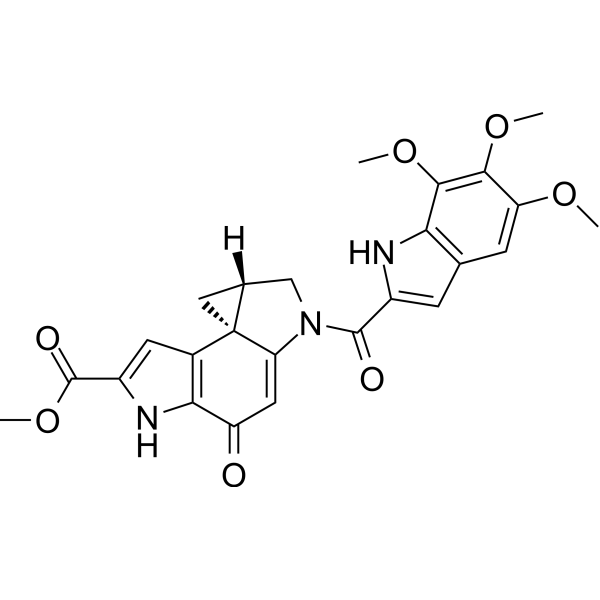
Duocarmycin SA is an orally active antitumor antibiotic with an IC50 of 10 pM. Duocarmycin SA is an extremely potent cytotoxic agent capable of inducing a sequence-selective alkylation of duplex DNA. Duocarmycin SA demonstrates synergistic cytotoxicity against glioblastoma multiforme (GBM) cells treated with proton radiation in vitro.
For research use only. We do not sell to patients.
- Purity : 99.89%
- CAS No.: 130288-24-3
- Formula: C25H23N3O7
- Molecular Weight:477.47
-
Storage:
-20°C, stored under nitrogen
* In solvent : -80°C, 6 months; -20°C, 1 month (stored under nitrogen)

To place orders, for customer services and technical support, please contact: MedChemExpress USA
Tel: 609-228-6898 E-mail: [email protected] [email protected]


-
 Biological Activity
-
Chemical Information
-
Solvent & Solubility
- Protocols
- Purity & Documentation
- References
-
 Help & FAQs


-
HY-101161
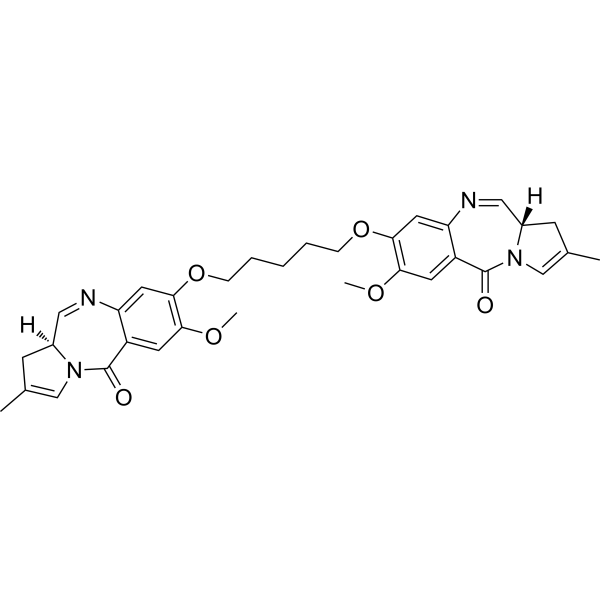
SG3199PBD Dimer -
HY-10162
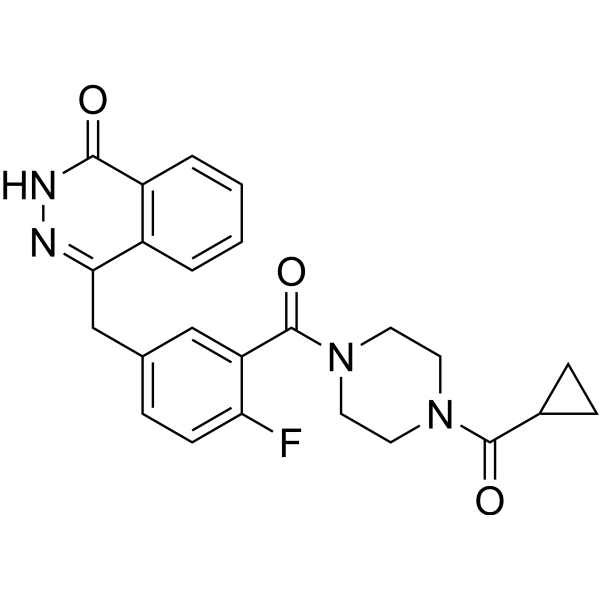
OlaparibPARP Inhibitor -
HY-101488
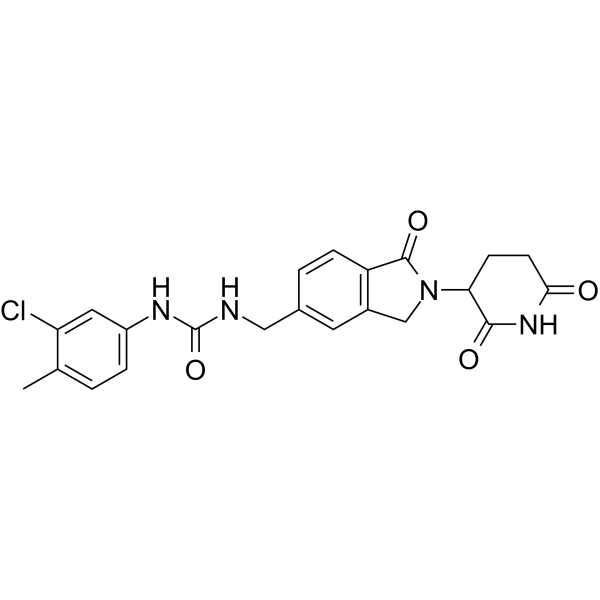
CC-885CRBN Modulator/GSPT1 Molecular Glue Degrader -
HY-15162
Monomethyl auristatin EAntimitotic Agent -
HY-107769
Duocarmycin TMDNA Alkylator -
HY-19609
CalicheamicinDNA-binding ADC Cytotoxin -
HY-12454
DM4Tubulin Inhibitor -
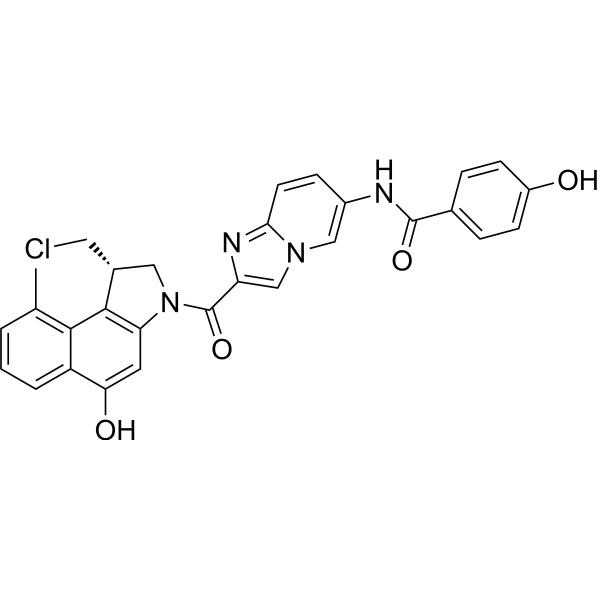
HY-132180A
Seco-DUBADUBA Prodrug -
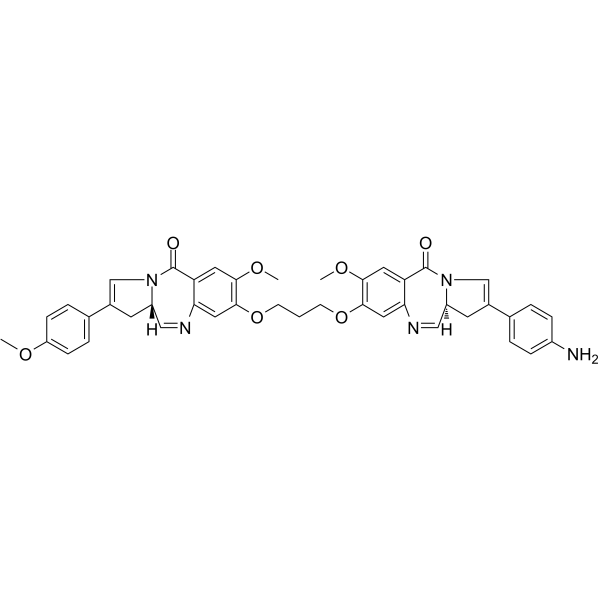
HY-101127
SGD-1882Pyrrolobenzodiazepine Dimer -
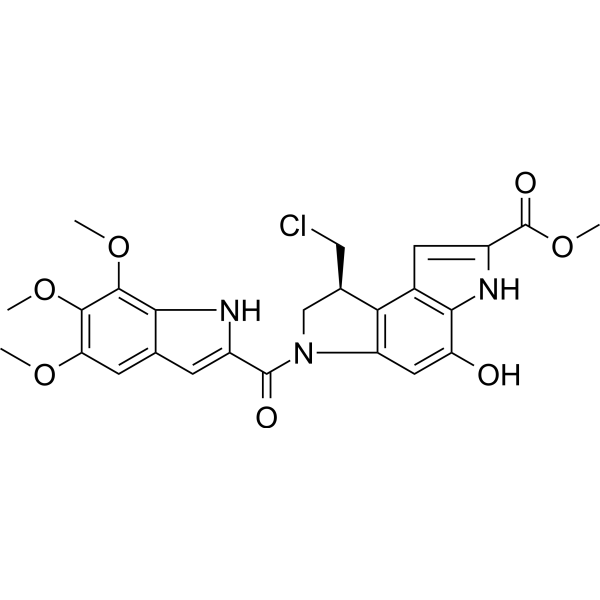
HY-129356A
(S)-Seco-Duocarmycin SAS-enantiomer -
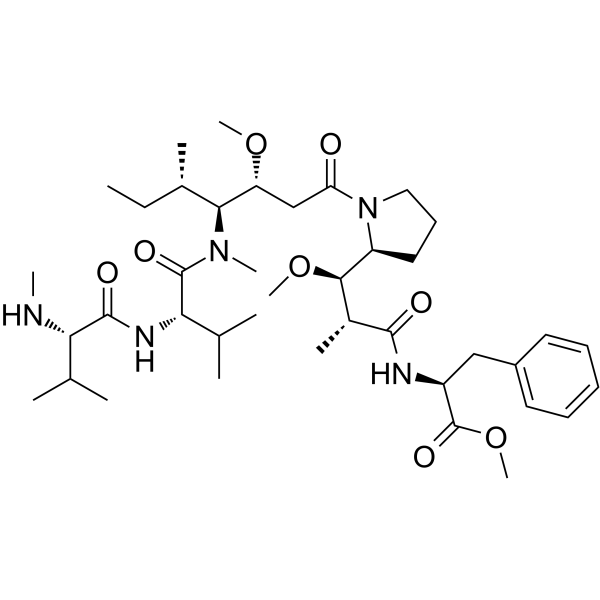
HY-79256
MMAF-OMeADC Cytotoxin -
HY-15584
TaltobulinTubulin Inhibitor
All Antibiotic Isoforms
More

Biological Activity
Description
IC50 & Target
|
Duocarmycins |
Cellular Effect
|
Cell Line

|
Type | Value | Description | References |
|---|---|---|---|---|
| L1210 | IC50 |
10 pM
Compound: (+)-Duocarmycin SA
|
In vitro cytotoxicity against L1210 cell line
In vitro cytotoxicity against L1210 cell line
|
[PMID: 10743956] |
| L1210 | IC50 |
10 pM
Compound: 1
|
Cytotoxicity against mouse L1210 cells
Cytotoxicity against mouse L1210 cells
|
[PMID: 19639994] |
| L1210 | IC50 |
10 pM
Compound: (+)-1, (+)-duocarmycin SA
|
Cytotoxicity against mouse L1210 cells
Cytotoxicity against mouse L1210 cells
|
[PMID: 19879753] |
| L1210 | IC50 |
10 pM
Compound: (+)-1, (+)-duocarmycin SA
|
Cytotoxicity against mouse L1210 cells
Cytotoxicity against mouse L1210 cells
|
[PMID: 20171886] |
| L1210 | IC50 |
6 pM
Compound: 1
|
Cytotoxicity against mouse L1210 cells
Cytotoxicity against mouse L1210 cells
|
[PMID: 20381346] |
| L1210 | IC50 |
0.01 nM
Compound: 2, duocarmycin SA
|
Cytotoxicity against mouse L1210 cells
Cytotoxicity against mouse L1210 cells
|
[PMID: 20942408] |
| L1210 | IC50 |
0.01 nM
Compound: 1
|
Cytotoxicity against mouse L1210 cells
Cytotoxicity against mouse L1210 cells
|
[PMID: 22650244] |
| L1210 | IC50 |
0.01 nM
Compound: 1, natural
|
Cytotoxicity against mouse L1210 cells assessed as growth inhibition after 72 hrs by phosphatase assay
Cytotoxicity against mouse L1210 cells assessed as growth inhibition after 72 hrs by phosphatase assay
|
[PMID: 23627265] |
| L1210 | IC50 |
10 pM
Compound: (+)-1
|
Cytotoxicity against mouse L1210 cells assessed as cell growth inhibition
Cytotoxicity against mouse L1210 cells assessed as cell growth inhibition
|
[PMID: 27221071] |
| U138-MG | IC50 |
0.0018 nM
Compound: DSA
|
Anticlonogenic activity against human U138MG cells assessed as decrease in cell survival after 14 days by methylene blue staining based method
Anticlonogenic activity against human U138MG cells assessed as decrease in cell survival after 14 days by methylene blue staining based method
|
[PMID: 29650288] |
| U138-MG | IC50 |
0.4 nM
Compound: DSA
|
Cytotoxicity against human U138MG cells assessed as decrease in cell viability after 72 hrs by trypan blue dye based assay
Cytotoxicity against human U138MG cells assessed as decrease in cell viability after 72 hrs by trypan blue dye based assay
|
[PMID: 29650288] |
| U138-MG | IC50 |
0.443 nM
Compound: DSA
|
Anticlonogenic activity against human U138MG cells assessed as decrease in cell survival pretreated for 2 hrs followed by 1 to 8 Gy dose of proton irradiation measured after 10 to 14 days by methylene blue staining based method
Anticlonogenic activity against human U138MG cells assessed as decrease in cell survival pretreated for 2 hrs followed by 1 to 8 Gy dose of proton irradiation measured after 10 to 14 days by methylene blue staining based method
|
[PMID: 29650288] |
In Vitro
Duocarmycin SA (DSA) (0.1-1 nM; 72 hours) inhibits U-138 cell viability in a dose-dependent manner and activates apoptotic and necrotic pathways[2].
Duocarmycin SA (0.1 nM; 72 hours) sensitizes human glioma cells to proton irradiation[2].
MedChemExpress (MCE) has not independently confirmed the accuracy of these methods. They are for reference only.
-
Cell Line:U-138 cells
-
Concentration:0.1, 0.5, 1 nM
-
Incubation Time:72 hours
-
Result:Produced a significant concentration-dependent decrease in cell viability, with 65% cell survival observed at 0.1 nM, and plateauing at a minimum of 25% cell survival at 0.5 nM, with no increase in cytotoxicity observed at higher doses.
The IC50 of Duocarmycin SA for U-138 MG cells is 0.4 nM.
Demonstrated strong cytotoxicity, with an IC50 of 0.0018 nM (1.8 pM).
-
Cell Line:U-138 cells
-
Concentration:0.001, 0.1 nM
-
Incubation Time:3 or 14 days
-
Result:Increased radio sensitivity of U-138 GBM cells by the activation of apoptotic and necrotic pathways.
Greatly reduced survival fractions at different proton radiation doses (1-8 Gy).
In Vivo
MedChemExpress (MCE) has not independently confirmed the accuracy of these methods. They are for reference only.
-
Animal Model:Murine lymphocytic leukemia P388 transplanted in CDF1 mice [3]
-
Dosage:0.143 mg/kg
-
Administration:Intraperitoneal injection (i.p.), single dose
-
Result:Showed a significant 30% increase in life span.


Chemical Information
-
CAS No. 130288-24-3
-
Appearance Solid
-
Molecular Weight 477.47
-
Formula C25H23N3O7
-
Color Off-white to light yellow
-
SMILES
O=C(C(N1)=CC([C@@]23[C@@](C3)([H])CN(C(C(N4)=CC5=C4C(OC)=C(OC)C(OC)=C5)=O)C2=C6)=C1C6=O)OC
-
Shipping
Room temperature in continental US; may vary elsewhere.
-
Storage
-20°C, stored under nitrogen
* In solvent : -80°C, 6 months; -20°C, 1 month (stored under nitrogen)


Solvent & Solubility
In Vitro:
DMSO : ≥ 50 mg/mL (104.72 mM; Hygroscopic DMSO has a significant impact on the solubility of product, please use newly opened DMSO)
* "≥" means soluble, but saturation unknown.
Please refer to the solubility information to select the appropriate solvent. Once prepared, please aliquot and store the solution to prevent product inactivation from repeated freeze-thaw cycles.
Storage method and period of stock solution: -80°C, 6 months; -20°C, 1 month (stored under nitrogen). When stored at -80°C, please use it within 6 months. When stored at -20°C, please use it within 1 month.
Please refer to the solubility information to select the appropriate solvent. Once prepared, please aliquot and store the solution to prevent product inactivation from repeated freeze-thaw cycles.
Storage method and period of stock solution: -80°C, 6 months; -20°C, 1 month (stored under nitrogen). When stored at -80°C, please use it within 6 months. When stored at -20°C, please use it within 1 month.
Concentration (start) × Volume (start) = Concentration (final) × Volume (final)
In Vivo:
Select the appropriate dissolution method based on your experimental animal and administration route.
- For the following dissolution methods, please ensure to first prepare a clear stock solution using an In Vitro approach and then sequentially add co-solvents:
- To ensure reliable experimental results, the clarified stock solution can be appropriately stored based on storage conditions. As for the working solution for In Vivo experiments, it is recommended to prepare freshly and use it on the same day.
- The percentages shown for the solvents indicate their volumetric ratio in the final prepared solution. If precipitation or phase separation occurs during preparation, heat and/or sonication can be used to aid dissolution.
Add each solvent one by one: 10% DMSO 40% PEG300 5% Tween-80 45% Saline
Solubility: ≥ 2.5 mg/mL (5.24 mM); Clear solution
This protocol yields a clear solution of ≥ 2.5 mg/mL (saturation unknown).
Taking 1 mL working solution as an example, add 100 μL DMSO stock solution (25.0 mg/mL) to 400 μL PEG300, and mix evenly; then add 50 μL Tween-80 and mix evenly; then add 450 μL Saline to adjust the volume to 1 mL.
Preparation of Saline: Dissolve 0.9 g sodium chloride in ddH₂O and dilute to 100 mL to obtain a clear Saline solution.
In Vivo Dissolution Calculator
Please enter the basic information of animal experiments:
-
-
-
-
Recommended: Prepare an additional quantity of animals to account for potential losses during experiments.
Please enter your animal formula composition:
-
%DMSO +
Recommended: Keep the proportion of DMSO in working solution below 2% if your animal is weak.
-
%+
-
+%Tween-80 + +
-
%Saline +
The co-solvents required include: DMSO, . All of co-solvents are available by MedChemExpress (MCE). , Tween 80. All of co-solvents are available by MedChemExpress (MCE).
Working solution concentration: 0.22 mg/mL
Method for preparing stock solution: mg drug dissolved in μL DMSO. Stock solution concentration: mg/mL. * In solvent : -80°C, 6 months; -20°C, 1 month (stored under nitrogen)
1. Take μL DMSO stock solution;
2. Add μL .
μL , mix evenly;
3. Then add μL Tween 80, mix evenly;
4. Then add μL
Please ensure that the stock solution in the first step is dissolved to a clear state, and add co-solvents in sequence. You can use ultrasonic heating (ultrasonic cleaner, recommended frequency 20-40 kHz), vortexing, etc. to assist dissolution.


Purity & Documentation
-
Data Sheet (277 KB)
-
SDS (557 KB)
- English - EN (557 KB)
- Français - FR (557 KB)
- Deutsch - DE (557 KB)
- Norwegian - NO (557 KB)
- Español - ES (557 KB)
- Swedish - SV (557 KB)
- Italian - IT (557 KB)
- Korean - KR (557 KB)
- Portuguese - PT (557 KB)
-
Handling Instructions (2659 KB)
References
[1]. MacMillan KS, et al. Synthesis and evaluation of a thio analogue of duocarmycin SA. Bioorg Med Chem Lett. 2009 Dec 15;19(24):6962-5. [Content Brief]
[2]. Boyle KE, et.al. Duocarmycin SA, a potent antitumor antibiotic, sensitizes glioblastoma cells to proton radiation. Bioorg Med Chem Lett. 2018 Sep 1;28(16):2688-2692. [Content Brief]
[3]. Ichimura M,et.al. Duocarmycin SA, a new antitumor antibiotic from Streptomyces sp. J Antibiot (Tokyo). 1990 Aug;43(8):1037-8. [Content Brief]


Complete Stock Solution Preparation Table
Please refer to the solubility information to select the appropriate solvent. Once prepared, please aliquot and store the solution to prevent product inactivation from repeated freeze-thaw cycles.
Storage method and period of stock solution: -80°C, 6 months; -20°C, 1 month (stored under nitrogen). When stored at -80°C, please use it within 6 months. When stored at -20°C, please use it within 1 month.
| Optional Solvent | Concentration Solvent Mass | 1 mg | 5 mg | 10 mg | 25 mg |
|---|---|---|---|---|---|
| DMSO | 1 mM | 2.0944 mL | 10.4719 mL | 20.9437 mL | 52.3593 mL |
| 5 mM | 0.4189 mL | 2.0944 mL | 4.1887 mL | 10.4719 mL | |
| 10 mM | 0.2094 mL | 1.0472 mL | 2.0944 mL | 5.2359 mL | |
| 15 mM | 0.1396 mL | 0.6981 mL | 1.3962 mL | 3.4906 mL | |
| 20 mM | 0.1047 mL | 0.5236 mL | 1.0472 mL | 2.6180 mL | |
| 25 mM | 0.0838 mL | 0.4189 mL | 0.8377 mL | 2.0944 mL | |
| 30 mM | 0.0698 mL | 0.3491 mL | 0.6981 mL | 1.7453 mL | |
| 40 mM | 0.0524 mL | 0.2618 mL | 0.5236 mL | 1.3090 mL | |
| 50 mM | 0.0419 mL | 0.2094 mL | 0.4189 mL | 1.0472 mL | |
| 60 mM | 0.0349 mL | 0.1745 mL | 0.3491 mL | 0.8727 mL | |
| 80 mM | 0.0262 mL | 0.1309 mL | 0.2618 mL | 0.6545 mL | |
| 100 mM | 0.0209 mL | 0.1047 mL | 0.2094 mL | 0.5236 mL |


Duocarmycin SA Related Classifications
HY-12456 Related Classifications
 Powered by Bioz