



KT-474
Based on 3 publication(s) in Google Scholar
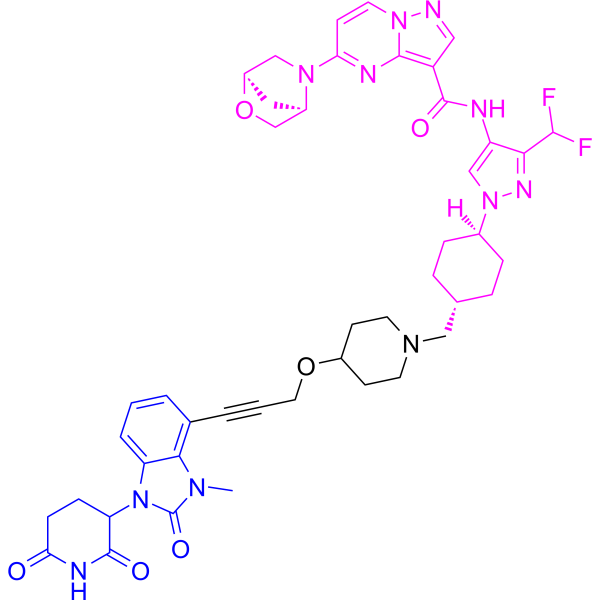
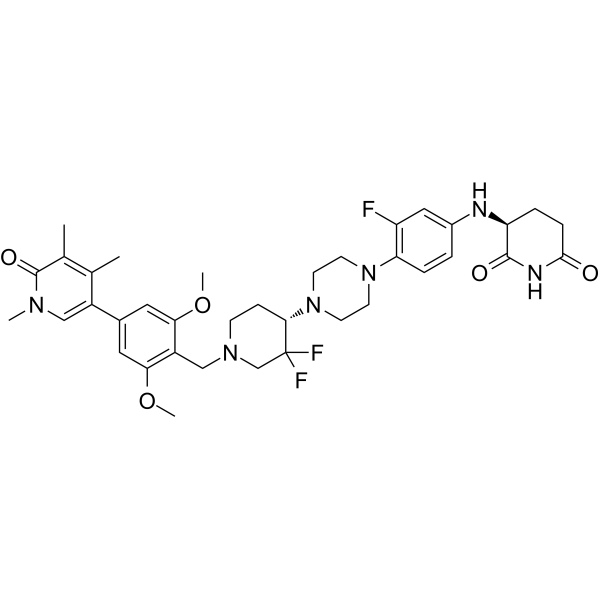
KT-474 (KYM-001) is a selective, orally active PROTAC IRAK4 degrader that induces potent IRAK4 degradation in OCI-Ly10 cells with a DC50 of 2 nM. KT-474 induces IRAK4 degradation via the ubiquitin-proteasome system and reduces proinflammatory cytokine production. KT-474 demonstrates potent cross-species IRAK4 degradation, induces cell cycle inhibition and apoptosis in certain tumor cells, and exhibits antitumor activity. KT-474 can be used for studies of inflammatory and autoimmune diseases, including acute lung injury, sepsis, hidradenitis suppurativa, atopic dermatitis, and psoriasis, as well as diffuse large B-cell lymphoma.
(Pink: IRAK4 ligand (HY-145484); Blue: Cereblon ligand (HY-45512); Black: linker).
연구목적의 판매만을 진행합니다. 환자를 대상으로 한 판매는 하지 않습니다.
- Purity : 99.41%
- CAS No.: 2432994-31-3
- 화학식: C44H49F2N11O6
- 분자량:865.93
-
보관:
-20°C, stored under nitrogen
* In solvent : -80°C, 6 months; -20°C, 1 month (stored under nitrogen)

To place orders, for customer services and technical support, please contact: MedChemExpress USA
Tel: 609-228-6898 E-mail: [email protected] [email protected]


-
 Biological Activity
-
Chemical Information
-
용액&용해도
- Protocol
- 순도&문서
- References
-
 Help & FAQs


-
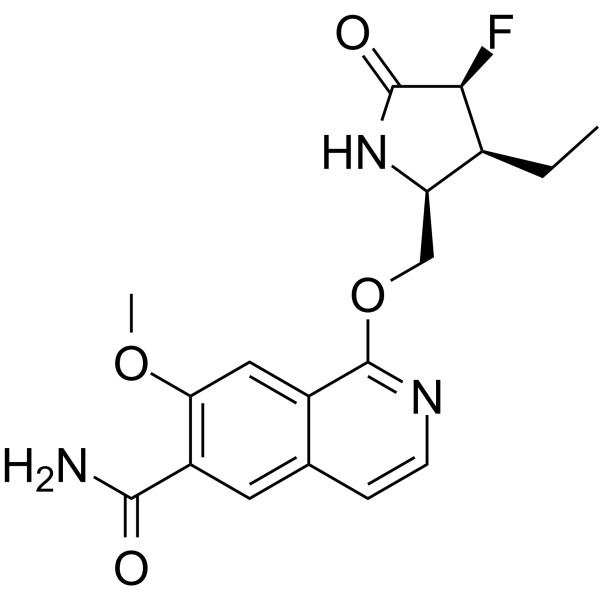
HY-19836
ZimlovisertibIRAK4 Inhibitor -
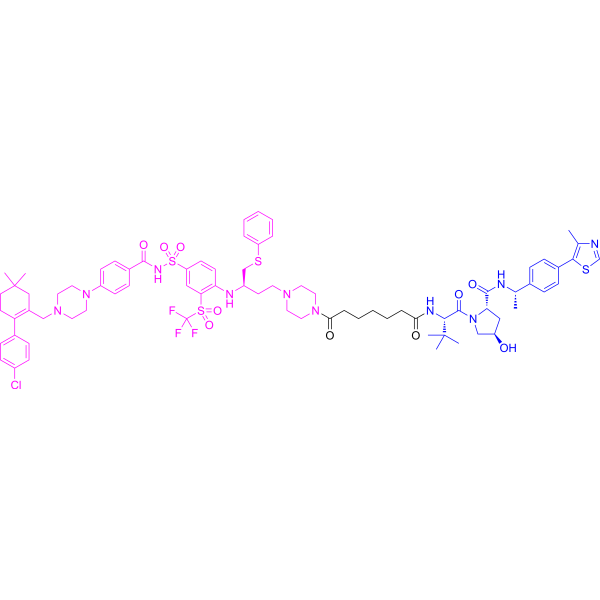
HY-130604
DT2216PROTAC BCL-XL Degrader -
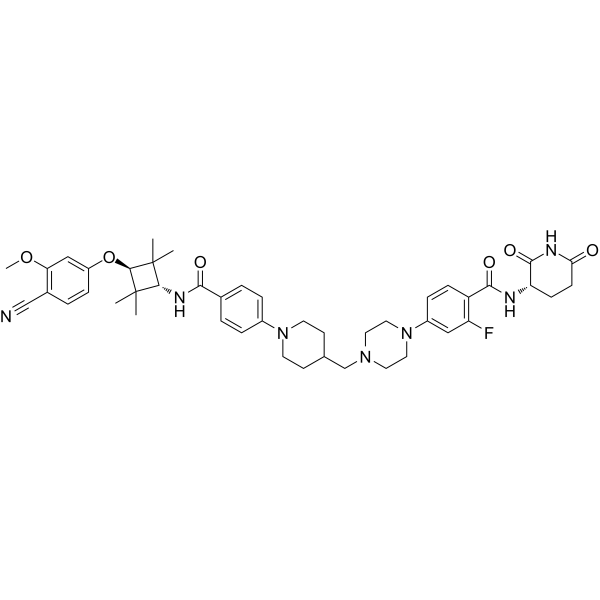
HY-153342
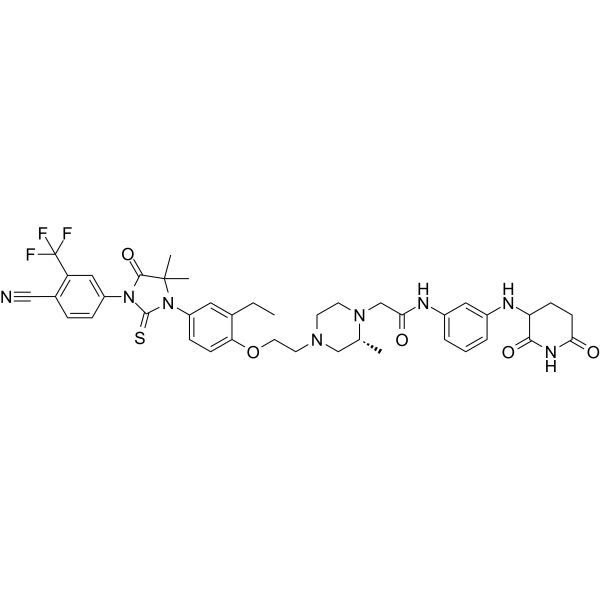
LuxdegalutamidePROTAC -
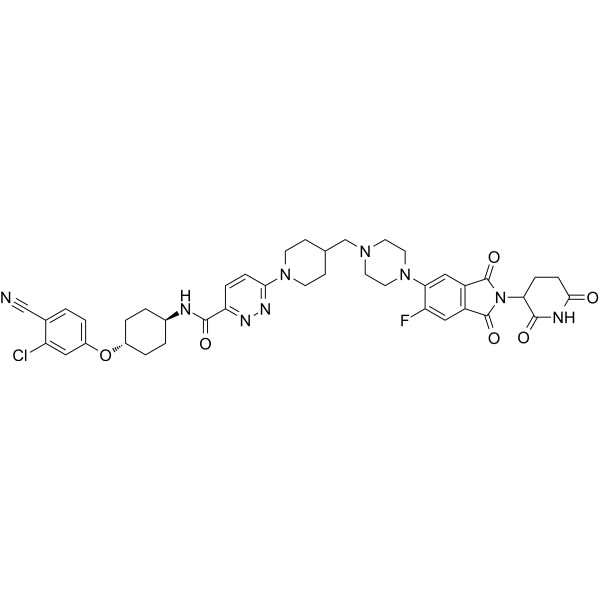
HY-138641
BavdegalutamideAR PROTAC Degrader -
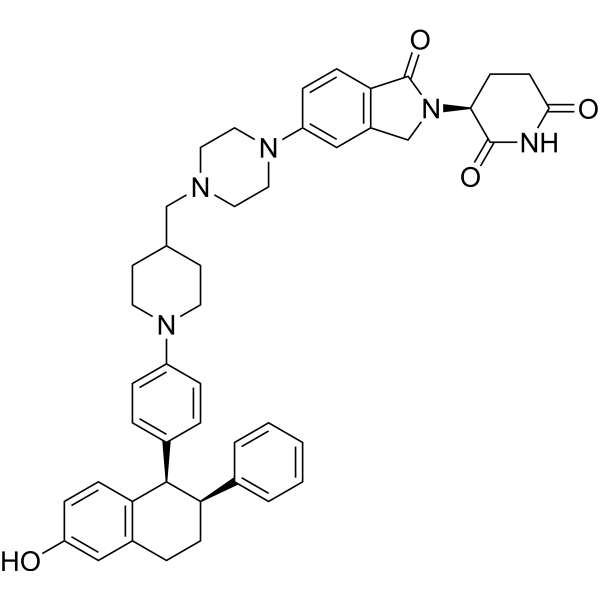
HY-138642
VepdegestrantPROTAC ER Degrader -
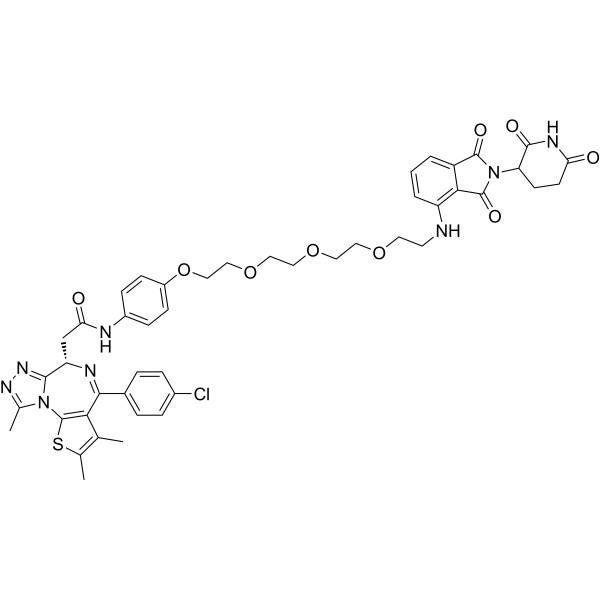
HY-16954
ARV-825PROTAC BRD2/BRD3/BRD4 Degrader -
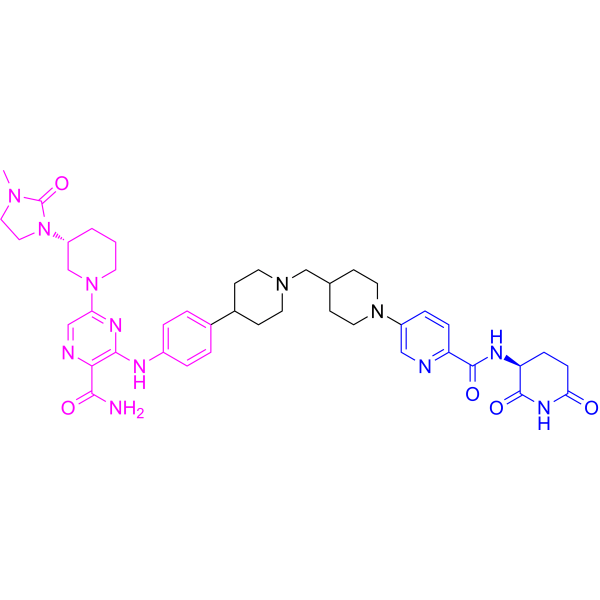
HY-153321
BexobrutidegBTK Degrader -
HY-153367
FHD-609BRD9 PROTAC Degrader -
HY-158101
BMS-986365PROTAC AR Degrader -
HY-135317
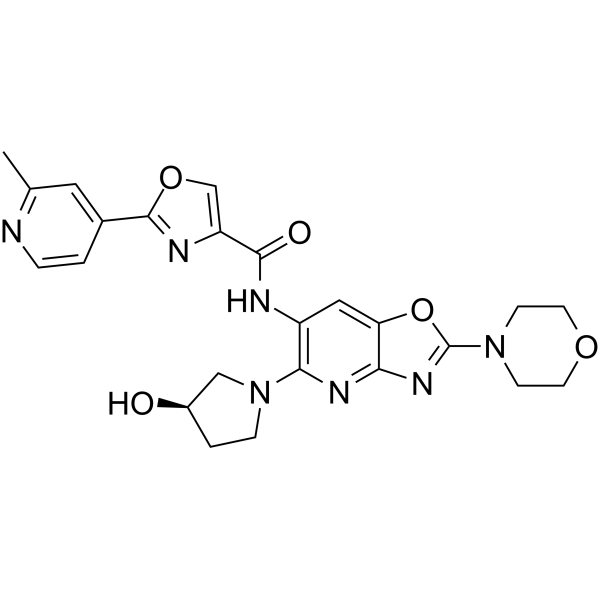
EmavusertibIRAK4 Inhibitor -
HY-139374
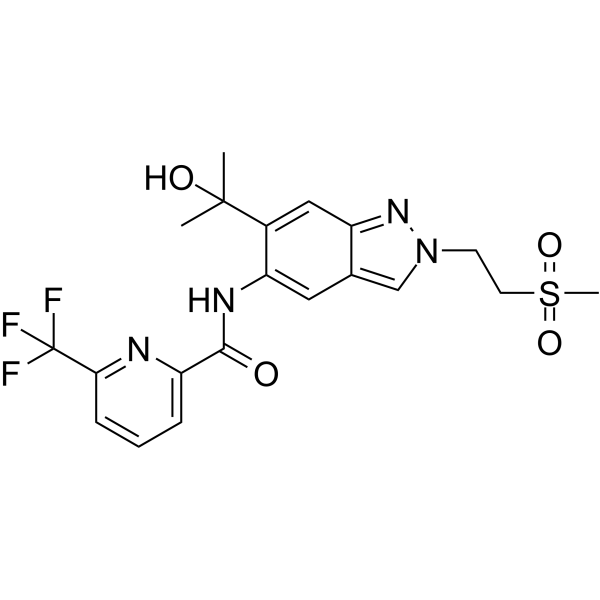
ZabedosertibIRAK4 Inhibitor -
HY-145925B
CFT8634BRD9 PROTAC Degrader


Biological Activity
제품 설명
IC50 & Target
[1]|
IRAK4 |
In Vitro
KT-474 (compound 17) (4 h) induces potent IRAK4 degradation in OCI-Ly10 cells with a DC50 of 2 nM and Dmax > 95% (IRAK4 IC50 = 41 nM)[1].
KT-474 exhibits potent cross-species IRAK4 degradation in mouse (DC50 = 4.2 nM) and rat (DC50 = 2.1 nM) primary splenocytes, and in the peripheral blood mononuclear cells (PBMCs) of dog (DC50 = 9.2 nM), cynomolgus monkey (DC50 = 2.9 nM), and human (DC50 = 1.5 nM)[1].
KT-474 (300 nM; 24 h) selectively degrades IRAK4 across the proteome without degrading IMiD neosubstrates or SALL4 in human PBMCs and human induced pluripotent stem cells (iPSCs)[1].
KT-474 potently inhibits Resiquimod (R848) (HY-13740)-stimulated IL-8 release in human PBMCs with an IC50 of 3 nM and Imax of 91%[1].
KT-474 exhibits microsomal intrinsic clearance values of < 12-76 μL/min/mg, hepatocyte intrinsic clearance values of < 6-14 μL/min/106 cells, and plasma-protein binding unbound fractions (Fu) of 0.027-0.051 across rat, dog, nonhuman primate (NHP), and human in vitro assays[1].
KT-474 (0.01 nM-1 μM) potently degrades IRAK4 in lymphocytes and monocytes with a half-maximal degradation concentration DC50 in the 1-2 nM range and a maximum degradation of 100%[2].
KT-474 (0.0064-500 nM) downregulates R848-induced and Lipopolysaccharide (LPS) (HY-D1056)-induced production of IL-6 and IL-8 in PBMCs[2].
KT-474 (0.12-2,000 nM) blocks TLR9-mediated NF-κB activation induced by CpG-B in B cells[2].
KT-474 (20-500 nM; 24 h) suppresses LPS-induced MAPK and NF-κB signaling pathway activation in RAW 264.7 cells[3].
KT-474 (20-500 nM; 1 h pre-treatment followed by 0.5 μg/mL LPS stimulation for 6 h) dose-dependently decreases Il6 and Tnfa mRNA levels and IL-6 and TNF-α secretion in RAW 264.7 cells[3].
KT-474 (24 h) degrades IRAK4 (DC50 = 4.034 nM) via the ubiquitin-proteasome system in RAW 264.7 cells[3].
KT-474 (KYM-001) induces potent, selective, E3 ligase-dependent IRAK4 degradation in MYD88 L265P-mutant OCI-LY10 cells[4].
KT-474 inhibits TLR-activated Myddosome signaling in human PBMCs[4].
KT-474 (48-72 h) induces cell cycle inhibition and apoptosis in activated B-cell-like diffuse large B-cell lymphoma (ABC DLBCL) cells, showing preferential activity in MYD88-mutant over MYD88-wild-type cell lines[4].
MedChemExpress (MCE) has not independently confirmed the accuracy of these methods. They are for reference only.
-
Cell Line:RAW 264.7 cells
-
Concentration:20 nM, 100 nM, 500 nM
-
Incubation Time:24 h (followed by 0-180 min LPS stimulation)
-
Result:Inhibited p-IRAK4 and degraded IRAK4.
Suppressed IRAK1 degradation and p-ERK/p-p38 levels.
Blocked NF-κB p65 phosphorylation and IκB-α degradation.
-
Cell Line:RAW 264.7 cells
-
Concentration:500 nM
-
Incubation Time:Not specified
-
Result:Reduced LPS-induced NF-κB p65 nuclear translocation (decreased p65/DAPI colocalization).
-
Cell Line:RAW 264.7 cells
-
Concentration:20, 100, and 500 nM
-
Incubation Time:1 h (followed by 6 h LPS stimulation)
-
Result:Dose-dependently reduced Il6 and Tnfa mRNA transcription.
-
Cell Line:RAW 264.7 cells
-
Concentration:Gradient up to 10,000 nM
-
Incubation Time:24 h (alone or pre-treatment with JH-I-25 (HY-138834), MG132 (HY-13259), Thalidomide (HY-14658))
-
Result:Dose-dependently degraded IRAK4 with DC50 = 4.034 nM, and IRAK4 degradation was attenuated by JH-I-25, MG132, and Thalidomide.
In Vivo
KT-474 (10-20 mg/kg; i.g.; 12 h) attenuates LPS-induced acute lung injury in C57BL/6 mice[3].
KT-474 (10-20 mg/kg; i.p.; once a day; 7 days) improves survival in C57BL/6 mice with LPS-induced sepsis[3].
KT-474 (KYM-001) (oral gavage) exhibits dose-dependent antitumor activity in human MYD88-mutant ABC DLBCL mouse xenograft models[4].
MedChemExpress (MCE) has not independently confirmed the accuracy of these methods. They are for reference only.
-
Animal Model:Mice (n = 10 females/group) with daily topical application of 5% Imiquimod (HY-B0180) on days 0-4 to induce cutaneous inflammation[1].
-
Dosage:30 mg/kg, 100 mg/kg
-
Administration:Oral gavage; twice a day; 3 days
-
Result:Reduced ear swelling comparably to Clobetasol (HY-W338819) (100 mg of 0.5% gel), and induced dose-dependent tissue exposure and IRAK4 degradation in skin (0.4 μM, 60% degradation at 30 mg/kg; 1.7 μM, 67% degradation at 100 mg/kg) and spleen (2.8 μM, 63% degradation at 30 mg/kg; 15.9 μM, 80% degradation at 100 mg/kg).
-
Animal Model:C57BL/6 mice (acute lung injury model induced by intratracheal instillation of 5 mg/kg LPS for 6 h)[3].
-
Dosage:10 mg/kg, 20 mg/kg
-
Administration:12 h intragastric pre-treatment followed by 6 h LPS stimulation
-
Result:Inhibited MAPK (p-p38) and NF-κB (p-p65, IκB-α degradation) signaling pathways in lung tissue.
Downregulated Il6, Tnfa, Vcam, and Icam mRNA expression in lung tissue, and reduced IL-6 and TNF-α levels in serum and BALF.
Reduced BALF total cell count and lung wet/dry weight ratio.
Decreased F4/80-positive macrophage (and MPO-positive neutrophil) infiltration in lung tissue, and ameliorated lung histopathological injury (Smith score).
-
Animal Model:C57BL/6 mice (sepsis model induced by intravenous injection of 32 mg/kg LPS)[3].
-
Dosage:10 mg/kg, 20 mg/kg
-
Administration:Intravenous injection; once a day; 7 days
-
Result:Increased 7-day survival rate compared with the LPS sepsis model group.
- Annexin V plus membrane-impermeant dye apoptosis staining
- BrdU Incorporation Assay
- Protocol for Cell Cycle
- Research Protocol for Inflammation-related Diseases
- Detection of Apoptosis
- TUNEL staining for apoptotic DNA fragmentation
- Flow cytometric DNA-content cell-cycle staining
- LPS-Induced Endotoxemia/Systemic Inflammation
- Imiquimod-Induced Psoriasiform Dermatitis
- TPA/Croton Oil Ear Edema and Dermatitis
- Apoptosis Solutions
- Subcutaneous Cell-Line-Derived Xenograft
- Inhalation Toxicity Study
Parmacokinetics


Chemical Information
-
CAS No. 2432994-31-3
-
Appearance Solid
-
분자량 865.93
-
화학식 C44H49F2N11O6
-
Color Off-white to yellow
-
SMILES
O=C1N(C(CCC2=O)C(N2)=O)C3=CC=CC(C#CCOC(CC4)CCN4C[C@H]5CC[C@@](N(N=C6C(F)F)C=C6NC(C7=C(N=C(N8[C@@H](CO9)C[C@@H]9C8)C=C%10)N%10N=C7)=O)([H])CC5)=C3N1C
-
Synonyms
KYM-001; PROTAC IRAK4 degrader-7; SAR444656
-
선적
Room temperature in continental US; may vary elsewhere.
-
보관
-20°C, stored under nitrogen
* In solvent : -80°C, 6 months; -20°C, 1 month (stored under nitrogen)


Publications (3)
-
Journal Impact Factor
-
Most Recent
-
Anal Chem
Hydrogen/Deuterium Exchange for Chiral Stability Assessment in Acidic Methine-Containing Compounds. [Abstract]2025 Dec 2;97(47):26097-26107. PMID: 41243541 -
-


용액&용해도
In Vitro:
DMSO : 100 mg/mL (115.48 mM; Need ultrasonic; Hygroscopic DMSO has a significant impact on the solubility of product, please use newly opened DMSO)
Please refer to the solubility information to select the appropriate solvent. Once prepared, please aliquot and store the solution to prevent product inactivation from repeated freeze-thaw cycles.
Storage method and period of stock solution: -80°C, 6 months; -20°C, 1 month (stored under nitrogen). When stored at -80°C, please use it within 6 months. When stored at -20°C, please use it within 1 month.
Concentration (start) × Volume (start) = Concentration (final) × Volume (final)
In Vivo:
Select the appropriate dissolution method based on your experimental animal and administration route.
- For the following dissolution methods, please ensure to first prepare a clear stock solution using an In Vitro approach and then sequentially add co-solvents:
- To ensure reliable experimental results, the clarified stock solution can be appropriately stored based on storage conditions. As for the working solution for In Vivo experiments, it is recommended to prepare freshly and use it on the same day.
- The percentages shown for the solvents indicate their volumetric ratio in the final prepared solution. If precipitation or phase separation occurs during preparation, heat and/or sonication can be used to aid dissolution.
Add each solvent one by one: 10% DMSO 40% PEG300 5% Tween-80 45% Saline
Solubility: ≥ 2.5 mg/mL (2.89 mM); Clear solution
This protocol yields a clear solution of ≥ 2.5 mg/mL (saturation unknown).
Taking 1 mL working solution as an example, add 100 μL DMSO stock solution (25.0 mg/mL) to 400 μL PEG300, and mix evenly; then add 50 μL Tween-80 and mix evenly; then add 450 μL Saline to adjust the volume to 1 mL.
Preparation of Saline: Dissolve 0.9 g sodium chloride in ddH₂O and dilute to 100 mL to obtain a clear Saline solution.
Add each solvent one by one: 10% DMSO 90% (20% SBE-β-CD in Saline)
Solubility: ≥ 2.5 mg/mL (2.89 mM); Clear solution
This protocol yields a clear solution of ≥ 2.5 mg/mL (saturation unknown).
Taking 1 mL working solution as an example, add 100 μL DMSO stock solution (25.0 mg/mL) to 900 μL 20% SBE-β-CD in Saline, and mix evenly.
Preparation of 20% SBE-β-CD in Saline (4°C, storage for one week): 2 g SBE-β-CD powder is dissolved in 10 mL Saline, completely dissolve until clear.
In Vivo Dissolution Calculator
Please enter the basic information of animal experiments:
-
-
-
-
Recommended: Prepare an additional quantity of animals to account for potential losses during experiments.
Please enter your animal formula composition:
-
%DMSO +
Recommended: Keep the proportion of DMSO in working solution below 2% if your animal is weak.
-
%+
-
+%Tween-80 + +
-
%Saline +
The co-solvents required include: DMSO, . All of co-solvents are available by MedChemExpress (MCE). , Tween 80. All of co-solvents are available by MedChemExpress (MCE).
Working solution concentration: 0.22 mg/mL
Method for preparing stock solution: mg drug dissolved in μL DMSO. Stock solution concentration: mg/mL. * In solvent : -80°C, 6 months; -20°C, 1 month (stored under nitrogen)
1. Take μL DMSO stock solution;
2. Add μL .
μL , mix evenly;
3. Then add μL Tween 80, mix evenly;
4. Then add μL
Please ensure that the stock solution in the first step is dissolved to a clear state, and add co-solvents in sequence. You can use ultrasonic heating (ultrasonic cleaner, recommended frequency 20-40 kHz), vortexing, etc. to assist dissolution.


순도&문서


References
[1]. Zheng X, et al. Discovery of KT-474─a Potent, Selective, and Orally Bioavailable IRAK4 Degrader for the Treatment of Autoimmune Diseases. J Med Chem. 2024 Oct 24;67(20):18022-18037. [Content Brief]
[2]. Ackerman L, et al. IRAK4 degrader in hidradenitis suppurativa and atopic dermatitis: a phase 1 trial. Nat Med. 2023 Dec;29(12):3127-3136. [Content Brief]

Complete Stock Solution Preparation Table
Please refer to the solubility information to select the appropriate solvent. Once prepared, please aliquot and store the solution to prevent product inactivation from repeated freeze-thaw cycles.
Storage method and period of stock solution: -80°C, 6 months; -20°C, 1 month (stored under nitrogen). When stored at -80°C, please use it within 6 months. When stored at -20°C, please use it within 1 month.
| Optional Solvent | Concentration Solvent Mass | 1 mg | 5 mg | 10 mg | 25 mg |
|---|---|---|---|---|---|
| DMSO | 1 mM | 1.1548 mL | 5.7741 mL | 11.5483 mL | 28.8707 mL |
| 5 mM | 0.2310 mL | 1.1548 mL | 2.3097 mL | 5.7741 mL | |
| 10 mM | 0.1155 mL | 0.5774 mL | 1.1548 mL | 2.8871 mL | |
| 15 mM | 0.0770 mL | 0.3849 mL | 0.7699 mL | 1.9247 mL | |
| 20 mM | 0.0577 mL | 0.2887 mL | 0.5774 mL | 1.4435 mL | |
| 25 mM | 0.0462 mL | 0.2310 mL | 0.4619 mL | 1.1548 mL | |
| 30 mM | 0.0385 mL | 0.1925 mL | 0.3849 mL | 0.9624 mL | |
| 40 mM | 0.0289 mL | 0.1444 mL | 0.2887 mL | 0.7218 mL | |
| 50 mM | 0.0231 mL | 0.1155 mL | 0.2310 mL | 0.5774 mL | |
| 60 mM | 0.0192 mL | 0.0962 mL | 0.1925 mL | 0.4812 mL | |
| 80 mM | 0.0144 mL | 0.0722 mL | 0.1444 mL | 0.3609 mL | |
| 100 mM | 0.0115 mL | 0.0577 mL | 0.1155 mL | 0.2887 mL |


KT-474 Related Classifications
HY-145483 Related Classifications
 Powered by Bioz
Keywords
- KT-474
- 2432994-31-3
- KYM-001
- PROTAC IRAK4 degrader-7
- SAR444656
- KT474
- KT 474
- KYM001
- KYM 001
- SAR444656
- SAR 444656
- SAR-444656
- PROTACs
- IRAK
- Apoptosis
- PROTAC
- Interleukin-1 receptor associated kinase
- IL-1R associated kinase
- PROTAC IRAK4 degrader
- CRBN-based degrader
- ubiquitin-proteasome system
- NF-κB pathway
- MAPK pathway
- inflammation
- RAW 264.7 cells
- OCI-Ly10 cells
- induced pluripotent stem cells
- mouse splenocytes cells
- rat splenocytes cells
- acute lung injury
- sepsis
- hidradenitis suppurativa
- atopic dermatitis
- psoriasis
- antitumor
- orally active
- Inhibitor
- inhibitor
- inhibit