1. Search Result
Search Result
Pathways Recommended: Anti-infection
Results for "

enteric infection

" in MedChemExpress (MCE) Product Catalog:

15

Inhibitors & Agonists

2

Screening Libraries

2

Peptides

1

Inhibitory Antibodies

3

Natural
Products

3

Isotope-Labeled Compounds

Cat. No. Product Name Target Research Areas Chemical Structure
  • HY-W071746
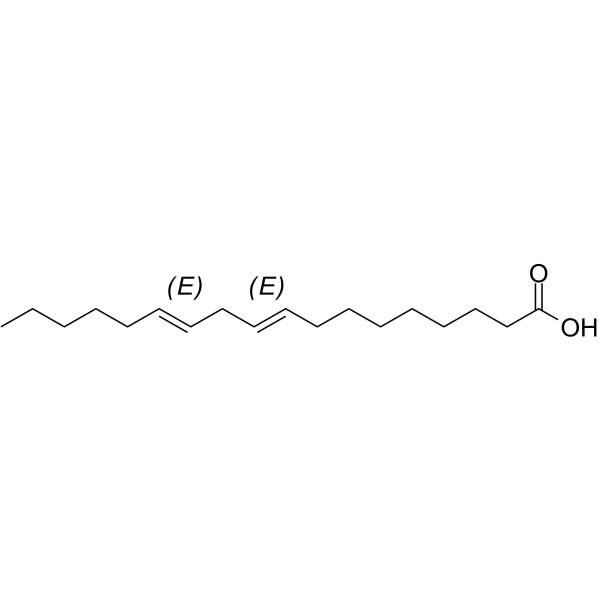
    Linolelaidic acid
    1 Publications Verification

    Linoelaidic acid

    Endogenous Metabolite Parasite Apoptosis Infection Inflammation/Immunology
    Linolelaidic acid (Linoelaidic acid) is an omega-6 trans fatty acid (TFA) that is an essential nutrient with oral activity. Linolelaidic acid can be added to enteral nutrition (oral), parenteral nutrition (intravenous), and infant formula. Linolelaidic acid has anti-inflammatory and anti-parasitic ((Parasite)) activities, and can induce Apoptosis. Linolelaidic acid is useful for research in infections .
    Linolelaidic acid
  • HY-B1267
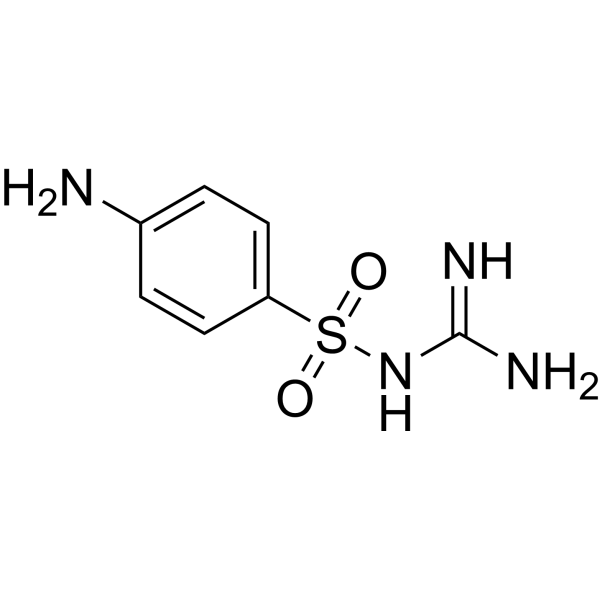
    Sulfaguanidine
    2 Publications Verification

    Bacterial Antibiotic Infection
    Sulfaguanidine is an orally active antimicrobial agent/antibiotic of sulfonamide class. Sulfaguanidine can be used for the research of enteric infections such as bacillary dysentery .
    Sulfaguanidine
  • HY-N12323

    Others Inflammation/Immunology
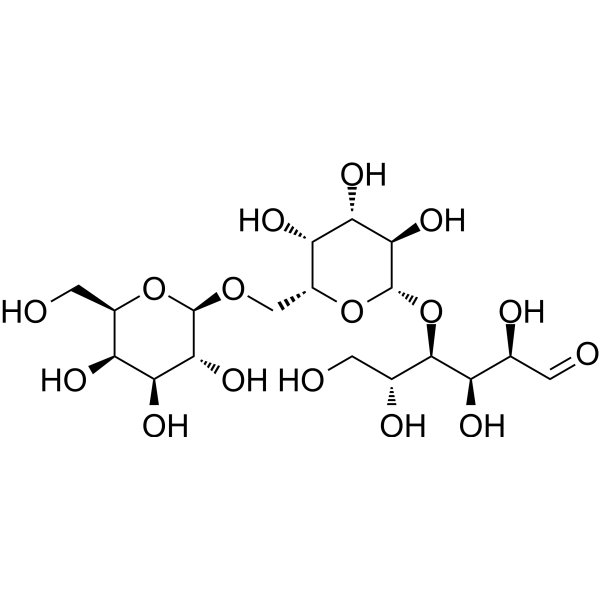
    6′-Galactosyllactose is the main oligosaccharide that makes up galactose, a component of human milk. 6′-Galactosyllactose can synthesize human milk oligosaccharides and synthetic galactosyllactose with 3′-Galactosyllactose and 4′-Galactosyllactose, and reduce inflammation in human T84, NCM-460 and H4 cells and intestinal tissues .
    6′-Galactosyllactose
  • HY-P99146

    CD3 Infection Neurological Disease Inflammation/Immunology Cancer
    Anti-Mouse TCR gamma/delta Antibody (UC7-13D5) is an anti-mouse TCR gamma/delta IgG monoclonal antibody. Anti-Mouse TCR gamma/delta Antibody (UC7-13D5) can enter the blood-brain barrier. Anti-Mouse TCR gamma/delta Antibody (UC7-13D5) effectively depletes γδ T cells and reduces macrophage and neutrophil infiltration. Anti-Mouse TCR gamma/delta Antibody (UC7-13D5) can reduce the immune response of transplants. Anti-Mouse TCR gamma/delta Antibody (UC7-13D5) can be used for researches on inflammation conditions, virus infection and cancer such as arthritis, JHM virus and breast cancer .
    Anti-Mouse TCR gamma/delta Antibody (UC7-13D5)
  • HY-B1267R

    Reference Standards Bacterial Antibiotic Infection
    Sulfaguanidine (Standard) is the analytical standard of Sulfaguanidine. This product is intended for research and analytical applications. Sulfaguanidine is an orally active antimicrobial agent/antibiotic of sulfonamide class. Sulfaguanidine can be used for the research of enteric infections such as bacillary dysentery .
    Sulfaguanidine (Standard)
  • HY-B1267S1

    Isotope-Labeled Compounds Bacterial Antibiotic Infection
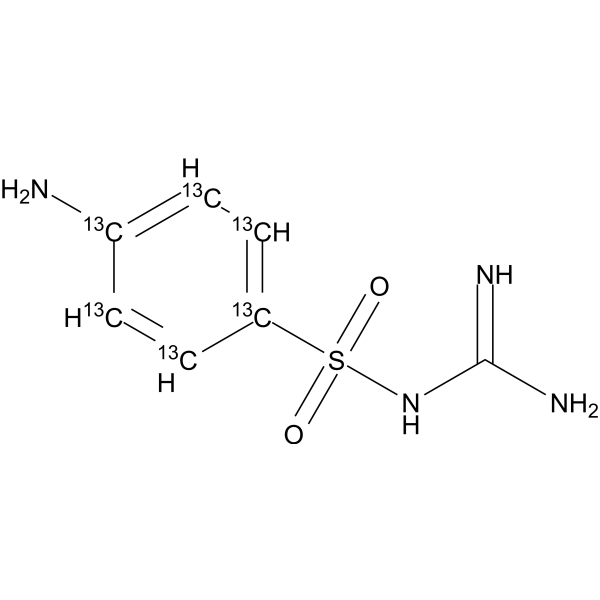
    Sulfaguanidine- 13C6 is the 13C6 labeled Sulfaguanidine. Sulfaguanidine is an orally active antimicrobial agent/antibiotic of sulfonamide class. Sulfaguanidine can be used for the research of enteric infections such as bacillary dysentery.
    Sulfaguanidine-13C6
  • HY-W071746R

    Linoelaidic acid (Standard)

    Reference Standards Endogenous Metabolite Parasite Apoptosis Infection Inflammation/Immunology
    Linolelaidic acid (Standard) is the analytical standard of Linolelaidic acid. This product is intended for research and analytical applications. Linolelaidic acid (Linoelaidic acid) is an omega-6 trans fatty acid (TFA) that is an essential nutrient with oral activity. Linolelaidic acid can be added to enteral nutrition (oral), parenteral nutrition (intravenous), and infant formula. Linolelaidic acid has anti-inflammatory and anti-parasitic ((Parasite)) activities, and can induce Apoptosis. Linolelaidic acid is useful for research in infections[1][2][3].
    Linolelaidic acid (Standard)
  • HY-P10980

    DNA/RNA Synthesis Bacterial Infection
    Citrocin is a potent bacterial RNA polymerase (RNAP) inhibitor. Citrocin shows significant inhibitory activity against Escherichia coli RNAP with an MIC range of 16-125 μM. Citrocin specifically binds to and inhibits RNA polymerase to block bacterial transcription and enters cells mainly through inner membrane protein SbmA. Citrocin is promising for research of Gram-negative bacterial infections, such as enterohemorrhagic E. coli .
    Citrocin
  • HY-171983

    RSV Infection
    RSV-IN-13 (compound 24) is a selective RSV fusion protein inhibitor with antiviral activity. RSV-IN-13 has an EC50 of 444.2 nM against RSV A2 strain and a CC90 of 23.7 μM in HepG2 cells. RSV-IN-13 can block the virus from entering host cells. RSV-IN-13 can be used to study RSV infection .
    RSV-IN-13
  • HY-121696

    Adicillin

    Bacterial Others
    Penicillin N (Adicillin) is a penicillin-type compound used to inhibit enteric bacilli infections.
    Penicillin N
  • HY-B0337S

    Sulphadimethoxine-d4

    Bacterial Infection
    Sulfadimethoxine-d4 is a deuterium labeled Sulfadimethoxine (Sulphadimethoxine). Sulfadimethoxine is a sulfonamide antibiotic used to treat many infections including treatment of respiratory, urinary tract, enteric, and soft tissue infections .
    Sulfadimethoxine-d4
  • HY-B1267S

    Isotope-Labeled Compounds Bacterial Antibiotic Infection
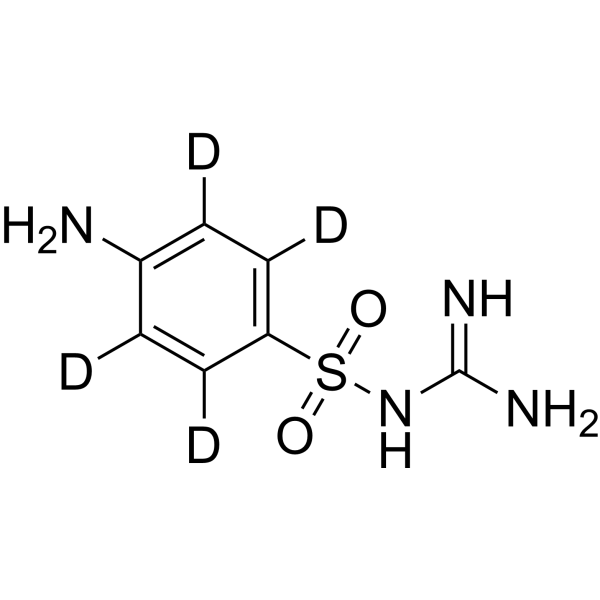
    Sulfaguanidine-d4 is the deuterium labeled Sulfaguanidine. Sulfaguanidine, belongs to the class of sulfonamide agent, is an orally active antibiotic. Sulfaguanidine can be used for the research of enteric infections such as bacillary dysentery .
    Sulfaguanidine-d4
  • HY-169977

    SARS-CoV Infection
    CKP-25 is an inhibitor for the interaction between Spike RBD-ACE2, that prevents the virus from entering the host cell, thereby reducing the replication and virus infection. CKP-25 inhibits SARS-CoV-2 with IC50 of 3.5 μM in Vero E6 cell .
    CKP-25
  • HY-P10970

    Bacterial Infection
    RT2 is a tryptophan-rich cationic amphipathic antibacterial peptide, with main targets including lipopolysaccharide (LPS) on the bacterial surface and intracellular DNA. RT2 binds to bacterial surface LPS, and interacts with cytoplasmic membrane phospholipids, enabling it to rapidly penetrate the bacterial cell membrane and enter the cell, and then bind to components such as DNA in the cytoplasmic membrane, thereby exerting antibacterial effects. RT2 is promising for research of acute and chronic infections caused by planktonic bacteria .
    RT2
  • HY-182816

    Topoisomerase DNA/RNA Synthesis Bacterial Infection
    Topoisomerase I-IN-22 is an inhibitor of MRSA DNA Topoisomerase I with an IC50 of 0.85 μg/mL. Topoisomerase I-IN-22 can specifically disrupt the cell membrane structure of MRSA, enter the interior of bacteria and inhibit the activity of DNA Topoisomerase I, thereby interfering with the processes of DNA replication and transcription. Topoisomerase I-IN-22 can be used for the research of MRSA infection .
    Topoisomerase I-IN-22

Inquiry Online

Your information is safe with us. * Required Fields.

Salutation


Country or Region *

Applicant Name *


Organization Name *

Department *


Email Address *


Product Name *

Cat. No.


Requested quantity *

Phone Number *


Remarks

Inquiry Online

Inquiry Information

Product Name:
Cat. No.:
Quantity:
MCE Japan Authorized Agent:

