1. Search Result
Search Result
Results for "

environment

" in MedChemExpress (MCE) Product Catalog:

302

Inhibitors & Agonists

14

Screening Libraries

51

Fluorescent Dyes

57

Biochemical Assay Reagents

23

Peptides

1

MCE Kits

2

Inhibitory Antibodies

29

Natural
Products

29

Isotope-Labeled Compounds

9

Click Chemistry

12

Oligonucleotides

Cat. No. Product Name
  • HY-L095
    372 compounds

    Mechanoreceptors convert different stimuli from the outside into electrical signals, enabling us to quickly respond to our environment. Mechanoreceptors are distributed throughout the body, including in the skin, tendons, muscles, joint capsules and viscera. In addition to the channels of TRP and Piezo mentioned in the Nobel Prize, there are also targets such as KCNK, ENaC and ASIC2, which play an important role in the environment perception and homeostasis of living organisms.

    MCE offers a unique collection of 372 compounds related to mechanoreceptors, which targeting different mechanoreceptors, such as TRP, Piezo, KCNK, ENaC, etc. MCE mechanoreceptors compound library is a powerful tool for studying mechanoreceptors and life perception.

  • HY-L191
    1,141 compounds

    Tibetan medicine, as one of the treasures of traditional Chinese medicine, carries the profound cultural heritage of the Tibetan people and their unique understanding of health. Tibet is the birthplace of Tibetan medicine, and its plateau climate and unique ecological environment have nurtured its rich medicinal resources. Among them, cordyceps, saffron and snow lily are favored by people for their excellent medicinal value and unique growth characteristics. Tibetan medicine, with its profound heritage, plays a crucial role in the management of diseases that are unique to high-altitude regions, such as altitude stress. It facilitates a swifter adaptation to high-altitude conditions and mitigates the symptoms of altitude sickness by meticulously recalibrating the internal environment within the human body. For rheumatic diseases, cardiovascular diseases, etc., Tibetan medicine has also shown its remarkable effect.

    MCE included 1,141 natural products from Tibetan medicine, including animal, plant and mineral sources.

  • HY-L190
    1,641 compounds

    Miao medicine is an important part of Chinese medicine, which carries the profound cultural heritage and rich life wisdom of the Hmongb people. Miao people live in a concentrated community in the mountainous area of the southwest border of China, which has a unique natural environment. Complex and diverse geology, lush natural vegetation, rich animal and plant species, a large number of mineral resources which provide a wide range of species sources for miao ethnicity medicine. On the other hand, due to the characteristics of the living environment of the Hmongb people, Miao medicine has demonstrated its unique therapeutic effect in the treatment of some endemic diseases, infectious diseases, insect, snake and beast bites, rheumatism and other diseases. With the development of modern science and technology, the research and application of seedling medicine are also deepening. Through the systematic study of the chemical composition and pharmacological action of the seedling medicine, it can provide a new idea and method for modern medicine.

    MCE included 1,641 natural products from traditional miao ethnicity medicine, including animal, plant and mineral sources.

  • HY-L183
    519 compounds

    Pesticide is a single substance or mixture that can be used to prevent, mitigate, iminate pests or as a plant conditioner, defoliant or desiccant. In recent years, scientists have proposed the concept of "Molecules to Ecosystems", bringing the concept of molecular biology to understand the impact of pesticides, degradation and relationship with the environment or organisms. MCE integrates effective compounds approved as pesticides by agencies such as the Environmental Protection Agency (EPA), China Pesticide Information Network and some insecticidal compounds with potential for agricultural applications.

    MCE can provide a library of 519 pesticide compounds that are tool compounds for relevant research.

  • HY-L247
    869 compounds

    Environmental pollution refers to the process where human activities release harmful chemicals or energy (such as industrial waste, pesticides, and plastic particles) into the natural environment at a rate that exceeds the ecosystem's capacity for self-purification, leading to deterioration in the composition or state of the atmosphere, water bodies, and soil. Environmental pollution is not only a direct threat to biodiversity but also ultimately impacts human health through the bioaccumulation effect of the food chain. Therefore, the accurate identification and dynamic monitoring of pollutants constitute the scientific cornerstone for formulating environmental policies, assessing ecological risks, and promoting green chemistry transformation.

    MCE features a collection of 869 environmental pollutants, covering categories such as air pollutants, water pollutants, and pesticides, for research in the field of environmental chemistry.

  • HY-L189
    338 compounds

    Amino acids, as one of the most fundamental organic compounds in living organisms, serve not only as the basic building blocks of proteins but also but also undertake the functions of energy supply, neurotransmitter synthesis, and maintenance of internal environment stability.Amino acid metabolic enzymes are a class of enzymes involved in the metabolic processes of amino acids, catalyzing their synthesis, breakdown, transformation, and interactions with other metabolic pathways. Abnormalities in amino acid metabolic enzymes can lead to various metabolic diseases, such as phenylketonuria and hyperammonemia, etc. Therefore, actively exploring and regulating the processes of amino acid metabolism is crucial for the development of drugs related to these diseases.

    MCE designs a unique collection of 338 small molecules target amino acid metabolizing enzymes, which is an important tool for studying studying amino acid metabolism processes or metabolism-related drug development.

  • HY-L028
    1,120 compounds

    The blood-brain barrier (BBB) is the complex network of brain microvessels. It protects the brain from the external bloodstream environment and supplies the brain with the required nutrients for normal function. However, blood-brain barrier is also the obstacle to deliver beneficial drugs to treat CNS (central nervous system) diseases or brain tumors, as it has the least permeable capillaries in the entire body due to physical barriers (tight junctions). Therefore, it is crucial to discover drugs which can cross this barrier for the treatment of brain-based diseases, such as Alzheimer’s disease (AD), Parkinson’s disease (PD) and epilepsy.

    MCE offers a unique collection of 1,120 compounds with confirmed CNS-Penetrant property. It’s a useful tool for the discovery of drugs used for brain diseases, such as brain tumors, mental disorders, and neurodegenerative diseases.

  • HY-L049
    1,930 compounds

    Antibacterial agents are a group of materials that fight against pathogenic bacteria. Thus, by killing or reducing the metabolic activity of bacteria, their pathogenic effect in the biological environments will be minimized. The most widely used antibacterial agents exert their effects on bacterial cell wall synthesis, protein synthesis, DNA replication and metabolic pathways. However, resistance to antimicrobial agents has become a major source of morbidity and mortality worldwide. The main mechanisms of resistance are limiting uptake of a drug, modification of a drug target, inactivation of a drug, and active efflux of a drug. Therefore, it is an urgent need to develop new drugs targeted at resistant organisms.

    MCE offers a unique collection of 1,930 compounds with validated antibacterial activities. MCE antibacterial compound library is an effective tool for drug repurposing screening, combination screening and biological investigation.

  • HY-L256
    37 compounds

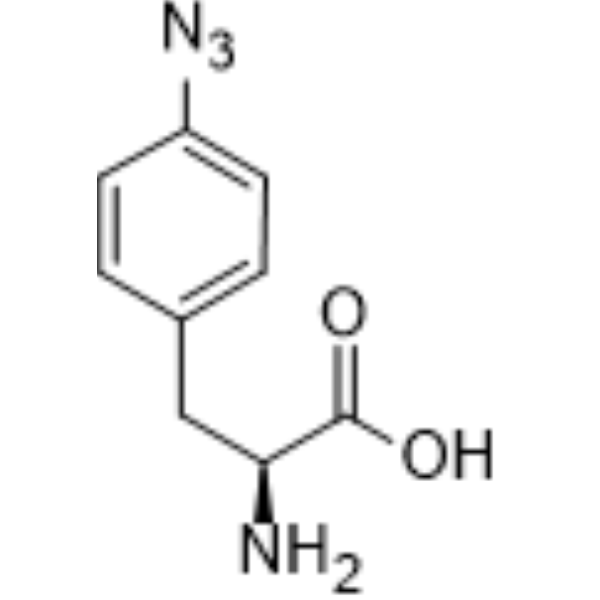
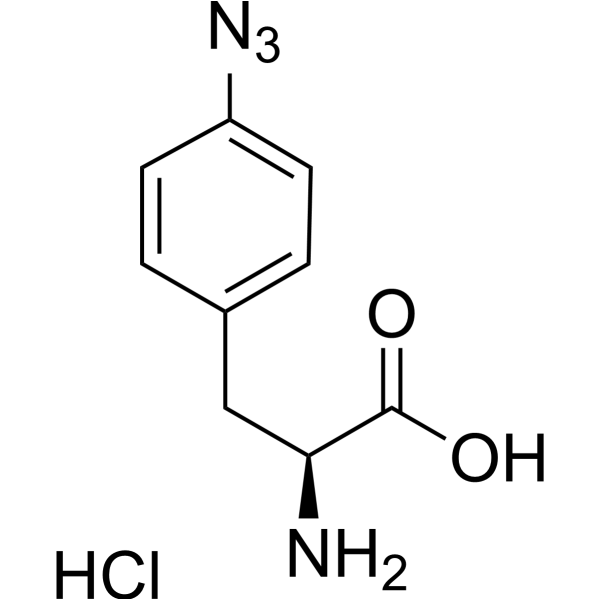
    In modern drug discovery and chemical biology research, the azide group (-N3) is an important functional moiety that is widely used in click chemistry, biomolecular labeling, drug delivery systems, and prodrug design due to its unique reactivity and bioorthogonality.

    The MCE Azide Structural Compound Library contains 37 compounds featuring -N3 functional groups. It is designed for the construction of click chemistry reaction systems and the subsequent development of functional molecules. This library enables the rapid assembly of targeting ligands, linkers, and functional molecular modules, thereby accelerating PROTAC assembly, optimization of antibody-drug conjugate (ADC) linkers, and the development of biological labeling probes. In addition, the high reaction selectivity and excellent biocompatibility of the azide group allow it to maintain stable reactivity even in complex biological environments, improving controllability and efficiency in drug design. It serves as an indispensable molecular tool in modern medicinal chemistry and chemical biology research.

  • HY-L914
    3,208 compounds

    In the research of covalent inhibitors targeting serine and threonine, scientists have found that the nucleophilicity of these hydroxyl groups is significantly enhanced due to the influence of their surrounding environment. This results in higher activity during catalytic reactions. Aspirin, which targets the non-catalytic domain serine (Ser529 in human COX1) of cyclooxygenase, exerts its anti-inflammatory effect through covalent binding. β-lactam antibiotics, which targets the catalytic domain serine of penicillin-binding proteins, interferes with bacterial cell wall synthesis.

    Through careful selection, we constructed a structural filter containing over 110 electrophilic groups. By analyzing the electrophilic fragments selected by the structural filter, we removed any molecules with trivial or undesirable structural features. Ultimately, we obtained 3,300 fragment molecules which can target serine and threonine residues and can be used for fragment-based covalent drug discovery.

  • HY-L168
    660 compounds

    Extracellular vesicles (EVs) are small membrane binding structures that are released from cells into the surrounding environment and play a crucial role in mediating and regulating intercellular communication related to physiological and pathological processes. EVs are lipid membrane vesicles composed of proteins, lipids, and nucleic acids. EVs can be divided into several types based on their source, such as extracellular vesicles, microcapsules, and apoptotic vesicles. The size range of exosomes is 30-150nm, which are endocrine in multi vesicular endosomes (MVEs); microvesicles (50-1000nm) are secreted directly through extracellular interactions, thereby releasing plasma membrane vesicles. In contrast, apoptotic bodies are usually larger, ranging in size from 1 to 5 μ m. This is generated during programmed cell death. EV plays a crucial role in transmitting information between cells and influencing the behavior and function of receptor cells.

    MCE designs a unique collection of 660 small molecules related to extracellular vesicles (EVs). It is a good tool to be used for research on metabolize, cancer and other diseases.

  • HY-L258
    385 compounds

    In modern medicinal chemistry and chemical biology research, alkyne (-C≡C-) structures play an important role in click chemistry, bioorthogonal labeling, and the construction of functional molecules due to their unique linear geometry and high reactivity. In particular, driven by the development of copper-catalyzed azide-alkyne cycloaddition (CuAAC) and copper-free click reactions (SPAAC), terminal alkyne groups have become important “chemical handles” for building complex biomolecular systems.

    The MCE Alkyne Compound Library contains 385 compounds designed for the construction of click chemistry reaction systems and the development of diverse functional molecules. In drug discovery, these structures serve as key reactive sites that can efficiently undergo click reactions with azide groups, enabling modular assembly of PROTAC molecules, construction of ADC linkers, and rapid synthesis of bioorthogonal labeling probes. In addition, alkyne groups exhibit high stability, mild reaction conditions, and excellent biocompatibility, allowing them to maintain reactivity in complex biological environments. This contributes to improved efficiency and controllability in drug development, making them indispensable chemical building blocks in modern drug design and functional molecular engineering.

  • HY-L238
    2,383 compounds

    Mongolian medicine refers to drugs used for disease prevention and treatment under the guidance of Mongolian medical theory. Originating from the vast grasslands and desert regions of northern China, Mongolian medicine developed under specific natural conditions and a nomadic lifestyle, forming a unique theoretical system and treatment methods. It emphasizes the balance between the human body and the natural environment and has demonstrated distinct efficacy in treating digestive system diseases, rheumatism, skin diseases, and various chronic conditions. For example, Mongolian medicine often uses Chinese red date for palpitations and angina pectoris, sea buckthorn to relieve coughs, reduce phlegm, promote blood circulation, and remove blood stasis, and scabious to clear lung heat and treat liver heat diseases. The application of these characteristic Mongolian medicines embodies the profound wisdom of Mongolian medical practice.

    With the advancement of modern technology, research on Mongolian medicine continues to deepen. Systematic studies on the chemical composition and pharmacological effects of Mongolian medicines can provide new ideas and methods for modern drug development.

    MCE has collected 2,383 characteristic natural products derived from Mongolian medicines, with 400+ plant sources of Mongolian medicine.

  • HY-L251
    94 compounds

    Ionizable lipids are a class of specialized, functional lipid molecules with pH-sensitive charge characteristics. They are primarily divided into two major categories: ionizable cationic lipids and ionizable anionic lipids, though the term typically specifies ionizable cationic lipids within the biomedical field. Structurally, these lipids consist of an ionizable hydrophilic headgroup, a biodegradable linker, and hydrophobic tails. Their primary application is serving as the key delivery vehicle in lipid nanoparticles (LNPs) to encapsulate negatively charged nucleic acid macromolecules, such as mRNA vaccines, siRNA therapeutics, and CRISPR gene-editing components. In a physiological, neutral environment, they remain electrically neutral to minimize systemic toxicity and prolong circulation time. Upon entering the acidic microenvironment of cellular endosomes, however, they undergo protonation to become positively charged, thereby inducing membrane fusion and enabling the highly efficient intracellular release of the nucleic acid cargo. Consequently, they serve as the technological cornerstone for bringing nucleic acid therapies into clinical application.

    To accelerate the translational process of cutting-edge nucleic acid drugs, MCE has meticulously constructed an ionizable lipid compound library containing 94 high-performance molecules, aiming to provide researchers and pharmaceutical professionals with a high-throughput, multi-dimensional lipid screening platform.

Inquiry Online

Your information is safe with us. * Required Fields.

Salutation


Country or Region *

Applicant Name *


Organization Name *

Department *


Email Address *


Product Name *

Cat. No.


Requested quantity *

Phone Number *


Remarks

Inquiry Online

Inquiry Information

Product Name:
Cat. No.:
Quantity:
MCE Japan Authorized Agent:

