613 Results for "

root

" in MedChemExpress (MCE) Product Catalog:
Products (613)

613 Results for "root" in MCE Product Catalog:

74
74 Publications Verification
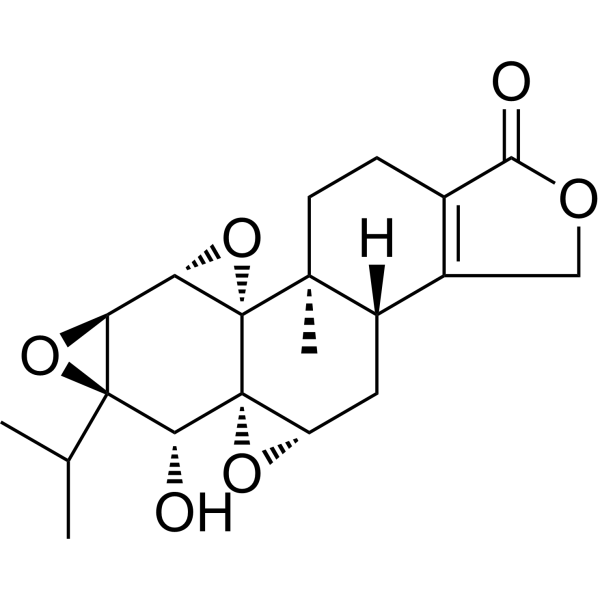
Cat. No.: HY-32735
CAS No.: 38748-32-2
Synonyms: PG490
Triptolide is a diterpenoid triepoxide extracted from the root of Tripterygium wilfordii with immunosuppressive, anti-inflammatory, antiproliferative and antitumour effects. Triptolide is a NF-κB activation inhibitor .
loading...
    loading...
47
47 Cited Publications
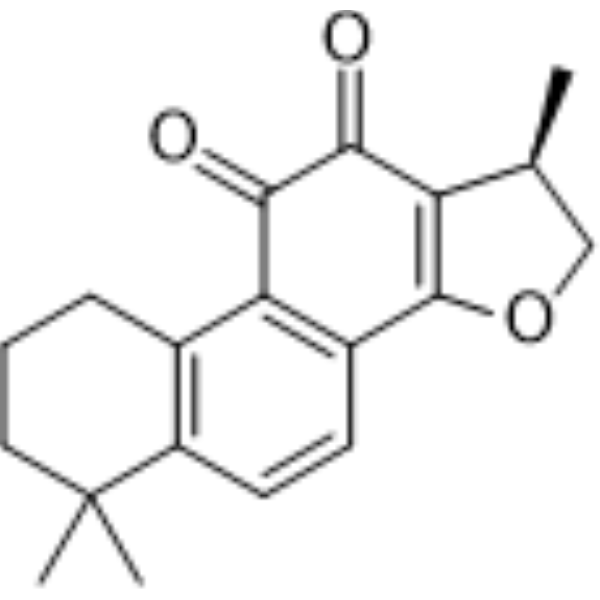
Cat. No.: HY-N0174
CAS No.: 35825-57-1
Synonyms: Cryptotanshinon; Tanshinone c
Cryptotanshinone is a natural compound extracted from the root of Salvia miltiorrhiza Bunge that shows antitumor activities. Cryptotanshinone inhibits STAT3 with an IC50 of 4.6 μM.
loading...
    loading...
37
37 Cited Publications
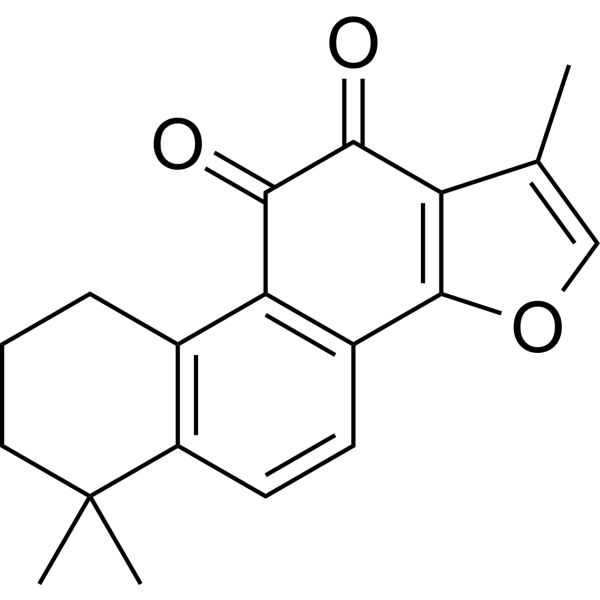
Cat. No.: HY-N0135
CAS No.: 568-72-9
Synonyms: Dan Shen ketone
Tanshinone IIA (Tan IIA) is one of the main compositions in the root of Salvia miltiorrhiza Bunge. Tanshinone IIA may suppress angiogenesis by targeting the protein kinase domains of VEGF/VEGFR2.
loading...
    loading...
35
35 Cited Publications
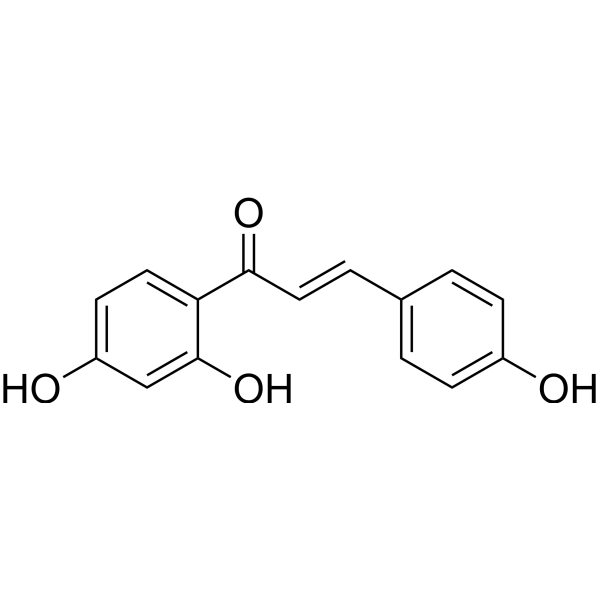
Cat. No.: HY-N0102
CAS No.: 961-29-5
Synonyms: GU17; ISL; Isoliquiritigen; SJ000286237
Isoliquiritigenin is an anti-tumor flavonoid from the root of Glycyrrhiza uralensis Fisch., which inhibits aldose reductase with an IC50 of 320 nM. Isoliquiritigenin is a potent inhibitor of influenza virus replication with an EC50 of 24.7 μM.
loading...
    loading...
32
32 Cited Publications
Cat. No.: HY-N0145
CAS No.: 3681-99-0
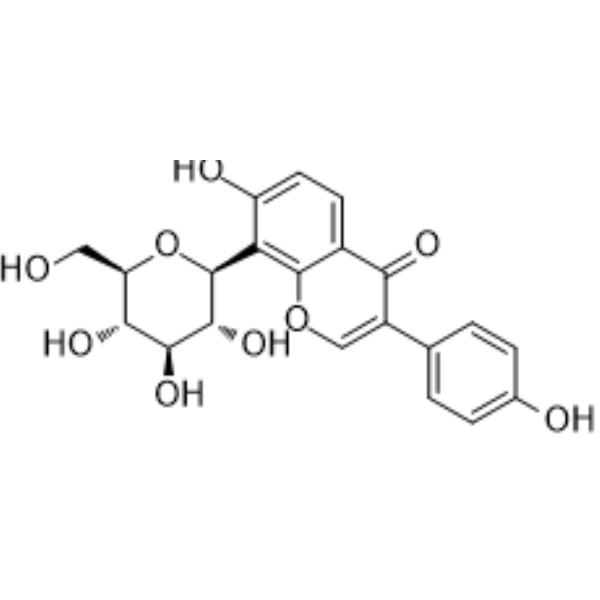
Puerarin is an isoflavone extracted from Pueraria root and is a 5-HT2C receptor antagonist. Puerarin inhibits the dorsal motor nucleus of the vagus (DMV)-vagus nerve pathway, which in turn leads to decreased fat absorption .
loading...
    loading...
28
28 Cited Publications
Cat. No.: HY-100001
CAS No.: 130495-35-1
Purity:  ≥99.01%
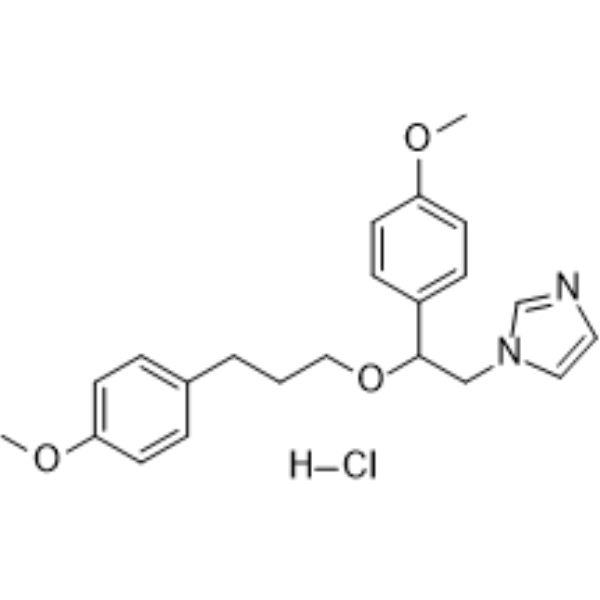
SKF-96365 hydrochloride is a TRPC channel antagonist and store-operated calcium entry (SOCE) inhibitor. SKF-96365 hydrochloride reduces calcium ion influx by inhibiting the activity and expression of TRPC6, STIM1 and Orai1. SKF-96365 hydrochloride inhibits voltage-gated sodium current (cardiac INa/NaV1.5) and slows myocardial conduction. SKF-96365 hydrochloride inhibits phosphorylation/activation of CaMKIIγ and suppresses the downstream AKT signaling pathway. SKF-96365 hydrochloride induces G2/M phase cell cycle arrest, apoptosis and cytoprotective autophagy in colorectal cancer cells. SKF-96365 hydrochloride alleviates allergic rhinitis symptoms by reducing inflammatory cytokine levels. SKF-96365 hydrochloride reduces intracellular calcium overload, inhibits Homer1 expression, prevents nuclear damage and suppresses apoptosis. SKF-96365 hydrochloride inhibits the growth of colorectal cancer xenografts in nude mice . SKF-96365 hydrochloride is applicable to research related to allergic rhinitis, colorectal cancer, Parkinson's disease, persistent spontaneous nociception and hyperalgesia .
loading...
    loading...
28
28 Cited Publications
Cat. No.: HY-125942
CAS No.: 162849-90-3
SKF-96365 is a TRPC channel antagonist and store-operated calcium entry (SOCE) inhibitor. SKF-96365 reduces calcium ion influx by inhibiting the activity and expression of TRPC6, STIM1 and Orai1. SKF-96365 inhibits voltage-gated sodium current (cardiac INa/NaV1.5) and slows myocardial conduction. SKF-96365 inhibits phosphorylation/activation of CaMKIIγ and suppresses the downstream AKT signaling pathway. SKF-96365 induces G2/M phase cell cycle arrest, apoptosis and cytoprotective autophagy in colorectal cancer cells. SKF-96365 alleviates allergic rhinitis symptoms by reducing inflammatory cytokine levels. SKF-96365 reduces intracellular calcium overload, inhibits Homer1 expression, prevents nuclear damage and suppresses apoptosis. SKF-96365 inhibits the growth of colorectal cancer xenografts in nude mice . SKF-96365 is applicable to research related to allergic rhinitis, colorectal cancer, Parkinson's disease, persistent spontaneous nociception and hyperalgesia .
loading...
    loading...
16
16 Cited Publications
Cat. No.: HY-N0052A
CAS No.: 5578-73-4
Synonyms: Sanguinarin chloride; Sanguinarium chloride; Pseudochelerythrine chloride
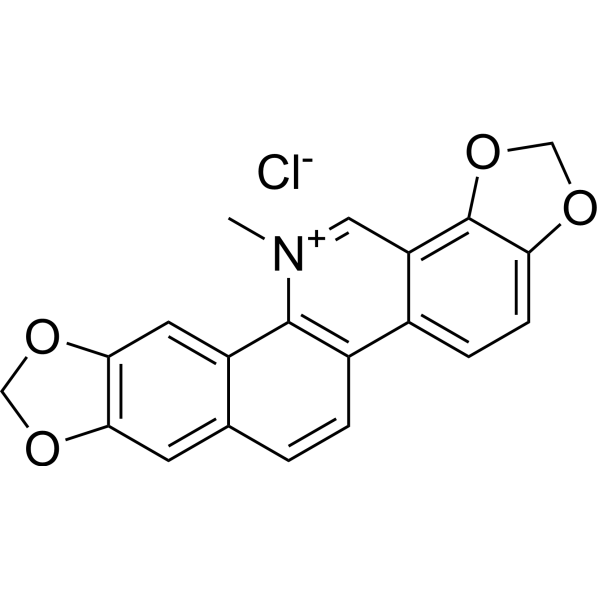
Sanguinarine (Sanguinarin) chloride, a benzophenanthridine alkaloid derived from the root of Sanguinaria Canadensis, can stimulate apoptosis via activating the production of reactive oxygen species (ROS). Sanguinarine-induced apoptosis is associated with the activation of JNK and NF-κB.
loading...
    loading...
16
16 Cited Publications
Cat. No.: HY-N0039
CAS No.: 41753-43-9
Synonyms: Gypenoside III
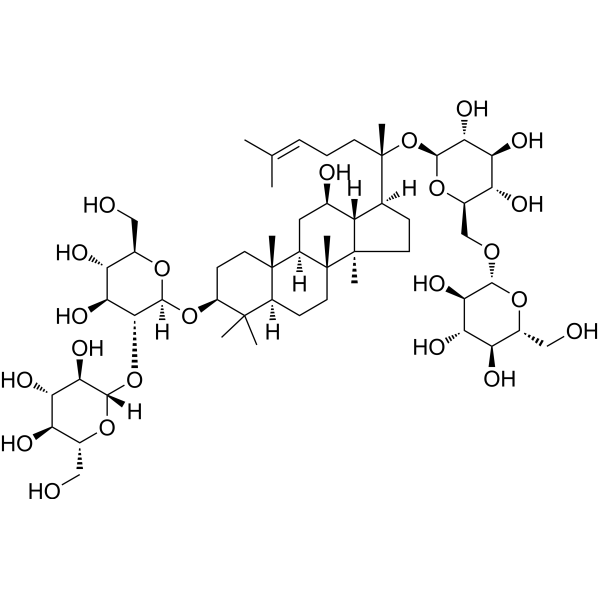
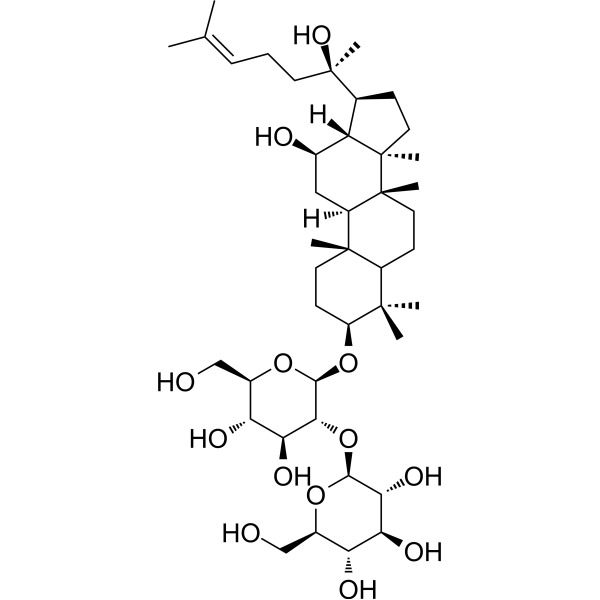
Ginsenoside Rb1, a main constituent of the root of Panax ginseng, inhibits Na +, K +-ATPase activity with an IC50 of 6.3±1.0 μM. Ginsenoside also inhibits IRAK-1 activation and phosphorylation of NF-κB p65 .
loading...
    loading...
16
16 Cited Publications
Cat. No.: HY-N0039R
CAS No.: 41753-43-9
Synonyms: Gypenoside III (Standard)
Ginsenoside Rb1 (Standard) is the analytical standard of Ginsenoside Rb1. This product is intended for research and analytical applications. Ginsenoside Rb1, a main constituent of the root of Panax ginseng, inhibits Na +, K +-ATPase activity with an IC50 of 6.3±1.0 μM. Ginsenoside also inhibits IRAK-1 activation and phosphorylation of NF-κB p65 .
loading...
    loading...
12
12 Cited Publications
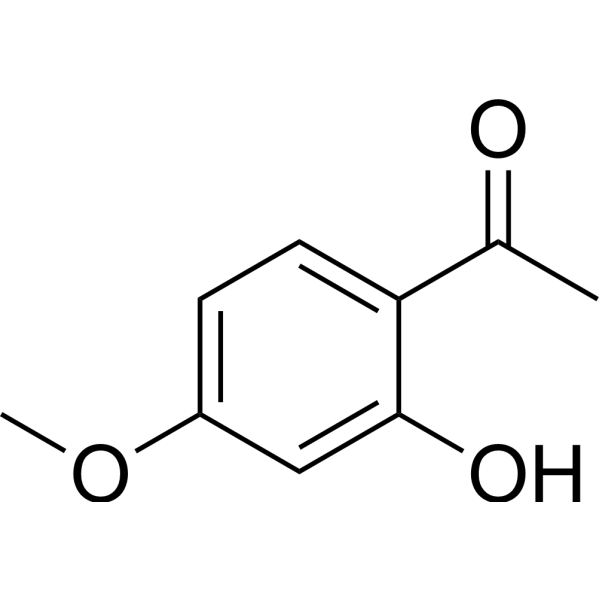
Cat. No.: HY-N0159
CAS No.: 552-41-0
Paeonol is an active extraction from the root of Paeonia suffruticosa, Paeonol inhibits MAO-A and MAO-B with IC50 of 54.6 μM and 42.5 μM, respectively.
loading...
    loading...
12
12 Cited Publications
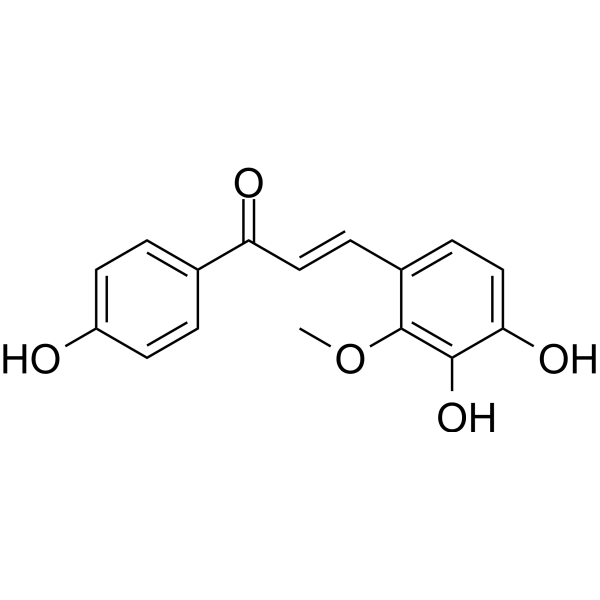
Cat. No.: HY-N0373
CAS No.: 58749-23-8
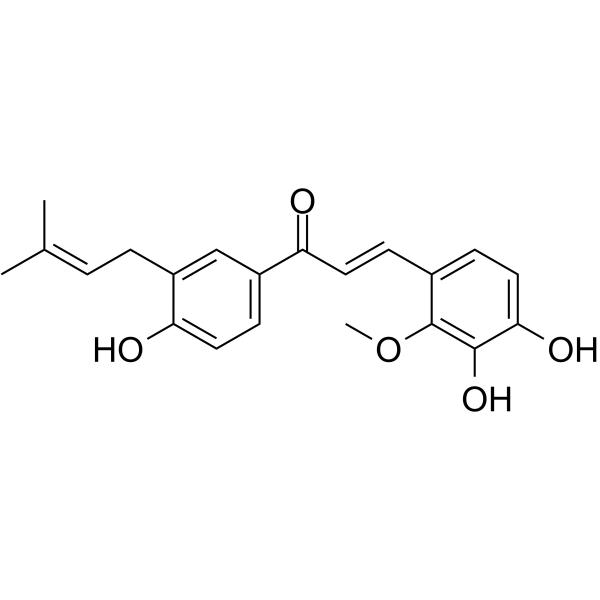
Licochalcone B is an extract from the root of Glycyrrhiza uralensis. Licochalcone B inhibits amyloid β (42) self-aggregation (IC50=2.16 μM) and disaggregate pre-formed Aβ42 fibrils, reduce metal-induced Aβ42 aggregation through chelating metal ionsLicochalcone B inhibits phosphorylation of NF-κB p65 in LPS signaling pathway. Licochalcone B inhibits growth and induces apoptosis of NSCLC cells. Licochalcone B specifically inhibits the NLRP3 inflammasome by disrupting NEK7‐NLRP3 interaction .
loading...
    loading...
12
12 Cited Publications
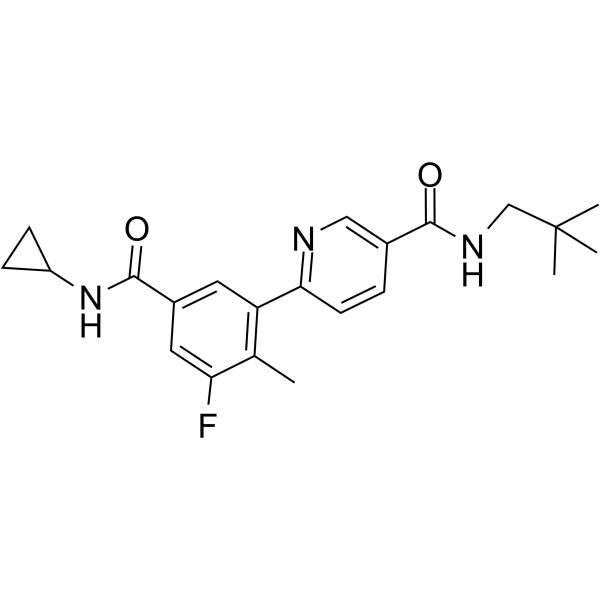
Cat. No.: HY-10402
CAS No.: 585543-15-3
Purity:  99.94%
Synonyms: GSK-AHAB; GW856553X; SB856553
Losmapimod (GSK-AHAB; GW856553X) is an orally active p38α/β MAPK inhibitor, with pKi values of 8.1 and 7.6 for p38α and p38β, respectively. Losmapimod reduces DUX4 expression, thus exerting efficacy in facioscapulohumeral muscular dystrophy. By inhibiting MAPK/NF-κB, Losmapimod reduces apoptosis of epileptiform hippocampal neurons, and exhibits anti-allodynia and anti-hyperalgesic activities. Losmapimod blocks the entry and fusion of Lassa fever virus (LASV). Losmapimod overcomes tyrosine kinase inhibitor resistance in non-small cell lung cancer (NSCLC). Losmapimod inhibits myocardial senescence and inflammation, and possesses cardioprotective activity against cardiotoxicity .
loading...
    loading...
10
10 Cited Publications
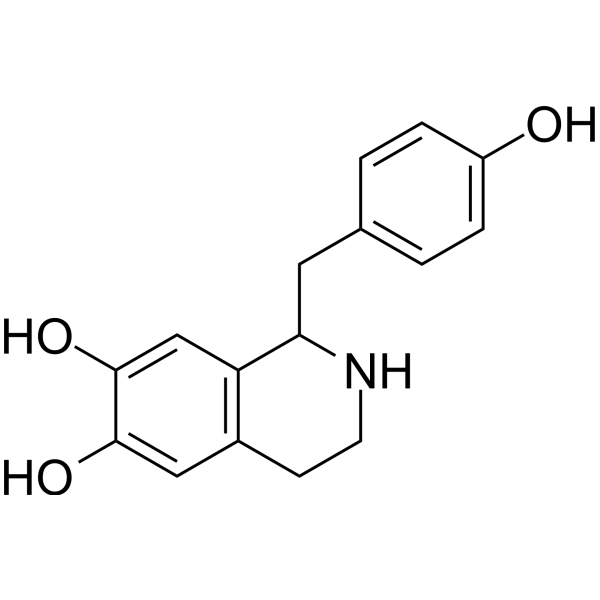
Cat. No.: HY-N2037
CAS No.: 5843-65-2
Synonyms: Norcoclaurine; Demethyl-Coclaurine
Higenamine (Norcoclaurine), a β2-AR agonist with antioxidant capability, is a key component of the Chinese herb aconite root that prescribes for treating symptoms of heart failure in the oriental Asian countries. Higenamine is also a α1-adrenergic receptor antagonist with hypotensive effect. is a selective LSD1 inhibitor (IC50=1.47 μM) that can be isolated from aconite. Higenamine hydrochloride has anti-inflammatory and antibacterial activity. Higenamine protects myocyte Apoptosis and ischemia/reperfusion (I/R) injury through selective activation of beta2-adrenergic receptor (β2-AR). Higenamine also reduces I/R-induced myocardial infarction in mice. Higenamine can attenuate IL-1β-induced Apoptosis through ROS-mediated PI3K/Akt signaling pathway. Higenamine protects brain cells from oxygen deprivation. Higenamine can promote bone formation in osteoporosis through the SMAD2/3 pathway. Higenamine can be used to study cancer, inflammation, cardiorenal syndrome and other diseases .
loading...
    loading...
9
9 Cited Publications
Cat. No.: HY-N0037
CAS No.: 39011-90-0
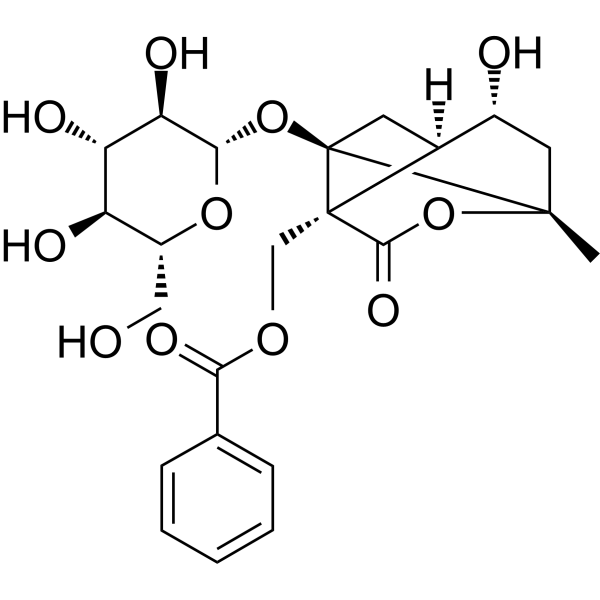
Albiflorin, a major constituent contained in peony root, is a brain-penetrant monoterpene glycoside with neuroprotective effects. Albiflorin also has anti-inflammatory, antioxidant and antinociceptive effects .
loading...
    loading...
8
8 Cited Publications
Cat. No.: HY-W004599
CAS No.: 1245-13-2
Target:  

Herbicide

Research Areas:  

Others

Bicinchoninic acid (compound 8) is an AHAS inhibitor, in an in vivo bioassay targeting the root growth inhibition of rapeseed, at a concentration of 100 μg/mL, it exhibited very low activity, with only a 1.4% root length inhibition rate .
loading...
    loading...
6
6 Cited Publications
Cat. No.: HY-N1381
CAS No.: 13137-64-9
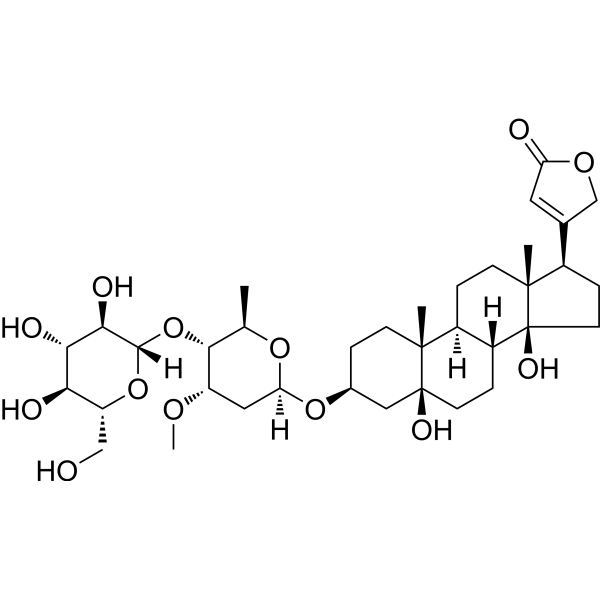
Periplocin is a cardiotonic steroid isolated from root-bark Periploca sepium Bunge. Periplocin promotes tumor cell apoptosis and inhibits tumor growth. Periplocin has the potential to facilitate wound healing through the activation of Src/ERK and PI3K/Akt pathways mediated by Na/K-ATPase .
loading...
    loading...
5
5 Cited Publications
Cat. No.: HY-N1376
CAS No.: 38243-03-7
Synonyms: (20R)-Propanaxadiol; R-ginsenoside Rg3
(20R)-ginsenoside Rg3 ((20R)-Propanaxadiol), one of the active compounds present in ginseng root, inhibits angiogenesis, and has anti-carcinogenic and antimetastatic effects .
loading...
    loading...
5
5 Cited Publications
Cat. No.: HY-N4187
CAS No.: 144506-15-0
Licochalcone D, a flavonoid compound mainly existing in the root of Glycyrrhiza uralensis, is a potent and orally active inhibitor of NF-kappaB (NF-κB) p65. Licochalcone D possesses antioxidant, anti-inflammatory, anti-cancer properties .
loading...
    loading...
5
5 Cited Publications
Cat. No.: HY-121119
CAS No.: 212329-37-8
Purity:  99.97%
MRS 1523 is a potent and selective adenosine A3 receptor antagonist with Ki values of 18.9 nM and 113 nM for human and rat A3 receptors, respectively. In rat this corresponds to selectivities of 140- and 18-fold vs A1 and A2A receptors, respectively. MRS 1523 can exert antihyperalgesic effect through N-type Ca channel block and action potential inhibition in isolated rat dorsal root ganglion (DRG) neurons .
loading...
    loading...

