



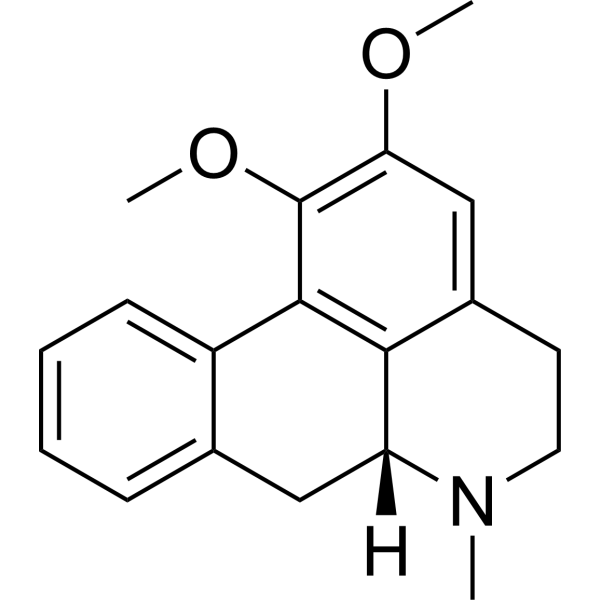
Nuciferine
Based on 8 publication(s) in Google Scholar
Nuciferine is an antagonist at 5-HT2A (IC50=478 nM), 5-HT2C (IC50=131 nM), and 5-HT2B (IC50=1 μM), an inverse agonist at 5-HT7 (IC50=150 nM), a partial agonist at D2 (EC50=64 nM), D5 (EC50=2.6 μM) and 5-HT6 (EC50=700 nM), an agonist at 5-HT1A (EC50=3.2 μM) and D4 (EC50=2 μM) receptor.
For research use only. We do not sell to patients.
- Purity : 99.90%
- CAS No.: 475-83-2
- Formula: C19H21NO2
- Molecular Weight:295.38
-
Storage:Powder -20°C, 3 years , 4°C, 2 years ; In solvent -80°C, 2 years , -20°C, 1 year

To place orders, for customer services and technical support, please contact: MedChemExpress USA
Tel: 609-228-6898 E-mail: [email protected] [email protected]


-
 Biological Activity
-
Chemical Information
-
Solvent & Solubility
- Protocols
- Purity & Documentation
- References
-
 Help & FAQs


-
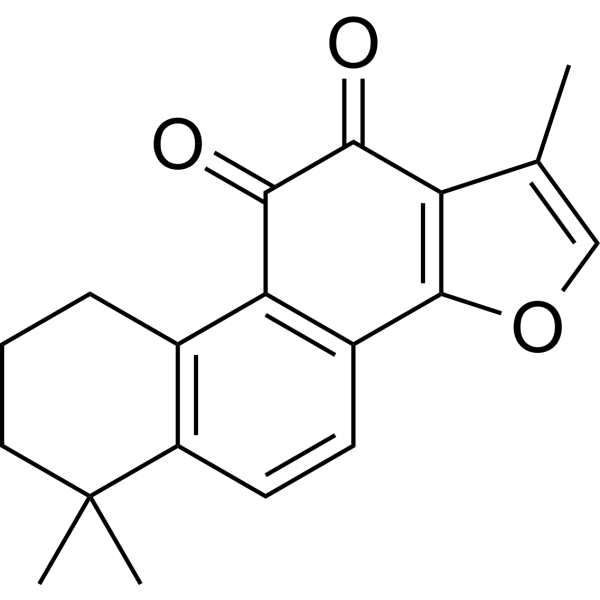
HY-N0135
Tanshinone IIAVEGFR Inhibitor -
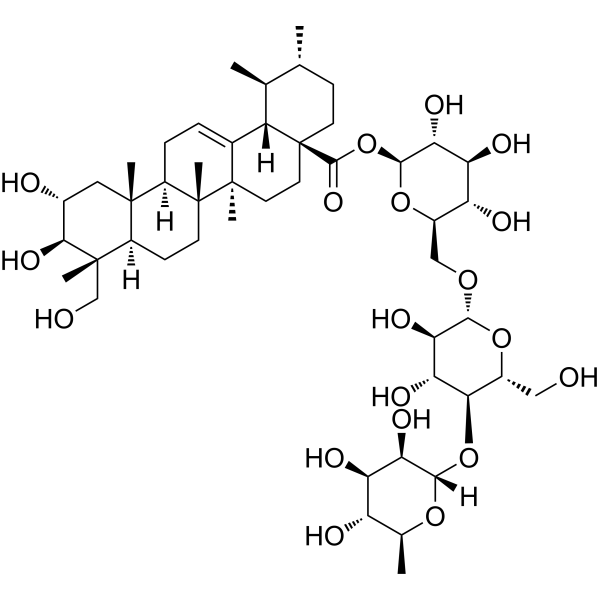
HY-N0439
AsiaticosideTriterpene Glycoside -
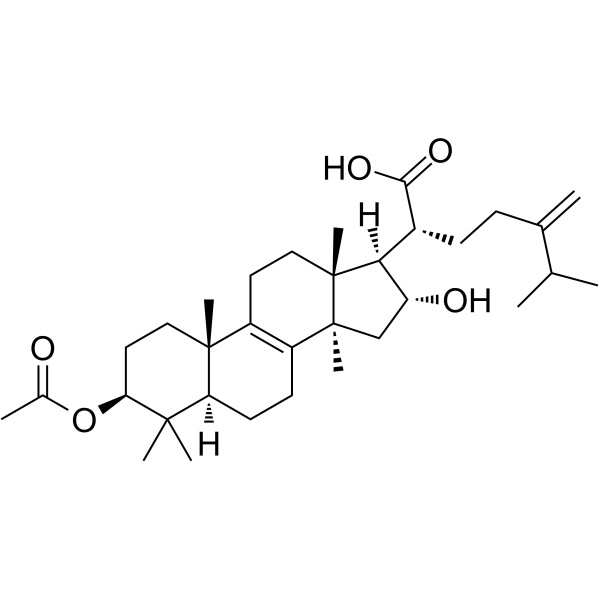
HY-N0371
Pachymic acidTriterpenoid Compound -
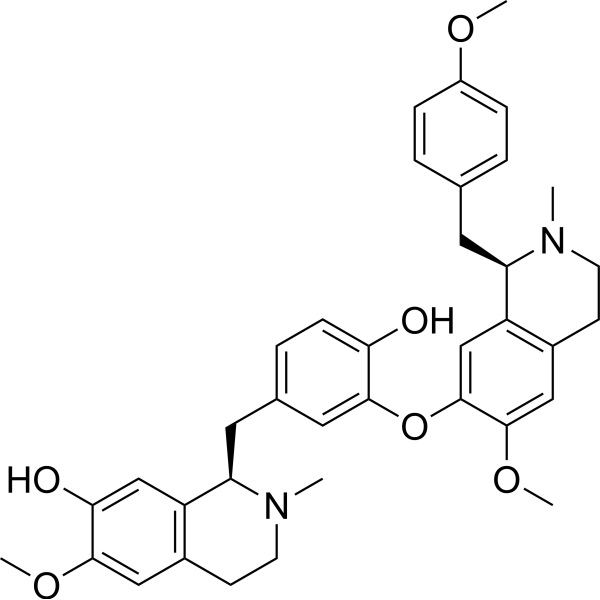
HY-N0770
IsoliensinineApoptosis Inducer -
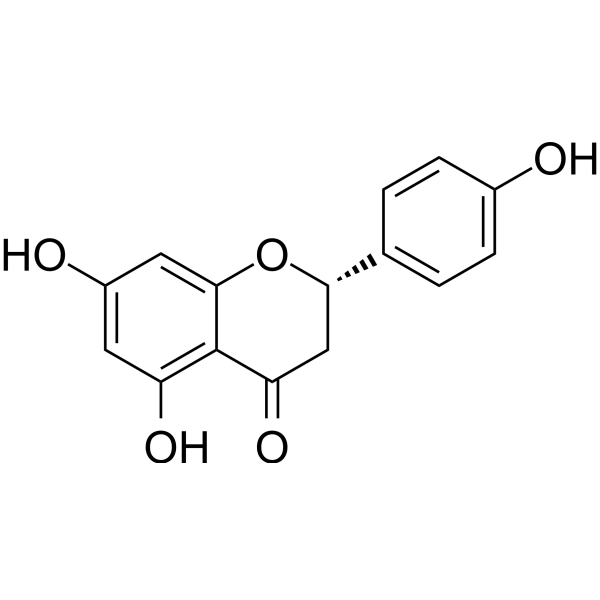
HY-N0100
NaringeninFlavonoid -
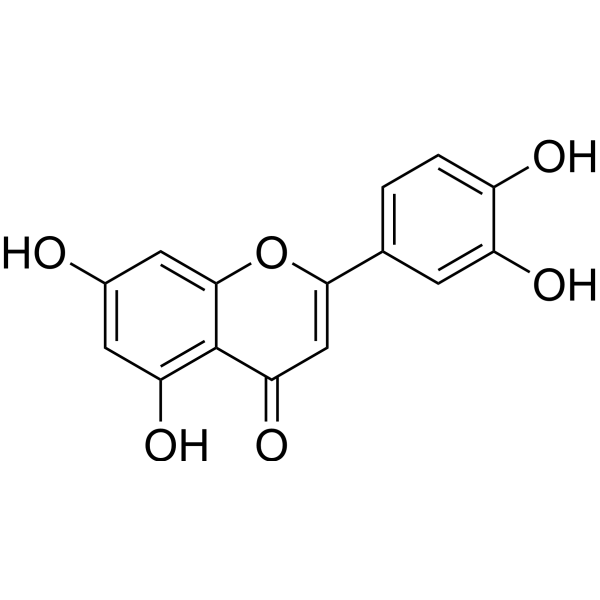
HY-N0162R
Luteolin (Standard)Nrf2 Inhibitor -
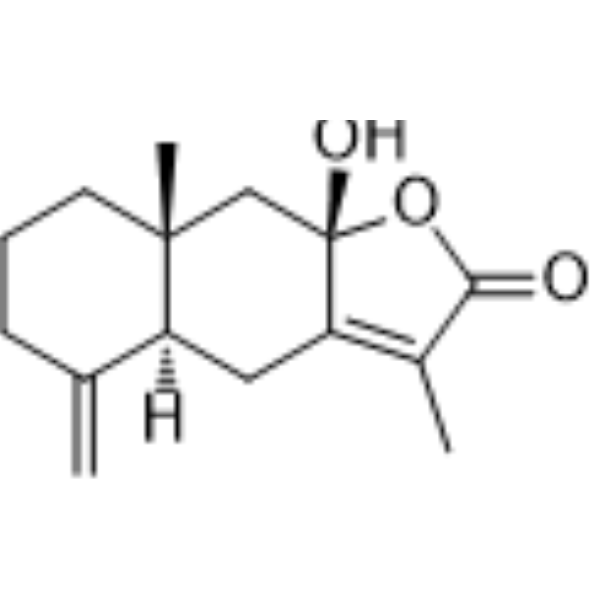
HY-N0203
Atractylenolide IIIApoptosis Inducer -
HY-N0779A
SilybinApoptosis Inducer -
HY-N0049R
Nuciferine (Standard) -
HY-N0197
BaicalinAutophagy Inducer -
HY-N0145
Puerarin5-HT Receptor Antagonist -
HY-N0292
OleuropeinApoptosis Inducer
Publications Citing Use of MedChemExpress (MCE) Nuciferine
More- J Adv Res. 2025 Aug 18:S2090-1232(25)00635-6. [Abstract]
- Phytomedicine. 2026 Jun:155:158070. [Abstract]
- J Agric Food Chem. 2024 Nov 6;72(44):24417-24431. [Abstract]
- Int Immunopharmacol. 2023 Jun:119:110204. [Abstract]
- Fish Shellfish Immunol. 2025 Oct:165:110535. [Abstract]
- J Funct Foods. August 2022, 105182.
- Nutr Metab. 2021 Feb 18;18(1):20. [Abstract]
- Mol Pharmacol. 2023 Nov;104(5):230-238. [Abstract]
 Customer Validation & Images

-
Cell Proliferation/Viability Assay
-
WB
-
IF
-
Histological Imaging/Staining
-
ELISA
All Parasite Isoforms
MoreAll 5-HT Receptor Isoforms
MoreAll Dopamine Receptor Isoforms
More

Biological Activity
Description
IC50 & Target
[1]|
5-HT2C Receptor 131 nM (IC50) |
Schistosome |
5-HT1A Receptor |
5-HT2A Receptor |
5-HT2B Receptor |
5-HT2C Receptor |
5-HT7 Receptor |
5-HT7 Receptor 150 nM (IC50) |
5-HT2A Receptor 478 nM (IC50) |
5-HT2B Receptor 1 μM (IC50) |
5-HT6 Receptor 700 nM (EC50) |
5-HT1A Receptor 3.2 μM (EC50) |
D2 Receptor 64 nM (EC50) |
D4 Receptor 2 μM (EC50) |
D5 Receptor 2.6 μM (EC50) |
Cellular Effect
|
Cell Line

|
Type | Value | Description | References |
|---|---|---|---|---|
| B16-4A5 | IC50 |
15.8 μM
Compound: 2
|
Inhibition of melanogenesis in mouse B16-4A5 cells after 72 hrs by spectrophotometry
Inhibition of melanogenesis in mouse B16-4A5 cells after 72 hrs by spectrophotometry
|
[PMID: 23270663] |
In Vitro
Nuciferine is a partial agonist at DD2 receptor with an activity (Emax=67% of dopamine) similar to aripiprazole (Emax=50% of dopamine). In line with its partial agonist activity, Nuciferine inhibited dopamine-induced activation of Gi with a potency similar to clozapine (Nuciferine KB=62 nM; Clozapine KB=20 nM) as determined via Schild regression analysis[1]. The natural product Nuciferine acts as an effective inhibitor of adult worm motility. Nuciferine is effective at inhibiting both basal and 5-HT evoked motility of adult schistosomes. Nuciferine inhibits Sm.5HTRL and schistosomule with 0.24±0.04 and 0.62±0.22 μM, respectively[2].
MedChemExpress (MCE) has not independently confirmed the accuracy of these methods. They are for reference only. Further protocols information, click here.
In Vivo
MedChemExpress (MCE) has not independently confirmed the accuracy of these methods. They are for reference only.


Chemical Information
-
CAS No. 475-83-2
-
Appearance Solid
-
Molecular Weight 295.38
-
Formula C19H21NO2
-
Color White to off-white
-
SMILES
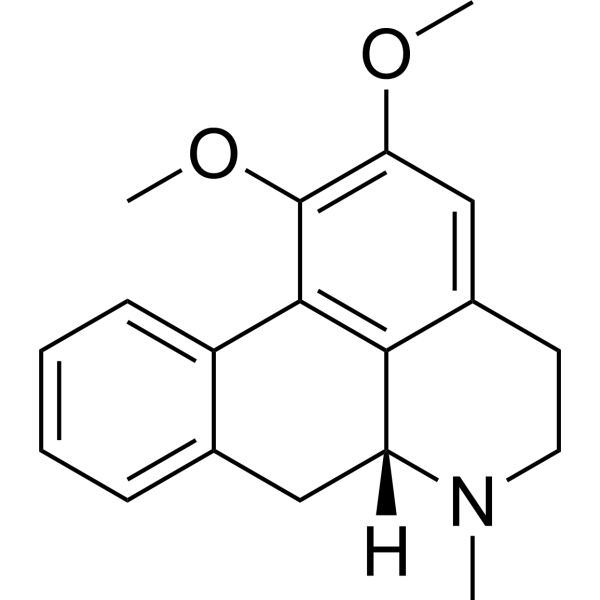
CN1CCC2=CC(OC)=C(OC)C3=C2[C@@]1([H])CC4=CC=CC=C34
-
Structure Classification
-
Initial Source
-
Shipping
Room temperature in continental US; may vary elsewhere.
-
Storage
Powder -20°C 3 years 4°C 2 years In solvent -80°C 2 years -20°C 1 year


Publications (8)
-
Journal Impact Factor
-
Most Recent
-
J Adv Res
Nuciferine inhibits pressure overload-induced cardiac remodeling by activating the SENP1-ACSL4-ferroptosis axis. [Abstract]2025 Aug 18:S2090-1232(25)00635-6. PMID: 40835001
Nuciferine purchased from MedChemExpress. Usage Cited in: J Adv Res. 2025 Aug 18:S2090-1232(25)00635-6. [Abstract]
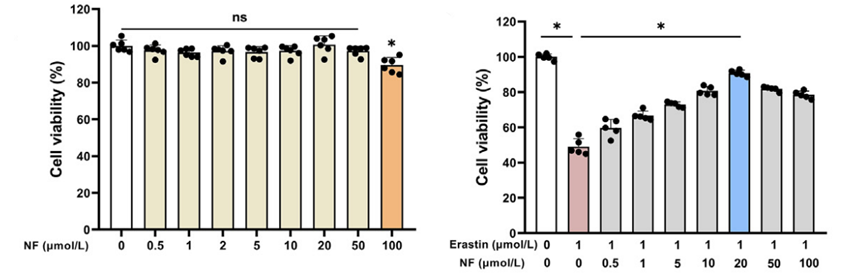
Quantitative analysis of survival rates after treatment with different concentrations of Nuciferine (NF) (0.5, 1, 2, 5, 10, 20, 50, 100 μM) and Erastin in NRCMs.
Nuciferine purchased from MedChemExpress. Usage Cited in: J Adv Res. 2025 Aug 18:S2090-1232(25)00635-6. [Abstract]
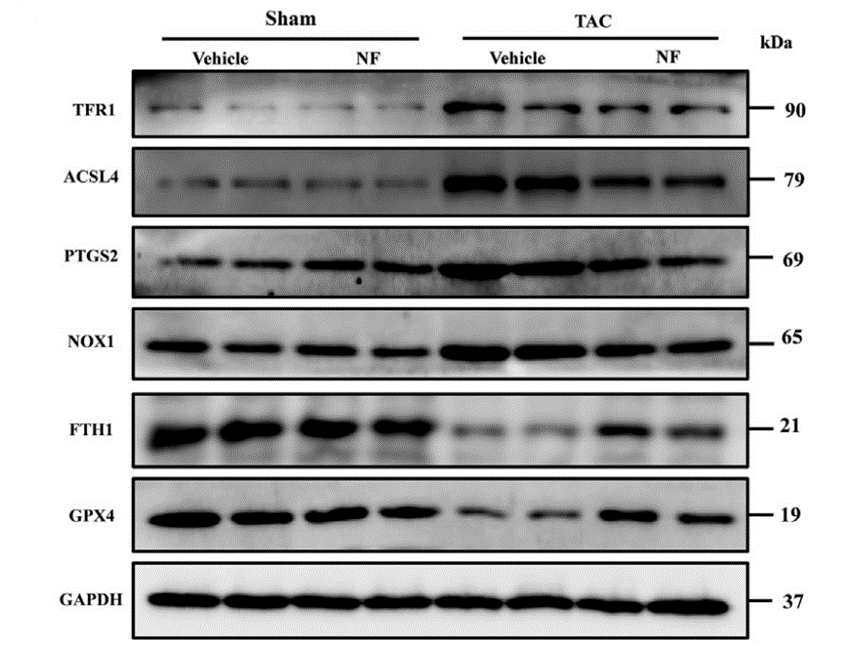
Representative Western blotting images and quantitative results of TFR1, ACSL4, PTGS2, NOX1, FTH1 and GPX4 expression in left ventricular tissues treated with Nuciferine (NF)
Nuciferine purchased from MedChemExpress. Usage Cited in: J Adv Res. 2025 Aug 18:S2090-1232(25)00635-6. [Abstract]
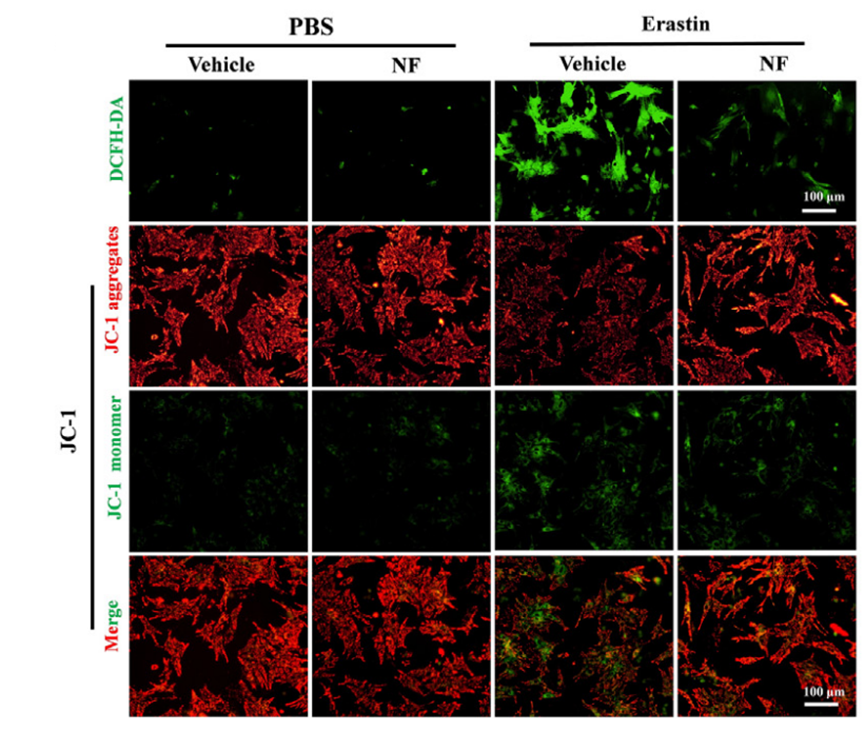
Representative images of DCFH-DA and JC-1 staining, and quantification of ROS fluorescence and JC-1 ratio in NRCMs treated with Nuciferine (NF).
Nuciferine purchased from MedChemExpress. Usage Cited in: J Adv Res. 2025 Aug 18:S2090-1232(25)00635-6. [Abstract]
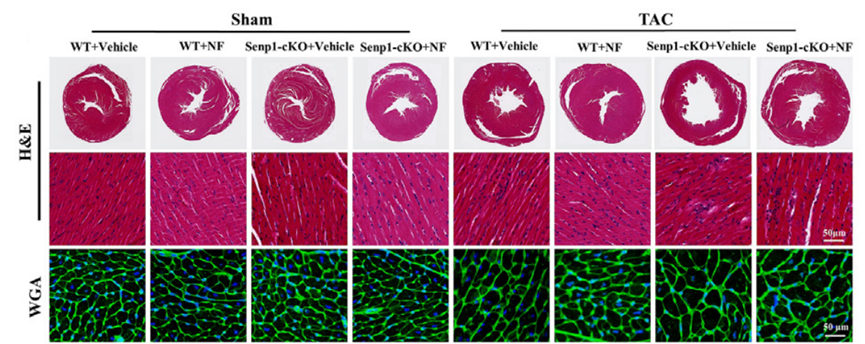
Representative images of H&E staining, WGA staining and PSR staining in left ventricular sections treated with Nuciferine (NF) (30 mg/kg, p.o.).
Nuciferine purchased from MedChemExpress. Usage Cited in: J Adv Res. 2025 Aug 18:S2090-1232(25)00635-6. [Abstract]
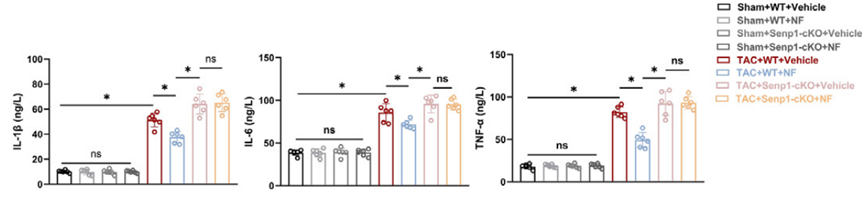
Quantification of heart tissue levels of IL-6, IL-1b, and TNF-a treated with Nuciferine (NF) (30 mg/kg, p.o.).
-
Phytomedicine
Nuciferine ameliorates steroid-induced osteonecrosis of the femoral head by inhibiting BMSCs ferroptosis via HIF-1α. [Abstract]2026 Jun:155:158070. PMID: 41861683 -
J Agric Food Chem
Nuciferine Alleviates High-Fat Diet- and ApoE-/--Induced Hepatic Steatosis and Ferroptosis in NAFLD Mice via the PPARα Signaling Pathway. [Abstract]2024 Nov 6;72(44):24417-24431. PMID: 39445611 -
Int Immunopharmacol
Nuciferine improves random skin flap survival via TFEB-mediated activation of autophagy-lysosomal pathway. [Abstract]2023 Jun:119:110204. PMID: 37126988 -
Fish Shellfish Immunol
Nuciferine supplement improved intestinal function and inflammatory response in juvenile large yellow croaker (Larmichthys crocea) fed diets with high palm oil level. [Abstract]2025 Oct:165:110535. PMID: 40617415 -
-
Nutr Metab
2021 Feb 18;18(1):20. PMID: 33602253 -
Mol Pharmacol
2023 Nov;104(5):230-238. PMID: 37567783


Solvent & Solubility
In Vitro:
DMSO : 5 mg/mL (16.93 mM; ultrasonic and warming and heat to 60°C; Hygroscopic DMSO has a significant impact on the solubility of product, please use newly opened DMSO)
Please refer to the solubility information to select the appropriate solvent. Once prepared, please aliquot and store the solution to prevent product inactivation from repeated freeze-thaw cycles.
Storage method and period of stock solution: -80°C, 2 years; -20°C, 1 year. When stored at -80°C, please use it within 2 years. When stored at -20°C, please use it within 1 year.
Please refer to the solubility information to select the appropriate solvent. Once prepared, please aliquot and store the solution to prevent product inactivation from repeated freeze-thaw cycles.
Storage method and period of stock solution: -80°C, 2 years; -20°C, 1 year. When stored at -80°C, please use it within 2 years. When stored at -20°C, please use it within 1 year.
Concentration (start) × Volume (start) = Concentration (final) × Volume (final)
In Vivo:
Select the appropriate dissolution method based on your experimental animal and administration route.
- For the following dissolution methods, please ensure to first prepare a clear stock solution using an In Vitro approach and then sequentially add co-solvents:
- To ensure reliable experimental results, the clarified stock solution can be appropriately stored based on storage conditions. As for the working solution for In Vivo experiments, it is recommended to prepare freshly and use it on the same day.
- The percentages shown for the solvents indicate their volumetric ratio in the final prepared solution. If precipitation or phase separation occurs during preparation, heat and/or sonication can be used to aid dissolution.
Add each solvent one by one: 10% DMSO 40% PEG300 5% Tween-80 45% Saline
Solubility: ≥ 1.11 mg/mL (3.76 mM); Clear solution
This protocol yields a clear solution of ≥ 1.11 mg/mL (saturation unknown).
Taking 1 mL working solution as an example, add 100 μL DMSO stock solution (11.1 mg/mL) to 400 μL PEG300, and mix evenly; then add 50 μL Tween-80 and mix evenly; then add 450 μL Saline to adjust the volume to 1 mL.
Preparation of Saline: Dissolve 0.9 g sodium chloride in ddH₂O and dilute to 100 mL to obtain a clear Saline solution.
Add each solvent one by one: 10% DMSO 90% (20% SBE-β-CD in Saline)
Solubility: ≥ 1.11 mg/mL (3.76 mM); Clear solution
This protocol yields a clear solution of ≥ 1.11 mg/mL (saturation unknown).
Taking 1 mL working solution as an example, add 100 μL DMSO stock solution (11.1 mg/mL) to 900 μL 20% SBE-β-CD in Saline, and mix evenly.
Preparation of 20% SBE-β-CD in Saline (4°C, storage for one week): 2 g SBE-β-CD powder is dissolved in 10 mL Saline, completely dissolve until clear.
In Vivo Dissolution Calculator
Please enter the basic information of animal experiments:
-
-
-
-
Recommended: Prepare an additional quantity of animals to account for potential losses during experiments.
Please enter your animal formula composition:
-
%DMSO +
Recommended: Keep the proportion of DMSO in working solution below 2% if your animal is weak.
-
%+
-
+%Tween-80 + +
-
%Saline +
The co-solvents required include: DMSO, . All of co-solvents are available by MedChemExpress (MCE). , Tween 80. All of co-solvents are available by MedChemExpress (MCE).
Working solution concentration: 0.22 mg/mL
Method for preparing stock solution: mg drug dissolved in μL DMSO. Stock solution concentration: mg/mL.
1. Take μL DMSO stock solution;
2. Add μL .
μL , mix evenly;
3. Then add μL Tween 80, mix evenly;
4. Then add μL
Please ensure that the stock solution in the first step is dissolved to a clear state, and add co-solvents in sequence. You can use ultrasonic heating (ultrasonic cleaner, recommended frequency 20-40 kHz), vortexing, etc. to assist dissolution.

Protocols
-
Cell Cytotoxicity Assay
Cytotoxicity assays are usually based on the assessment of cell membrane damage, which can also be indirectly detected by measuring cell viability. Detection methods include MTT assay, CKK-8 assay, LDH assay and ATP assay, etc.


Purity & Documentation
-
Data Sheet (287 KB)
-
SDS (393 KB)
- English - EN (393 KB)
- Français - FR (393 KB)
- Deutsch - DE (393 KB)
- Norwegian - NO (393 KB)
- Español - ES (393 KB)
- Swedish - SV (393 KB)
- Italian - IT (393 KB)
- Korean - KR (393 KB)
- Portuguese - PT (393 KB)
-
Handling Instructions (2659 KB)
References
[1]. Farrell MS, et al. In Vitro and In Vivo Characterization of the Alkaloid Nuciferine. PLoS One. 2016 Mar 10;11(3):e0150602. [Content Brief]
[2]. Chan JD, et al. Pharmacological profiling an abundantly expressed schistosome serotonergic GPCR identifies nuciferine as a potent antagonist. Int J Parasitol Drugs Drug Resist. 2016 Dec;6(3):364-370. [Content Brief]


Complete Stock Solution Preparation Table
Please refer to the solubility information to select the appropriate solvent. Once prepared, please aliquot and store the solution to prevent product inactivation from repeated freeze-thaw cycles.
Storage method and period of stock solution: -80°C, 2 years; -20°C, 1 year. When stored at -80°C, please use it within 2 years. When stored at -20°C, please use it within 1 year.
| Optional Solvent | Concentration Solvent Mass | 1 mg | 5 mg | 10 mg | 25 mg |
|---|---|---|---|---|---|
| DMSO | 1 mM | 3.3855 mL | 16.9273 mL | 33.8547 mL | 84.6367 mL |
| 5 mM | 0.6771 mL | 3.3855 mL | 6.7709 mL | 16.9273 mL | |
| 10 mM | 0.3385 mL | 1.6927 mL | 3.3855 mL | 8.4637 mL | |
| 15 mM | 0.2257 mL | 1.1285 mL | 2.2570 mL | 5.6424 mL |


Nuciferine Related Classifications
HY-N0049 Related Classifications
 Powered by Bioz