



Akt Inhibitor
-
STA-1474
 0 ImagesCat. No.: HY-13752CAS No.: 1118915-78-8
STA-1474 is an orally active and highly selective HSP90 inhibitor, as well as a phosphate prodrug of the HSP90 inhibitor STA-9090 (HY-15205). STA-1474 disrupts the chaperone function of HSP90 and promotes the degradation of client proteins. STA-1474 inhibits the phosphorylation of Met, Akt and STAT3, thereby blocking related signaling pathways. STA-1474 induces apoptosis and inhibits proliferation of osteosarcoma cells, and triggers the up-regulation of HSP70 and HSP90. STA-1474 induces tumor regression and caspase-3 activation in mouse osteosarcoma xenograft models. STA-1474 can be used in the research of osteosarcoma.
-
c-Met-IN-32
 0 ImagesCat. No.: HY-189651
c-Met-IN-32 is an orally active c-Met inhibitor with an IC50 of 18 nM, blocking autophosphorylation and downstream PI3K/AKT and RAS/ERK signaling pathways. c-Met-IN-32 inhibits MER, FYN, and SRC kinases. c-Met-IN-32 induces apoptosis, inhibits migration and invasion, suppresses the proliferation of MET-amplified cancer cells, and exhibits selectivity against non-MET-dependent cancer cell lines. c-Met-IN-32 can be used for research on non-small cell lung cancer.
-
Leupeptin Ac-LL
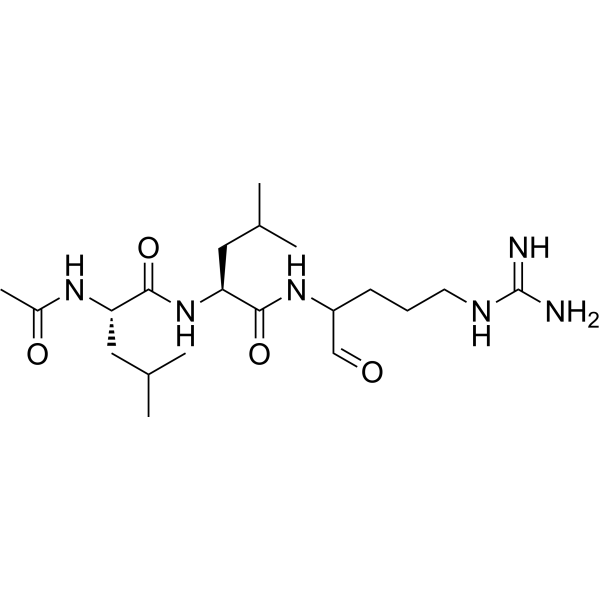 0 ImagesCat. No.: HY-18234BCAS No.: 24365-47-7
Leupeptin Ac-LL is a broad-spectrum protease inhibitor. By inhibiting the activation of the PTEN/PI3K/Akt/NF-κB/ERK1/2/p38 signaling pathway, Leupeptin Ac-LL significantly reduces LPS-induced NO and ROS production, mitochondrial membrane potential hyperpolarization, phagocytic activity, pro-inflammatory cytokine release, and M1 polarization in mouse peritoneal macrophages, and reverses autophagic flux impairment. It also decreases Concanavalin A (HY-P2149)-induced proliferation index of mouse splenic lymphocytes and the Th1/IL-10 and Th2/IL-10 cytokine ratios, thereby modulating innate and adaptive immune responses. Leupeptin Ac-LL inhibits blood coagulation and tumorigenesis in mouse skin. Leupeptin Ac-LL can be used in research on chronic inflammatory diseases and skin tumorigenesis.
-
Desethylamiodarone-d4 hydrochloride
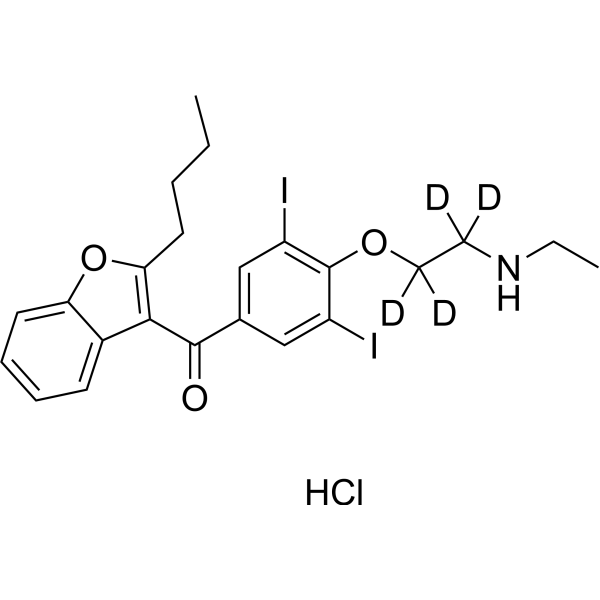 0 ImagesCat. No.: HY-130353SCAS No.: 1189960-80-2Synonyms: N-Desethylamiodarone-d4 hydrochloride; LB 33020-d4 hydrochloride
Desethylamiodarone-d4 hydrochloride (N-Desethylamiodarone-d4 hydrochloride; LB 33020-d4 hydrochloride) is the deuterated-labeled Desethylamiodarone hydrochloride (HY-130353). Desethylamiodarone hydrochloride (N-Desethylamiodarone hydrochloride; LB 33020 hydrochloride) is the major active metabolite of Amiodarone (HY-14187) generated via CYP3A4 metabolism. Desethylamiodarone hydrochloride downregulates p‑Akt, p‑Bad and Bcl‑2, upregulates Bax, promotes mitochondrial release of cytochrome c, activates caspase‑3 and cleaves PARP‑1, thereby inducing cell cycle arrest and apoptosis. Desethylamiodarone hydrochloride can be used in cervical cancer-related research.
-
BRK/PTK6-IN-1
 0 ImagesCat. No.: HY-178460
BRK/PTK6-IN-1 (Compound 51) is a highly efficient and selective BRK inhibitor (IC50 = 3.37 nM, Kd = 44 nM). BRK/PTK6-IN-1 can reduce MMP-9 protein expression and inhibit IGF-1 induced AKT phosphorylation in MDA-MB-231 cells. BRK/PTK6-IN-1 significantly inhibits migration, invasion, and colony formation but does not affect cell proliferation. BRK/PTK6-IN-1 is often used in the research of breast cancer and other cancers.
-
ROCK2-IN-13
 0 ImagesCat. No.: HY-179498
ROCK2-IN-13 is a selective ROCK2 inhibitor. ROCK2-IN-13 reduces nuclear expression by disrupting the interaction of ROCK2 with transcriptional co activators p300> and PGC 1α, repressing oncogenic transcription. ROCK2-IN-13 activates FOXO1 driven PTEN expression, leading to suppression of the PI3K/Akt pathway, induction of G2/M cell cycle arrest, and promotion of apoptosis. ROCK2-IN-13 ablates the nuclear transcriptional function of ROCK2 that sustains oncogenic signaling and restores the tumor suppressive PTEN/FOXO1 axis. ROCK2-IN-13 can be used for prostate cancer reseach.
-
EGFR-IN-182
 0 ImagesCat. No.: HY-178955
EGFR-IN-182 (Compound 4) is an EGFR inhibitor with an IC50 value of 199 nM. EGFR-IN-182 inhibits HSP90 and PI3K, with IC50 values of 5.007 and 13.596 μM respectively. EGFR-IN-182 exhibits strong anti-proliferative activity against MCF-7 and MDA-MB-231 cells. EGFR-IN-182 downregulates Cyclin D1, inducing cell cycle arrest; it enhances the activity of caspase-9, inducing cell apoptosis. EGFR-IN-182 downregulates the expressions of ERK and AKT. EGFR-IN-182 can be used for research on breast cancer.
-
EGFR-IN-213
 0 ImagesCat. No.: HY-183754CAS No.: 3115216-45-7
EGFR-IN-213 is a selective inhibitor of EGFRL858R/T790M/C797S with a human IC50 of 0.48 nM. EGFR-IN-213 acts as an antiproliferative agent, inducing apoptosis and cell cycle arrest, and inhibiting colony formation, cell migration, and tube formation. EGFR-IN-213 can be used for the research of non-small cell lung cancer, chronic myeloid leukemia, gastric cancer, prostate cancer.
-
PX-316
 0 ImagesCat. No.: HY-119134CAS No.: 253440-95-8
-
PI3K/AKT-IN-7
 0 ImagesCat. No.: HY-189668
PI3K/AKT-IN-7 is a PI3K/Akt signaling pathway inhibitor with selective antiproliferative activity against hepatocellular carcinoma cells. PI3K/AKT-IN-7 downregulates the phosphorylation of PI3K and Akt and binds to NCF2 (Kd = 1.40 μM). PI3K/AKT-IN-7 induces apoptosis, S-phase cell cycle arrest, loss of mitochondrial membrane potential, and ROS accumulation, while inhibiting proliferation, migration, invasion, and DNA synthesis. PI3K/AKT-IN-7 inhibits tumor growth in a Hep3B xenograft BALB/c mouse model and reduces the expression of Ki67, PCNA, and MMP9. PI3K/AKT-IN-7 can be used for research on hepatocellular carcinoma.
-
EGFR-IN-181
 0 ImagesCat. No.: HY-178939
EGFR-IN-181 is an orally active, potent, brain-penetrant EGFRL858R/T790M/C797S triple mutations inhibitor (IC50 = 1.32 nM). EGFR-IN-181 can inhibit EGFR phosphorylation (p-EGFR) and phosphorylation of its downstream signaling proteins AKT (p-AKT) and ERK (p-ERK). EGFR-IN-181 can induce apoptosis and cause G2 phase arrest. EGFR-IN-181 can be used for the study of non-small cell lung cancer (NSCLC) and brain metastases.
-
JAK2-IN-9
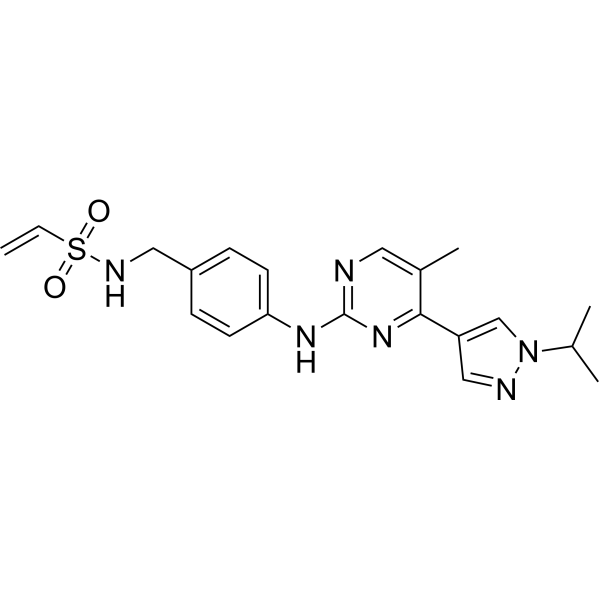 0 ImagesCat. No.: HY-155746CAS No.: 2568842-26-0
JAK2-IN-9 is an orally active selective JAK2 inhibitor with a human IC50 of 5 nM. JAK2-IN-9 inhibits JAK2 kinase activity, blocks JAK2 phosphorylation, and suppresses the activation of the downstream JAK2-STAT signaling pathway. JAK2-IN-9 inhibits the phosphorylation of STAT3, STAT5 and AKT in cancer cells. JAK2-IN-9 induces cancer cell apoptosis (apoptosis) and cell cycle arrest. JAK2-IN-9 can be used for the research of myeloproliferative neoplasms.
-
FLT3-IN-32 hydrochloride
 0 ImagesCat. No.: HY-174437BCAS No.: 3047195-66-1
FLT3-IN-32 hydrochloride is a potent and orally active FLT3 inhibitor with an IC50s of 0.29 nM, 0.77 nM and 2.07 nM against FLT3-ITD, FLT3-D835Y and FLT-N676K. FLT3-IN-32 hydrochloride reduces the phosphorylation of FLT3 and its downstream signaling molecules (STAT5, MAPK, AKT) to induce FLT3-mutated Ba/F3 cells apoptosis. FLT3-IN-32 hydrochloride shows significant anti-tumor efficacy in n the MV4-11 xenograft model. FLT3-IN-32 hydrochloride can be used for the study of acute myeloid leukemia (AML).
-
TSR-011-isomer
 0 ImagesCat. No.: HY-117806CAS No.: 1388225-79-3
TSR-011-isomer is an isomer of Belizatinib (HY-17603), a ALK inhibitor with an IC50 of 6 nM. TSR-011-isomer acts as a substrate for metabolic hydrolysis and NADPH-dependent metabolism. TSR-011-isomer undergoes enzymatic hydrolysis in mouse plasma and NADPH-dependent metabolism in mouse liver microsomes, thereby supporting clearance processes. TSR-011-isomer can be used in studies related to ALK-driven cancers.
-
Dimethoxycurcumin-d6
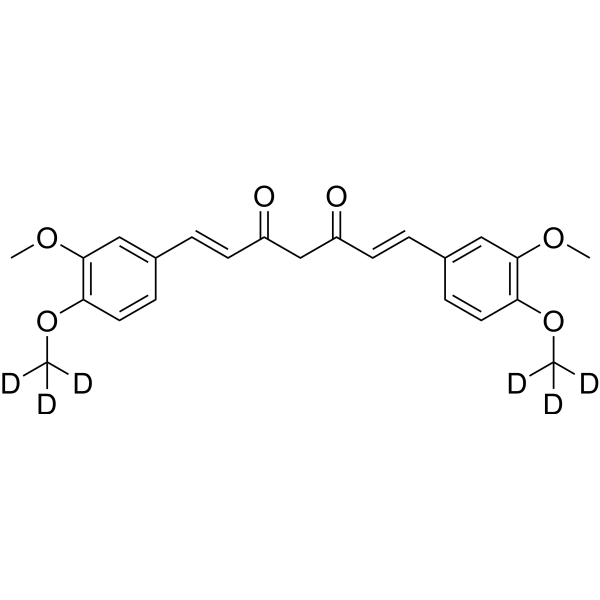 0 ImagesCat. No.: HY-100977SCAS No.: 3006902-95-7Synonyms: DiMC-d6; CHC 004-d6; Di-O-methylcurcumin-d6
Dimethoxycurcumin-d6 (DiMC-d6; CHC 004-d6; Di-O-methylcurcumin-d6) is the deuterated-labeled Dimethoxycurcumin (HY-100977). Dimethoxycurcumin (DiMC) is a curcuminoid compound found in Curcuma longa. Dimethoxycurcumin is also an orally active thioredoxin reductase inhibitor (IC50 = 5.4 μM) and androgen receptor antagonist. Dimethoxycurcumin inhibits thioredoxin reductase, leading to oxidized thioredoxin accumulation, ROS production, DNA damage, glutathione depletion, mitochondrial membrane potential decrease, ATP depletion, S phase arrest, and apoptosis. Dimethoxycurcumin inhibits NF-κB, NADPH oxidase subunits, ATP synthase subunits, CDK4, cyclin-D1, FASN, ACC, and the IRS2-PI3K-Akt pathway, while activating AMPK, ERK, and JNK. Dimethoxycurcumin can be used for research on cancer, arsenic-induced hepatotoxicity, and tuberculosis.
-
Desethylamiodarone hydrochloride (Standard)
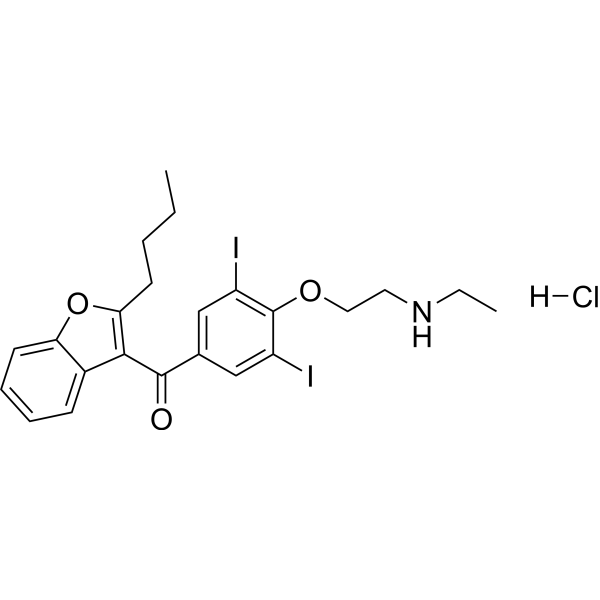 0 ImagesCat. No.: HY-130353RCAS No.: 96027-74-6Synonyms: N-Desethylamiodarone hydrochloride (Standard); LB 33020 hydrochloride (Standard)
Desethylamiodarone hydrochloride (Standard) (N-Desethylamiodarone hydrochloride (Standard); LB 33020 hydrochloride (Standard)) is the analytical standard of Desethylamiodarone hydrochloride (HY-130353). This product is intended for research and analytical applications. Desethylamiodarone hydrochloride (N-Desethylamiodarone hydrochloride; LB 33020 hydrochloride) is the major active metabolite of Amiodarone (HY-14187) generated via CYP3A4 metabolism. Desethylamiodarone hydrochloride downregulates p‑Akt, p‑Bad and Bcl‑2, upregulates Bax, promotes mitochondrial release of cytochrome c, activates caspase‑3 and cleaves PARP‑1, thereby inducing cell cycle arrest and apoptosis. Desethylamiodarone hydrochloride can be used in cervical cancer-related research.
-
Leupeptin hemisulfate (Standard)
 0 Images
Leupeptin hemisulfate (Standard) is the analytical standard of Leupeptin hemisulfate (HY-18234A ). This product is intended for research and analytical applications. Leupeptin hemisulfate is a broad-spectrum protease inhibitor. By inhibiting the activation of the PTEN/PI3K/Akt/NF-κB/ERK1/2/p38 signaling pathway, Leupeptin hemisulfate significantly reduces LPS-induced NO and ROS production, mitochondrial membrane potential hyperpolarization, phagocytic activity, pro-inflammatory cytokine release, and M1 polarization in mouse peritoneal macrophages, and reverses autophagic flux impairment. It also decreases Concanavalin A (HY-P2149)-induced proliferation index of mouse splenic lymphocytes and the Th1/IL-10 and Th2/IL-10 cytokine ratios, thereby modulating innate and adaptive immune responses. Leupeptin hemisulfate inhibits blood coagulation and tumorigenesis in mouse skin. Leupeptin hemisulfate can be used in research on chronic inflammatory diseases and skin tumorigenesis.
-
Jolkinolide B (Standard)
 0 ImagesCat. No.: HY-N0732RCAS No.: 37905-08-1
Jolkinolide B (Standard) is the analytical standard of Jolkinolide B (HY-N0732). This product is intended for research and analytical applications. Jolkinolide B is a bioactive diterpene isolated from the roots of Euphorbia fischeriana Steud with oral activity. Jolkinolide B downregulates XIAP, cIAP1, cIAP2, and phosphorylated Akt, upregulates Smac, activates caspase-3 and caspase-9, and inhibits NF-κB, TGFβ/smad3 and JAK/STAT3 pathways. Jolkinolide B exerts comprehensive biological effects including inducing cancer cell apoptosis, suppressing inflammatory responses, improving lung function, alleviating hepatic steatosis and eliminating intracellular Mycobacterium tuberculosis. Jolkinolide B can be used for the research of leukemia, histiocytic lymphoma, asthma, metabolic dysfunction-associated steatotic liver disease and tuberculosis.
-
TrxR/EGFR-IN-1
 0 ImagesCat. No.: HY-168492CAS No.: 3038386-42-1
TrxR/EGFR-IN-1 is a TrxR/GFR inhibitor and a Gefitinib (HY-50895) derivative. TrxR/EGFR-IN-1 inhibits TrxR and EGFR, downregulates p‑EGFR, p‑AKT, and p‑ERK; promotes GPX4 protein degradation through dual autophagy-lysosomal and proteasomal pathways, triggering ferroptosis. TrxR/EGFR-IN-1 induces endoplasmic reticulum stress, immunogenic cell death, and apoptosis, increasing intracellular ROS and oxidative stress. TrxR/EGFR-IN-1 exhibits in vitro antiproliferative activity against both Gefitinib-sensitive and Gefitinib-resistant non-small cell lung cancer. TrxR/EGFR-IN-1 inhibits tumor growth in the PC9GR xenograft tumor model. TrxR/EGFR-IN-1 can be used for lung cancer-related research.
-
GSK-3β/VEGFR2-IN-1
 0 ImagesCat. No.: HY-184741
GSK-3β/VEGFR2-IN-1 is an orally active dual inhibitor of GSK-3β (IC50 = 325 nM) and VEGFR2 (IC50 = 78 nM). GSK-3β/VEGFR2-IN-1 suppresses the phosphorylation of VEGFR2, AKT, MEK and ERK, inhibits human tongue squamous cell carcinoma cells migration and suppresses formation of HUVECs, exhibits low toxicity towards other cancer cells and normal cells, demonstrates significant antitumor efficacy in a CAL27 xenograft mouse model. GSK-3β/VEGFR2-IN-1 can be used for the study of tongue squamous cell carcinoma.



