



Akt Inhibitor
-
RET-IN-2
 0 ImagesCat. No.: HY-125014CAS No.: 2095172-11-3
-
Anticancer agent 357
 0 ImagesCat. No.: HY-187517
Anticancer agent 357 is an orally active HER2 inhibitor. Anticancer agent 357 reduces the phosphorylation levels of HER2, AKT and GSK-3β, and downregulates the expression of β-catenin. Anticancer agent 357 inhibits the proliferation and migration of colon cancer cells with high HER2 expression, and suppresses tumor growth in xenograft models. Anticancer agent 357 can be used in colorectal cancer-related research.
-
FNIII14
 0 ImagesCat. No.: HY-P10984CAS No.: 206536-96-1
FNIII14 is a β1-integrin inhibitory peptide. FNIII14 induces the conformational shift of β1-integrin from the active form to the inactive form, blocks integrin-mediated signaling pathways, disrupts the interaction between VLA-4 and fibronectin, inhibits the phosphorylation of FAK/Akt, suppresses cell adhesion, fibronectin fibril formation and chondrocyte proliferation, induces chondrocyte apoptosis and cartilage degeneration, upregulates the pro-apoptotic protein Bim, and binds to membrane-bound eEF1A. FNIII14 reversibly disrupts cell adhesion without reducing cell viability, accelerates adipocyte differentiation, and loosens tumor matrix architecture to enhance the permeability of nanotherapeutic agents. FNIII14 can be used in research related to neuroblastoma, pancreatic cancer, acute myeloid leukemia, colitis-associated colorectal cancer, osteoarthritis, and atherosclerosis.
-
Usenamine A
 0 ImagesCat. No.: HY-N20711CAS No.: 1428417-60-0
Usenamine A is an orally active natural dibenzofuran compound with multiple biological activities such as anti-inflammatory and anticancer effects. Usenamine A inhibits the AKT/mTOR/STAT3/ID1 signaling axis and induces ubiquitin-proteasome degradation of ID1. Usenamine A targets the TNF-TNFR2 complex, inhibits RGS2, and interferes with Myosin-9/actin cytoskeleton remodeling. Usenamine A induces apoptosis, autophagy and ROS-mediated endoplasmic reticulum stress in cancer cells, inhibits cancer cell proliferation and invasion, and reduces the production of pro-inflammatory cytokines. Usenamine A alleviates arthritis-related symptoms. Usenamine A can be used in studies related to liver cancer, non-small cell lung cancer, rheumatoid arthritis and ankylosing spondylitis.
-
Anti-Mouse E-Cadherin/CD324 Antibody (DECMA-1)
 0 ImagesCat. No.: HY-P990248Purity: 98.53%
Anti-Mouse E-Cadherin/CD324 Antibody (DECMA-1) is an anti-mouse E-Cadherin/CD324 IgG1 monoclonal antibody. Anti-Mouse E-Cadherin/CD324 Antibody (DECMA-1) can downregulate the HER signaling axis and PI3K/Akt/mTOR signaling pathway. Anti-Mouse E-Cadherin/CD324 Antibody (DECMA-1) can inhibit the proliferation of tumor cells and induce their apoptosis. Anti-Mouse E-Cadherin/CD324 Antibody (DECMA-1) can be used for researches on cancer and inflammation conditions such as breast cancer, chronic compression injury (CCI) and asthma.
-
FAK-IN-32
 0 ImagesCat. No.: HY-184902CAS No.: 3110809-62-3
FAK-IN-32 is an orally active, selective and highly potent FAK inhibitor (IC50 = 10.87 nM). FAK-IN-32 can induce cell cycle arrest at the G2/M phase, inhibit FAK-AKT signaling pathway activity, and promote apoptosis to some extent. FAK-IN-32 can be used for research on KRAS-mutant colorectal cancer.
-
PI3Kδ-IN-28
 0 ImagesCat. No.: HY-184125
PI3Kδ-IN-28 is an orally active and selective PI3Kδ inhibitor with an IC50 of 6.1 nM. PI3Kδ-IN-28 inhibits pro-inflammatory M1 macrophage polarization, promotes anti-inflammatory M2 phenotype, and alleviates pulmonary edema and inflammatory infiltration. PI3Kδ-IN-28 is applicable to research related to acute lung injury.
-
OSU-53
 0 ImagesCat. No.: HY-125535CAS No.: 1290069-19-0
OSU-53 is an orally active AMPK activator and mTOR inhibitor, with an IC50 of 0.3 μM for AMPK, an EC50 of 2-5 μM for AMPK, and an IC50 of 8.23 μM for mTOR. OSU-53 inhibits the Akt signaling pathway, directly activates AMPK by binding to its autoinhibitory domain, reduces IKKβ-mediated phosphorylation of Foxo3a, blocks Akt-mediated phosphorylation of MDM2, and promotes the nuclear localization and stabilization of Foxo3a, while directly inhibiting mTOR. OSU-53 inhibits epithelial-mesenchymal transition (EMT), induces epithelial phenotype, suppresses invasion and metastasis, induces autophagy, inhibits the activation of ERK and Akt, reduces the secretion of nitric oxide and proinflammatory cytokines, and inhibits the migration of MDSC; at high doses, it induces MDSC apoptosis, attenuates the immunosuppressive effect of MDSC, reduces MDSC levels, and blocks incision-induced mechanical hyperalgesia. OSU-53 can be used in studies related to breast cancer, prostate cancer, thyroid cancer, melanoma and postoperative pain.
-
(S)-N-trans-feruloyloctopamine
 0 ImagesCat. No.: HY-N11517CAS No.: 640235-67-2
(S)-N-trans-feruloyloctopamine is an isomer of N-trans-feruloyloctopamine (HY-N2232). N-trans-feruloyloctopamine is a natural hydroxycinnamic acid amide compound derived from garlic husk, possessing tyrosinase inhibitory, FGF2 inhibitory, anti-melanogenic, and anti-tumor activities, and is used in research related to hepatocellular carcinoma, pigmentation disorders, and UVB-induced skin damage.
-
EGFR/Akt/STAT3-IN-1
 0 ImagesCat. No.: HY-189464
EGFR/Akt/STAT3-IN-1 is an EGFR/Akt/STAT3 inhibitor (IC50 values of 9.79 μM, 17.80 μM, and 8.30 μM, respectively) that induces apoptosis and G0/G1 cell cycle arrest by inhibiting EGFR tyrosine kinase, Akt kinase, and STAT3 transcriptional activity, and exhibits selective cytotoxicity against cancer cells. EGFR/Akt/STAT3-IN-1 can be used for research on non-small cell lung cancer.
-
FGFR-IN-28
 0 ImagesCat. No.: HY-184250CAS No.: 2634677-16-8
FGFR-IN-28 is a FGFR inhibitor with inhibitory activity against multiple subtypes of the FGFR family, with an IC50 of 4.4 nM against FGFR4. FGFR-IN-28 inhibits kinase activity and phosphorylation processes, and blocks the downstream MAPK and AKT signaling pathways. FGFR-IN-28 induces cellular DNA damage, cell cycle arrest, apoptosis and ferroptosis, and reduces the adhesion, invasion and metastasis abilities of cancer cells. FGFR-IN-28 exhibits anti-tumor activity in in vitro experiments on colon cancer cells, and inhibits tumor growth in colon cancer xenograft models. FGFR-IN-28 can be used in colon cancer-related research.
-
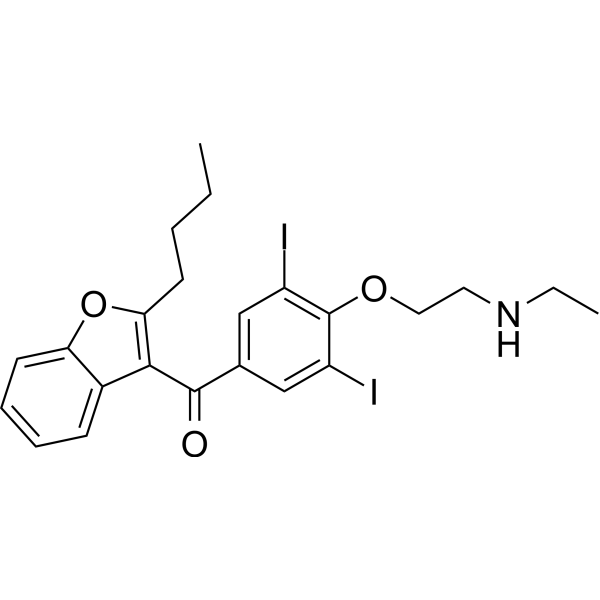
Desethylamiodarone
 0 ImagesCat. No.: HY-122423CAS No.: 83409-32-9Synonyms: N-Desethylamiodarone; LB 33020
Desethylamiodarone (N-Desethylamiodarone; LB 33020) is the major active metabolite of Amiodarone (HY-14187) generated via CYP3A4 metabolism. Desethylamiodarone downregulates p‑Akt, p‑Bad and Bcl‑2, upregulates Bax, promotes mitochondrial release of cytochrome c, activates caspase‑3 and cleaves PARP‑1, thereby inducing cell cycle arrest and apoptosis. Desethylamiodarone can be used in cervical cancer-related research.
-
PROTAC PI3K/110β degrader-1
 0 ImagesCat. No.: HY-176421CAS No.: 3070438-85-3
PROTAC PI3K/110β degrader-1 is a VHL-recruiting PROTAC degrader targeting PI3K/110β, with DC50 values of 0.416 μM (MCF-7) and 19.66 μM (A549), respectively. PROTAC PI3K/110β degrader-1 recruits VHL to induce proteasomal degradation of PI3K/110β. It activates endoplasmic reticulum stress (ERS)-mediated mitochondrial apoptosis via the PERK/ATF4/CHOP unfolded protein response (UPR) pathway, downregulates p-AKT and Bcl-2, upregulates Bax, cleaved-caspase-9 and cleaved-caspase-3, inhibits the expression and activity of P-gp, and exerts synergistic anti-tumor effects with Doxorubicin (Adriamycin, ADM) (HY-15142A) and Cisplatin (DDP) (HY-17394). PROTAC PI3K/110β degrader-1 can be used in research related to multidrug-resistant cancers.
-
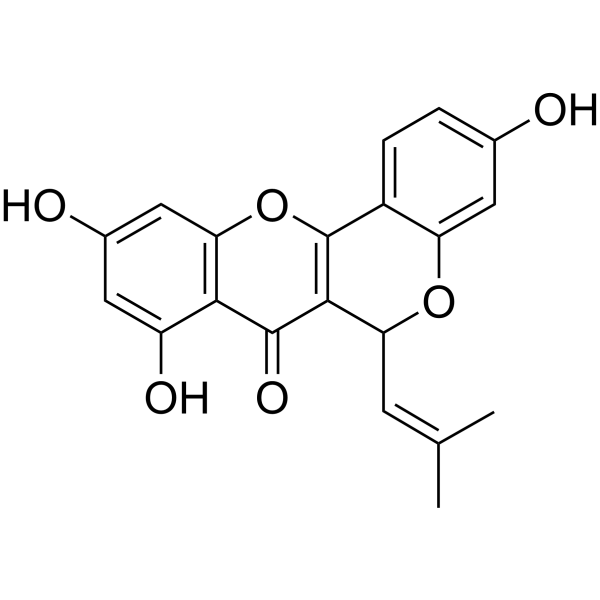
Cyclocommunol
 0 ImagesCat. No.: HY-N3665CAS No.: 145643-96-5
Cyclocommunol is a GST inhibitor with an IC50 of 3.0 μM. Cyclocommunol downregulates the expression of the anti-apoptotic (apoptosis) protein Mcl-1, reduces the levels of phosphorylated Akt and mTOR, and induces caspase-dependent apoptosis, reactive oxygen species (ROS) production and autophagy. Cyclocommunol can be used in research related to oral squamous cell carcinoma, breast cancer, lung cancer, norovirus-induced gastroenteritis and bacterial infections.
-
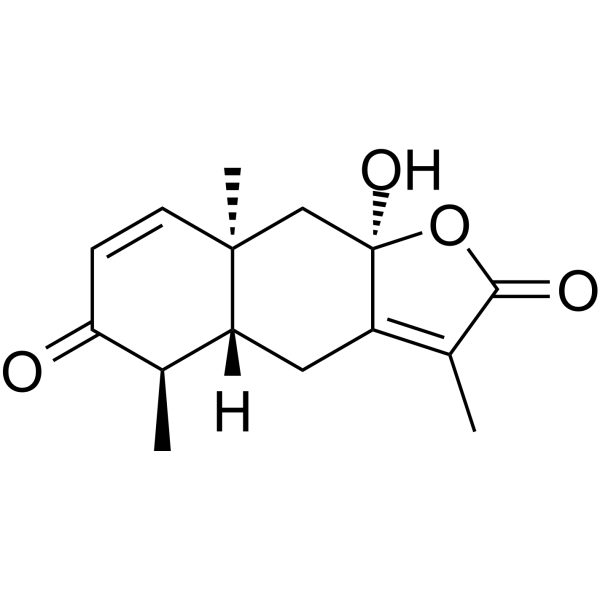
Eudebeiolide B
 0 ImagesCat. No.: HY-N11775CAS No.: 1934299-51-0Synonyms: Plebeiolide D
-
Autophagy-IN/Ferroptosis inducer-modulator-1
 0 ImagesCat. No.: HY-187191
Autophagy-IN/Ferroptosis inducer-modulator-1 is a dual-functional molecule that acts as an Autophagy inhibitor and a Ferroptosis inducer. Autophagy-IN/Ferroptosis inducer-modulator-1 downregulates GPX4 expression, elevates ROS levels and reduces mitochondrial membrane potential. Autophagy-IN/Ferroptosis inducer-modulator-1 arrests the cell cycle of non-small cell lung cancer (NSCLC) cells, induces mild apoptosis and inhibits autophagy. Autophagy inhibition induced by Autophagy-IN/Ferroptosis inducer-modulator-1 acts upstream of ferroptosis to produce a synergistic effect. Autophagy-IN/Ferroptosis inducer-modulator-1 exhibits anti-tumor activity against both human tumor cells and zebrafish xenograft models. Autophagy-IN/Ferroptosis inducer-modulator-1 can be used for research related to non-small cell lung cancer.
-
Tanshinol borneol ester
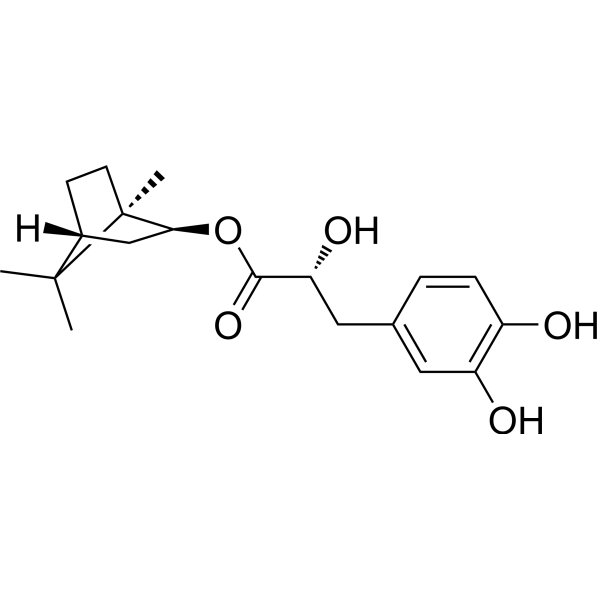 0 ImagesCat. No.: HY-142019CAS No.: 1623012-10-1
-
JPS004
 0 ImagesCat. No.: HY-176904CAS No.: 2559747-12-3
JPS004 is a PROTAC degrader targeting HDAC1, HDAC2 and HDAC3. JPS004 induces extensive transcriptomic changes in human colon cancer cell line HCT116, including downregulation of HDAC complex components and cell cycle regulatory machinery, modulation of the AKT/mTOR signaling pathway, and upregulation of FOXO-mediated apoptosis and autophagy related genes. JPS004 can be used in colon cancer-related research.
-
Pan-RAS-IN-8
 0 ImagesCat. No.: HY-177762CAS No.: 3103594-37-9
Pan-RAS-IN-8 (Page 152, third row, third from left to right) is a pan-RAS inhibitor. Pan-RAS-IN-8 blocks the binding of RAS to downstream effector molecules by forming a ternary complex, thereby inhibiting the activation of the MAPK and PI3K-AKT signaling pathways. Pan-RAS-IN-8 can be used for the research of cancer, inflammatory diseases and autoimmune diseases.
-
Tubulin-IN-64
 0 ImagesCat. No.: HY-181491
Tubulin-IN-64 is a sulfonated styrylquinazoline derivative with high selectivity antitumor activity. Tubulin-IN-64 targets tubulin, inhibits the EGFR/Akt/mTOR and EGFR/Ras signaling pathways, induces cell cycle arrest, apoptosis and autophagy. Tubulin-IN-64 exhibits significant antitumor efficacy in the zebrafish GBM xenograft model. Tubulin-IN-64 can be used for the research on glioblastoma and leukemia.



