



Apoptosis
Apoptosis
Apoptosis is a distinctive form of cell death exhibiting specific morphological and biochemical characteristics, including cell membrane blebbing, chromatin condensation, genomic DNA fragmentation, and exposure of specific phagocytosis signaling molecules on the cell surface. Cells undergoing apoptosis differ from those dying through necrosis. Necrotic cells are usually recognized by the immune system as a danger signal and, thus, resulting in inflammation; in contrast, apoptotic death is quiet and orderly.
There are two major pathways of apoptotic cell death induction: The intrinsic pathway, also called the Bcl-2-regulated or mitochondrial pathway, is activated by various developmental cues or cytotoxic insults, such as viral infection, DNA damage and growth-factor deprivation, and is strictly controlled by the BCL-2 family of proteins. The extrinsic or death-receptor pathway is triggered by ligation of death receptors (members of the tumor necrosis factor (TNF) receptor family, such as Fas or TNF receptor-1 (TNFR1)) that contain an intracellular death domain, which can recruit and activate caspase-8 through the adaptor protein Fas-associated death domain (FADD; also known as MORT1) at the cell surface. This recruitment causes subsequent activation of downstream (effector) caspases, such as caspase-3, -6 or -7, without any involvement of the BCL-2 family.
Studies suggest that alterations in cell survival contribute to the pathogenesis of a number of human diseases, including cancer, viral infections, autoimmune diseases, neurodegenerative disorders, and AIDS (acquired immunodeficiency syndrome). Treatments designed to specifically alter the apoptotic threshold may have the potential to change the natural progression of some of these diseases.
All Product Categories
-
Apoptosis Inhibitors
(904)
View all products
-
Apoptosis Agonists
(7)
View all products
-
Apoptosis Antagonists
(9)
View all products
-
Apoptosis Activators
(363)
View all products
-
Apoptosis Modulators
(60)
View all products
-
Apoptosis Inducers
(7944)
View all products
-
Apoptosis Degrader
(1)
View all products
-
Apoptosis Controls
(33)
View all products
-
Apoptosis Related Products (9888)
Related Products (9888)

-
Antibodies (120)
-
PDGFRβ-IN-1
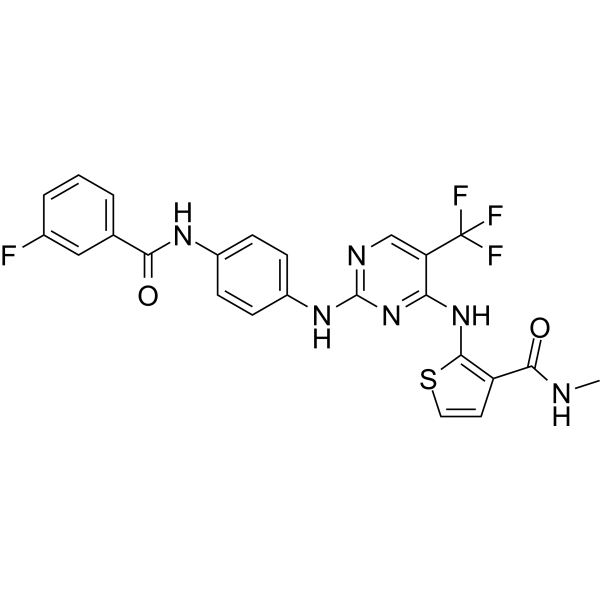
 0 ImagesCat. No.: HY-187366PDGFRβ-IN-1 is an orally active PDGFRβ inhibitor with an IC50 of 3.9 nM against human PDGFRβ. PDGFRβ-IN-1 selectively inhibits PDGFRβ, blocks its downstream signaling pathways, and promotes its degradation via a non-classical pathway. PDGFRβ-IN-1 inhibits cancer cell proliferation, migration and colony formation, and induces cancer cell apoptosis. PDGFRβ-IN-1 suppresses tumor growth in xenograft models. PDGFRβ-IN-1 can be used for the research of hepatocellular carcinoma.
-
Tubulin polymerization-IN-92
 0 ImagesCat. No.: HY-183329Tubulin polymerization-IN-92, an analog of KX-01 (HY-10340), is a potent orally active tubulin polymerization inhibitor that binds tubulin with a Ka of 1.29 μM. Tubulin polymerization-IN-92 simultaneously occupies the colchicine site in β-tubulin and a cavity in α-tubulin. Tubulin polymerization-IN-92 exerts antiproliferative activity, induces G2/M cell cycle arrest and apoptosis in cancer cells. Tubulin polymerization-IN-92 inhibits tumor growth in mouse xenograft models. Tubulin polymerization-IN-92 can be used for the research of colon cancer, cervical cancer, and Paclitaxel (HY-B0015)-resistant ovarian cancer.
-
RO5068760
 0 ImagesCat. No.: HY-111033CAS No.: 947182-25-4RO5068760 is a potent, orally active and selective non-ATP-competitive MEK1/2 inhibitor with an IC50 of 0.025 μM for MEK1. RO5068760 significantly inhibits MAPK pathway activity, thereby inducing G1 cell cycle arrest and apoptosis to inhibit cancer cell growth. RO5068760 exhibits significant efficacy in a broad spectrum of tumors with aberrant MAPK pathway activation. RO5068760 can be used for melanoma, colorectal cancer, non-small cell lung cancer (NSCLC), and pancreatic cancer research.
-
Aurora kinase-IN-1
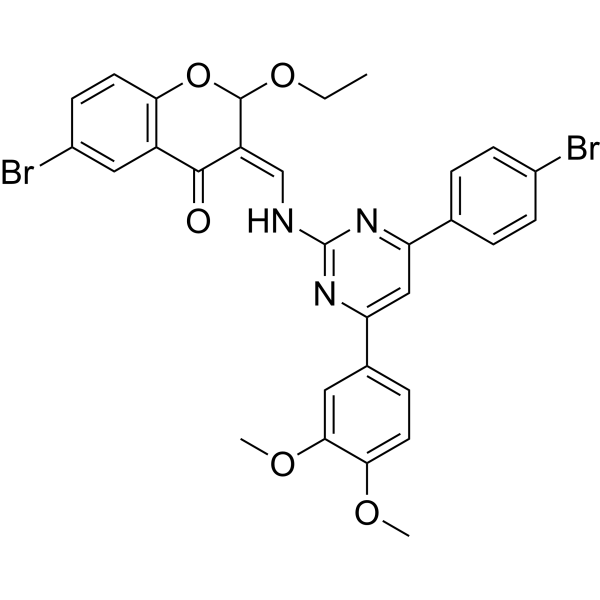 0 ImagesCat. No.: HY-115932Aurora kinase-IN-1 (Compound 9) is a potent inhibitor of aurora kinase. Aurora kinase-IN-1 upregulates the expression of G1 cell cycle inhibitory proteins including p21 and p27, and G1 progressive cyclin D1, and downregulates G1-to-S progressive cyclins, resulting in cell cycle arrest at the G1/S boundary. Aurora kinase-IN-1 also induces apoptosis. Aurora kinase-IN-1 is a lead compound for chemotherapeutic agents.
-
CDK9/HDAC1/HDAC3-IN-1
 0 ImagesCat. No.: HY-172891CAS No.: 2197029-81-3CDK9/HDAC1/HDAC3-IN-1 is dual-functional inhibitor of CDK9 and HDAC. CDK9/HDAC1/HDAC3-IN-1 inhibits the protein activity of CDK9/HDAC/HDAC3 with IC50 s of 0.17 μM, 1.73 μM and 1.11 μM for CDK9, HDAC1, and HDAC3, respectively. CDK9/HDAC1/HDAC3-IN-1 inhibits cancer cells by inducing cell apoptosis and cell cycle arrest in the G2/M phase, as well as tumor growth in a murine TNBC MDA-MB-231 xenograft model. CDK9/HDAC1/HDAC3-IN-1 has a broad-spectrum anti-cancer activity, such as breast cancer, cervical cancer, and liver cancer.
-
HSP90-IN-18
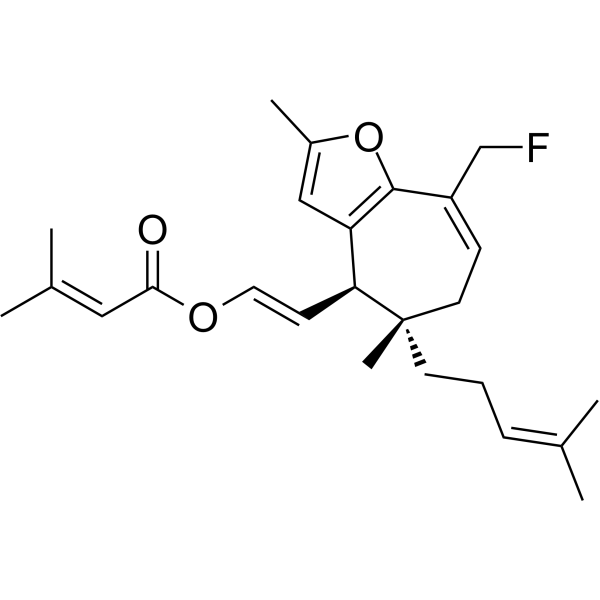 0 ImagesCat. No.: HY-152027CAS No.: 2927442-45-1HSP90-IN-18 is an effective heat shock protein 90 (Hsp90) inhibitor. HSP90-IN-18 has effective Hsp90 inhibitory activity with an IC50 value of 0.39 μM. HSP90-IN-18 can be used for the research of viral infection, neurodegenerative disease, and inflammation.
-
Chelerythrine hydroxide
 0 ImagesChelerythrine hydroxide is an alkaloid, acts as a potent and selective Ca2+/phospholopid-dependent PKC antagonist, with an IC50 of 0.7 μM. Chelerythrine hydroxide inhibits the BclXL-Bak BH3 peptide binding with IC50 of 1.5 μM. Chelerythrine hydroxide triggers Apoptosis and Autophagy. Chelerythrine hydroxide has antitumor, antidiabetic and anti-inflammatory activity. Chelerythrine hydroxide shows antibacterial activities against Gram-positive bacteria, Staphylococcus aureus (SA), MRSA.
-
Tubulin inhibitor 32
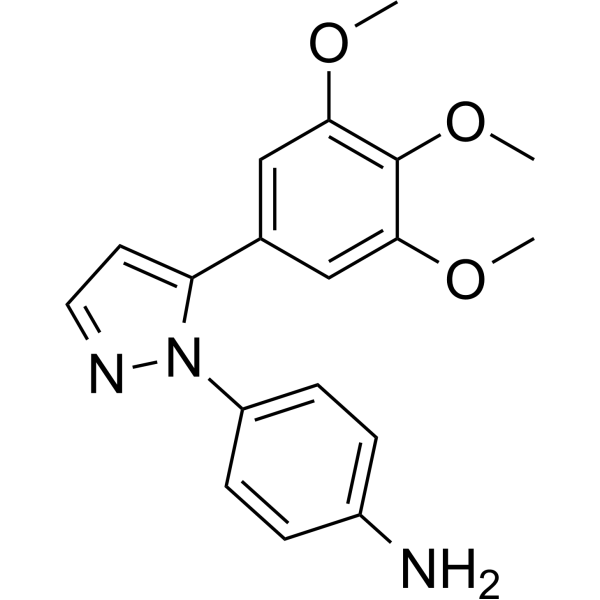 0 ImagesCat. No.: HY-149252CAS No.: 2923531-39-7Tubulin inhibitor 32 is a potent and orally active tubulin inhibitor. Tubulin inhibitor 32 shows anti-proliferative activity and inhibits microtubule polymerization. Tubulin inhibitor 32 induces Apoptosis and cell cycle arrest at G2/M phase. Tubulin inhibitor 32 shows anti-tumor activity.
-
R-Phycoerythrin ammonium sulfate precipitate
 0 ImagesCat. No.: HY-D0988BCAS No.: 11016-17-4Synonyms: R-PE ammonium sulfate precipitateR-Phycoerythrin (R-PE) (ammonium sulfate precipitate) is found in Heterosiphonia japonica. R-Phycoerythrin (ammonium sulfate precipitate) is an orange-red fluorescent probe with α, β, and γ subunits. R-Phycoerythrin (concentrated solution) can be used in photodynamic therapy (PDT) to induce apoptosis in tumor cells. R-Phycoerythrin (ammonium sulfate precipitate) can be used in fluorescence microscopy, flow cytometry, and immunofluorescence analysis (Ex/Em = 496/578 nm).
-
EAD1
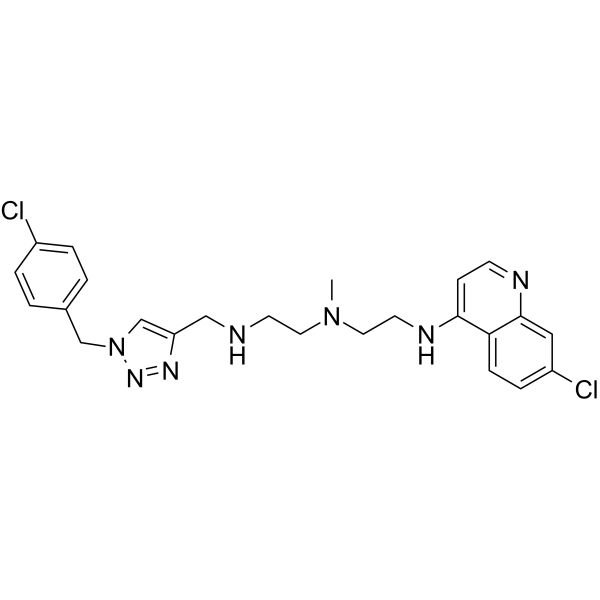 0 ImagesCat. No.: HY-123056CAS No.: 1644388-26-0EAD1 is a Chloroquine (HY-17589A) analog with anticancer activity. EAD1 blocks autophagy, leading to the intracellular accumulation of autophagosome-related proteins LC3-II and p62. EAD1 induces cancer cell apoptosis and inhibits cancer cell proliferation. EAD1 can be used in the research of lung cancer and pancreatic cancer.
-
Zoniporide dihydrochloride
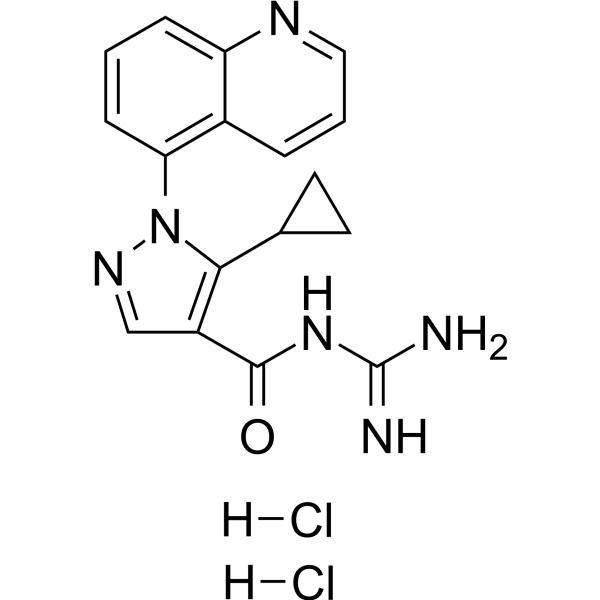 0 ImagesCat. No.: HY-105064CCAS No.: 241799-10-0Synonyms: CP-597396 dihydrochlorideZoniporide dihydrochloride (CP-597396 dihydrochloride) is a selective Na+/H+ exchanger subtype 1 (NHE1) inhibitor with cardioprotective activity, with IC50 values of 67 nM and 73 nM against rat NHE1. Zoniporide dihydrochloride reduces intracellular Na+ and Ca2+ overload, preserves mitochondrial integrity, activates pro-survival ERK1/2 and STAT3 signaling pathways, reduces necrosis and apoptosis, and decreases neutrophil aggregation. Zoniporide dihydrochloride is applicable to research related to myocardial ischemia-reperfusion injury and heart graft ischemia-reperfusion injury.
-
L-threo-Sphingosine
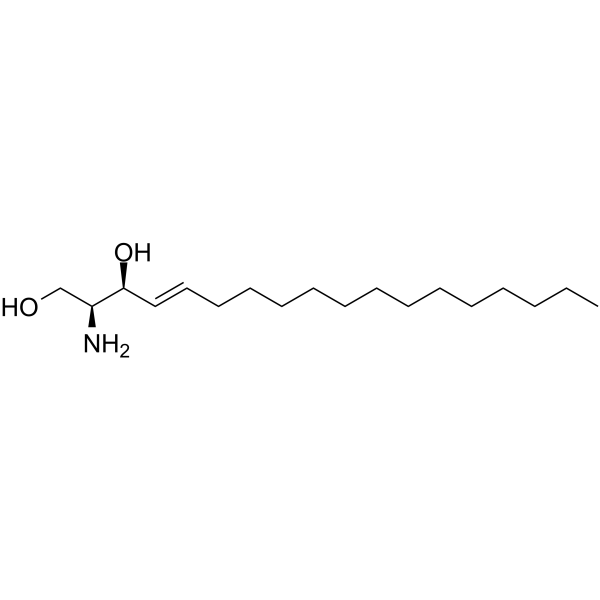 0 ImagesCat. No.: HY-117152CAS No.: 25695-95-8Synonyms: L-threo-Sphingosine C-18L-threo-Sphingosine is a potent MAPK inhibitor. L-threo-Sphingosine induces apoptosis and clear DNA fragmentation. L-threo-Sphingosine shows anticancer effect.
-
Ac-LEVD-CHO TFA
 0 ImagesCat. No.: HY-136727AAc-LEVD-CHO (TFA) is an inhibitor of caspase-4. Ac-LEVD-CHO (TFA) can inhibit the expression and secretion of IL-1α expression as well as the activation of caspase-4 induced by the T. denticola periodontal pathogen surface protein Td92 in human gingival fibroblasts. Ac-LEVD-CHO (TFA) can also reduce the apoptosis due to the expression of the dominant negative adenoviral RNA-dependent protein kinase in A549 and PC3 cancer cell lines.
-
LBL1
 0 ImagesCat. No.: HY-115533CAS No.: 1605301-58-3LBL1 is a Lamin A inhibitor with a Kd of 5.11 μM for LA (1-387). LBL1 directly binds to Lamin A and disrupts the Lamin A-Rad51 interaction, accelerates proteasome-mediated Rad51 degradation, and induces DNA double-strand breaks. LBL1 induces Apoptosis. LBL1 serves as a chemical tool for studying lamin biology and the post-translational regulation of Rad51. LBL1 can be used in studies related to breast cancer and non-small cell lung cancer.
-
AZD-7648 (GMP)
 0 ImagesCat. No.: HY-111783GCAS No.: 2230820-11-6AZD-7648 (GMP) is AZD-7648 (HY-111783) produced by using GMP guidelines. GMP small molecules works appropriately as an auxiliary reagent for cell therapy manufacture. AZD-7648 is a potent, orally active, selective DNA-PK inhibitor with an IC50 of 0.6 nM. AZD-7648 induces apoptosis and shows antitumor activity.
-
Anticancer agent 337
 0 ImagesCat. No.: HY-184750Anticancer agent 337 (compound 5n) is a topoisomerase I inhibitor. Anticancer agent 337 inhibits topoisomerase I activity in a concentration-dependent manner, suppresses cancer cell migration, induces apoptosis, and arrests the cell cycle at the G1 phase. Anticancer agent 337 can be used in the research of lung cancer, hepatocellular carcinoma, and cervical adenocarcinoma.
-
ZWZH-21
 0 ImagesCat. No.: HY-175513CAS No.: 3069195-42-9ZWZH-21 is a selective and orally active HDAC1/2 dual inhibitor with IC50 values of 34 nM for HDAC1 and 41 nM for HDAC2. ZWZH-21 can inhibit HCT116 and SW480 cells growth with IC50 values of 0.524 μM and 1.063 μM, respectively. ZWZH-21 can inhibit proliferation and migration and induces apoptosis in multiple colorectal cancer cells. ZWZH-21 can be used for the research of cancer, such as colorectal cancer.
-
Tubulin inhibitor 43
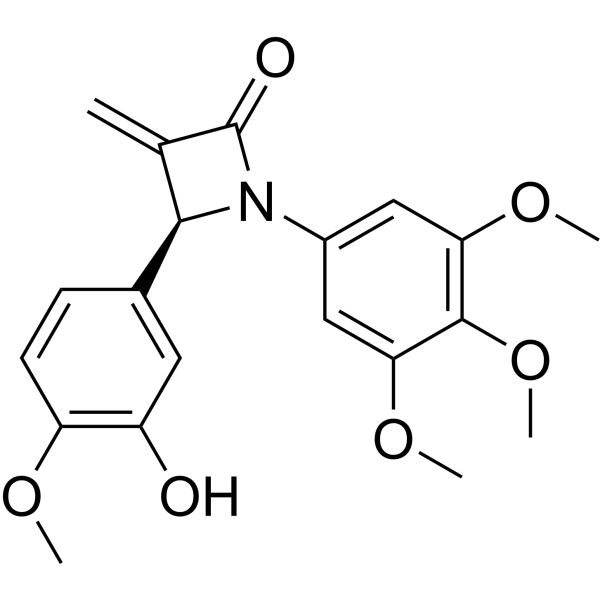 0 ImagesCat. No.: HY-160854CAS No.: 1541208-02-9
-
TT-232 TFA
 0 ImagesCat. No.: HY-105172ACAS No.: 2703745-48-4Synonyms: CAP-232 TFA; TLN-232 TFATT-232 TFA (CAP-232 TFA) is an analogue of somatostatin. TT-232 TFA can induce apoptosis of pancreatic tumor cell lines, inhibit tyrosine kinase activity and stimulate tyrosine phosphatase activity in colon tumor cell lines. TT-232 TFA inhibits the proliferation of tumor cells, induces apoptosis of tumor cells and shows strong anti-tumor effects. TT-232 TFA can be used in the development of anti-tumor drugs and the study of apoptosis mechanism.




