



Apoptosis
Apoptosis
Apoptosis is a distinctive form of cell death exhibiting specific morphological and biochemical characteristics, including cell membrane blebbing, chromatin condensation, genomic DNA fragmentation, and exposure of specific phagocytosis signaling molecules on the cell surface. Cells undergoing apoptosis differ from those dying through necrosis. Necrotic cells are usually recognized by the immune system as a danger signal and, thus, resulting in inflammation; in contrast, apoptotic death is quiet and orderly.
There are two major pathways of apoptotic cell death induction: The intrinsic pathway, also called the Bcl-2-regulated or mitochondrial pathway, is activated by various developmental cues or cytotoxic insults, such as viral infection, DNA damage and growth-factor deprivation, and is strictly controlled by the BCL-2 family of proteins. The extrinsic or death-receptor pathway is triggered by ligation of death receptors (members of the tumor necrosis factor (TNF) receptor family, such as Fas or TNF receptor-1 (TNFR1)) that contain an intracellular death domain, which can recruit and activate caspase-8 through the adaptor protein Fas-associated death domain (FADD; also known as MORT1) at the cell surface. This recruitment causes subsequent activation of downstream (effector) caspases, such as caspase-3, -6 or -7, without any involvement of the BCL-2 family.
Studies suggest that alterations in cell survival contribute to the pathogenesis of a number of human diseases, including cancer, viral infections, autoimmune diseases, neurodegenerative disorders, and AIDS (acquired immunodeficiency syndrome). Treatments designed to specifically alter the apoptotic threshold may have the potential to change the natural progression of some of these diseases.
All Product Categories
-
Apoptosis Inhibitors
(904)
View all products
-
Apoptosis Agonists
(7)
View all products
-
Apoptosis Antagonists
(9)
View all products
-
Apoptosis Activators
(363)
View all products
-
Apoptosis Modulators
(60)
View all products
-
Apoptosis Inducers
(7944)
View all products
-
Apoptosis Degrader
(1)
View all products
-
Apoptosis Controls
(33)
View all products
-
Apoptosis 관련 제품 (9888)
관련 제품 (9888)

-
Antibodies (120)
-
MC3817 free base
 0 ImagesCat. No.: HY-179409AMC3817 free base is a selective DNMT1 inhibitor. MC3817 free base inhibits DNMT1 and DNMT3A/3L with IC50s of 0.044 μM and > 10μM, respectively. MC3817 free base inhibits P53-dependent cancer cell proliferation, induces apoptosis and DNA damage. MC3817 free base elevates cleaved Caspase 3, P53, and γH2AX. MC3817 free base can be used in non-small cell lung cancer, colon cancer, cervical cancer, triple-negative breast cancer and histiocytic lymphoma research.
-
Sanazole
 0 ImagesCat. No.: HY-117249CAS No.: 104958-90-9Synonyms: AK-2123

-
Nrf2 activator 19
 0 ImagesCat. No.: HY-173307Purity: 98.10%Nrf2 activator 19 is a BBB-penetrable NRF2/HO-1 activator. Nrf2 activator 19 exerts potent antioxidant and neuroprotective effects. Nrf2 activator 19 can also effectively reduce brain damage, reduce Reactive Oxygen Species (ROS) accumulation. Nrf2 activator 19 inhibits neuronal apoptosis. Nrf2 activator 19 promotes the recovery of neurological function and motor ability. Nrf2 activator 19 shows significant potential in ischemic stroke research.
-
SIOC-XJC-SF02
 0 ImagesCat. No.: HY-176908CAS No.: 2763226-49-7SIOC-XJC-SF02 is a Fenofibrate (HY-17356) derivative. SIOC-XJC-SF02 induces Apoptosis. SIOC-XJC-SF02 exhibits significant anti-cancer activity against hepatocellular carcinoma.
-
HDAC-IN-96
 0 ImagesCat. No.: HY-177768CAS No.: 3055552-13-8HDAC-IN-96 (Compound 3f) is a selective HDAC1/2 inhibitor with IC50 values of 457.1 and 433.7 nM. HDAC-IN-96 has strong inhibitory activity against multiple hematological tumor cells (RS4;11, K562, RPMI-8226, U266), with IC50 values ranging from 2.11 to 5.35 μM. HDAC-IN-96 can induce cancer cells apoptosis and S phase arrest. HDAC-IN-96 can be used for the research of cancer, such as acute lymphoblastic leukemia.
-
hGGPPS-IN-3
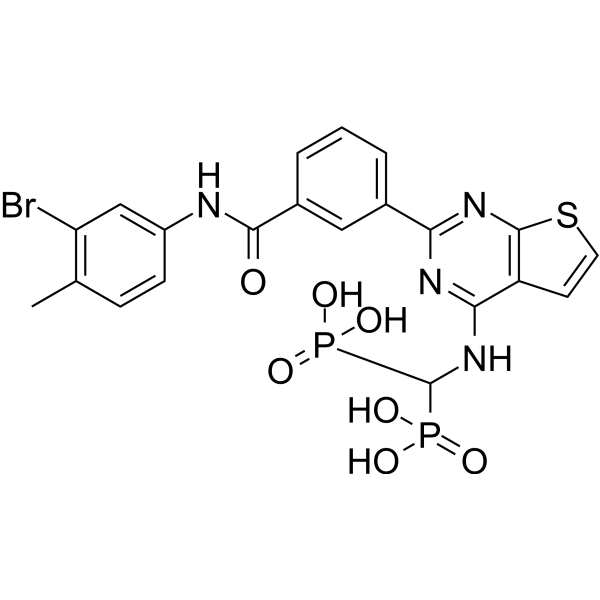 0 ImagesCat. No.: HY-144130CAS No.: 2763223-96-5hGGPPS-IN-3 (Compound 13h) is a potent inhibitor of the human geranylgeranyl pyrophosphate synthase (hGGPPS). hGGPPS-IN-3 is an analogue of C-2-substituted thienopyrimidine-based bisphosphonates (C2-ThP-BPs). hGGPPS-IN-3 induces target-selective apoptosis of multiple myeloma (MM) cells and exhibits antimyeloma activity in vivo.
-
DH-18
 0 ImagesCat. No.: HY-168605DH-18 is a matrix metalloproteinase-2 (MMP-2) inhibitor with the IC50 values of 139.45 nM, 518.11 nM and 833.34 nM for MMP-2, MMP-9 and MMP-8, respectively. DH-18 induces cell apoptosis and arrests cell cycle in the G0/G1 phase. DH-18 inhibits cell growth and can be used for study of chronic myeloid leukemia.
-
Pitavastatin-d4-1 sodium
 0 ImagesCat. No.: HY-B0144AS3Purity: 99.22%Synonyms: NK-104-d4-1 sodiumPitavastatin-d4-1 (NK-104-d4-1) sodium is the deuterium labeled Pitavastatin sodium (HY-B0144B). Pitavastatin (NK-104) is a potent hydroxymethylglutaryl-CoA (HMG-CoA) reductase inhibitor. Pitavastatin inhibits cholesterol synthesis from acetic acid with an IC50 of 5.8 nM in HepG2 cells. Pitavastatin is an efficient hepatocyte low-density lipoprotein-cholesterol (LDL-C) receptor inducer. Pitavastatin also possesses anti-atherosclerotic, anti-asthmatic, anti-osteoarthritis, antineoplastic, neuroprotective, hepatoprotective and reno-protective effects.
-
Fludarabine phosphate (Standard)
 0 ImagesSynonyms: NSC 118218 phosphate (Standard)Fludarabine (phosphate) (Standard) is the analytical standard of Fludarabine (phosphate). This product is intended for research and analytical applications. Fludarabine (phosphate) is an analogue of adenosine and deoxyadenosine, which is able to compete with dATP for incorporation into DNA and inhibit DNA synthesis.
-
PDE1-IN-6
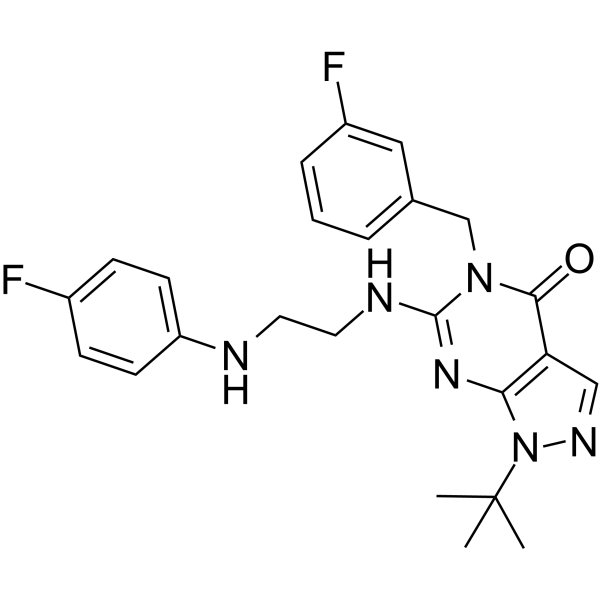 0 ImagesCat. No.: HY-163406CAS No.: 2877017-16-6
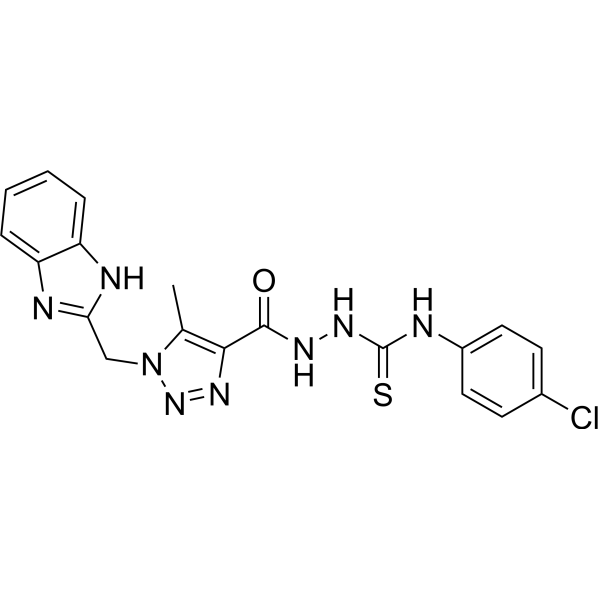
-
Aspafilioside B
 0 ImagesCat. No.: HY-122465CAS No.: 131123-73-4Aspafilioside B is a steroidal saponin. Aspafilioside B is extractable from Asparagus filicinus. Aspafilioside B activates the ERK, c-Raf and p38 MAPK signaling pathways, and upregulates H-Ras and N-Ras. Aspafilioside B mediates G2/M cell cycle arrest by altering the expression of cell cycle regulatory proteins. Aspafilioside B induces Apoptosis. Aspafilioside B increases intracellular ROS levels. Aspafilioside B is applicable to research related to hepatocellular carcinoma.

-
GBM CSCs-IN-1
 0 ImagesCat. No.: HY-161946CAS No.: 3080542-96-4GBM CSCs-IN-1 (Compound (−)-20), a derivative of rocaglate, is a potent inhibitor of glioblastoma stem cells (GBM CSCs) with an EC50 of 45 nM, functioning by targeting the RNA helicase DDX3. Furthermore, GBM CSCs-IN-1 is also capable of inducing apoptosis.
-
L-Glutamic acid monosodium salt (Standard)
 0 ImagesL-Glutamic acid (monosodium salt) (Standard) is the analytical standard of L-Glutamic acid (monosodium salt). This product is intended for research and analytical applications. L-Glutamic acid monosodium salt is an excitatory amino acid neurotransmitter that acts as an agonist for all subtypes of glutamate receptors (metabolic rhodophylline, NMDA, and AMPA). L-Glutamic acid monosodium salt has an agonist effect on the release of DA from dopaminergic nerve endings. L-Glutamic acid monosodium salt can be used in the study of neurological diseases.
-
Trilinolein-d5
 0 ImagesCat. No.: HY-128393S2Trilinolein-d5 is the deuterium labeled Trilinolein (HY-128393). Trilinolein is an orally active triglyceride that inhibits the PI3K/Akt, Ras/MEK/ERK signaling pathways, and MMP-2. Trilinolein can reduce oxidative stress, induce apoptosis, and inhibit cell migration. Trilinolein can be used in the research fields of cardiovascular disease, cerebrovascular disease (such as cerebral ischemia), and non-small cell lung cancer.
-
PROTAC BRD4 Degrader-17
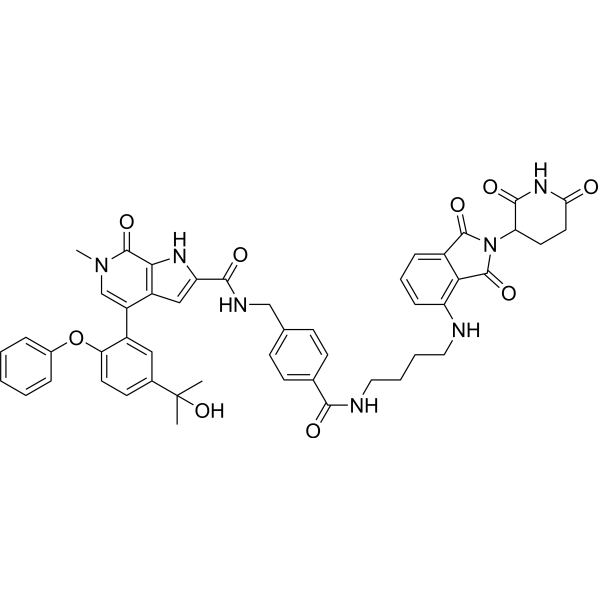 0 ImagesCat. No.: HY-143328CAS No.: 2585561-49-3PROTAC BRD4 Degrader-17 (compound 13i) is a potent PROTAC BRD4 Degrader, with IC50 values of 29.54 nM (BRD4 (BD1)) and 3.82 nM (BRD4 (BD2)). PROTAC BRD4 Degrader-17 significantly attenuates G2/M progression associated Cyclin B1 expression. PROTAC BRD4 Degrader-17 significantly induces apoptosis in MV-4-11 cells.
-
SF-9-2
 0 ImagesCat. No.: HY-175236CAS No.: 3053768-78-5SF-9-2 is a PD-L1/PD-1 binding inhibitor (IC50 = 24.9 nM). SF-9-2 inhibits epithelial-mesenchymal transition, migration, invasion, and proliferation of SK-N-SH cells, and also induces apoptosis and cell cycle arrest. SF-9-2 blocks PD-L1-induced SK-N-SH cell growth through the MAPK signaling pathway. SF-9-2 restores GSK-3β activity and enhances PD-L1 degradation through the ubiquitin-proteasome pathway. SF-9-2 inhibits tumor growth in the SK-N-SH NOG mouse model without significant toxicity. SF-9-2 also acts as an immune checkpoint inhibitor, blocking PD-L1 to restore T cell function. SF-9-2 can be used in neuroblastoma research.
-
2'-Deoxyadenosine-13C10,15N5
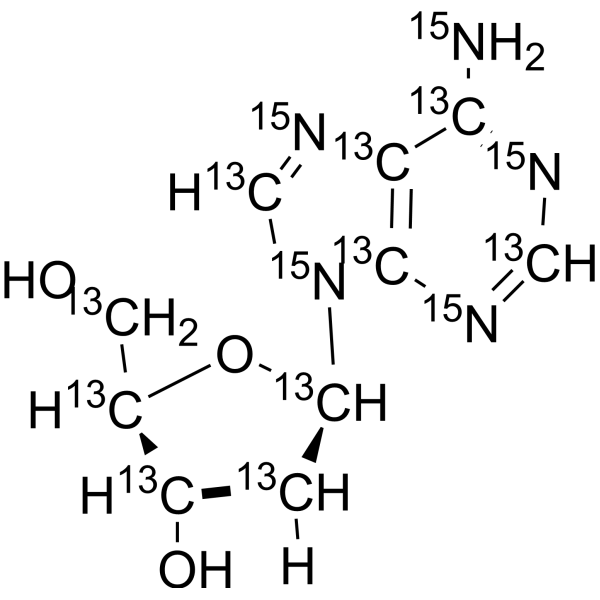 0 ImagesCat. No.: HY-W040329SCAS No.: 1987883-24-82'-Deoxyadenosine-13C10,15N5 is 13C and 15N-labeled 2'-Deoxyadenosine (HY-W040329). 2′-Deoxyadenosine is an adenine nucleoside that inhibits glucose-stimulated insulin release. 2′-Deoxyadenosine inhibits glucose-stimulated increases seen in islet cyclic AMP (cAMP) accumulation. 2'-Deoxyadenosine activates caspase-3 and promotes apoptosis. 2'-Deoxyadenosine inhibits the activity of S-adenosyl-L-homocysteine hydrolase (SAHH). 2'-Deoxyadenosine inhibits the growth of various cells. 2'-Deoxyadenosine has an anticancer effect on colon cancer.




