



Apoptosis Inhibitor

-
Silybin B (Standard)
 0 ImagesCat. No.: HY-N7046RCAS No.: 142797-34-0Synonyms: Silibinin B (Standard)
Silybin (Silibinin B) (Standard) is the analytical standard of Silybin B (HY-N7046). This product is intended for research and analytical applications. Silybin B (Silibinin B) is an orally active amyloid-β aggregation inhibitor and ATR pathway activator, that can cross the blood-brain barrier. Silybin B inhibits Aβ fibril formation and promotes amorphous aggregate formation, while activating the ATR-mediated DNA damage repair pathway and inhibiting JNK/p38 MAPK signaling. Silybin B can reduce Cisplatin (HY-17394)-induced neuronal DNA damage and apoptosis. Silybin B has anti-oxidative stress, cell cycle regulation and neuroprotective activities. Silybin B is mainly used in the study of Alzheimer's disease and Cisplatin chemotherapy-related neurotoxicity.
-
Moroxydine
 0 ImagesCat. No.: HY-W016937CAS No.: 3731-59-7Synonyms: ABOB
Moroxydine (ABOB) is a broad-spectrum agent with multi-antiviral activities against DNA and RNA viruses, including influenza virus, herpes simplex, varicella zoster, measles, mumps disease, hepatitis C virus, etc. Moroxydine exhibits excellent antiviral activity and shows low cytotoxicity to cells infected by dsRNA viruses (grass carp reovirus, GCRV) and large DNA viruses (giant salamander iridovirus, GSIV). Moroxydine blocks the GCRV-induced cytopathic effects and eliminates nucleocapsids in ctenopharyngodon idella kidney (CIK) cells to keep the normal morphological structure. Moroxydine significantly inhibits the apoptosis, the caspase 3 activity, Bax expression and down-regulates Bcl-2 levels[1][2][3].
-
Benazepril-d5 hydrochloride
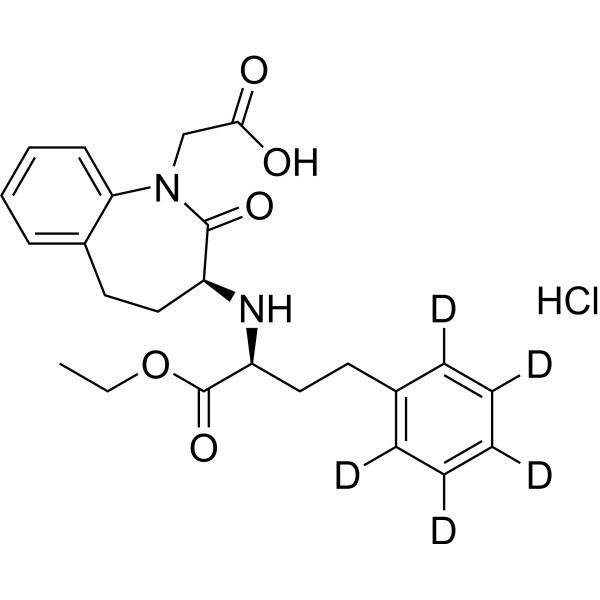 0 ImagesCat. No.: HY-B0093ASCAS No.: 1279026-26-4Synonyms: CGS14824A-d5 hydrochloride
Benazepril-d5 hydrochloride is deuterium labeled Benazepril hydrochloride. Benazepril hydrochloride is an orally active angiotensin-converting enzyme (ACE) inhibitor to reduce angiotensin-II production. Benazepril hydrochloride inhibits oxidative stress and inhibits apoptosis by the PI3K/Akt signaling pathway. In addition, Benazepril hydrochloride improves diabetic nephropathy and decreases proteinuria. Benazepril hydrochloride can be used in the study of hypertension, heart failure and diabetic nephropathy.
-
STING-IN-16
 0 ImagesCat. No.: HY-175210CAS No.: 2982807-58-7
STING-IN-16 is a STING inhibitor with IC50 values of 44 nM (human) and 32 nM (mice) for cellular STING inhibition. STING-IN-16 effectively inhibits the activation of the STING axis in both human and murine cells. STING-IN-16 can restore renal mitochondrial function, suppress reactive oxygen species (ROS) production, and reduce cell apoptosis. STING-IN-16 shows robust anti-inflammatory efiicacy in vivo. STING-IN-16 can be used for the study of autoimmune and autoinflammatory diseases.
-
Triptolidenol
 0 ImagesCat. No.: HY-N11784CAS No.: 99694-86-7
Triptolidenol, a traditional Chinese medicine, is an epoxy diterpene lactone that can be isolated from Tripterygium wilfordii. Triptolidenol has anti-inflammatory and anticancer activities. Triptolidenol significantly inhibits tumor cell proliferation and migration, arrests cell cycle arrest at S phase and induces apoptosis by activating the cytochrome c/caspase cascade signaling pathway. Triptolidenol disrupts NF-κB/COX-2 pathway by inhibiting IKKβ at ATP-binding sites. Triptolidenol can be used for chronic nephritis and kidney cancer like clear cell renal cell carcinoma (ccRCC) research.
-
Semaglutide, Cy5 labeled
 0 ImagesCat. No.: HY-114118F5Synonyms: Semaglutide-Cys(Cy5)
Semaglutide, Cy5-labeled (Semaglutide-Cys(Cy5)) is a CY5 (HY-D0821) -labeled version of Semaglutide (HY-114118) (Ex/Em = 633/670 nm). Semaglutide, Cy5-labeled can be used for studies on Semaglutide receptor binding (GLP-1R), cellular uptake and endocytosis, in vivo tissue distribution, and the targeting efficiency of delivery systems.

-
20-5,14-HEDE-d2-1
 0 ImagesCat. No.: HY-160099S1Synonyms: WIT003-d2-1
20-5,14-HEDE-d2-1 (WIT003-d2-1) is the deuterated-labeled 20-5,14-HEDE (HY-160099). 20-5,14-HEDE (WIT003) is an analog of 20-HETE. 20-5,14-HEDE activates PI3K/Akt signaling pathway, thereby exhibiting anti-apoptotic and cell survival promoting effects. 20-5,14-HEDE is the agonist for 20-HETE that increases intracellular Ca2+ concentrations, thereby enhancing vasoconstriction.
-
Rhamnazin 3-O-rutinoside
 0 ImagesCat. No.: HY-N20734CAS No.: 64527-08-8Synonyms: Polygalacin
Rhamnazin 3-O-rutinoside (Polygalacin) is a flavonoid compound. Rhamnazin 3-O-rutinoside can be extracted from Areca catechu L. Rhamnazin 3-O-rutinoside shows no significant inhibitory effect on recombinant hPTP1B, with an IC50 > 100 μM. Rhamnazin 3-O-rutinoside reduces Apoptotic cell death. Rhamnazin 3-O-rutinoside possesses cellular antioxidant activity and alleviates H2O2-induced oxidative stress. Rhamnazin 3-O-rutinoside lacks free radical scavenging activity. Rhamnazin 3-O-rutinoside can be used in the research of neurodegenerative diseases.
-
Alginate oligosaccharides
 0 ImagesCat. No.: HY-N20693Synonyms: AOS
Alginate oligosaccharides (AOS) are orally effective linear oligosaccharides with anti-inflammatory, antioxidant and antimicrobial activities. Alginate oligosaccharides inhibit the activation of NLRP3 inflammasome and NF-κB, promote nuclear translocation of Nrf2 and phosphorylation of AMPK, and reduce the enhanced functional level of TRPV1. Alginate oligosaccharides improve oxidative stress, ROS production, mitochondrial bioenergetic dysfunction and gait impairment. Alginate oligosaccharides inhibit the release of neuropeptides; alter the structure and viscoelasticity of mucin matrix; disrupt bacterial and fungal biofilms; regulate gut microbiota; and exert anti-apoptotic effects.
-
Ciliatoside A
 0 ImagesCat. No.: HY-N21694CAS No.: 303084-57-3
Ciliatoside A is a naturally bioactive compound that exhibits significant anti-inflammatory, antiviral, and neuroprotective activities. Ciliatoside A serves as a mitophagy inducer and NLRP3 inflammasome inhibitor, activating AMPK, SIRT1, and the PINK1/Parkin axis, and inhibiting pyroptosis and apoptosis. Ciliatoside A promotes autophagic flux, autophagosome-lysosome fusion, mTOR inhibition, and p62-dependent HBc degradation; reduces Aβ aggregation, plaque deposition, microglial/astrocyte activation, and bacterial load; and maintains neuronal integrity, mitochondrial membrane potential, and ATP production. Ciliatoside A is used in research on Alzheimer's disease, Klebsiella pneumoniae-induced pneumonia, hepatitis B virus infection, and inflammation.
-
CHD-1
 0 ImagesCat. No.: HY-170565CAS No.: 3041166-70-2
-
Sibiriline
 0 ImagesCat. No.: HY-120600CAS No.: 1346526-26-8
Sibiriline is a specific competitive inhibitor of RIPK1 that targets the RIPK1 ATP-binding site and locks it in an inactive conformation. Sibiriline inhibits TNF-induced RIPK1-dependent necroptosis and RIPK1-dependent apoptosis, but does not protect cells from caspase-dependent apoptosis. Sibiriline protects mice from concanavalin A-induced hepatitis and has the potential to inhibit immune-dependent hepatitis..
-
Ebselen derivative 1
 0 ImagesCat. No.: HY-163506CAS No.: 3030492-59-9
Ebselen derivative 1 (Compound 19) is a glutathione peroxidase (GPx) mimic with oral activity. Ebselen derivative 1 demonstrates significant protective effects against cisplatin (HY-17394)-induced hair cell (HC) damage both in vitro and in vivo, effectively reducing oxidative stress, apoptosis, and ferroptosis in hair cells. Ebselen derivative 1 can be utilized in the research of cisplatin (HY-17394)-induced hearing loss .
-
P53/TLR2 modulator-1
 0 ImagesCat. No.: HY-173309
P53/TLR2 modulator-1 (Compound Z9) is a modulator that targets both the P53 pathway and TLR2 simultaneously, exhibiting anti-radiation activity. P53/TLR2 modulator-1 reduces apoptosis by inhibiting the radiation-induced expression of P53 and Bax. At the same time, it activates the TLR2 pathway, upregulates the expression of downstream proteins MyD88 and P65, and promotes the secretion of cytokines such as IL-6, thus exerting an anti-radiation effect. P53/TLR2 modulator-1 shows significant anti-radiation activity against both AHH-1 cells and HUVECs. It can also increase the survival rate of C57BL/6J mice irradiated with a lethal dose of radiation and reduce the damage to their hematopoietic system, the villous structure of the small intestine, and the spleen caused by radiation. P53/TLR2 modulator-1 can be used in the research of radiation injury-related diseases.
-
C14-Tri-LAN-Gly
 0 ImagesCat. No.: HY-178899CAS No.: 1863978-06-6
C14-Tri-LAN-Gly is a highly selective and potent NOD1 agonist. C14-Tri-LAN-Gly activates NOD1. C14-Tri-LAN-Gly inhibits the expression of cleaved-caspase3. C14-Tri-LAN-Gly upregulates A20 expression. C14-Tri-LAN-Gly protects mice from lethal hepatitis by inhibiting hepatocyte Apoptosis. C14-Tri-LAN-Gly inhibits osteoblastogenesis and promots osteoclastogenesis.
-
Anti-apoptotic agent 1
 0 ImagesCat. No.: HY-161705CAS No.: 2563616-64-6
Anti-apoptotic agent 1 (Compound B4) exhibits neuroprotective activity and good pharmacokinetic properties. Anti-apoptotic agent 1 inhibits apoptosis, prevents stroke recurrence in photothrombotic rat model.
-
LDH-IN-5
 0 ImagesCat. No.: HY-179027CAS No.: 2768522-31-0
LDH-IN-5 is a Lactate Dehydrogenase (LDH) inhibitor with neuroprotective activity. LDH-IN-5 can inhibit cell apoptosis, reduce ROS, MDA production and increases superoxide dismutase (SOD) activity. LDH-IN-5 can be used for the research of neurological disease, such as ischemic stroke.



