Bcl-2 Family
Bcl-2 is a family of evolutionarily related proteins. These proteins govern mitochondrial outer membrane permeabilization (MOMP) and can be either pro-apoptotic (Bax, Bad, Bak and Bok among others) or anti-apoptotic (including Bcl-2 proper, Bcl-xL, and Bcl-w, among an assortment of others). There are a total of 25 genes in the Bcl-2 family known to date. Human genes encoding proteins that belong to this family include: Bak1, Bax, Bal-2, Bok, Mcl-1.
Bcl-2 Family Isoform Specific Products
-
Bcl-2 Family
(450)
View all products
-
Bcl-2
(328)
View all products
-
Bcl-xL
(123)
View all products
-
Bcl-W
(17)
View all products
-
Mcl-1
(99)
View all products
-
Bfl-1
(11)
View all products
-
Bcl-B
(6)
View all products
-
Bax
(220)
View all products
-
Bak
(14)
View all products
-
Bim
(14)
View all products
-
BNIP3
(1)
View all products
-
Bad
(10)
View all products
All Product Categories
-
Bcl-2 Family Inhibitors
(567)
View all products
-
Bcl-2 Family Agonists
(5)
View all products
-
Bcl-2 Family Antagonists
(9)
View all products
-
Bcl-2 Family Activators
(90)
View all products
-
Bcl-2 Family Modulators
(153)
View all products
-
Bcl-2 Family Inducers
(13)
View all products
-
Bcl-2 Family Degraders
(21)
View all products
-
Bcl-2 Family Controls
(2)
View all products
-
Bcl-2 Family Ligands
(9)
View all products
-
Bcl-2 Family Related Products (1047)
Related Products (1047)

-
Antibodies (31)
-
Bcl-2 Family Signaling Pathway
-
Bcl-2 Family Isoform Comparison

-
STAT3-IN-46
 0 ImagesCat. No.: HY-175771STAT3-IN-46 is a selective and orally active inhibitor of signal transducer and activator of transcription 3 (STAT3) (KD = 323.3 nM). STAT3-IN-46 directly binds to the SH2 domain of the STAT3 and inhibits IL-6/JAK/STAT3 signaling pathway (IC50 = 0.87 μM) and downregulates c-Myc and Bcl-2 levels. STAT3-IN-46 can be used for the research of cancer, such as triple-negative breast cancer.
-
MLS-2384 free base
 0 ImagesCat. No.: HY-125718CAS No.: 1067884-45-0MLS-2384 free base is a dual JAK/Src kinase inhibitor. MLS-2384 free base downregulates STAT3 downstream proteins c-Myc and Mcl-1. MLS-2384 free base induces Apoptosis. MLS-2384 free base exhibits anticancer activity against prostate cancer, breast cancer, skin cancer, ovarian cancer, lung cancer, and liver cancer.
-
Apoptosis inducer 43
 0 ImagesCat. No.: HY-175332Apoptosis inducer 43 is an apoptosis inducer. Apoptosis inducer 43 can induce apoptosis, SubG0-G1 cell cycle arrest, secondary necrosis, and upregulate caspase-3, p53, and Bax/Bcl-2 expression in HCT116 cells. Apoptosis inducer 43 can inhibit tumor growth in a solid Ehrlich carcinoma (SEC) mouse model. Apoptosis inducer 43 can be used to study cancers such as colon cancer, leukemia, and non-small cell lung cancer.

-
Gossypin (Standard)
 0 ImagesCat. No.: HY-125911RCAS No.: 652-78-8Gossypin (Standard) is the analytical standard of Gossypin. This product is intended for research and analytical applications. Gossypin is an orally active flavone isolated from Hibiscus vitifolius. Gossypin has antioxidant, antiinflammatory, anticancer, anticataract, antidiabetic, and hepatoprotective activities. Gossypin inhibits NF-κB and NF-κB-regulated gene expression. Gossypin inhibits AURKA and RSK2. Gossypin inhibits invasion and induces apoptosis. Gossypin can be used for gastric cancer study.
-
STAT3/NF-κB-IN-1
 0 ImagesCat. No.: HY-175227STAT3/NF-κB-IN-1 is a potentSTAT3 and NF-κB inhibitor with IC50s of 5.86 (STAT3) and 4.22 μM (NF-κB) in 4T1 cells. STAT3/NF-κB-IN-1 is able to induce apoptosis via its upregulation on key apoptotic regulators; caspases-3/9, Bax and downregulation of Bcl-2. STAT3/NF-κB-IN-1 exerts considerable anticancer activity against breast cancer cell lines and reduces tumor volume in vivo. STAT3/NF-κB-IN-1 can be used for the study of breast cancer.
-
LSD1-IN-26
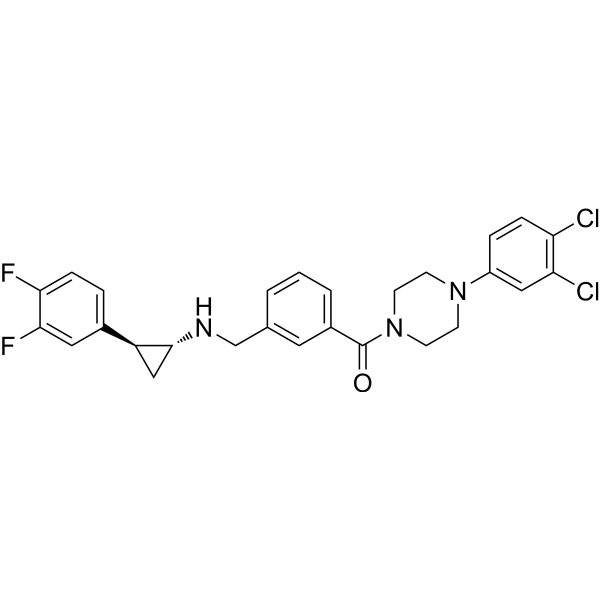 0 ImagesCat. No.: HY-149978CAS No.: 3041141-72-1LSD1-IN-26 (compound 12u) is a potent LSD1 inhibitor, with an IC50 of 25.3 nM. LSD1-IN-26 also inhibits MAO-A (IC50=1234.57 nM) and MAO-B (IC50=3819.27 nM). LSD1-IN-26 significantly induces apoptosis in MGC-803 cells. LSD1-IN-26 can be used for gastric cancer research.
-
Mcl-1-IN-21
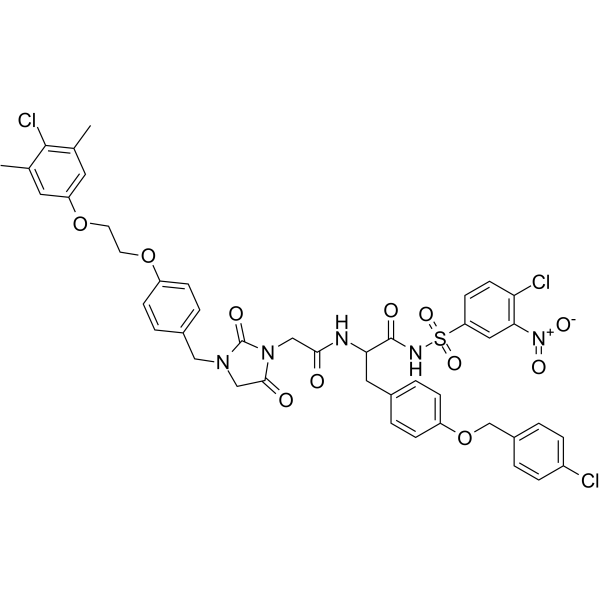
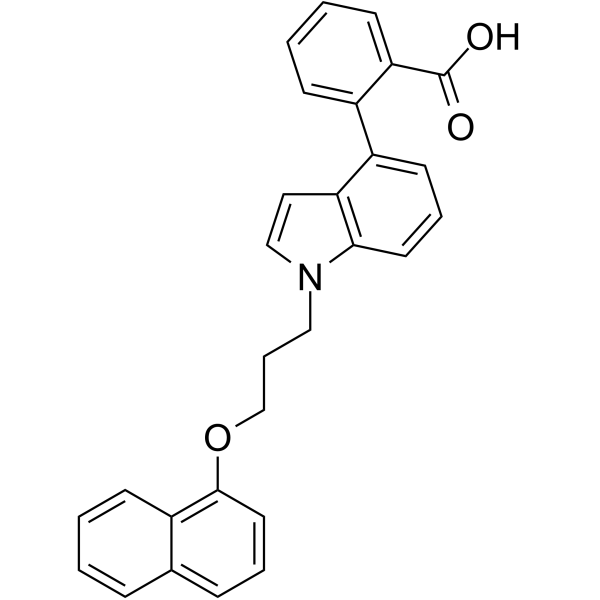
 0 ImagesCat. No.: HY-181054Mcl-1-IN-21 is a selective Mcl-1 protein inhibitor. Mcl-1-IN-21 can induce apoptosis, elevate intracellular ROS, reduce mitochondrial membrane potential, exert cytotoxicity against human cervical cancer cells, and inhibit tumor growth in a human cervical cancer xenograft mouse model. Mcl-1-IN-21 can be used for the research of cervical cancer.
-
MN33-63
 0 ImagesCat. No.: HY-182760MN33-63 is a Bcl-2 inhibitor, caspase-3 activator and DNA crosslinker with broad-spectrum anticancer activity. MN33-63 improves the water solubility of SN-38 (HY-13704), inhibits tumor growth and proliferation in a dose-dependent manner, and causes no obvious toxicity. MN33-63 relieves the inhibition of the mitochondrial apoptotic pathway, initiates the apoptosis program, inhibits Topo I activity, and promotes its degradation via the ubiquitin-proteasome and autophagy-lysosome pathways. MN33-63 induces DNA crosslinking, G2/M cell cycle arrest, inhibition of cancer cell migration, and cancer cell apoptosis through the mitochondrial pathway. MN33-63 can be used in the research of colorectal cancer, cervical cancer, hepatocellular carcinoma, lung adenocarcinoma and gastric cancer.
-
Ciwujianoside B (Standard)
 0 ImagesCat. No.: HY-N0307RCAS No.: 114902-16-8Ciwujianoside B (Standard) is the analytical standard of Ciwujianoside B. This product is intended for research and analytical applications. Ciwujianoside B is an orally active, blood-brain barrier penetrable radioprotective agent and memory enhancer. Ciwujianoside B reduces radiation-induced DNA damage, cell cycle arrest and apoptosis, downregulates NF-κB and the Bax/Bcl-2 ratio, and enhances the proliferative capacity of bone marrow cells. Ciwujianoside B enhances object recognition memory in normal mice and induces dendritic extension in primary cultured cortical neurons. Ciwujianoside B can be used in studies related to hematopoietic system radiation injury and memory enhancement.
-
UMI-77-d4
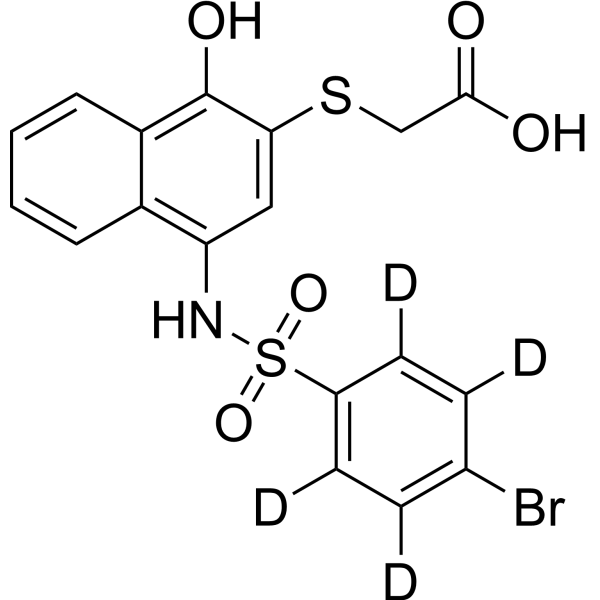 0 ImagesCat. No.: HY-18628SUMI-77-d4 is the deuterium labeled UMI-77. UMI-77 is a selective Mcl-1 inhibitor, which shows high binding affinity to Mcl-1 (IC50=0.31 μM). UMI-77 binds to the BH3 binding groove of Mcl-1 with Ki of 490 nM, showing selectivity over other members of anti-apoptotic Bcl-2 members.
-
MRT68921 hydrochloride
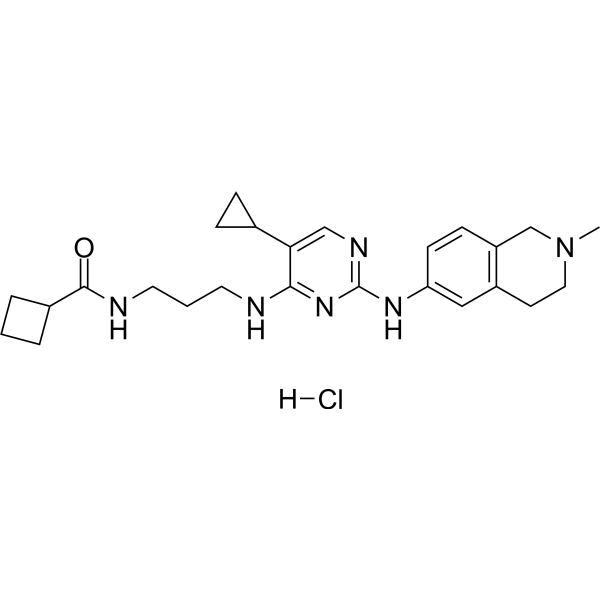 0 ImagesCat. No.: HY-100006BCAS No.: 2070014-87-6MRT68921 hydrochloride is a potent NUAK1/ULK1 dual inhibitor. MRT68921 hydrochloride inhibits ULK1 and ULK2 with IC50 values of 2.9 nM and 1.1 nM, respectively. MRT68921 hydrochloride can block cells autophagy and kill tumor cells by breaking the balance of oxidative stress signals. MRT68921 hydrochloride can inhibit cell proliferation and induce ROS production and apoptosis. MRT68921 hydrochloride can be used for the research of cancer, such as breast cancer.
-
Anticancer agent 56
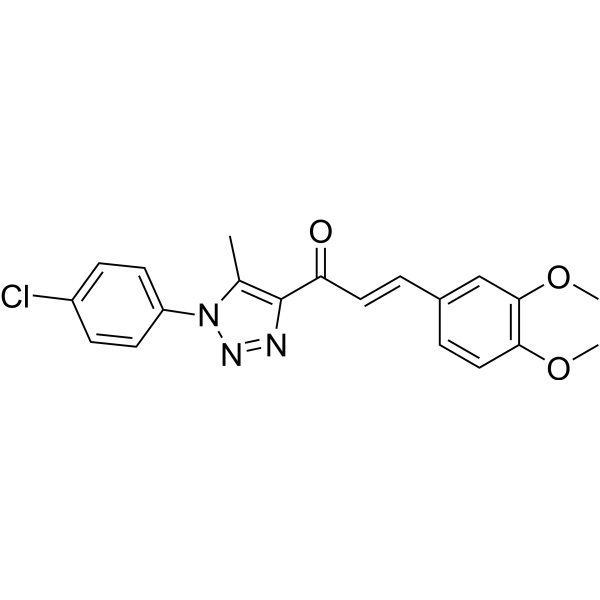 0 ImagesCat. No.: HY-146444CAS No.: 2241915-59-1Anticancer agent 56 (compound 4d) is a potent anti-cancer agent with agent-likeness properties, possessing anticancer activity against several cancer cell lines (IC50<3 μM). Anticancer agent 56 induces cell cycle arrest at G2/M phase and triggers mitochondrial apoptosis pathway. Anticancer agent 56 acts by accumulation of ROS, up regulation of BAX, down regulation of Bcl-2 and activation of caspases 3, 7, 9.
-
Apoptosis inducer 49
 0 ImagesCat. No.: HY-178940Apoptosis inducer 49 is a selective apoptosis inducer with high specificity against CCRF-CEM leukemia cells (IC50 = 2.68 μM). Apoptosis inducer 49 enhances RNA synthesis and replication stress, activates the Chk1-p21 axis, leading to S-phase arrest. Apoptosis inducer 49 can inhibit Bcl-2 and activate caspase-3. Apoptosis inducer 49 can be used for the study of Leukemia.
-
EGFR/VEGFR2-IN-9
 0 ImagesCat. No.: HY-178942CAS No.: 3123724-88-6EGFR/VEGFR2-IN-9 (Compound 9b) is an inhibitor of VEGFR-2 (IC50 = 1.325 μM) and EGFR (IC50 = 1.891 μM). EGFR/VEGFR2-IN-9 significantly inhibits the proliferation of multiple cancer cell lines, particularly leukemia cells. EGFR/VEGFR2-IN-9 upregulates the expression levels of Bax, caspase-3, and p53, while downregulating the expression of Bcl-2. EGFR/VEGFR2-IN-9 induces apoptosis and arrests the cell cycle in the G1 phase. EGFR/VEGFR2-IN-9 can be used to investigate anti-tumor angiogenesis and multi-drug resistant cancers.
-
Bcl-2-IN-20
 0 ImagesCat. No.: HY-161786Bcl-2-IN-20 (Compound 81) is an inhibitor for Bcl-2 with IC50 <10 μM (79.1% inhibition at 9 μM). Bcl-2-IN-20 exhibits cytotoxicity in SK-MEL-28 (IC50>10 μM), A549 (IC50=6.1 μM), HepG2 (IC50>10 μM), MCF-7 (IC50=8.9 μM), HCT116 (IC50>10 μM) and HEK-293 (IC50=14.1 μM). Bcl-2-IN-20 promotes the ROS production, induces apoptosis and DNA damage.