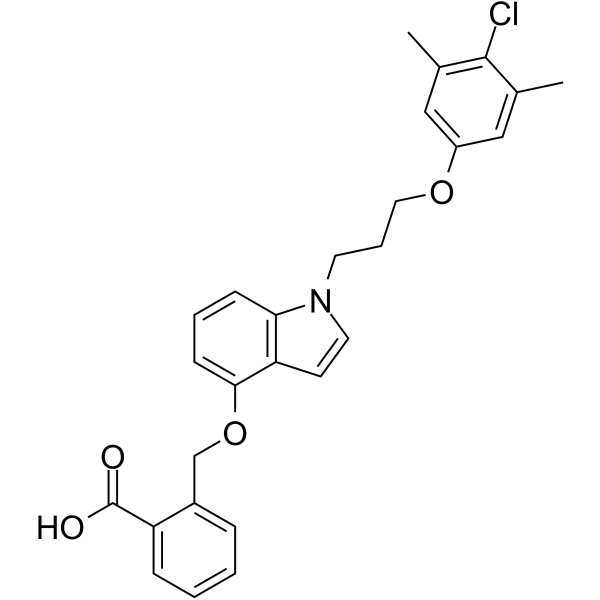
Bcl-2 Family
Bcl-2 is a family of evolutionarily related proteins. These proteins govern mitochondrial outer membrane permeabilization (MOMP) and can be either pro-apoptotic (Bax, Bad, Bak and Bok among others) or anti-apoptotic (including Bcl-2 proper, Bcl-xL, and Bcl-w, among an assortment of others). There are a total of 25 genes in the Bcl-2 family known to date. Human genes encoding proteins that belong to this family include: Bak1, Bax, Bal-2, Bok, Mcl-1.
Bcl-2 Family Isoform Specific Products
-
Bcl-2 Family
(450)
View all products
-
Bcl-2
(328)
View all products
-
Bcl-xL
(123)
View all products
-
Bcl-W
(17)
View all products
-
Mcl-1
(99)
View all products
-
Bfl-1
(11)
View all products
-
Bcl-B
(6)
View all products
-
Bax
(220)
View all products
-
Bak
(14)
View all products
-
Bim
(14)
View all products
-
BNIP3
(1)
View all products
-
Bad
(10)
View all products
All Product Categories
-
Bcl-2 Family Inhibitors
(567)
View all products
-
Bcl-2 Family Agonists
(5)
View all products
-
Bcl-2 Family Antagonists
(9)
View all products
-
Bcl-2 Family Activators
(90)
View all products
-
Bcl-2 Family Modulators
(153)
View all products
-
Bcl-2 Family Inducers
(13)
View all products
-
Bcl-2 Family Degraders
(21)
View all products
-
Bcl-2 Family Controls
(2)
View all products
-
Bcl-2 Family Ligands
(9)
View all products
-
Bcl-2 Family Related Products (1047)
Related Products (1047)

-
Antibodies (31)
-
Bcl-2 Family Signaling Pathway
-
Bcl-2 Family Isoform Comparison
-
Bcl-2-IN-5
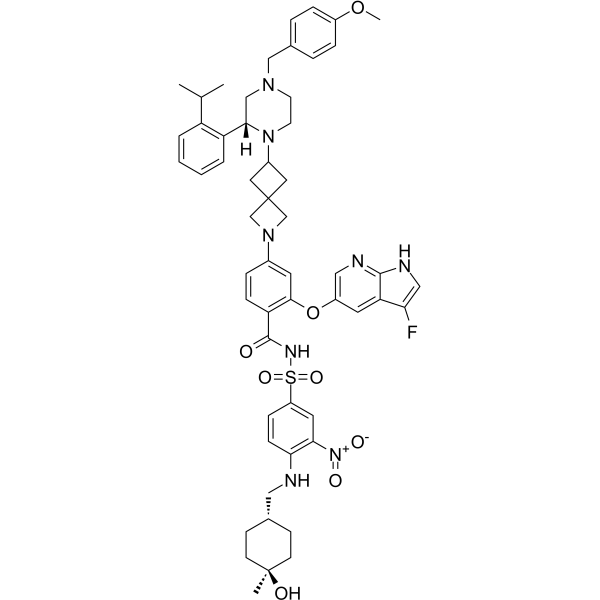 0 ImagesCat. No.: HY-143873CAS No.: 2728752-20-1Bcl-2-IN-5 is a BCL-2 inhibitor with IC50s of 0.12 nM, 0.14 nM and 0.22 nM for Bcl-2 wild type, Bcl-2 D103Y and Bcl-2 G101V, respectively. Bcl-2-IN-5 inhibits the cell growth with IC50 values of 0.2 nM and 0.44 nM for Bcl 2-G101V knock-in RS4; 11 and RS4; 11 cells, respectively (WO2021208963A1; Example 155).
-
Rosomidnar sodium
 0 ImagesCat. No.: HY-153494ASynonyms: PNT100 sodiumPNT100 sodium is a 24-base, chemically unmodified DNA oligonucleotide sequence that is complementary to the regulatory region upstream of the BCL-2 gene. Exposure of tumor cells to PNT100 results in suppression of proliferation and cell death.
-
Candidone
 0 ImagesCat. No.: HY-180324CAS No.: 77727-18-5Candidone is a type of flavanone phenolic compound with anti-cancer and antibacterial activities. Candidone inhibits the proliferation of hepatoblastoma and cholangiocarcinoma cells and induces their apoptosis by up-regulating p21, Bax, and caspase 3/9, and down-regulating Bcl-2 and survivin. It reduces the metastatic ability of cancer cells by inhibiting the expression of phosphorylated p38 and matrix metalloproteinase MMP-9. Candidone has inhibitory effects on multidrug-resistant bacterial strains. Candidone binds to the base pairs of DNA in a groove-binding manner, thereby slightly altering the conformation of DNA.
-
MPQPPAK
 0 ImagesCat. No.: HY-P12336MPQPPAK is a polypeptide obtained from the enzymatic hydrolysis of C-phycocyanin (HY-D1025) and possesses neuroprotective activity. MPQPPAK enhances the activities of antioxidant enzymes SOD, CAT, and GSH-Px, reduces ROS, inhibits apoptosis and acetylcholinesterase (AChE) activity in brain tissue, and decreases protein carbonyl content. In the MPTP (HY-W114750)-induced zebrafish Parkinson's disease model, MPQPPAK exhibits antioxidant effects, inhibits autophagy and apoptosis, reverses the loss of dopaminergic neurons and cerebral blood vessels, and alleviates motor deficits. MPQPPAK can be used for research on Parkinson's disease.
-
Mcl-1 inhibitor 13
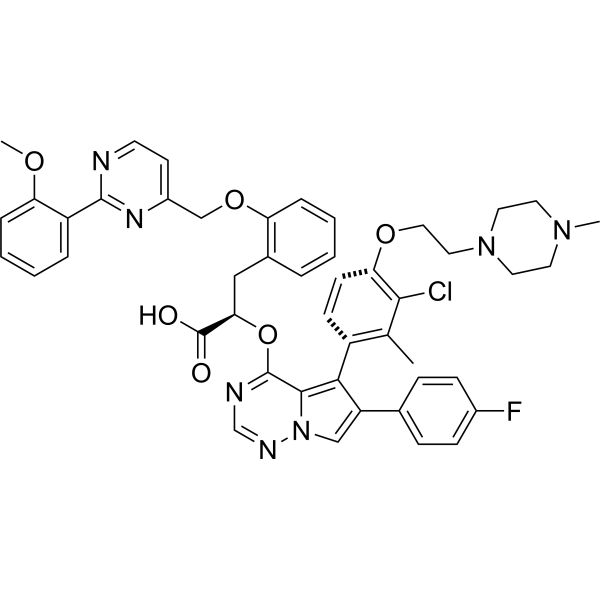 0 ImagesCat. No.: HY-153423ACAS No.: 2445466-06-6Mcl-1 inhibitor 13 (Example 9) is a MCL-1 inhibitor (Ki: 8.2 nM). Mcl-1 inhibitor 13 can be used for the research of cancers.
-
Mcl-1-IN-22 hydrochloride
 0 ImagesCat. No.: HY-183601AMcl-1-IN-22 hydrochloride is a tetrahydro-β-carboline-based Mcl-1 inhibitor with a Ki of 0.015 μM. Mcl-1-IN-22 hydrochloride shows antitumor activity, induces apoptosis and produces synergistic antitumor effects in combination with Cisplatin (HY-17394) and Paclitaxel (HY-B0015). Mcl-1-IN-22 hydrochloride can be used for the research of cancer, such as ovarian cancer.
-
CAIX/CDK-2-IN-1
 0 ImagesCat. No.: HY-179022CAIX/CDK-2-IN-1 is a dual-acting inhibitor of carbonic anhydrase IX (CA IX) and cyclin-dependent kinase-2 (CDK-2) with IC50 values of 0.29 μM and 0.32 μM. The zein nanoparticls of CAIX/CDK-2-IN-1 can induce cancer cells apoptosis. CAIX/CDK-2-IN-1 can be used for the research of cancer, such as lung cancer.
-
PROTAC HDAC3 degrader-1
 0 ImagesCat. No.: HY-181767CAS No.: 3133883-15-2PROTAC HDAC3 degrader-1 is a selective PROTAC degrader targeting HDAC3 with a DC50 of 30.73 nM. PROTAC HDAC3 degrader-1 induces degradation of HDAC3 via the ubiquitin-proteasome system. PROTAC HDAC3 degrader-1 promotes apoptosis, induces DNA damage, and downregulates anti-apoptotic proteins Mcl-1 and Bcl-xL. PROTAC HDAC3 degrader-1 can be used for the research of acute myeloid leukemia.
-
STAT3-IN-44
 0 ImagesCat. No.: HY-175010STAT3-IN-44 is a potent STAT3 inhibitor with IC50s of 1.84 (C6 cells) and 4.81 μM (A549 cells). STAT3-IN-44 inhibits STAT3 phosphorylation, downregulates Bcl-2, and upregulates Caspase-3 to promote late-stage apoptosis. STAT3-IN-44 significantly suppresses tumor cell proliferation and migration. STAT3-IN-44 can be used for the study of cancers such as glioma and lung cancer.
-
Apoptosis inducer 45
 0 ImagesCat. No.: HY-178099Apoptosis inducer 45 is an apoptosis inducer. Apoptosis inducer 45 is cytotoxically active against the MCF-7 cell line. Apoptosis inducer 45 elicits MCF-7 cell apoptosis via the mitochondrial pathway (increases the Bax/Bcl-2 ratio) by activating cleavage of caspase-9, thereby inducing the fragmentation of DNA repair protein PARP. Apoptosis inducer 45 also can induce caspase-8 cleavage, subsequently initiating cleavage of caspase-3 and its downstream protein PARP to culminate in the extrinsic apoptosis. Apoptosis inducer 45 can be used in the research of breast cancer.
-
Topoisomerase I-IN-20
 0 ImagesCat. No.: HY-181725Topoisomerase I-IN-20 is a Topoisomerase I inhibitor. Topoisomerase I-IN-20 disrupts DNA synthesis and transcription, thereby inhibiting the proliferation and migration of cancer cells. Topoisomerase I-IN-20 induces S-phase cell cycle arrest and mitochondria-mediated Apoptosis in cancer cells, which is characterized by upregulated expression of p53, Bax, caspase-3 and caspase-9, along with downregulated expression of Bcl-2. Topoisomerase I-IN-20 increases intracellular ROS levels. Topoisomerase I-IN-20 is applicable to lung cancer-related research.
-
CDK9/CycT1 degrader-1
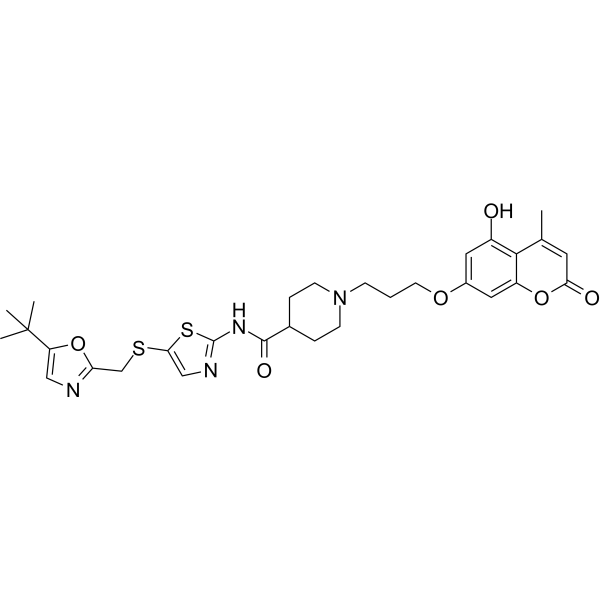 0 ImagesCat. No.: HY-156795CAS No.: 3020773-91-2CDK9/CycT1 degrader-1 is an autophagy-anchored bifunctional degrader that mediates the degradation of the CDK9/cyclin T1 protein complex. CDK9/CycT1 degrader-1 binds both CDK9 and LC3B simultaneously to form a ternary complex, achieving target protein degradation via the autophagy-lysosome pathway. CDK9/CycT1 degrader-1 downregulates the protein levels of Mcl‑1 and c‑Myc and induces apoptosis. PROTAC CDK9/CycT1 Degrader-2 is applicable to cancer-related research.
-
Vernodalin
 0 ImagesCat. No.: HY-N19029CAS No.: 21871-10-3Vernodalin is an orally active, cytotoxic sesquiterpene lactone with a Kd value of 9.55 μM for p38 MAPK. Vernodalin downregulates the expression of phosphorylated ERK, JNK, AKT, PI3K, mTOR, p38MAPK, FAK, MMP-2, MMP-9, and uPA, while upregulates the expression of TIMP-1 and TIMP-2. Vernodalin increases ROS production, upregulates the expression of Bax and caspase 3, downregulates the expression of Bcl-2, and induces apoptosis (apoptosis), oxidative stress response and cell cycle arrest. Vernodalin inhibits the proliferation, adhesion and metastasis of cancer cells. Vernodalin enhances the activity of VEGF-B, AMPK and eNOS signaling pathways. Vernodalin alleviates myocardial injury and restores hemodynamic parameters. Vernodalin inhibits the growth of Trypanosoma brucei rhodesiense. Vernodalin can be used in research related to various cancers including gastric cancer, colorectal cancer and lung cancer, as well as African human trypanosomiasis and myocardial infarction.
-
Multi-kinase-IN-7
 0 ImagesCat. No.: HY-178142Multi-kinase-IN-7 is a multikinase inhibitor with IC50s of 2.19, 2.95, 3.59 and 9.31 μM against EGFR, VEGFR2, TrKA and CDK2, respectively. Multi-kinase-IN-7 shows moderate and weaker activity against FAK, AKT1, GSK3β and CDK5 with IC50 values of 6.3, 9.2, 11.7 and 23.4 μM, respectively. Multi-kinase-IN-7 displays broad spectrum antiproliferative potential against NCI cancer cell lines. Multi-kinase-IN-7 induces cell cycle arrest, apoptosis and necrosis. Multi-kinase-IN-7 Inhibitor can be used for the study of breast cancer.
-
EGFR/HER2-IN-17
 0 ImagesCat. No.: HY-172623EGFR/HER2-IN-17 (Compound 7h) is a dual inhibitor of epidermal growth factor receptor (EGFR) and human epidermal growth factor receptor 2 (HER2). EGFR/HER2-IN-17 inhibits cancer cell proliferation. EGFR/HER2-IN-17 interacts with the binding pockets of EGFR and HER2, activating caspase-3 and caspase-8, and decreases the expression of Bcl-2, thereby inducing apoptosis. EGFR/HER2-IN-17 is promising for research of cancers.
-
W1307
 0 ImagesCat. No.: HY-184891CAS No.: 3028770-95-5W1307 is a selective STAT3 inhibitor with a KD value of 1.74 μM. W1307 inhibits STAT3 Tyr705 phosphorylation, disrupts STAT3 dimerization, and suppresses STAT3 transcriptional activity. W1307 downregulates the expression of STAT3 downstream targets c-Myc, Mcl-1 and Bcl-2. W1307 transcriptionally inhibits SREBP1 and CPT2 expression to disrupt lipid homeostasis. W1307 shows potent anti-leukemic activity and synergizes with Cytarabine (Ara-C) (HY-13605) to overcome chemoresistance in acute myeloid leukemia (AML).
-
BCL2L10 Human Pre-designed siRNA Set A
 0 ImagesCat. No.: HY-RS01424
BCL2L10 Human Pre-designed siRNA Set A contains three designed siRNAs for BCL2L10 gene (Human), as well as a negative control, a positive control, and a FAM-labeled negative control.
-
Mcl-1-IN-23
 0 ImagesCat. No.: HY-184310CAS No.: 2756736-34-0Mcl-1-IN-23 is a Mcl-1 inhibitor with a Ki value of 0.024 μM. Mcl-1-IN-23 binds directly to Mcl-1 and displaces the pro-apoptotic proteins Bak and Bim from Mcl-1 complexes. Mcl-1-IN-23 induces cell apoptosis, activates caspase-3, promotes PARP cleavage, and exerts antiproliferative activity against cancer cells. Mcl-1-IN-23 can be used for the research of leukemia.