



Bcl-2 Family
Bcl-2 is a family of evolutionarily related proteins. These proteins govern mitochondrial outer membrane permeabilization (MOMP) and can be either pro-apoptotic (Bax, Bad, Bak and Bok among others) or anti-apoptotic (including Bcl-2 proper, Bcl-xL, and Bcl-w, among an assortment of others). There are a total of 25 genes in the Bcl-2 family known to date. Human genes encoding proteins that belong to this family include: Bak1, Bax, Bal-2, Bok, Mcl-1.
Bcl-2 Family Isoform Specific Products
-
Bcl-2 Family
(450)
View all products
-
Bcl-2
(328)
View all products
-
Bcl-xL
(123)
View all products
-
Bcl-W
(17)
View all products
-
Mcl-1
(99)
View all products
-
Bfl-1
(11)
View all products
-
Bcl-B
(6)
View all products
-
Bax
(220)
View all products
-
Bak
(14)
View all products
-
Bim
(14)
View all products
-
BNIP3
(1)
View all products
-
Bad
(10)
View all products
All Product Categories
-
Bcl-2 Family Inhibitors
(567)
View all products
-
Bcl-2 Family Agonists
(5)
View all products
-
Bcl-2 Family Antagonists
(9)
View all products
-
Bcl-2 Family Activators
(90)
View all products
-
Bcl-2 Family Modulators
(153)
View all products
-
Bcl-2 Family Inducers
(13)
View all products
-
Bcl-2 Family Degraders
(21)
View all products
-
Bcl-2 Family Controls
(2)
View all products
-
Bcl-2 Family Ligands
(9)
View all products
-
Bcl-2 Family Related Products (1047)
Related Products (1047)

-
Antibodies (31)
-
Bcl-2 Family Signaling Pathway
-
Bcl-2 Family Isoform Comparison
-
Apoptosis inducer 62
 0 ImagesCat. No.: HY-184302Apoptosis inducer 62 is an apoptosis inducer that reduces the expression levels of anti-apoptotic proteins Bcl-2 and Bcl-xL. Apoptosis inducer 62 induces ROS accumulation, mitochondrial membrane potential depolarization, DNA damage, cell cycle arrest. Apoptosis inducer 62 exhibits activity in colorectal tumor xenograft models. Apoptosis inducer 62 can be used for research related to colorectal cancer.
-
AKT1-IN-13
 0 ImagesCat. No.: HY-184145AKT1-IN-13 is an orally active AKT1 inhibitor with an IC50 of 5.17 μM. AKT1-IN-13 also exhibits high inhibitory activity against PAK1, PKA, MAP2K1 (MEK1 / MAPKK1) and MAPK1 (ERK2). AKT1-IN-13 induces cell apoptosis, activates the pro-apoptotic protein BAX, inhibits the anti-apoptotic protein Bcl-2, and activates caspase 3 simultaneously. As a cytotoxic agent, AKT1-IN-13 exerts a killing effect on orthotopically transplanted liver cancer in an AKT1-dependent manner. AKT1-IN-13 can be used in studies related to hepatocellular carcinoma.
-
CG-1521
 0 ImagesCat. No.: HY-108919CAS No.: 674767-29-4CG-1521 is a histone deacetylase (HDAC) inhibitor that stabilizes Ac-Lys373 P53, increases P21 levels and HDAC2 degradation. CG-1521 can inhibit proliferation, induce cell cycle arrest and apoptosis. CG-1521 promotes Bax translocation to the mitochondria and cleavage. CG-1521 downregulates KIF4, Aurora B and Nek2 protein expression and DNA synthesis. CG-1521 can be used for the research of prostate cancer and inflammatory breast cancer.

-
Estrogen receptor modulator 10
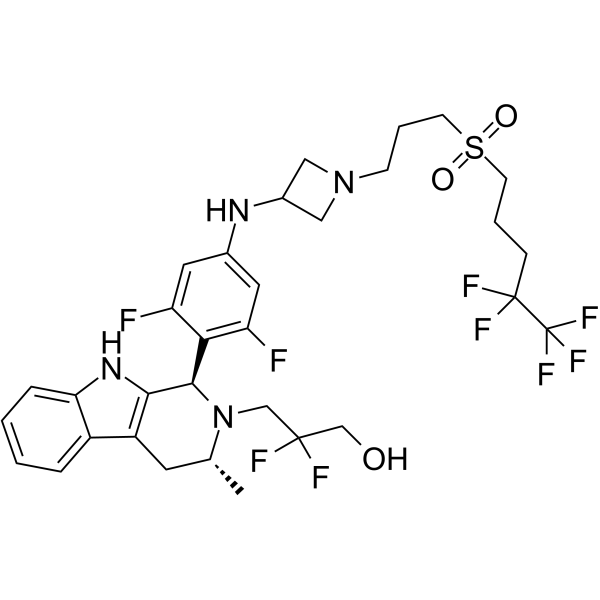 0 ImagesCat. No.: HY-155406CAS No.: 2991504-90-4Estrogen receptor modulator 10 (compound G-5b) is an estrogen receptor (ER) antagonist (IC50=6.7 nM) and degrader (DC50=0.4 nM). Estrogen receptor modulator 10 is developed based on the Fulvestrant (HY-13636) molecule and can rapidly degrade ER receptors through the proteasome pathway. Estrogen receptor modulator 10 can induce cell apoptosis and block cells in the G1/G0 phase and can be used in cancer research.
-
F1324 acetate
 0 ImagesCat. No.: HY-100866B
-
Ki11502
 0 ImagesKi11502 is a multi-targeted receptor tyrosine kinase (RTK) inhibitor that selectively inhibits the activity of PDGF β/α receptors with IC50 values less than 10 nM. Ki11502 selectively inhibits PDGF β receptor phosphorylation, proliferation, and proteoglycan synthesis in human vascular smooth muscle cells. Ki11502 can induce Apoptosis) and exhibits profound antiproliferative effects on select subsets of leukemia, including those with Imatinib (HY-15463) resistant mutations. Ki11502 is highly suitable for studying the role of PDGF in vascular diseases, particularly the role of proteoglycans in atherosclerosis.
-
D-(+)-Phenyllactic acid (Standard)
 0 ImagesD-(+)-Phenyllactic acid (Standard) is the analytical standard of D-(+)-Phenyllactic acid. This product is intended for research and analytical applications. D-(+)-Phenyllactic acid is an anti-bacterial agent, excreted by Geotrichum candidum, inhibits a range of Gram-positive from humans and foodstuffs and Gram-negative bacteria found in humans[1].
-
Tambulin
 0 ImagesTambulin is an orally active flavonol compound found in Zanthoxylum armatum. Tambulin can inhibit cell proliferation, induce apoptosis and inhibit ROS production. Tambulin upregulates cleaved caspase-3, cleaved caspase-9, and Bax, downregulates Bcl-2 levels. Tambulin can stimulate glucose-dependent insulin secretion and induce endothelium-independent vasorelaxation. Tambulin binds to succinate dehydrogenase (SDH) (Ki = 11.02 μM) and shows significant ferric reducing power. Tambulin can enhances oxidative stress resistance, reduces, lipofuscin deposits, lipid levels, α-synuclein levels, improves locomotary behavior, and dopamine levels in in age-synchronized L1 hermaphrodite Caenorhabditis elegans models of ageing and Parkinson's disease. Tambulin can be used for the researches of Parkinson's disease, lung squamous cell carcinoma, and diabetes.
-
Topoisomerase II inhibitor 23
 0 ImagesCat. No.: HY-174404Topoisomerase II inhibitor 23 is a potent topoisomerase II inhibitor (IC50 = 0.94 μM). Topoisomerase II inhibitor 23 shows high selectivity and exceptional cytotoxic activity in MCF-7, HepG2, and HCT116 cells. Topoisomerase II inhibitor 23 induces cell cycle arrest at the G1 phase, leading to inhibition of cell proliferation. Topoisomerase II inhibitor 2 induces apoptosis by up-regulating the pro-apoptotic Bax level and down-regulating the anti-apoptotic Bcl-2 level.
-
TZEP7
 0 ImagesCat. No.: HY-170787CAS No.: 2566714-41-6TZEP7 is an EGFR kinase inhibitior in cancer cells. TZEP7 exhibits cytotoxic effects against cancer cell lines and induces apoptosis. TZEP7 demonstrates downregulation of antiapoptotic Bcl-2, upregulation of pro-apoptotic Bax, and increases caspase levels. TZEP7 is promising for research of anticancer agent.
-
Topoisomerase II/EGFR-IN-2
 0 ImagesCat. No.: HY-180823Topoisomerase II/EGFR-IN-2 (Compound 3) is an inhibitor of Topoisomerase IIα (IC50 = 0.122 μM) and EGFR-TKWT (IC50 = 16.8 μM). Topoisomerase II/EGFR-IN-2 inhibits the proliferation of HeLa and HepG2 cells, inducing cell cycle arrest and apoptosis. Topoisomerase II/EGFR-IN-2 upregulates caspase-3 and Bax, and downregulates Bcl-2. Topoisomerase II/EGFR-IN-2 can be used to study liver cancer and cervical cancer.
-
Bcl-2-IN-11
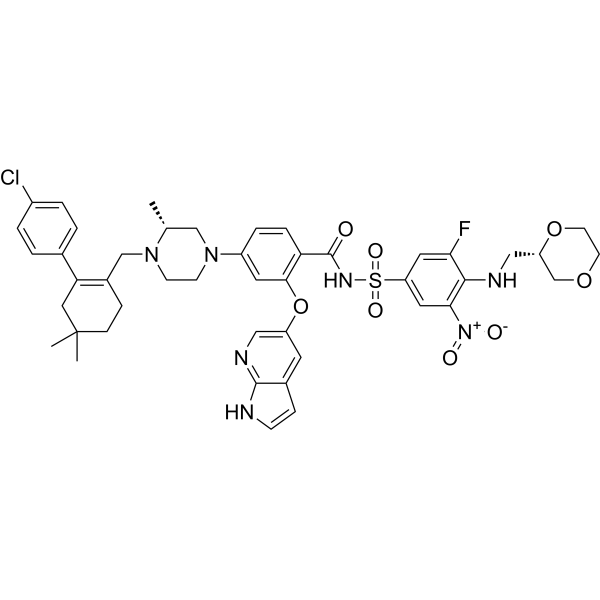 0 ImagesCat. No.: HY-153953CAS No.: 2760536-88-5Bcl-2-IN-11 (compound 6) is a potent and selective Bcl-2 activity inhibitor, with an IC50 of 0.9 nM. Bcl-2-IN-11 shows weak inhibition of Bcl-xl (IC50 > 1000 nM). Bcl-2-IN-11 can be used for the research of a variety of cancers caused by abnormal overexpression of Bcl-2 family proteins: especially malignant hematologic diseases of acute lymphoid leukemia, etc. Bcl-2-IN-11 can also avoid toxic side effects caused by Bcl-xl inhibition, such as thrombocytopenia.
-
PI3K/mTOR-IN-19
 0 ImagesCat. No.: HY-179155PI3K/mTOR-IN-19 is an orally active, potent, selective PI3K (IC50 = 4.23 nM) and mTOR (IC50 = 2.3 nM) inhibitor. PI3K/mTOR-IN-19 significantly inhibits Eca109 cell viability and induces apoptosis. PI3K/mTOR-IN-19 causes G0/G1 cell cycle arrest, decreased mitochondrial membrane potential, and demonstrates marked telomerase inhibitory activity. PI3K/mTOR-IN-19 modulates the expression of key apoptotic regulators (Bcl-2, Bax, and p53) and downregulates the PI3K/Akt/mTOR signaling pathway. PI3K/mTOR-IN-19 can be used for the study of esophageal cancer.
-
Simazine-d10
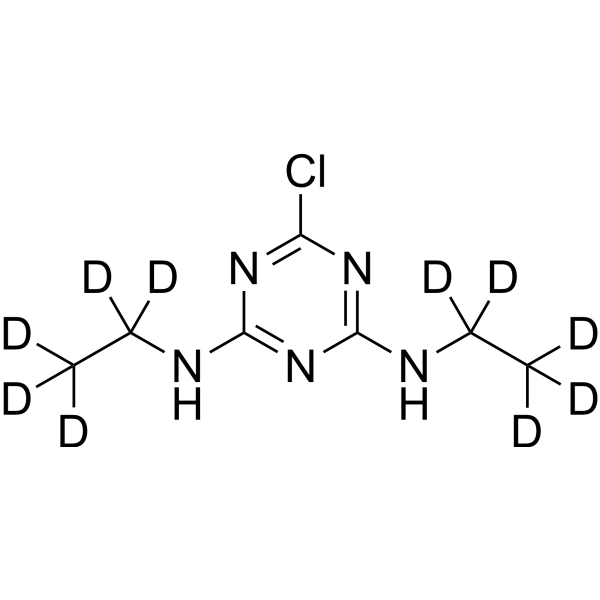 0 ImagesSimazine-d10 is the deuterium labeled Simazine (HY-B2046). Simazine is a triazine herbicide. Simazine is widely used in agriculture, potted plant and tree production. In addition, Simazine can induce the apoptosis of immune cells in the spleen of mice and inhibit the proliferation of B cells and T cells in mice.
-
Bcl-2-IN-12
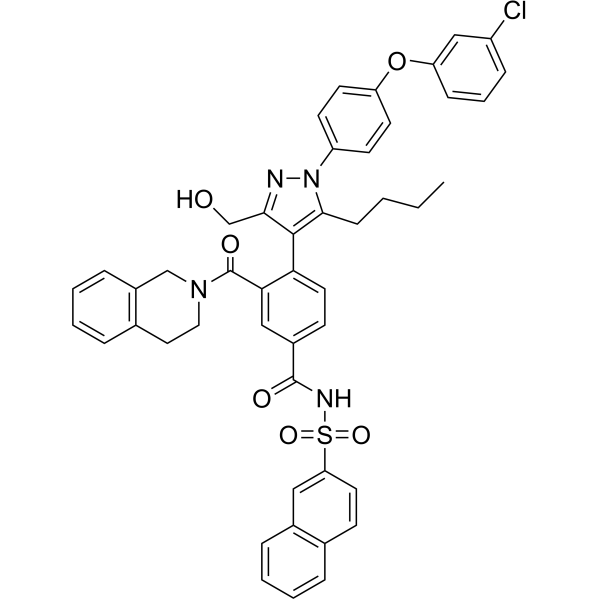 0 ImagesCat. No.: HY-149622CAS No.: 1383737-59-4
-
Beclin1-Bcl-2 interaction inhibitor 1
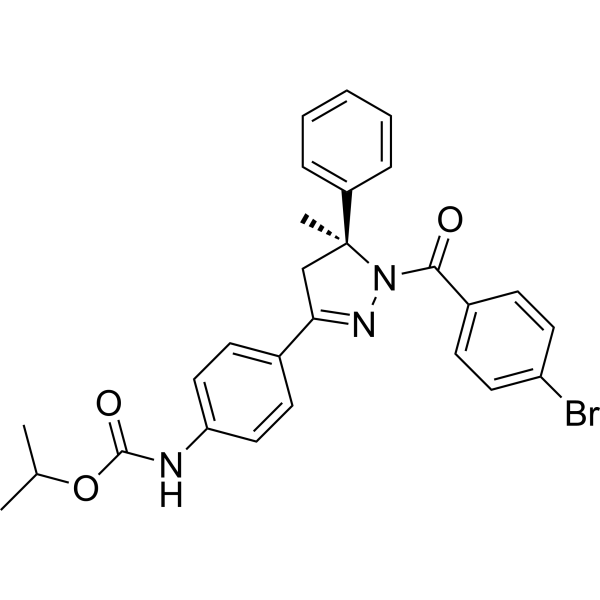 0 ImagesCat. No.: HY-149681Beclin1-Bcl-2 interaction inhibitor 1 is a Beclin1 and Bcl-2 interaction inhibitor with an IC50 value of 4.4 nM. Beclin1-Bcl-2 interaction inhibitor 1 disrupts the binding of the Bcl-2-Beclin 1 BH3 domain. Beclin1-Bcl-2 interaction inhibitor 1 can be used in the research of cancer and neurodegenerative diseases.
-
Topo I/II-IN-3
 0 ImagesCat. No.: HY-183330Topo I/II-IN-3 is a dual inhibitor of topoisomerase I/II (topoisomerase I/II), with an IC50 of 8.99 μM against Topo I and an IC50 of 26.92 μM against Topo II. Topo I/II-IN-3 induces DNA damage, elevates intracellular ROS levels, activates the mitochondrial apoptosis pathway, and exerts cytotoxicity against cancer cells. Topo I/II-IN-3 upregulates the expression of γ-H2AX, p53, activated caspase-9, Bax and activated caspase-3, while downregulating the expression of Bcl-2. Topo I/II-IN-3 can be used in research related to breast cancer, liver cancer and gastric cancer.
-
BPTQ
 0 ImagesCat. No.: HY-124122CAS No.: 1802665-43-5BPTQ is a potent inhibitor against VEGFR1 and CHK2 with IC50 values of 0.54 and 1.70 µmol/L, respectively. BPTQ is also an intercalator of DNA with anticancer activities. BPTQ inhibits the proliferation of HL-60 cells by arresting cells at S and G2/M phase with an IC50 value of 12 µmol/L. BPTQ also activates the mitochondria-mediated Apoptosis pathway by a decrease in mitochondrial membrane potential, increase in the Bax:Bcl-2 ratio and activation of caspases.
-
CDK9-IN-53
 0 ImagesCat. No.: HY-13828CAS No.: 1421340-50-2CDK9-IN-53 is a potent and selective CDK9 inhibitor with a Ki of 7 nM and an IC50 of 14 nM against CDK9/Cyclin T1. CDK9-IN-53 achieves highly selective inhibition by competitively binding to the ATP pocket of CDK9, thereby blocking RNAPII transcription and downregulating the anti-apoptotic protein Mcl-1, ultimately triggering Caspase-dependent apoptosis in cancer cells. CDK9-IN-53 can be used for research on chronic lymphocytic leukemia.




