



COX-2
Cyclooxygenase-2 (COX-2) is an inducible enzyme catalyzing the conversion of arachidonic acid to prostaglandin endoperoxides, central to prostanoid biosynthesis and inflammatory signaling[1][2]. Mechanistically, COX-2 activity is regulated by both its catalytic and allosteric subunits, allowing modulation by fatty acids and selective inhibitors, distinguishing it from constitutive COX-1[2]. COX-2 is strongly upregulated in response to pro-inflammatory cytokines, hypoxia, and tumor microenvironment signals, orchestrating prostaglandin E2 (PGE2) production and downstream activation of NF-κB and PI3K-Akt pathways[3][4][5]. In disease models, COX-2 contributes to cancer progression, atherosclerosis, and migraine through modulation of immune responses, vascular smooth muscle activity, and neuronal-glial interactions[6][7][5]. Compared with COX-1, COX-2 expression is more context-dependent and spatially regulated, being highly inducible in endothelial cells, arterial versus venous smooth muscle, and neuronal populations under stress or inflammatory stimuli[8][9][10]. Experimental studies demonstrate COX-2 as a critical mediator of ischemic preconditioning in the heart, providing cardioprotection via PGE2 and PGI2 signaling[11]. Selective COX-2 inhibitors, including synthetic NSAIDs and dual COX/LOX modulators, are utilized to interrogate COX-2 function and develop anti-inflammatory therapies with reduced gastrointestinal and cardiovascular side effects[3][12]. Agonist studies further highlight receptor-mediated induction of COX-2, exemplifying its role in colon carcinoma and trigeminal ganglia models[13][7].
References:
- [1]. Smith FG, et al. Cyclooxygenase (COX) Inhibitors and the Newborn Kidney. Pharmaceuticals (Basel). 2012 Oct 25;5(11):1160-76. [Content Brief]
- [2]. Ahmadi M, et al. Non-steroidal anti-inflammatory drugs: recent advances in the use of synthetic COX-2 inhibitors. RSC Med Chem. 2022 Feb 14;13(5):471-496. [Content Brief]
- [3]. Bolli R, et al. Discovery of a new function of cyclooxygenase (COX)-2: COX-2 is a cardioprotective protein that alleviates ischemia/reperfusion injury and mediates the late phase of preconditioning. Cardiovasc Res. 2002 Aug 15;55(3):506-19. [Content Brief]
- [4]. Kirkby NS, et al. COX-2 protects against atherosclerosis independently of local vascular prostacyclin: identification of COX-2 associated pathways implicate Rgl1 and lymphocyte networks. PLoS One. 2014 Jun 2;9(6):e98165. [Content Brief]
- [5]. Segelcke D, et al. The role of the spinal cyclooxygenase (COX) for incisional pain in rats at different developmental stages. Eur J Pain. 2020 Feb;24(2):312-324. [Content Brief]
- [6]. Chatzipieris FP, et al. Recent advances in dual COX/LOX inhibitor design (2020-2024). Life. 2026;16(1):163. [Content Brief]
- [7]. Yang WL, et al. Cholinergic receptor up-regulates COX-2 expression and prostaglandin E(2) production in colon cancer cells. Carcinogenesis. 2000 Oct;21(10):1789-93. [Content Brief]
- [8]. Hsieh HL, et al. c-Src-dependent EGF receptor transactivation contributes to ET-1-induced COX-2 expression in brain microvascular endothelial cells. J Neuroinflammation. 2012 Jul 2;9:152. [Content Brief]
- [9]. Neeb L, et al. IL-1β stimulates COX-2 dependent PGE₂ synthesis and CGRP release in rat trigeminal ganglia cells. PLoS One. 2011 Mar 4;6(3):e17360. [Content Brief]
- [10]. Chen S, et al. 288 The COX-2 pathway as a mediator of resistance to anti-PD-1 therapy. J Immunother Cancer. 2021;9(Suppl 2):A312.
- [11]. Bishop-Bailey D, et al. Differential induction of cyclooxygenase-2 in human arterial and venous smooth muscle: role of endogenous prostanoids. Arterioscler Thromb Vasc Biol. 1998 Oct;18(10):1655-61. [Content Brief]
- [12]. Majumder M, et al. COX-2 Elevates Oncogenic miR-526b in Breast Cancer by EP4 Activation. Mol Cancer Res. 2015 Jun;13(6):1022-33. [Content Brief]
- [13]. Scott KF, et al. Functional coupling and differential regulation of the phospholipase A2-cyclooxygenase pathways in inflammation. J Leukoc Biol. 1999 Oct;66(4):535-41. [Content Brief]
- [14]. Smith WL, et al. Interactions of fatty acids, nonsteroidal anti-inflammatory drugs, and coxibs with the catalytic and allosteric subunits of cyclooxygenases-1 and -2. J Biol Chem. 2019 Feb 1;294(5):1697-1705. [Content Brief]
-
COX-2 Related Products (507)
Related Products (507)

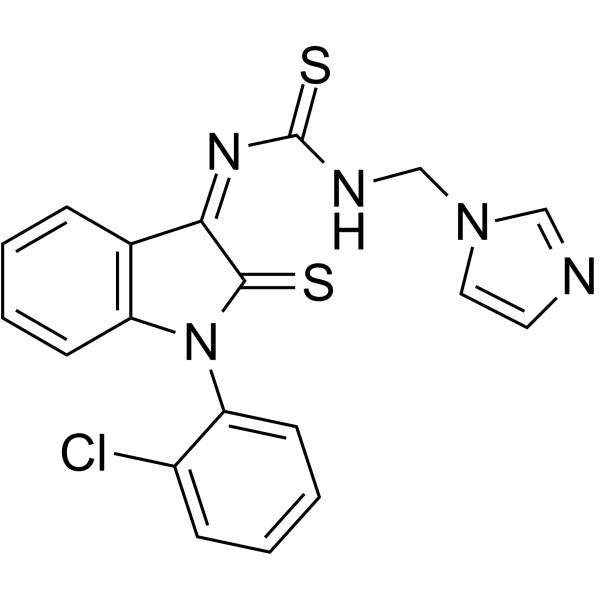

-
Eltenac
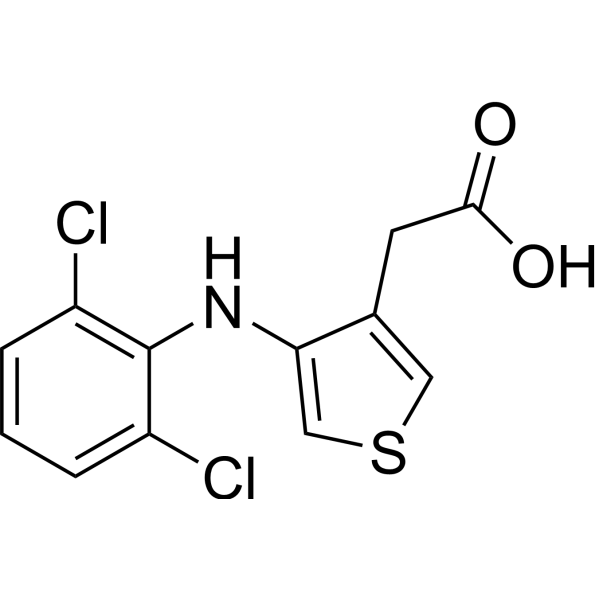 0 ImagesCat. No.: HY-106093CAS No.: 72895-88-6Eltenac, a non-steroidal anti-inflammatory drug (NSAID), is a COX inhibitor. Eltenac shows IC50 of 0.03 μM for both COX-1 and COX-2 in isolated human whole blood.
-
Multi-kinase-IN-8
 0 ImagesCat. No.: HY-179439Multi-kinase-IN-8 is a muti-kinase inhibitor. Multi-kinase-IN-8 inhibits COX-1 (IC50 of 12.6 μM), COX-2 (IC50 of 0.05 μM) and VEGFR-2 (IC50 of 0.12 nM). Multi-kinase-IN-8 inhibits tumor-associated carbonic anhydrases (CA IX and CA XII with Ki of 31.5 nM and 386.9 nM, respectively). Multi-kinase-IN-8 triggers cell cycle arrest and apoptosis through upregulation of Caspase 9 and Bax along with downregulation of Bcl 2. Multi-kinase-IN-8 suppresses PGE2, p-VEGFR-2, MMP-9 and HIF-1α and exhibits growth-inhibitory activity against breast cancer, lung cancer, and colorectal adenocarcinoma.
-
(±)-Methotrexate
 0 ImagesCat. No.: HY-121151CAS No.: 60388-53-6Synonyms: (±)-Amethopterin; (±)-CL14377; (±)-WR19039(±)-Methotrexate ((±)-Amethopterin; (±)-CL14377; (±)-WR19039) is the racemate of Methotrexate (HY-14519). Methotrexate is an orally active antifolate (Antifolate). Methotrexate inhibits dihydrofolate reductase (DHFR), blocks tetrahydrofolate production, suppresses purine/pyrimidine synthesis and transmethylation, and causes intracellular accumulation of AICAR. Methotrexate promotes extracellular adenosine release, regulates the cytokine network, and inhibits the alarmin function of HMGB1. Methotrexate induces apoptosis and cytotoxicity, upregulates the expression of iNOS and COX-2, suppresses hippocampal neurogenesis, and induces pulmonary fibrosis. Methotrexate is used in the research of various immune and inflammation-related diseases such as arthritis, psoriasis, systemic lupus erythematosus, as well as pulmonary fibrosis and breast cancer.
-
Kaempferol 3-O-(2G-glucosylrutinoside)-7-O-glucoside
 0 ImagesCat. No.: HY-N18025CAS No.: 131559-50-7Kaempferol 3-O-(2G-glucosylrutinoside)-7-O-glucoside is an anti-inflammatory agent. Kaempferol 3-O-(2G-glucosylrutinoside)-7-O-glucoside exerts significant anti-inflammatory effects in LPS (HY-D1056)-induced RAW 264.7 macrophages by inhibiting the NF-κB, MAPK and Akt signaling pathways, thereby reducing the production of inflammatory mediators (NO, PGE2) and pro-inflammatory cytokines (TNF-α, IL-1β, IL-6).
-
COX-2/15-LOX-IN-7
 0 ImagesCat. No.: HY-179021CAS No.: 1860810-23-6COX-2/15-LOX-IN-7 is a potent, selective and orally active dual inhibitor of COX-2 and 15-LOX with IC50 values of 0.022 and 1.19 μM. COX-2/15-LOX-IN-7 also inhibits COX-1 with an IC50 value of 28.081μM. COX-2/15-LOX-IN-7 has low cytotoxicity against human colorectal cancer HT-29 and HCT116 cell lines (IC50 >100 μM for both). COX-2/15-LOX-IN-7 exhibits non-ulcerogenic performance. COX-2/15-LOX-IN-7 can be used for the research of cancer.
-
Melafolone
 0 ImagesCat. No.: HY-165394CAS No.: 129724-42-1Melafolone is a potent dual COX-2/EGFR inhibitor with IC50s of 13.2 μM (COX-2) and 17.4 μM (EGFR). Melafolone enhances the effect of anti-PD-1 through vascular normalization and PD-L1 downregulation via the PI3K/Akt pathway in Lewis lung carcinoma (LLC) and CMT167 models. Melafolone can be used for lung cancer research.
-
Tomoxiprole
 0 ImagesCat. No.: HY-105874CAS No.: 76145-76-1Synonyms: MDL 035Tomoxiprole (MDL 035) is a new analgesic antiinflammatory agent. Tomoxiprole selectively inhibits cyclooxygenase-2 (IC50 = 7 nM) .

-
Cudraflavone B
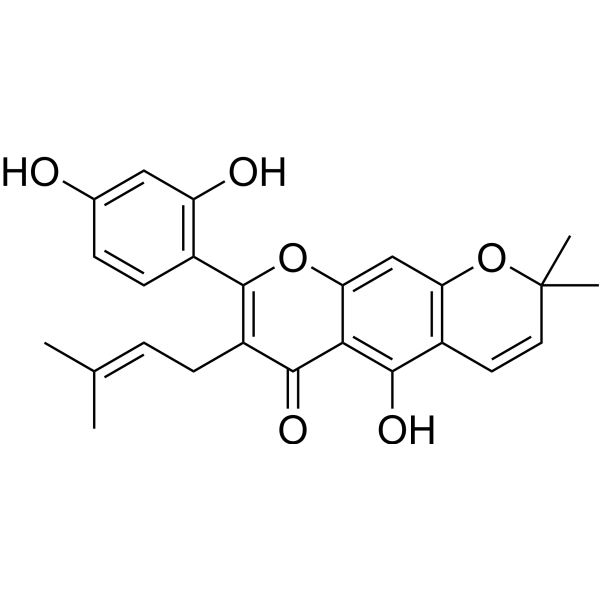 0 ImagesCat. No.: HY-N10009CAS No.: 19275-49-1Cudraflavone B is a prenylated flavonoid with anti-inflammatory and anti-tumor properties. Cudraflavone B is also a dual inhibitor of COX-1 and COX-2. Cudraflavone B blocks the translocation of nuclear factor κB (NF-κB) from the cytoplasm to the nucleus in macrophages. Thus, Cudraflavone B inhibits tumor necrosis factor α (TNFα) gene expression and secretion. Cudraflavone B also triggers the mitochondrial apoptotic pathway, activates NF-κB, the MAPK p38, and ERK, and induced the expression of SIRT1. Thus Cudraflavone B inhibits the growth of human oral squamous cell carcinoma cells.
-
MBL-1
 0 ImagesCat. No.: HY-N6189CAS No.: 1815632-13-3MBL-1 is an orally active anti-inflammatory agent. MBL-1 can be isolated from the fermentation broth of Aspergillus sp. derived from gorgonians. MBL-1 inhibits the activity of the hCOX-2 protein with an IC50 of 5.77 μM. MBL-1 reduces the production of key pro-inflammatory mediators such as NO, ROS, IL-1β and IL-18 by inhibiting the MAPK/NF-κB and NLRP3 signaling pathways. MBL-1 exerts a protective effect against DSS-induced colitis. MBL-1 can be used for the research of ulcerative colitis.
-
2'-Hydroxy-4-methoxychalcone
 0 Images2'-Hydroxy-4-methoxychalcone is a PPARγ agonist. 2'-Hydroxy-4-methoxychalcone also exhibits inhibitory activity against gelatinase/collagenase and human glutathione S-transferase (GST), with an IC50 of 5.2 μM and a Ki of 15.36 μM against GST. 2'-Hydroxy-4-methoxychalcone inhibits both the NF-κB and AP-1 signaling pathways, exerting anti-inflammatory activity; it also inhibits COX-2, conferring anti-cancer/anti-angiogenic activity. 2'-Hydroxy-4-methoxychalcone can be used in studies related to atherosclerosis, inflammatory diseases and cancer.
-
AChE-IN-82
 0 ImagesCat. No.: HY-170938AChE-IN-82 (compound 49) is an acetylcholinesterase (AChE) inhibitor. AChE-IN-82 inhibits eeAChE, eqBChE, hMAO-A, hMAO-B, and BACE-1 with IC50s of 0.072, 9.81, 14.52, 0.024, 2.42 μM, respectively. AChE-IN-82 inhibits COX-1, COX-2 and 5-LOX with IC50s of 60.41, 0.187, 0.18 μM, respectively. AChE-IN-82 shows an excellent neuroprotective effect by significantly reducing oxidative stress induced by H2 O2.
-
Akt/NF-κB/MAPK-IN-1
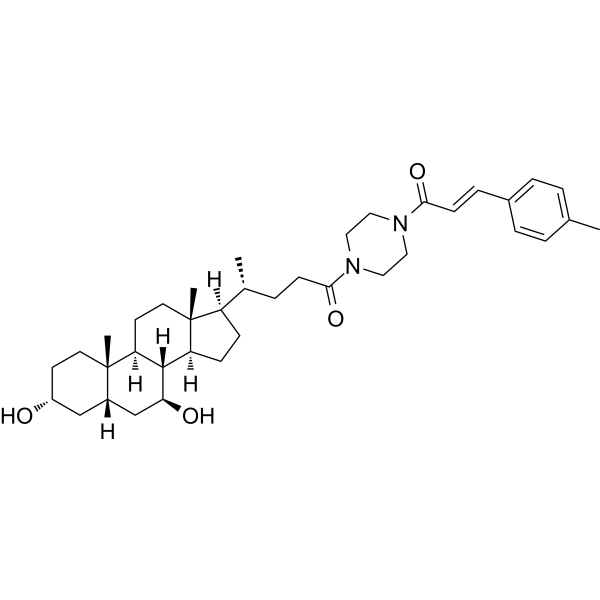 0 ImagesCat. No.: HY-149496CAS No.: 2994215-72-2Akt/NF-κB/MAPK-IN-1 (compound 2m) is a potent and orally active inhibitor against NO (IC50=7.70 μM) with no significant toxicity. Akt/NF-κB/MAPK-IN-1 shows anti-inflammatory activity by inhibiting Akt/NF-κB and MAPK signaling pathways.
-
DPAP
 0 ImagesCat. No.: HY-182899DPAP is a p-ERK1/2 inhibitor with an IC50 of 7.85 μM against p-ERK1/2. DPAP inhibits the expression of p-MEK1/2 and disrupts the Ras-ERK signaling pathway. DPAP inhibits the expression of COX-2 in nerve cells. DPAP damages DNA and mitochondria, induces Apoptosis via the mitochondrial pathway, and upregulates PD-L1. DPAP inhibits melanoma metastasis and angiogenesis, and inactivates spinal microglia and astrocytes. DPAP exhibits anti-melanoma activity and can be combined with anti-PD-1 monoclonal antibodies to modify anti-tumor effects. DPAP is applicable for the research of melanoma.
-
N1-Acetyl-5-methoxykynuramine hydrochloride
 0 ImagesCat. No.: HY-W587743CAS No.: 1215711-91-3Synonyms: AMK hydrochlorideN1-Acetyl-5-methoxykynuramine hydrochloride (AMK hydrochloride) is an active metabolite of Melatonin (HY-B0075) with antioxidant activity and blood-brain barrier permeability. N1-Acetyl-5-methoxykynuramine hydrochloride inhibits LPS-induced activation of inducible nitric oxide synthase and COX-2, scavenges ROS, hydroxyl radicals, carbonate radicals and ABTS cation radicals, and protects bovine serum albumin from peroxyl radical-mediated damage. N1-Acetyl-5-methoxykynuramine hydrochloride reduces the increase in cytoplasmic and mitochondrial lipid peroxidation in the substantia nigra and striatum in MPTP (HY-15608)-induced mouse models of Parkinson's disease. N1-Acetyl-5-methoxykynuramine hydrochloride can be used in studies related to Parkinson's disease, metabolism-related diseases and oxidative stress.
-
(±)-Methotrexate-13C,d3 disodium
 0 ImagesCat. No.: HY-121151S2Synonyms: (±)-Amethopterin-13C,d3 disodium; (±)-CL14377-13C,d3 disodium; (±)-WR19039-13C,d3 disodium(±)-Methotrexate-13C,d3 disodium ((±)-Amethopterin-13C,d3 disodium; (±)-CL14377-13C,d3 disodium; (±)-WR19039-13C,d3 disodium) is the deuterated, 13C-labeled (±)-Methotrexate (HY-121151). (±)-Methotrexate is the racemate of Methotrexate (HY-14519). Methotrexate is an orally active antifolate (Antifolate). Methotrexate inhibits dihydrofolate reductase (DHFR), blocks tetrahydrofolate production, suppresses purine/pyrimidine synthesis and transmethylation, and causes intracellular accumulation of AICAR. Methotrexate promotes extracellular adenosine release, regulates the cytokine network, and inhibits the alarmin function of HMGB1. Methotrexate induces apoptosis and cytotoxicity, upregulates the expression of iNOS and COX-2, suppresses hippocampal neurogenesis, and induces pulmonary fibrosis. Methotrexate is used in the research of various immune and inflammation-related diseases such as arthritis, psoriasis, systemic lupus erythematosus, as well as pulmonary fibrosis and breast cancer.
-
(+)-Lariciresinol 4,4’-O-bis-β-D-glucopyranoside
 0 ImagesCat. No.: HY-N21854CAS No.: 936331-98-5(+)-Lariciresinol 4,4'-O-bis-β-D-glucopyranoside is a COX-2 inhibitor. (+)-Lariciresinol 4,4'-O-bis-β-D-glucopyranoside exhibits inhibitory effects on LPS (HY-D1056)-induced COX-2 activity in mouse peritoneal macrophages and reduces PGE2 levels in the supernatant. (+)-Lariciresinol 4,4'-O-bis-β-D-glucopyranoside can be used for inflammation-related research.
-
1-(2,5-Dihydroxyphenyl)-3-hydroxybutan-1-one
 0 ImagesCat. No.: HY-N19110CAS No.: 1083202-40-71-(2,5-Dihydroxyphenyl)-3-hydroxybutan-1-one is an inhibitor of iNOS and COX-2. 1-(2,5-Dihydroxyphenyl)-3-hydroxybutan-1-one inhibits LPS-induced excessive production of NO and PGE2, as well as the mRNA expression of pro-inflammatory cytokines TNF-α, IL-1β, IL-6 and IL-12. 1-(2,5-Dihydroxyphenyl)-3-hydroxybutan-1-one can be used in inflammation-related research.



