



Caspase
Caspase is a family of cysteine proteases that play essential roles in apoptosis (programmed cell death), necrosis, and inflammation. There are two types of apoptotic caspases: initiator (apical) caspases and effector (executioner) caspases. Initiator caspases (e.g., CASP2, CASP8, CASP9, and CASP10) cleave inactive pro-forms of effector caspases, thereby activating them. Effector caspases (e.g., CASP3, CASP6, CASP7) in turn cleave other protein substrates within the cell, to trigger the apoptotic process. The initiation of this cascade reaction is regulated by caspase inhibitors. CASP4 and CASP5, which are overexpressed in some cases of vitiligo and associated autoimmune diseases caused by NALP1 variants, are not currently classified as initiator or effector in MeSH, because they are inflammatory enzymes that, in concert with CASP1, are involved in T-cell maturation.
Caspase Isoform Specific Products
-
Caspase 1
(79)
View all products
-
Caspase 2
(11)
View all products
-
Caspase 3
(547)
View all products
-
Caspase 4
(11)
View all products
-
Caspase 5
(5)
View all products
-
Caspase 6
(12)
View all products
-
Caspase 7
(108)
View all products
-
Caspase 8
(111)
View all products
-
Caspase 9
(197)
View all products
-
Caspase 10
(6)
View all products
-
Caspase 12
(3)
View all products
-
Caspase
(599)
View all products
-
Caspase 11
(2)
View all products
-
Caspase-13
(1)
View all products
All Product Categories
-
Caspase Inhibitors
(449)
View all products
-
Caspase Agonists
(41)
View all products
-
Caspase Activators
(627)
View all products
-
Caspase Modulators
(48)
View all products
-
Caspase Chemicals
(4)
View all products
-
Caspase MDM2 Inhibitor
(1)
View all products
-
Caspase Inducers
(49)
View all products
-
Caspase Degrader
(1)
View all products
-
Caspase Control
(1)
View all products
-
Caspase Substrates
(4)
View all products
-
Caspase Proteins
(10)
View all products
-
Caspase-1 Proteins
(3)
View all products
-
Caspase-3 Proteins
(3)
View all products
-
Caspase 7 Proteins
(1)
View all products
-
Caspase-8 Proteins
(1)
View all products
-
Caspase-10 Proteins
(1)
View all products
-
Caspase Related Products (1404)
Related Products (1404)

-
Recombinant Proteins (10)
-
Antibodies (35)
-
Caspase Signaling Pathway
-
Caspase Isoform Comparison
-
Lacidipine (Standard)
 0 ImagesLacidipine (Standard) is the analytical standard of Lacidipine. This product is intended for research and analytical applications. Lacidipine is an orally active and highly selective L-type calcium channel blocker that acts on smooth muscle calcium channels, primarily dilates peripheral arteries, reduces peripheral resistance, and has long-lasting anti-hypertensive activity. Lacidipine protects HKCs from apoptosis induced by ATP depletion and recovery by modulating the caspase-3 pathway. Lacidipine can be used in studies of hypertension, atherosclerosis and acute kidney injury (AKI).
-
O6-Benzylguanine sodium
 0 ImagesCat. No.: HY-W002585ACAS No.: 100994-97-6O6-Benzylguanine sodium is an orally active, blood-brain barrier-penetrant inhibitor of O6-methylguanine-DNA methyltransferase (MGMT/AGT). O6-Benzylguanine sodium modulates p53 and its downstream p21 and cyclins to induce cell cycle arrest and apoptosis, and on the other hand activates mTORC1/MAPK and other signaling pathways to induce cellular senescence by inhibiting intracellular MGMT. O6-Benzylguanine sodium is used in research related to various tumors, cellular senescence, and vascular smooth muscle dysfunction.
-
N-(p-Coumaroyl) Serotonin (Standard)
 0 ImagesCat. No.: HY-129440RCAS No.: 68573-24-0N-(p-Coumaroyl) Serotonin (Standard) is the analytical standard of N-(p-Coumaroyl) Serotonin (HY-129440). This product is intended for research and analytical applications. N-(p-Coumaroyl) Serotonin is an orally active polyphenol found in safflower seeds with potent anti-inflammatory, antioxidant, and antitumor activities. N-(p-Coumaroyl) Serotonin suppresses NF‑κB, TLR4/MyD88 and MAPK signaling, activates NQO1/HO‑1 pathways, and inhibits pro‑inflammatory cytokines, iNOS and COX‑2 and ROS production. N-(p-Coumaroyl) Serotonin induces S‑phase arrest and apoptosis in glioblastoma cells, reduces atherosclerotic lesions, and alleviates renal and vascular injuries. N-(p-Coumaroyl) Serotonin acts as a vasodilator, regulates calcium dynamics. N-(p-Coumaroyl) Serotonin can be used for the research of neurodegenerative diseases, atherosclerosis, glioblastoma, and acute renal failure.
-
2'-Deoxyadenosine monohydrate-15N5
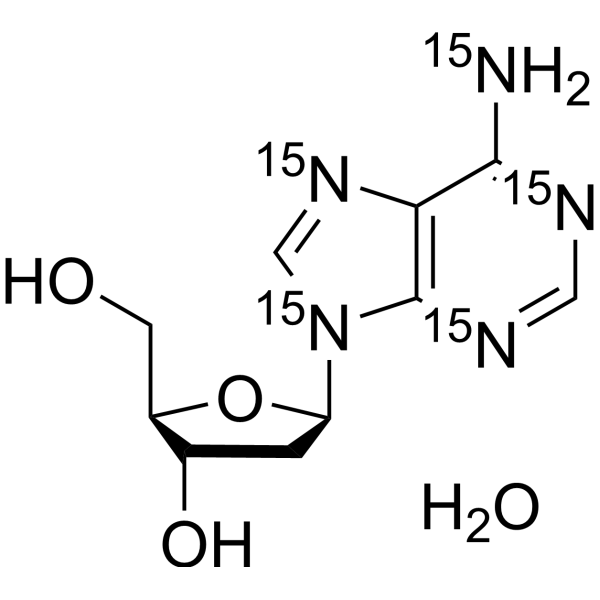 0 ImagesCat. No.: HY-W011683S72'-Deoxyadenosine monohydrate-15N5 is the 15N labeled 2'-Deoxyadenosine monohydrate (HY-W011683). 2′-Deoxyadenosine monohydrate is an adenine nucleoside that inhibits glucose-stimulated insulin release. 2′-Deoxyadenosine monohydrate inhibits glucose-stimulated increases seen in islet cyclic AMP (cAMP) accumulation. 2'-Deoxyadenosine monohydrate activates caspase-3 and promotes apoptosis. 2'-Deoxyadenosine monohydrate inhibits the activity of S-adenosyl-L-homocysteine hydrolase (SAHH). 2'-Deoxyadenosine monohydrate inhibits the growth of various cells. 2'-Deoxyadenosine monohydrate has an anticancer effect on colon cancer.
-
VMY-1-103
 0 ImagesCat. No.: HY-17548CAS No.: 1209002-43-6VMY-1-103 is an inhibitor for cyclin/Cdk complex, that arrests the cell cycle at G1 phase. VMY-1-103 reduces mitochondrial membrane potential, induces p53 phosphorylation and and PARP cleavage, activates caspase-3, and thus induces apoptosis in prostate cancer cell LNCaP.
-
Polyporenic acid C (Standard)
 0 ImagesPolyporenic acid C (Standard) is an analytical standard of Polyporenic acid C (HY-N2993). This product is intended for research and analytical applications. Polyporenic acid C is a lanostane-type triterpenoid. Polyporenic acid C can be isolated from Poria cocos. Polyporenic acid C causes the cleavage of caspase-8 and caspase-3, as well as the cleavage of PARP. Polyporenic acid C reduces the phosphorylation level of Akt (Ser473), increases the phosphorylation of PTEN and p53 (Ser15), and activates JNK. Polyporenic acid C induces Apoptosis. Polyporenic acid C shows anticancer activity against non-small cell lung cancer.
-
Bromuconazole
 0 ImagesCat. No.: HY-W715812CAS No.: 116255-48-2Bromuconazole is a triazole fungicide with oral efficacy and blood-brain barrier permeability. Bromuconazole protects crops from various fungal contaminations. Bromuconazole exhibits cytotoxicity against a variety of cancer cells, induces G0/G1 cell cycle arrest and inhibits DNA synthesis in cancer cells, and triggers cytoskeletal structural disorder, genotoxic damage, apoptotic (apoptosis) cell death, and mitochondrial membrane depolarization. Bromuconazole activates caspase-3, induces excessive production of ROS, p53 and Bax, lipid peroxidation, increased activities of SOD and CAT, and downregulates Bcl-2. By upregulating p-ERK1/2 and p-JNK, Bromuconazole disrupts the MAPK signaling pathway, impairs the cellular stress response of human trophoblast cells and endometrial cells, and damages the implantation process. Bromuconazole is applicable to research related to glioma, colon cancer, reproductive injury (implantation dysfunction), and cardiac dysfunction.
-
ASO-5005
 0 ImagesCat. No.: HY-188137ASO-5005 is a 20-mer Gapmer antisense oligonucleotide modified with locked nucleic acids (LNA), featuring a full phosphorothioate backbone, which targets BCL2 mRNA and BCL2L1 mRNA. ASO-5005 downregulates Bcl-2 expression via an RNase H-dependent mechanism, with its sequence fully complementary to BCL2 mRNA; it simultaneously downregulates Bcl-xL expression via an RNase H-dependent mechanism, with three mismatches between its sequence and BCL2L1 mRNA, while LNA modification enhances its activity against this mismatched target. ASO-5005 induces Apoptosis by activating Caspase-3 and cleaving ICAD. ASO-5005 does not significantly regulate the expression of Bcl-W, Survivin, Akt, or p53 in tumor cells. ASO-5005 can be used for research on breast cancer and non-small cell lung cancer.
-
2-Aminobenzothiazole (Standard)
 0 Images2-Aminobenzothiazole (Standard) is the analytical standard of 2-Aminobenzothiazole. This product is intended for research and analytical applications. 2-Aminobenzothiazole acts as a caspase 3/7 activator, an anticancer cytotoxic agent, and also exhibits neurotoxicity. 2-Aminobenzothiazole drives the apoptotic pathway by activating caspase 3/7, induces mitochondrial inner membrane depolarization, and triggers both early and late apoptosis via a caspase-dependent pathway. In zebrafish models, 2-Aminobenzothiazole induces oxidative damage in brain tissues and inhibits genes related to GABA and 5-HT synthesis pathways. Long-term exposure to 2-Aminobenzothiazole impairs motor ability, social behavior, anxiety-like state and cognitive function. 2-Aminobenzothiazole can be used in studies of human laryngeal carcinoma and related neurotoxicity.
-
Quinidine hydrochloride monohydrate (Standard)
 0 ImagesQuinidine hydrochloride monohydrate (Standard) is the analytical standard of Quinidine hydrochloride monohydrate (HY-B1302). This product is intended for research and analytical applications. Quinidine hydrochloride monohydrate is an orally active antiarrhythmic agent. Quinidine hydrochloride monohydrate reduces the expression level of P-gp, inhibits P-gp-mediated efflux, increases the intracellular accumulation of P-gp substrates, induces PARP cleavage and Caspase-3 activation, and elevates the proportion of Apoptotic cells at the sub-G1 phase. Quinidine hydrochloride monohydrate exerts sustained block and open-channel block effects on IK(f). Quinidine hydrochloride monohydrate alters the urinary metabolic ratio of Amphetamine, modulates the Pentylenetetrazol-induced seizure threshold, and regulates the anticonvulsant effect of Dextromethorphan. Quinidine hydrochloride monohydrate can be used in studies related to uterine sarcoma and seizures.
-
O6-Benzylguanine (Standard)
 0 ImagesO6-Benzylguanine Standard is the analytical standard of O6-Benzylguanine (HY-W002585). This product is intended for research and analytical applications. O6-Benzylguanine is an orally active, blood-brain barrier-penetrant inhibitor of O6-methylguanine-DNA methyltransferase (MGMT/AGT). O6-Benzylguanine modulates p53 and its downstream p21 and cyclins to induce cell cycle arrest and apoptosis, and on the other hand activates mTORC1/MAPK and other signaling pathways to induce cellular senescence by inhibiting intracellular MGMT. O6-Benzylguanine is used in research related to various tumors, cellular senescence, and vascular smooth muscle dysfunction.
-
HTS07944
 0 ImagesCat. No.: HY-137225CAS No.: 706758-28-3Synonyms: HTS07944SCHTS07944 (HTS07944SC, C3) is a potent modulator of laminin receptor (37 LR). HTS07944 (HTS07944SC, C3) possesses anti-cancer activity in PC-3 cells and activates Caspase 3/7.
-
(-)-Isoproterenol
 0 Images(-)-Isoproterenol (Levisoprenalinel) is the R-isomer of Isoproterenol. (-)-Isoproterenol can reduce the cleavage of caspase 3 and TNFα levels in retinal endothelial cells (REC). (-)-Isoproterenol can be used for the study of diabetic retinopathy.
-
Icariside I (Standard)
 0 ImagesSynonyms: Icarisid I (Standard)Icariside I (Standard) is the analytical standard of Icariside I (HY-N1939). This product is intended for research and analytical applications. Icariside I (GH01) is an orally active metabolite of icalin. Icariside I improves estrogen deficiency-induced osteoporosis by simultaneously regulating osteoblast and osteoclast differentiation. Icariside I promotes ATP (HY-B2176) or Nigericin (HY-127019)-induced mtROS production and NLRP3 inflammasome activation and causes idiosyncratic hepatotoxicity. Icariside I does not alter the activation of NLRC4 and AIM2 inflammasomes. Icariside I inhibits breast cancer proliferation, apoptosis, invasion, and metastasis by targeting the IL-6/STAT3 pathway. Icariside I is a kynurenine-AhR pathway inhibitor that alleviates cancer by blocking tumor immune escape.
-
Mofarotene
 0 ImagesCat. No.: HY-127149CAS No.: 125533-88-2Synonyms: Ro 40-8757Mofarotene (Ro 40-8757), an arotinoid, is anticancer compound. Mofarotene induces apoptosis, associated with mitochondrial membrane depolarization, activation of caspase-3 and -9, and enhanced production of reactive oxygen species. Mofarotene inhibits hematopoiesis in vitro by inhibiting maturation from primitive progenitor cells.
-
HDAC-IN-82
 0 ImagesCat. No.: HY-169922HDAC-IN-82 (Compound 18b) is a histone deacetylase (HDAC) inhibitor with selective antiplasmodial and anticancer activity. HDAC-IN-82 shows potent antiproliferative activity and caspase 3/7 activation in cancer cells. HDAC-IN-82 causes hyperacetylation of histone H3 and α-tubulin.
-
Tauroursodeoxycholate dihydrate (Standard)
 0 ImagesSynonyms: Tauroursodeoxycholic acid dihydrate (Standard); TUDCA dihydrate (Standard); UR 906 dihydrate (Standard)Tauroursodeoxycholate (dihydrate) (Standard) is the analytical standard of Tauroursodeoxycholate (dihydrate). This product is intended for research and analytical applications. Tauroursodeoxycholate (Tauroursodeoxycholic acid; TDUCA) dihydrate is an endoplasmic reticulum (ER) stress inhibitor. Tauroursodeoxycholate significantly reduces expression of apoptosis molecules, such as caspase-3 and caspase-12. Tauroursodeoxycholate also inhibits ERK.
-
DPQZ
 0 ImagesCat. No.: HY-116664CAS No.: 1431362-93-4
-
Nivitol
 0 ImagesCat. No.: HY-108046CAS No.: 869743-37-3Synonyms: UP302Nivitol (UP302) is a natural phenolic compound discovered from Dianella ensifolia and also acts as a Tyrosinase inhibitor. Nivitol competitively and reversibly inhibits tyrosinase, suppressing melanin production. Nivitol inhibits homogentisate 1,2-dioxygenase (HGD). In human leukemia cells, Nivitol inhibits PI3K/AKT pathway phosphorylation, increases ROS, decreases mitochondrial membrane potential, and induces G2/M cell cycle arrest, apoptosis, and PINK1/Parkin-mediated mitophagy. Nivitol exhibits inhibition of tumor growth in the MV411 xenograft mouse model. Nivitol is used for research on exogenous ochronosis, hyperpigmentation, and leukemia.
-
NCP26
 0 ImagesCat. No.: HY-183004CAS No.: 2396683-89-7NCP26 is an ATP-competitive ProRS inhibitor (with a KD of 271 nM in the absence of proline, and a KD of 0.35 nM in the presence of 100 μM proline). NCP26 activates AAR, induces G0/G1 phase arrest, Apoptosis, Caspase cleavage, and PARP cleavage. NCP26 downregulates MYC, TCF3, and CCND1. NCP26 inhibits the growth of multiple myeloma cells. NCP26 can be used for the research of multiple myeloma.




