



HSP Inhibitor
-
CH5015765
 0 Images
CH5015765 is an orally available Hsp90 inhibitor bound to the N-terminal ATP binding site, with a dissociation constant of 3.4 nM, CH5015765 exerts antiproliferative activity against human cancer cell lines, with IC50 values of 0.46 μM for HCT116 colorectal cancer cells and 0.57 μM for NCI-N87 gastric cancer cells. CH5015765 can be used for the study of cancer.
-
Apatorsen
 0 ImagesSynonyms: OGX-427
Apatorsen is a 2'-methoxyethyl-modified antisense oligonucleotide and also a Hsp27 inhibitor. Apatorsen reduces Hsp27 mRNA and protein levels, impairs stress-induced cytoprotective functions, induces cell apoptosis, inhibits tumor growth and prevents metastasis. Apatorsen is applicable to research related to non-small cell lung cancer, castration-resistant prostate cancer, breast cancer, ovarian cancer and bladder cancer.

-
2-Chloro-ADP sodium solution (10 mM)
 0 ImagesCat. No.: HY-131776ACAS No.: 82927-78-4Synonyms: 2-Chloroadenosine 5′-diphosphate sodium solution (10 mM)
2-Chloro-ADP (2-Chloroadenosine 5′-diphosphate) sodium (10 mM) is a Adenosine 5'-diphosphate (ADP; HY-W010918) derivative that induces human platelet aggregation and inhibits stimulated adenylate cyclase. 2-Chloro-ADP sodium (10 mM) inhibits mortalin nucleotide-binding domain (NBD) with a Ki of 45.05 μM.
-
Geldanamycin (Standard)
 0 Images
Geldanamycin (Standard) is the analytical standard of Geldanamycin. This product is intended for research and analytical applications. Geldanamycin is a Hsp90 inhibitor with antimicrobial activity against many Gram-positive and some Gram-negative bacteria. Geldanamycin has anti-influenza virus H5N1 activities.
-
[Au(TPP)]Cl
![[Au(TPP)]Cl](https://file.medchemexpress.com/product_pic/hy-w854649.gif "Click to View [Au(TPP)]Cl Product Detail") 0 ImagesCat. No.: HY-W854649CAS No.: 15695-27-9
0 ImagesCat. No.: HY-W854649CAS No.: 15695-27-9[Au(TPP)]Cl inhibits the refolding activity of the Hsp60-Hsp10 complex with significant anticancer activities.
-
Anti-Human/Mouse GRP78 Antibody (C38)
 0 ImagesCat. No.: HY-P990805
Anti-Human/Mouse GRP78 Antibody (C38) is a kind of mouse IgG2b antibody inhibitor, targeting to GRP78. Anti-Human/Mouse GRP78 Antibody (C38) inhibits RhoA, ROCK and AKT activation. Anti-Human/Mouse GRP78 Antibody (C38) can be used for the researches of cancer and metabolic disease, such as melanoma and diabetes.
-
BAG3/HSP70-IN-1
 0 ImagesCat. No.: HY-170944
BAG3/HSP70-IN-1 (compound 16) is the first-in-class BAG3 and HSP70 dual inhibitor. BAG3/HSP70-IN-1 binds to BAG3 full-length, BAG3-BD, and HSP70 proteins with Kds of 33.10 μM, 27.90 μM, and 33.80 μM, respectively. BAG3/HSP70-IN-1 inhibits HeLa cells with an IC50 of 49.46 μM. BAG3/HSP70-IN-1 induces apoptosis by activating caspase 3 and caspase 9 levels in HeLa cells. BAG3/HSP70-IN-1 elevates p21 levels while reduces FOXM1 expression in HeLa cells. BAG3/HSP70-IN-1 decreases ATPase activity.
-
HSP90/mTOR-IN-1
 0 ImagesCat. No.: HY-151137CAS No.: 3033543-67-5
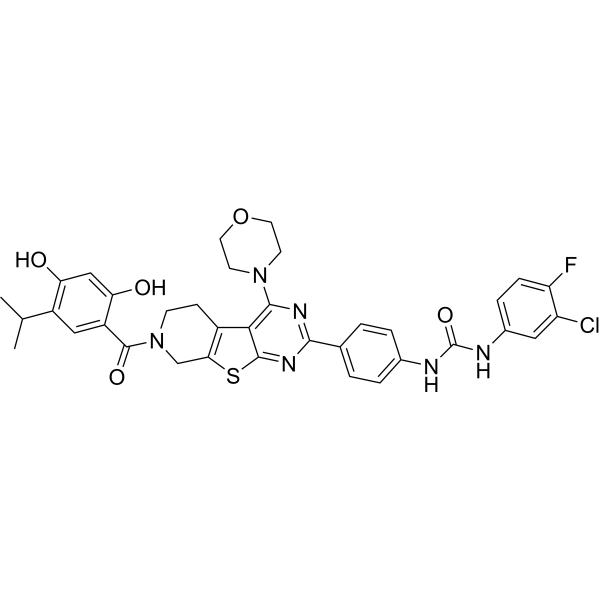
HSP90/mTOR-IN-1 is a potent and orally active Hsp90 and mTOR inhibitor with IC50 values of 69 nM and 29 nM, respectively. HSP90/mTOR-IN-1 suppresses the proliferation of SW780 cells through the over-activation of the PI3K/AKT/mTOR pathway. HSP90/mTOR-IN-1 induces apoptosis and autophagy via selective Hsp90 and mTOR inhibition. HSP90/mTOR-IN-1 also has considerable in vivo anti-tumor activity. HSP90/mTOR-IN-1 can be used for researching bladder cancer.
-
BOLD-100 free base
 0 ImagesCat. No.: HY-147039CAS No.: 783324-98-1Synonyms: NKP-1339 free base; IT-139 free base; KP-1339 free base
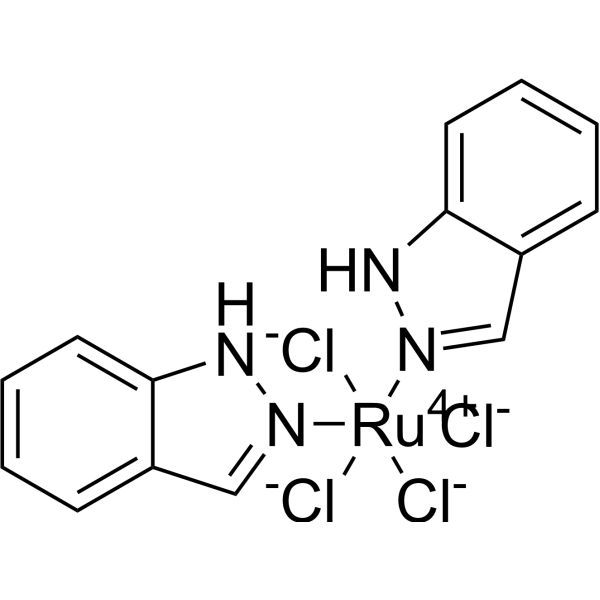
BOLD-100 (NKP-1339; IT-139) free base is a ruthenium-based anticancer agent. BOLD-100 free base also is an inhibitor of stress-induced GRP78 upregulation, disrupting endoplasmic reticulum (ER) homeostasis and inducing ER stress and unfolded protein response (UPR). BOLD-100 free base interferes with the complex interplay between ER-stress response, lysosome dynamics, and autophagy execution.
-
Onalespib lactate
 0 ImagesCat. No.: HY-113916CAS No.: 1019889-35-0Synonyms: AT13387 lactate
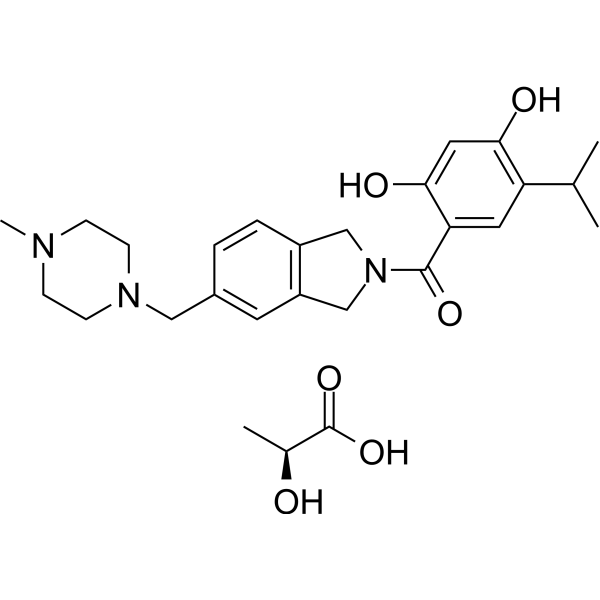
Onalespib lactate is a potent and cross the blood-brain barrier heat-shock-protein-90 (Hsp90) inhibitor with an Kd value of 0.71 nM. Onalespib lactate inhibits the proliferation, survival and migration. Onalespib lactate decreases the expression of EGFR, p-EGFR, AKT, P-AKT, ERK1/2, P-ERK1/2, S6, P-S6 protein. Onalespib lactate shows antitumor activity. Onalespib lactate has the potential for the research of non-small cell lung cancer (NSCLC).
-
SNX-7081
 0 ImagesCat. No.: HY-111165CAS No.: 908111-22-8
SNX-7081 is an Hsp90 inhibitor with Ki and IC50 values of 26 nM and 44 nM, respectively. SNX-7081 blocks the nuclear translocation of NF-κB, inhibits the production of pro-inflammatory cytokines, attenuates the ERK/JNK and PDGF signaling pathways, and suppresses LPS (HY-D1056)-induced nitric oxide production. SNX-7081 inhibits DNA repair, induces G2/M cell cycle arrest, and triggers apoptosis via downregulation of MYC/nucleolin and activation of Fas. SNX-7081 can be used in research related to rheumatoid arthritis and cancer.
-
KUNG94
 0 ImagesCat. No.: HY-119732CAS No.: 2134571-29-0
KUNG94 is a selective Grp94/HSP90B inhibitor (IC50=8 nM). By inhibiting the chaperone function of Grp94, KUNG94 reduces the maturation and cell surface trafficking of its specific client proteins. KUNG94 can be used for studies on Grp94-related biological mechanisms, as well as diseases including cancer and primary open-angle glaucoma.
-
Cemdomespib
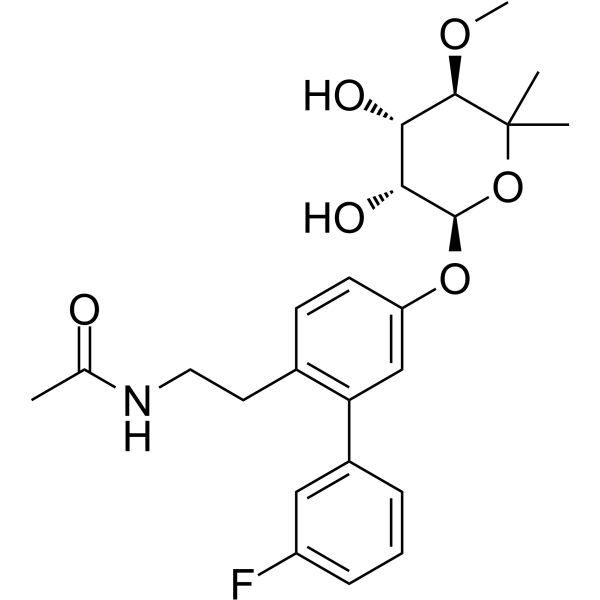 0 ImagesCat. No.: HY-145559CAS No.: 1450642-92-8Synonyms: KU-596
Cemdomespib (KU-596) is a highly bioavailable second-generation Hsp90 modulator. Cemdomespib has shown efficacy in improving sensory deficits in models of diabetic peripheral neuropathy. Cemdomespib induces Hsp70 levels and manifest neuroprotective activity through induction of the heat shock response.
-
Hsp110/HDAC6-IN-1
 0 ImagesCat. No.: HY-183985
Hsp110/HDAC6-IN-1 is an orally active Hsp110/HDAC6 dual inhibitor. Hsp110/HDAC6-IN-1 disrupts Hsp110-STAT3 protein-protein interaction, suppresses HDAC6 enzymatic activity, and suppresses STAT3 signaling pathway. Hsp110/HDAC6-IN-1 inhibits abnormal proliferation and migration of human pulmonary arterial endothelial cells, and suppresses pulmonary vascular remodeling in rats. Hsp110/HDAC6-IN-1 can be used for the research of pulmonary arterial hypertension.
-
Apidaecin IA
 0 ImagesCat. No.: HY-P5721CAS No.: 123081-48-1
Apidaecin IA is a basic peptide. Apidaecin IA inhibits the enzymatic activity of DnaK. Apidaecin IA induces bacterial cell death. Apidaecin IA can be used in research related to peritonitis and bacterial infections.
-
1,6-Dimethoxyhexane
 0 ImagesCat. No.: HY-W275882CAS No.: 13179-98-1
1,6-Dimethoxyhexane is an aliphatic ether that serves as a PROTAC linker and fuel additive. 1,6-Dimethoxyhexane is an orally active testicular toxicant. It has no direct toxicity on its own, but exerts toxicity after oxidative metabolism by liver/testicular microsomes to produce 2-Methoxyacetic Acid (MAA). 1,6-Dimethoxyhexane induces apoptosis/necrosis of pachytene spermatocytes, downregulates the expression of HSP70.2, HSP60 and ERp60/PDI A3, and causes spermatogenic tubule degeneration, testicular/thymic atrophy, a sharp decline in epididymal sperm density, and other effects. 1,6-Dimethoxyhexane can be used in studies related to testicular toxicity.
-
GRP78-IN-2
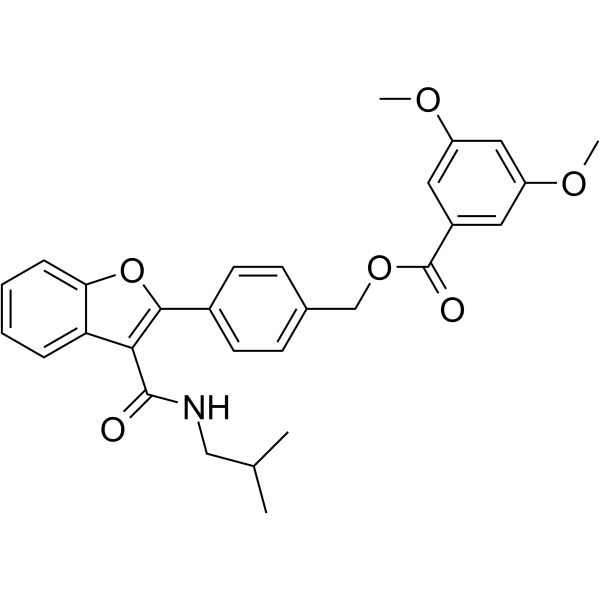 0 ImagesCat. No.: HY-146420CAS No.: 1882875-63-9
GRP78-IN-2 (Compound FL5) is a GRP78 (Glucose Regulated Protein 78 kDa) inhibitor. GRP78-IN-2 preferentially targeting cell surface GRP78 and shows potent antiangiogenic and anticancer activities without affecting other normal cells.
-
NDNA4
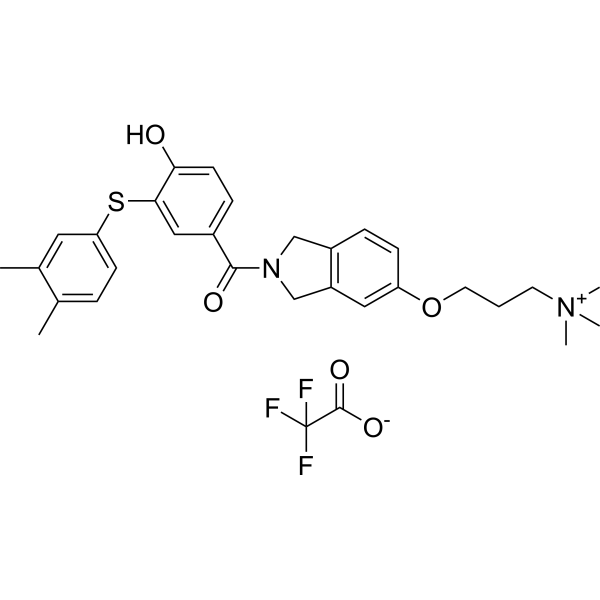 0 ImagesCat. No.: HY-149431
NDNA4 (compound 17) is a selective inhibitor of Hsp90α (IC50: 0.34 μM). NDNA4 is a permanently charged analog with low membrane permeability and low cytotoxicity against Ovcar-8 and MCF-10A ((IC50 >100 μM)). NDNA4 prevents disruption of hERG channel maturation without generating a heat shock response or causing degradation of Hsp90α-dependent client proteins.
-
KHS101
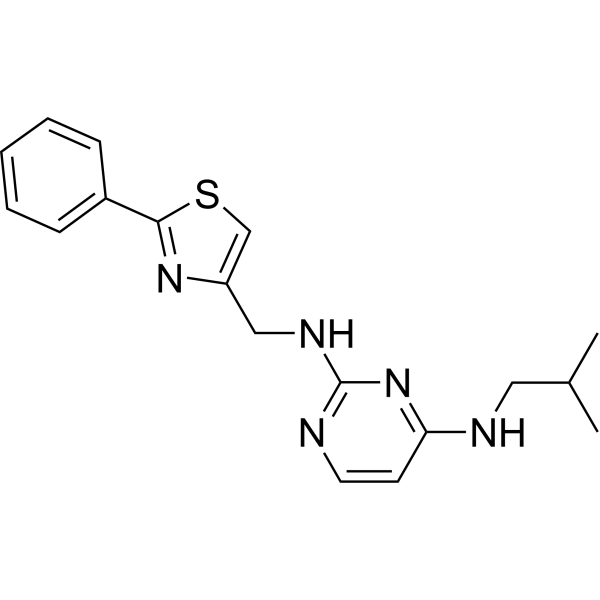 0 ImagesCat. No.: HY-10996CAS No.: 1262770-73-9
KHS101 is a blood-brain barrier-penetrant anticancer agent that primarily functions by inhibiting HSPD1 (IC50 = 14.4 μM) and TACC3 across different cellular backgrounds. KHS101 promotes the aggregation of HSPD1 with client proteins, destabilizes TACC3, and reduces the levels of TACC3, Aurora A and PLK1. KHS101 induces autophagy, apoptosis, cell cycle exit and neuronal differentiation; it suppresses cancer cell growth, motility, EMT and stemness; it also impairs mitochondrial bioenergetics and glycolysis in glioblastoma cells. KHS101 can be used in research related to glioblastoma multiforme and breast cancer.



