



HSP90
Heat shock protein 90 (HSP90) functions as an ATP-dependent molecular chaperone that regulates the folding, stability, and activity of numerous signaling proteins[1][2]. HSP90 participates in essential cellular processes, including signal transduction, cell cycle control, stress management, and protein quality control, and operates in coordination with HSP70, HSP40, and co-chaperones such as Hop and p23 to ensure proper client maturation[3][4][5][6]. The cytosolic isoforms, HSP90α and HSP90β, exhibit distinct biological roles: HSP90β is constitutively expressed and critical for cellular survival, whereas HSP90α is stress-inducible and supports extracellular functions under pathological conditions[3][2][7]. Mechanistically, HSP90 interacts with clients by recognizing hydrophobic residues across multiple domains, and its chaperone activity is fine-tuned by tetratricopeptide repeat (TPR) domain-containing co-chaperones and post-translational modifications[3][2][8]. In disease models, HSP90 supports oncogenic signaling, promotes metastasis via extracellular HSP90α-mediated MMP-2 activation, and regulates protein homeostasis in neurodegenerative and renal stress conditions[9][10][11][7]. Compared with HSP90α, HSP90β shows higher structural stability, distinct thermal unfolding properties, and isoform-specific interactions with selective clients, which are exploited in experimental pharmacological interventions[2][7][12]. Selective inhibitors targeting HSP90β demonstrate therapeutic potential by modulating protein folding and proteostasis while minimizing compensatory HSP90α upregulation and extracellular secretion[7][13]. Overall, understanding isoform-specific mechanisms and co-chaperone interactions facilitates the rational design of HSP90-targeted research and therapeutic strategies[14][3].
References:
- [1]. Young JC, et al. Hsp90: a specialized but essential protein-folding tool. J Cell Biol. 2001 Jul 23;154(2):267-73. [Content Brief]
- [2]. Karagöz GE, et al. Hsp90 interaction with clients. Trends Biochem Sci. 2015 Feb;40(2):117-25. [Content Brief]
- [3]. Ausili A. Despite their structural similarities, et al. Despite their structural similarities, the cytosolic isoforms of human Hsp90 show different behaviour in thermal unfolding due to their conformation: An FTIR study. Arch Biochem Biophys. 2023 May 15;740:109599. [Content Brief]
- [4]. Assimon VA, et al. Specific Binding of Tetratricopeptide Repeat Proteins to Heat Shock Protein 70 (Hsp70) and Heat Shock Protein 90 (Hsp90) Is Regulated by Affinity and Phosphorylation. Biochemistry. 2015 Dec 8;54(48):7120-31. [Content Brief]
- [5]. Albakova Z. HSP90 multi-functionality in cancer. Front Immunol. 2024 Aug 1;15:1436973. doi: 10.3389/fimmu.2024.1436973. PMID: 39148727; PMCID: PMC11324539. et al. HSP90 multi-functionality in cancer. Front Immunol. 2024 Aug 1;15:1436973. [Content Brief]
- [6]. Rabezanahary H, et al. Live virus neutralizing antibodies against pre and post Omicron strains in food and retail workers in Québec, Canada. Heliyon. 2024 May 21;10(10):e31026. [Content Brief]
- [7]. Chang C, et al. The Distinct Assignments for Hsp90α and Hsp90β: More Than Skin Deep. Cells. 2023 Jan 11;12(2):277. [Content Brief]
- [8]. Sims JD, et al. Extracellular heat shock protein (Hsp)70 and Hsp90α assist in matrix metalloproteinase-2 activation and breast cancer cell migration and invasion. PLoS One. 2011 Apr 14;6(4):e18848. [Content Brief]
- [9]. Donnelly BF, et al. Hsp70 and Hsp90 multichaperone complexes sequentially regulate thiazide-sensitive cotransporter endoplasmic reticulum-associated degradation and biogenesis. J Biol Chem. 2013 May 3;288(18):13124-35. [Content Brief]
- [10]. Chen B, et al. Comparative genomics and evolution of the HSP90 family of genes across all kingdoms of organisms. BMC Genomics. 2006 Jun 17;7:156. [Content Brief]
- [11]. Chaudhury S, et al. The Hsp90β Isoform: An Attractive Target for Drug Development. Med Res Rev. 2025 Sep;45(5):1452-1465. [Content Brief]
- [12]. El-Kasaby A, et al. A cytosolic relay of heat shock proteins HSP70-1A and HSP90β monitors the folding trajectory of the serotonin transporter. J Biol Chem. 2014 Oct 17;289(42):28987-9000. [Content Brief]
- [13]. Morishima Y, et al. The hsp90 cochaperone p23 is the limiting component of the multiprotein hsp90/hsp70-based chaperone system in vivo where it acts to stabilize the client protein: hsp90 complex. J Biol Chem. 2003 Dec 5;278(49):48754-63. [Content Brief]
- [14]. Vogt M, et al. Co-targeting HSP90 alpha and CDK7 overcomes resistance against HSP90 inhibitors in BCR-ABL1+ leukemia cells. Cell Death Dis. 2023 Dec 6;14(12):799. [Content Brief]
-
HSP90 Related Products (157)
Related Products (157)

-
Antibodies (2)
-
Hsp90-IN-44
 0 ImagesCat. No.: HY-177875CAS No.: 934346-12-0
-
17-AEP-GA
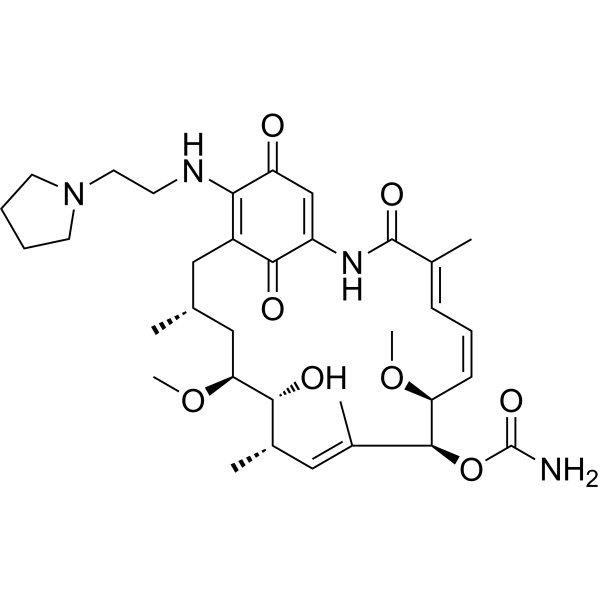 0 ImagesCat. No.: HY-133570CAS No.: 75747-23-817-AEP-GA, an HSP90 antagonist, is a potent inhibitor of glioblastoma cell proliferation, survival, migration and invasion. ADCs Toxin.
-
HDAC6/HSP90-IN-1
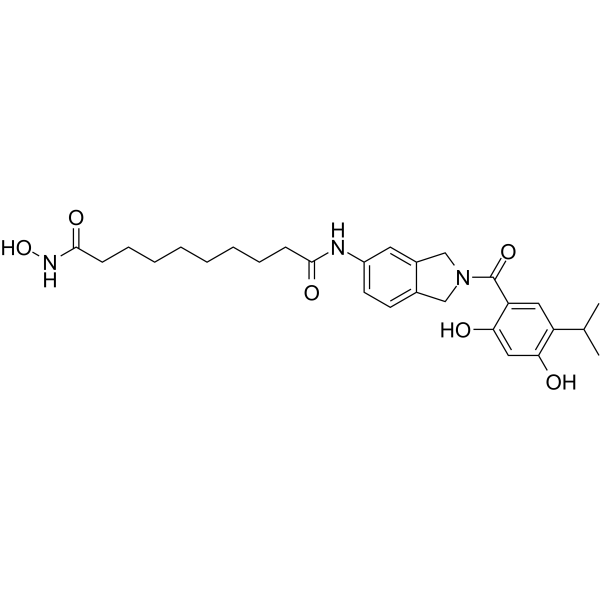 0 ImagesCat. No.: HY-146293CAS No.: 2411955-43-4HDAC6/HSP90-IN-1 (compound 17) is a potent and selective dual inhibitor of HDAC6 and HSP90, with IC50 values of 4.3 and 46.8 nM, respectively. HDAC6/HSP90-IN-1 down-regulates PD-L1 expression in INF-γ treated H1975 lung cancer cells. HDAC6/HSP90-IN-1 inhibits tumor growth in human H1975 xenograft mice.
-
HDAC6/HSP90-IN-3
 0 ImagesCat. No.: HY-175467HDAC6/HSP90-IN-3 (Compound 17) is an orally active dual histone deacetylase 6 (HDAC6) and heat shock protein 90 (HSP90) inhibitor with IC50 values of 28 nM and 0.88 μM, respectively. HDAC6/HSP90-IN-3 is promising for research of malignant tumors such as prostate cancer.


-
17-GMB-APA-GA
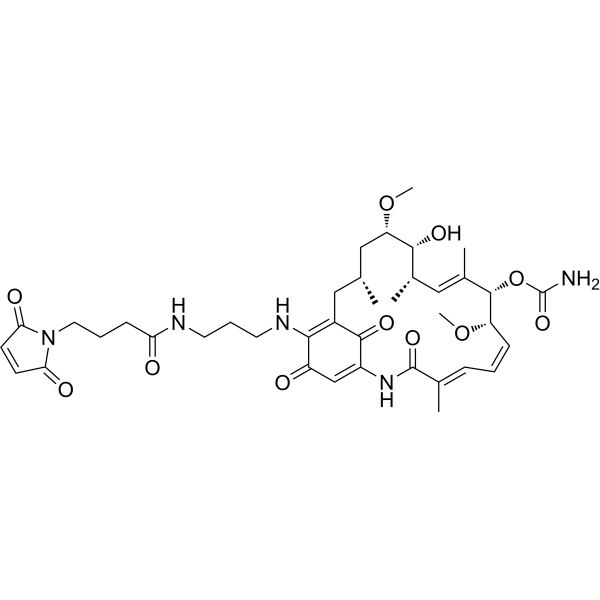 0 ImagesCat. No.: HY-130997CAS No.: 256337-10-7
-
HSP90-IN-14
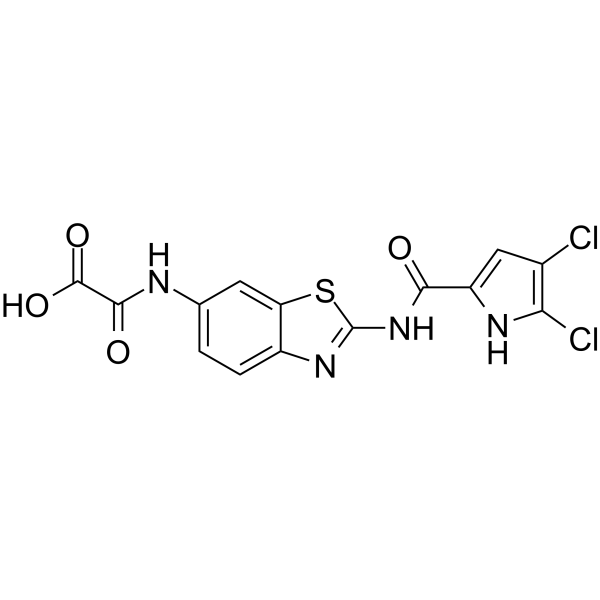 0 ImagesCat. No.: HY-147974CAS No.: 1995132-67-6HSP90-IN-14 (compound 4) is a potent Hsp90 (heat shock protein 90) inhibitor, with a Kd of 0.26 μM. HSP90-IN-14 shows anti-influenza virus activity in MDCK cells, with EC50 values of 2.6, 3.9, and 17 μM for influenza A/H3N2, A/H1N1, and B, respectively.
-
AChE/BChE-IN-37
 0 ImagesCat. No.: HY-183760AChE/BChE-IN-37 is a blood-brain barrier-permeable AChE/BChE inhibitor, with an IC50 of 73.65 μM against electric eel-derived AChE and an IC50 of 82.93 μM against horse-derived BChE. AChE/BChE-IN-37 exhibits chelating activity towards Cu2+, Ca2+, Mg2+, Fe2+ and Zn2+. AChE/BChE-IN-37 interacts with HSP90AA1 and GSK-3β. AChE/BChE-IN-37 inhibits the self-induced aggregation of Aβ1-42. AChE/BChE-IN-37 suppresses LPS-induced NO production in cells. AChE/BChE-IN-37 can be used in research related to Alzheimer's disease and inflammatory diseases.
-
DDO-6691
 0 ImagesCat. No.: HY-176404CAS No.: 2640292-52-8DDO-6691 is a heat shock protein 90 (HSP90) inhibitor. DDO-6691 has antiproliferative effects on a variety of tumor cells, with HCT-116 colon cancer cells being the most sensitive (IC50: 1.08 μM). DDO-6691 exhibits potent tumor growth inhibition in the HCT-116 xenograft mouse model.
-
HSF1-IN-3
 0 ImagesCat. No.: HY-184309HSF1-IN-3 is a heat shock transcription factor 1 (HSF1) inhibitor with a Kd value of 23.8 μM against HSF1-DBD. HSF1-IN-3 inhibits the proliferation of cancer cells and induces their apoptosis, with stronger activity in androgen-dependent prostate cancer cells. HSF1-IN-3 reduces the expression of HSP70 and HSP90, downstream effectors of HSF1, and attenuates HSE-driven transcriptional activity. HSF1-IN-3 can be used in the research of cancers such as prostate cancer and leukemia.
-
PU24FCl
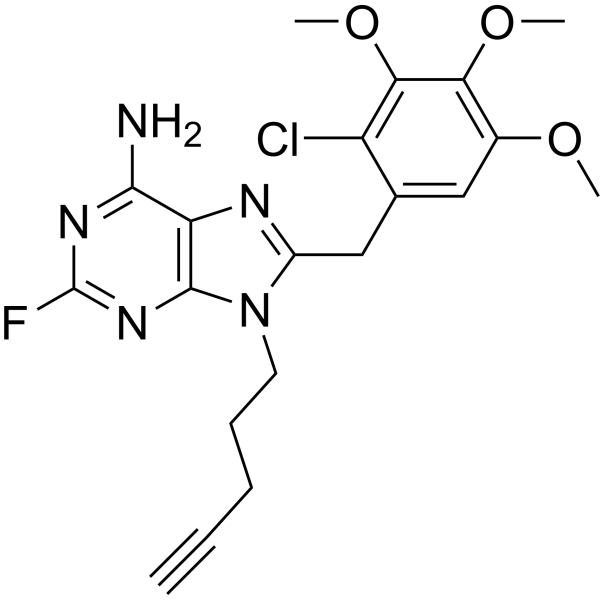 0 ImagesCat. No.: HY-11039CAS No.: 422508-46-1
-
GUT-70
 0 ImagesCat. No.: HY-120923CAS No.: 161633-75-6GUT-70, a tricyclic coumarin, is a Hsp90 inhibitor. GUT-70 activates the caspase 2, 3, 8 and 9, and induces the apoptosis in leukemic cells. GUT-70 inhibits HIV-1 replication in chronically infected cells via suppression of the NF-κB pathway. GUT-70 can be used for the study of leukemic, mantle cell lymphoma (MCL) and HIV-1 infection.
-
NBE5
 0 ImagesCat. No.: HY-181907NBE5 is an orally active hydrophobic tag-targeting (Hyt) degrader (HyTTD) that targets Keap1. NBE5 mimics protein misfolding and recruits the molecular chaperone Hsp90, while achieving targeted degradation of Keap1 through both the ubiquitin-proteasome system and the autophagy-lysosome system. Consequently, NBE5 relieves the inhibition of the transcription factor Nrf2 by Keap1, potently activates the Nrf2-mediated endogenous antioxidant pathway, and upregulates the expression of downstream antioxidant proteins such as HO-1 and GCLM. NBE5 effectively alleviates oxidative stress and inflammatory damage, and exhibits excellent in vivo activity in a mouse model of acute colitis induced by DSS (HY-116282C).
NBE5 consists of a hydrophobic tag (HY-W022007), a Keap1-Nrf2 ligand (HY-14909), and a linker (HY-W014831).
-
PKHB1
 0 ImagesSynonyms: txCD47PKHB1 (txCD47) is a CD47 agonist and Thrombospondin-1 peptide mimetic. PKHB1 activates CD47 and triggers Caspase-independent, calcium-dependent cell death via mitochondrial alterations, ROS production, endoplasmic reticulum morphological changes, and dissipation of mitochondrial membrane potential. PKHB1 induces the exposure of Calreticulin, HSP70, and HSP90, thereby driving immunogenic cell death. PKHB1 promotes intratumoral CD8+ T cell infiltration and inhibits breast tumorigenesis. PKHB1 reduces HSV-1 levels and alleviates the severity of herpes simplex keratitis. PKHB1 can be used in research related to breast cancer, herpes simplex keratitis, and T-cell acute lymphoblastic leukemia.
-
CC-11
 0 ImagesCat. No.: HY-179457CAS No.: 3079942-94-9CC-11 is an orally active small molecule drug conjugate (SMDC) that links the PI3K/mTOR inhibitor with the extracellular heat shock protein 90 (EHSP90) targeting ligand through a cleavable linker. CC-11 exhibits strong HSP90 binding activity (IC50 = 15 nM) and inhibits PI3Kα kinase activity (IC50 = 0.54 nM). CC-11 has anti-proliferative activity against colon cancer cells. CC-11 shows significant efficacy in the HCT-116 xenograft tumor model. CC-11 can be used for research on colon cancer.
-
5-Iodo-BIIB021
 0 ImagesCat. No.: HY-W437598CAS No.: 911397-54-1
-
Hsp90-IN-45
 0 ImagesCat. No.: HY-181478Hsp90-IN-45 is a Hsp90 inhibitor. Hsp90-IN-45 competitively binds to the ATP-binding site of purified Hsp90α with a Kd of 70 nM, blocks ATP hydrolysis, and disrupts Hsp90 client signaling. Hsp90-IN-45 inhibits ATPase activity of purified Hsp90α. Hsp90-IN-45 will be radiolabeled with 76/77Br for use as a radiotheragnostic agent for PET imaging and Meitner-Auger electron therapy. Hsp90-IN-45 can be used for the research of cancer.
-
MRLB-223
 0 ImagesCat. No.: HY-124792CAS No.: 937727-03-2MRLB-223 is a preferential HDAC1 and HDAC2 inhibitor with activity against tumor cells.MRLB-223 induces histone hyperacetylation, intrinsic apoptotic pathway activation, tumor cell apoptosis, Hsp90 hyperacetylation, and caspase-dependent Bcr-Abl degradation.MRLB-223 mediates p53-independent tumor cell death, with activity suppressed by Bcl-2 overexpression, and kills Bcr-Abl-expressing myeloid cells.MRLB-223 exerts effects in mice bearing Eμ-myc lymphomas.MRLB-223 can be used for the research of Eμ-myc lymphoma.




