



HSV
Herpes simplex virus
HSV (Herpes simplex virus) can be spread when an infected person is producing and shedding the virus. Herpes simplex can be spread through contact with saliva, such as sharing drinks. Symptoms of herpes simplex virus infection include watery blisters in the skin or mucous membranes of the mouth, lips or genitals. Lesions heal with ascab characteristic of herpetic disease. As neurotropic and neuroinvasive viruses, HSV-1 and -2 persist in the body by becoming latent and hiding from the immune system in the cell bodies of neurons. After the initial or primary infection, some infected people experience sporadic episodes of viral reactivation or outbreaks.
HSV Isoform Specific Products
All Product Categories
-
HSV Related Products (362)
Related Products (362)

-
HSV Isoform Comparison
-
AT-533
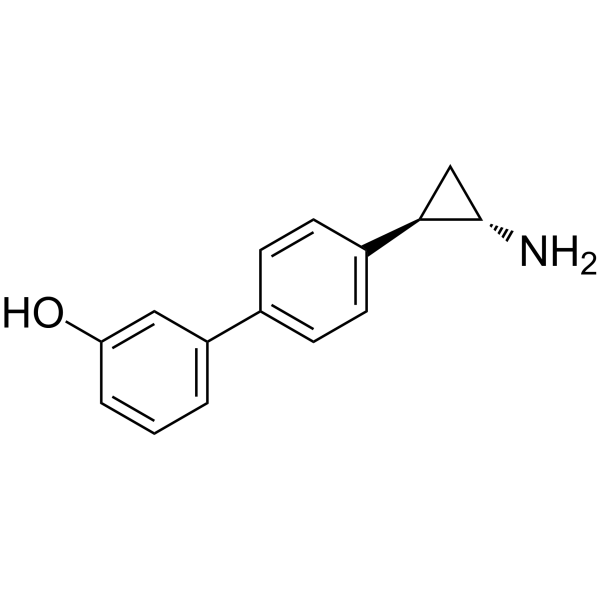
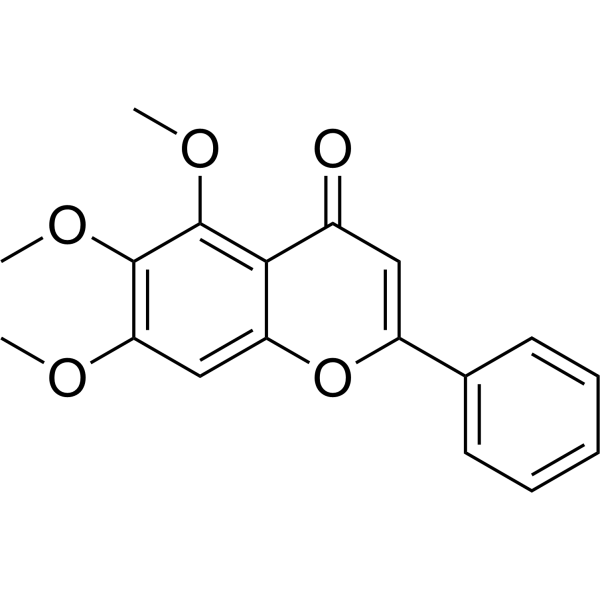
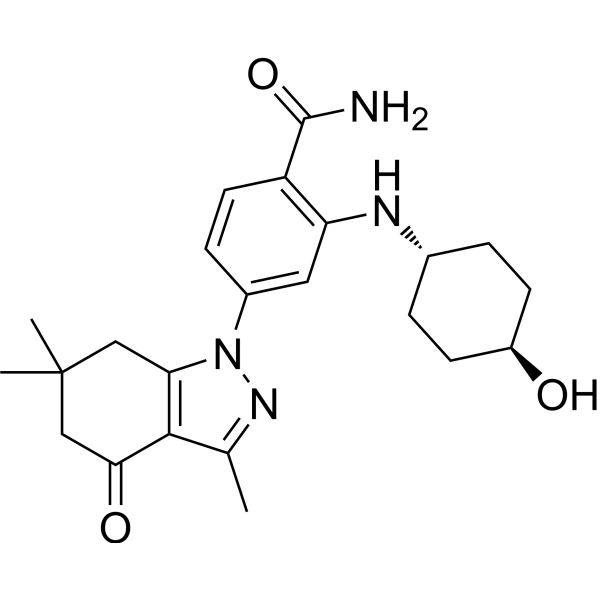 0 ImagesAT-533 is a potent Hsp90 and HSV inhibitor. AT-533 suppresses tumor growth and angiogenesis by blocking the HIF-1α/VEGF/VEGFR-2 signaling pathway. AT-533 also inhibits the activation of the downstream pathways, including Akt/mTOR/p70S6K, Erk1/2 and FAK. AT-533 inhibits the tube formation, cell migration, and invasion of human umbilical vein endothelial cells (HUVECs).
-
Ganciclovir triphosphate disodium solution (100 mM ± 3 mM)
 0 ImagesCat. No.: HY-131605BPurity: 98.65%Synonyms: GCV-TP disodiumGanciclovir triphosphate disodium solution (100 mM ± 3 mM) (GCV-TP disodium) is a competitive DNA polymerase inhibitor and a metabolite of Ganciclovir (HY-13637). Ganciclovir triphosphate disodium solution (100 mM ± 3 mM) can replace Guanine-5'-triphosphate to terminate DNA chain extension, and mimics dGTP (HY-138616) to compete with mammalian DNA polymerases. Ganciclovir triphosphate disodium solution (100 mM ± 3 mM) can be used in research related to HSV infection, retinoblastoma, glioblastoma and colorectal cancer.
-
Moroxydine hydrochloride
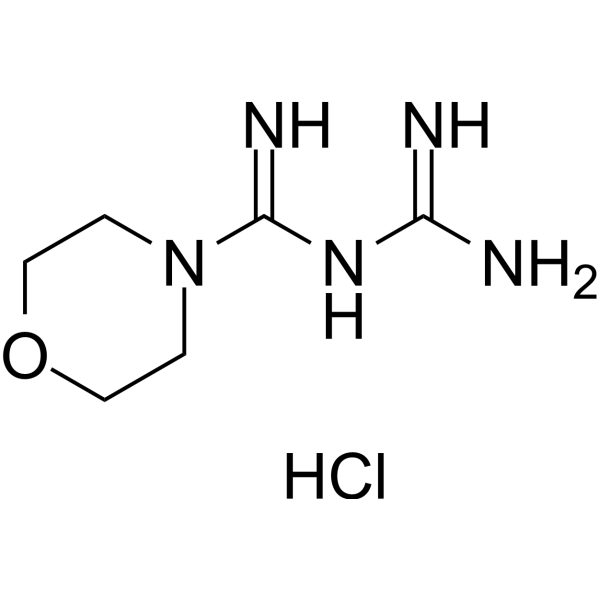 0 ImagesMoroxydine (ABOB) hydrochloride is a broad-spectrum agent with multi-antiviral activities against DNA and RNA viruses, including influenza virus, herpes simplex, varicella zoster, measles, mumps disease, hepatitis C virus, etc. Moroxydine hydrochloride exhibits excellent antiviral activity and shows low cytotoxicity to cells infected by dsRNA viruses (grass carp reovirus, GCRV) and large DNA viruses (giant salamander iridovirus, GSIV). Moroxydine hydrochloride blocks the GCRV-induced cytopathic effects and eliminates nucleocapsids in ctenopharyngodon idella kidney (CIK) cells to keep the normal morphological structure. Moroxydine hydrochloride significantly inhibits the apoptosis, the caspase 3 activity, Bax expression and down-regulates Bcl-2 levels.
-
Adenosine monophosphate-13C10 dilithium
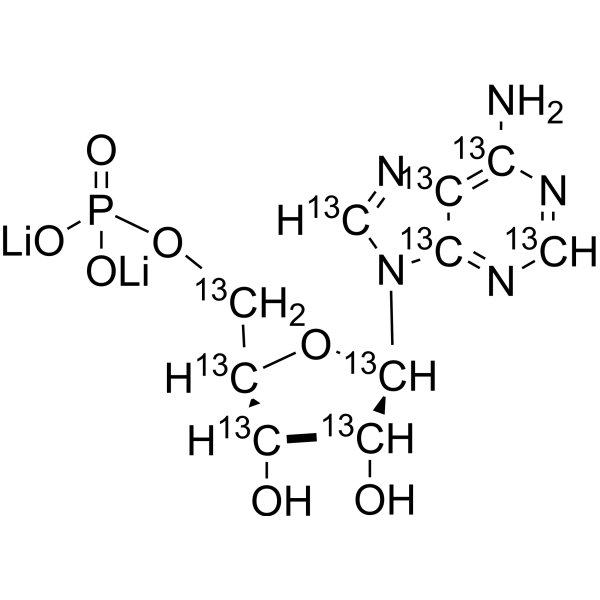 0 ImagesCat. No.: HY-A0181S3Purity: 99.2%Synonyms: AMP-13C10 dilithiumAdenosine monophosphate-13C10 (AMP-13C10) dilithium is 13C-labeled Adenosine monophosphate (HY-A0181). Adenosine monophosphate is an adenosine A1 receptor agonist. Adenosine monophosphate has significant antiviral activity against HSV-1 and HSV-2. Adenosine monophosphate is a key cellular metabolite regulating energy homeostasis and signal transduction.
-
LDC4297 hydrochloride
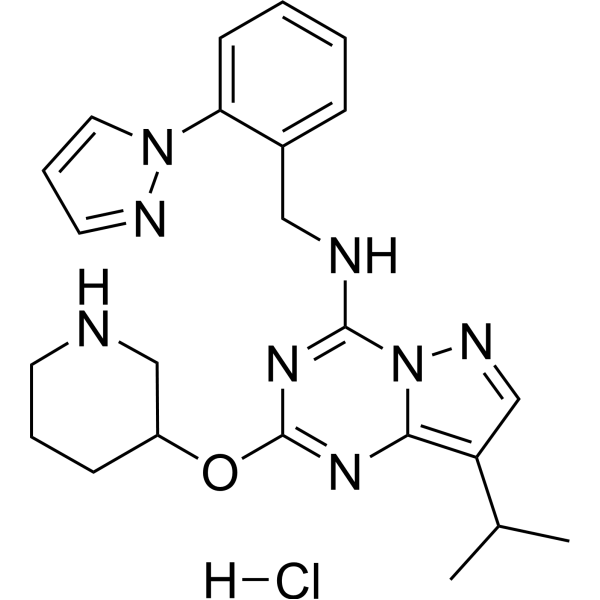 0 ImagesLDC4297 hydrochloride is a selective inhibitor of CDK7 with an IC50 value of 0.13 nM. LDC4297 hydrochloride inhibits human cytomegalovirus (HCMV) replication with an EC50 value of 24.5 nM. LDC4297 hydrochloride shows broad antiviral activities to Herpesviridae, Adenoviridae, Poxviridae, Retroviridae and Orthomyxoviridae with EC50 values of 0.02-1.21 μM. LDC4297 hydrochloride can be used for the research of infection.
-
Dextran sulfate sodium salt (MW>500000)
 0 ImagesSynonyms: DSS (MW>500000); DXS (MW>500000)Dextran sulfate sodium salt (MW>500000) (DSS (MW>500000)) is a negatively charged sulfated polysaccharide. Dextran sulfate sodium salt has antiviral, antibacterial, anti-inflammatory, antifibrotic, and wound-healing properties. Dextran sulfate sodium salt can be used as an additive in cell culture media for preventing cell aggregation and in cosmetics as a gel-forming agent.
-
Manzamine A hydrochloride
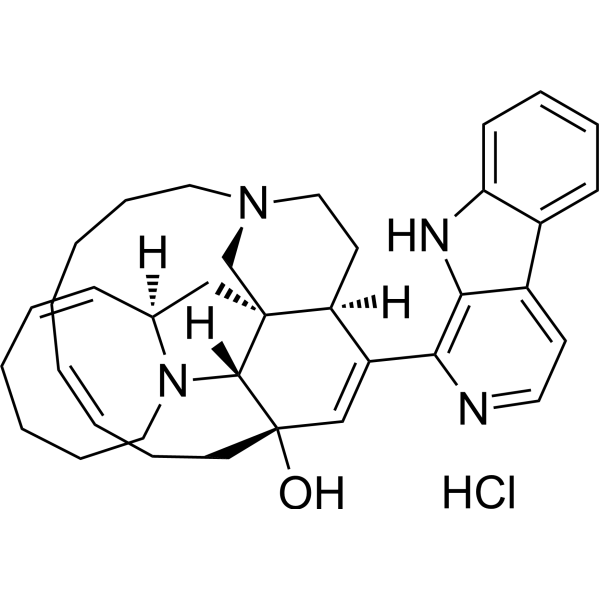 0 ImagesSynonyms: Keramamine A hydrochlorideManzamine A hydrochloride, an orally active beta-carboline alkaloid, inhibits specifically GSK-3β and CDK-5 with IC50s of 10.2 μM and 1.5 μM, respectively. Manzamine A hydrochloride targets vacuolar ATPases and inhibits autophagy in pancreatic cancer cells. Manzamine A hydrochloride has antimalarial and anticancer activities. Manzamine A hydrochloride also shows potent activity against HSV-1.
-
Guanosine-13C10,15N5
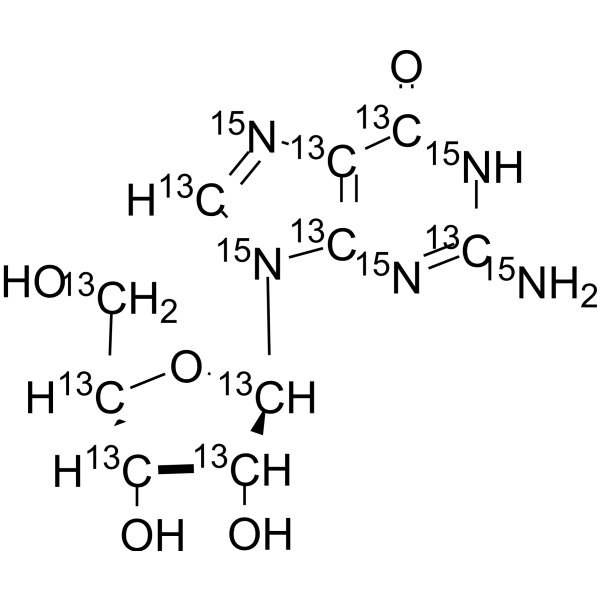 0 ImagesSynonyms: DL-Guanosine-13C10,15N5; Vernine-13C10,15N5
-
Ferruginol
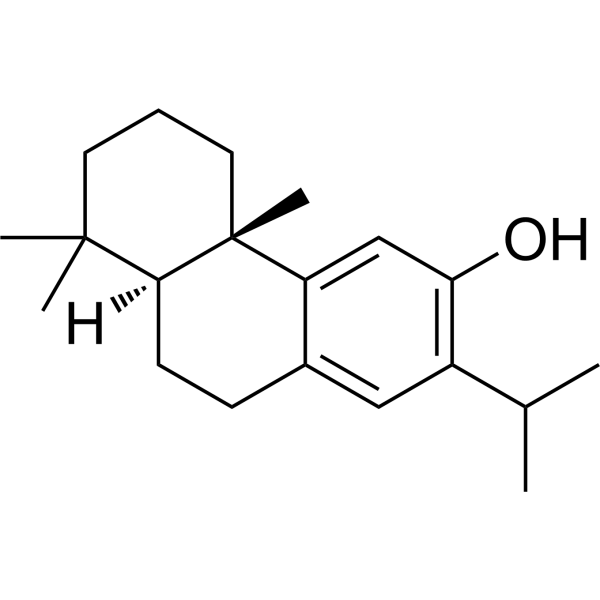 0 ImagesFerruginol ((+)-Ferruginol), a natural diterpenoid, is an inhibitor of the activation of Epstein-Barr virus early antigen (EBV-EA). Ferruginol inhibits the growth of thyroid cancer cells through the induction of mitochondrial apoptosis. Ferruginol has antitumor, cardioprotective, antioxidant, gastroprotective, and neuroprotective activities.
-
Docusate Sodium
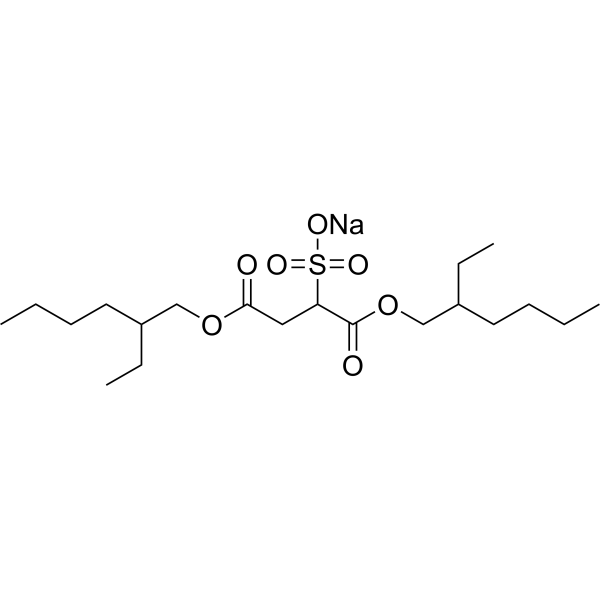 0 ImagesDocusate Sodium (Dioctyl sulfosuccinate sodium salt) is one of the main components in stool softeners. Docusate Sodium is a sulfated surfactant and may inactivate viral pathogens by disrupting viral envelopes and/or denaturing/disassociating proteins. Docusate Sodium is effective in vitro against wild type and drug-resistant strains of HSV type 1 and 2. Docusate Sodium is an obesogen. Docusate Sodium with developmental exposure leads to increased adult adiposity, inflammation, metabolic disorder and dyslipidemia in offspring fed a standard diet in mice.
-
2-Deoxy-D-glucose-d
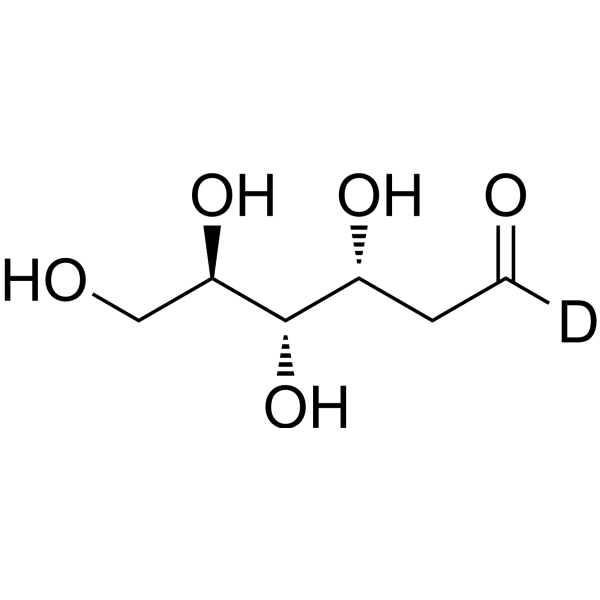 0 ImagesSynonyms: 2-DG-d1; 2-Deoxy-D-arabino-hexose-d1; D-Arabino-2-deoxyhexose-d12-Deoxy-D-glucose-d is the deuterium labeled 2-Deoxy-D-glucose. 2-Deoxy-D-glucose is a glucose analog that acts as a competitive inhibitor of glucose metabolism, inhibiting glycolysis via its actions on hexokinase.
-
Guanosine-15N5
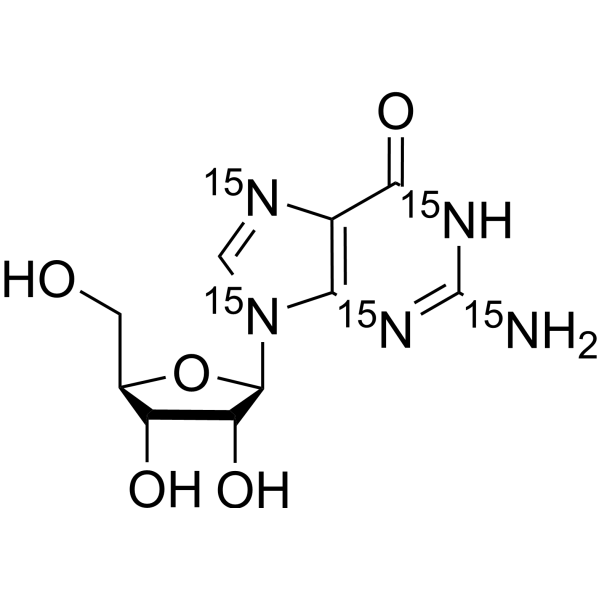 0 ImagesSynonyms: DL-Guanosine-15N5; Vernine-15N5
-
Acyclovir sodium
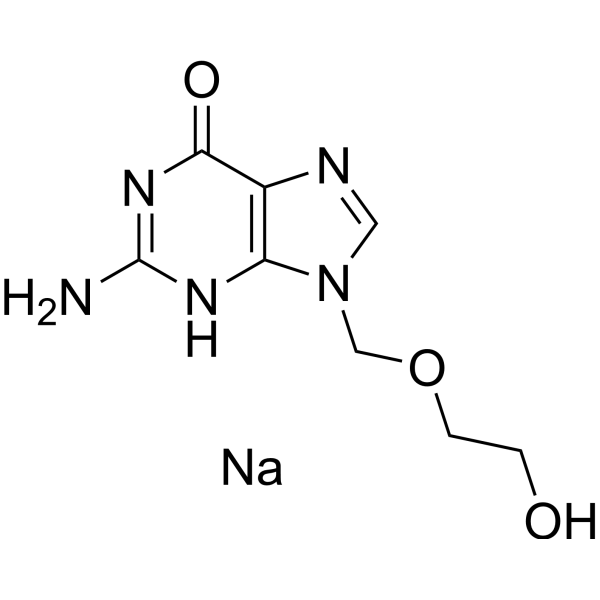 0 ImagesSynonyms: Aciclovir sodium; Acycloguanosine sodiumAcyclovir (Aciclovir) sodium is a potent, orally active antiviral agent. Acyclovir sodium has antiherpetic activity with IC50 values of 0.85 μM and 0.86 μM for HSV-1 and HSV-2, respectively. Acyclovir sodium induces cell cycle perturbation and apoptosis. Acyclovir sodium prevents bacterial infections during induction therapy for acute leukaemia.
-
SIBA
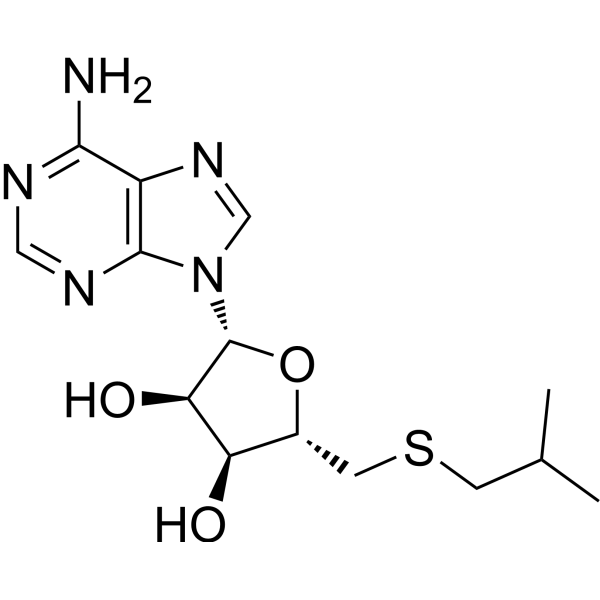 0 ImagesSynonyms: 5'-Isobutylthioadenosine; 5'-Deoxy-5'-isobutylthioadenosineSIBA (5'-Isobutylthioadenosine) is a transmethylation inhibitor (SAH (HY-19528) analogue), with potent anti-proliferative activity. SIBA reversibly inhibits the production of HSV-1 by blocking methylation, specifically by blocking the 5' end-capping of viral mRNA. SIBA also inhibits the growth of tumour cells in vitro and metastatic spread in vivo. SIBA can be used in cancer, HSV-1 infection and anti-malaria studies.
-
Soyasaponin II
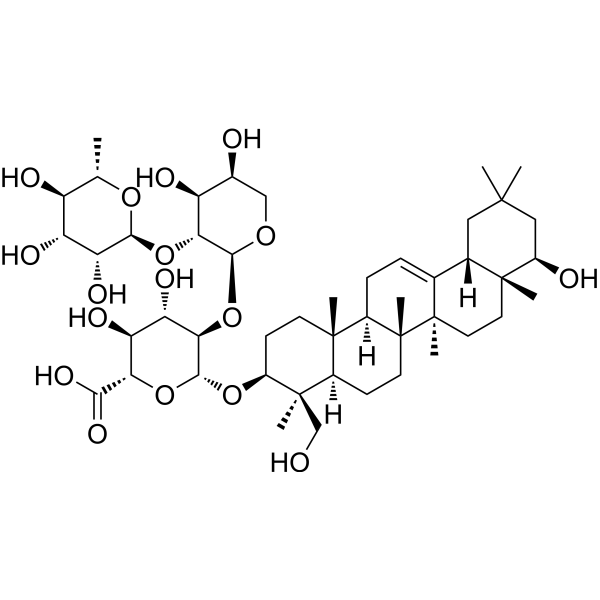 0 ImagesSoyasaponin II is a saponin with antiviral activity. Soyasaponin II inhibits the replication of HSV-1, HCMV, influenza virus, and HIV-1. Soyasaponin II shows potent inhibition on HSV-1 replication. Soyasaponin II serves as a inhibitor for YB-1 phosphorylation and NLRP3 inflammasome priming and could protect mice against LPS/GalN induced acute liver failure.
-
S-Acetylglutathione
 0 ImagesS-Acetylglutathione is a glutathione derivative and intracellular glutathione supplement that bypasses glutathione synthetase deficiency through intracellular thioesterase conversion, exhibits higher blood stability than glutathione, and selectively induces apoptosis in lymphoma and malignant cells by inducing oxidative stress (apoptosis). S-Acetylglutathione can be used in research on glutathione synthetase deficiency, herpes simplex virus type 1 infection, murine AIDS, lymphoma, and malignant tumors.
-
FIT-039
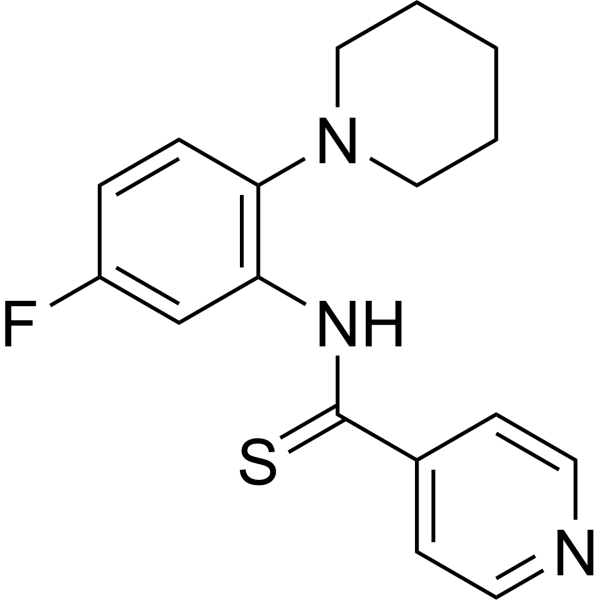 0 ImagesFIT-039 is a selective, ATP-competitive and orally active CDK9 inhibitor with an IC50 of 5.8 μM for CKD9/cyclin T1. FIT-039 does not inhibit other CDKs and other kinases. FIT-039 inhibits replication of HSV-1 (IC50 of 0.69 μM), HSV-2, human adenovirus, and human CMV. FIT-039 is a promising antiviral agent for inhibiting drug-resistant HSVs and other DNA viruses.



