



Interleukin Related Modulator
-
Kaempferol 3-O-β-D-glucuronide (Standard)
 0 ImagesCat. No.: HY-N7176RCAS No.: 22688-78-4Synonyms: Kaempferol-3-glucuronide (Standard); Kaempferol-3-O-glucuronide (Standard)
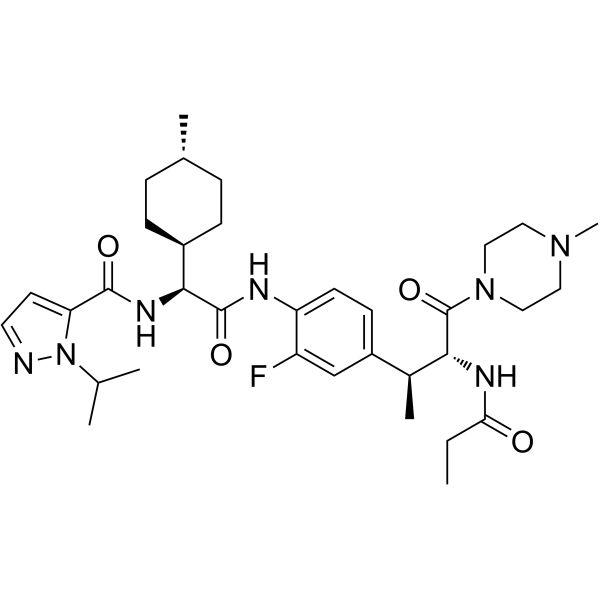
Prosulfocarb (Standard) is the analytical standard of Prosulfocarb. This product is intended for research and analytical applications. Prosulfocarb is a herbicide with a rapidly growing use trend. Prosulfocarb is used in winter cereals to help address the problem of increasing biotic resistance of weeds to certain pesticides. Environmental and food effects of prosulfocarb have been observed, and its transfer pattern from target crops to non-target areas has been studied. The volatility effect of prosulfocarb is an important factor explaining the inefficiency of isolated area contamination and marginal protection against residue spread.
-
Diphenylcyclopropenone (Standard)
 0 ImagesSynonyms: Diphencyprone (Standard)
Diphenylcyclopropenone (Standard) is the analytical standard of Diphenylcyclopropenone. This product is intended for research and analytical applications. Diphenylcyclopropenone (Diphencyprone) is a topical immunomodulatory agent that can be used for alopecia areata research.
-
GFH018 methylbenzenesulfonate
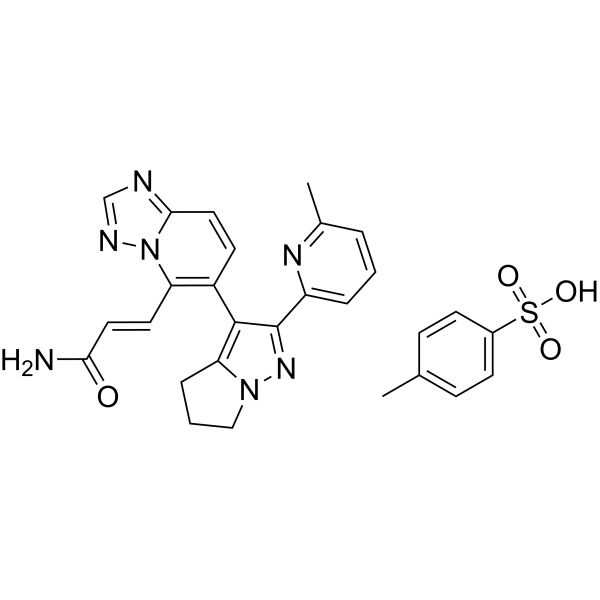 0 ImagesCat. No.: HY-160215ACAS No.: 2345717-52-2
GFH018 is an orally active, selective and ATP-competitive TGF-βR1 inhibitor with an IC50 of 40 nM. GFH018 reactivates the immune system by blocking the immunosuppression mediated by regulatory T cells and M2 macrophages. GFH018 inhibits tumor angiogenesis. GFH018 suppresses tumor growth in mouse tumor models. GFH018 can be used for the research of solid tumors, hepatocellular carcinoma, colorectal cancer, breast cancer, and relapsed/metastatic nasopharyngeal carcinoma.
-
IL-17 modulator 5
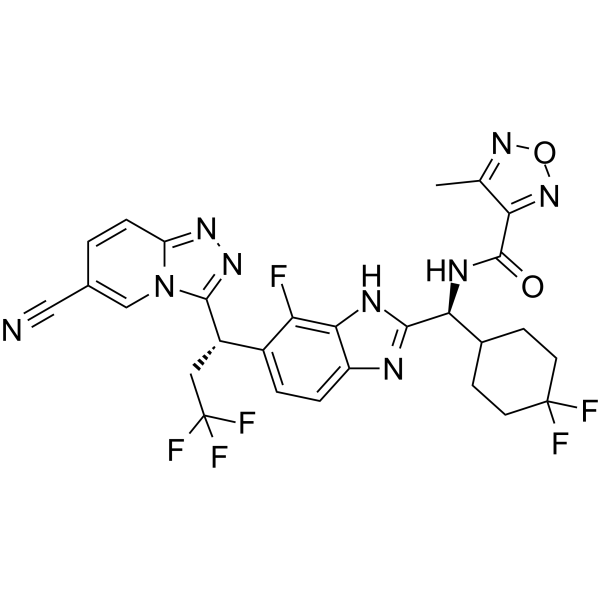 0 ImagesCat. No.: HY-145434CAS No.: 2724206-27-1
IL-17 modulator 5 (compound 26) is a IL-17 inhibitor, with an IC50 of 1 nM.
-
ADP-β-S
 0 ImagesCat. No.: HY-134353CAS No.: 35094-45-2Synonyms: Adenosine 5'-(β-thiodiphosphate)
ADP-β-S (Adenosine 5'-(β-thiodiphosphate)) is a non-hydrolyzable ADP analog and a P2Y12 receptor agonist. ADP-β-S activates the P2Y12 receptor in microglia, thereby triggering downstream inflammatory signaling pathways. ADP-β-S activates P2Y purinergic receptors in rat pancreatic β cells and enhances glucose-induced insulin secretion. ADP-β-S can be used in the research of diseases such as inflammation and diabetes.
-
α-MSH (11-13)
 0 ImagesCat. No.: HY-129724CAS No.: 67727-97-3Synonyms: ACTH-(11-13); Lys-Pro-Val; H-Lys-Pro-Val-OH
α-MSH (11-13) (ACTH-(11-13)) is a C-terminal tripeptide of α-MSH that can cross the blood-brain barrier. α-MSH (11-13) exhibits antipyretic, anti-inflammatory, and antibacterial activities. α-MSH (11-13) also exerts neuroprotective effects after traumatic brain injury by inhibiting excessive activation of microglia and reducing neuronal apoptosis. α-MSH (11-13) can be used in research related to traumatic brain injury, fever, and bacterial infections.
-
ADP-β-S trisodium
 0 ImagesCat. No.: HY-134353ASynonyms: Adenosine 5'-(β-thiodiphosphate) trisodium
ADP-β-S (Adenosine 5'-(β-thiodiphosphate)) trilithium is a non-hydrolyzable ADP analog and a P2Y12 receptor agonist. ADP-β-S trilithium activates the P2Y12 receptor in microglia, thereby triggering downstream inflammatory signaling pathways. ADP-β-S trilithium activates P2Y purinergic receptors in rat pancreatic β cells and enhances glucose-induced insulin secretion. ADP-β-S trilithium can be used in the research of diseases such as inflammation and diabetes.
-
IL-17 modulator 8
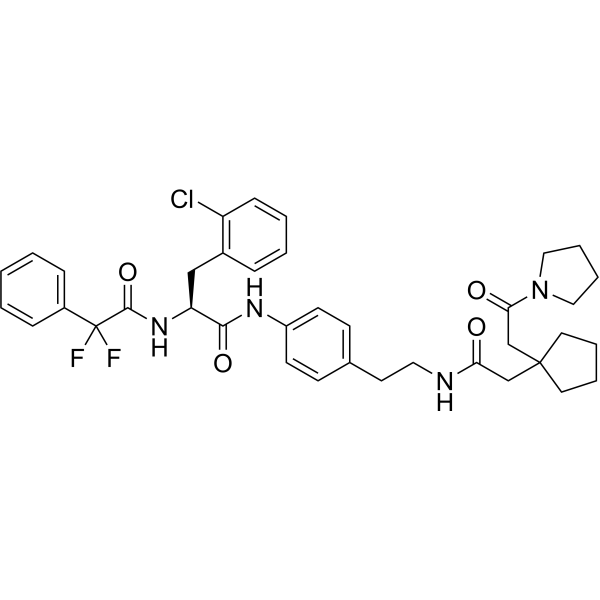 0 ImagesCat. No.: HY-160026CAS No.: 1608097-49-9
IL-17 modulator 8 (compound 286) is an orally active modulator of IL-17. IL-17 modulator 8 significantly reduces IL-6, IFN-γ, and edema. IL-17 modulator 8 can used in study arthritis.
-
IL-17 modulator 9
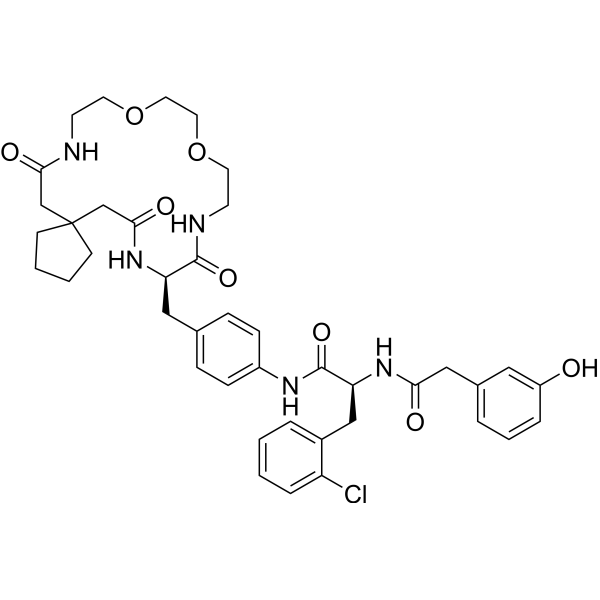 0 ImagesCat. No.: HY-160028CAS No.: 1449211-26-0
IL-17 modulator 9 (compound 453) is an orally active modulator of IL-17. IL-17 modulator 9 significantly reduces IL-6, IFN-γ, and edema. IL-17 modulator 9 can used in study inflammation.
-
LMP-420
 0 ImagesCat. No.: HY-124665CAS No.: 473870-63-2
LMP-420 is a selective tumor necrosis factor-α (TNF-α) inhibitor. LMP-420 reduces the release of pro-inflammatory cytokines (e.g., IL-1β, IL-2), inducing the expression of anti-inflammatory cytokine IL-10 and anti-apoptotic molecules SOCS-1 and Mn-SOD. LMP-420 also downregulates chemokines (e.g., IP-10, MCP-1) to reduce immune cell infiltration. LMP-420 is promising for research of type 1 diabetes mellitus, inflammatory diseases (e.g., colitis), and HIV-Mycobacterium tuberculosis coinfection.
-
IL-17 modulator 2
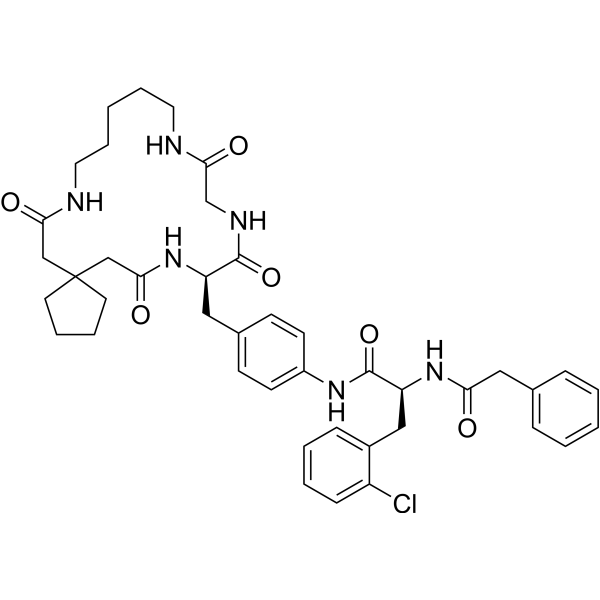 0 ImagesCat. No.: HY-134371CAS No.: 1449208-36-9
IL-17 modulator 2 (compound 159) is an orally active modulator of IL-17. IL-17 modulator 2 significantly reduces IL-6, IFN-γ, and edema. IL-17 modulator 2 can used in study arthritis.
-
Graveoline (Standard)
 0 Images
Graveoline (Standard) is the analytical standard of Graveoline (HY-12538). This product is intended for research and analytical applications. Graveoline (Rutamine) is an orally active alkaloid with various activities such as antifungal, antiparasitic, anti-inflammatory, and antitumor effects. Graveoline can induce tumor cell apoptosis and autophagy through a reactive oxygen species-mediated pathway. Graveoline has an MIC of 500 μg/mL for Candida albicans. Graveoline can be used in the research of various diseases such as tumors and liver injury.
-
Gamma-glutamylcysteine ammonium
 0 ImagesCat. No.: HY-113402BSynonyms: γ-Glu-Cys ammonium
Gamma-glutamylcysteine ammonium (γ-Glu-Cys ammonium) is an orally active, blood-brain barrier permeable dipeptide. Gamma-glutamylcysteine ammonium activates AMPK, SIRT1, IL-4/STAT6, AC/cAMP/PI3K, IGF-1R/IRS1/PI3K, and Nrf2 signaling pathways; it inhibits NF-κB, JAK1/STAT1/3, MAPKs, cadmium-induced p38 MAPK, JNK, and PI3K/Akt signaling pathways. Gamma-glutamylcysteine ammonium regulates macrophage polarization, modulates the trafficking of CD36 and GLUT4, induces glutathione synthesis, improves metabolic dysfunction, reduces lipid deposition, ameliorates glucose homeostasis, inhibits apoptosis (Apoptosis), stabilizes mitochondria, suppresses lipid peroxidation, iron accumulation and ferroptosis (Ferroptosis), reduces ds-HMGB1 levels, reverses mechanical hyperalgesia, and alleviates hepatic lipid droplet formation. Gamma-glutamylcysteine ammonium is applicable to research related to inflammatory bowel disease, type 2 diabetes, cadmium-induced neurotoxicity, Alzheimer's disease, cerebral ischemia/reperfusion injury, neuropathy, and alcoholic liver disease.
-
N-Acetyl-D-glucosamine-d3
 0 ImagesCat. No.: HY-A0132S14CAS No.: 77369-11-0Synonyms: N-Acetyl-2-amino-2-deoxy-D-glucose-d3
N-Acetyl-D-glucosamine-d3 (N-Acetyl-2-amino-2-deoxy-D-glucose-d3) is deuterium labeled N-Acetyl-D-glucosamine. N-Acetyl-D-Glucosamine (N-Acetyl-2-amino-2-deoxy-D-glucose), the D isomer of N-acetylglucosamine, is an orally active monosaccharide derivative of glucose with anti-tumor and anti-inflammation properties. N-Acetyl-D-Glucosamine is also a bacterial metabolite, which is found in Escherichia coli. N-Acetyl-D-Glucosamine can induce yeast-mycelial conversion in Candida albicans. N-Acetyl-D-Glucosamine also enhances healing of cartilaginous injuries in rabbits.
-
Manidipine (Standard)
 0 Images
Manidipine (Standard) is the analytical standard of Manidipine. This product is intended for research and analytical applications. Manidipine is an orally active calcium channel antagonist. Manidipine regulates the expression of cytokines (IL-1β, IL-6). Manidipine has a hypotensive effect. Manidipine can be used in the study of cardiovascular diseases (such as hypertension, myocardial ischemia-reperfusion injury, ventricular hypertrophy), kidney diseases (such as glomerular diseases), and epilepsy.
-
Imidazolidinyl urea (Standard)
 0 ImagesCat. No.: HY-B1158RCAS No.: 39236-46-9
Imidazolidinyl urea (Standard) is the analytical standard of Imidazolidinyl urea. This product is intended for research and analytical applications. Imidazolidinyl urea is a commonly used antibacterial preservative in cosmetics and pharmaceuticals that releases formaldehyde through decomposition. Imidazolidinyl urea can also be used in the preparation of multifunctional hydrogels for the care of infectious wounds. Imidazolidinyl urea has broad-spectrum antibacterial activity, which mainly inhibits the reproduction of gram-negative bacteria and gram-positive bacteria, and restricts the growth of yeast and mold to a certain extent. Imidazolidinyl urea can induce non-histaminergic allergy by MRGPRX2 activation of mast cells.
-
Manidipine-d4
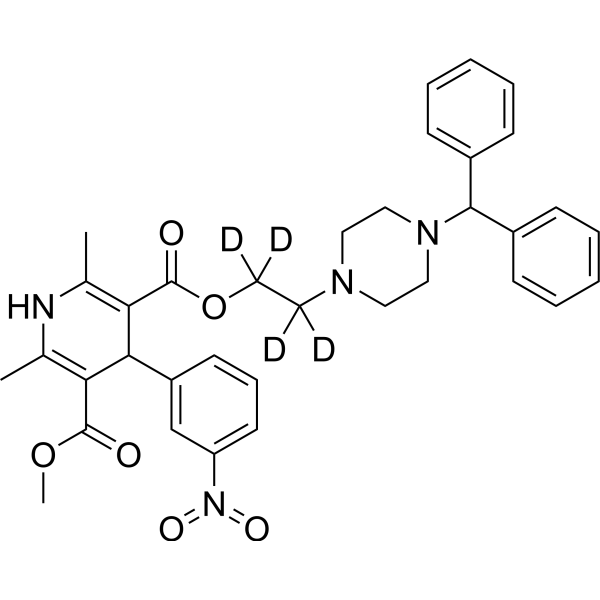 0 ImagesCat. No.: HY-B0419SCAS No.: 1189656-59-4
Manidipine-d4 is the deuterium labeled Manidipine (HY-B0419). Manidipine is an orally active calcium channel antagonist. Manidipine regulates the expression of cytokines (IL-1β, IL-6). Manidipine has a hypotensive effect. Manidipine can be used in the study of cardiovascular diseases (such as hypertension, myocardial ischemia-reperfusion injury, ventricular hypertrophy), kidney diseases (such as glomerular diseases), and epilepsy.
-
γ-Hexalactone (Standard)
 0 ImagesCat. No.: HY-W015892RCAS No.: 695-06-7Synonyms: γ-Caprolactone (Standard)
γ-Hexalactone (Standard) is the analytical standard of γ-Hexalactone (γ-Caprolactone) (HY-W015892). This product is intended for research and analytical applications. γ-Hexalactone is a gamma-lactone found in ripe fruits. γ-Hexalactone induces DNA damage in human lymphocytes and HepG2 cells, modulates cytokine secretion in human lymphocytes, and reduces recombinant PON1 activity. γ-Hexalactone serves as a dose-dependent oviposition inhibitor against Bactrocera oleae. γ-Hexalactone can be used for the research of Bactrocera oleae pest management.
-
Oxazolone (Standard)
 0 ImagesCat. No.: HY-126360RCAS No.: 15646-46-5
Oxazolone (Standard) is the analytical standard of Oxazolone (HY-126360). This product is intended for research and analytical applications. Oxazolone is a haptenizing agent that induces acute or chronic inflammation of the large intestine and is used to construct models of colitis. Oxazolone can cause Th1/Th2-dependent colitis with weight loss and diarrhea. Oxazolone-induced inflammation can be mitigated by neutralizing anti-IL-4 or anti-TNF-α antibodies or decoy IL-13R2-α-FC proteins.



