



NOD-like Receptor (NLR)
Nucleotide oligomerization domain (NOD)-like receptors (NLRs) are critical cytoplasmic pattern-recognition receptors (PRRs) that play an important role in the host innate immune response and immunity homeostasis. There are 23 NLR family members in humans and at least 34 NLR genes in mice. NLRs are expressed in many cell types including immune cells and epithelial cells, although certain NLR family members are expressed primarily in phagocytes including macrophages and neutrophils. The NLR family are most commonly classified according to their N-terminal domain, falling into one of four subfamilies; NLRA, NLRB, NLRC and NLRP.
The NLRs recognize various ligands from microbial pathogens (peptidoglycan, flagellin, viral RNA, fungal hyphae, etc.), host cells (ATPs, cholesterol crystals, uric acid, etc.), and environmental sources (alum, asbestos, silica, alloy particles, UV radiation, skin irritants, etc.). Most NLRs act as PRRs, recognizing the above ligands and activate inflammatory responses. However, some NLRs may not act as PRRs but instead respond to cytokines such as interferons. The activated NLRs show various functions that can be divided into four broad categories: inflammasome formation, signaling transduction, transcription activation, and autophagy.
NOD-like Receptor (NLR) Isoform Specific Products
All Product Categories
-
NOD-like Receptor (NLR) Inhibitors
(373)
View all products
-
NOD-like Receptor (NLR) Agonists
(25)
View all products
-
NOD-like Receptor (NLR) Antagonists
(8)
View all products
-
NOD-like Receptor (NLR) Activators
(48)
View all products
-
NOD-like Receptor (NLR) Modulators
(10)
View all products
-
NOD-like Receptor (NLR) Inducer
(1)
View all products
-
NOD-like Receptor (NLR) Degraders
(2)
View all products
-
NOD-like Receptor (NLR) Ligand
(1)
View all products
-
NOD-like Receptor Proteins
(1)
View all products
-
NLRP3 Proteins
(1)
View all products
-
NOD-like Receptor (NLR) Related Products (485)
Related Products (485)

-
Recombinant Proteins (1)
-
Antibodies (2)
-
NOD-like Receptor (NLR) Isoform Comparison
-
NLRP3-IN-22
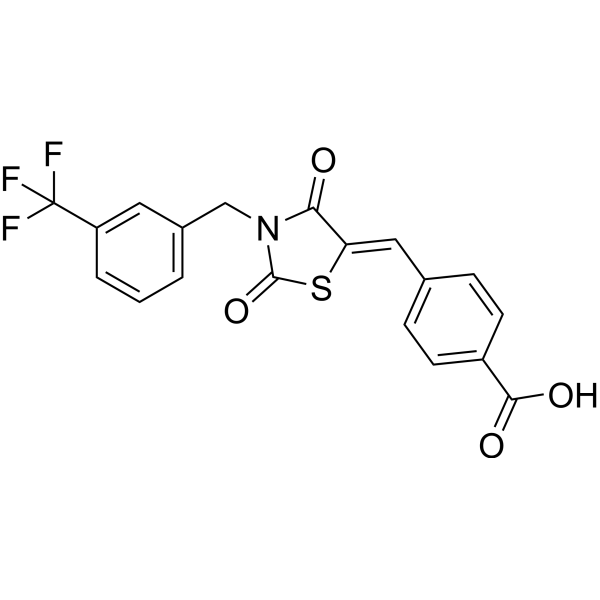 0 ImagesCat. No.: HY-156469CAS No.: 1193329-98-4NLRP3-IN-22 (Compound II-4) is a NLRP3 inhibitor (inhibition rate: 67% at 10 μM)
-
Selnoflast monopotassium
 0 ImagesCat. No.: HY-132831CCAS No.: 2260969-37-5Synonyms: Somalix monopotassium; RO-7486967 monopotassium; IZD334 monopotassiumSelnoflast (RO7486967) monopotassium, formerly somalix/RG6418/IZD334 monopotassium, is an orally active, potent, selective and reversible small molecule NLRP3 inflammasome inhibitor. Selnoflast monopotassium is a potent inhibitor of IL-1β release stimulated by NLRP3 activation in human Alzheimer's disease (AD) monocyte-derived macrophages. Selnoflast monopotassium is promising for research of AD and systemic inflammatory diseases, such as ulcerative colitis and chronic obstructive pulmonary disease.
-
NLRP3-IN-96
 0 ImagesCat. No.: HY-189652CAS No.: 3113161-60-4NLRP3-IN-96 is a blood-brain barrier-penetrant NLRP3 inhibitor with a human Kd value of 556 nM. NLRP3-IN-96 inhibits NLRP3 inflammasome activation, suppresses IL-1β release and reduces NLRP3 expression, and inhibits TNF-α production through an NLRP3-independent pathway. NLRP3-IN-96 can be used for research on neuropathic pain.


-
COX-2/NLRP3-IN-1
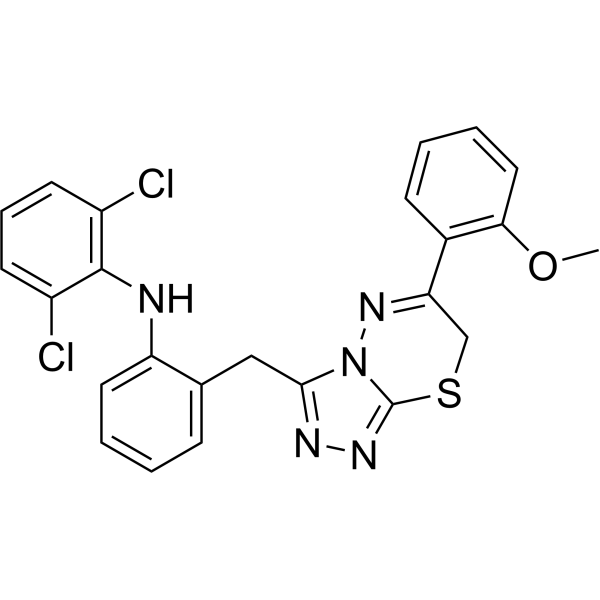 0 ImagesCat. No.: HY-161266CAS No.: 3057274-61-7COX-2/NLRP3-IN-1 (Compound 6k) is a COX-2/NLRP3 inhibitor with a IC50 of 1.53 μM for COX-2. COX-2/NLRP3-IN-1 exerts anti-inflammatory effects by inhibiting the NF-κB/NLRP3 signaling pathway.
-
MR2938
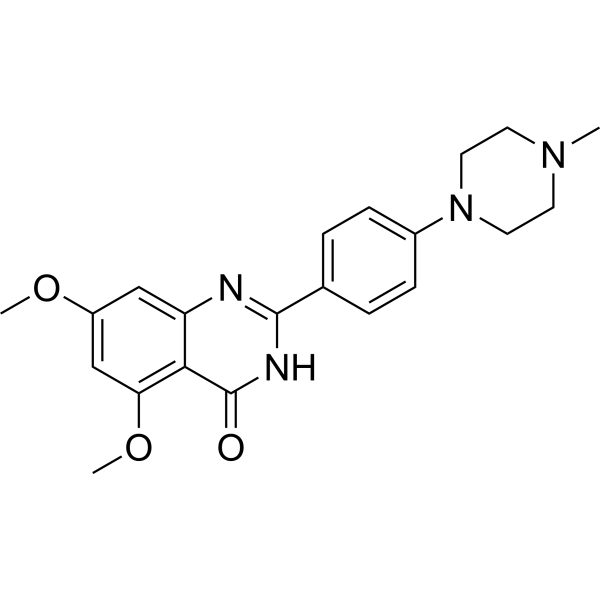 0 ImagesCat. No.: HY-149087CAS No.: 1044870-65-6
-
CAII-IN-11
 0 ImagesCat. No.: HY-180916CAII-IN-11 (Compound A1) is a dual-target compound that contains a hCA II inhibitor (IC₅₀ = 2 nM) portion and a NO donor portion. CAII-IN-11 also has inhibitory activity against hCA IX, hCA XII, and hCA I, with IC50 values of 6, 3, and 152 nM respectively. CAII-IN-11 significantly increases the intracellular cGMP level in human trabecular meshwork cells. CAII-IN-11 reduces the apoptosis of retinal ganglion cells by reducing oxidative stress (ROS levels), inhibiting astrocytes and the NLRP3 inflammasome activation. CAII-IN-11 has hypotensive activity in rabbit models and can be used for the study of glaucoma.
-
NLRP3-IN-88
 0 ImagesCat. No.: HY-182102CAS No.: 2557349-73-0NLRP3-IN-88 (Compound 1) is an NLRP3 inhibitor. NLRP3-IN-88 inhibits IL-1β. NLRP3-IN-88 can be used in research on intestinal diseases and inflammatory diseases.
-
NLRP3-IN-38
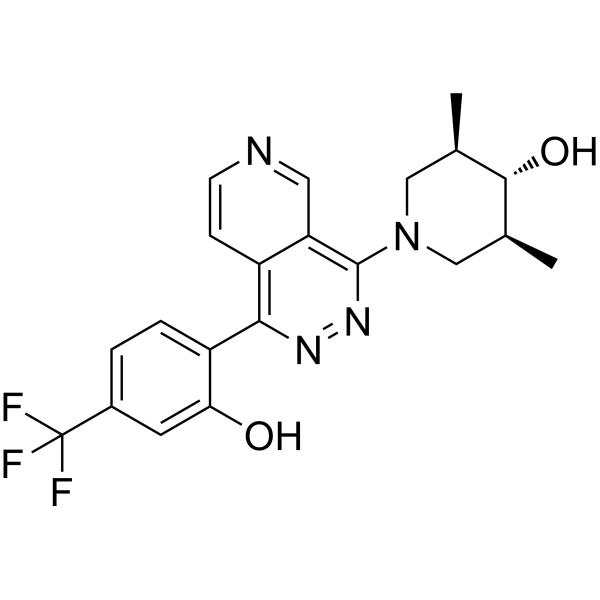 0 ImagesCat. No.: HY-163497CAS No.: 3033054-46-2NLRP3-IN-38 (Compound 18) is an inhibitor for NOD-like receptor protein 3 (NLRP3), that inhibits NLRP3 inflammasome activation with an EC50 of 23 nM.
-
NLRP3-IN-82
 0 ImagesCat. No.: HY-175464CAS No.: 3091347-92-8NLRP3-IN-82 (Compound 2b) is a NLRP3IC50< 5 nM). NLRP3-IN-82 can be used for neurological diseases like Alzheimer's disease, inflammatory diseases like inflammatory bowel disease and metabolic disorders like obesity research.
-
NLRP3-IN-14
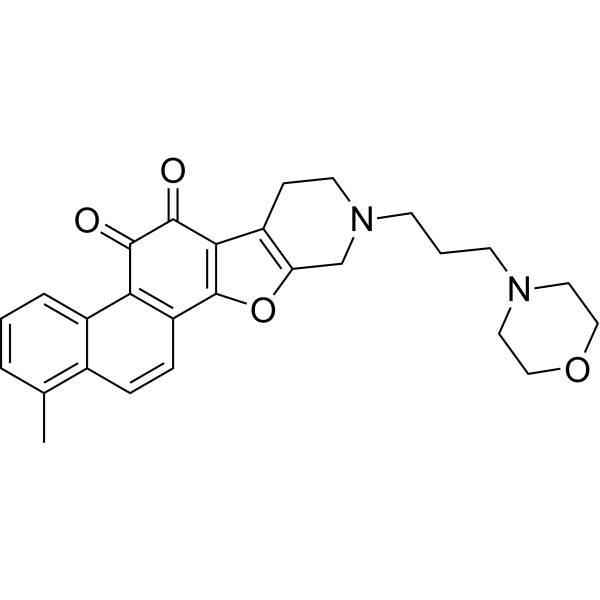 0 ImagesCat. No.: HY-149121CAS No.: 2767369-80-0NLRP3-IN-14 is a potent and selective NLRP3 inflammasome inhibitor (KD: 5.87 μM). NLRP3-IN-14 inhibits IL-1β release with an IC50 of 0.131 μM. NLRP3-IN-14 can be used for the research of inflammation.
-
NLRP3-IN-32
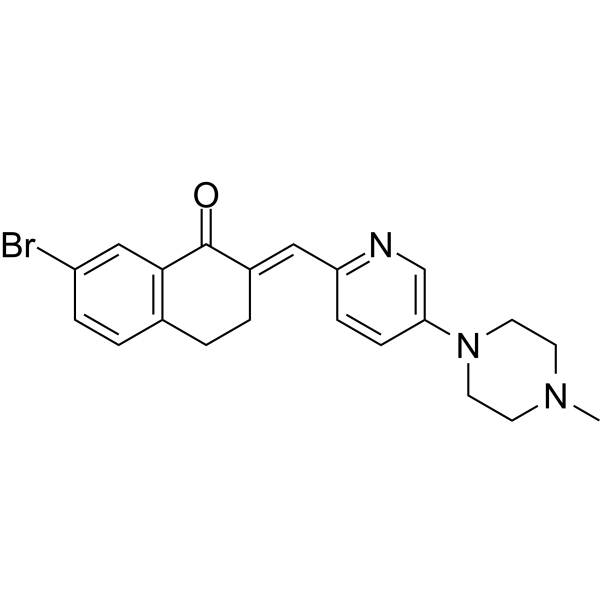 0 ImagesCat. No.: HY-161329NLRP3-IN-32 (compound 7a), a 3, 4-dihydronaphthalene-1(2H)-one derivative, is a potential NLRP3 inflammatory vesicles inhibitor. NLRP3-IN-32 can block the assembly and activation of NLRP3 inflammasome by down-regulating the expression of NLPR3 and apoptosis-associated speck-like protein containing a CARD (ASC), and inhibiting the production of reactive oxygen species (ROS) and other inflammatory mediators. NLRP3-IN-32 inhibits the phosphorylation of IκBα and NF-κB/p65 and the nuclear translocation of p65, thereby inhibiting NF-κB signaling.
-
Bisdemethoxycurcumin
 0 ImagesCat. No.: HY-N2942CAS No.: 52328-96-8Bisdemethoxycurcumin is an orally effective curcuminoid. Bisdemethoxycurcumin downregulates pro-inflammatory cytokines in macrophages by inhibiting the phosphorylation of PI3K/Akt and p38 MAPK. Bisdemethoxycurcumin relieves autophagy inhibition and promotes lipophagy to clear vascular smooth muscle foam cells by inhibiting the PDK1/Akt/mTOR pathway. Bisdemethoxycurcumin activates the cAMP/Epac/AMPKα axis and the NRF2/HO-1 antioxidant axis, thereby indirectly inhibiting the phosphorylation of NF-κB p65 and pro-inflammatory outputs such as IL-1β/IL-6/TNF-α, so as to alleviate pulmonary oxidative stress, inflammatory infiltration and pulmonary edema. Bisdemethoxycurcumin blocks NLRP3-mediated pyroptosis and protects cartilage extracellular matrix degradation by activating NRF2/HO-1. Bisdemethoxycurcumin also exerts a synergistic effect with potassium iodide against Candida.
-
ABT-546 hydrochloride
 0 ImagesCat. No.: HY-19309CAS No.: 223756-43-2Synonyms: A-216546 hydrochlorideABT-546 (A-216546) hydrochloride is an orally active ETA receptor antagonist, with Ki values of 0.46 nM and 13000 nM for human ETA and ETB receptors, respectively, and exhibits >25000-fold selectivity over the ETB receptor. ABT-546 hydrochloride effectively inhibits ET-1 (HY-P0202)-induced phosphoinositide hydrolysis (IC50 = 0.59 nM) and arachidonic acid release (IC50 = 3.03 nM), and antagonizes ET-1-induced contraction in isolated vascular rings. ABT-546 hydrochloride crosses the placental barrier but shows extremely low fetal exposure, with a favorable safety profile. ABT-546 hydrochloride inhibits ET-1-induced pressor response and downregulates the NLRP3/ROS/GSDMD-mediated pyroptosis pathway. ABT-546 hydrochloride can be used for research on abdominal aortic aneurysm.
-
Garlic oil (synthetic)
 0 ImagesCat. No.: HY-N14116ACAS No.: 8000-78-0Garlic oil (synthetic) is an orally effective anti-inflammatory, antioxidant, and anticancer agent. Garlic oil (synthetic) inhibits the activation of NF-κB, NFκB2 and NLRP3 inflammasome, and induces the expression of GSTA1, HO-1 and NQO-1. Garlic oil (synthetic) reduces the Bcl-2/Bax protein ratio and activates NNK-induced apoptosis (apoptosis) in lung tissues. Garlic oil (synthetic) attenuates NNK-induced apoptosis in MRC-5 cells and reduces excessive ROS production. Garlic oil (synthetic) alleviates pyroptosis (pyroptosis) and exerts a protective effect against acute lung injury in mice. Garlic oil (synthetic) inhibits lung tumorigenesis in mice and improves small intestinal motility in rats with type 2 diabetes. Garlic oil (synthetic) can be used in research related to acute lung injury, lung cancer, peptic ulcer, type 2 diabetes and hypertension.

-
NLRP3-IN-34
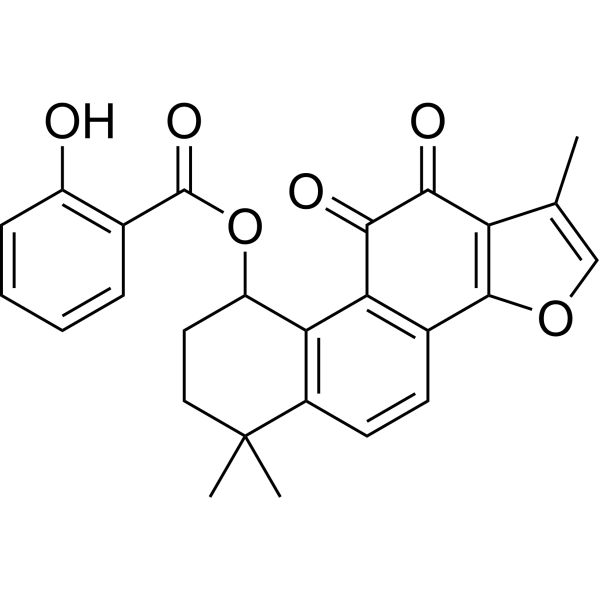 0 ImagesCat. No.: HY-158111CAS No.: 1392502-55-4NLRP3-IN-34 (Compound T10) is an inhibitor for NLRP3 inflammasome. NLRP3-IN-34 inhibits ROS production, NLRP3 inflammasome-dependent IL-1β production (IC50 is 0.48 μM in cells J774A.1), and inhibits pyroptosis. NLRP3-IN-34 exhibits anti-inflammatory activity against DSS-induced peritonitis.
-
NLRP3-IN-2 (Standard)
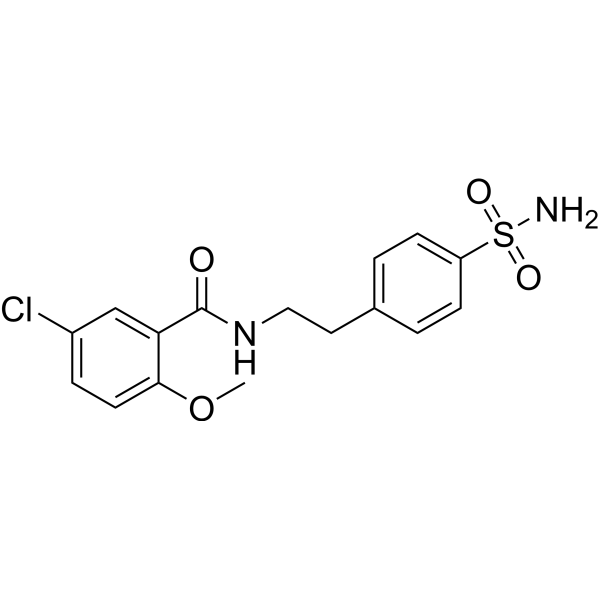 0 ImagesCat. No.: HY-W011082RCAS No.: 16673-34-0NLRP3-IN-2 (Standard) is the analytical standard of NLRP3-IN-2. This product is intended for research and analytical applications. NLRP3-IN-2, an intermediate substrate in the synthesis of glyburide, inhibits the formation of the NLRP3 inflammasome in cardiomyocytes and limits the infarct size following myocardial ischemia/reperfusion in the mouse, without affecting glucose metabolism.
-
Alginate oligosaccharides
 0 ImagesCat. No.: HY-N20693Synonyms: AOSAlginate oligosaccharides (AOS) are orally effective linear oligosaccharides with anti-inflammatory, antioxidant and antimicrobial activities. Alginate oligosaccharides inhibit the activation of NLRP3 inflammasome and NF-κB, promote nuclear translocation of Nrf2 and phosphorylation of AMPK, and reduce the enhanced functional level of TRPV1. Alginate oligosaccharides improve oxidative stress, ROS production, mitochondrial bioenergetic dysfunction and gait impairment. Alginate oligosaccharides inhibit the release of neuropeptides; alter the structure and viscoelasticity of mucin matrix; disrupt bacterial and fungal biofilms; regulate gut microbiota; and exert anti-apoptotic effects.




