



PARP1
PARP1 (poly(ADP-ribose) polymerase 1) is a nuclear ADP-ribosyltransferase that functions as an early sensor of DNA strand breaks and catalyzes poly(ADP-ribosyl)ation to recruit DNA repair factors and coordinate chromatin remodeling at sites of genomic damage[1][2]. Mechanistically, PARP1 is a central component of the DNA damage response and plays critical roles in single-strand break repair and base excision repair through the recruitment of repair proteins such as XRCC1 and associated repair complexes[1][3]. Beyond local DNA repair, PARP1 contributes to genome surveillance by transmitting damage signals that influence repair pathway selection, replication stress responses, and maintenance of genomic stability[1][4]. In disease contexts, impaired PARP1-regulated repair can promote genomic instability, whereas elevated dependence on PARP1-mediated repair is a characteristic feature of multiple cancer models, particularly tumors with homologous recombination defects[4][5]. Compared with the related isoform PARP2, PARP1 accounts for the majority of DNA damage-induced poly(ADP-ribose) synthesis and displays distinct DNA-binding properties, including efficient recognition of single-strand DNA breaks, while PARP2 preferentially recognizes repair intermediates such as DNA gaps and flaps[3][6]. These functional distinctions support nonredundant contributions of PARP1 and PARP2 to the spatial and temporal organization of DNA repair pathways[3]. For experimental applications, PARP inhibitors have become widely used tools for investigating DNA damage responses and synthetic lethality, particularly in BRCA1/2-deficient tumor models, where suppression of PARP1-dependent repair enhances the accumulation of unrepaired DNA lesions and promotes selective cancer cell death[5][7].
References:
- [1]. Wang F, et al. PARPs and PARP inhibitors: molecular mechanisms and clinical applications. Mol Biomed. 2025 Dec 29;6(1):152. [Content Brief]
- [2]. Sciencedirect.topics.
- [3]. Yelamos J, et al. PARP-1 and PARP-2: New players in tumour development. Am J Cancer Res. 2011;1(3):328-346. Epub 2011 Jan 8. PMID: 21968702; PMCID: PMC3180065. [Content Brief]
- [4]. Petropoulos M, et al. Transcription-replication conflicts underlie sensitivity to PARP inhibitors. Nature. 2024 Apr;628(8007):433-441. [Content Brief]
- [5]. Rose M, et al. PARP Inhibitors: Clinical Relevance, Mechanisms of Action and Tumor Resistance. Front Cell Dev Biol. 2020 Sep 9;8:564601. [Content Brief]
- [6]. Szántó M, et al. Specific and shared biological functions of PARP2 - is PARP2 really a lil' brother of PARP1? Expert Rev Mol Med. 2024;26:e13.
- [7]. Underhill C, et al. A review of PARP inhibitors: from bench to bedside. Ann Oncol. 2011 Feb;22(2):268-79. [Content Brief]
-
PARP1 Related Products (219)
Related Products (219)

-
Antibodies (2)
-
BWA-6047
 0 ImagesCat. No.: HY-176128BWA-6047 is an oral active PROTAC degrader targeting AR/AR-V7 and GSPT1 with DC50 values of 3.7, 3.0 and 1.2 nM in 22Rv1 cells. BWA-6047 suppresses the expression of AR downstream target genes and and transcriptional activity. BWA-6047 inhibits cancer cells proliferation, causes G1 phase cell cycle arrest and induces apoptosis. BWA-6047 increases cleaved-PARP-1 and cleaved-caspase-3 levels. BWA-6047 reduces growth of LNCaP xenograft tumors in mice models without obvious toxicity. BWA-6047 can be used for the research of prostate cancer.
-
PARP1/CDK12-IN-2
 0 ImagesCat. No.: HY-189660PARP1/CDK12-IN-2 is a selective dual PARP1/CDK12 inhibitor with an IC50 of 42 nM for CDK12 and an IC50 of 35 nM for PARP1. PARP1/CDK12-IN-2 inhibits CDK13. PARP1/CDK12-IN-2 induces Apoptosis and induces G2/M phase arrest. PARP1/CDK12-IN-2 exhibits anticancer activity against breast cancer and lung cancer. PARP1/CDK12-IN-2 can be used for research on triple-negative breast cancer.
-
7-Epi 10-desacetyl paclitaxel (Standard)
 0 ImagesCat. No.: HY-77572RCAS No.: 78454-17-8Synonyms: 7-epi-10-deacetyltaxol (Standard); 10-Deacetyl-7-epipaclitaxel (Standard)7-Epi 10-desacetyl paclitaxel (Standard) (7-epi-10-deacetyltaxol (Standard); 10-Deacetyl-7-epipaclitaxel (Standard)) is the analytical standard of 7-Epi 10-desacetyl paclitaxel (HY-77572). This product is intended for research and analytical applications. 7-Epi 10-desacetyl paclitaxel (7-epi-10-deacetyltaxol; 10-Deacetyl-7-epipaclitaxel) is a taxane diterpenoid that can be found in Taxus species and is also produced by the endophytic fungus Pestalotiopsis microspora. 7-Epi 10-desacetyl paclitaxel inhibits cancer cell proliferation and induces apoptosis and cell cycle arrest. 7-Epi 10-desacetyl paclitaxel induces apoptosis through the intrinsic mitochondrial pathway, a process associated with ROS generation, an increased Bax/Bcl-2 ratio, and PARP cleavage. 7-Epi 10-desacetyl paclitaxel can be used in research on hepatocellular carcinoma.
-
DLC-50
 0 ImagesCat. No.: HY-161868CAS No.: 2928537-98-6
-
Desethylamiodarone
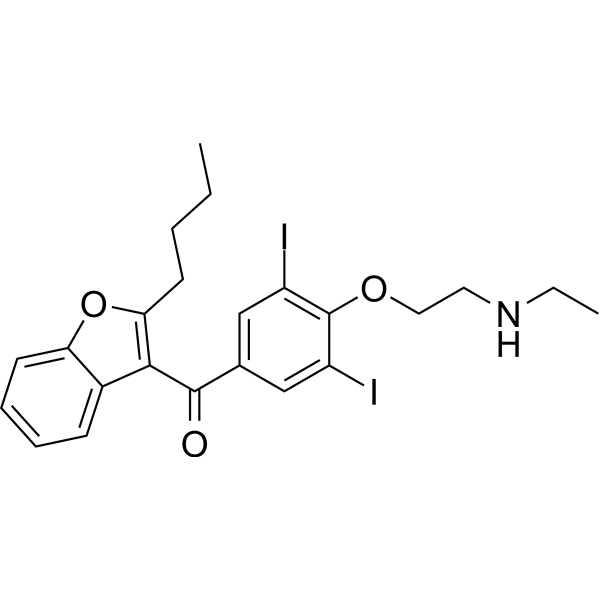 0 ImagesCat. No.: HY-122423CAS No.: 83409-32-9Synonyms: N-Desethylamiodarone; LB 33020Desethylamiodarone (N-Desethylamiodarone; LB 33020) is the major active metabolite of Amiodarone (HY-14187) generated via CYP3A4 metabolism. Desethylamiodarone downregulates p‑Akt, p‑Bad and Bcl‑2, upregulates Bax, promotes mitochondrial release of cytochrome c, activates caspase‑3 and cleaves PARP‑1, thereby inducing cell cycle arrest and apoptosis. Desethylamiodarone can be used in cervical cancer-related research.

-
HL435
 0 ImagesCat. No.: HY-161769HL435 is a BRD4 PROTAC degrader with DC50 values of 11.9 nM (MDA-MB-231 cells) and 21.9 nM (MCF-7 cells), respectively. HL435 recruits the CRL4DCAF11 E3 ubiquitin ligase complex to degrade BRD4 via the ubiquitin-proteasome system. HL435 induces cell cycle arrest and apoptosis (apoptosis) in cancer cells, downregulates the expression levels of cyclin D1 and cyclin B1, activates caspase-9, and induces PARP1 cleavage. HL435 exerts anti-tumor activity both in vitro and in mouse xenograft tumor models. HL435 can be used for the research of breast cancer and prostate cancer.
-
(rac)-Talazoparib
 0 ImagesCat. No.: HY-14687CAS No.: 1207454-56-5Synonyms: (rac)-BMN-673; (rac)-LT-673(rac)-Talazoparib ((rac)-BMN-673) (Compound 47) is the orally active inhibitor for PARP1/2 with Ki of 1.2 nM and 0.87 nM. (rac)-Talazoparib inhibits cellular PARylation with an EC50 of 2.51 nM. (rac)-Talazoparib causes the accumulation of DNA damage, inhibits proliferation of BRCA1/2-mutated MX-1 cell and Capan-1 cell with IC50 of 0.3 nM and 5 nM. (rac)-Talazoparib exhibits antitumor efficacy in mouse models.
-
PARP1-IN-8
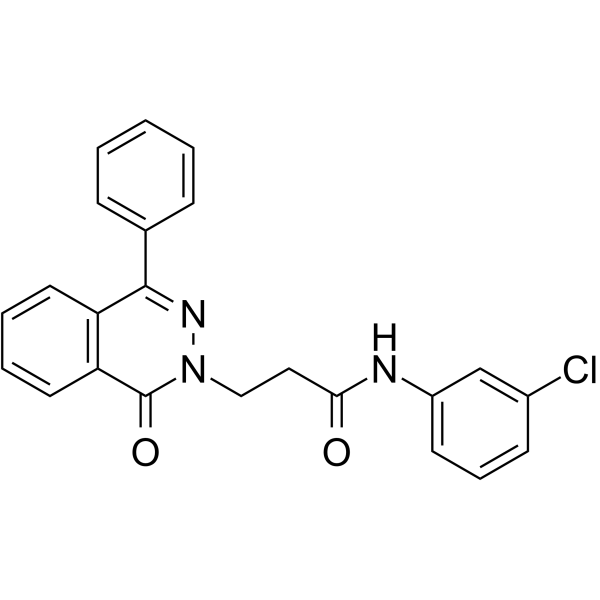 0 ImagesPARP1-IN-8 (compound 11c) is a potent and BBB-penetrated PARP1 inhibitor, with an IC50 of 97 nM. PARP1-IN-8 shows significantly potent anti-proliferative activity against Human lung adenocarcinoma epithelial cell line A549.
-
CM002
 0 ImagesCat. No.: HY-184895CM002 is a circadian clock activator. CM002 inhibits the lineage commitment and terminal differentiation of preadipocytes by activating the circadian clock, thereby blocking the adipogenesis process driven by Wnt signaling-mediated transcriptional induction. CM002 attenuates lipid storage in a clock-dependent manner via inhibition of the lipogenic program in mature adipocytes. CM002 enhances circadian clock output across various adipose depots in both lean and obese mice through BMAL1/CLOCK-dependent metabolic reprogramming, inhibits adipocyte development and hypertrophy, and improves insulin sensitivity. CM002 can be used in research on obesity and type 2 diabetes.
-
AZ0108
 0 ImagesCat. No.: HY-100847CAS No.: 1825345-52-5AZ0108 is an inhibitor for poly ADP-ribose polymerase (PARP), which inhibits PARP1, PARP2, PARP3, PARP6, TNKS1, TNKS2, with IC50s of <0.03, <0.03, 2.8, 0.083, 3.2, >3 μM, respectively. AZ0108 prevents centrosome clustering with an EC50 of 0.053 μM, and exhibits cytotoxicity in cell OCI-LY-19 with GI50 of 0.017 μM. AZ0108 exhibits good in vivo pharmacokinetic characters in rat/mouse models.
-
PARP/EZH2-IN-2
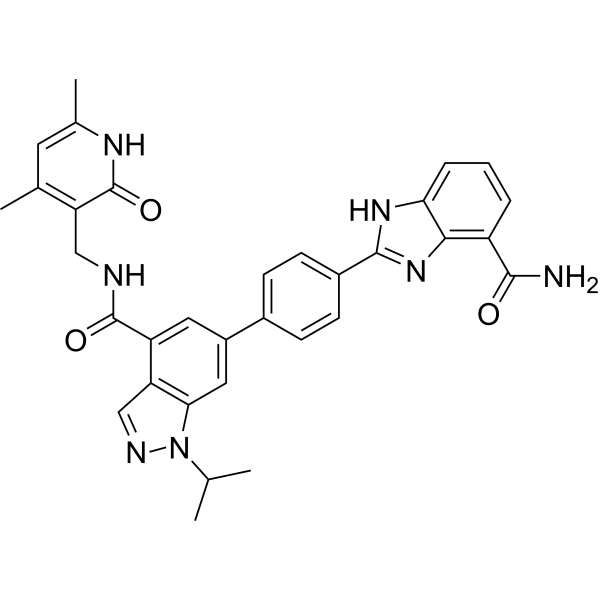 0 ImagesCat. No.: HY-161083CAS No.: 3026744-15-7PARP/EZH2-IN-2 (compound 12e) is a dual target PARP1 and EZH2 inhibitor, with IC50 values of 6.89 and 27.34 nM, respectively. PARP/EZH2-IN-2 shows anticancer activity, with no toxicity to normal cells. PARP/EZH2-IN-2 achieves synthetic lethality indirectly by inhibiting EZH2 to increase the sensitivity to PARP1, and induces cell death by regulating excessive autophagy.
-
DPQ hydrochloride
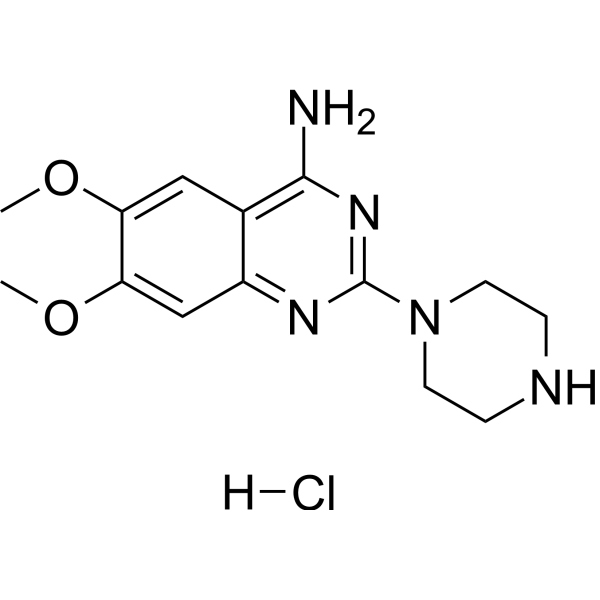 0 ImagesSynonyms: 6,7-Dimethoxy-2-(1-piperazinyl)-4-quinazolinamine hydrochlorideDPQ hydrochloride is a blood-brain barrier permeable and selective PARP-1 inhibitor that blocks PARP-1-mediated DNA damage repair and NAD+/ATP consumption, thereby inhibiting excessive inflammatory responses. DPQ hydrochloride inhibits NF-κB pathway activation, reduces the expression of pro-inflammatory factors (such as TNF-α, IL-6) and oxidative stress. DPQ hydrochloride can be used in inflammation-related studies of acute lung injury, myocardial infarction, and neurodegenerative diseases.
-
TPP-C8-CO-DSG bromide
 0 ImagesCat. No.: HY-184737TPP-C8-CO-DSG bromide is a derivative of Diosgenin (HY-N0177) and an anticancer agent. TPP-C8-CO-DSG bromide downregulates Bcl-2 expression and upregulates Bax expression. TPP-C8-CO-DSG bromide promotes the cleavage of Caspase 9, Caspase 3 and PARP-1. TPP-C8-CO-DSG bromide depolarizes mitochondrial membrane potential, reduces intracellular ATP production, and induces intracellular ROS accumulation. TPP-C8-CO-DSG bromide promotes Apoptosis. TPP-C8-CO-DSG bromide exhibits anticancer activity against prostate cancer, breast cancer, lung adenocarcinoma, cervical cancer and colorectal cancer. TPP-C8-CO-DSG bromide can be used in the research of cervical cancer.
-
IDO1-IN-34
 0 ImagesCat. No.: HY-183317IDO1-IN-34 is a selective IDO1 inhibitor with an IC50 of 0.093 μM. IDO1-IN-34 exhibits cytotoxicity against various cancer cell lines. IDO1-IN-34 inhibits the kynurenine (kynurenine) pathway and activates IL-2. IDO1-IN-34 induces cell apoptosis via the endogenous mitochondrial pathway, while increasing the levels of cytochrome c, caspase-3, caspase-9 and PARP-1. IDO1-IN-34 can be used for research on liver cancer, lung cancer, breast cancer, prostate cancer, colon cancer and leukemia.
-
TNKS-IN-1
 0 ImagesTNKS-IN-1 is a selective and potent tankyrase (TNKS1/TNKS2) inhibitor with IC50 values of 7.9 nM and 8.7 nM. TNKS-IN-1 induces axin2 accumulation with an EC50 of 1500 nM. TNKS-IN-1 can antagonize the Wnt signal transduction pathway by stabilizing axin proteins and promoting β-catenin degradation. TNKS-IN-1 can be used for the research of colorectal cancer.
-
PARP1/BRD4-IN-2
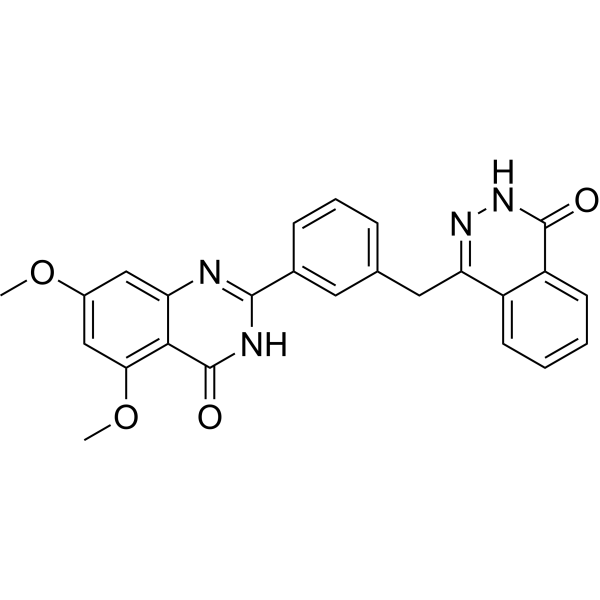 0 ImagesCat. No.: HY-150613CAS No.: 3037993-97-5PARP1/BRD4-IN-2 is a potent and selective PARP1 and BRD4 inhibitor with IC50 values of 197 nM and 238 nM, respectively. PARP1/BRD4-IN-2 inhibits DNA damage repair, arrests G0/G1 transition and induces apoptosis. PARP1/BRD4-IN-2 has anti-tumor activity in MDA-MB-468 xenograft mouse model. PARP1/BRD4-IN-2 can be used for researching triple-negative breast cancer (TNBC).
-
N-Desmethyl clomipramine
 0 ImagesN-Desmethyl clomipramine (Desmethylclomipramine; Norclomipramine) is the orally active major active metabolite of the tricyclic antidepressant Clomipramine (HY-B0457A), possessing multiple activities including anti-inflammatory, antioxidant, antibacterial, and antiparasitic effects. N-Desmethyl clomipramine blocks autophagosome-lysosome fusion, leading to the accumulation of LC3-II, p62, ATG7, WIPI2, and ATG5-12, reactivates the p53/p21 pathway, induces apoptosis through C-PARP and C-CAS3, and inhibits the proliferation, migration, and invasion of renal cancer cells. N-Desmethyl clomipramine inhibits LdTOPIA, inducing R-loop accumulation in the nucleus of Leishmania, ultimately causing parasite death. N-Desmethyl clomipramine can be used for research on depression, metastatic renal cell carcinoma, and leishmaniasis.
-
Antitumor agent-214
 0 ImagesCat. No.: HY-181720CAS No.: 1911631-77-0Antitumor agent-214 is a chalcone analogue with anti-tumor activity. Antitumor agent-214 induces cell cycle arrest and apoptosis in tumor cells, disrupts mitochondrial metabolism, and upregulates the expression of caspase 3, caspase 7 and caspase 9, downregulates PARP1. Antitumor agent-214 can be used for anti-tumor research related to colorectal cancer, breast cancer, lung cancer, and cervical cancer.
-
PARP1-IN-14
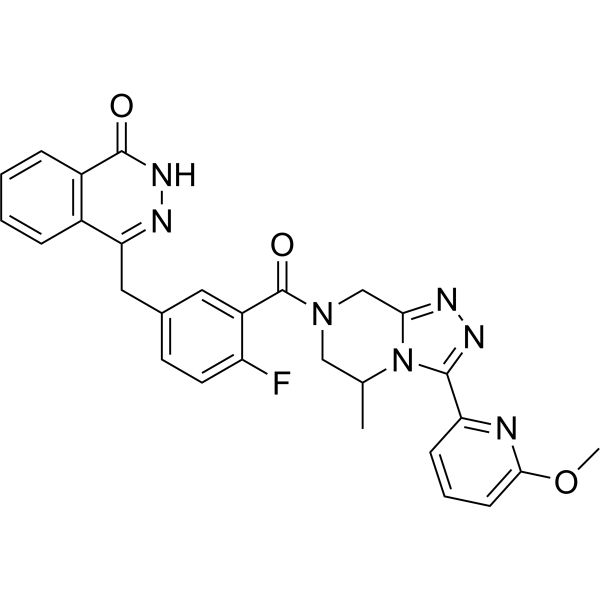 0 ImagesCat. No.: HY-155766CAS No.: 2098639-70-2PARP1-IN-14 (compound 19k) is a potent PARP1 inhibitor, with an IC50 of 0.6 ± 0.1 nM. PARP1-IN-14 exhibits antiproliferative effect against both MDA-MB-436 (BRCA1−/−) and Capan-1 (BRCA2−/−) cells with IC50 values below 0.3 nM.




