



TNF Receptor Inhibitor
-
KOR agonist 7
 0 ImagesCat. No.: HY-178945
KOR agonist 7 (Compound 29) is a highly selective κ-opioid receptor (KOR) agonist with a Ki of 138 nM. KOR agonist 7 shows no activity at μ- and δ-opioid receptors or σ1 receptor, and exhibits extremely low affinity for σ2 receptor (Ki = 2.8 μM). KOR agonist 7 significantly reduces the secretion of pro-inflammatory cytokines such as IL-6, TNF-α, and IFN-γ, while increasing the production of the anti-inflammatory cytokine IL-10. KOR agonist 7 downregulates the expression of the pro-inflammatory M1 macrophage marker CD80 and upregulates the anti-inflammatory M2 macrophage marker CD163. KOR agonist 7 holds potential for applications in analgesia and immune modulation.
-
RIPK2-IN-7
 0 Images
RIPK2-IN-7 (Compound 10w) is an orally active, selective RIPK2 inhibitor (IC50: 0.6 nM). RIPK2-IN-7 inhibits RIPK2 kinase activity, blocks the nucleotide-binding oligomerization domain (NOD) signaling pathway, and reduces the production of inflammatory factors (such as TNFα). RIPK2-IN-7 can be used in the study of inflammatory bowel disease (IBD).
-
LMP-420
 0 ImagesCat. No.: HY-124665CAS No.: 473870-63-2
LMP-420 is a selective tumor necrosis factor-α (TNF-α) inhibitor. LMP-420 reduces the release of pro-inflammatory cytokines (e.g., IL-1β, IL-2), inducing the expression of anti-inflammatory cytokine IL-10 and anti-apoptotic molecules SOCS-1 and Mn-SOD. LMP-420 also downregulates chemokines (e.g., IP-10, MCP-1) to reduce immune cell infiltration. LMP-420 is promising for research of type 1 diabetes mellitus, inflammatory diseases (e.g., colitis), and HIV-Mycobacterium tuberculosis coinfection.
-
Kaempferol 3-O-(2G-glucosylrutinoside)-7-O-glucoside
 0 ImagesCat. No.: HY-N18025CAS No.: 131559-50-7
Kaempferol 3-O-(2G-glucosylrutinoside)-7-O-glucoside is an anti-inflammatory agent. Kaempferol 3-O-(2G-glucosylrutinoside)-7-O-glucoside exerts significant anti-inflammatory effects in LPS (HY-D1056)-induced RAW 264.7 macrophages by inhibiting the NF-κB, MAPK and Akt signaling pathways, thereby reducing the production of inflammatory mediators (NO, PGE2) and pro-inflammatory cytokines (TNF-α, IL-1β, IL-6).
-
TBE 31
 0 ImagesCat. No.: HY-141439CAS No.: 936475-62-6
TBE 31 is an orally active Keap1/Nrf2 pathway activator and NQO1 inducer with a Dm value of 1.1 nM for NQO1. TBE 31 binds to cysteine residues of Keap1, inhibits ubiquitination and degradation of Nrf2, thereby activating the expression of ARE-dependent genes. TBE 31 induces cytoprotective enzymes including NQO1 and GST isoforms, promotes Nrf2 accumulation, and upregulates Nrf2-regulated genes related to antioxidation and lipid metabolism. TBE 31 inhibits pro-inflammatory responses, formation of AFB1-DNA adducts, endoplasmic reticulum stress, cell apoptosis (apoptosis), hepatic fibrosis, oxidative stress, and the expression of ChREBP. TBE 31 reduces the number of tumors in a mouse model of ultraviolet-induced skin carcinogenesis. TBE 31 enhances nerve growth factor-induced neurite outgrowth. TBE 31 attenuates LPS-induced serum TNF-α levels and immobility time in mice. TBE 31 can be used in research related to liver cancer, skin cancer, inflammation-related depression, and non-alcoholic steatohepatitis.
-
Afimkibart
 0 ImagesCat. No.: HY-P990876ASynonyms: PF-06480605; RVT-3101
Afimkibart (PF-06480605; RVT-3101) is a humanized monoclonal antibody targeting TL1A (TNFSF15). Afimkibart blocks the TL1A‑DR3 signaling axis by neutralizing the TL1A ligand, inhibits the release of pro-inflammatory cytokines, suppresses NF-κB activation and IFN-γ production, and simultaneously attenuates fibroblast activation and fibrosis progression associated with this pathway. Afimkibart is applicable to research on immune inflammation-related conditions, such as ulcerative colitis.
-
A 80426
 0 ImagesCat. No.: HY-120037CAS No.: 152148-63-5
A 80426 is an orally active serotonin (5-HT uptake) inhibitor (IC50 = 13 nM; Ki = 3.8 nM) and α2-Adrenoceptor receptor antagonist (Ki = 2 nM). A 80426 shows weak antagonistic effect to dopamine D1 receptor (Ki = 744 nM) and D2 receptor (Ki = 52 nM). A 80426 upregulates the expression and activity of TRPV1, activates the NF-κB and PI3K pathways, and reduces the levels of pro-inflammatory cytokines IL-1β, IL-6, and TNF-α. A 80426 can be used in research related to inflammatory pain and depression.
-
Isoeucommin A
 0 ImagesCat. No.: HY-N19615CAS No.: 134859-90-8
Isoeucommin A is a lignan compound. Isoeucommin A activates the Nrf2/HO-1 pathway and induces phosphorylation of GSK-3β. Isoeucommin A reduces the levels of pro-inflammatory cytokines TNF-α, IL-1β and IL-6, decreases the oxidative stress marker MDA, increases the antioxidants SOD and GSH, and alleviates oxidative stress in mesangial cells. Isoeucommin A alleviates renal tissue injury, improves impaired renal function and enhances the viability of renal tubular epithelial cells in diabetic nephropathy models. Isoeucommin A can be used in the research of diabetic nephropathy.
-
IBI37G5
 0 ImagesCat. No.: HY-P991464
IBI37G5 is a human monoclonal antibody (mAb) targeting TNFRSF18/GITR/CD357. IBI37G5 has anti-tumor activity in MC38 and B16F10 mouse tumor models. IBI37G5 can be used in the study of cancer immunity.
-
TNF-α-IN-12
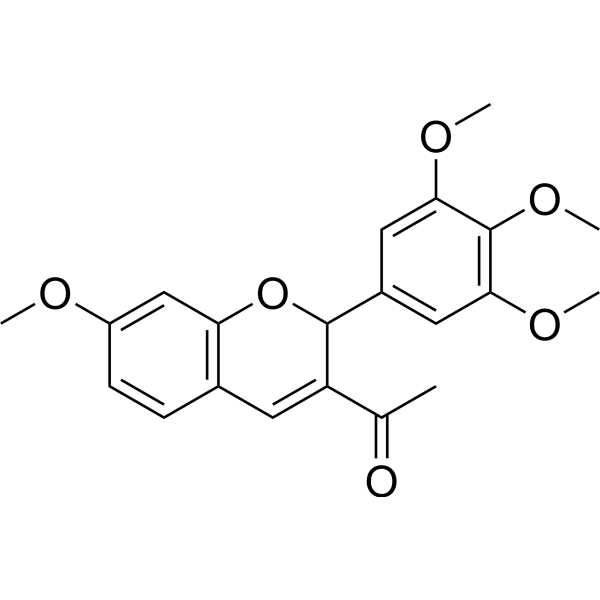 0 ImagesCat. No.: HY-160433CAS No.: 364039-56-5
TNF-α-IN-12 is a TNF-α inhibitor with IC50 of 0.1 μM. TNF-α-IN-12 can decrease the TNF-α blood levels.
-
Anti-inflammatory agent 107
 0 ImagesCat. No.: HY-179502
Anti-inflammatory agent 107 is an orally active anti-inflammatory agent. Anti-inflammatory agent 107 inhibits and NF-κB with a superior binding affinity of -9.4578 kcal/mol. Anti-inflammatory agent 107 reduces levels of inflammatory biomarkers (TNF-α, IL-6, INF-γ, NF-κβ, C-reactive protein and Erythrocyte Sedimentation Rate) and enhances the endogenous antioxidant defense system by elevating SOD (Superoxide Dismutase), CAT (Catalase) and GSH (Glutathione) activities. Anti-inflammatory agent 107 not induces liver toxicity and demonstrates hepatoprotective effects. Anti-inflammatory agent 107 dose-dependently ameliorates leukocyte infiltration and tissue edema. Anti-inflammatory agent 107 can be used for anti-inflammatory research.
-
Cudraflavone B
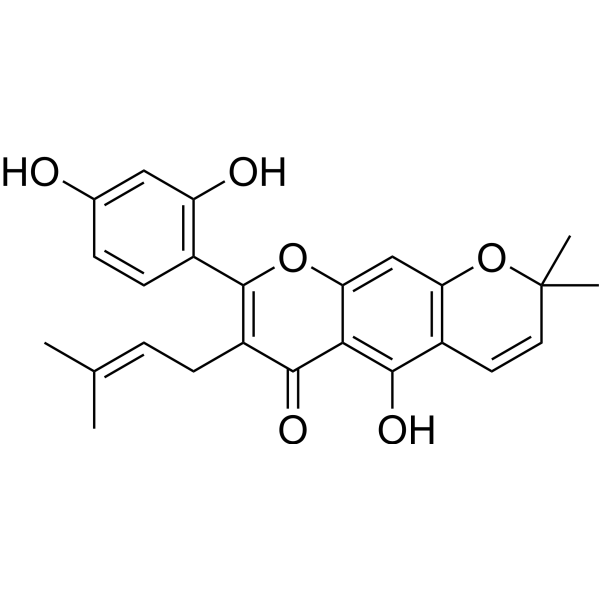 0 ImagesCat. No.: HY-N10009CAS No.: 19275-49-1
Cudraflavone B is a prenylated flavonoid with anti-inflammatory and anti-tumor properties. Cudraflavone B is also a dual inhibitor of COX-1 and COX-2. Cudraflavone B blocks the translocation of nuclear factor κB (NF-κB) from the cytoplasm to the nucleus in macrophages. Thus, Cudraflavone B inhibits tumor necrosis factor α (TNFα) gene expression and secretion. Cudraflavone B also triggers the mitochondrial apoptotic pathway, activates NF-κB, the MAPK p38, and ERK, and induced the expression of SIRT1. Thus Cudraflavone B inhibits the growth of human oral squamous cell carcinoma cells.
-
IBI356
 0 ImagesCat. No.: HY-P991614
IBI356 is a humanized monoclonal antibody inhibitor targeting OX40L/CD134L/CD252. IBI356 can be used to study chronic inflammatory skin diseases, such as atopic dermatitis.
-
Akt/NF-κB/MAPK-IN-1
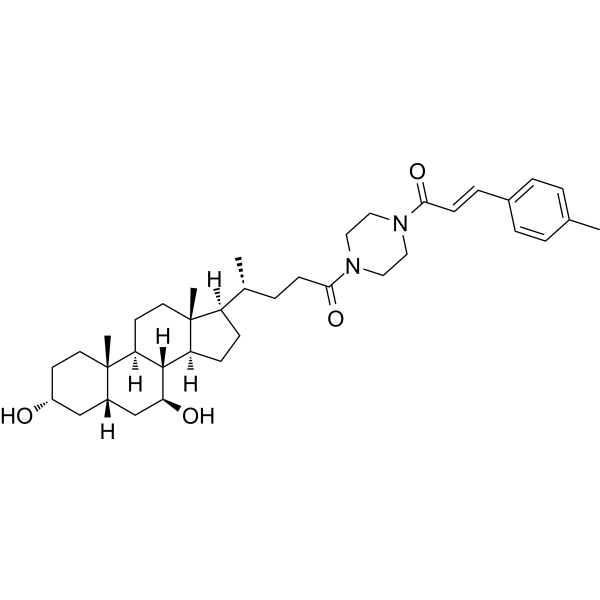 0 ImagesCat. No.: HY-149496CAS No.: 2994215-72-2
Akt/NF-κB/MAPK-IN-1 (compound 2m) is a potent and orally active inhibitor against NO (IC50=7.70 μM) with no significant toxicity. Akt/NF-κB/MAPK-IN-1 shows anti-inflammatory activity by inhibiting Akt/NF-κB and MAPK signaling pathways.
-
rel-Cleroindicin F
 0 ImagesCat. No.: HY-N3602ACAS No.: 94535-01-0Synonyms: Rengyolone
rel-Cleroindicin F (Rengyolone) is a cyclohexyl acetyl compound that can be isolated from the fruit of forsythia and has anti-inflammatory activity. It strongly inhibits the production of nitric oxide (NO) and tumor necrosis factor-alpha (TNF-α). rel-Cleroindicin F does this by downregulating the activity of NF-κB and NF-κB kinases in RAW 264.7 cells stimulated by LPS (HY-D1056), thus inhibiting the expression of inducible nitric oxide synthase (NO Synthase) and nitric oxide production.
-
JNJ-64164711
 0 ImagesCat. No.: HY-P992395Synonyms: JNJ-711
JNJ-64164711 (JNJ-711) is a bifunctional antibody that simultaneously targets human GITR/TNFRSF18 and FcγRIIIa. JNJ-64164711 binds to the GITR domain to activate the NF-κB signaling pathway, while binding to FcγRIIIa to support antibody-dependent cellular cytotoxicity (ADCC). JNJ-64164711 can specifically eliminate GITR-positive hematological tumor cells, activated T cells and intratumoral regulatory T cells through the ADCC mechanism, thereby significantly enhancing the body's anti-tumor immune response. JNJ-64164711 can be used in research related to non-small cell lung cancer, colorectal cancer, prostate cancer, renal cell carcinoma and hematological tumors.
-
CO delivery molecule 1
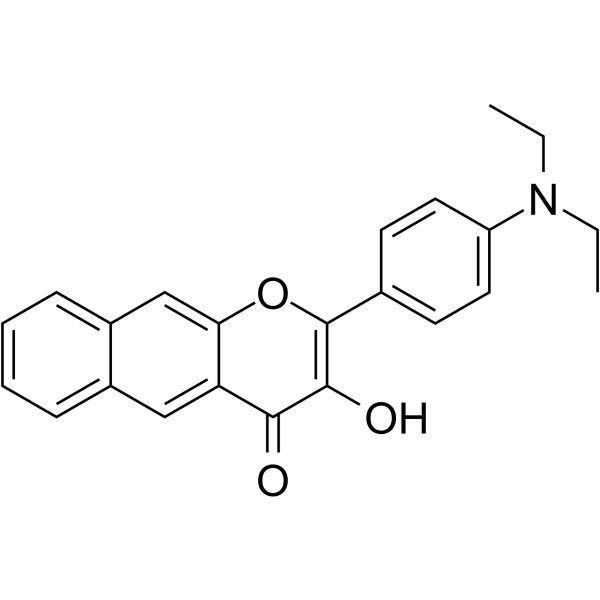 0 ImagesCat. No.: HY-144368CAS No.: 1972616-04-8
CO delivery molecule 1 (compound 4) localizes to the endoplasmic reticulum, mitochondria, and lysosomes. Subcellular localization of CO delivery molecule 1 results in CO-induced toxicity effects. Anti-inflammatory effects of CO delivery molecule 1, as measured by TNF-α suppression, occur at the nanomolar level in the absence of CO release, and are enhanced with visible-light-induced CO release.
-
XmAb-2513
 0 ImagesCat. No.: HY-P991638
XmAb-2513 is a humanized monoclonal antibody inhibitor targeting CD30. XmAb-2513 has significant anti-proliferative activity and superior antibody-dependent cell-mediated cytotoxicity (ADCC) as well as antibody-dependent cell-mediated phagocytosis (ADCP). XmAb-2513 can be used for hematologic malignancies like Hodgkin Lymphoma (HL) and Anaplastic Large Cell Lymphoma (ALCL) research.
-
Apremilast-d3
 0 ImagesCat. No.: HY-12085S3CAS No.: 1258597-46-4Synonyms: CC-10004-d3
Apremilast-d3 (CC-10004-d3) is deuterium labeled Apremilast. Apremilast (CC-10004) is an orally available inhibitor of type-4 cyclic nucleotide phosphodiesterase (PDE-4) with an IC50 of 74 nM. Apremilast inhibits TNF-α release by lipopolysaccharide (LPS) with an IC50 of 104 nM.
-
TNFR1-IN-2
 0 ImagesCat. No.: HY-P11834CAS No.: 3053449-34-3
TNFR1-IN-2 is a selective TNFR1 inhibitor with a Kd of 0.1 nM for hTNFR1. TNFR1-IN-1 inhibits TNFα-induced NF-κB signal transduction, with an IC50 value of 2.8 nM. TNFR1-IN-1 can be used in research related to inflammatory and immune diseases.



