



Quinone Reductase
Quinone Reductase
Quinones, a class of organic compounds, are formally derived from aromatic compounds and are a subset of the quinoid family which also contains the quinone imines and the quinone methides. NQO1 (QR1, EC 1.6.99.2), also referred to as DT-diaphorase (formerly), nicotinamide quinone oxidoreductase 1, quinone reductase type 1, or menadione reductase, is a cytosolic flavoenzyme. Another member of the quinone oxidoreductases family is NQO2 (QR2, EC 1.10.99.2) which is also a FAD bound protein (25 kDa) and closely related to NQO1. In addition to NQO1 and NQO2 found in humans, an ancient NQO3 subfamily exists in eubacteria, NQO4 subfamily in fungi, and NQO5 subfamily in archaebacteria[1][2].
References:
- [1]. Rashid MH, et al. Interactions of the antioxidant enzymes NAD(P)H: Quinone oxidoreductase 1 (NQO1) and NRH: Quinone oxidoreductase 2 (NQO2) with pharmacological agents, endogenous biochemicals and environmental contaminants. Chem Biol Interact. 2021 Aug 25;345:109574.
- [2]. Cuendet M, et al. Quinone reductase induction as a biomarker for cancer chemoprevention. J Nat Prod. 2006 Mar;69(3):460-3.
All Product Categories
-
Quinone Reductase Inhibitors
(27)
View all products
-
Quinone Reductase Activators
(28)
View all products
-
Quinone Reductase Modulator
(1)
View all products
-
Quinone Reductase Inducers
(9)
View all products
-
Quinone Reductase Control
(1)
View all products
-
Quinone Reductase Substrates
(7)
View all products
-
Quinone Reductase Related Products (78)
Related Products (78)

-
AI-3
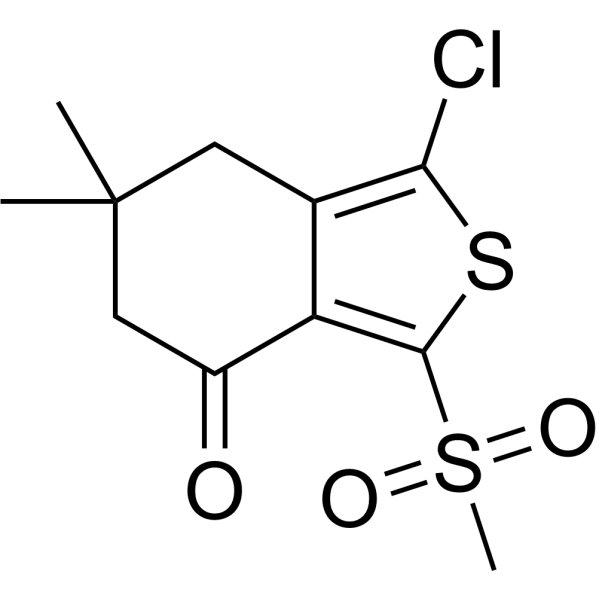 0 ImagesCat. No.: HY-107736CAS No.: 882288-28-0AI-3 is a potent ARE (antioxidant response element) activator. AI-3 increases the NQO1 at the transcript levels and protein expression levels. AI-3 has the potential for the research of oxidative stress related diseases.
-
Antitumor agent-67
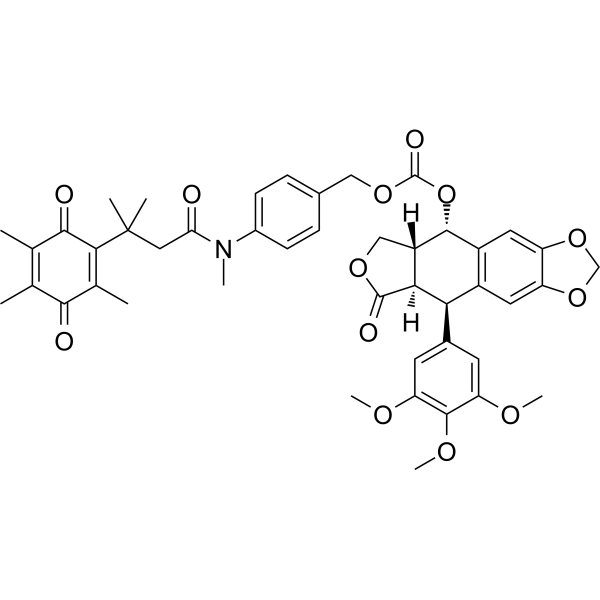 0 ImagesCat. No.: HY-146114CAS No.: 2820146-10-7Antitumor agent-67 (compound 3) is a potent antitumor agent. Antitumor agent-67 has highly selective toxicity to cancer cells and lower damage to normal cells. Antitumor agent-67 can be activated by NQO1 and effectively liberate podophyllotoxin and kill tumor cells. Antitumor agent-67 significantly suppresses cancer growth in HepG2 xenograft models without obvious toxicity.
-
IP-DNQ
 0 ImagesCat. No.: HY-178774CAS No.: 1430798-23-4Synonyms: Isopentyl-deoxynboquinoneIP-DNQ is an efficient NQO1 dependent cytotoxic agent. IP-DNQ has a potent killing effect on MCF-7 cells (IC50 = 0.18 µM). IP-DNQ can be used for cancer research.
-
Tanshindiol B
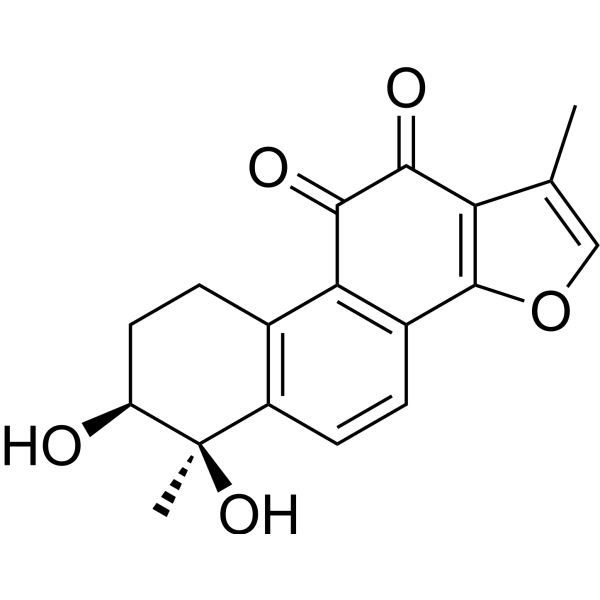 0 ImagesCat. No.: HY-123903CAS No.: 97465-70-8Tanshindiol B, a naphthaquinone diterpene, inhibits glioblastoma (GBM) growth by induction of noptosis (NQO1-dependent necrosis).
-
PRL-295
 0 ImagesCat. No.: HY-171035CAS No.: 2377770-85-7PRL-295 is an orally active inhibitor targeting Keap1-Nrf2 interaction. PRL-295 increases the thermal stability of Keap1 and disrupts its interaction with Nrf2, thereby activating the Nrf2-dependent transcriptional target NAD(P)H:quinone oxidoreductase 1 (NQO1). PRL-295 protects against Acetaminophen (HY-66005)-induced liver injury in mice.
-
Keap1/Nrf2/ARE activator 2
 0 ImagesCat. No.: HY-180155CAS No.: 3105470-83-2Keap1/Nrf2/ARE activator 2 is an activator of Keap1/Nrf2/ARE pathway and non-competitively inhibits AChE with an IC50 of 14.79 μM and a Ki of 1.35 μM. Keap1/Nrf2/ARE activator 2 promotes Nrf2 nuclear translocation, leading to antioxidant gene upregulation and enhanced cellular defense against oxidative stress. Keap1/Nrf2/ARE activator exhibits robust neuroprotection against both H2O2- and Scopolamine (SCA) (HY-N0296)-induced injury in PC12 cells. Keap1/Nrf2/ARE activator 2 ameliorates memory impairment and the neuro-inflammation associated with SCA-initiated cognitive dysfunction in a zebrafish model. Keap1/Nrf2/ARE activator 2 can be used for the research of Alzheimer's disease.
-
Nrf2 activator-27
 0 ImagesCat. No.: HY-184690Nrf2 activator-27 is a Nrf2 activator with anti-inflammatory activity. Nrf2 activator-27 increases the expression level of Nrf2, promotes its nuclear translocation, and upregulates the downstream target proteins HO-1 and NQO1. Nrf2 activator-27 reduces the production of NO, TNF-α, IL-1β and IL-6 in LPS-stimulated macrophages. Nrf2 activator-27 can be used for the research of inflammation-related diseases.
-
XD2-149
 0 ImagesCat. No.: HY-159570CAS No.: 2710221-08-0XD2-149 is a ZFP91 PROTAC degrader with DC50 values of 0.08 μM and 0.06 μM, respectively. ZFP91 is a bifunctional nuclear protein with both transcription factor and E3 ubiquitin ligase activities, and is classified as an oncogenic non-canonical NF-κB pathway regulator in tumor and immune regulation. XD2-149 induces proteasome-dependent degradation of the E3 ubiquitin-protein ligase ZFP91. XD2-149 inhibits the STAT3 signaling pathway in pancreatic cancer cells and induces NQO1-dependent cell death independent of ZFP91 degradation. XD2-149 can be used for the research of pancreatic cancer.
-
Caricotamide
 0 ImagesCat. No.: HY-W843391CAS No.: 64881-21-6Synonyms: EP-0152RCaricotamide (EP-0152R) is a coenzyme of quinone oxidoreductase 2 (NQO2). Caricotamide can efficiently induce the catalytic activity of NQO2 and enhance the anticancer activity of Tretazicar (HY-13543).
-
NQO1 inducer 1
 0 ImagesCat. No.: HY-176720NQO1 inducer 1 (Compound 20) is a potent NQO1 inducer (CD=3 μM). NQO1 inducer 1 is a promising antioxidant that can be used for the research of redox-modulating.
-
SHN7
 0 ImagesCat. No.: HY-184706CAS No.: 3126116-06-8SHN7 is a selective HDAC1/HDAC6 inhibitor, NQO1 substrate and ROS inducer, with an IC50 of 30 nM against HDAC1 and an IC50 of 10 nM against HDAC6. SHN7 inhibits STAT3 with a Kd of 8.9 μM. SHN7 arrests the cell cycle at the G2/M phase and induces Apoptosis. SHN7 exhibits anti-tumor effects in triple-negative breast cancer (TNBC) xenograft models. SHN7 can be used for the research of triple-negative breast cancer.
-
Bisindolylmaleimide III hydrochloride
 0 ImagesCat. No.: HY-112454CAS No.: 683775-59-9Bisindolylmaleimide III hydrochloride is a protein kinase C (PKC) inhibitor with IC50 values of 0.26, 5.7, and 6 μM against PKCα, PKCδ, and PKCμ, respectively. Bisindolylmaleimide III hydrochloride also exhibits inhibitory activity against other off-targets, with IC50 values of 0.17, 1, and 2 μM against SLK, adenosine kinase (AK), and CDK2, respectively; its Ki for NQO2 is 16.5 μM. Bisindolylmaleimide III hydrochloride selectively binds to activated Rsk1 following EGF stimulation, and serves as a tool for detecting the activation status of intracellular Rsk1 and PKCα, as well as for functional analysis of SLK. Bisindolylmaleimide III hydrochloride can be used in studies of signal transduction and colorectal cancer.
-
Keap1-Nrf2-IN-30
 0 ImagesCat. No.: HY-184761Keap1-Nrf2-IN-30 is an orally active, blood-brain barrier-permeable Keap1-Nrf2 protein-protein interaction inhibitor with a Keap1 Kd value of 157 nM. Keap1-Nrf2-IN-30 selectively inhibits the Keap1-Nrf2 protein-protein interaction, promotes Nrf2 nuclear translocation, suppresses induced ferroptosis, reduces the expression of Aβ and p-Tau, and upregulates the expression of GPX4 and SLC7A11. Keap1-Nrf2-IN-30 upregulates the expression of HO-1 and NQO1, alleviates neuronal damage, and improves cognitive and spatial memory deficits. Keap1-Nrf2-IN-30 can be used in the research of Alzheimer's disease.
-
Garlic oil (synthetic)
 0 ImagesCat. No.: HY-N14116ACAS No.: 8000-78-0Garlic oil (synthetic) is an orally effective anti-inflammatory, antioxidant, and anticancer agent. Garlic oil (synthetic) inhibits the activation of NF-κB, NFκB2 and NLRP3 inflammasome, and induces the expression of GSTA1, HO-1 and NQO-1. Garlic oil (synthetic) reduces the Bcl-2/Bax protein ratio and activates NNK-induced apoptosis (apoptosis) in lung tissues. Garlic oil (synthetic) attenuates NNK-induced apoptosis in MRC-5 cells and reduces excessive ROS production. Garlic oil (synthetic) alleviates pyroptosis (pyroptosis) and exerts a protective effect against acute lung injury in mice. Garlic oil (synthetic) inhibits lung tumorigenesis in mice and improves small intestinal motility in rats with type 2 diabetes. Garlic oil (synthetic) can be used in research related to acute lung injury, lung cancer, peptic ulcer, type 2 diabetes and hypertension.
-
Nampt-IN-8
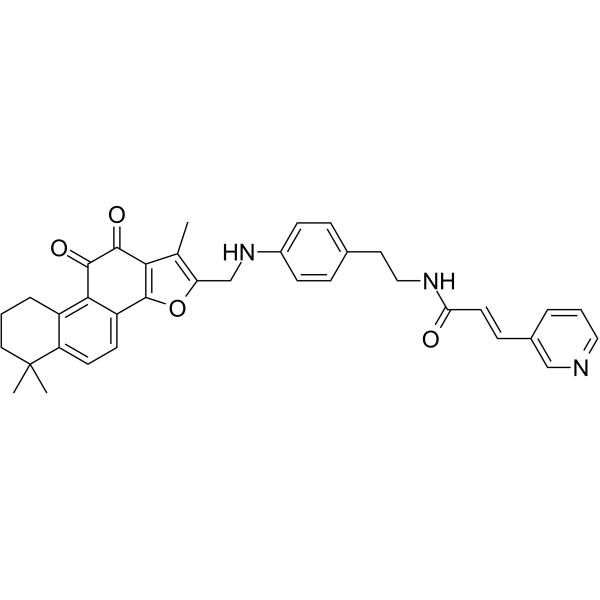 0 ImagesCat. No.: HY-147795CAS No.: 2453183-75-8Nampt-IN-8 (Compound 10d) is an NAMPT inhibitor with an IC50 of 0.183 μM. Nampt-IN-8 is also a relatively good NQO1 substrate. Nampt-IN-8 induces cell apoptosis and ROS.
-
TBE 31
 0 ImagesCat. No.: HY-141439CAS No.: 936475-62-6TBE 31 is an orally active Keap1/Nrf2 pathway activator and NQO1 inducer with a Dm value of 1.1 nM for NQO1. TBE 31 binds to cysteine residues of Keap1, inhibits ubiquitination and degradation of Nrf2, thereby activating the expression of ARE-dependent genes. TBE 31 induces cytoprotective enzymes including NQO1 and GST isoforms, promotes Nrf2 accumulation, and upregulates Nrf2-regulated genes related to antioxidation and lipid metabolism. TBE 31 inhibits pro-inflammatory responses, formation of AFB1-DNA adducts, endoplasmic reticulum stress, cell apoptosis (apoptosis), hepatic fibrosis, oxidative stress, and the expression of ChREBP. TBE 31 reduces the number of tumors in a mouse model of ultraviolet-induced skin carcinogenesis. TBE 31 enhances nerve growth factor-induced neurite outgrowth. TBE 31 attenuates LPS-induced serum TNF-α levels and immobility time in mice. TBE 31 can be used in research related to liver cancer, skin cancer, inflammation-related depression, and non-alcoholic steatohepatitis.
-
NQO2 activator-1
 0 ImagesCat. No.: HY-180168CAS No.: 1266401-09-5NQO2 activator-1 (Compound 1d) is a selective NQO2 activator with 20.89% increase of NQO2 activity at 10 μM. NQO2 activator-1 strongly inhibits NLRP3 inflammasome activation. NQO2 activator-1 can be used for the research of inflammation and immunology, such as rheumatoid arthritis.
-
Antitumor agent-195
 0 ImagesCat. No.: HY-170947Antitumor agent-195 (compound 16c) is a dual targeting agent of STAT3 and NQO1. Antitumor agent-195 significantly inhibits phosphorylation of STAT3 at Tyr705 at a concentration of 1 μM and effectively induce Apoptosis in MDAMB-231 and MDA-MB-468 breast cancer cells. Antitumor agent-195 as a NQO1 substrate strongly increases ROS generation and causes severe DNA damage in a dose-dependent manner. Antitumor agent-195 shows encouraging anti-tumor efficacy in the MDA-MB-231 xenograft model.
-
Glucocamelinin
 0 ImagesCat. No.: HY-N20735CAS No.: 67884-10-0Synonyms: 10-(Methylsulfinyl)decylglucosinolate; GSL 10Glucocamelinin (GSL 10) is a sulfinyl glucosinolate identified from seeds of Camelina sativa and an upregulator of quinone reductase (NQO1). Glucocamelinin upregulates the activity of phase II detoxifying enzymes, exhibits selective cytotoxic activity against lung cancer cells, and possesses in vitro antioxidant activity. Glucocamelinin can be used in studies related to non-small cell lung cancer.
-
Sesaminol
 0 ImagesCat. No.: HY-N15190CAS No.: 74061-79-3Sesaminol is an orally active activator for Nrf2-ARE pathway, that promotes the the nuclear translocation of Nrf2 and enhances the NQO1 expression, thereby enhances the cell's defense against oxidative stress. Sesaminol inhibits 6-OHDA (HY-B1081)-induced ROS production and apoptosis in cell SH-SY5Y. Sesaminol exhibits neuroprotective efficacy against Rotenone (HY-B1756)-induced Parkinson's disease.



