Reactive Oxygen Species (ROS)
Reactive oxygen species (ROS), such as superoxide anion (O2-), hydrogen peroxide (H2O2), and hydroxyl radical (HO•), consist of radical and non-radical oxygen species formed by the partial reduction of oxygen. Cellular ROS are generated endogenously during mitochondrial oxidative metabolism as well as in cellular response to xenobiotics, cytokines, and bacterial invasion.
ROS also activates MAPK pathways by the direct inhibition of MAPK phosphatases. Through PTEN, the PI3K pathway is subject to reversible redox regulation by ROS generated by growth factor stimulation. The activation of autophagy may be a cellular defense mechanism in response to ROS.
All Product Categories
-
Reactive Oxygen Species (ROS) Inhibitors
(1091)
View all products
-
Reactive Oxygen Species (ROS) Agonists
(37)
View all products
-
Reactive Oxygen Species (ROS) Antagonists
(2)
View all products
-
Reactive Oxygen Species (ROS) Activators
(525)
View all products
-
Reactive Oxygen Species (ROS) Modulators
(22)
View all products
-
Reactive Oxygen Species (ROS) MDM2 Inhibitor
(1)
View all products
-
Reactive Oxygen Species (ROS) Inducers
(645)
View all products
-
Reactive Oxygen Species (ROS) Controls
(5)
View all products
-
Reactive Oxygen Species (ROS) Substrates
(3)
View all products
-
Reactive Oxygen Species (ROS) Related Products (2859)
Related Products (2859)

-
Antibodies (8)
-
KWZL-7f15
 0 ImagesCat. No.: HY-182036KWZL-7f15 is a dual CDK6/BRD4 inhibitor with an IC50 of 31.81 nM against human CDK6. KWZL-7f15 inhibits the CDK6-RB axis and BRD4-Myc axis, and also acts as a pan-BET inhibitor. KWZL-7f15 exhibits antiproliferative activity against triple-negative breast cancer cells. KWZL-7f15 shows antitumor activity in xenograft mouse models. KWZL-7f15 can be used in studies related to triple-negative breast cancer.
-
Antitumor agent-139
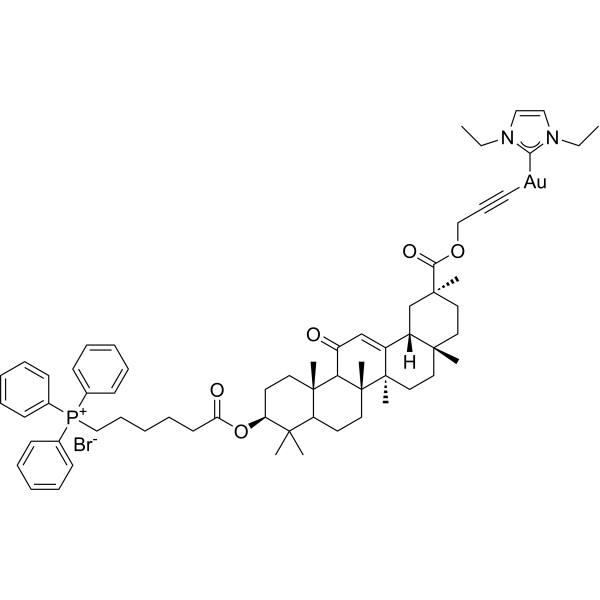 0 ImagesCat. No.: HY-163301Antitumor agent-139 (compound 9b) is a liver - and mitochondria-targeting gold(I) complexe, and produces reactive oxygen species (ROS) and facilitates DNA excretion. Antitumor agent-139 inhibits tumor growth in a patient-derived xenograft model of hepatocellular carcinoma.
-
Psoralidin (Standard)
 0 ImagesPsoralidin (Standard) is the analytical standard of Psoralidin. This product is intended for research and analytical applications. Psoralidin is a dual inhibitor of COX-2 and 5-LOX, regulates ionizing radiation (IR)-induced pulmonary inflammation.Anti-cancer, anti-bacterial, and anti-inflammatory properties. Psoralidin significantly downregulates NOTCH1 signaling. Psoralidin also greatly induces ROS generation.
-
Lactobionic acid (Standard)
 0 ImagesLactobionic acid (Standard) is an analytical standard for lactobionic acid. This product is intended for use in research and analytical applications. Lactobionic acid is a bionic acid that can be naturally found in the Caspian Sea yogurt and chemically constituted of a gluconic acid bonded to a galactose. Lactobionic acid has antioxidant, antimicrobial, chelating, stabilizer, acidulant, and moisturizing properties. Lactobionic acid can be obtained by electrolytic methods, microbial fermentation or biocatalytic approaches. Lactobionic acid can be used in foodstuffs, to produce new functional products and against food-borne pathogens. Lactobionic acid inhibits DNA repair and protein synthesis, induction of oxidative stress and inhibition of metabolic pathways against MRSA.
-
KB-15
 0 ImagesCat. No.: HY-175542KB-15 is a STAT3 inhibitor. KB-15 exhibits potent anti-proliferative activity against AGS gastric cancer cells (IC50 = 0.29 μM) and BGC-823 gastric cancer cells (IC50 = 0.65 μM). KB-15 exerts anti-tumor effects by inhibiting STAT3 phosphorylation, downregulating HO-1 expression, and promoting intracellular ROS accumulation. KB-15 induces G0/G1 phase cell cycle arrest and apoptosis, as well as suppresses colony formation and migration of gastric cancer cells. KB-15 demonstrates excellent anti-tumor efficacy in BGC-823 subcutaneous xenograft model. KB-15 can be used for the study of gastric cancer.
-
Antitumor agent-218
 0 ImagesCat. No.: HY-183797CAS No.: 3094774-72-5Antitumor agent-218 is an aggregation-induced emission (AIE)-based photosensitizer. Antitumor agent-218 selectively accumulates in the endoplasmic reticulum, and generates ROS within the endoplasmic reticulum upon irradiation to induce necroptosis of tumor cells. Antitumor agent-218 can be used in cancer-related research.
-
Pirenoxine sodium
 0 ImagesCat. No.: HY-108296ACAS No.: 51410-30-1Synonyms: Catalin K sodiumPirenoxine sodium (Catalin K sodium) is an antioxidant with lens-protective activity. Pirenoxine sodium inhibits lens sclerosis, prevents lipid peroxidation and suppresses lens protein opacification. Pirenoxine sodium blocks benzoquinone acetic acid-induced cataract progression. Pirenoxine sodium can be used in research related to presbyopia and cataracts.
-
Antileishmanial agent-40
 0 ImagesCat. No.: HY-183262CAS No.: 3126462-40-3Antileishmanial agent-40 is an orally active and selective antileishmanial agent. Antileishmanial agent-40 elevates intracellular reactive oxygen species (ROS) levels in Leishmania donovani promastigotes. Antileishmanial agent-40 induces cell cycle arrest at the sub-G0/G1 phase in Leishmania donovani promastigotes, indicative of programmed-like parasite death. Antileishmanial agent-40 can be used for the research of leishmaniasis.
-
Py-FGGK
 0 ImagesCat. No.: HY-P11822Py-FGGK is a gelatinase-responsive short peptide. Py-FGGK can specifically target MRSA, cause leakage of cellular components, generate ROS in situ, and kill biofilm-encapsulated MRSA cells. Py-FGGK can promote cell migration to aid wound healing, and accelerates wound healing in MRSA-infected rat models. Py-FGGK can be used in studies related to MRSA infection.
-
Ciprofloxacin lactate solution
 0 ImagesCat. No.: HY-FLW040298CAS No.: 97867-33-9Synonyms: Bay-09867 lactate solutionCiprofloxacin lactate solution is mainly composed of Ciprofloxacin lactate (HY-W040298). Ciprofloxacin (Bay-09867) lactate is a potent, orally active topoisomerase IV inhibitor. Ciprofloxacin lactate induces mitochondrial DNA and nuclear DNA damage and lead to mitochondrial dysfunction, ROS production. Ciprofloxacin lactate has anti-proliferative activity and induces apoptosis. Ciprofloxacin lactate is a fluoroquinolone antibiotic, exhibiting potent antibacterial activity.
-
27-Hydroxyisomangiferolic acid
 0 ImagesCat. No.: HY-N19669CAS No.: 123563-64-427-Hydroxyisomangiferolic acid, a cycloartane-type triterpene found in Indonesian propolis from East Java, acts as a weak scavenger with low free radical scavenging activity against DPPH (HY-112053) radicals. can be used for research on inflammation, heart disease, diabetes and cancer.
-
FBP
 0 ImagesCat. No.: HY-182266FBP is a mitochondria-targeted, selective anticancer agent. FBP induces oxidative stress and mitochondrial dysfunction, leading to Apoptosis. FBP generates ROS and causes double-strand DNA breaks in cancer cells. FBP exhibits cytotoxic efficacy against cancer cells, with cervical cancer cells being the most sensitive. FBP can be used for the research of cervical cancer, lung cancer, melanoma and breast cancer.
-
2E-3-F16
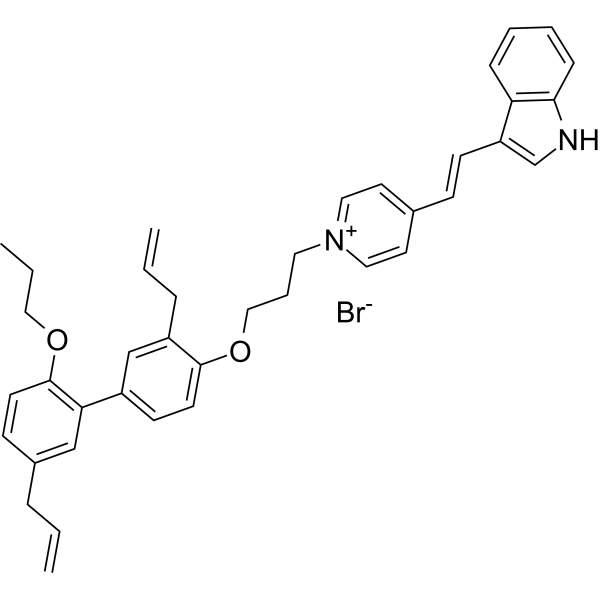 0 ImagesCat. No.: HY-157292CAS No.: 3002962-69-52E-3-F16 is a anticancer agent. 2E-3-F16 exhibits tumor cell selectivity between NCI-H446 cancer cells and HBE cells. 2E-3-F16 enhances the sensitivity of A549 cells to Cisplatin (HY-17394).
-
SCP-7
 0 ImagesCat. No.: HY-187792CAS No.: 2479389-64-3SCP-7 is a STAT3 inhibitor with a Kd value of 795 nM. SCP-7 induces mitochondrial dysfunction, increases ROS levels and promotes apoptosis. SCP-7 induces G2/M phase arrest of the cell cycle. SCP-7 inhibits the proliferation, migration and colony formation of colorectal cancer cells. SCP-7 suppresses tumor growth in a mouse xenograft model of colorectal cancer. SCP-7 is applicable to research related to colorectal cancer.
-
Nrf2/HO-1 activator 2
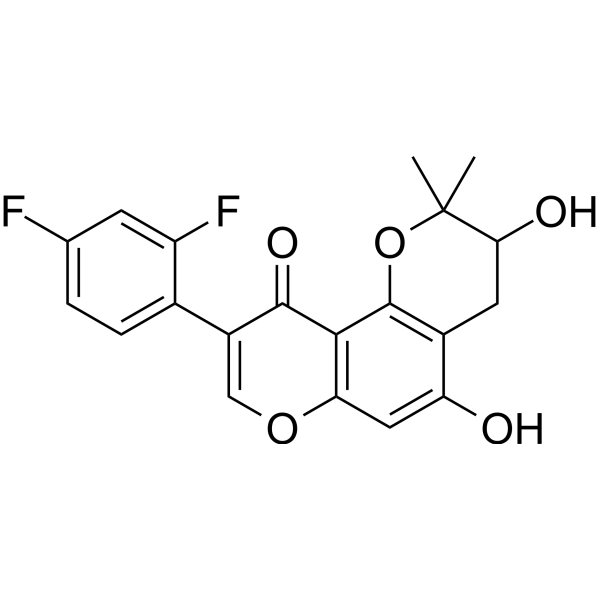 0 ImagesCat. No.: HY-151431CAS No.: 2883506-31-6Nrf2/HO-1 activator 2 (compound 13m), difluoro-substituted derivative, is a potent Nrf2/HO-1 activator. Nrf2/HO-1 activator 2 has neuroprotective and antioxidant effects through the Nrf2/HO-1 pathway mediated by phosphorylation of ERK1/2, JNK, or Akt in PC12 cells. Nrf2/HO-1 activator 2 can be used in the research of Parkinson's disease (PD).
-
N4Py
 0 ImagesCat. No.: HY-120420CAS No.: 167695-87-6N4Py is a bleomycin-mimetic pentadentate ligand that targets intracellular FeII and reversibly chelates a variety of transition metals. N4Py chelates induce apoptosis through two pathways: DNA cleavage via ROS generation and XIAP downregulation via ZnII chelation, with only FeII/FeIII-N4Py exhibiting potent DNA cleavage activity. The folate conjugate of N4Py targets folate receptors, can be intracellularly cleaved, and selectively kills FR-positive cancer cells. N4Py can be used in research on various cancers including nasopharyngeal epidermoid carcinoma, ovarian cancer, and mammary adenocarcinoma.
-
Cytisine-platinum(IV) prodrug-1
 0 ImagesCat. No.: HY-182360Cytisine-Platinum(IV) Prodrug-1 is a Pt(IV) prodrug incorporating the natural compound Cytisine (HY-N0175) with antiproliferative activity against tumor cells. Cytisine-Platinum(IV) Prodrug-1 promotes calcium transfer across the IP3R1-GRP75-VDAC1 axis to drive mitochondrial calcium overload. Cytisine-Platinum(IV) Prodrug-1 initiates unfolded protein response via PERK, eIF2α, ATF4, and CHOP to modulate Bcl-2 and Bax, triggering apoptosis. Cytisine-Platinum(IV) Prodrug-1 induces mitochondrial dysfunction, ROS production, reduced ATP synthesis, DNA damage, and S-phase cell cycle arrest. Cytisine-Platinum(IV) Prodrug-1 activates the cGAS-STING pathway, reduces PD-L1 expression, drives immunogenic cell death. Cytisine-Platinum(IV) Prodrug-1 exhibits high physiological stability, efficient cellular accumulation, and enhanced platinum-DNA binding, and inhibits tumor growth in mouse models with reduced systemic toxicity. Cytisine-Platinum(IV) Prodrug-1 can be used for the research of lung cancer.
-
Apoptosis inducer 65
 0 ImagesCat. No.: HY-189411Apoptosis inducer 65 is an apoptosis inducer with antiproliferative activity against cancer cells. Apoptosis inducer 65 induces G0/G1 cell cycle arrest and intrinsic apoptosis by upregulating p53, BAX, and caspase-7, while downregulating Bcl-2. Apoptosis inducer 65 inhibits ROS, NO, TNF-α, IL-1β, and IL-6 in macrophages. Apoptosis inducer 65 can be used for research on hepatocellular carcinoma and inflammation.