



Amantadine-d6

Based on 1 Customer Validation
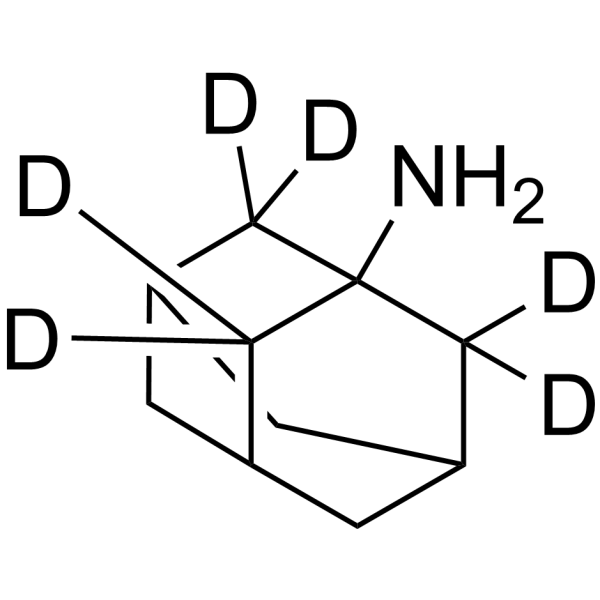
Amantadine-d6 is the deuterium labeled Amantadine. Amantadine (1-Adamantanamine) is an orally avtive and potent antiviral agent with activity against influenza A viruses. Amantadine inhibits several ion channels such as NMDA and M2, and also inhibits Coronavirus ion channels. Amantadine also has anti-orthopoxvirus and anticancer activity. Amantadine can be used for Parkinson's disease, postoperative cognitive dysfunction (POCD) and COVID-19 research.
For research use only. We do not sell to patients.
- Purity : 99.86%
- CAS No.: 1219805-53-4
- Formula: C10H11D6N
- Molecular Weight:157.29
-
Storage:Powder -20°C, 3 years ; In solvent -80°C, 6 months , -20°C, 1 month

To place orders, for customer services and technical support, please contact: MedChemExpress USA
Tel: 609-228-6898 E-mail: [email protected] [email protected]


-
 Biological Activity
-
Chemical Information
- Protocols
- Purity & Documentation
- References
-
 Help & FAQs


-
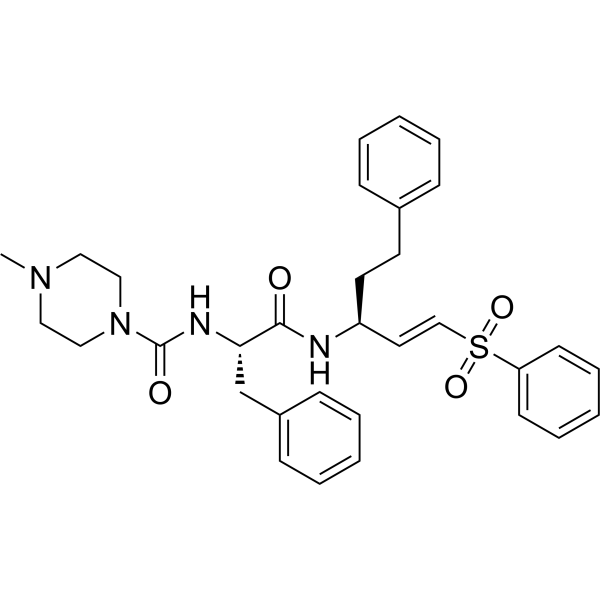
HY-119293
K777Cysteine Protease Inhibitor -
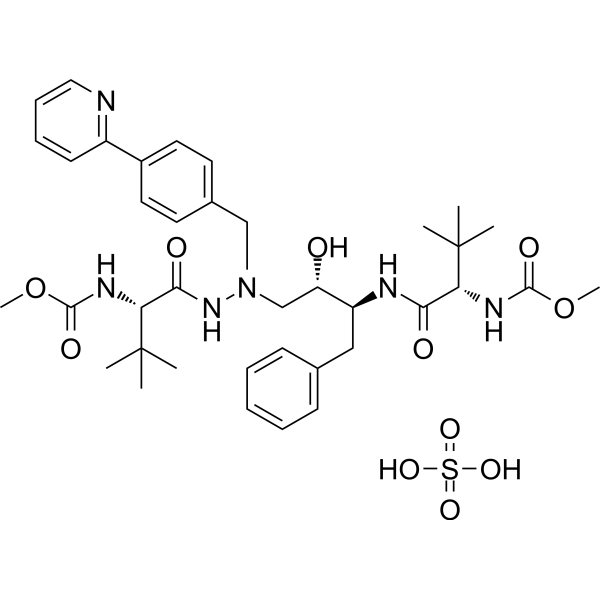
HY-17367A
Atazanavir sulfateHIV Protease Inhibitor -
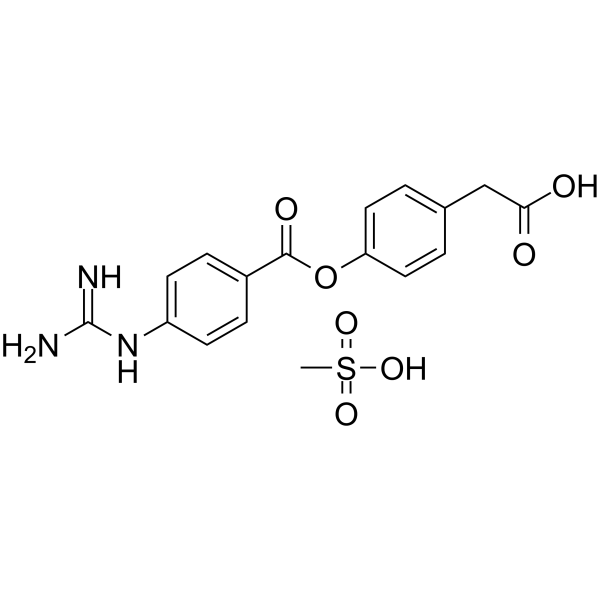
HY-19727A
FOY 251Proteinase Inhibitor -
HY-D1270
Direct Violet 1SARS-CoV Inhibitor -
HY-B0402B
Amantadine sulfateAntiviral Agent -

HY-17367AR
Atazanavir sulfate (Standard)HIV Protease Inhibitor -

HY-19727AR
FOY 251 (Standard)Proteinase Inhibitor


Biological Activity
Description
In Vitro
Stable heavy isotopes of hydrogen, carbon, and other elements have been incorporated into drug molecules, largely as tracers for quantitation during the drug development process. Deuteration has gained attention because of its potential to affect the pharmacokinetic and metabolic profiles of drugs[1].
MedChemExpress (MCE) has not independently confirmed the accuracy of these methods. They are for reference only. Further protocols information, click here.
Application
1. This compound can be used as a tracer
2. This compound can be used as an internal standard for quantitative analysis by NMR, GC-MS, or LC-MS.


Chemical Information
-
CAS No. 1219805-53-4
-
Unlabeled CAS 768-94-5
-
Appearance Solid
-
Molecular Weight 157.29
-
Formula C10H11D6N
-
Color White to off-white
-
SMILES
NC12C([2H])(C3CC(C2([2H])[2H])CC(C1([2H])[2H])C3)[2H]
-
Synonyms
1-Adamantanamine-d6; 1-Aminoadamantane-d6
-
Shipping
Room temperature in continental US; may vary elsewhere.
-
Storage
Powder -20°C 3 years In solvent -80°C 6 months -20°C 1 month

Protocols
-
Research Protocol for Infectious Diseases
Infectious-disease experiments test how pathogens interact with host barriers, innate immune receptors, inflammatory signaling, pathogen replication, and tissue injury; pattern-recognition receptors such as TLRs, RIG-I-like receptors, NOD-like receptors, and inflammasomes detect microbial molecules and activate NF-κB, interferon, and cytokine responses. The central hypothesis is that infection severity reflects the balance between pathogen burden and host response: protective inflammation restricts pathogen growth, whereas excessive or mislocalized inflammation contributes to tissue damage and disease phenotype. Unresolved questions include which host pathways are protective versus pathogenic, why some infection models fail to translate to human disease, and which combined readouts best predict clinically relevant infection outcomes.
-
Human pluripotent stem cell midbrain dopaminergic neuron differentiation
Human pluripotent stem cells are directed toward midbrain dopaminergic neurons by first inducing a neural floor-plate-like progenitor state, then patterning cells with ventralizing SHH signaling and midbrain/WNT-FGF cues, and finally maturing progenitors into neurons expressing dopaminergic markers such as TH, NURR1/NR4A2, PITX3, DAT/SLC6A3, VMAT2/SLC18A2, GIRK2/KCNJ6, FOXA2, LMX1A, and EN1. The main readouts are loss of pluripotency, acquisition of FOXA2+/LMX1A+ midbrain floor-plate progenitors, emergence of βIII-tubulin+/MAP2+ neurons, and production of TH+ dopaminergic neurons with molecular, dopamine-release, and electrophysiological features of midbrain dopaminergic identity.


Purity & Documentation
-
Data Sheet (277 KB)
-
SDS (251 KB)
- English - EN (251 KB)
- Français - FR (251 KB)
- Deutsch - DE (251 KB)
- Norwegian - NO (251 KB)
- Español - ES (251 KB)
- Swedish - SV (251 KB)
- Italian - IT (251 KB)
- Korean - KR (251 KB)
- Portuguese - PT (251 KB)
-
Handling Instructions (2659 KB)
References
[1]. Russak EM, et al. Impact of Deuterium Substitution on the Pharmacokinetics of Pharmaceuticals. Ann Pharmacother. 2019 Feb;53(2):211-216. [Content Brief]
[2]. Suzuki H, et al. Emergence of amantadine-resistant influenza A viruses: epidemiological study. J Infect Chemother. 2003;9(3):195-200. [Content Brief]
[3]. Hubsher G, et al. Amantadine: the journey from fighting flu to treating Parkinson disease. Neurology. 201278(14):1096-1099. [Content Brief]
[4]. Donald F Smee, et al. A review of compounds exhibiting anti-orthopoxvirus activity in animal models. Antiviral Res. 2003 Jan57(1-2):41-52. [Content Brief]
[5]. Fink K, et al. Amantadine Inhibits SARS-CoV-2 In Vitro. Viruses. 2021 Mar 2413(4):539. [Content Brief]
[6]. Zhang J, et al. Amantadine alleviates postoperative cognitive dysfunction possibly by increasing glial cell line-derived neurotrophic factor in rats. Anesthesiology. 2014 Oct121(4):773-85. [Content Brief]
[7]. Lan Z, et al. Amantadine inhibits cellular proliferation and induces the apoptosis of hepatocellular cancer cells in vitro. Int J Mol Med. 201536(3):904-910. [Content Brief]

Calculators
Concentration (start) × Volume (start) = Concentration (final) × Volume (final)


Amantadine-d6 Related Classifications
HY-B0402S1 Related Classifications
 Powered by Bioz