



Quercimeritrin
Based on 2 publication(s) in Google Scholar
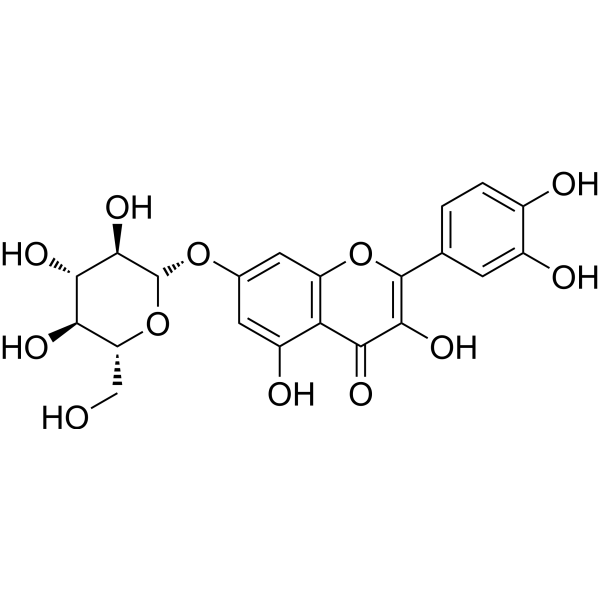
Quercimeritrin (Quercetin-7-O-β-D-glucopyranoside) is an orally active α-glucosidase inhibitor (with an IC50 of 79.88 μM against the Saccharomyces cerevisiae enzyme) and a P-gp substrate, with anti-angiogenic and antioxidant activities. Quercimeritrin does not cross the blood-brain barrier and does not inhibit cytochrome P450 enzymes. Quercimeritrin precisely binds to and inhibits the active sites of c-Kit, MMP-2, Aurora-A kinases and α-glucosidase, thereby disrupting target functions. Quercimeritrin effectively regulates postprandial blood glucose and also exhibits significant anti-angiogenic activity, which inhibits endothelial cell proliferation and microvascular growth. Quercimeritrin can be used in the research of diabetes and breast cancer.
For research use only. We do not sell to patients.
- Purity : 99.48%
- CAS No.: 491-50-9
- Formula: C21H20O12
- Molecular Weight:464.38
-
Storage:
4°C, protect from light
* In solvent : -80°C, 6 months; -20°C, 1 month (protect from light)

To place orders, for customer services and technical support, please contact: MedChemExpress USA
Tel: 609-228-6898 E-mail: [email protected] [email protected]


-
 Biological Activity
-
Chemical Information
-
Solvent & Solubility
- Protocols
- Purity & Documentation
- References
-
 Help & FAQs


-
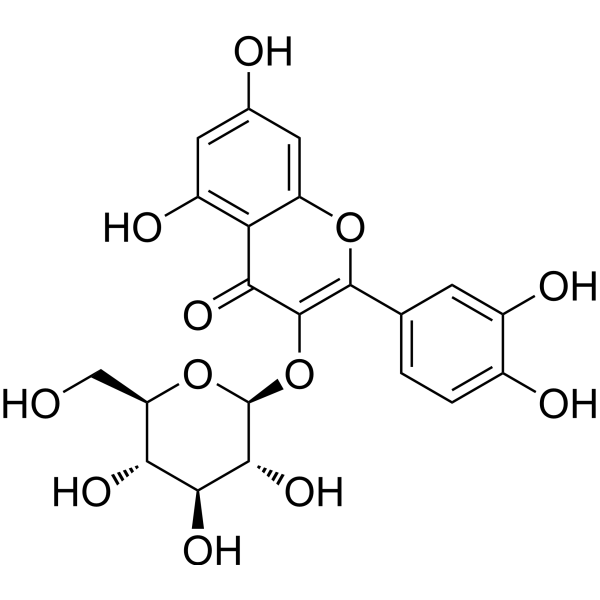
HY-N1445
IsoquercitrinNO Synthase Inhibitor -
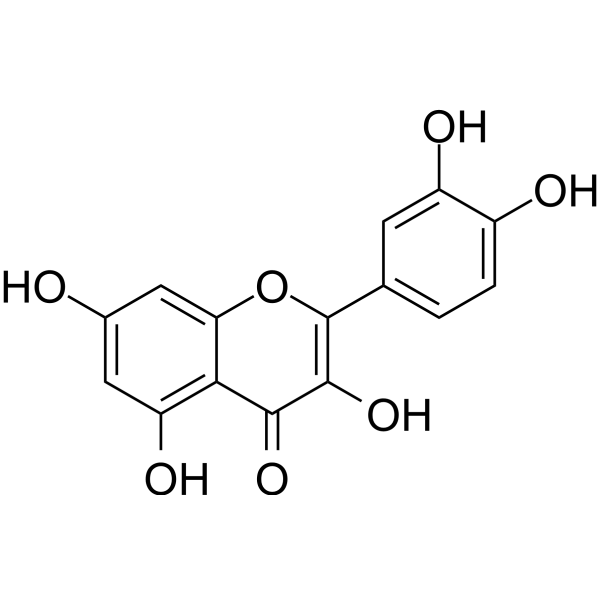
HY-18085
QuercetinFlavonoid Antioxidant -
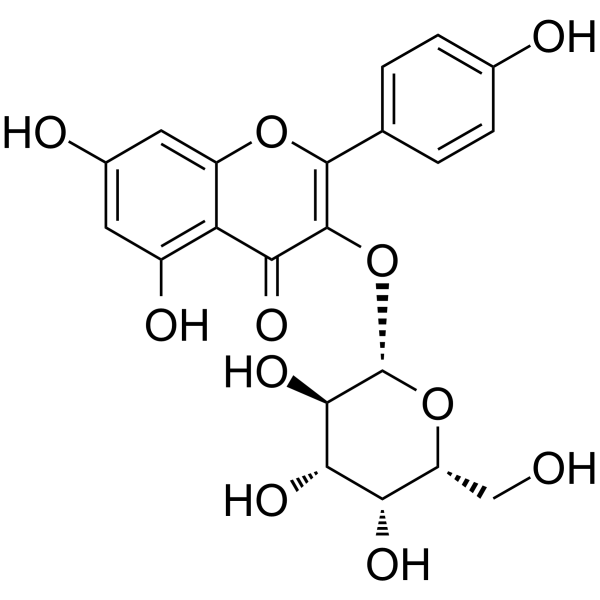
HY-N6605
Kaempferol 3-O-β-D-galactopyranosideAntioxidant Agent -

HY-N0419R
Quercimeritrin (Standard)Natural Product -
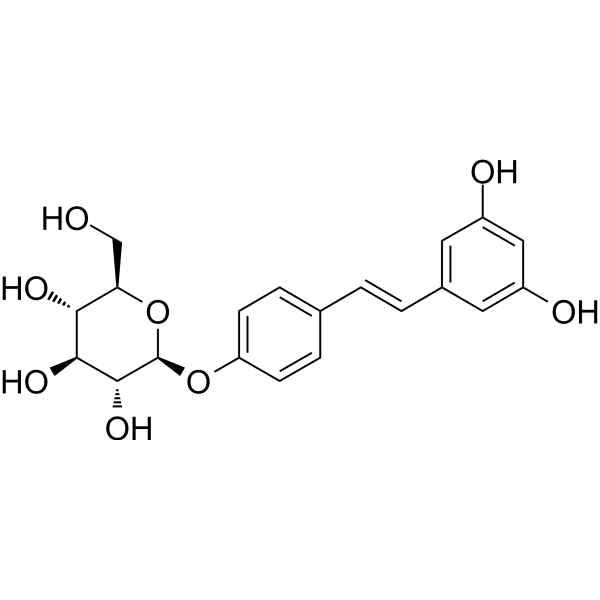
HY-N4195
Resveratrolosideα-Glucosidase Inhibitior -
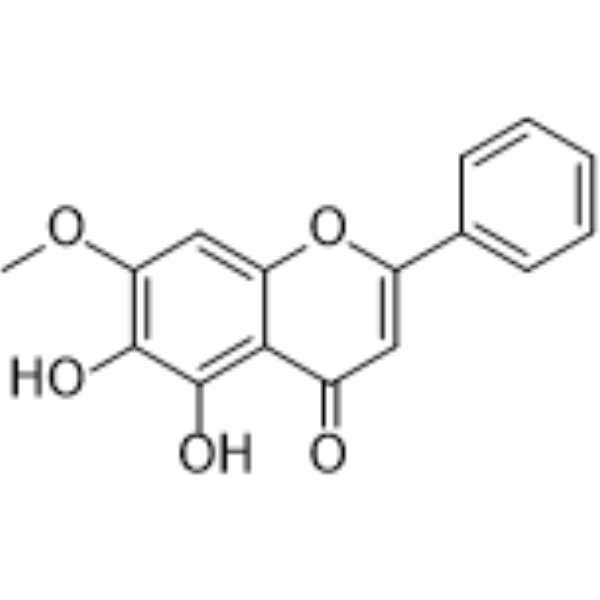
HY-N4285
NegleteinFlavone -
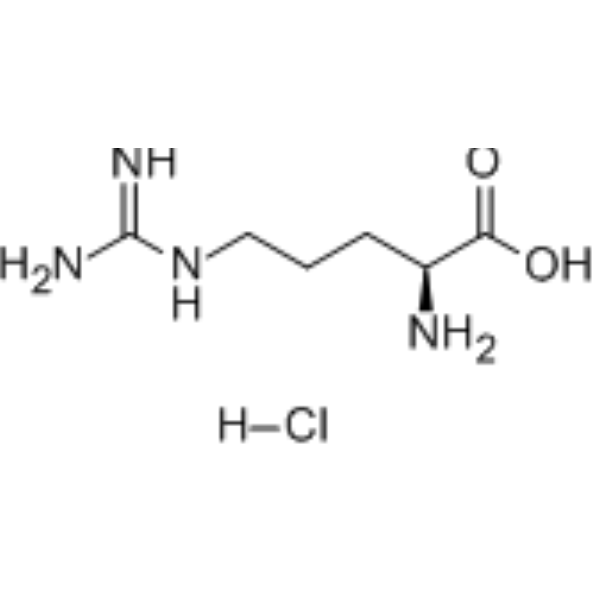
HY-N0455A
L-Arginine hydrochlorideNitrogen Donor -
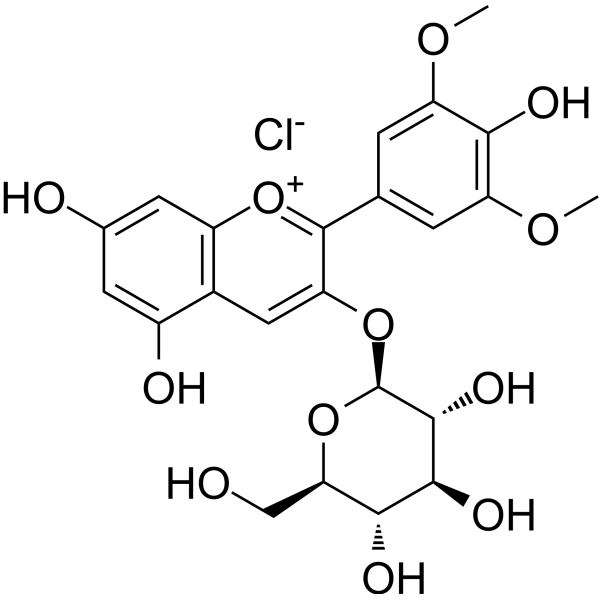
HY-125740
Malvidin-3-glucoside chlorideNF-κB Inhibitor -

HY-N0455AR
L-Arginine hydrochloride (Standard)Nitrogen Donor -
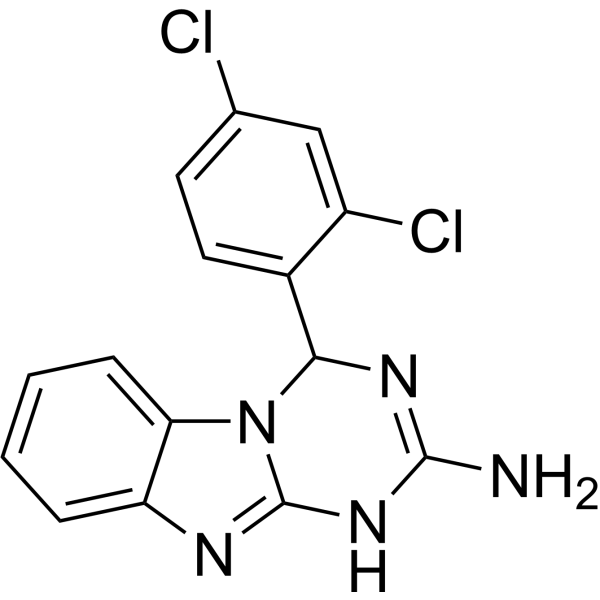
HY-W278582
Topoisomerase II inhibitor 14TopII Inhibitor -

HY-125740R
Malvidin-3-glucoside chloride (Standard)NF-κB Inhibitor
Publications Citing Use of MedChemExpress (MCE) Quercimeritrin
MoreAll VEGFR Isoforms
MoreAll Aurora Kinase Isoforms
More

Biological Activity
Description
IC50 & Target
|
VEGFR2 |
MMP-2 |
MMP-9 |
Cellular Effect
|
Cell Line

|
Type | Value | Description | References |
|---|---|---|---|---|
| KB | ED50 |
28 μg/mL
Compound: NSC-115917
|
Cytotoxicity against human KB cells
Cytotoxicity against human KB cells
|
[PMID: 469554] |
In Vitro
Quercimeritrin has a high absorption rate in the human intestine, cannot cross the blood-brain barrier, and does not inhibit major CYPs. It is a substrate of P-gp, and fails to meet one of the Ghose rules due to its low lipophilicity[1].
Quercimeritrin (3.91-500 μM; 10-20 min) potently inhibits α-glucosidase isolated from Saccharomyces cerevisiae, with an IC50 of 79.88 μM, and exhibits a concentration-dependent inhibitory effect[2].
Quercimeritrin (3.91-500 μM; 10-20 min) weakly inhibits porcine pancreas-derived α-amylase, with an IC50 value greater than 250 μM[2].
Quercimeritrin (15.6-500 μM) competitively inhibits α-glucosidase from Saccharomyces cerevisiae and α-amylase from porcine pancreas, and exhibits higher binding affinity for α-glucosidase[2].
Quercimeritrin (10-100 μM; 72 h) inhibits the proliferation of human umbilical vein endothelial cells (HUVEC) in a dose-dependent manner, with a significant inhibitory effect observed at 100 μM[3].
Quercimeritrin (100 μM; 12 h) cannot effectively inhibit tube formation in human umbilical vein endothelial cells (HUVECs), with an inhibition rate of less than 20%[3].
Quercimeritrin (100 μM; 6 h) does not inhibit VEGF-induced HUVEC migration in Boyden chamber assays[3].
MedChemExpress (MCE) has not independently confirmed the accuracy of these methods. They are for reference only.
-
Cell Line:Human umbilical vein endothelial cell (HUVEC)
-
Concentration:10, 100 μM
-
Incubation Time:72 h
-
Result:Suppressed HUVEC proliferation in a dose-dependent manner at 10-100 μM.
Significantly suppressed HUVEC proliferation at 100 μM.
-
Cell Line:Human umbilical vein endothelial cell (HUVEC)
-
Concentration:100 μM
-
Incubation Time:6 h
-
Result:Did not suppress VEGF-induced HUVEC migration, with migrated cell numbers similar to the positive control (VEGF alone).
In Vivo
MedChemExpress (MCE) has not independently confirmed the accuracy of these methods. They are for reference only.
-
Animal Model:db/db mice[2]
-
Dosage:100 mg/kg; 200 mg/kg
-
Administration:oral; single dose
-
Result:Reduced postprandial glucose area under the curve (AUC) by 19.0% to 43.7 mmol/(L*h) compared to the model group (100 mg/kg dose).
Reduced postprandial glucose AUC by 24.5% to 40.7 mmol/(L*h) compared to the model group (200 mg/kg dose).
Resulted in a significantly lower postprandial blood glucose level at 120 minutes than the control and acarbose groups (200 mg/kg dose).
- Mitochondrial membrane-potential fluorescent assay
- BrdU Incorporation Assay
- Somatic Cell Culture
- CFSE Dye Dilution Proliferation Assay
- Dye-dilution cell tracking and proliferation staining
- CCK-8/WST-8 Cell Proliferation Assay
- Protocol for Cell Cycle
- Cell Counting-Based Growth Curve Assay
- Colony Formation (Clonogenic) Assay
- Research Protocol for Metabolic Diseases
- Breast Cancer Modeling
- Cell Viability Determination by MTT Colorimetric Assay
- EdU Incorporation Assay (Click Chemistry-Based DNA Synthesis Measurement)
- Ki-67 Immunostaining Proliferation Assay
- PCNA Immunodetection Proliferation Assay
- Protocol for Cell Counting and Cell Density Analysis
- Mitochondrial membrane-potential and mitochondrial mass staining
- Endothelial Tube Formation Assay
- MTT Cell Proliferation Assay


Chemical Information
-
CAS No. 491-50-9
-
Appearance Solid
-
Molecular Weight 464.38
-
Formula C21H20O12
-
Color White to yellow
-
SMILES
OC1=CC=C(C(OC2=C3C(O)=CC(O[C@H]4[C@H](O)[C@@H](O)[C@H](O)[C@@H](CO)O4)=C2)=C(O)C3=O)C=C1O
-
Synonyms
Quercetin-7-O-β-D-glucopyranoside
-
Structure Classification
-
Shipping
Room temperature in continental US; may vary elsewhere.
-
Storage
4°C, protect from light
* In solvent : -80°C, 6 months; -20°C, 1 month (protect from light)


Publications (2)
-
Journal Impact Factor
-
Most Recent
-
Food Chem
Effects of sun drying combined with baking processes on the flavor quality of Chongqing Tuocha raw tea. [Abstract]2025 Dec 30:497:146992. PMID: 41285060 -
Food Chem
Flavonoid-mediated metabolic underpinning quality variation in red bud-sport pear mutants. [Abstract]2025 Oct 15:489:144992. PMID: 40466530


Solvent & Solubility
In Vitro:
DMSO : 33.33 mg/mL (71.77 mM; Need ultrasonic; Hygroscopic DMSO has a significant impact on the solubility of product, please use newly opened DMSO)
Please refer to the solubility information to select the appropriate solvent. Once prepared, please aliquot and store the solution to prevent product inactivation from repeated freeze-thaw cycles.
Storage method and period of stock solution: -80°C, 6 months; -20°C, 1 month (protect from light). When stored at -80°C, please use it within 6 months. When stored at -20°C, please use it within 1 month.
Please refer to the solubility information to select the appropriate solvent. Once prepared, please aliquot and store the solution to prevent product inactivation from repeated freeze-thaw cycles.
Storage method and period of stock solution: -80°C, 6 months; -20°C, 1 month (protect from light). When stored at -80°C, please use it within 6 months. When stored at -20°C, please use it within 1 month.
Concentration (start) × Volume (start) = Concentration (final) × Volume (final)
In Vivo:
Select the appropriate dissolution method based on your experimental animal and administration route.
- For the following dissolution methods, please ensure to first prepare a clear stock solution using an In Vitro approach and then sequentially add co-solvents:
- To ensure reliable experimental results, the clarified stock solution can be appropriately stored based on storage conditions. As for the working solution for In Vivo experiments, it is recommended to prepare freshly and use it on the same day.
- The percentages shown for the solvents indicate their volumetric ratio in the final prepared solution. If precipitation or phase separation occurs during preparation, heat and/or sonication can be used to aid dissolution.
Add each solvent one by one: 10% DMSO 40% PEG300 5% Tween-80 45% Saline
Solubility: ≥ 2.5 mg/mL (5.38 mM); Clear solution
This protocol yields a clear solution of ≥ 2.5 mg/mL (saturation unknown).
Taking 1 mL working solution as an example, add 100 μL DMSO stock solution (25.0 mg/mL) to 400 μL PEG300, and mix evenly; then add 50 μL Tween-80 and mix evenly; then add 450 μL Saline to adjust the volume to 1 mL.
Preparation of Saline: Dissolve 0.9 g sodium chloride in ddH₂O and dilute to 100 mL to obtain a clear Saline solution.
Add each solvent one by one: 10% DMSO 90% (20% SBE-β-CD in Saline)
Solubility: ≥ 2.5 mg/mL (5.38 mM); Clear solution
This protocol yields a clear solution of ≥ 2.5 mg/mL (saturation unknown).
Taking 1 mL working solution as an example, add 100 μL DMSO stock solution (25.0 mg/mL) to 900 μL 20% SBE-β-CD in Saline, and mix evenly.
Preparation of 20% SBE-β-CD in Saline (4°C, storage for one week): 2 g SBE-β-CD powder is dissolved in 10 mL Saline, completely dissolve until clear.
In Vivo Dissolution Calculator
Please enter the basic information of animal experiments:
-
-
-
-
Recommended: Prepare an additional quantity of animals to account for potential losses during experiments.
Please enter your animal formula composition:
-
%DMSO +
Recommended: Keep the proportion of DMSO in working solution below 2% if your animal is weak.
-
%+
-
+%Tween-80 + +
-
%Saline +
The co-solvents required include: DMSO, . All of co-solvents are available by MedChemExpress (MCE). , Tween 80. All of co-solvents are available by MedChemExpress (MCE).
Working solution concentration: 0.22 mg/mL
Method for preparing stock solution: mg drug dissolved in μL DMSO. Stock solution concentration: mg/mL. * In solvent : -80°C, 6 months; -20°C, 1 month (protect from light)
1. Take μL DMSO stock solution;
2. Add μL .
μL , mix evenly;
3. Then add μL Tween 80, mix evenly;
4. Then add μL
Please ensure that the stock solution in the first step is dissolved to a clear state, and add co-solvents in sequence. You can use ultrasonic heating (ultrasonic cleaner, recommended frequency 20-40 kHz), vortexing, etc. to assist dissolution.


Purity & Documentation
-
Data Sheet (281 KB)
-
SDS (252 KB)
- English - EN (252 KB)
- Français - FR (252 KB)
- Deutsch - DE (252 KB)
- Norwegian - NO (252 KB)
- Español - ES (252 KB)
- Swedish - SV (252 KB)
- Italian - IT (252 KB)
- Korean - KR (252 KB)
- Portuguese - PT (252 KB)
-
Handling Instructions (2659 KB)
References


Complete Stock Solution Preparation Table
Please refer to the solubility information to select the appropriate solvent. Once prepared, please aliquot and store the solution to prevent product inactivation from repeated freeze-thaw cycles.
Storage method and period of stock solution: -80°C, 6 months; -20°C, 1 month (protect from light). When stored at -80°C, please use it within 6 months. When stored at -20°C, please use it within 1 month.
| Optional Solvent | Concentration Solvent Mass | 1 mg | 5 mg | 10 mg | 25 mg |
|---|---|---|---|---|---|
| DMSO | 1 mM | 2.1534 mL | 10.7670 mL | 21.5341 mL | 53.8352 mL |
| 5 mM | 0.4307 mL | 2.1534 mL | 4.3068 mL | 10.7670 mL | |
| 10 mM | 0.2153 mL | 1.0767 mL | 2.1534 mL | 5.3835 mL | |
| 15 mM | 0.1436 mL | 0.7178 mL | 1.4356 mL | 3.5890 mL | |
| 20 mM | 0.1077 mL | 0.5384 mL | 1.0767 mL | 2.6918 mL | |
| 25 mM | 0.0861 mL | 0.4307 mL | 0.8614 mL | 2.1534 mL | |
| 30 mM | 0.0718 mL | 0.3589 mL | 0.7178 mL | 1.7945 mL | |
| 40 mM | 0.0538 mL | 0.2692 mL | 0.5384 mL | 1.3459 mL | |
| 50 mM | 0.0431 mL | 0.2153 mL | 0.4307 mL | 1.0767 mL | |
| 60 mM | 0.0359 mL | 0.1795 mL | 0.3589 mL | 0.8973 mL |


Quercimeritrin Related Classifications
HY-N0419 Related Classifications
 Powered by Bioz