



Melamine
Based on 1 publication(s) in Google Scholar
Melamine is an orally active inducer of Apoptosis. Melamine induces animal disease models. Melamine affects the activity of Sertoli cell and can be used for research on male reproductive function. Melamine also has neurotoxicity and nephrotoxicity. Melamine induces cognitive impairment and acute kidney injury models. Melamine can also be used to induce bladder cancer and urinary stone models.
For research use only. We do not sell to patients.
- Purity : 99.97%
- CAS No.: 108-78-1
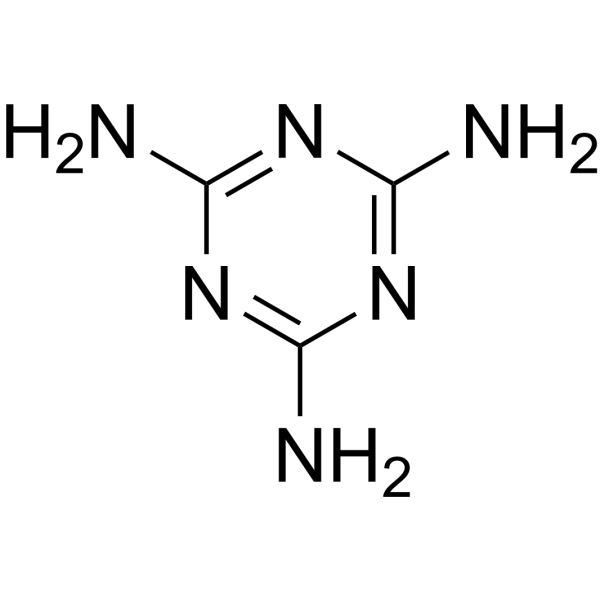
- Formula: C3H6N6
- Molecular Weight:126.12
-
Storage:Powder -20°C, 3 years , 4°C, 2 years ; In solvent -80°C, 2 years , -20°C, 1 year

To place orders, for customer services and technical support, please contact: MedChemExpress USA
Tel: 609-228-6898 E-mail: [email protected] [email protected]


-
 Biological Activity
-
Chemical Information
-
Solvent & Solubility
- Protocols
- Purity & Documentation
- References
-
 Help & FAQs


-
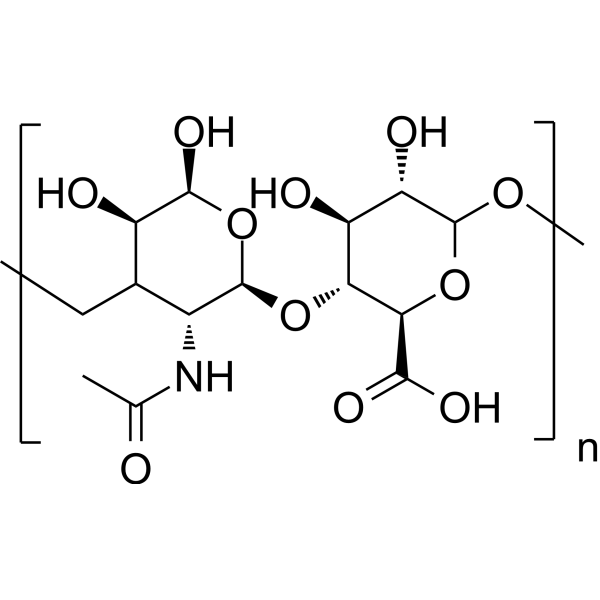
HY-B0633A
Hyaluronic acidGlycosaminoglycan -
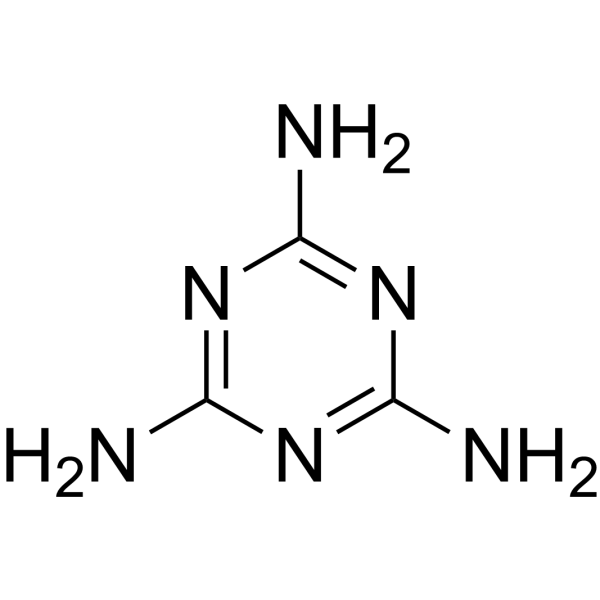
HY-Y1117R
Melamine (Standard)Intermediate -
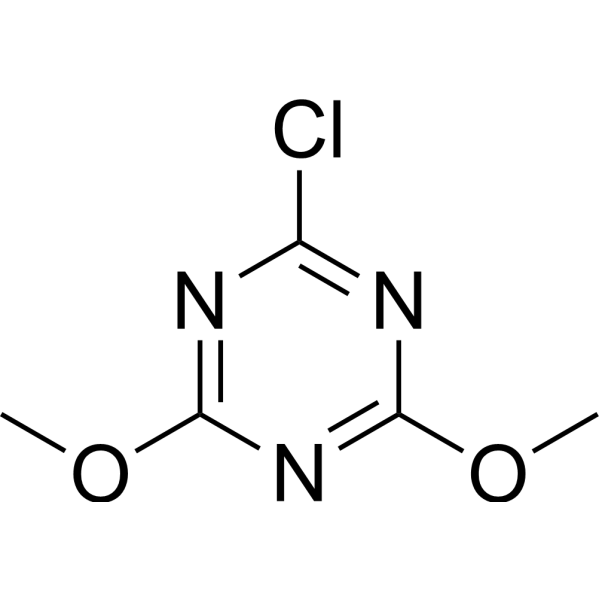
HY-W016718
ChlorodimethoxytriazineBiochemical Reagent -
HY-15150
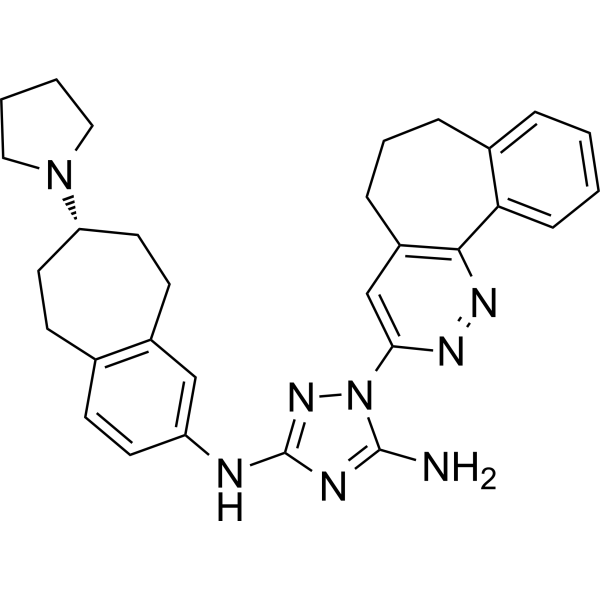
BemcentinibAXL Inhibitor -
HY-W008232
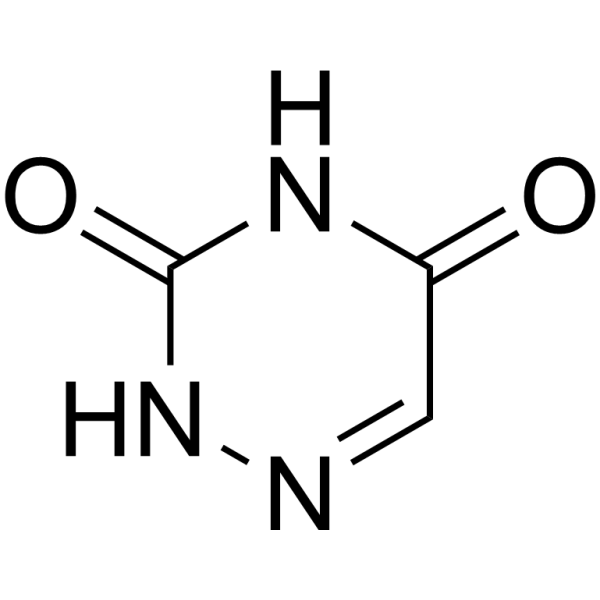
6-AzauracilBiochemical Reagent -
HY-12704
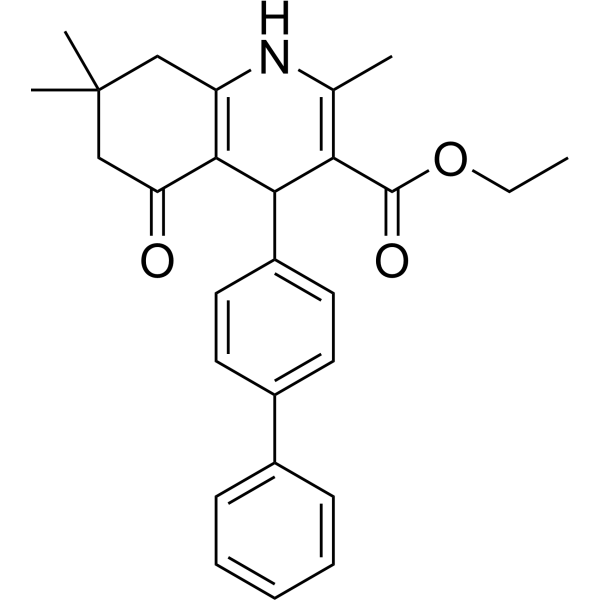
ITD-1TGF-β Receptor Inhibitor -
HY-N1472
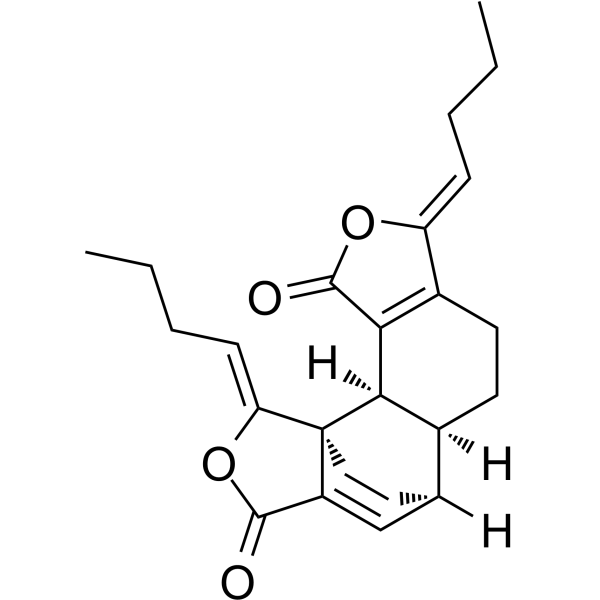
Levistolide AApoptosis Inducer -
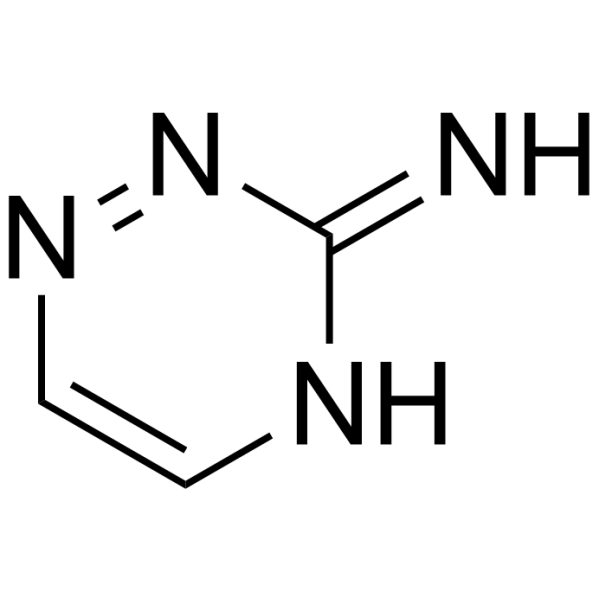
HY-W004843
3-Amino-1,2,4-triazineNO Synthase Inhibitor -
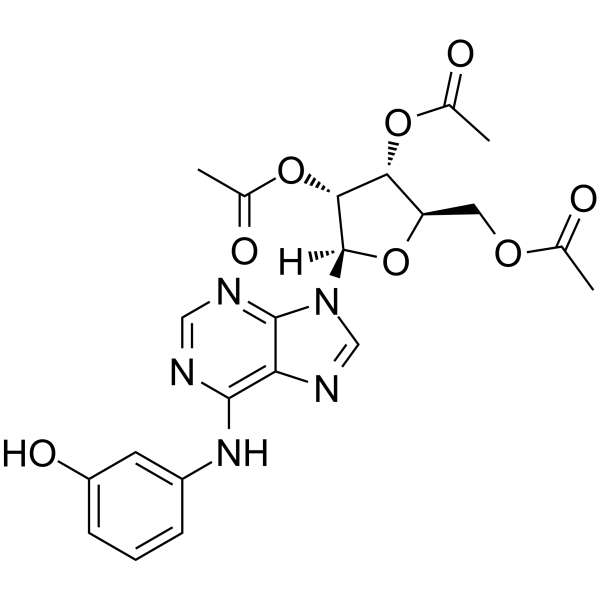
HY-141645
IMM-H007AMPK Activator -

HY-15150R
Bemcentinib (Standard)AXL Inhibitor -

HY-Y0215R
5-Azacytosine (Standard) -
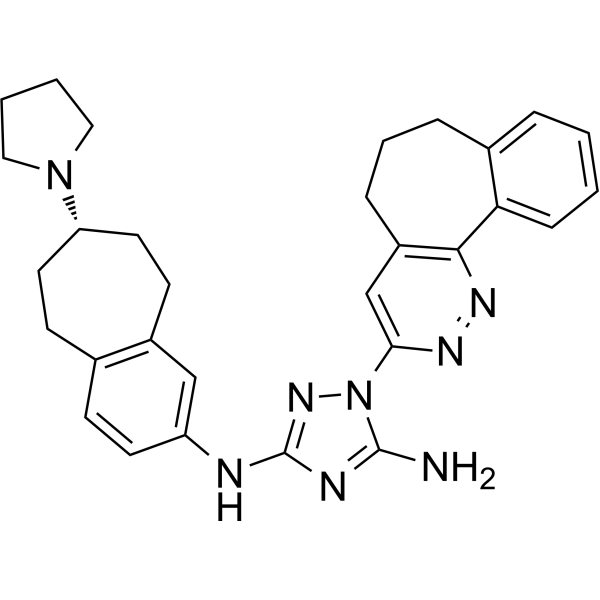
HY-15150G
Bemcentinib (GMP)AXL Inhibitor
Publications Citing Use of MedChemExpress (MCE) Melamine
More

Biological Activity
Description
In Vitro
Melamine (0-1000 g/mL, 24 h) suppresses cell viability and induces cell apoptosis in concentration-dependent manner in Sertoli cells[1].
Melamine (50 g/mL, 24 h) down-regulates the expressions of junction-associated proteins including occludin, N-cadherin, and vimentin, suggesting that MA disrupts the integrity of Sertoli cell barrier[1].
MedChemExpress (MCE) has not independently confirmed the accuracy of these methods. They are for reference only. Further protocols information, click here.
-
Cell Line:TM4 cells
-
Concentration:0, 10, 30, 50, 100, 500, 1000 g/mL
-
Incubation Time:24 h
-
Result:Decreased cell viability at a concentration of 50 g/mL or greater dose-dependently.
Induced dilated rough endoplasmic reticulum, swollen mitochondria, a disrupted cytoplasmic membrane, and nuclear enlargement and dissolve of the chromatin.
Induced apoptotic bodies formation and increased both early apoptotic cells and late apoptotic cells at 500 g/mL.
Decreased the expression levels of N-cadherin, occludin, and vimentin.
In Vivo
-
Animal Model:Healthy male Wistar rats, three-week-old[2]
-
Dosage:300 mg/kg
-
Administration:p.o., daily, 28 days
-
Result:Obviously reduced number of neurons in hippocampal CA1 area.
Significantly increased MDA (Malonaldehyde) level and decreased ATP, T-SOD and GSH-Px in the hippocampus content.
-
Animal Model:Sprague Dawley (SD) rats, male 4-week-old rats, 2-month old female rats, male pups[3]
-
Dosage:60, 300, 600 mg/kg (male 4-week-old rats), 600 mg/kg (2-month old female rats, male pups)
-
Administration:p.o., daily, 2 weeks (2-month old female rats), 3 months (male 4-week-old rats, male pups)
-
Result:Reduced the cortical enhancement dose-dependently.
Had long term harmful effect on renovascular function.
Induced Disease Models
Please do not refer to only one article to determine the experimental conditions. It is recommended to determine the optimal experimental conditions (animal strain, age, dosage, frequency and cycle, detection time and indicators, etc.) through preliminary experiments before the formal experiment.
Melamine (300 mg/kg, p.o., daily, 28 days) is able to impair the learning and memory abilities and reduces rats weight [2].
Melamine (60-600 mg/kg, p.o., daily, 2 weeks) impairs endothelial function and increases pro-inflammatory and pro-fibrotic markers in renal arteries of rats dose-dependently[3].
PK parameter of Melamine. The half-life (t1/2) is 32.2-32.9 hours, the clearance (Clz/F) is 35.9-36.6 mL/h/kg, and the volume of distribution (Vss) is 1.67-1.74 L/kg[8].
Melamine can be used in animal modeling to construct models of acute nephrotoxicity, cognitive deficits, and urinary stone formation[5][6][7].
Administration: 100, 300, 600 mg/kg • p.o. • 15 days
Phenotypic observations: Increases kidney weight, crystal deposition in the renal papillary collecting ducts, and renal inflammation were observed.
Administration: 300 mg/kg • p.o. • daily for 4 weeks.
Behavioral observation: Induces symptoms of piloerection and haematuria as well as reduced spontaneous activity.
Administration: 1 and 3% Melamine • p.o. • daily for 40 weeks.
MedChemExpress (MCE) has not independently confirmed the accuracy of these methods. They are for reference only.


Chemical Information
-
CAS No. 108-78-1
-
Appearance Solid
-
Molecular Weight 126.12
-
Formula C3H6N6
-
Color White to off-white
-
SMILES
NC1=NC(N)=NC(N)=N1
-
Structure Classification
-
Initial Source
-
Shipping
Room temperature in continental US; may vary elsewhere.
-
Storage
Powder -20°C 3 years 4°C 2 years In solvent -80°C 2 years -20°C 1 year


Publications (1)
-
Journal Impact Factor
-
Most Recent
-
Ecotoxicol Environ Saf
A network toxicology and machine learning approach to investigate the mechanism of kidney injury from melamine and cyanuric acid co-exposure. [Abstract]2025 Mar 15:293:118029. PMID: 40088607


Solvent & Solubility
In Vitro:
DMSO : 10 mg/mL (79.29 mM; ultrasonic and warming and heat to 60°C; Hygroscopic DMSO has a significant impact on the solubility of product, please use newly opened DMSO)
H2O : 1 mg/mL (7.93 mM; Need ultrasonic)
Please refer to the solubility information to select the appropriate solvent. Once prepared, please aliquot and store the solution to prevent product inactivation from repeated freeze-thaw cycles.
Storage method and period of stock solution: -80°C, 2 years; -20°C, 1 year. When stored at -80°C, please use it within 2 years. When stored at -20°C, please use it within 1 year.
* Note: If you choose water as the stock solution, please dilute it to the working solution, then filter and sterilize it with a 0.22 μm filter before use.
Please refer to the solubility information to select the appropriate solvent. Once prepared, please aliquot and store the solution to prevent product inactivation from repeated freeze-thaw cycles.
Storage method and period of stock solution: -80°C, 2 years; -20°C, 1 year. When stored at -80°C, please use it within 2 years. When stored at -20°C, please use it within 1 year.
* Note: If you choose water as the stock solution, please dilute it to the working solution, then filter and sterilize it with a 0.22 μm filter before use.
Concentration (start) × Volume (start) = Concentration (final) × Volume (final)
In Vivo:
Select the appropriate dissolution method based on your experimental animal and administration route.
- For the following dissolution methods, please ensure to first prepare a clear stock solution using an In Vitro approach and then sequentially add co-solvents:
- To ensure reliable experimental results, the clarified stock solution can be appropriately stored based on storage conditions. As for the working solution for In Vivo experiments, it is recommended to prepare freshly and use it on the same day.
- The percentages shown for the solvents indicate their volumetric ratio in the final prepared solution. If precipitation or phase separation occurs during preparation, heat and/or sonication can be used to aid dissolution.
Add each solvent one by one: 10% DMSO 40% PEG300 5% Tween-80 45% Saline
Solubility: ≥ 1.25 mg/mL (9.91 mM); Clear solution
This protocol yields a clear solution of ≥ 1.25 mg/mL (saturation unknown).
Taking 1 mL working solution as an example, add 100 μL DMSO stock solution (12.5 mg/mL) to 400 μL PEG300, and mix evenly; then add 50 μL Tween-80 and mix evenly; then add 450 μL Saline to adjust the volume to 1 mL.
Preparation of Saline: Dissolve 0.9 g sodium chloride in ddH₂O and dilute to 100 mL to obtain a clear Saline solution.
Add each solvent one by one: 10% DMSO 90% (20% SBE-β-CD in Saline)
Solubility: ≥ 1.25 mg/mL (9.91 mM); Clear solution
This protocol yields a clear solution of ≥ 1.25 mg/mL (saturation unknown).
Taking 1 mL working solution as an example, add 100 μL DMSO stock solution (12.5 mg/mL) to 900 μL 20% SBE-β-CD in Saline, and mix evenly.
Preparation of 20% SBE-β-CD in Saline (4°C, storage for one week): 2 g SBE-β-CD powder is dissolved in 10 mL Saline, completely dissolve until clear.
In Vivo Dissolution Calculator
Please enter the basic information of animal experiments:
-
-
-
-
Recommended: Prepare an additional quantity of animals to account for potential losses during experiments.
Please enter your animal formula composition:
-
%DMSO +
Recommended: Keep the proportion of DMSO in working solution below 2% if your animal is weak.
-
%+
-
+%Tween-80 + +
-
%Saline +
The co-solvents required include: DMSO, . All of co-solvents are available by MedChemExpress (MCE). , Tween 80. All of co-solvents are available by MedChemExpress (MCE).
Working solution concentration: 0.22 mg/mL
Method for preparing stock solution: mg drug dissolved in μL DMSO. Stock solution concentration: mg/mL.
1. Take μL DMSO stock solution;
2. Add μL .
μL , mix evenly;
3. Then add μL Tween 80, mix evenly;
4. Then add μL
Please ensure that the stock solution in the first step is dissolved to a clear state, and add co-solvents in sequence. You can use ultrasonic heating (ultrasonic cleaner, recommended frequency 20-40 kHz), vortexing, etc. to assist dissolution.

Protocols
-
Neurotoxicity Study
This protocol assesses in vitro neurotoxicity by combining neuronal viability, mitochondrial/metabolic activity, neurite outgrowth, and optional neuronal network function readouts. Calcein-AM or resazurin/PrestoBlue readouts estimate viable or metabolically active cells; βIII-tubulin immunofluorescence detects neuronal morphology and neurite networks; TMRE detects mitochondrial membrane potential; and MEA recordings detect functional changes in neuronal network activity.
-
Detection of Apoptosis
Apoptosis, also called programmed cell death, is generally characterized by distinct morphological characteristics.
-
TUNEL staining for apoptotic DNA fragmentation
TUNEL staining detects DNA strand breaks by using terminal deoxynucleotidyl transferase to add labeled nucleotides to exposed 3′-OH DNA termini, generating either microscopic staining in fixed cells or tissue sections, or fluorescence/cytometric signal in cell suspensions. TUNEL positivity reflects DNA fragmentation but should not be interpreted alone as definitive apoptosis, because TUNEL can also label necrotic, autolytic, mechanically damaged, or DNA-repair-associated DNA breaks.
-
Nephrotoxicity Study
This protocol assesses nephrotoxicity by combining functional kidney injury readouts, urinary/tissue injury biomarkers, and renal histopathology. Serum creatinine and BUN reflect impaired kidney function, while KIM-1, NGAL, clusterin, osteopontin, IL-18, cystatin C, nephrin, Oat5, urinary protein, glucose, and alkaline phosphatase have been used to detect tubular injury in cisplatin-, gentamicin-, and acetaminophen-induced nephrotoxicity models.
-
Annexin V plus membrane-impermeant dye apoptosis staining
Annexin V-based apoptosis assays rely on the detection of phosphatidylserine (PS) externalization from the inner leaflet of the plasma membrane to the outer leaflet, an early biochemical hallmark of apoptosis. Fluorescently labeled Annexin V binds PS in a calcium-dependent manner, enabling identification of early apoptotic cells by flow cytometry or fluorescence microscopy. When combined with a membrane-impermeant DNA-binding dye (e. g. , propidium iodide), this approach allows discrimination between viable (Annexin V−/dye−), early apoptotic (Annexin V+/dye−), and late apoptotic or necrotic (Annexin V+/dye+) cell populations by assessing membrane integrity and PS exposure.
-
Apoptosis Solutions
Apoptosis is a regulated, generally non-lytic cell-death pathway that removes unwanted, damaged, infected, or abnormal cells through coordinated morphological changes, caspase activation, DNA fragmentation, and membrane remodeling. The intrinsic apoptosis pathway is controlled mainly by mitochondrial outer membrane permeabilization, BCL-2 family proteins, cytochrome c release, apoptosome formation, caspase-9 activation, and downstream executioner caspase-3/7 activation. The extrinsic apoptosis pathway is initiated by death receptors such as Fas, TNFR, and TRAIL receptors, which recruit adaptor proteins and activate caspase-8 before engaging executioner caspases or mitochondrial amplification through BID cleavage. Apoptosis is linked to many phenotypes, including cancer cell killing, tissue homeostasis, immune regulation, neurodegeneration, infection response, and treatment-induced cytotoxicity; unresolved questions include how apoptosis interacts with necroptosis, pyroptosis, ferroptos
-
Alzheimer’s Disease Modeling
Alzheimer’s Disease (AD) is a neurodegenerative disorder characterized by a progressive decline in cognitive functions and loss of specific types of neurons and synapses. Alzheimer's symptoms can be simulated in mice by injecting drugs (such as Aβ) or genetically modified.


Purity & Documentation
-
Data Sheet (294 KB)
-
SDS (479 KB)
- English - EN (479 KB)
- Français - FR (479 KB)
- Deutsch - DE (479 KB)
- Norwegian - NO (479 KB)
- Español - ES (479 KB)
- Swedish - SV (479 KB)
- Italian - IT (479 KB)
- Korean - KR (479 KB)
- Portuguese - PT (479 KB)
-
Handling Instructions (2659 KB)
References
[1]. Chang L, et al. In vitro toxicity evaluation of melamine on mouse TM4 Sertoli cells. Environ Toxicol Pharmacol. 2017 Mar;50:111-118. [Content Brief]
[2]. An L, et al. Melamine induced cognitive impairment associated with oxidative damage in rat's hippocampus. Pharmacol Biochem Behav. 2012 Aug;102(2):196-202. [Content Brief]
[3]. Tian XY, et al. Melamine Impairs Renal and Vascular Function in Rats. Sci Rep. 2016 Jun 21;6:28041 [Content Brief]
[4]. Xie G, et al. Metabonomic evaluation of melamine-induced acute renal toxicity in rats. J Proteome Res. 2010 Jan;9(1):125-33. [Content Brief]
[5]. An L, et al. Cognitive deficits induced by melamine in rats. Toxicol Lett. 2011 Oct 30;206(3):276-80. [Content Brief]
[6]. Ogasawara H, et al. Urinary bladder carcinogenesis induced by melamine in F344 male rats: correlation between carcinogenicity and urolith formation. Carcinogenesis. 1995 Nov;16(11):2773-7. [Content Brief]
[7]. Kuo FC, et al. Melamine activates NFκB/COX-2/PGE2 pathway and increases NADPH oxidase-dependent ROS production in macrophages and human embryonic kidney cells. Toxicol In Vitro. 2013 Sep;27(6):1603-11. [Content Brief]
[8]. Xue M, et al. Plasma pharmacokinetics of melamine and a blend of melamine and cyanuric acid in rainbow trout (Oncorhynchus mykiss). Regul Toxicol Pharmacol. 2011 Oct;61(1):93-7. [Content Brief]


Complete Stock Solution Preparation Table
Please refer to the solubility information to select the appropriate solvent. Once prepared, please aliquot and store the solution to prevent product inactivation from repeated freeze-thaw cycles.
Storage method and period of stock solution: -80°C, 2 years; -20°C, 1 year. When stored at -80°C, please use it within 2 years. When stored at -20°C, please use it within 1 year.
| Optional Solvent | Concentration Solvent Mass | 1 mg | 5 mg | 10 mg | 25 mg |
|---|---|---|---|---|---|
| H2O / DMSO | 1 mM | 7.9290 mL | 39.6448 mL | 79.2896 mL | 198.2239 mL |
| 5 mM | 1.5858 mL | 7.9290 mL | 15.8579 mL | 39.6448 mL | |
| DMSO | 10 mM | 0.7929 mL | 3.9645 mL | 7.9290 mL | 19.8224 mL |
| 15 mM | 0.5286 mL | 2.6430 mL | 5.2860 mL | 13.2149 mL | |
| 20 mM | 0.3964 mL | 1.9822 mL | 3.9645 mL | 9.9112 mL | |
| 25 mM | 0.3172 mL | 1.5858 mL | 3.1716 mL | 7.9290 mL | |
| 30 mM | 0.2643 mL | 1.3215 mL | 2.6430 mL | 6.6075 mL | |
| 40 mM | 0.1982 mL | 0.9911 mL | 1.9822 mL | 4.9556 mL | |
| 50 mM | 0.1586 mL | 0.7929 mL | 1.5858 mL | 3.9645 mL | |
| 60 mM | 0.1321 mL | 0.6607 mL | 1.3215 mL | 3.3037 mL |
* Note: If you choose water as the stock solution, please dilute it to the working solution, then filter and sterilize it with a 0.22 μm filter before use.


Melamine Related Classifications
HY-Y1117 Related Classifications
 Powered by Bioz
Keywords