



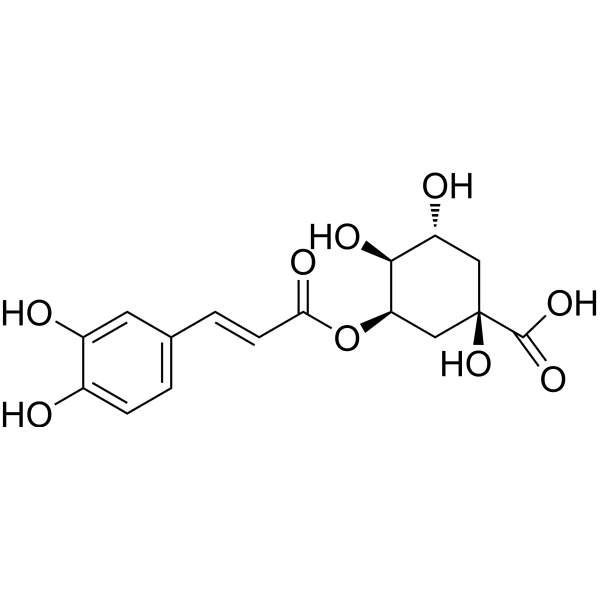
Neochlorogenic acid
Based on 5 publication(s) in Google Scholar
Neochlorogenic acid is a natural polyphenolic compound found in dried fruits and other plants. Neochlorogenic acid inhibits the production of TNF-α and IL-1β. Neochlorogenic acid suppresses iNOS and COX-2 protein expression. Neochlorogenic acid also inhibits phosphorylated NF-κB p65 and p38 MAPK activation.
Nur für Forschungszwecke. Wir verkaufen nicht an Patienten.
- Reinheit: 99.80%
- CAS. Nr.: 906-33-2
- Formel: C16H18O9
- Molecular Weight:354.31
-
Speicherung:Powder -20°C, 3 years , 4°C, 2 years ; In solvent -80°C, 6 months , -20°C, 1 month

To place orders, for customer services and technical support, please contact: MedChemExpress USA
Tel: 609-228-6898 E-mail: [email protected] [email protected]


-
 Biologische Aktivität
-
Chemical Information
-
Lösungsmittel & Löslichkeit
- Protokoll
- Reinheit & Dokumentation
- Verweise
-
 Help & FAQs


-
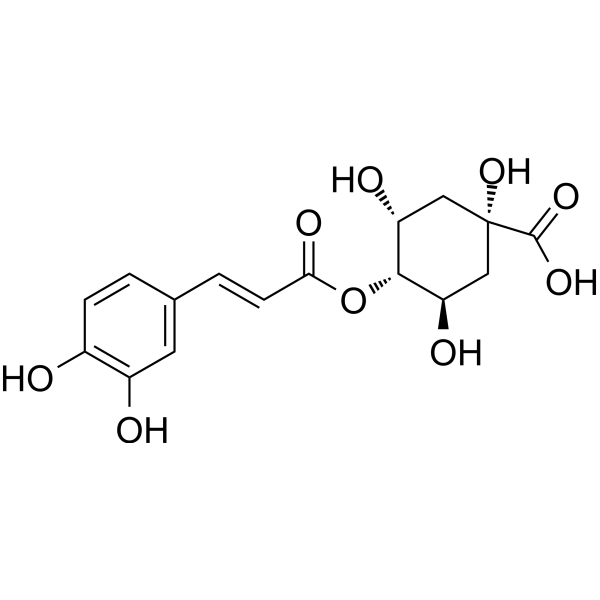
HY-N0787
Cryptochlorogenic acid
-
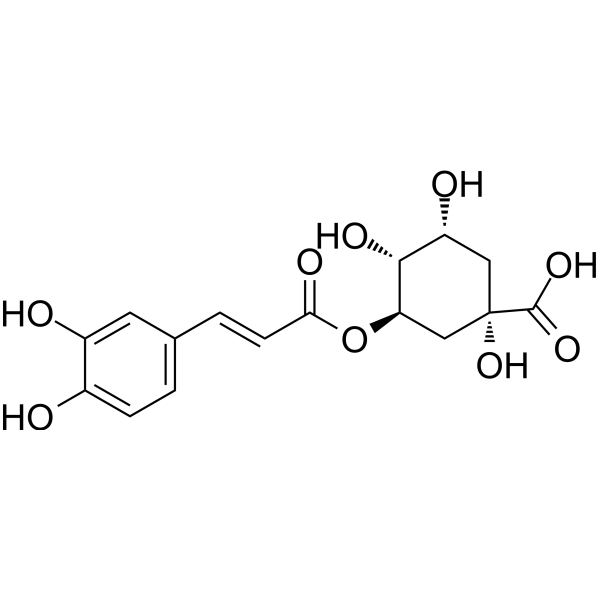
HY-N0055
Chlorogenic acid
-
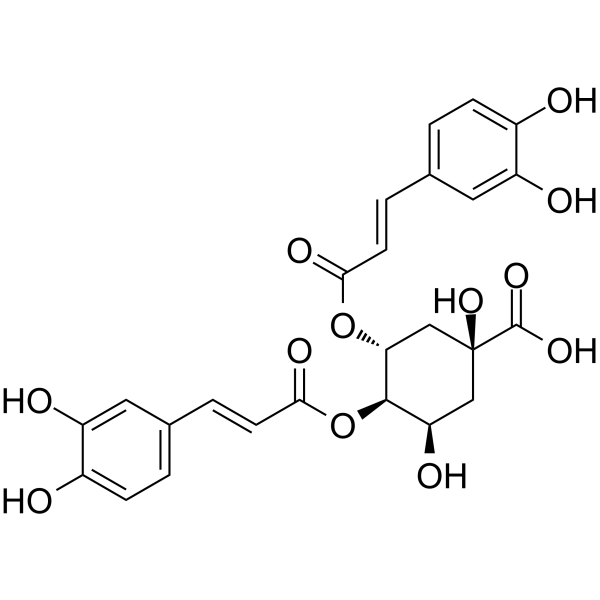
HY-N0057
3,4-Dicaffeoylquinic acid
-
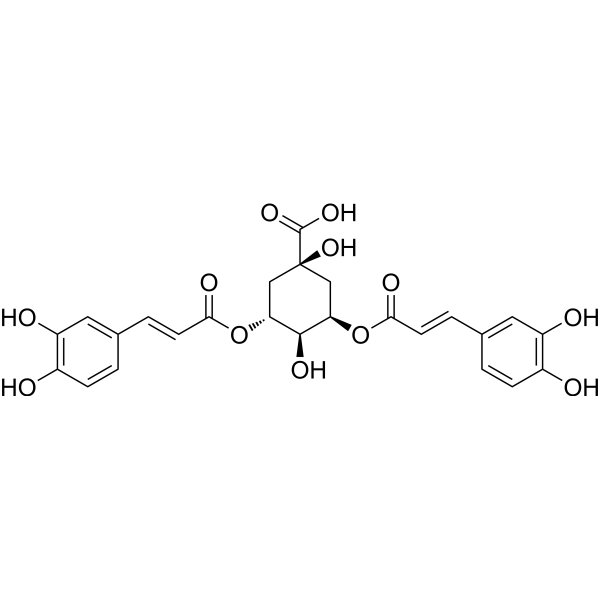
HY-N0056
Isochlorogenic acid A
-
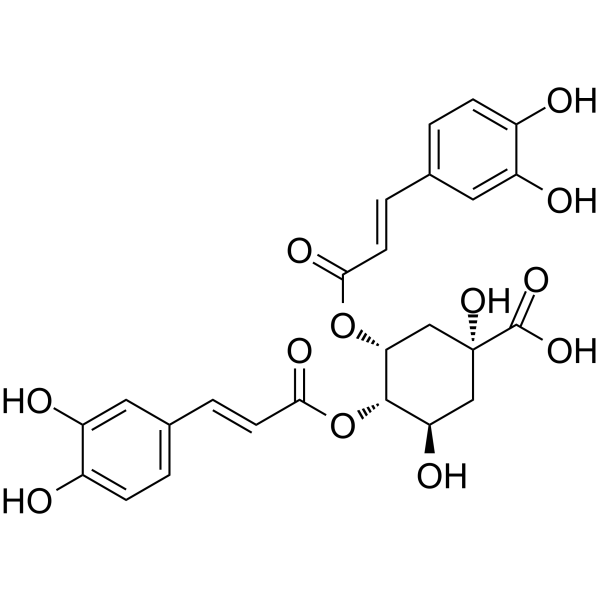
HY-N0058
4,5-Dicaffeoylquinic acid
-

HY-N0722R
Neochlorogenic acid (Standard)
-
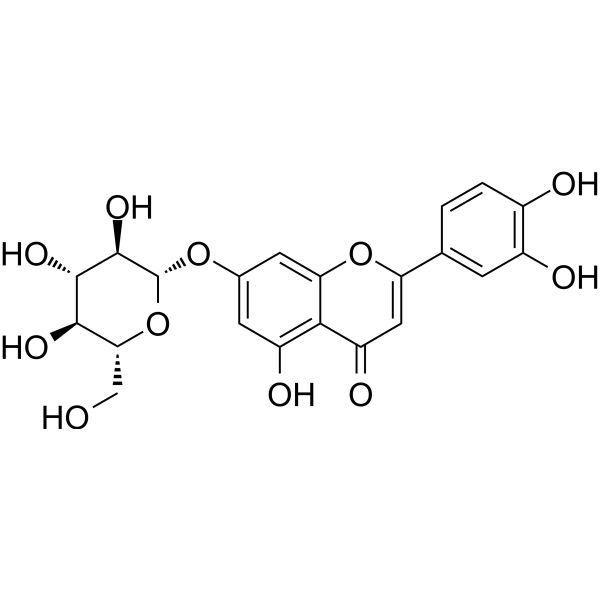
HY-N0540
Cynaroside
-
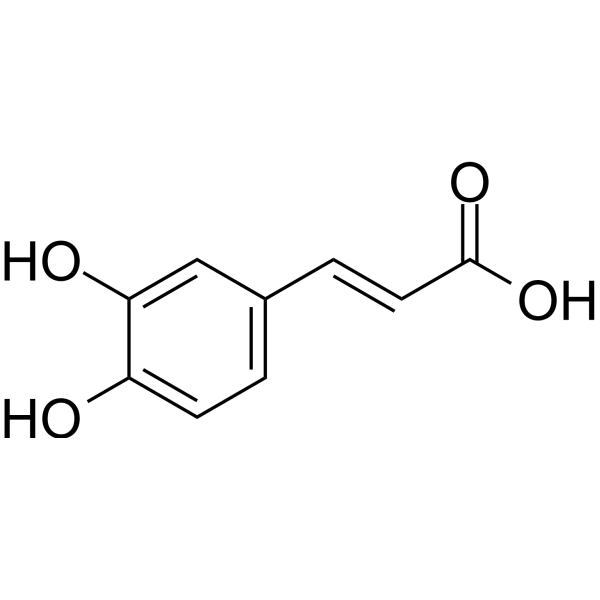
HY-N0172
Caffeic acid
-
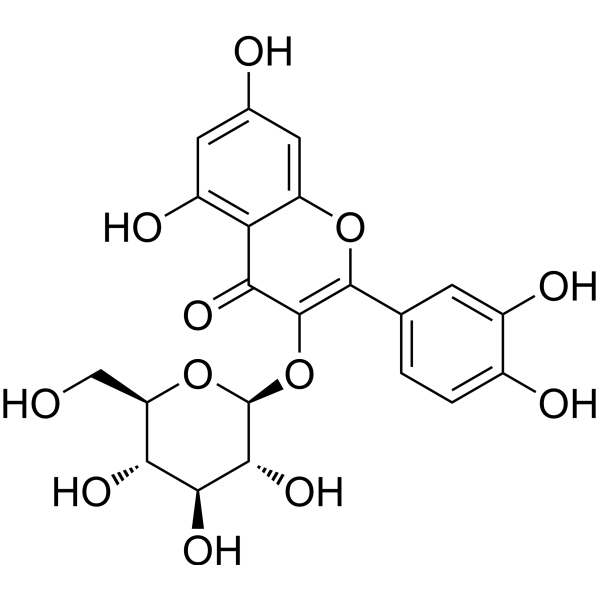
HY-N1445
Isoquercitrin
-
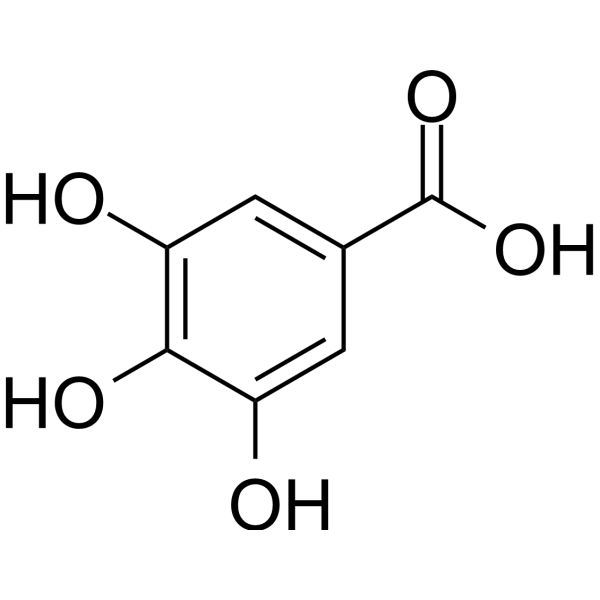
HY-N0523
Gallic acid
-
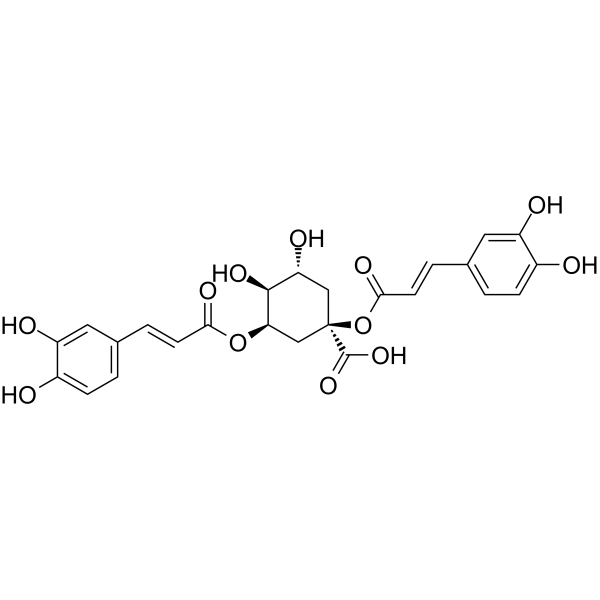
HY-N0359
Cynarin
-
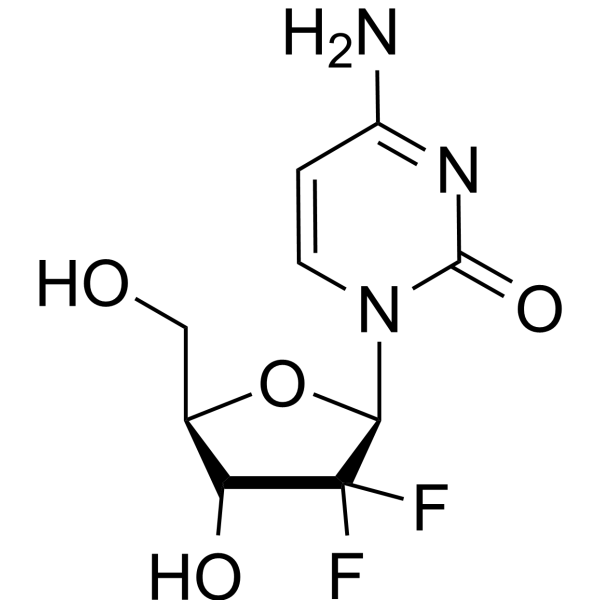
HY-17026
Gemcitabine
Publications Citing Use of MedChemExpress (MCE) Neochlorogenic acid
More Customer Validation & Images

-
Flow Cytometry

-
Cell Proliferation/Viability Assay

Alle TNF Receptor Isoform-spezifische Produkte anzeigen
More

Biologische Aktivität
|
p65 |
IL-1β |
COX-2 |
|
Cell Line

|
Type | Value | Description | References |
|---|---|---|---|---|
| BMDM | IC50 |
48 μM
Compound: Neochlorogenic acid
|
Inhibition of M-CSF/RANKL-induced osteoclast differentiation in C57BL/6 mouse bone marrow macrophage assessed as reduction in multinucleated TRAP+ cells incubated for 6 days with fresh media replacement on day 3 and measured on day 6 by TRAP staining-base
Inhibition of M-CSF/RANKL-induced osteoclast differentiation in C57BL/6 mouse bone marrow macrophage assessed as reduction in multinucleated TRAP+ cells incubated for 6 days with fresh media replacement on day 3 and measured on day 6 by TRAP staining-base
|
[PMID: 31257875] |
| HeLa | IC50 |
>200 μM
Compound: RLE13
|
Inhibition of HDAC in human HeLa cells using Boc-Lys(AC)-AMC as substrate after 24 to 48 hrs by spectrofluorometry
Inhibition of HDAC in human HeLa cells using Boc-Lys(AC)-AMC as substrate after 24 to 48 hrs by spectrofluorometry
|
[PMID: 26996372] |
Neochlorogenic acid (NCA) shows a reduction of lipopolysaccharide (LPS)-induced NO production by suppressing iNOS and COX-2 protein expression and production of pro-inflammatory cytokines, such as TNF-α and IL-1β, in BV2 microglia cells. In addition, phosphorylated p38 MAPK and NF-κB p65 are also inhibited by Neochlorogenic acid in activated microglia. iNOS and COX-2 levels are increased in LPS-induced BV2 cells, but this increase is significantly inhibited after treatment with 50 and 100 μM Neochlorogenic acid[1].
MedChemExpress (MCE) has not independently confirmed the accuracy of these methods. They are for reference only.


Chemical Information
-
CAS. Nr. 906-33-2
-
Appearance Solid
-
Molecular Weight 354.31
-
Formel C16H18O9
-
Color White to off-white
-
SMILES
O=C([C@]1(O)C[C@@H](OC(/C=C/C2=CC=C(O)C(O)=C2)=O)[C@@H](O)[C@H](O)C1)O
-
Synonyms
trans-5-O-Caffeoylquinic acid
-
Structure Classification
-
Initial Source
-
Versand
Room temperature in continental US; may vary elsewhere.
-
Speicherung
Powder -20°C 3 years 4°C 2 years In solvent -80°C 6 months -20°C 1 month


Publications (5)
-
Journal Impact Factor
-
Most Recent
-
Phytomedicine
A novel mechanism of Reduning injection in sepsis treatment: Targeting inflammatory kinases TBK1 and IKKβ. [Abstract]2026 Feb:151:157776. PMID: 41512388 -
Food Funct
Blackthorn juice from central Italy exhibits selective anticancer activity by inducing apoptosis and autophagy in gastric carcinoma cells. [Abstract]2025 Oct 27;16(21):8548-8563. PMID: 41085359 -
-
Immunology
Cytoskeleton protein 4.1R regulates B-cell fate by modulating the canonical NF-κB pathway. [Abstract]2020 Dec;161(4):314-324. PMID: 32852059
Neochlorogenic acid purchased from MedChemExpress. Usage Cited in: Immunology. 2020 Dec;161(4):314-324. [Abstract]
B cells pre-treated with or without the canonical NF-κB inhibitor Neochlorogenic acid (NCA, 100 μM) 1 hr, following lipopolysaccharide (LPS; 10 μg/mL) plus interleukin-4 (IL-4; 3 ng/mL) stimulation for 48 hr. Flow cytometry measure B-cell proliferation.
Neochlorogenic acid purchased from MedChemExpress. Usage Cited in: Immunology. 2020 Dec;161(4):314-324. [Abstract]
B cells pre-treated with or without the canonical NF-κB inhibitor Neochlorogenic acid (NCA, 100 μM) 1 hr, following lipopolysaccharide (LPS; 10 μg/mL) plus interleukin-4 (IL-4; 3 ng/mL) stimulation for 48 hr. CCK-8 assay measure B-cell proliferation.
-
Vet Microbiol
The Chinese medicine monomer Schisandrin C inhibits PRRSV infection by regulating the OGT-PI3K/AKT/mTOR signaling pathway. [Abstract]2026 May:316:110992. PMID: 41865607


Lösungsmittel & Löslichkeit
DMSO : 100 mg/mL (282.24 mM; Need ultrasonic; Hygroscopic DMSO has a significant impact on the solubility of product, please use newly opened DMSO)
H2O : 2 mg/mL (5.64 mM; Need ultrasonic)
Please refer to the solubility information to select the appropriate solvent. Once prepared, please aliquot and store the solution to prevent product inactivation from repeated freeze-thaw cycles.
Storage method and period of stock solution: -80°C, 6 months; -20°C, 1 month. When stored at -80°C, please use it within 6 months. When stored at -20°C, please use it within 1 month.
* Note: If you choose water as the stock solution, please dilute it to the working solution, then filter and sterilize it with a 0.22 μm filter before use.
Please refer to the solubility information to select the appropriate solvent. Once prepared, please aliquot and store the solution to prevent product inactivation from repeated freeze-thaw cycles.
Storage method and period of stock solution: -80°C, 6 months; -20°C, 1 month. When stored at -80°C, please use it within 6 months. When stored at -20°C, please use it within 1 month.
* Note: If you choose water as the stock solution, please dilute it to the working solution, then filter and sterilize it with a 0.22 μm filter before use.
Konzentration (Stammlösung) × Volumen (Stammlösung) = Konzentration (Ziellösung) × Volumen (Ziellösung)
Select the appropriate dissolution method based on your experimental animal and administration route.
- For the following dissolution methods, please ensure to first prepare a clear stock solution using an In Vitro approach and then sequentially add co-solvents:
- To ensure reliable experimental results, the clarified stock solution can be appropriately stored based on storage conditions. As for the working solution for In Vivo experiments, it is recommended to prepare freshly and use it on the same day.
- The percentages shown for the solvents indicate their volumetric ratio in the final prepared solution. If precipitation or phase separation occurs during preparation, heat and/or sonication can be used to aid dissolution.
Add each solvent one by one: 10% DMSO 40% PEG300 5% Tween-80 45% Saline
Solubility: 2.08 mg/mL (5.87 mM); Suspended solution; Need ultrasonic
This protocol yields a suspended solution of 2.08 mg/mL. Suspended solution can be used for oral and intraperitoneal injection.
Taking 1 mL working solution as an example, add 100 μL DMSO stock solution (20.8 mg/mL) to 400 μL PEG300, and mix evenly; then add 50 μL Tween-80 and mix evenly; then add 450 μL Saline to adjust the volume to 1 mL.
Preparation of Saline: Dissolve 0.9 g sodium chloride in ddH₂O and dilute to 100 mL to obtain a clear Saline solution.
Add each solvent one by one: 10% DMSO 90% (20% SBE-β-CD in Saline)
Solubility: ≥ 2.08 mg/mL (5.87 mM); Clear solution
This protocol yields a clear solution of ≥ 2.08 mg/mL (saturation unknown).
Taking 1 mL working solution as an example, add 100 μL DMSO stock solution (20.8 mg/mL) to 900 μL 20% SBE-β-CD in Saline, and mix evenly.
Preparation of 20% SBE-β-CD in Saline (4°C, storage for one week): 2 g SBE-β-CD powder is dissolved in 10 mL Saline, completely dissolve until clear.
For the following dissolution methods, please prepare the working solution directly:
It is recommended to prepare fresh solutions and use them promptly within a short period of time.
The percentages shown for the solvents indicate their volumetric ratio in the final prepared solution. If precipitation or phase separation occurs during preparation, heat and/or sonication can be used to aid dissolution.
Add each solvent one by one: PBS
Solubility: 4 mg/mL (11.29 mM); Clear solution; Need ultrasonic and warming and heat to 60°C
Please enter the basic information of animal experiments:
-
-
-
-
Recommended: Prepare an additional quantity of animals to account for potential losses during experiments.
Please enter your animal formula composition:
-
%DMSO +
Recommended: Keep the proportion of DMSO in working solution below 2% if your animal is weak.
-
%+
-
+%Tween-80 + +
-
%Saline +
The co-solvents required include: DMSO, . All of co-solvents are available by MedChemExpress (MCE). , Tween 80. All of co-solvents are available by MedChemExpress (MCE).
Working solution concentration: 0.22 mg/mL
Method for preparing stock solution: mg drug dissolved in μL DMSO. Stock solution concentration: mg/mL.
1. Take μL DMSO stock solution;
2. Add μL .
μL , mix evenly;
3. Then add μL Tween 80, mix evenly;
4. Then add μL
Please ensure that the stock solution in the first step is dissolved to a clear state, and add co-solvents in sequence. You can use ultrasonic heating (ultrasonic cleaner, recommended frequency 20-40 kHz), vortexing, etc. to assist dissolution.

Protokoll
Mouse BV2 microglial cells are maintained in DMEM, supplemented with 5 % FBS and 1 % antibiotic–antimycotic in a humidified incubator with 5 % CO2 at 37°C. Neochlorogenic acid and Dexamethasone as positive control are dissolved in DMSO to a final concentration of 10 mM for the stock solution. Treatments with LPS and/or Neochlorogenic acid are carried out under serum-free conditions. Effects of Neochlorogenic acid are measured on cell viability in lipopolysaccharide (LPS)-stimulated BV2 microglial cells. The cells are treated with or without LPS (4 μg/ml) and Neochlorogenic acid (10, 50, and 100 μM) for 24 h. Dexamethasone (10 μM) is used for positive control. Cell viability is confirmed by the MTT assay. The medium was removed from the wells, MTT was added, and the samples were then incubated for 3 h at 37°C. The formazan crystals were dissolved by adding DMSO, and the absorbance values were measured at 540 nm using a microplate reader[1].
MedChemExpress (MCE) has not independently confirmed the accuracy of these methods. They are for reference only.


Reinheit & Dokumentation
-
Data Sheet (275 KB)
-
SDS (393 KB)
- English - EN (393 KB)
- Français - FR (393 KB)
- Deutsch - DE (393 KB)
- Norwegian - NO (393 KB)
- Español - ES (393 KB)
- Swedish - SV (393 KB)
- Italian - IT (393 KB)
- Korean - KR (393 KB)
- Portuguese - PT (393 KB)
-
Handling Instructions (2659 KB)
Verweise


Complete Stock Solution Preparation Table
Please refer to the solubility information to select the appropriate solvent. Once prepared, please aliquot and store the solution to prevent product inactivation from repeated freeze-thaw cycles.
Storage method and period of stock solution: -80°C, 6 months; -20°C, 1 month. When stored at -80°C, please use it within 6 months. When stored at -20°C, please use it within 1 month.
| Optional Solvent | Concentration Solvent Mass | 1 mg | 5 mg | 10 mg | 25 mg |
|---|---|---|---|---|---|
| H2O / DMSO | 1 mM | 2.8224 mL | 14.1119 mL | 28.2239 mL | 70.5597 mL |
| 5 mM | 0.5645 mL | 2.8224 mL | 5.6448 mL | 14.1119 mL | |
| DMSO | 10 mM | 0.2822 mL | 1.4112 mL | 2.8224 mL | 7.0560 mL |
| 15 mM | 0.1882 mL | 0.9408 mL | 1.8816 mL | 4.7040 mL | |
| 20 mM | 0.1411 mL | 0.7056 mL | 1.4112 mL | 3.5280 mL | |
| 25 mM | 0.1129 mL | 0.5645 mL | 1.1290 mL | 2.8224 mL | |
| 30 mM | 0.0941 mL | 0.4704 mL | 0.9408 mL | 2.3520 mL | |
| 40 mM | 0.0706 mL | 0.3528 mL | 0.7056 mL | 1.7640 mL | |
| 50 mM | 0.0564 mL | 0.2822 mL | 0.5645 mL | 1.4112 mL | |
| 60 mM | 0.0470 mL | 0.2352 mL | 0.4704 mL | 1.1760 mL | |
| 80 mM | 0.0353 mL | 0.1764 mL | 0.3528 mL | 0.8820 mL | |
| 100 mM | 0.0282 mL | 0.1411 mL | 0.2822 mL | 0.7056 mL |
* Note: If you choose water as the stock solution, please dilute it to the working solution, then filter and sterilize it with a 0.22 μm filter before use.


Neochlorogenic acid Related Classifications
HY-N0722 Related Classifications
 Powered by Bioz