



MNS
Based on 4 publication(s) in Google Scholar
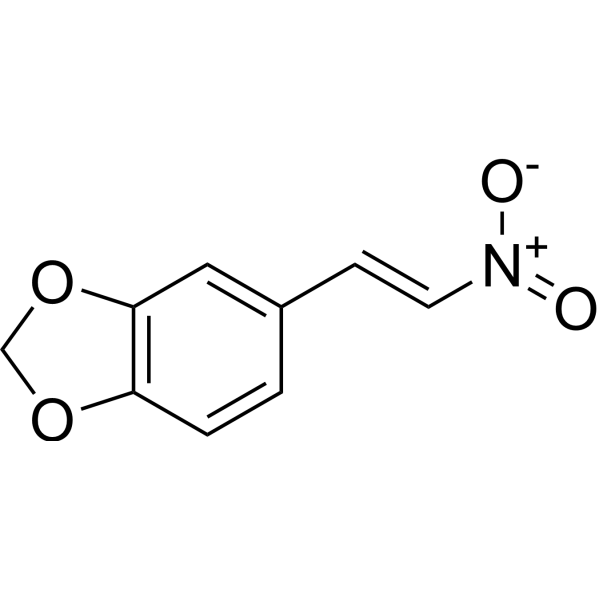
MNS (NSC 170724), the beta-nitrostyrene derivative, is an orally active tyrosine kinase inhibitor, a broad-spectrum antiplatelet agent, and a PANoptosis inhibitor. MNS inhibits Src, Syk, and FAK with IC50 of 27.3, 2.8, and 97.6 μM, respectively. MNS inhibits NLRP3 inflammasome and β1 integrin. MNS completely inhibits U46619, ADP-, arachidonic acid-, collagen-, and thrombin-induced platelet aggregation with IC50 values of 2.1, 4.1, 5.8, 7.0, and 12.7 μM, respectively. MNS is cytotoxic to a variety of cells.
For research use only. We do not sell to patients.
- CAS No.: 1485-00-3
- Formula: C9H7NO4
- Molecular Weight:193.16
-
Storage:Powder -20°C, 3 years , 4°C, 2 years ; In solvent -80°C, 2 years , -20°C, 1 year

To place orders, for customer services and technical support, please contact: MedChemExpress USA
Tel: 609-228-6898 E-mail: [email protected] [email protected]


-
 Biological Activity
-
Chemical Information
-
Solvent & Solubility
- Protocols
- Purity & Documentation
- References
-
 Help & FAQs


-
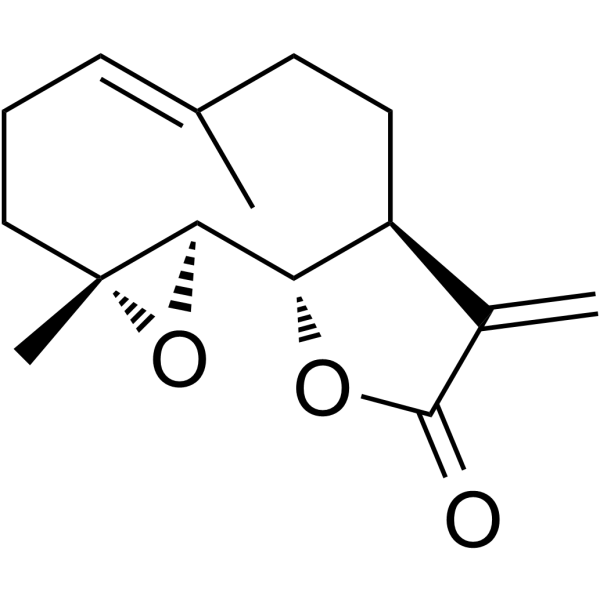
HY-N0141
ParthenolideNF-κB Inhibitor -
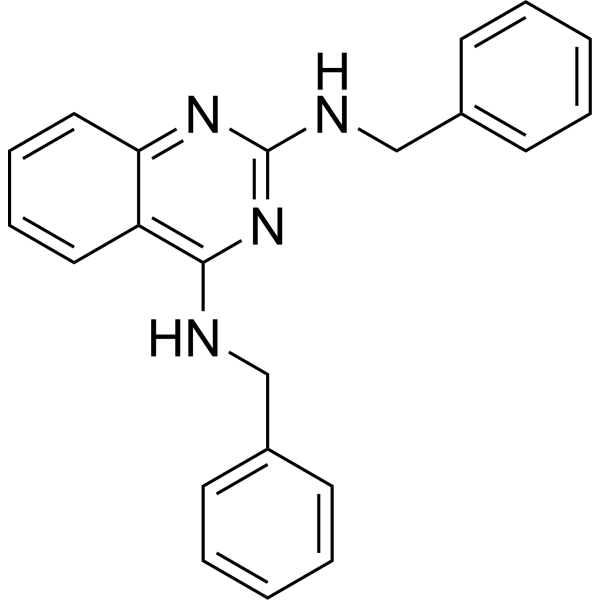
HY-15945
DBeQp97 Inhibitor -
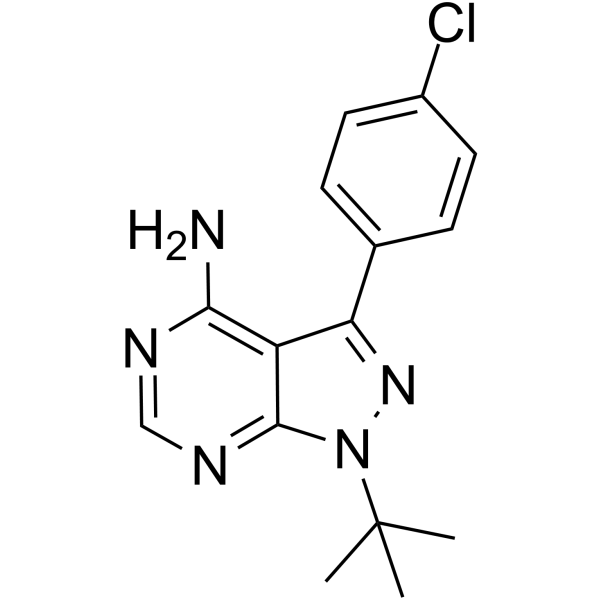
HY-13805
PP2Src Inhibitor -
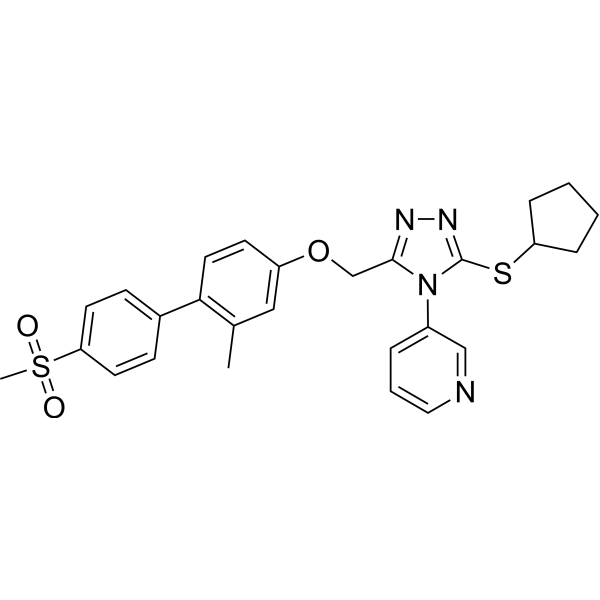
HY-15713
NMS-873VCP/p97 Inhibitor -
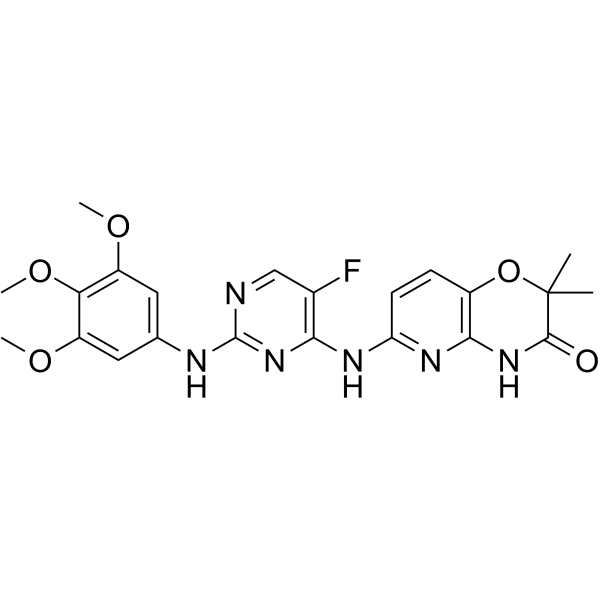
HY-11108
R406 free baseSyk/FLT3 Inhibitor -
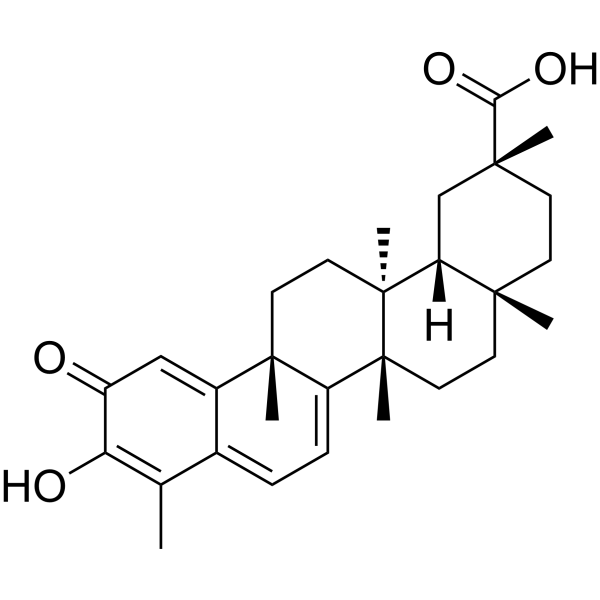
HY-13067
CelastrolAutophagy Inducer -
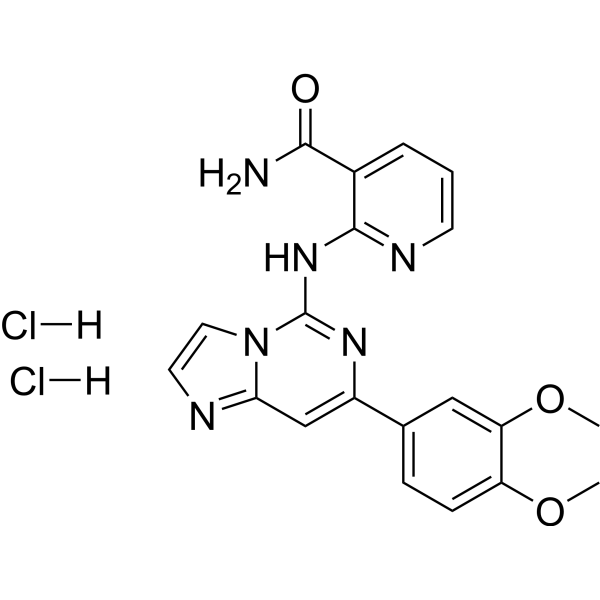
HY-14985
BAY 61-3606 dihydrochlorideApoptosis Inducer -
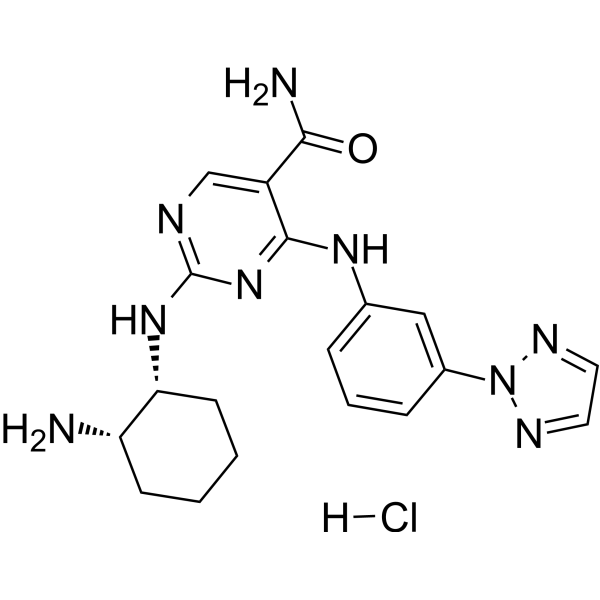
HY-15323
PRT062607 HydrochlorideSyk Inhibitor -
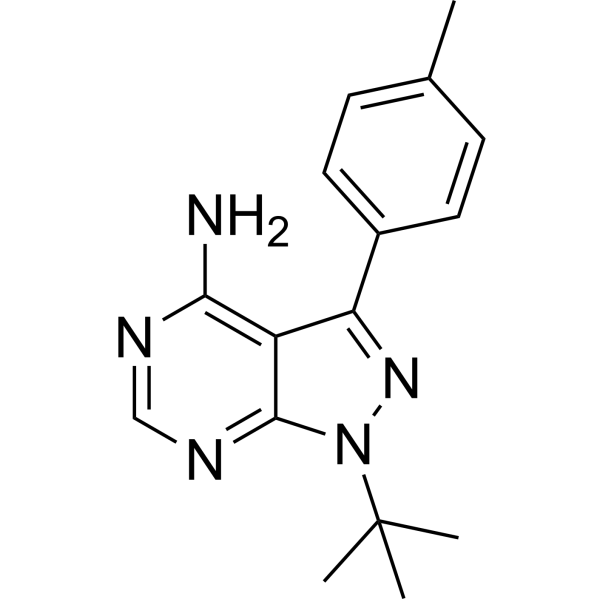
HY-13804
PP1Src Inhibitor -
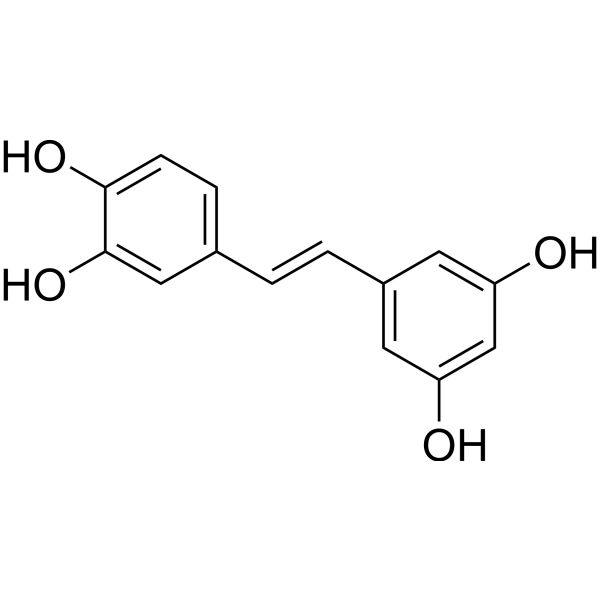
HY-13518
PiceatannolSyk Inhibitor -
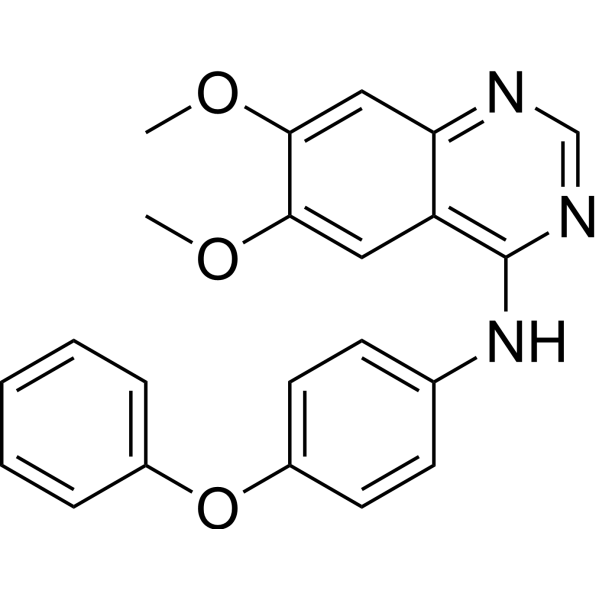
HY-101053
Src Inhibitor 1Src Inhibitor -
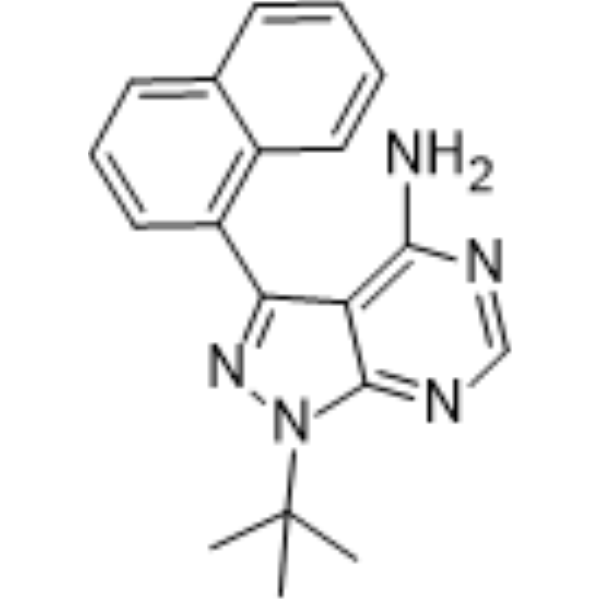
HY-13941
1-Naphthyl PP1Src Inhibitor
Publications Citing Use of MedChemExpress (MCE) MNS
More

Biological Activity
Description
|
NLRP3 inflammasome |
Cellular Effect
|
Cell Line

|
Type | Value | Description | References |
|---|---|---|---|---|
| BXPC-3 | GI50 |
1.7 μg/mL
Compound: 4m
|
Cytotoxicity against human BxPC3 cells after 48 hrs by sulforhodamine B assay
Cytotoxicity against human BxPC3 cells after 48 hrs by sulforhodamine B assay
|
[PMID: 19709889] |
| DU-145 | GI50 |
1.8 μg/mL
Compound: 4m
|
Cytotoxicity against human DU145 cells after 48 hrs by sulforhodamine B assay
Cytotoxicity against human DU145 cells after 48 hrs by sulforhodamine B assay
|
[PMID: 19709889] |
| HBL-100 | IC50 |
>20 μM
Compound: MNS
|
Cytotoxicity against human HBL100 cells after 72 hrs by MTT assay
Cytotoxicity against human HBL100 cells after 72 hrs by MTT assay
|
[PMID: 20850977] |
| HeLa | IC50 |
3.9 μM
Compound: 2
|
Inhibition of proteasomal turnover of p97-independent ODD-luciferase reporter substrate in human HeLa cells incubated for 120 mins by luciferase reporter gene assay
Inhibition of proteasomal turnover of p97-independent ODD-luciferase reporter substrate in human HeLa cells incubated for 120 mins by luciferase reporter gene assay
|
[PMID: 33476933] |
| KM-20L2 | GI50 |
1.8 μg/mL
Compound: 4m
|
Cytotoxicity against human KM20L2 cells after 48 hrs by sulforhodamine B assay
Cytotoxicity against human KM20L2 cells after 48 hrs by sulforhodamine B assay
|
[PMID: 19709889] |
| L02 | IC50 |
39.24 μM
Compound: MNS
|
Cytotoxicity against human L02 cells assessed as reduction in cell viability incubated for 24 hrs by MTT assay
Cytotoxicity against human L02 cells assessed as reduction in cell viability incubated for 24 hrs by MTT assay
|
[PMID: 35428012] |
| L02 | IC50 |
41.1 μM
Compound: MNS
|
Cytotoxicity against human L-02 cells incubated for 24 hrs by MTT assay
Cytotoxicity against human L-02 cells incubated for 24 hrs by MTT assay
|
[PMID: 34506712] |
| MCF7 | GI50 |
0.58 μg/mL
Compound: 4m
|
Cytotoxicity against human MCF7 cells after 48 hrs by sulforhodamine B assay
Cytotoxicity against human MCF7 cells after 48 hrs by sulforhodamine B assay
|
[PMID: 19709889] |
| MDA-MB-231 | IC50 |
14 μM
Compound: MNS
|
Cytotoxicity against human MDA-MB-231 cells after 72 hrs by MTT assay
Cytotoxicity against human MDA-MB-231 cells after 72 hrs by MTT assay
|
[PMID: 20850977] |
| NCI-H460 | GI50 |
2 μg/mL
Compound: 4m
|
Cytotoxicity against human NCI-H460 cells after 48 hrs by sulforhodamine B assay
Cytotoxicity against human NCI-H460 cells after 48 hrs by sulforhodamine B assay
|
[PMID: 19709889] |
| P388 | ED50 |
2 μg/mL
Compound: 4m
|
Cytotoxicity against mouse P388 cells after 48 hrs by sulforhodamine B assay
Cytotoxicity against mouse P388 cells after 48 hrs by sulforhodamine B assay
|
[PMID: 19709889] |
| Platelet | IC50 |
14 μM
Compound: MNS
|
Antiaggregatory activity in human platelets assessed as inhibition of thrombin-induced platelet aggregation preincubated for 3 mins before thrombin challenge by turbidimetry analysis
Antiaggregatory activity in human platelets assessed as inhibition of thrombin-induced platelet aggregation preincubated for 3 mins before thrombin challenge by turbidimetry analysis
|
[PMID: 20850977] |
| Platelet | IC50 |
7.2 μM
Compound: MNS
|
Antiaggregatory activity in human platelets assessed as inhibition of collagen-induced platelet aggregation preincubated for 3 mins before collagen challenge by turbidimetry analysis
Antiaggregatory activity in human platelets assessed as inhibition of collagen-induced platelet aggregation preincubated for 3 mins before collagen challenge by turbidimetry analysis
|
[PMID: 20850977] |
| SF-268 | GI50 |
1.9 μg/mL
Compound: 4m
|
Cytotoxicity against human SF268 cells after 48 hrs by sulforhodamine B assay
Cytotoxicity against human SF268 cells after 48 hrs by sulforhodamine B assay
|
[PMID: 19709889] |
In Vitro
MNS (48 h) shows cytotoxicity against human BxPC3, DU145, and KM20L2 cells, with GI50 of 1.7 μg/mL, 1.8 μg/mL, 1.8 μg/mL, respectively[3].
MNS (1-20 μM, 1-15 h) inhibits adhesion and migration of MDA-MB-231 cells by suppressing β1 integrin function and surface protein disulfide isomerase[4].
MNS (1-10 μM, 15 min) inhibits NLRP3 inflammasome activation in LPS-primed BMDMs by blocking assembly of the inflammasome[5].
MNS (2.5-10 μM, 4-24 h) decreases the motility and colony formation of osteosarcoma cells[6].
MedChemExpress (MCE) has not independently confirmed the accuracy of these methods. They are for reference only.
-
Cell Line:MDA-MB-231
-
Concentration:1, 2, 5, 10, 20 μM
-
Incubation Time:15 h
-
Result:Concentration-dependently prevented MDA-MB-231 cells from migrating.
Failed to migrate into and close a wound at 10 and 20 μM.
Abolished the migration at 5 μM.
In Vivo
MNS (30 mg/kg, p.o., 5 days) alleviates DSS-induced mouse colitis by inhibiting the NLRP3 inflammasome[8].
MNS (20 mg/kg, i.p., 30 min before reperfusion) significantly protects the kidneys from RIR injury in rats by reducing PANoptosis through specific inhibition of NLRP3[9].
MedChemExpress (MCE) has not independently confirmed the accuracy of these methods. They are for reference only.


Chemical Information
-
CAS No. 1485-00-3
-
Appearance Solid
-
Molecular Weight 193.16
-
Formula C9H7NO4
-
Color Light yellow to green yellow
-
SMILES
O=[N+]([O-])/C=C/C1=CC(OCO2)=C2C=C1
-
Synonyms
NSC 170724; 5-(2-Nitrovinyl)benzodioxole
-
Shipping
Room temperature in continental US; may vary elsewhere.
-
Storage
Powder -20°C 3 years 4°C 2 years In solvent -80°C 2 years -20°C 1 year


Publications (4)
-
Journal Impact Factor
-
Most Recent


Solvent & Solubility
In Vitro:
DMSO : 50 mg/mL (258.85 mM; Need ultrasonic; Hygroscopic DMSO has a significant impact on the solubility of product, please use newly opened DMSO)
H2O : < 0.1 mg/mL (insoluble)
Please refer to the solubility information to select the appropriate solvent. Once prepared, please aliquot and store the solution to prevent product inactivation from repeated freeze-thaw cycles.
Storage method and period of stock solution: -80°C, 2 years; -20°C, 1 year. When stored at -80°C, please use it within 2 years. When stored at -20°C, please use it within 1 year.
Please refer to the solubility information to select the appropriate solvent. Once prepared, please aliquot and store the solution to prevent product inactivation from repeated freeze-thaw cycles.
Storage method and period of stock solution: -80°C, 2 years; -20°C, 1 year. When stored at -80°C, please use it within 2 years. When stored at -20°C, please use it within 1 year.
Concentration (start) × Volume (start) = Concentration (final) × Volume (final)
In Vivo:
Select the appropriate dissolution method based on your experimental animal and administration route.
- For the following dissolution methods, please ensure to first prepare a clear stock solution using an In Vitro approach and then sequentially add co-solvents:
- To ensure reliable experimental results, the clarified stock solution can be appropriately stored based on storage conditions. As for the working solution for In Vivo experiments, it is recommended to prepare freshly and use it on the same day.
- The percentages shown for the solvents indicate their volumetric ratio in the final prepared solution. If precipitation or phase separation occurs during preparation, heat and/or sonication can be used to aid dissolution.
Add each solvent one by one: 10% DMSO 40% PEG300 5% Tween-80 45% Saline
Solubility: 2.5 mg/mL (12.94 mM); Suspended solution; Need ultrasonic
This protocol yields a suspended solution of 2.5 mg/mL. Suspended solution can be used for oral and intraperitoneal injection.
Taking 1 mL working solution as an example, add 100 μL DMSO stock solution (25.0 mg/mL) to 400 μL PEG300, and mix evenly; then add 50 μL Tween-80 and mix evenly; then add 450 μL Saline to adjust the volume to 1 mL.
Preparation of Saline: Dissolve 0.9 g sodium chloride in ddH₂O and dilute to 100 mL to obtain a clear Saline solution.
In Vivo Dissolution Calculator
Please enter the basic information of animal experiments:
-
-
-
-
Recommended: Prepare an additional quantity of animals to account for potential losses during experiments.
Please enter your animal formula composition:
-
%DMSO +
Recommended: Keep the proportion of DMSO in working solution below 2% if your animal is weak.
-
%+
-
+%Tween-80 + +
-
%Saline +
The co-solvents required include: DMSO, . All of co-solvents are available by MedChemExpress (MCE). , Tween 80. All of co-solvents are available by MedChemExpress (MCE).
Working solution concentration: 0.22 mg/mL
Method for preparing stock solution: mg drug dissolved in μL DMSO. Stock solution concentration: mg/mL.
1. Take μL DMSO stock solution;
2. Add μL .
μL , mix evenly;
3. Then add μL Tween 80, mix evenly;
4. Then add μL
Please ensure that the stock solution in the first step is dissolved to a clear state, and add co-solvents in sequence. You can use ultrasonic heating (ultrasonic cleaner, recommended frequency 20-40 kHz), vortexing, etc. to assist dissolution.


Purity & Documentation
-
Data Sheet (280 KB)
-
SDS (480 KB)
- English - EN (480 KB)
- Français - FR (480 KB)
- Deutsch - DE (480 KB)
- Norwegian - NO (480 KB)
- Español - ES (480 KB)
- Swedish - SV (480 KB)
- Italian - IT (480 KB)
- Korean - KR (480 KB)
- Portuguese - PT (480 KB)
-
Handling Instructions (2659 KB)
References
[1]. Wang WY, et al. Synthesis and pharmacological evaluation of novel beta-nitrostyrene derivatives as tyrosine kinase inhibitors with potent antiplatelet activity. Biochem Pharmacol. 2007;74(4):601-611. [Content Brief]
[2]. Wang WY, et al. Prevention of platelet glycoprotein IIb/IIIa activation by 3,4-methylenedioxy-beta-nitrostyrene, a novel tyrosine kinase inhibitor. Mol Pharmacol. 2006;70(4):1380-1389. [Content Brief]
[3]. Pettit RK, et al. E-Combretastatin and E-resveratrol structural modifications: antimicrobial and cancer cell growth inhibitory beta-E-nitrostyrenes. Bioorg Med Chem. 2009 Sep 15;17(18):6606-12. [Content Brief]
[4]. Chen IH, et al. 3,4-Methylenedioxy-β-nitrostyrene inhibits adhesion and migration of human triple-negative breast cancer cells by suppressing β1 integrin function and surface protein disulfide isomerase. Biochimie. 2015 Mar;110:81-92. [Content Brief]
[5]. He Y, et al. 3,4-methylenedioxy-β-nitrostyrene inhibits NLRP3 inflammasome activation by blocking assembly of the inflammasome. J Biol Chem. 2014 Jan 10;289(2):1142-50. [Content Brief]
[6]. Messerschmitt PJ, et al. Osteosarcoma Phenotype Is Inhibited by 3,4-Methylenedioxy-β-nitrostyrene. Sarcoma. 2012;2012:479712. [Content Brief]
[7]. Xiao M, et al. 3,4-Methylenedioxy-β-Nitrostyrene Ameliorates Experimental Burn Wound Progression by Inhibiting the NLRP3 Inflammasome Activation. Plast Reconstr Surg. 2016 Mar;137(3):566e-575e. [Content Brief]
[8]. Zheng J, et al. 3,4-Methylenedioxy-β-Nitrostyrene Alleviates Dextran Sulfate Sodium-Induced Mouse Colitis by Inhibiting the NLRP3 Inflammasome. Front Pharmacol. 2022 Jun 15;13:866228. [Content Brief]
[9]. Uysal E, et al. Targeting the PANoptosome with 3,4-Methylenedioxy-β-Nitrostyrene, Reduces PANoptosis and Protects the Kidney against Renal İschemia-Reperfusion Injury. J Invest Surg. 2022 Nov-Dec;35(11-12):1824-1835. [Content Brief]
[10]. Wang L, et al. Mechanisms of PANoptosis and relevant small-molecule compounds for fighting diseases. Cell Death Dis. 2023 Dec 21;14(12):851. [Content Brief]


Complete Stock Solution Preparation Table
Please refer to the solubility information to select the appropriate solvent. Once prepared, please aliquot and store the solution to prevent product inactivation from repeated freeze-thaw cycles.
Storage method and period of stock solution: -80°C, 2 years; -20°C, 1 year. When stored at -80°C, please use it within 2 years. When stored at -20°C, please use it within 1 year.
| Optional Solvent | Concentration Solvent Mass | 1 mg | 5 mg | 10 mg | 25 mg |
|---|---|---|---|---|---|
| DMSO | 1 mM | 5.1771 mL | 25.8853 mL | 51.7706 mL | 129.4264 mL |
| 5 mM | 1.0354 mL | 5.1771 mL | 10.3541 mL | 25.8853 mL | |
| 10 mM | 0.5177 mL | 2.5885 mL | 5.1771 mL | 12.9426 mL | |
| 15 mM | 0.3451 mL | 1.7257 mL | 3.4514 mL | 8.6284 mL | |
| 20 mM | 0.2589 mL | 1.2943 mL | 2.5885 mL | 6.4713 mL | |
| 25 mM | 0.2071 mL | 1.0354 mL | 2.0708 mL | 5.1771 mL | |
| 30 mM | 0.1726 mL | 0.8628 mL | 1.7257 mL | 4.3142 mL | |
| 40 mM | 0.1294 mL | 0.6471 mL | 1.2943 mL | 3.2357 mL | |
| 50 mM | 0.1035 mL | 0.5177 mL | 1.0354 mL | 2.5885 mL | |
| 60 mM | 0.0863 mL | 0.4314 mL | 0.8628 mL | 2.1571 mL | |
| 80 mM | 0.0647 mL | 0.3236 mL | 0.6471 mL | 1.6178 mL | |
| 100 mM | 0.0518 mL | 0.2589 mL | 0.5177 mL | 1.2943 mL |


MNS Related Classifications
HY-78263 Related Classifications
 Powered by Bioz