



Akt
PKB; Protein kinase B
Akt/PKB (Protein kinase B), a serine/threonine protein kinase with antiapoptotic activity, is one of the major downstream targets of PtdIns(3,4,5)P3 signaling pathway. It contains a pleckstrin homology domain (PH domain) that specifically binds PtdIns(3,4,5)P3 on the plasma membrane. Akt phosphorylation and activation are directly determined by the level of PtdIns(3,4,5)P3 on the plasma membrane, which is regulated by PI3K.
Akt consists of three isoforms: PKBα/Akt1, PKBβ/Akt2 and PKBγ/Akt3. Akt isoforms have an N-terminal PH (pleckstrin homology) domain and a kinase domain, which are separated by a 39-amino-acid hinge region. Catalytically active Akt regulates the function of numerous substrates involved in cell survival, growth, proliferation, metabolism and protein synthesis.
Akt is a crucial mediator of cell survival and its deactivation is implicated in various stress-induced pathological cell death and degenerative diseases.
Akt Isoform Specific Products
All Product Categories
-
Akt Inhibitors
(1020)
View all products
-
Akt Agonists
(7)
View all products
-
Akt Activators
(301)
View all products
-
Akt Modulators
(25)
View all products
-
Akt Chemical
(1)
View all products
-
Akt Inducers
(9)
View all products
-
Akt Degraders
(11)
View all products
-
Akt Control
(1)
View all products
-
Akt Substrate
(1)
View all products
-
Akt Ligands
(6)
View all products
-
AKT Serine/Threonine Kinase 2 (AKT2) Proteins
(5)
View all products
-
AKT Serine/Threonine Kinase 3 (AKT3) Proteins
(6)
View all products
-
Akt Related Products (1489)
Related Products (1489)

-
Recombinant Proteins (11)
-
Antibodies (11)
-
Akt Isoform Comparison
-
Peptide R54
 0 ImagesCat. No.: HY-P11011CAS No.: 2232233-39-3Synonyms: Pep R54; CXCR4 antagonist peptide 19
-
EGFR-IN-201
 0 ImagesCat. No.: HY-181659CAS No.: 3103654-99-2EGFR-IN-201 is a potent EGFR inhibitor, with an IC50 of 0.091 μM against wild-type EGFR; for mutant EGFR variants, the IC50 values of EGFRT790M, EGFRL858R and EGFRC797S are 0.147 μM, 0.221 μM and 0.703 μM, respectively. EGFR-IN-201 inhibits EGFR downstream signaling proteins AKT1 (IC50 = 0.225 μg/mL) and ERK1 (IC50 = 0.705 μg/mL). EGFR-IN-201 induces G0/G1 cell cycle arrest, apoptosis and low-level necrosis in cancer cells. EGFR-IN-201 is applicable to research on cancers such as colon cancer.
-
Topoisomerase I-IN-25
 0 ImagesCat. No.: HY-189630Topoisomerase I-IN-25 is a moderate inhibitor of Topoisomerase I-mediated DNA relaxation. Topoisomerase I-IN-25 inhibits the cAMP-PKA-CREB and PI3K-AKT-mTOR signaling pathways. Topoisomerase I-IN-25 downregulates Bcl-2, upregulates Bax, and induces Apoptosis, G2/M phase arrest, mitochondrial dysfunction, and reactive oxygen species accumulation. Topoisomerase I-IN-25 exhibits anticancer activity against hepatocellular carcinoma. Topoisomerase I-IN-25 can be used for research on hepatocellular carcinoma.

-
ALK/PI3K/AKT-IN-1
 0 ImagesCat. No.: HY-173007CAS No.: 3050831-84-7ALK/PI3K/AKT-IN-1 (Compound 45) inhibits the proliferation of cancer cell A549, H1975 and PC9 with an IC50 of 0.44, 0.83 and 1.51 μM. ALK/PI3K/AKT-IN-1 increases the expression of p21 and p27, inhibits the activity of CDK2 and p-Rb, arrests the cell cycle at G1 phase. ALK/PI3K/AKT-IN-1 inhibits the ALK/PI3K/AKT signaling pathway, promotes the depolarization of mitochondrial membrane potential, and inducing apoptosis in A549 cell. ALK/PI3K/AKT-IN-1 inhibits the formation and growth of A549 cell spheroids.
-
Isobavachalcone (Standard)
 0 ImagesSynonyms: Corylifolinin (Standard); Isobacachalcone (Standard)Isobavachalcone (Standard) is the analytical standard of Isobavachalcone. This product is intended for research and analytical applications. Isobavachalcone (Corylifolinin) is derived from Psoralea corylifolia Linn. and is a potent inhibitor of Akt signaling pathway, which induces apoptosis in human cancer cells (Inhibits OVCAR-8 cell growth with an IC50 value of 7.92 μM). Isobavachalcone also induces Reactive Oxyen Species (ROS) generation in OVCAR-8 cells and has exhibit cancer anti-promotive and anti-proliferative activity.
-
Multi-kinase-IN-2
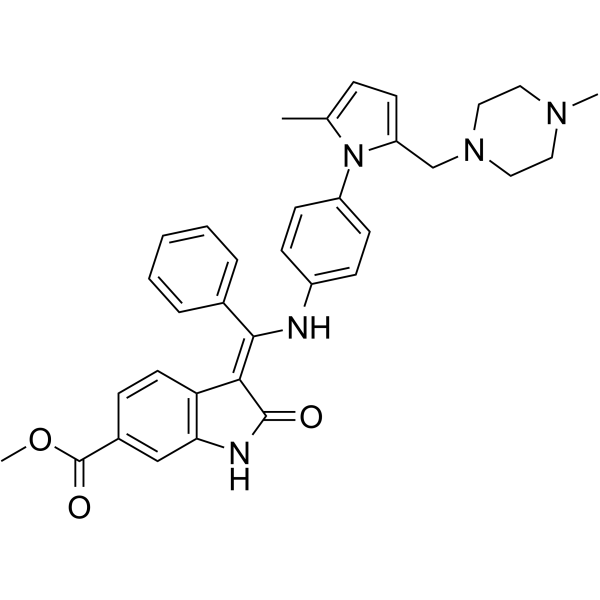 0 ImagesCat. No.: HY-150026CAS No.: 2095628-21-8Multi-kinase-IN-2 (compound 7h) is an orally active and potent angiokinase inhibitor. Multi-kinase-IN-2 exhibits excellent inhibitory activity against angiokinases including VEGFR-1/2/3, PDGFRα/β, and FGFR-1, as well as LYN and c-KIT kinases. Multi-kinase-IN-2 significantly attenuates phosphorylation of AKT and ERK proteins. Multi-kinase-IN-2 induces cell apoptosis. Multi-kinase-IN-2 shows anticancer activity.
-
6-O-Isobutyrylbritannilactone
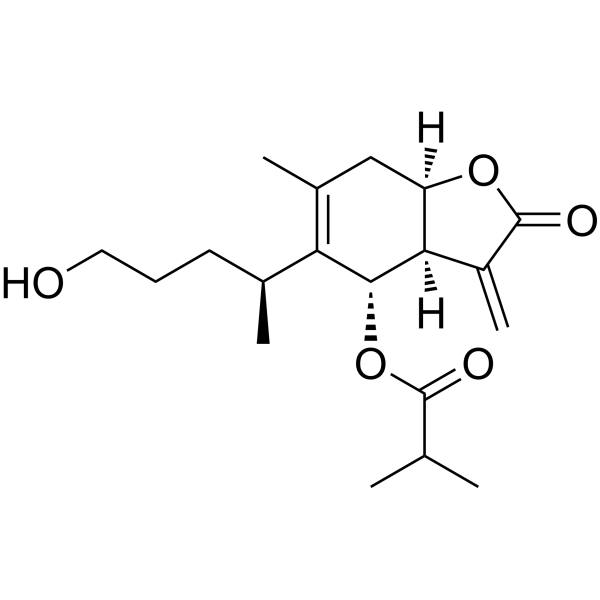 0 Images6-O-Isobutyrylbritannilactone is a natural melanogenesis inhibitor. 6-O-Isobutyrylbritannilactone, a sesquiterpene, can be isolated from the flowers of Inula britannica. 6-O-Isobutyrylbritannilactone inhibits IBMX (HY-12318)-induced melanin production in B16F10 cells. 6-O-Isobutyrylbritannilactone also regulates ERK, PI3K/AKT, and CREB, shows antimelanogenic activity in zebrafish embryos models.
-
Akt1-IN-6
 0 ImagesCat. No.: HY-163578CAS No.: 3034254-12-8Akt1-IN-6 (Compound 273) is an Akt1 inhibitor (IC50: <15 nM)
-
FLT3-IN-32 hydrochloride
 0 ImagesCat. No.: HY-174437BCAS No.: 3047195-66-1FLT3-IN-32 hydrochloride is a potent and orally active FLT3 inhibitor with an IC50s of 0.29 nM, 0.77 nM and 2.07 nM against FLT3-ITD, FLT3-D835Y and FLT-N676K. FLT3-IN-32 hydrochloride reduces the phosphorylation of FLT3 and its downstream signaling molecules (STAT5, MAPK, AKT) to induce FLT3-mutated Ba/F3 cells apoptosis. FLT3-IN-32 hydrochloride shows significant anti-tumor efficacy in n the MV4-11 xenograft model. FLT3-IN-32 hydrochloride can be used for the study of acute myeloid leukemia (AML).
-
Afatinib dimaleate (Standard)
 0 ImagesSynonyms: BIBW 2992MA2 (Standard)Afatinib (dimaleate) (Standard) is the analytical standard of Afatinib (dimaleate). This product is intended for research and analytical applications. Afatinib (BIBW 2992) dimaleate is an orally active, potent and irreversible dual specificity inhibitor of ErbB family (EGFR and HER2), with IC50 values of 0.5 nM, 0.4 nM, 10 nM and 14 nM for EGFRwt, EGFRL858R, EGFRL858R/T790M and HER2, respectively. Afatinib dimaleate can be used for the research of esophageal squamous cell carcinoma (ESCC), non-small cell lung cancer (NSCLC) and gastric cancer.
-
TSR-011-isomer
 0 ImagesCat. No.: HY-117806CAS No.: 1388225-79-3TSR-011-isomer is an isomer of Belizatinib (HY-17603), a ALK inhibitor with an IC50 of 6 nM. TSR-011-isomer acts as a substrate for metabolic hydrolysis and NADPH-dependent metabolism. TSR-011-isomer undergoes enzymatic hydrolysis in mouse plasma and NADPH-dependent metabolism in mouse liver microsomes, thereby supporting clearance processes. TSR-011-isomer can be used in studies related to ALK-driven cancers.
-
NS-417 free base
 0 ImagesCat. No.: HY-182401CAS No.: 160753-58-2NS-417 free base is an ERK1, ERK2, and Akt kinase activator with neuroprotective, neurite outgrowth potentiating, and dopaminergic cell population enhancing activity. NS-417 free base enhances activation of ERK1, ERK2, and Akt kinase via growth factor stimulation. NS-417 free base rescues cells from growth factor withdrawal-induced death, stimulates neurite outgrowth, increases tyrosine hydroxylase-positive cell counts, and displays neurotrophic-like activity in in vitro models. NS-417 free base can be used for the research of parkinson’s disease.
-
Chalcomoracin
 0 ImagesCat. No.: HY-N20674CAS No.: 76472-89-4Chalcomoracin is an orally active anticancer agent. Chalcomoracin exhibits anticancer, antibacterial, and α-glucosidase inhibitory activities, with an IC50 of 14.23 µM against yeast α-glucosidase and an IC50 of 5.5 μM against FabI of Staphylococcus aureus. Chalcomoracin reduces the phosphorylation levels of ERK, JNK, and P38; enhances the phosphorylation level of ERK1/2; regulates the MAPK, mTOR, AKT, and p53 signaling pathways; upregulates the expression of Chop, Bip, PINK1, GRP78, and GADD153; and downregulates the expression of Alix. Chalcomoracin induces apoptosis (apoptosis), endoplasmic reticulum stress (endoplasmic reticulum stress), paraptosis (paraptosis), ROS production, mitophagy (mitophagy), and autophagy (autophagy); it inhibits cancer cell viability, colony-forming ability, migration, invasion, proliferation, tumorigenesis, fatty acid synthesis, S. aureus growth, vitreous-stimulated retinal cell activity, and cell cycle progression at the G0/G1 phase. Chalcomoracin can be used in research related to hepatocellular carcinoma, non-small cell lung cancer, triple-negative breast cancer, prostate cancer, proliferative vitreoretinopathy, pancreatic cancer, diabetes, and bacterial infections.
-
CSF1R-IN-27
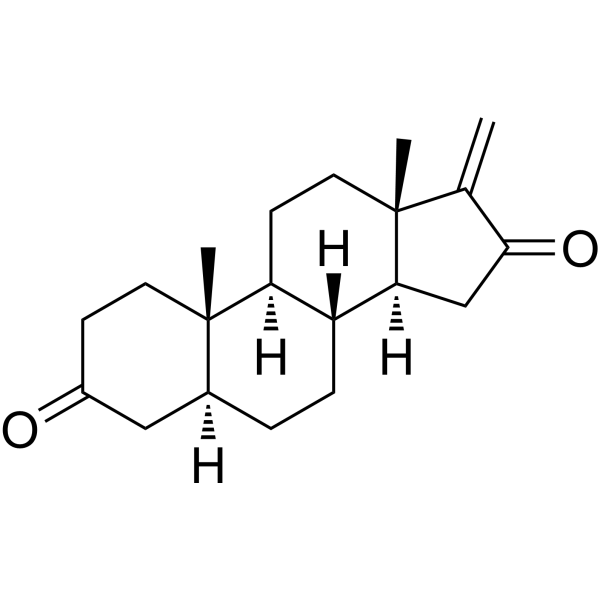
 0 ImagesCat. No.: HY-183569CAS No.: 3034296-91-5CSF1R-IN-27 is a CSF1R inhibitor with oral effectiveness, kinome-wide selective profile, low cellular cytotoxicity, and CSF1R IC50 values of 19 nM, 88 nM, 173 nM, 797 nM, 1448 nM, and >3000 nM. CSF1R-IN-27 suppresses M-CSF-induced phosphorylation of CSF1R, AKT, and ERK in macrophages, and inhibits hepatic p-CSF1R/p-AKT/p-ERK signaling. CSF1R-IN-27 reduces serum transaminase levels, improves hepatic histopathology, alleviates inflammatory cell infiltration, and decreases circulating TNF-α and IL-6 levels. CSF1R-IN-27 can be used for the research of acute liver injury.
-
CP-654577
 0 ImagesCat. No.: HY-118900CAS No.: 639087-64-2CP-654577 is a selective ErbB2 inhibitor with an IC50 of 11 nM. CP-654577 downregulates the Notch1 signaling pathway. CP-654577 upregulates p27kip1, reduces the levels of Cyclins D and E, and inhibits G1 phase progression of the cell cycle. CP-654577 induces cell Apoptosis, downregulates activated Akt, and suppresses tumor growth in athymic mice. CP-654577 can be used in breast cancer-related research.
-
JAK1-IN-21
 0 ImagesCat. No.: HY-184592JAK1-IN-21, biotin-conjugated isoxazole derivative, is a JAK1 inhibitor. JAK1-IN-21 directly engages and stabilizes JAK1, reduces the phosphorylation of JAK1, STAT1 and AKT, induces apoptotic marker cleavage (PARP, Caspase-3, Caspase-7) and exhibits broad-spectrum antiproliferative activity against cancer cells. JAK1-IN-21 can be used for the study of liver cancer, prostate cancer, and breast cancer.
-
AZD3409
 0 ImagesCat. No.: HY-10062CAS No.: 345915-10-8Synonyms: EBP-921AZD3409 is a prenyl inhibitor that exhibits inhibitory activity against both farnesyl transferase and geranylgeranyl transferase I. AZD3409 inhibits the growth of breast cancer cells, with IC50s of 220 nM (MDA-MB-468), 180 nM (MDA-MB-361), and 290 nM (SK-Br-3). AZD3409 significantly reduces the activation level of AKT in breast cancer cell lines. AZD3409 induces G0/G1 phase arrest in MDA-MB-468 cells, causes G2/M phase arrest in MDA-MB-361 cells. AZD3409 can be used for the study of breast cancer.
-
SR 13668
 0 ImagesCat. No.: HY-16469CAS No.: 637774-61-9SR13668 is a potent indole analog derived from indole-3-carbinol (I3C), known for its natural anticancer properties but limited by poor metabolic characteristics. Developed to enhance I3C's anticancer efficacy, SR13668 effectively inhibits growth factor-stimulated Akt activation. It demonstrates strong oral anticancer activity across different cancer types in preclinical studies, showing promise in clinical development due to its favorable safety profile and potent therapeutic effects.




