



Akt
PKB; Protein kinase B
Akt/PKB (Protein kinase B), a serine/threonine protein kinase with antiapoptotic activity, is one of the major downstream targets of PtdIns(3,4,5)P3 signaling pathway. It contains a pleckstrin homology domain (PH domain) that specifically binds PtdIns(3,4,5)P3 on the plasma membrane. Akt phosphorylation and activation are directly determined by the level of PtdIns(3,4,5)P3 on the plasma membrane, which is regulated by PI3K.
Akt consists of three isoforms: PKBα/Akt1, PKBβ/Akt2 and PKBγ/Akt3. Akt isoforms have an N-terminal PH (pleckstrin homology) domain and a kinase domain, which are separated by a 39-amino-acid hinge region. Catalytically active Akt regulates the function of numerous substrates involved in cell survival, growth, proliferation, metabolism and protein synthesis.
Akt is a crucial mediator of cell survival and its deactivation is implicated in various stress-induced pathological cell death and degenerative diseases.
Akt Isoform Specific Products
All Product Categories
-
Akt Inhibitors
(1020)
View all products
-
Akt Agonists
(7)
View all products
-
Akt Activators
(301)
View all products
-
Akt Modulators
(25)
View all products
-
Akt Chemical
(1)
View all products
-
Akt Inducers
(9)
View all products
-
Akt Degraders
(11)
View all products
-
Akt Control
(1)
View all products
-
Akt Substrate
(1)
View all products
-
Akt Ligands
(6)
View all products
-
AKT Serine/Threonine Kinase 2 (AKT2) Proteins
(5)
View all products
-
AKT Serine/Threonine Kinase 3 (AKT3) Proteins
(6)
View all products
-
Akt Related Products (1489)
Related Products (1489)

-
Recombinant Proteins (11)
-
Antibodies (11)
-
Akt Isoform Comparison
-
Kukoamine B (Standard)
 0 ImagesCat. No.: HY-N2393RCAS No.: 164991-67-7Kukoamine B (Standard) is the analytical standard of Kukoamine B. This product is intended for research and analytical applications. Kukoamine B, a spermine alkaloid, is a potent dual LPS and CpG DNA inhibitor with Kd values of 1.23 µM and 0.66 µM, respectively. Kukoamine B exerts anti-inflammatory, anti-diabetic, anti-oxidant, anti-osteoporotic and neuroprotective effects. Kukoamine B has the potential for the study of sepsis.
-
Lumichrome (Standard)
 0 ImagesLumichrome (Standard) is the analytical standard of Lumichrome. This product is intended for research and analytical applications. Lumichrome, a photodegradation product of Riboflavin, is an endogenous compound in humans. Lumichrome inhibits human lung cancer cell growth and induces apoptosis via a p53-dependent mechanism. Lumichrom is the inhibitor for AKT/β-catenin signaling pathway. Lumichrom is the inhibitor for AKT/β-catenin signaling pathway.
-
Taurolithocholic acid-d5
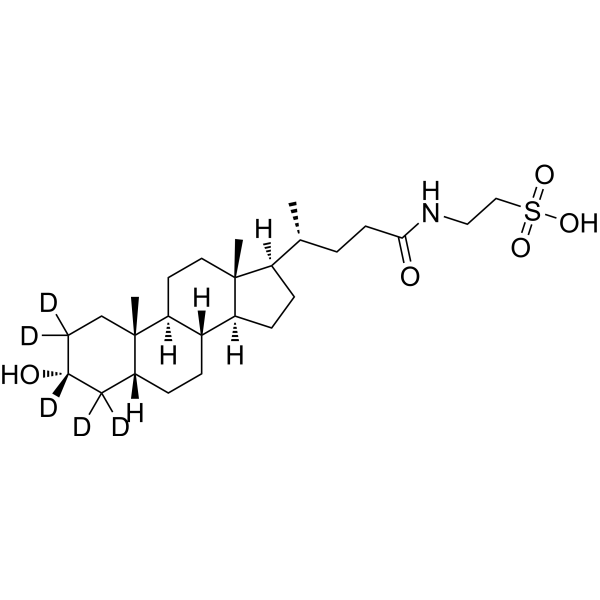 0 ImagesCat. No.: HY-113308SCAS No.: 1265681-64-8Taurolithocholic acid-d5 is deuterium labeled Taurolithocholic acid. Taurolithocholic acid is an orally active bile acid and antiviral agent. Taurolithocholic acid upregulates FADS2 by activating the TGR5-PI3K/AKT-SREBP2 signaling axis, inhibits SFTSV-induced ferroptosis, viral replication and viral entry of HBV/HDV, while reducing the release of IL-1β, lipid ROS and LDH. While exerting antiviral protective effects, Taurolithocholic acid also stimulates the recycling of hepatocellular membrane transporters, impairs canalicular bile acid secretion function, and induces hepatocyte cholestasis, apoptosis and acute hepatocellular injury. Taurolithocholic acid serves as an experimental model compound for hepatocellular cholestasis. At concentrations ≤200 μM, Taurolithocholic acid shows no cytotoxicity and does not activate the interferon pathway. Taurolithocholic acid not only protects mice from lethal SFTSV infection but also is suitable for studies related to severe fever with thrombocytopenia syndrome and cholestasis.
-
SIJ1777
 0 ImagesCat. No.: HY-164400CAS No.: 839707-55-0SIJ1777 is a GNF-7 (HY-10943) derivative, possesses potent anti-cancer effects on melanoma cells harboring BRAF class I/II/III mutations. SIJ1777 substantially inhibits the activation of MEK, ERK, and AKT. SIJ1777 remarkably induces apoptosis and significantly blocks migration, invasion, and anchorage-independent growth of melanoma cells harboring BRAF class I/II/II mutations.
-
Akt1-IN-8
 0 ImagesCat. No.: HY-173122CAS No.: 2247688-87-3Akt1-IN-8 (Compound JL18) is a potent and oral bioavailable (41%) inhibitor of AKT1 kinase, with an IC50 of 8.8 nM. Akt1-IN-8 exhibits significant antiproliferative effects against PC-3 prostate cancer cells, with an IC50 of 3.0 μM. Akt1-IN-8 can reduce phosphorylated GSK3β levels.
-
Akt RIMTAC-1
 0 ImagesCat. No.: HY-187500Akt RIMTAC-1 is a Akt RIMTAC degrader (a PROTAC-like agent) with a DC50 of 3.52 μM. Akt RIMTAC-1 forms a ternary complex with AKT and RIPK1, and recruits the VHL E3 ligase complex to mediate ubiquitination and proteasomal degradation. Akt RIMTAC-1 does not alter AKT1 mRNA levels (pink: AKT ligand-5 (HY-187501); blue: RIPK1-ligand-4 (HY-187391); black: Linker (HY-23166)).
-
WF-10129
 0 ImagesCat. No.: HY-113853CAS No.: 109075-64-1WF-10129 is a cytotoxic steroidal compound isolated from the plant Physalis. WF-10129 inhibits liver cancer cell proliferation, induces apoptosis, interferes with metabolism, and significantly reduces lactate production in vitro and in vivo. WF-10129 can also exert anti-tumor activity by regulating the expression of related genes and proteins through the AKT-p53 pathway.
-
PI3K/AKT-IN-7
 0 ImagesCat. No.: HY-189668PI3K/AKT-IN-7 is a PI3K/Akt signaling pathway inhibitor with selective antiproliferative activity against hepatocellular carcinoma cells. PI3K/AKT-IN-7 downregulates the phosphorylation of PI3K and Akt and binds to NCF2 (Kd = 1.40 μM). PI3K/AKT-IN-7 induces apoptosis, S-phase cell cycle arrest, loss of mitochondrial membrane potential, and ROS accumulation, while inhibiting proliferation, migration, invasion, and DNA synthesis. PI3K/AKT-IN-7 inhibits tumor growth in a Hep3B xenograft BALB/c mouse model and reduces the expression of Ki67, PCNA, and MMP9. PI3K/AKT-IN-7 can be used for research on hepatocellular carcinoma.
-
PI3Kδ-IN-25
 0 ImagesCat. No.: HY-175369PI3Kδ-IN-25 is an orally active selective PI3Kδ inhibitor (IC50 = 2.1 nM). PI3Kδ-IN-25 has IC50s of 272, 285, and 1171 nM for PI3Kα, PI3Kγ, and PI3Kβ, respectively. PI3Kδ-IN-25 inhibits AKT Ser473 phosphorylation, suppresses Treg cell proliferation, and downregulates PD-L1 expression in B16F10 cells. PI3Kδ-IN-25 exhibits anticancer effects in B16F10 melanoma and Lewis lung cancer mouse models by reducing tumor-infiltrating Treg cells and enhancing immune responses. PI3Kδ-IN-25 is potentially useful in the study of melanoma, lung cancer, and other cancers.
-
PI3Kα-IN-32
 0 ImagesCat. No.: HY-183285CAS No.: 3057582-20-1
-
PROTAC PI3Kδ degrader-1
 0 ImagesCat. No.: HY-176239PROTAC PI3Kδ degrader-1 is a Lysine-targeted covalent PI3Kδ PROTAC degrader with a DC50 of 3.98 nM. PROTAC PI3Kδ degrader-1 has a potent antiproliferative activity and selective PI3Kδ inhibition (IC50: 8 nM). PROTAC PI3Kδ degrader-1 also significantly degrades p-AKT, induces cell cycle arrest in G1 phase and prompts cell apoptosis and autophagy. PROTAC PI3Kδ degrader-1 effectively inhibits the tumor growth in SU-DHL-6 xenograft mice model.
-
Brassicasterol (Standard)
 0 ImagesCat. No.: HY-113289RCAS No.: 474-67-9L-Ornithine (hydrochloride) (Standard) is the analytical standard of L-Ornithine (hydrochloride). This product is intended for research and analytical applications. L-Ornithine hydrochloride is a non-proteinogenic amino acid, is mainly used in urea cycle removing excess nitrogen in vivo. L-Ornithine hydrochloride shows nephroprotective.
-
EGFR-IN-181
 0 ImagesCat. No.: HY-178939EGFR-IN-181 is an orally active, potent, brain-penetrant EGFRL858R/T790M/C797S triple mutations inhibitor (IC50 = 1.32 nM). EGFR-IN-181 can inhibit EGFR phosphorylation (p-EGFR) and phosphorylation of its downstream signaling proteins AKT (p-AKT) and ERK (p-ERK). EGFR-IN-181 can induce apoptosis and cause G2 phase arrest. EGFR-IN-181 can be used for the study of non-small cell lung cancer (NSCLC) and brain metastases.
-
LC-MG-10
 0 ImagesCat. No.: HY-184322LC-MG-10 is a selective molecular glue degrader targeting FGFR2, with a DC50 of 230.2 nM in KATO III cells. LC-MG-10 induces proteasomal degradation of FGFR2 via a covalent molecular glue mechanism. LC-MG-10 inhibits cancer cell proliferation. LC-MG-10 suppresses FGFR2-mediated PI3K/AKT and MAPK/ERK signaling pathways. LC-MG-10 can be used in studies related to gastric cancer.
-
Archexin sodium
 0 ImagesCat. No.: HY-177616ASynonyms: RX-0201 sodiumArchexin sodium is an antisense oligonucleotide (ASO) against Akt1. It is used for the study of metastatic renal cancer.

-
RET-IN-33
 0 ImagesCat. No.: HY-183684RET-IN-33 is a moderately selective inhibitor of RET mutants. RET-IN-33 potently inhibits G810 mutants, with IC50 values of 4.43 nM (G810R), 3.28 nM (G810C) and 0.51 nM (G810S), respectively. RET-IN-33 also inhibits other RET mutants: V804M (IC50 0.73 nM), V804L (IC50 0.36 nM), Y806H (IC50 0.74 nM) and M918T (IC50 0.55 nM). RET-IN-33 also inhibits other kinases, with an IC50 of 1.50 nM against VEGFR2 and 1.60 nM against PDGFRα. RET-IN-33 blocks the autophosphorylation of RET mutants and the downstream SHC/AKT/ERK signaling pathway. RET-IN-33 selectively inhibits the proliferation of RET-driven cell models without affecting non-RET-dependent or normal cells. RET-IN-33 exhibits dose-dependent antitumor efficacy in RET-driven xenograft models. RET-IN-33 can be used for the research of medullary thyroid carcinoma, papillary thyroid carcinoma and non-small cell lung cancer.
-
JAK2-IN-9
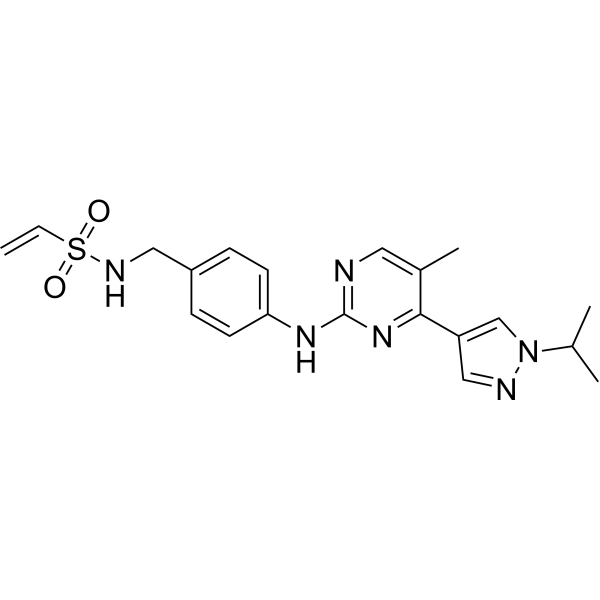 0 ImagesCat. No.: HY-155746CAS No.: 2568842-26-0JAK2-IN-9 is an orally active selective JAK2 inhibitor with a human IC50 of 5 nM. JAK2-IN-9 inhibits JAK2 kinase activity, blocks JAK2 phosphorylation, and suppresses the activation of the downstream JAK2-STAT signaling pathway. JAK2-IN-9 inhibits the phosphorylation of STAT3, STAT5 and AKT in cancer cells. JAK2-IN-9 induces cancer cell apoptosis (apoptosis) and cell cycle arrest. JAK2-IN-9 can be used for the research of myeloproliferative neoplasms.
-
SCR1693
 0 ImagesCat. No.: HY-165341CAS No.: 1442559-20-7SCR1693 is a selective, reversible, orally active and noncompetitive inhibitor of AChE (IC50 = 0.68 μM) as well as a calcium channel blocker. SCR1693 reduces tau phosphorylation levels, and inhibits the generation and release of Aβ. SCR1693 restores insulin signaling and improves cognitive deficits. SCR1693 can be used for the study of Alzheimer's disease, especially which complicated with type 2 diabetes mellitus.
-
Asperosaponin V
 0 ImagesCat. No.: HY-N16118CAS No.: 120481-38-1Asperosaponin V is an indirect modulator of bone metabolism-related targets (e.g., PI3K/AKT, BMP-2/p38, and ERK 1/2 pathways). Asperosaponin V promotes marrow stromal cell proliferation and induces osteoblast differentiation. Asperosaponin V is promising for research of osteoporosis and fracture healing.




