CDK
Cyclin dependent kinase
CDKs (Cyclin-dependent kinases) are serine-threonine kinases first discovered for their role in regulating the cell cycle. They are also involved in regulating transcription, mRNA processing, and the differentiation of nerve cells. CDKs are relatively small proteins, with molecular weights ranging from 34 to 40 kDa, and contain little more than the kinase domain. In fact, yeast cells can proliferate normally when their CDK gene has been replaced with the homologous human gene. By definition, a CDK binds a regulatory protein called a cyclin. Without cyclin, CDK has little kinase activity; only the cyclin-CDK complex is an active kinase.
There are around 20 Cyclin-dependent kinases (CDK1-20) known till date. CDK1, 4 and 5 are involved in cell cycle, and CDK 7, 8, 9 and 11 are associated with transcription.
CDK levels remain relatively constant throughout the cell cycle and most regulation is post-translational. Most knowledge of CDK structure and function is based on CDKs of S. pombe (Cdc2), S. cerevisia (CDC28), and vertebrates (CDC2 and CDK2). The four major mechanisms of CDK regulation are cyclin binding, CAK phosphorylation, regulatory inhibitory phosphorylation, and binding of CDK inhibitory subunits (CKIs).
CDK Isoform Specific Products
-
CDK
(482)
View all products
-
CDK1
(195)
View all products
-
CDK2
(313)
View all products
-
CDK3
(28)
View all products
-
CDK4
(229)
View all products
-
CDK5
(97)
View all products
-
CDK6
(176)
View all products
-
CDK7
(118)
View all products
-
CDK8
(57)
View all products
-
CDK9
(203)
View all products
-
CDK11
(9)
View all products
-
CDK12
(52)
View all products
-
CDK13
(26)
View all products
-
CDK14
(6)
View all products
-
CDK16
(8)
View all products
-
CDK19
(25)
View all products
-
CDC
(21)
View all products
-
CLK
(31)
View all products
-
Pho85
(1)
View all products
-
CDK10
(1)
View all products
-
CDK15
(1)
View all products
-
CDK17
(2)
View all products
-
CDK18
(1)
View all products
-
CDK20
(1)
View all products
-
PITSLRE
(1)
View all products
All Product Categories
-
CDK Inhibitors
(1065)
View all products
-
CDK Agonists
(3)
View all products
-
CDK Antagonists
(2)
View all products
-
CDK Activators
(18)
View all products
-
CDK Modulators
(15)
View all products
-
CDK Degraders
(93)
View all products
-
CDK Controls
(4)
View all products
-
CDK Substrate
(1)
View all products
-
CDK Ligands
(16)
View all products
-
Cyclin-Dependent Kinases (CDKs) Proteins
(80)
View all products
-
Cyclin Dependent Kinase 1 (CDK1) Proteins
(9)
View all products
-
Cyclin-Dependent Kinase 2 (CDK2) Proteins
(12)
View all products
-
Cyclin-Dependent Kinase 3 (CDK3) Proteins
(6)
View all products
-
Cyclin-Dependent Kinase 4 (CDK4) Proteins
(4)
View all products
-
Cyclin-Dependent Kinase 5 (CDK5) Proteins
(5)
View all products
-
Cyclin-Dependent Kinase 6 (CDK6) Proteins
(6)
View all products
-
Cyclin-Dependent Kinase 7 (CDK7) Proteins
(4)
View all products
-
CDK Related Products (1339)
Related Products (1339)

-
Recombinant Proteins (82)
-
Antibodies (42)
-
CDK Isoform Comparison
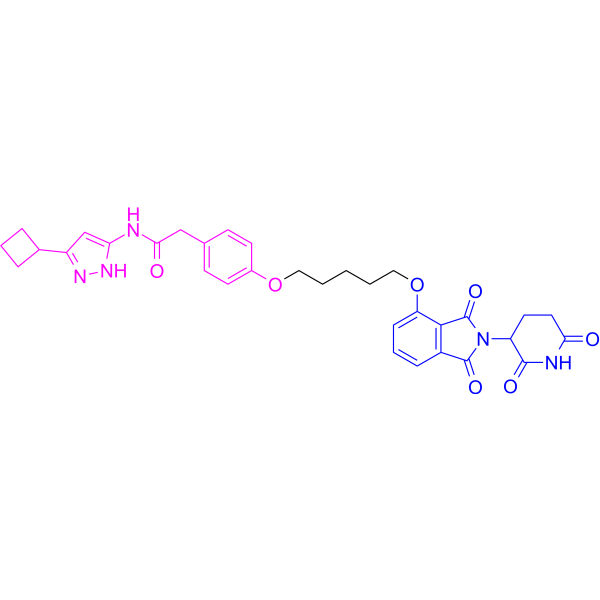
-
YK-2168
 0 ImagesYK-2168 is a potent and selective CDK9 inhibitor with an IC50 of 5.9 nM. YK-2168 inhibits phosphorylation of the CDK9 substrate pS2-RNA Pol II C-terminal domain. YK-2168 induces apoptosis in tumor cells, suppresses expression of CDK9-regulated genes including MYC and Mcl1, and inhibits tumor growth in CDX mice models. YK-2168 can be used for the research of cancer, such as leukemia.
-
LL-K8-22
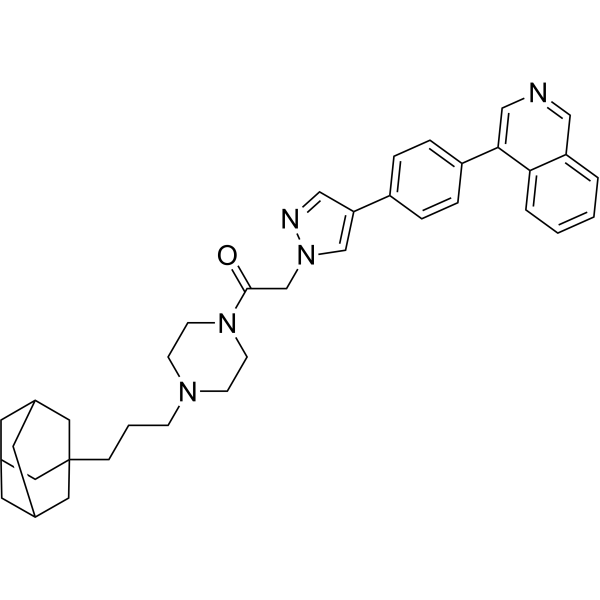 0 ImagesLL-K8-22 is a dual degrader of CDK8 and cyclin C HyT, with DC50 values of 2.52 μM and 2.64 μM, respectively. LL-K8-22 inhibits phosphorylation of STAT1 Ser 727, phosphorylation of the C-terminal domain Ser 2/5 of RNA polymerase II, and phosphorylation of Rb. LL-K8-22 represses E2F- and MYC-driven transcriptional programs and exhibits antiproliferative effects. LL-K8-22 synchronously induces proteasome-dependent selective degradation of CDK8 and cyclin C without degrading CDK19, other CDK family members, or other cyclins. LL-K8-22 can be used in the research of triple-negative breast cancer and colon cancer.
-
Ipivivint
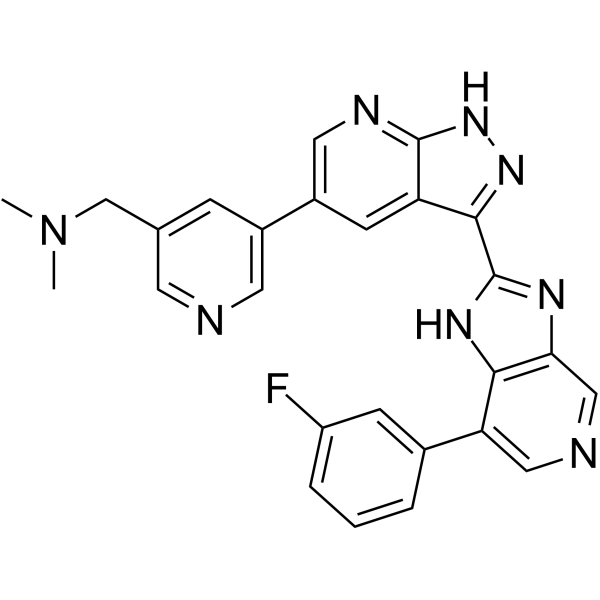 0 ImagesIpivivint (Compound 38) is an orally active and potent CDC-like kinase (CLK) inhibitor with EC50 of 1 nM and 7 nM for CLK2 (human) and CLK3 (human), respectively. Ipivivint also inhibits the Wnt pathway (EC50=13 nM) and tyrosine phosphorylation-regulated kinase 1A (human) (EC50=5 nM).
-
Samuraciclib hydrochloride dihydrate
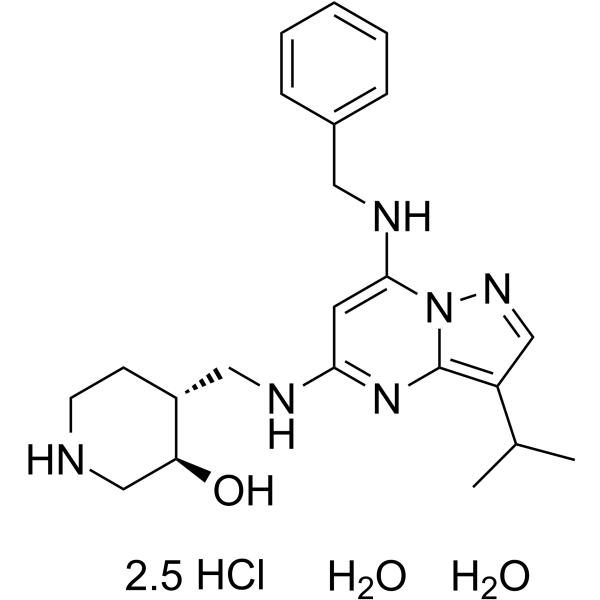 0 ImagesCat. No.: HY-103712BPurity: 99.90%Synonyms: CT7001 hydrochloride dihydrate; ICEC0942 hydrochloride dihydrateSamuraciclib (CT7001) hydrochloride hydrate is a potent, selective, ATP-competitive and orally active CDK7 inhibitor, with an IC50 of 41 nM. Samuraciclib hydrochloride hydrate displays 45-, 15-, 230- and 30-fold selectivity over CDK1, CDK2 (IC50 of 578 nM), CDK5 and CDK9, respectively. Samuraciclib hydrochloride hydrate inhibits the growth of breast cancer cell lines with GI50 values between 0.2-0.3 μM. Samuraciclib hydrochloride hydrate has anti-tumor effects.
-
TFEB activator 2
 0 ImagesTFEB activator 2 is an orally active compound that can cross the blood-brain barrier. TFEB activator 2 can bind to the dopamine transporter (DAT). TFEB activator 2 promotes TFEB nuclear translocation and lysosome biogenesis by targeting the DAT-CDK9-TFEB pathway. TFEB activator 2 has neuroprotective activity and can be used in the research of Alzheimer's disease and other diseases.
-
CDK2 degrader 3
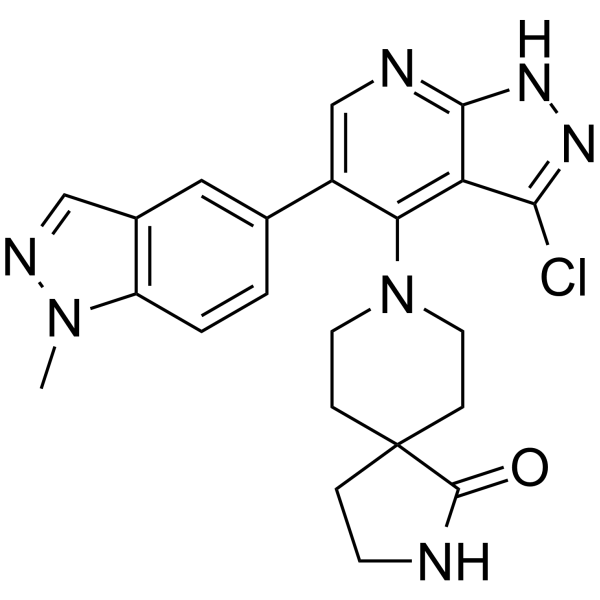
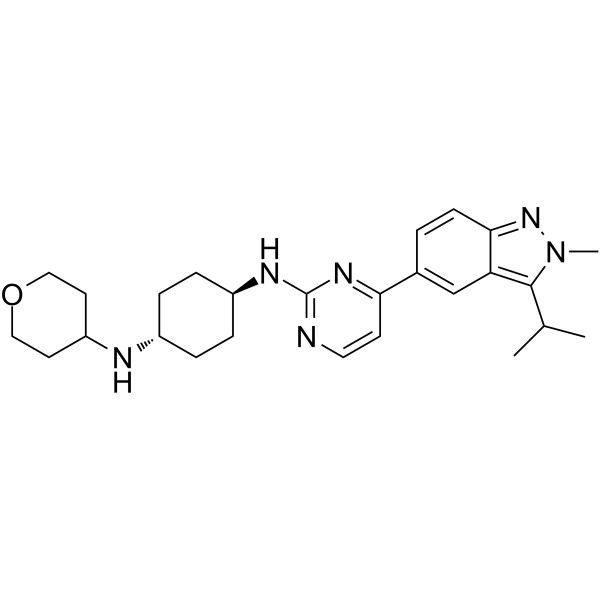
 0 ImagesCDK2 degrader 3 is a selective CDK2 molecular glue-like degrader. CDK2 degrader 3 induces G1 cell cycle arrest in CCNE1-amplified cancer cells. CDK2 degrader 3 is applicable to breast cancer-related research.
-
MFH290
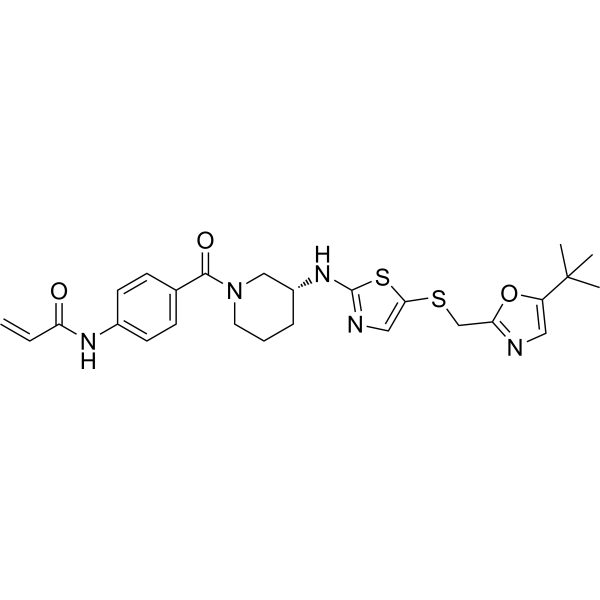 0 ImagesMFH290 is an orally active, selective covalent CDK12/CDK13 inhibitor, with an IC50 of 25 nM against human CDK12 and 49 nM against human CDK13. MFH290 reduces the phosphorylation level of CTD-RNAPII-Ser2, downregulates genes related to DNA damage response (DDR), and inhibits transcription factors regulated by super-enhancers. MFH290 can be used in research related to various cancers including leukemia.
-
Aminopurvalanol A
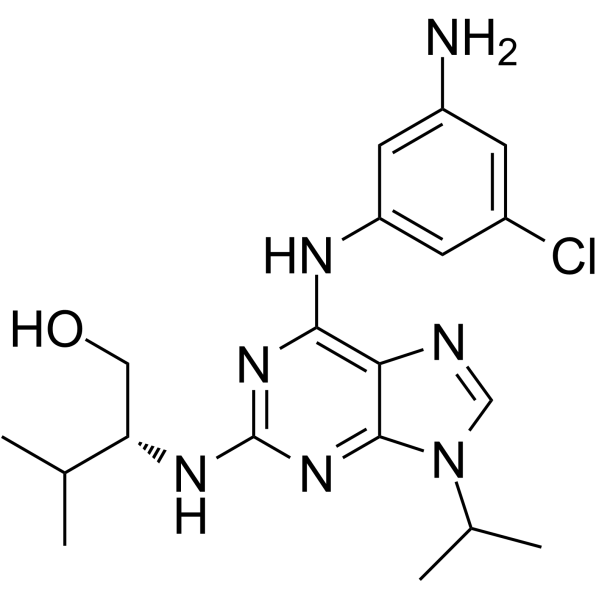 0 ImagesAminopurvalanol A is a potent, selective, and cell permeable inhibitor of Cyclins/Cdk complexes. Aminopurvalanol A preferentially targets the G2/M-phase transition inhibiting cancer cell differentiation. Aminopurvalanol A causes the inhibition of sperm fertilizing ability via the inhibition of physiological capacitation-dependent actin polymerization.
-
YKL-5-124 TFA
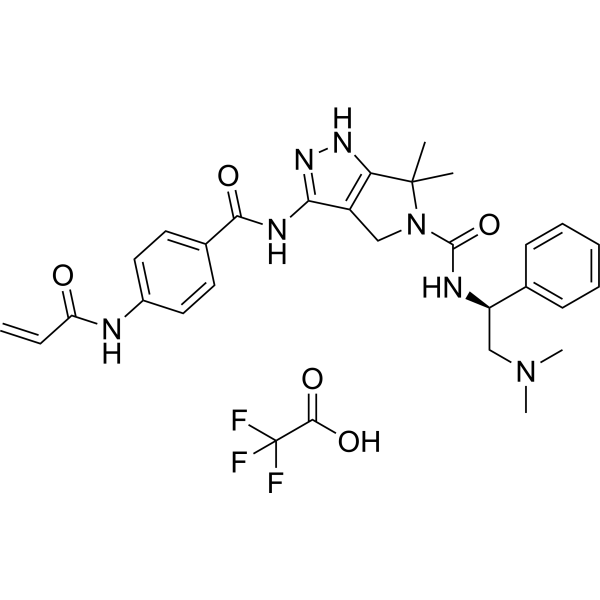 0 ImagesYKL-5-124 TFA is a potent, selective, irreversible and covalent CDK7 inhibitor with IC50s of 53.5 nM and 9.7 nM for CDK7 and CDK7/Mat1/CycH, respectively. YKL-5-124 TFA is >100-fold greater selective for CDK7 than CDK9 and CDK2, and inactive against CDK12 and CDK13. YKL-5-124 TFA induces a strong cell-cycle arrest, inhibits E2F-driven gene expression, and exhibits little effect on RNA polymerase II phosphorylation status.
-
BSJ-03-204 triTFA
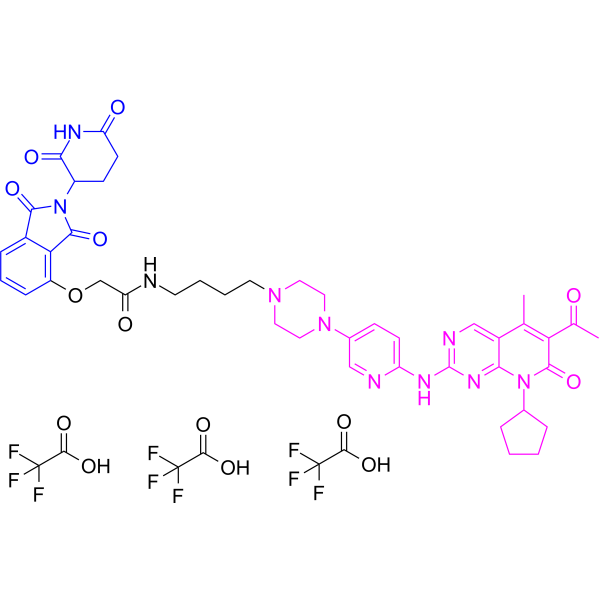 0 ImagesCat. No.: HY-136250APurity: 99.87%BSJ-03-204 triTFA is a PROTAC-based CDK degrader derived from Palbociclib (HY-50767). BSJ-03-204 triTFA targets bovine CDK4/CCND1 and CDK6/CCND1 complexes with IC50 values of 26.9 nM and 10.4 nM, respectively. BSJ-03-204 triTFA also triggers ubiquitination and degradation of RB1, reduces pRb levels, thereby inducing G1 cell cycle arrest and exerting antiproliferative effects, as well as inducing time-dependent KLHL8 accumulation. BSJ-03-204 triTFA can be used in research related to pancreatic ductal adenocarcinoma, breast cancer, lung cancer, mantle cell lymphoma, and cloned bovine placental hyperplasia.
-
CDK9 inhibitor HH1
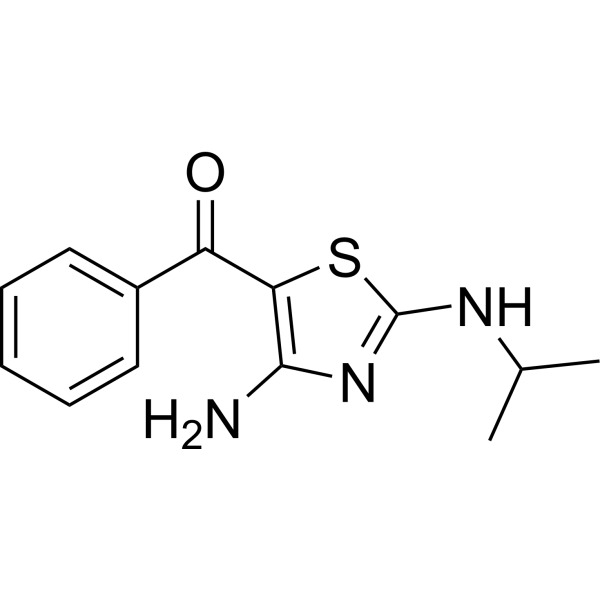 0 ImagesCDK9 inhibitor HH1 is a potent and selectively CDK9 inhibitor. CDK9 inhibitor HH1 inhibits the transcription of CDK. CDK9 inhibitor HH1 can be used in research of cancer.
-
TMX-3013
 0 ImagesTMX-3013 is a CDK inhibitor capable of inhibiting the activity of CDK1, CDK2, CDK4, CDK5, and CDK6, with IC50 values of 0.9 nM, <0.5 nM, 24.5 nM, 0.5 nM, and 15.6 nM, respectively. TMX-3013 can be used as a target protein ligand, conjugated with the PROTAC linker and the CRBN ligand Thalidomide (HY-14658) for the synthesis of PROTAC TMX-2138 (HY-164906). TMX-3013 can also act as an effector ligand, binding to target proteins HaloTag or FKBP, and can be used in the synthesis of regulated induced proximity targeting chimeras (RIPTACs).
-
NCT02
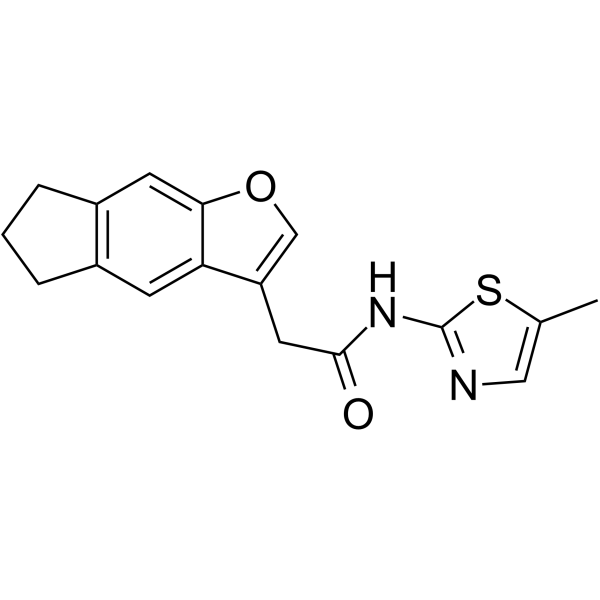 0 ImagesNCT02 is a molecular glue degrader based on the E3 ubiquitin ligase DDB1 that targets CDK12 and its binding partner CCNK. NCT02 triggers the ubiquitination and proteasomal degradation of CCNK, thereby downregulating CDK12 protein levels and inhibiting its downstream signaling pathways. NCT02 can induce tumor cell apoptosis, arrest the cell cycle, and selectively inhibit the proliferation of colorectal cancer cells carrying TP53 defects or belonging to the consensus molecular subtype CMS4. NCT02 has the potential to inhibit tumor growth in in vitro and in vivo models.