



CDK
Cyclin dependent kinase
CDKs (Cyclin-dependent kinases) are serine-threonine kinases first discovered for their role in regulating the cell cycle. They are also involved in regulating transcription, mRNA processing, and the differentiation of nerve cells. CDKs are relatively small proteins, with molecular weights ranging from 34 to 40 kDa, and contain little more than the kinase domain. In fact, yeast cells can proliferate normally when their CDK gene has been replaced with the homologous human gene. By definition, a CDK binds a regulatory protein called a cyclin. Without cyclin, CDK has little kinase activity; only the cyclin-CDK complex is an active kinase.
There are around 20 Cyclin-dependent kinases (CDK1-20) known till date. CDK1, 4 and 5 are involved in cell cycle, and CDK 7, 8, 9 and 11 are associated with transcription.
CDK levels remain relatively constant throughout the cell cycle and most regulation is post-translational. Most knowledge of CDK structure and function is based on CDKs of S. pombe (Cdc2), S. cerevisia (CDC28), and vertebrates (CDC2 and CDK2). The four major mechanisms of CDK regulation are cyclin binding, CAK phosphorylation, regulatory inhibitory phosphorylation, and binding of CDK inhibitory subunits (CKIs).
CDK Isoform Specific Products
-
CDK
(487)
View all products
-
CDK1
(196)
View all products
-
CDK2
(315)
View all products
-
CDK3
(28)
View all products
-
CDK4
(233)
View all products
-
CDK5
(98)
View all products
-
CDK6
(178)
View all products
-
CDK7
(119)
View all products
-
CDK8
(57)
View all products
-
CDK9
(205)
View all products
-
CDK11
(9)
View all products
-
CDK12
(53)
View all products
-
CDK13
(27)
View all products
-
CDK14
(6)
View all products
-
CDK16
(8)
View all products
-
CDK19
(25)
View all products
-
CDC
(21)
View all products
-
CLK
(31)
View all products
-
Pho85
(1)
View all products
-
CDK10
(1)
View all products
-
CDK15
(1)
View all products
-
CDK17
(2)
View all products
-
CDK18
(1)
View all products
-
CDK20
(1)
View all products
-
PITSLRE
(1)
View all products
All Product Categories
-
CDK Inhibitors
(1077)
View all products
-
CDK Agonists
(3)
View all products
-
CDK Antagonists
(2)
View all products
-
CDK Activators
(18)
View all products
-
CDK Modulators
(15)
View all products
-
CDK Degraders
(95)
View all products
-
CDK Controls
(4)
View all products
-
CDK Substrate
(1)
View all products
-
CDK Ligands
(16)
View all products
-
Cyclin-Dependent Kinases (CDKs) Proteins
(80)
View all products
-
Cyclin Dependent Kinase 1 (CDK1) Proteins
(9)
View all products
-
Cyclin-Dependent Kinase 2 (CDK2) Proteins
(12)
View all products
-
Cyclin-Dependent Kinase 3 (CDK3) Proteins
(6)
View all products
-
Cyclin-Dependent Kinase 4 (CDK4) Proteins
(4)
View all products
-
Cyclin-Dependent Kinase 5 (CDK5) Proteins
(5)
View all products
-
Cyclin-Dependent Kinase 6 (CDK6) Proteins
(6)
View all products
-
Cyclin-Dependent Kinase 7 (CDK7) Proteins
(4)
View all products
-
CDK Related Products (1353)
Related Products (1353)

-
Recombinant Proteins (82)
-
Antibodies (42)
-
CDK Isoform Comparison
-
CDK4/6-IN-7
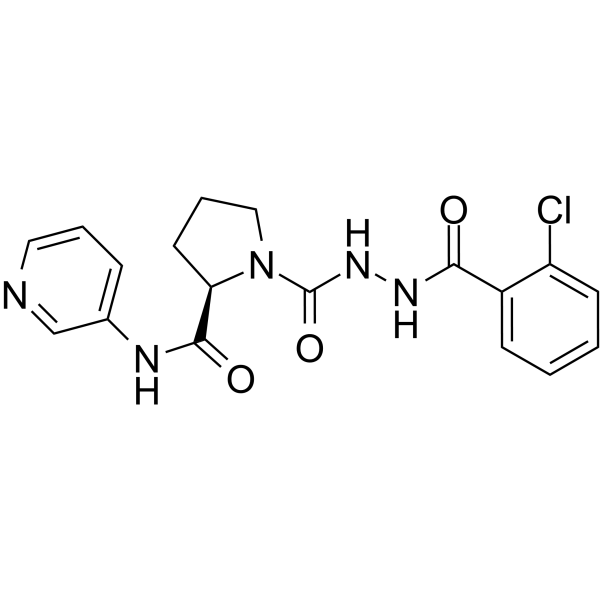 0 ImagesCat. No.: HY-143257CAS No.: 2649120-20-5CDK4/6-IN-7 is a potent, selective and orally active CDK4/6 inhibitor, with IC50s of 1.58 and 4.09 nM, respectively. CDK4/6-IN-7 can be used for the research of breast cancer.
-
Multi-kinase-IN-4
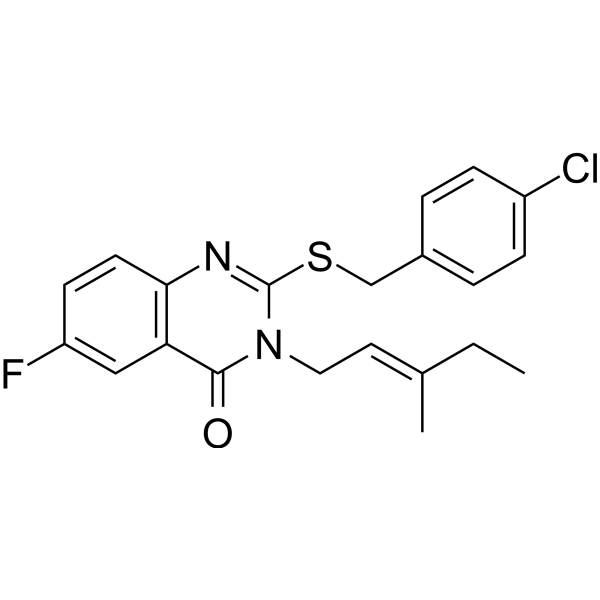 0 ImagesCat. No.: HY-149407Multi-kinase-IN-4 (compound 5d) is multi-targeted kinase inhibitor, including VEGFR2, EGFR, HER2, and CDK2, with IC50 values of 0.33, 0.22, 0.18 and 2.09 μM, respectively. Multi-kinase-IN-4 shows broad-spectrum anti-cancer activities against HepG2, MCF-7, MDA-231, and HeLa cell lines (IC50 = 1.94–7.1 µM), but exhibits lower toxicity in the WI-38 cells (IC50 = 40.85 µM). Multi-kinase-IN-4 induces apoptosis and arrests cell cycle at S phase in HepG2 cells. Multi-kinase-IN-4 has the potential for the research of cancer.
-
CDK4-IN-7
 0 ImagesCat. No.: HY-184444CAS No.: 3113087-01-4CDK4-IN-7 is a CDK4 inhibitor with an IC50 of 26 nM. CDK4-IN-7 shows selectivity for CDK1, with an IC50 of 4.2262 μM. CDK4-IN-7 can be used in cancer research.
-
CDK18/CycY Recombinant Human Active Protein Kinase
 0 ImagesCat. No.: HY-E70667CDK18 is a neuronal kinase that phosphorylates TAU protein when overexpressed in human brain. CDK18 shares a conserved PCTAIRE amino acid sequence in the helical α-C region of the kinase N-lobe. CDK18/CycY Recombinant Human Active Protein Kinase is an ortholog of CDK18.
-
Thio-acridone
 0 ImagesThio-acridone (SACD) is a photosensitizer (HAF-PSs). Thio-acridone forms a long-lived triplet state upon excitation by 470 nm visible light,, ultimately generating singlet oxygen to damage the structures and functions of target cells such as cancer cells. Thio-acridone is promising for research of cancers. Thio-acridone is a CDK4/Cyclin D1 inhibitor (IC50 = 2 uM).
-
CDK1/CycE2 Recombinant Human Active Protein Kinase
 0 ImagesCat. No.: HY-E70655CDK1 is a cyclin-dependent kinase that functions as a serine/threonine protein kinase, and is a key player in cell cycle regulation. CDK1/CycE2 Recombinant Human Active Protein Kinase is an ortholog of CDK1.
-
Cdc7-IN-15
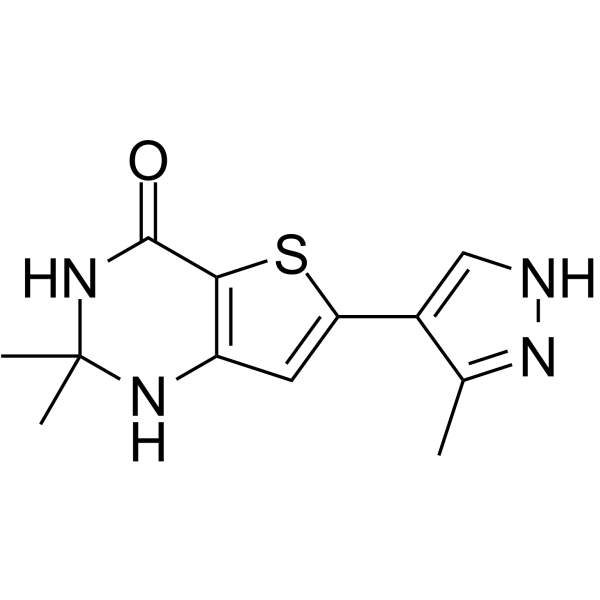 0 ImagesCat. No.: HY-143429CAS No.: 1244027-03-9
-
PF-06842874
 0 ImagesCat. No.: HY-172234CAS No.: 2516247-98-4PF-06842874 is a CDK4/Cyclin D1 and CDK6/Cyclin D3 inhibitor (Ki values are 62 and 130 nM, respectively). PF-06842874 can be used in the research of pulmonary arterial hypertension and cancer.
-
CDKI-83
 0 ImagesCat. No.: HY-123034CAS No.: 1189558-88-0CDKI-83 is a potent CDK9 and CDK1 inhibitor with Ki values of 21 nM and 72 nM for CDK9/T1 and CDK1/B, respectively. CDKI-83 demonstrates effective anti-proliferative activity in human tumour cell lines with a GI50<1 μM. CDKI-83 effectively induces apoptosis in A2780 human ovarian cancer cells. CDKI-83 reduces phosphorylation at Ser-2 of RNA polymerase II (RNAPII) by inhibiting cellular CDK9 activity, and down-regulates Mcl-1 and Bcl-2. CDKI-83 has the potential for anti-cancer research.
-
CDK2-IN-53
 0 ImagesCat. No.: HY-180546CDK2-IN-53 (compound 9) is a CDK2 inhibitor with anticancer activity. CDK2-IN-53 selectively inhibits the proliferation of HCT-116 and MCF-7cells with IC50 values of 13.89 and 7.65 μM, respectively, while showing lower cytotoxicity toward normal lung fibroblast (WI-38) cells (IC50 = 71.24 μM). CDK2-IN-53 can be used for cancer research, such as colon and breast cancer.
-
Aloisine A
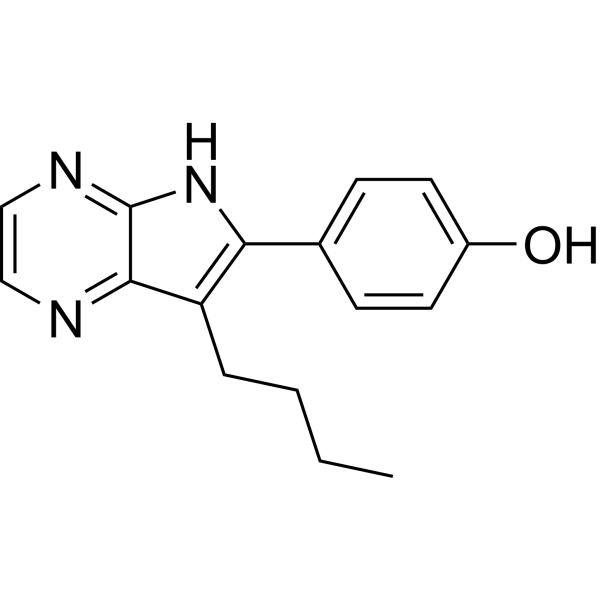 0 ImagesCat. No.: HY-112363CAS No.: 496864-16-5Synonyms: RP107Aloisine A (RP107) is a a potent cyclin-dependent kinase (CDK) inhibitor with IC50s of 0.15 μM, 0.12 μM, 0.4 μM, 0.16 μM for CDK1/cyclin B, CDK2/cyclin A, CDK2/cyclin E, CDK5/p35, respectively. Aloisine A ininhibits GSK-3α (IC50=0.5 μM) and GSK-3β (IC50=1.5 μM). Aloisine A stimulates wild-type CFTR and mutated CFTR, with submicromolar affinity by a cAMP-independent mechanism. Aloisine A has the potential for CFTR-related diseases, including cystic fibrosis research.
-
CDK7-IN-32
 0 ImagesCat. No.: HY-170425CAS No.: 2055741-42-7CDK7-IN-32 (compound10) is a CDK7 inhibitor.
-
CDK9 degrader-2
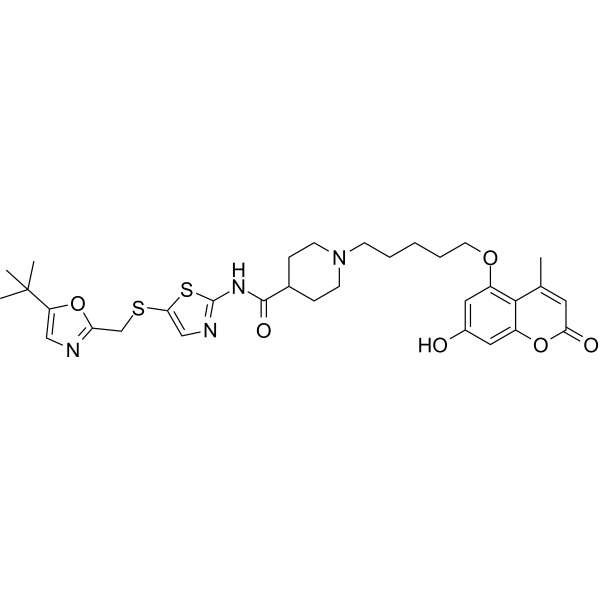 0 ImagesCat. No.: HY-156083CAS No.: 3020773-81-0CDK9 degrader-2 is a bifunctional degrader of ATTEC (Autophagy-Tethering Compound) that degrades the CDK9/cyclin T1 complex. CDK9 degrader-2 forms a ternary complex with CDK9 and LC3B, and achieves degradation through the autophagy-lysosome pathway, a process independent of the ubiquitin-proteasome system. CDK9 degrader-2 downregulates the expression of Mcl-1 and c-Myc proteins, induces apoptosis, and exhibits antitumor activity in in vivo MV4-11 xenograft models. CDK9 degrader-2 can be used for leukemia research.
-
H1k
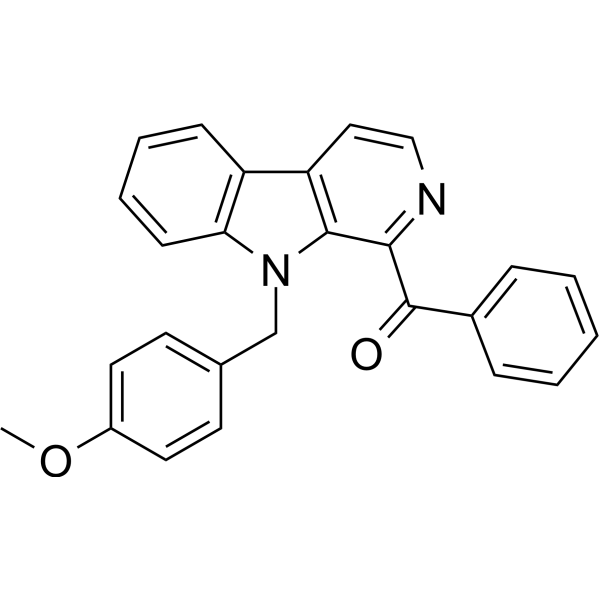 0 ImagesCat. No.: HY-149261CAS No.: 3039928-21-4H1k, a Eudistomin Y derivative, is a lysosome-targeted antiproliferation agent. H1k increases the autophagy signal and downregulate the expression of cyclin-dependent kinase (CDK1) and cyclin B1. H1k can be used in research of cancer.
-
LZ9
 0 ImagesCat. No.: HY-170306CAS No.: 844441-29-8LZ9 is a ATP-competitive CDK1 and CDK2 inhibitor. LZ9 has the potential for the research of colorectal cancer (CRC).
-
LCI133
 0 ImagesCat. No.: HY-179375CAS No.: 3065284-87-6LCI133 is afirst-in-class,nanomolar-potent, selective multikinase inhibitor targeting CDK4/6/9 and AURKA/B (IC50 = 4.7/10.2/4.1 nM and 2.8/10.6 nM). LCI133 induces S/G2 cell-cycle arrest and robust apoptosis in MYCN-amplified neuroblastoma BE(2)-C cells. LCI133 demonstrates significant antitumor efficacy in a BE(2)-C neuroblastoma xenograft model.
-
CDK2/CycE1 Recombinant Human Active Protein Kinase
 0 ImagesCat. No.: HY-E70672CDK2 is a cyclin-dependent kinase involved in the control of the cell cycle. CDK2/CycE1 Recombinant Human Active Protein Kinase is an ortholog of CDK2.
-
CLK1/4-IN-1
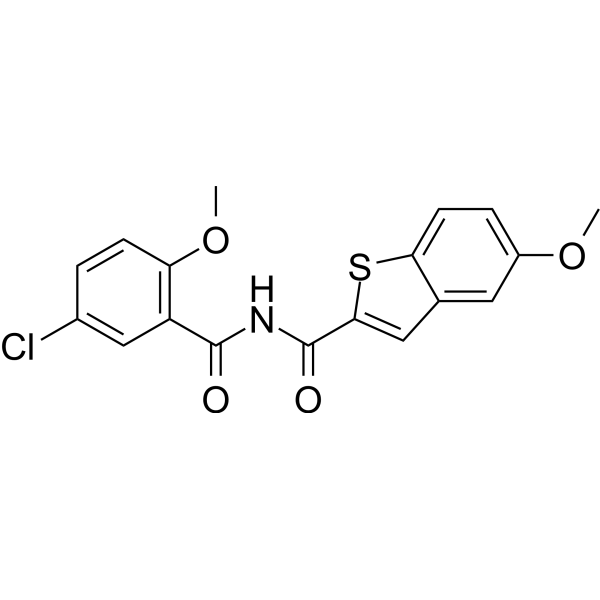 0 ImagesCat. No.: HY-146335CAS No.: 3029431-90-8CLK1/4-IN-1 (compound 31) is a potent and selective Clk1 and Clk4 inhibitor with an IC50 value of 9.7 nM and 6.6 nM, respectively. CLK1/4-IN-1 has growth inhibitory activities against T24 cancer cells with GI50 of 1.1 μM. CLK1/4-IN-1 can be used for researching anticancer.
-
Metuzumab
 0 ImagesCat. No.: HY-P991883Synonyms: Licartin; Metuximab; MehuzumabMetuzumab (Licartin) is a human-mouse chimeric IgG1 monoclonal antibody targeting CD147. Metuzumab induces Apoptosis, reduces levels of Cyclin D1, full-length Caspase-3, and Bcl-2, and increases Bax expression. Metuzumab enhances the sensitivity of non-small cell lung cancer (NSCLC) cells to Gemcitabine (HY-17026). Metuzumab is applicable for research on hepatocellular carcinoma and non-small cell lung cancer [1] [2].
-
CDK9-IN-49
 0 ImagesCat. No.: HY-185340CAS No.: 2987897-39-0CDK9-IN-49 is a CDK9 inhibitor with an IC50 of 7.32 nM. CDK9-IN-49 inhibits the proliferation of various cancer cells. CDK9-IN-49 can be used in the research of cancers such as acute myeloid leukemia and prostate cancer.




