



CXCR
CXC chemokine receptors (CXCRs) are seven-transmembrane chemokine receptors that regulate immune-system development and leukocyte trafficking through chemokine-directed cell migration[1]. Mechanistically, CXCR signaling connects ligand recognition to immune-cell positioning, with CXCL8-CXCR1/CXCR2 driving neutrophil chemotaxis during infection and tissue injury[2]. In disease and experimental models, CXCR4 binds CXCL12/SDF-1, supports chemotaxis and calcium signaling, and functions as the HIV-1 entry cofactor LESTR/fusin[3]. Compared with related isoforms, CXCR3-A and CXCR3-B show divergent activities: CXCR3-B mediates endothelial growth inhibition induced by CXCL9, CXCL10, CXCL11, and CXCL4[4]. CXCR5 differs functionally by mediating selective B-lymphocyte attraction through BCA-1/CXCL13, linking this receptor to lymphoid-tissue B-cell trafficking[5]. For experimental applications, plerixafor/AMD3100 provides a validated CXCR4 antagonist tool that rapidly mobilizes CD34⁺ hematopoietic cells in healthy volunteers[6].
References:
- [1]. Bachelerie F, et al. International Union of Basic and Clinical Pharmacology. [corrected]. LXXXIX. Update on the extended family of chemokine receptors and introducing a new nomenclature for atypical chemokine receptors. Pharmacol Rev. 2013 Nov 11;66(1):1-79. [Content Brief]
- [2]. Cambier S, et al. The chemokines CXCL8 and CXCL12: molecular and functional properties, role in disease and efforts towards pharmacological intervention. Cell Mol Immunol. 2023 Mar;20(3):217-251. [Content Brief]
- [3]. Bleul CC, et al. The lymphocyte chemoattractant SDF-1 is a ligand for LESTR/fusin and blocks HIV-1 entry. Nature. 1996 Aug 29;382(6594):829-33. [Content Brief]
- [4]. Lasagni L, et al. An alternatively spliced variant of CXCR3 mediates the inhibition of endothelial cell growth induced by IP-10, Mig, and I-TAC, and acts as functional receptor for platelet factor 4. J Exp Med. 2003;197(11):1537-49. [Content Brief]
- [5]. Legler DF, et al. B cell-attracting chemokine 1, a human CXC chemokine expressed in lymphoid tissues, selectively attracts B lymphocytes via BLR1/CXCR5. J Exp Med. 1998 Feb 16;187(4):655-60. [Content Brief]
- [6]. Devine SM, et al. Rapid mobilization of CD34+ cells following administration of the CXCR4 antagonist AMD3100 to patients with multiple myeloma and non-Hodgkin's lymphoma. J Clin Oncol. 2004;22(6):1095-102. [Content Brief]
All Product Categories
-
CXCR Related Products (173)
Related Products (173)

-
GSK812397
 0 ImagesCat. No.: HY-111224CAS No.: 878197-98-9GSK812397 is a CXCR4 antagonist with potential for the treatment of HIV infection. To evaluate the clinical potential of GSK812397, kilogram-scale agent candidates are needed. Here, an improved, scalable synthetic route for the CXCR4 antagonist GSK812397 is described. This new route has been scaled up in a 50-liter stationary facility to obtain 1.2 kg of agent substance in 20% overall yield and >99% chemical and enantiomeric purity in five steps. CXC chemokine receptor 4 (CXCR4) is a 7-transmembrane protein that functions in part as a host co-receptor for multiple strains of HIV-1. It is thought that targeting CXCR4 will help inhibit the replication of several late cytopathic viruses; therefore, CXCR4 antagonists are one of the most promising new classes of experimental anti-HIV agents. GSK812397 is a potent CXCR4 antagonist and is therefore a candidate for investigation for the treatment of HIV infection.
-
SDNUM04
 0 ImagesCat. No.: HY-175882CAS No.: 3113549-20-2SDNUM04 is a C-X-C chemokine receptor 4 (CXCR4) ligand and can be used as a tracer in tumor-targeting studies.
-
Zn-DPA-maytansinoid conjugate 1
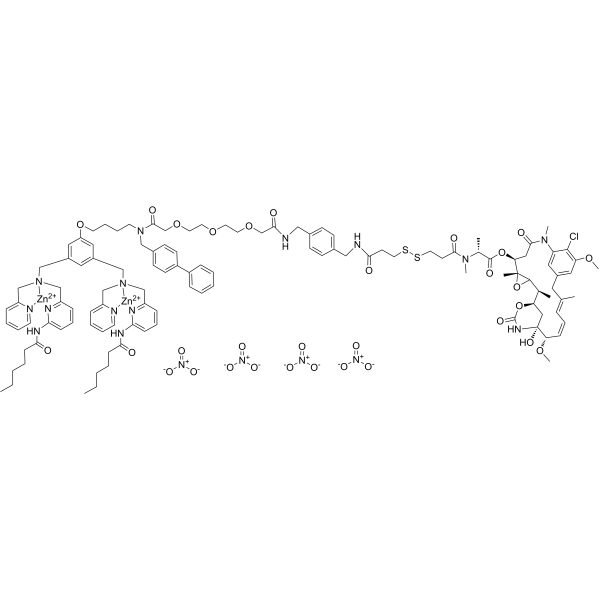 0 ImagesCat. No.: HY-151559CAS No.: 3034629-04-1Zn-DPA-maytansinoid conjugate 1 is a small molecule-based maytansinoid conjugate targeting immune checkpoint. Zn-DPA-maytansinoid conjugate 1 induces lasting regression of tumor growth and rejuvenates tumor microenvironment (TME) to an "inflamed hot tumor" .
-
Olopatadine-d6
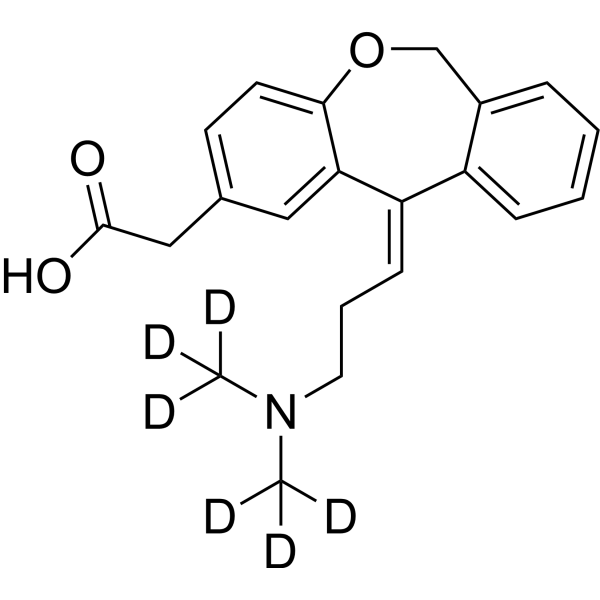 0 ImagesCat. No.: HY-W062109SCAS No.: 1231979-85-3Olopatadine-d6 is the deuterium labeled Olopatadine. Olopatadine hydrochloride (ALO4943A; KW4679) is an orally active histamine H1 receptor antagonist and mast cell stabilizer. Olopatadine hydrochloride exerts antiallergic effects by blocking histamine H1 receptor-mediated activities. Olopatadine hydrochloride inhibits exocytosis, chemokine release, F-actin polymerization, CXCL10-induced calcium influx, and T cell chemotactic activity. Olopatadine hydrochloride also reduces the expression levels of CXCR3 on the surface of CD4+ and CD8+ T cells. Olopatadine hydrochloride inhibits scratching behavior, improves dermatitis scores, and suppresses intraepidermal neurite outgrowth. Olopatadine hydrochloride simultaneously decreases the levels of inflammatory markers, growth factors, histamine, and specific IgE, while increasing the expression of ErbB3A/HER3A. Olopatadine hydrochloride can be used in research related to seasonal pollinosis, chronic rhinitis, urticaria, allergic conjunctivitis, alopecia areata, and atopic dermatitis.
-
FTO-IN-17
 0 ImagesFTO-IN-17 is an orally active and brain-penetrant FTO (m6A RNA demethylase) inhibitor with an IC50 of 1.1 μM. FTO-IN-17 stably binds the FTO catalytic pocket. FTO-IN-17 protects against Aβ1-42-induced toxicity while increasing global m6A levels and dampening pro-inflammatory gene (CXCL10, TNF-α) expression. FTO-IN-17 ameliorates anxiety-like behavior and rescues hippocampal-dependent spatial, recognition memory and neuroinflammation in Alzheimer's disease mice models.
-
SX-576
 0 ImagesCat. No.: HY-124183CAS No.: 1240494-14-7
-
Nicotinamide N-oxide-d4
 0 ImagesCat. No.: HY-W701397CAS No.: 1246817-64-0Nicotinamide N-oxide-d4 is the deuterium labeled Nicotinamide N-oxide (HY-101407). Nicotinamide N-oxide, an in vivo nicotinamide metabolite, is a potent, and selective antagonist of the CXCR2 receptor.
-
VUF10132
 0 ImagesCat. No.: HY-118037CAS No.: 1037732-88-9VUF10132 is a non-peptide CXCR3 receptor antagonist with anti-inflammatory activity, inhibiting diseases such as rheumatoid arthritis, multiple sclerosis, and psoriasis. VUF10132 has high affinity for the human CXCR3 receptor but slightly lower affinity for the murine CXCR3 receptor. Additionally, VUF10132 exhibits inverse agonist properties at the CXCR3 receptor.
-
Olopatadine-d6 (hydrochloride)
 0 ImagesCat. No.: HY-B0426AS2Synonyms: ALO4943A-d6 hydrochloride; KW4679-d6 hydrochlorideOlopatadine-d6 (ALO4943A-d6; KW4679-d6) hydrochloride is deuterium-labeled Olopatadine (hydrochloride) (HY-B0426A). Olopatadine hydrochloride (ALO4943A; KW4679) is an orally active histamine H1 receptor antagonist and mast cell stabilizer. Olopatadine hydrochloride exerts antiallergic effects by blocking histamine H1 receptor-mediated activities. Olopatadine hydrochloride inhibits exocytosis, chemokine release, F-actin polymerization, CXCL10-induced calcium influx, and T cell chemotactic activity. Olopatadine hydrochloride also reduces the expression levels of CXCR3 on the surface of CD4+ and CD8+ T cells. Olopatadine hydrochloride inhibits scratching behavior, improves dermatitis scores, and suppresses intraepidermal neurite outgrowth. Olopatadine hydrochloride simultaneously decreases the levels of inflammatory markers, growth factors, histamine, and specific IgE, while increasing the expression of ErbB3A/HER3A. Olopatadine hydrochloride can be used in research related to seasonal pollinosis, chronic rhinitis, urticaria, allergic conjunctivitis, alopecia areata, and atopic dermatitis.
-
Antileukinate
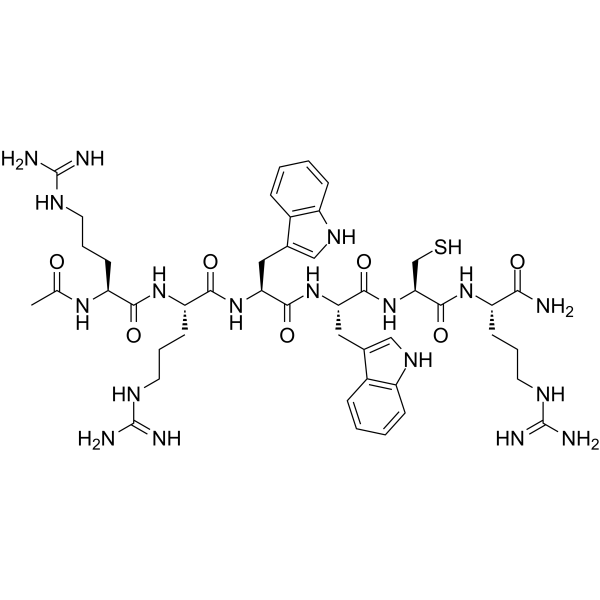 0 ImagesCat. No.: HY-125567CAS No.: 138559-60-1Antileukinate, a hexapeptide, is a potent inhibitor of CXC-chemokine receptor (CXCR). Antileukinate inhibits neutrophil chemotaxis and activation. Antileukinate can be used for the research of acute inflammation and injury.
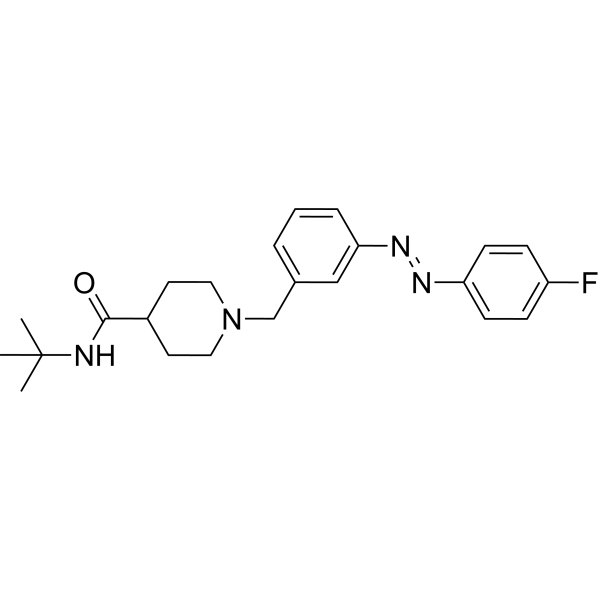
-
Zp17
 0 ImagesCat. No.: HY-184797Zp17 is a PROTAC degrader that targets the STING protein for degradation by recruiting cereblon, with a DC50 of 956 nM in THP-1 cells. Zp17 induces proteasome-dependent STING protein degradation and inhibits the activity of the STING signaling pathway. Zp17 alleviates renal function injury in a mouse model of acute kidney injury induced by Cisplatin (HY-17394). Zp17 exhibits STING-degrading activity in human monocytes and STING-inhibiting activity in mouse macrophage reporter cells. Zp17 can be used for research on inflammation and acute kidney injury.


-
CXCR2 antagonist 3
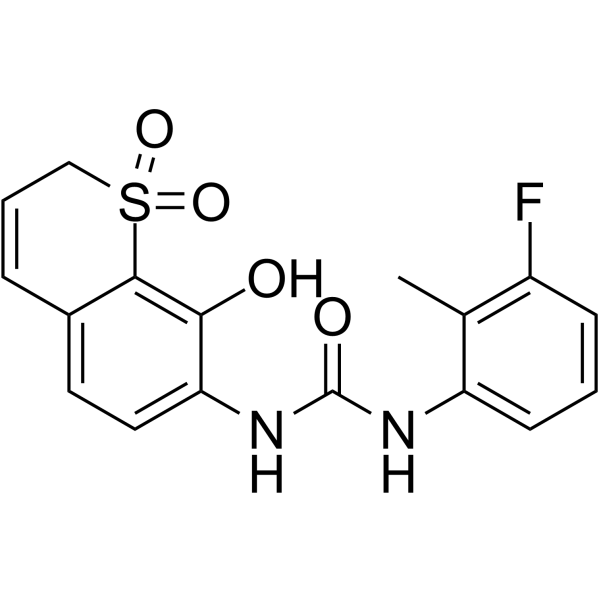 0 ImagesCat. No.: HY-139874CAS No.: 2647464-92-2CXCR2 antagonist 3 (compound 11h) is a potent antagonist of CXC chemokine receptor 2 (CXCR2). CXCR2 antagonist 3 demonstrates double-digit nanomolar potencies against CXCR2 and significantly inhibited neutrophil infiltration into the air pouch. CXCR2 antagonist 3 reduces the infiltration of neutrophils and MDSCs and enhance the infiltration of CD3+ T lymphocytes into the Pan02 tumor tissues.
-
Decursin-d6
 0 ImagesCat. No.: HY-18981SSynonyms: (+)-Decursin-d6Decursin-d6 ((+)-Decursin-d6) is the deuterium labeled Decursin (HY-18981). Decursin ((+)-Decursin) is a potent anti-tumor agent. Decursin also is a cytotoxic agent and a potent protein kinase C activator. Decursin induces apoptosis and cell cycle arrest at G1 phase. Decursin decreases the expression of CDK2, CDK4, CDK6, cyclin D1 protein at 48 h. Decursin inhibits cell proliferation and migration. Decursin shows anti-tumor, anti-inflammatory and analgesic activities.
-
LN6023 hydrochloride
 0 ImagesCat. No.: HY-172541LN6023 (hydrochloride) (Compound 27) is a CXCR7 agonist. LN6023 (hydrochloride) induces the recruitment of β-arrestin in HEK293T cells expressing human CXCR7 (EC50 = 3.5 µM). LN6023 (hydrochloride) reduces the surface level of P-selectin in isolated and washed human platelets. LN6023 (hydrochloride) can be used to study platelet-mediated thrombosis.
-
Cyclic MKEY
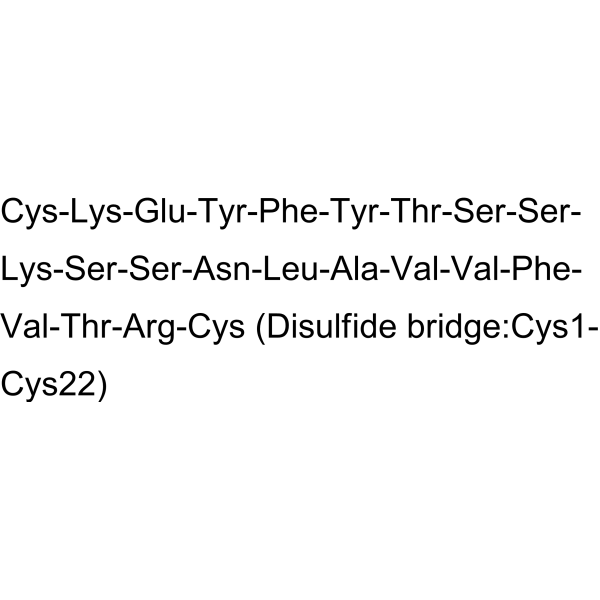 0 ImagesCat. No.: HY-P1949Cyclic MKEY is a synthetic cyclic peptide inhibitor of CXCL4-CCL5 heterodimer formation, which protects against atherosclerosis and aortic aneurysm formation by mediating inflammation. Cyclic MKEY also protects against stroke-induced brain injury in mice.
-
Olopatadine hydrochloride (Standard)
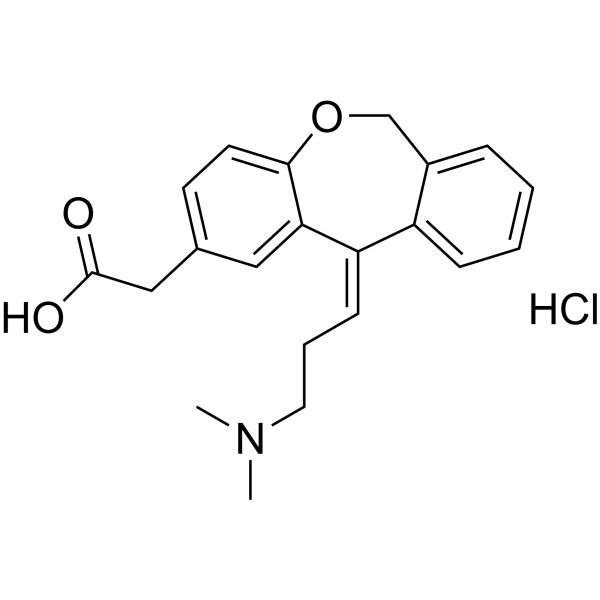 0 ImagesSynonyms: ALO4943A (Standard); KW4679 (Standard)Olopatadine (hydrochloride) (Standard) is the analytical standard of Olopatadine (hydrochloride). This product is intended for research and analytical applications. Olopatadine hydrochloride (ALO4943A; KW4679) is an orally active histamine H1 receptor antagonist and mast cell stabilizer. Olopatadine hydrochloride exerts antiallergic effects by blocking histamine H1 receptor-mediated activities. Olopatadine hydrochloride inhibits exocytosis, chemokine release, F-actin polymerization, CXCL10-induced calcium influx, and T cell chemotactic activity. Olopatadine hydrochloride also reduces the expression levels of CXCR3 on the surface of CD4+ and CD8+ T cells. Olopatadine hydrochloride inhibits scratching behavior, improves dermatitis scores, and suppresses intraepidermal neurite outgrowth. Olopatadine hydrochloride simultaneously decreases the levels of inflammatory markers, growth factors, histamine, and specific IgE, while increasing the expression of ErbB3A/HER3A. Olopatadine hydrochloride can be used in research related to seasonal pollinosis, chronic rhinitis, urticaria, allergic conjunctivitis, alopecia areata, and atopic dermatitis.
-
Anti-CXCL13 Antibody
 0 ImagesCat. No.: HY-P992222



